
The right liquid fertilizer feeds your outdoor plants through their leaves and roots, delivering nutrients faster than any granular formula. But getting the NPK ratio wrong or choosing a weak concentrate can leave you with leggy growth or, worse, burned foliage. This guide breaks down the best performers so you can start feeding with confidence.
I’m Rikta — the co-founder and writer behind Lawn Gear Lab. I’ve spent months digging through label analysis, comparing NPK ratios, and studying ingredients like kelp extract and fish emulsion to sort the effective concentrates from the watered-down duds.
Whether you’re tending roses, hydrangeas, vegetables, or a patch of lawn, finding the ideal liquid fertilizer for outdoor plants hinges on matching concentration strength, micronutrient diversity, and organic certification to your specific garden’s needs.
How To Choose The Best Liquid Fertilizer For Outdoor Plants
Selecting a liquid concentrate means reading past marketing claims. The key variables are the NPK ratio, the source of nutrients (synthetic vs. organic), and the concentration level per gallon. A formula meant for indoor foliage may lack the potassium your flowering perennials need, while a heavy nitrogen lawn feed can stop a rose bush from blooming.
Understand NPK and secondary nutrients
The three numbers on the label represent nitrogen (N) for leaf growth, phosphorus (P) for root and flower development, and potassium (K) for overall plant health and disease resistance. A balanced 3-1-2 ratio works well for general foliage, but a bloom-focused formula should have a higher middle number. For vegetables, watch for added calcium and magnesium to prevent blossom-end rot.
Organic vs. synthetic liquid sources
Organic concentrates like fish emulsion or seaweed extract release nutrients as soil microbes break them down, improving long-term soil structure. Synthetic liquid fertilizers deliver immediate, precise ratios but do little to build soil biology. Choose organic OMRI-listed options if you grow edibles or want to avoid chemical salt buildup over repeated applications.
Concentration and coverage per gallon
Not all 32-ounce bottles are equal. Some require only a teaspoon per gallon, making them economical for large gardens, while others demand four ounces per gallon. Check the mixing ratio listed on the technical specs — a higher concentration per ounce usually means better value, provided you follow dilution instructions to avoid burning roots.
Quick Comparison
On smaller screens, swipe sideways to see the full table.
| Model | Category | Best For | Key Spec | Amazon |
|---|---|---|---|---|
| Dyna Gro Foliage Pro | Balanced All-Purpose | Foliage & houseplants | NPK 9-3-6 | Amazon |
| Miracle-Gro LiquaFeed Bloom Booster | Bloom Booster | Flowering plants | NPK 10-30-20 | Amazon |
| Foliage-Pro 9-3-6 | Foliage Plant Food | Houseplants & tropicals | NPK 9-3-6 | Amazon |
| Great Big Roses & Flowers Booster | Soil Activator | Roses & shrubs | 70 trace minerals | Amazon |
| Alaska Fish Fertilizer 5-1-1 | Organic Nitrogen | Vegetables & lawns | NPK 5-1-1 | Amazon |
| Eleanor’s VF-11 | Non-Burning Formula | Indoor & outdoor feeds | Low-salt concentrate | Amazon |
| Sunday Lawn Kickstart | Lawn Recovery | Turf & grass improvement | NPK 22-0-2 | Amazon |
In‑Depth Reviews
1. Dyna Gro Foliage Pro 9-3-6
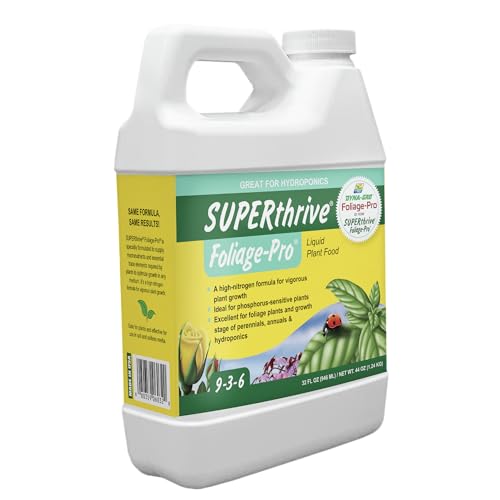
The Dyna Gro Foliage Pro delivers a precise 9-3-6 NPK ratio packed into a 32-ounce concentrate. The formula is built around a 3-1-2 macronutrient profile that promotes dense leaf growth and strong root systems, making it a go-to for tropical foliage, greenhouse crops, and low-light environments. Users report visible new growth within days after the first feeding, largely due to the balanced nitrogen supply coupled with chelated micronutrients that remain plant-available across a wide pH range.
One of its standout qualities is the versatility: it works in both soil and hydroponic setups. The mixing ratio is highly concentrated—just a small amount per gallon—so a single quart stretches far beyond what similar-sized bottles yield. Professional growers frequently recommend it because the formula covers all essential macro and micro needs without needing to rotate supplements.
The main risk is user error: the high concentration means over-application can shock plants fast. Several reviews highlight that skipping the dilution instructions nearly killed their collection. As long as you measure carefully (¼ teaspoon per gallon for maintenance), the results are consistent, dense, and fast. For the price per application, it’s tough to beat.
What works
- Highly concentrated — small dose covers many plants
- Balanced 9-3-6 NPK suits most foliage and tropicals
- Fast visible growth reported within days
What doesn’t
- Easy to overdo if instructions are not followed exactly
- Designed more for foliage than heavy bloom production
2. Miracle-Gro LiquaFeed Bloom Booster

The Miracle-Gro LiquaFeed Bloom Booster is specifically formulated for flower production, with a high-phosphorus profile that nudges plants toward bigger, more abundant blooms. The 4-pack of refills delivers 64 total ounces, designed to work with the LiquaFeed hose-end sprayer for fast, even application across beds and containers. Users consistently report that flowering plants bud earlier and maintain color longer through the season.
What sets this apart from general-purpose liquid feeds is the phosphorus to potassium ratio that targets bloom development. Roses, petunias, and hydrangeas all respond with denser flower clusters when fed on a 2–3 times per week schedule. The hose-end system removes the guesswork from mixing — just attach, squeeze, and water. For gardeners with large flower beds, this convenience alone saves significant time.
The trade-off is that this formula is less suited for leafy greens, vegetables, or foliage plants that need higher nitrogen. And while users praise the results, some note that the refill pouches run out faster than expected when covering a large garden. It’s a specialized bloom tool, not a one-bottle solution.
What works
- Fast, noticeable bloom improvement on flowering plants
- Easy hose-end application for large areas
- Good value per ounce in the 4-refill bundle
What doesn’t
- Not ideal for leafy greens or general foliage
- Requires LiquaFeed sprayer (sold separately)
3. Foliage-Pro 9-3-6 Plant Food
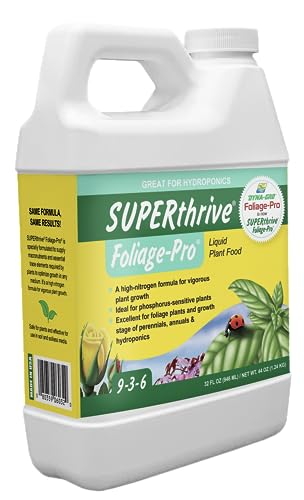
The Foliage-Pro 9-3-6 liquid plant food mirrors the same balanced NPK as Dyna Gro but comes at a slightly different price point and mixing specification. The formula uses a 9-3-6 ratio tailored for foliage plants, with an extremely dilute mixing guide of just ¼ to ½ teaspoon per gallon. That means a single 32-ounce bottle can treat a massive number of containers across the growing season.
Users who grow philodendrons, monsteras, and bonsai trees report that the difference after switching from a balanced fertilizer is hard to ignore. Yellowing leaves on monsteras reversed within two weeks, and a 42-year-old bonsai banyan tree pushed new branch formation after a single double-dose application. The high dilution margin also reduces the risk of salt buildup in pots, making it safe for repeated feedings.
The downside is the high upfront cost per bottle compared to mainstream brands, but the per-application math favors it heavily. A few notes mention the bottle design makes precise measuring tricky. For anyone with a large collection of potted foliage or tropicals, this is one of the most cost-effective concentrates available.
What works
- Tiny dose per gallon — bottle lasts many seasons
- Reverses yellowing on tropical foliage fast
- Safe for repeated use in container plants
What doesn’t
- Higher initial cost per bottle
- Not designed for heavy bloom production
4. Great Big Roses & Flowers Liquid Booster
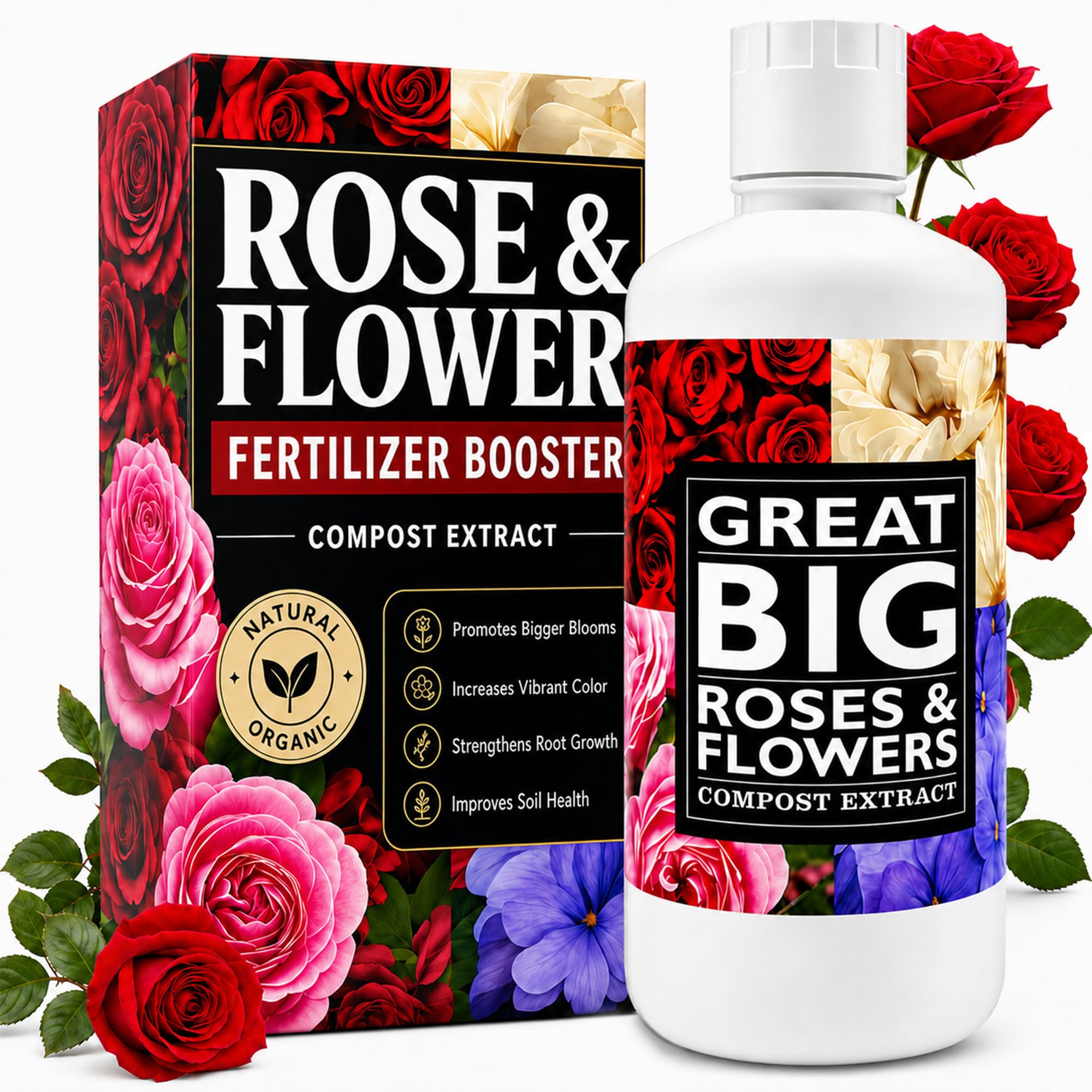
The Great Big Roses & Flowers Liquid Booster is not a standard NPK fertilizer — it’s a soil activator that delivers humic acids, seaweed extract, and over 70 chelated trace minerals to the root zone. The primary function is to unlock nutrients already present in your soil, making it more effective when paired with an existing feeding program. Gardeners report rose bushes that had not bloomed in years producing abundant flowers within weeks.
The formula amplifies the results of organic inputs like fish emulsion, bone meal, and worm castings. It works across a broad range of plants — roses, hydrangeas, citrus, succulents — by conditioning the soil rather than forcing top growth. A single 32-ounce bottle makes about 8 gallons of mixed feed, covering a typical garden bed for the entire growing season.
The biggest complaint is the packaging: the wide mouth on the jug makes measuring into a watering can messy, and the product is expensive if used alone without a base fertilizer. For anyone struggling with poor soil fertility or stubborn blooms, this booster bridges the gap between soil health and plant performance.
What works
- Unlocks existing soil nutrients for better blooms
- 70 trace minerals plus humic acid boost root health
- Works across roses, shrubs, and fruit trees
What doesn’t
- Jug design makes measuring difficult without spilling
- Best results require pairing with a base fertilizer
5. Alaska Fish Fertilizer 5-1-1 (115 oz)
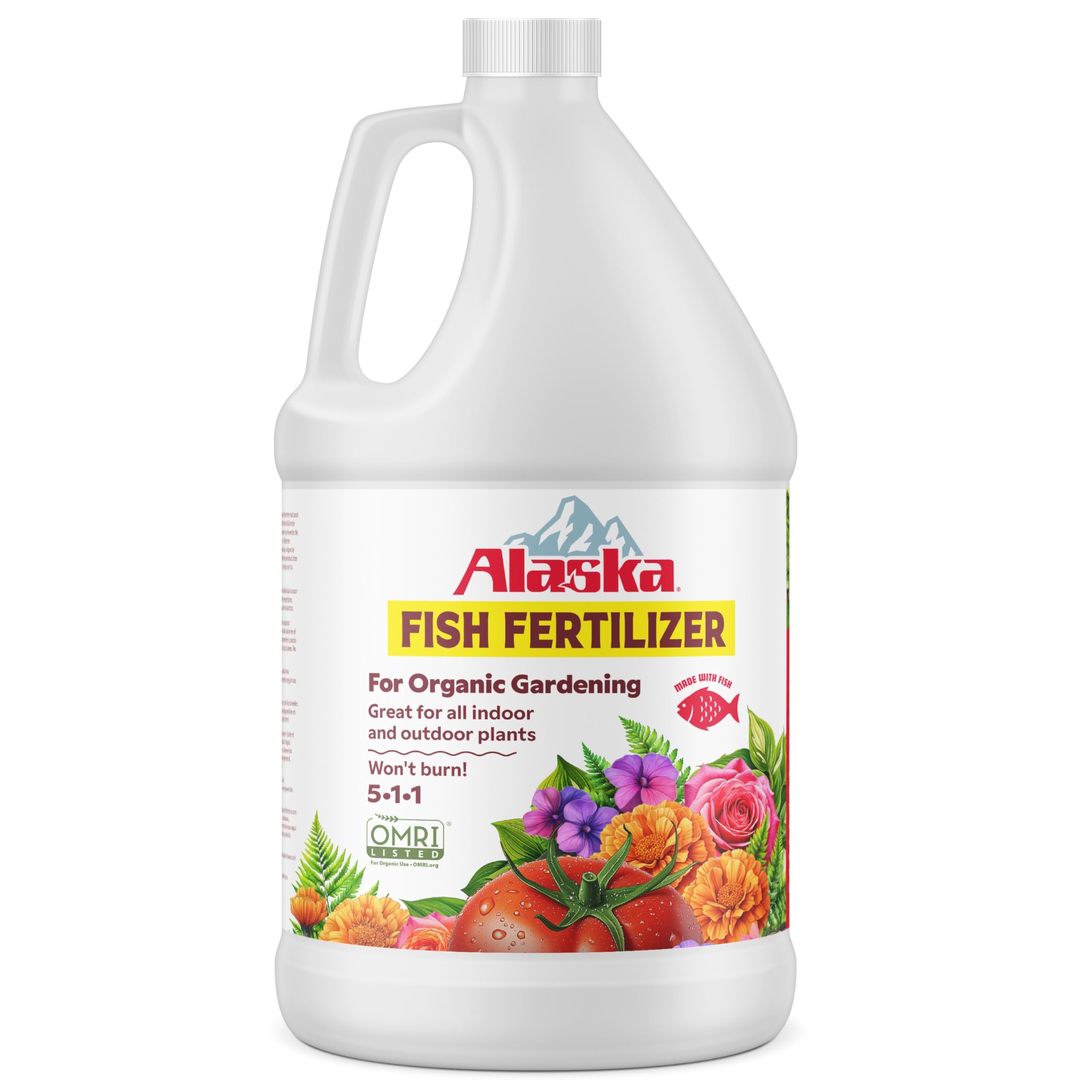
Alaska Fish Fertilizer is an OMRI-listed organic nitrogen source with a 5-1-1 NPK ratio. Made from cold-processed fish byproducts, it preserves essential micronutrients and amino acids that synthetic processes strip away. This is the go-to liquid for organic vegetable gardens, fruit trees, and transplants that need a strong vegetative start without chemical salts.
The high nitrogen content (5) drives lush leaf and stem growth, making it ideal for leafy greens, herbs, and early-season feeding. Users report healthier roots, reduced transplant shock, and rapid recovery on perennials. The 115-ounce jug covers up to 1,000 square feet and lasts through multiple applications when diluted per the 3-week schedule.
The notable drawback is the smell — fish emulsion has a pungent odor that lingers for about a day before dissipating into the soil. Users also note that the nitrogen-heavy ratio is not suited for the flowering stage, so you’ll need a separate bloom booster if you want flowers or fruiting. For organic growers focused on soil biology and vegetative health, it’s a proven staple.
What works
- Organic OMRI certification for edible gardens
- Promotes strong vegetative growth and deeper roots
- Large 115-ounce jug offers good coverage
What doesn’t
- Strong fishy smell that lasts about 24 hours
- Low phosphorus needs a bloom supplement for flowers
6. Eleanor’s VF-11 Plant Food (1 Gallon)
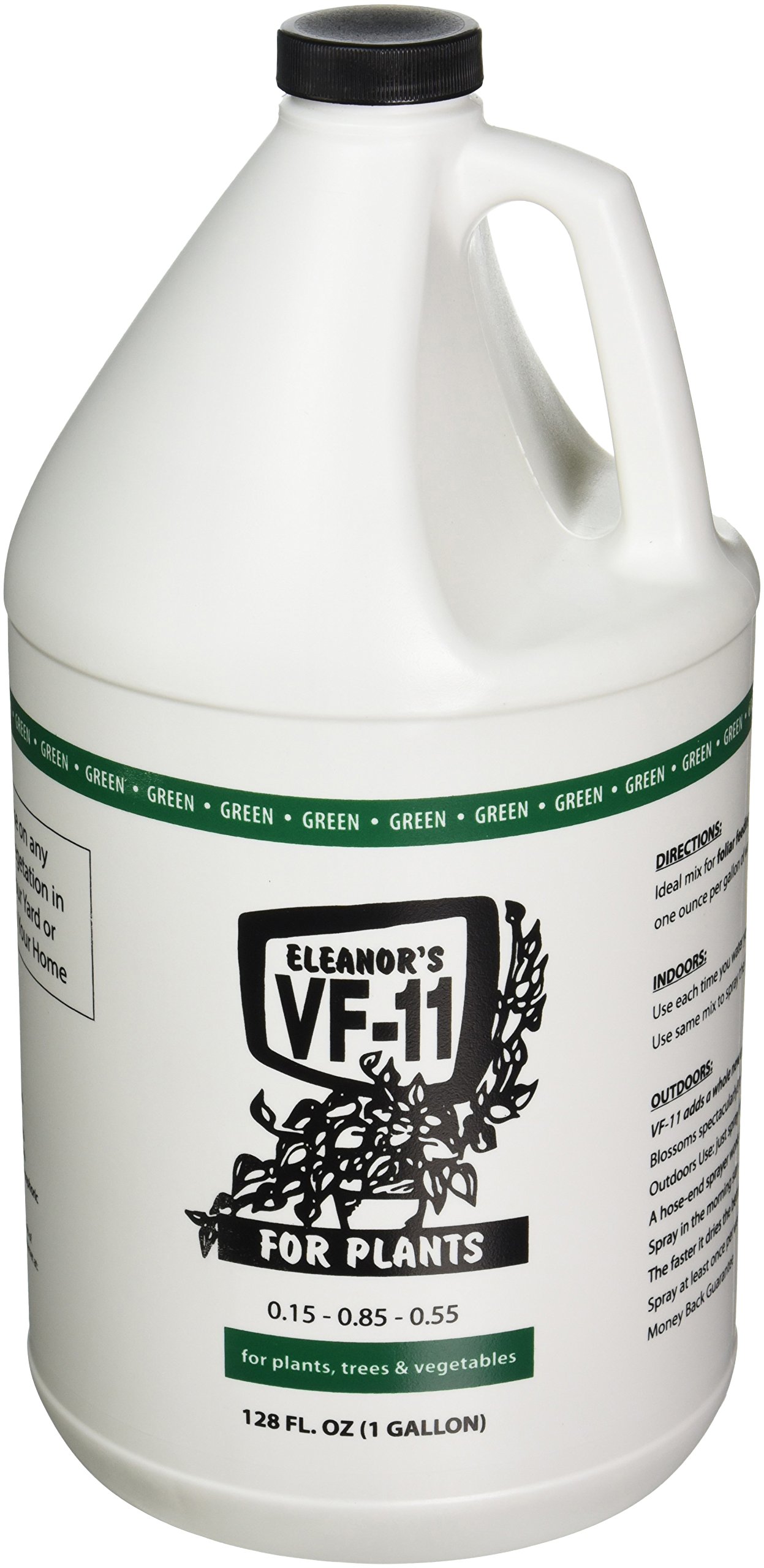
Eleanor’s VF-11 is a German-origin plant food formulated for foliar and root feeding with a low-salt, non-burning profile. The nutrients are low in concentration but highly available, meaning they absorb directly through leaf pores without shocking sensitive plants. It’s especially popular among orchid, African violet, and gardenia growers who need a gentle feed that won’t burn delicate roots.
The 1-gallon size is economical for year-round use, and the formula works for both indoor and outdoor plants. Users praise its ability to stimulate blooms on Christmas cactus and cyclamen, as well as boost growth on tomatoes and pothos. The unscented, clear liquid mixes cleanly without the smell typical of organic fish or kelp products.
The downside is that the low-concentration formula requires more frequent feeding compared to stronger concentrates. Some experienced growers feel it’s better as a maintenance supplement than a primary nutrient source for heavy feeders. For anyone who wants a reliable, risk-free daily feed, the VF-11 is a low-stress option.
What works
- Non-burning formula safe for orchids and sensitive plants
- Unscented and mixes clear — no fishy odor
- Effective for foliar feeding on leaves and stems
What doesn’t
- Low concentration requires more frequent applications
- Less suited for heavy-feeding vegetables
7. Sunday Lawn Kickstart Fertilizer (2 Pack)

Sunday Lawn Kickstart is a hose-end liquid fertilizer designed for lawn recovery, not flower beds. Its 22-0-2 NPK ratio delivers a heavy nitrogen punch with zero phosphorus and minimal potassium, targeting deep greening and heat-stress recovery on turf grass. The 2-pack covers up to 10,000 square feet, making it a solid choice for homeowners with medium to large lawns who want fast results without measuring or mixing.
Users report visible greening within two weeks and significant growth improvement by five weeks. The sprayer attachment connects directly to a standard garden hose, so applications take 15 minutes or less. The iron content helps correct yellowing and gives a deep green color without the risk of burning if applied during the recommended 60–89°F temperature window.
The main limitation is its narrow focus: this is strictly a lawn feed. It won’t help flower beds, shrubs, or vegetable gardens. Some users also report mixed results on thin or dormant grass, suggesting it works best as a seasonal kickstart rather than a standalone lawn program. For turf-specific feeding, the convenience is excellent.
What works
- Fast green-up on turf in 2–3 weeks
- Easy hose-end sprayer — no mixing required
- Safe for pets and children after drying
What doesn’t
- Only suitable for grass, not flowers or vegetables
- Results vary on thin or dormant lawns
Hardware & Specs Guide
NPK Ratio
The three-number sequence tells you the percentage by weight of nitrogen, phosphorus, and potassium. A 9-3-6 ratio means 9% nitrogen, 3% phosphorus, and 6% potassium. High nitrogen (first number) drives leaves and stems; high phosphorus (middle) pushes flowers and fruit; high potassium (last) strengthens overall health and disease resistance.
Concentration & Dilution
Liquid fertilizers vary from high-concentration (¼ teaspoon per gallon) to weak (2–4 ounces per gallon). More concentrated products require careful measuring but offer better value per application. Always check the specific mixing ratio on the label — a “balanced” bottle can still burn plants if used too strong.
Organic vs. Synthetic Base
OMRI-listed products (like fish emulsion) rely on organic matter digestion by soil microbes, which builds long-term soil structure. Synthetic liquid fertilizers deliver immediate available salts that plants absorb quickly but can accumulate and degrade soil biology over time if overused.
Trace Minerals & Additives
Beyond NPK, look for chelated iron (prevents yellowing), humic acid (improves nutrient uptake), and seaweed extract (provides growth hormones). Products with 70+ trace minerals feed the soil food web, not just the plant — this is critical for perennial beds and long-term soil health.
FAQ
How often should I apply liquid fertilizer to outdoor plants?
Can I mix liquid fertilizer with other products like insecticidal soap?
Why does liquid fish fertilizer smell and does it attract animals?
Final Thoughts: The Verdict
For most gardeners, the liquid fertilizer for outdoor plants winner is the Dyna Gro Foliage Pro because its balanced 9-3-6 ratio and high concentration deliver reliable, fast growth across foliage, tropicals, and greenhouse plants without needing multiple bottles. If you want an organic nitrogen source for vegetables and leafy greens, grab the Alaska Fish Fertilizer. And for reviving stubborn rose bushes or unlocking locked-up soil nutrients, nothing beats the Great Big Roses & Flowers Booster.