
Every gardener knows the sting of a hidden thorn or the raw scrape from a stubborn root. Claw garden gloves are purpose-built to replace that pain with direct-digging power, letting you rake, scoop, and pull with your fingertips embedded with sturdy talons. Whether you’re yanking bindweed or loosening compacted soil around a rose bush, these gloves turn your hands into a precision tool.
I’m Rikta — the co-founder and writer behind Lawn Gear Lab. For this guide, I analyzed hundreds of customer experiences, cross-referenced material specs from pigskin to synthetic suede, and weighed real-world durability claims to find which claw gloves actually hold up under heavy use.
After comparing seven top contenders on grip, gauntlet length, and claw anchorage, I am ready to share the definitive selection of the best claw garden gloves for every digging and weeding chore.
How To Choose The Best Claw Garden Gloves
The claw garden glove market spans from simple rubber-tipped styles to full gauntlet leather pairs with reinforced talons. Picking the right one means understanding how the claw material, glove length, and palm grip interact with your specific yard conditions.
Claw Material & Anchorage
Most claws are made from molded thermoplastic rubber (TPR) or rigid nylon. TPR claws offer flexibility and a softer grip on roots, while nylon tips stay sharper longer but can be rigid. The key is how the claw is attached: glued-on tips can peel after a few uses, whereas stitched or overmolded claws hold up to repeated soil abrasion. Look for claws that extend at least 1.5 inches past the fingertip for effective digging in compacted ground.
Gauntlet Length & Arm Protection
If you work with thorny roses, blackberries, or cactus, a short-cuff glove leaves your wrists and lower forearms vulnerable to scratches. Gauntlet gloves that reach 6–8 inches above the wrist provide meaningful barrier coverage. For heavy brush, elbow-length cuffs (roughly 12 inches from the wrist) are ideal.
Palm & Back Material
The palm needs abrasion resistance — cowhide or pigskin leather offers the best durability without sacrificing dexterity. The back of the hand can be breathable canvas or stretch nylon for ventilation, but if you’re in thorn-heavy terrain, a fully leather back (like goatskin) adds another layer of puncture defense. Synthetic suede is lighter and cheaper but wears faster when scraping against rocks.
Glove Fit & Dirt Seal
A loose glove lets soil and debris enter at the wrist and reduces claw control. Elastic wrist bands or adjustable Velcro cuffs create a snug seal. Pay attention to sizing charts — several gloves in this category run small, so ordering one size up is a common recommendation from long-term users.
Quick Comparison
On smaller screens, swipe sideways to see the full table.
| Model | Category | Best For | Key Spec | Amazon |
|---|---|---|---|---|
| Wild Field Work with Claws | Neoprene / Claw | Digging & pulling weeds | TPR claw tips | Amazon |
| Legacy Gardens Goatskin | Leather Gauntlet | Rose & cactus pruning | A-grade goatskin leather | Amazon |
| HANDLANDY Pigskin | Leather Gauntlet | Heavy brush & berry bushes | Elbow-length gauntlet cuff | Amazon |
| WORKPRO Leather | Leather Gauntlet | All-around yard work | Reinforced stitching | Amazon |
| DLY Cowhide Gauntlet | Leather Gauntlet | Daily gardening & pruning | Cowhide palm / touchscreen | Amazon |
| WANCHI Synthetic Suede | Synthetic Gauntlet | Light weeding & planting | Lightweight nylon fabric | Amazon |
| Trifabricy Cotton Gauntlet | Cotton Gauntlet | Soil allergen protection | Cotton / reinforced finger tabs | Amazon |
In‑Depth Reviews
1. Garden Gloves with Claws Wild Field Work
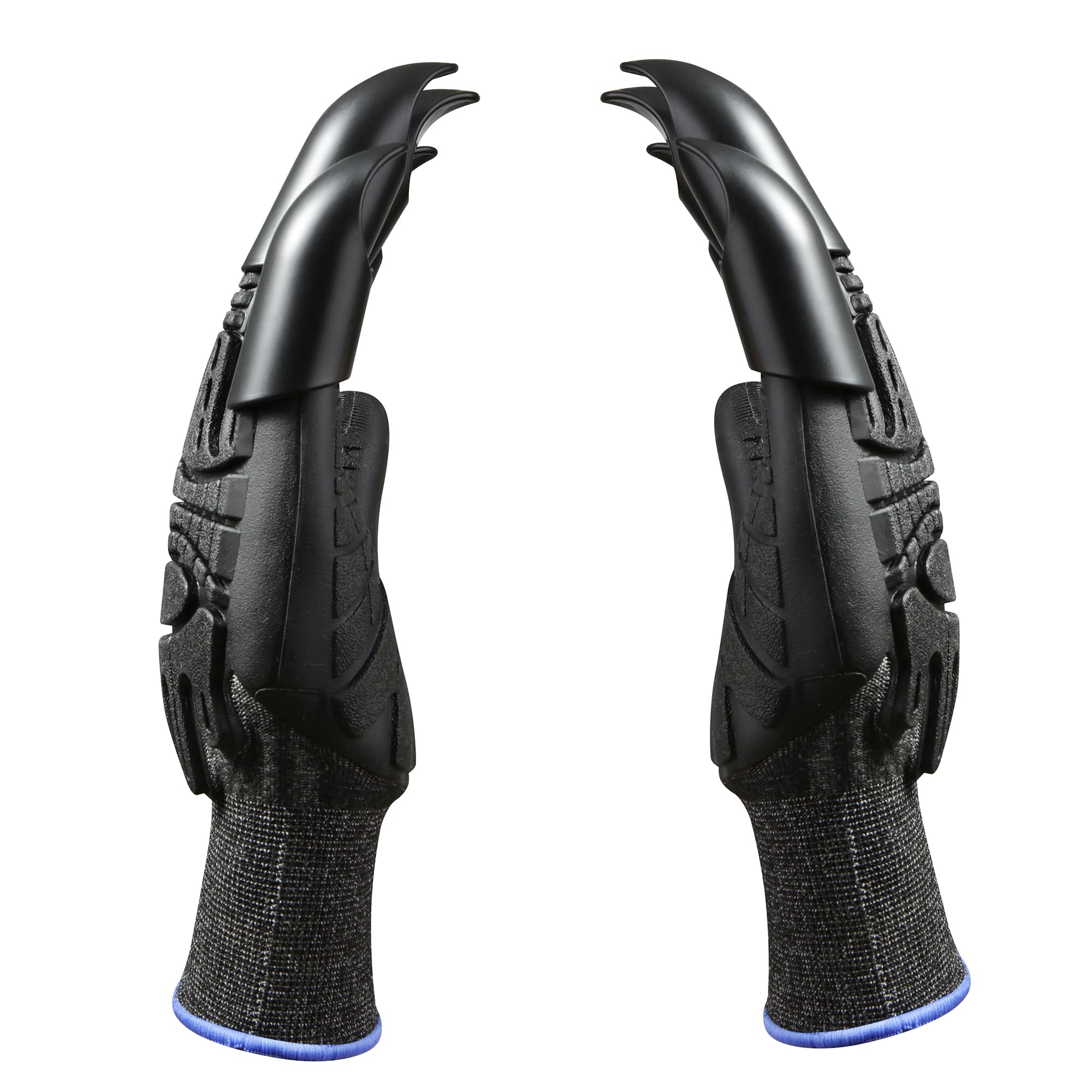
This claw-style glove is the one that started the conversation — a thick neoprene shell fitted with sturdy molded TPR claws on each fingertip (except the thumb). The claws measure roughly 1.5 inches long, giving you serious leverage when prying up dandelions or scratching through crusted topsoil. Multiple testers reported that the tips help soften dirt around potted plants and provide enough grip to pull small roots whole without bending over for a trowel.
The neoprene body blocks sticks and thorns effectively; one user cleared an overgrown greenhouse with blackberry bushes and a thorny orange tree and reported that thorns stuck in the glove material but never reached skin. However, the claws are glued onto the fabric, and a small number of reviews noted separation after heavy use in hard clay. The lack of a thumb claw is a missed opportunity for stubborn single-stem weeds.
Breathability is modest — neoprene traps heat — but for short, intense weeding sessions, the tradeoff for puncture protection is worthwhile. The wrist closure is elastic but not adjustable, so achieving a tight dirt seal depends on getting the right size.
What works
- Excellent root-pulling leverage from molded TPR claws
- Neoprene shell blocks thorn penetration
- Good for potted plants and surface-level weeding
What doesn’t
- Claw anchorage may fail under hard clay stress
- No thumb claw limits single-stem weed extraction
- Limited breathability for extended wear
2. Legacy Gardens Leather Gardening Gloves

Crafted from A-grade goatskin leather, the Legacy Gardens gauntlet is softer and more flexible than cowhide while retaining excellent puncture resistance. The extended cuff reaches several inches past the wrist, and tall users (including one 6-foot-3 reviewer) appreciated the nearly elbow-length coverage when working with thorny Meyer lemon trees. Double-stitched padding on the thumb, index, and middle fingers adds an extra layer of abrasion resistance exactly where pruning shears and thorny stems make contact.
The slim-fit elastic wrist keeps the glove snug without constricting blood flow, and the goatskin molds to the hand after a short break-in period. Several reviewers noted that fine cactus spines can still penetrate the leather on the back of the hand, so these are best for rose thorns and general brush rather than fine desert spines. One long-term user reported that the stitching on four fingertips gave out after three months of heavy use in Arizona landscaping.
Breathability is a highlight — goatskin is naturally porous and resists sweat buildup better than synthetic materials. The brown dye did transfer onto the hands of one user when wet, which is a minor cosmetic annoyance. Overall, this is a premium leather gauntlet that excels in flexibility and forearm protection.
What works
- Flexible goatskin molds to hand for precise tool control
- Long gauntlet protects lower forearm from scratches
- Good breathability for all-day comfort
What doesn’t
- Fine cactus spines may still penetrate back leather
- Fingertip stitching durability concerns under heavy use
- Dye transfer possible when gloves get wet
3. HANDLANDY Rose Pruning Gloves

The HANDLANDY gauntlet uses pigskin leather — praised for its open-pore structure that stays breathable and dries soft after getting wet. The palm and back are both pigskin, giving you full-leather puncture resistance around the entire hand. The cuff extends nearly to the elbow, making these one of the longest options in this comparison; that extra length is a lifesaver when reaching into dense holly bushes or berry thickets where hidden thorns wait at forearm height.
Reinforced padding on the palm and fingertips adds another defense layer, and the loose-fit design (ambidextrous, no right/left specific cut) allows easy on/off but may feel baggy for precision tasks. Multiple reviewers with medium-large hands found the sizing chart accurate, but several noted that the gloves run small, especially for larger male hands — the advice to order one size up appears frequently. One user wore them four days a week for four months and reported the leather held up well with only minor wear at the thumb crease.
The pigskin is not water-resistant, so they will soak through in wet grass, but they dry quickly without stiffening. If you prioritize breathability and extended arm coverage, this is a strong contender for heavy brush clearing.
What works
- Nearly elbow-length cuff for full forearm protection
- Pigskin stays breathable and dries soft after wetting
- Durable construction holds up to weekly heavy use
What doesn’t
- Runs significantly small — size up accordingly
- Not water-resistant; absorbs moisture in wet conditions
- Loose fit can reduce dexterity for fine work
4. WORKPRO Gardening Gloves
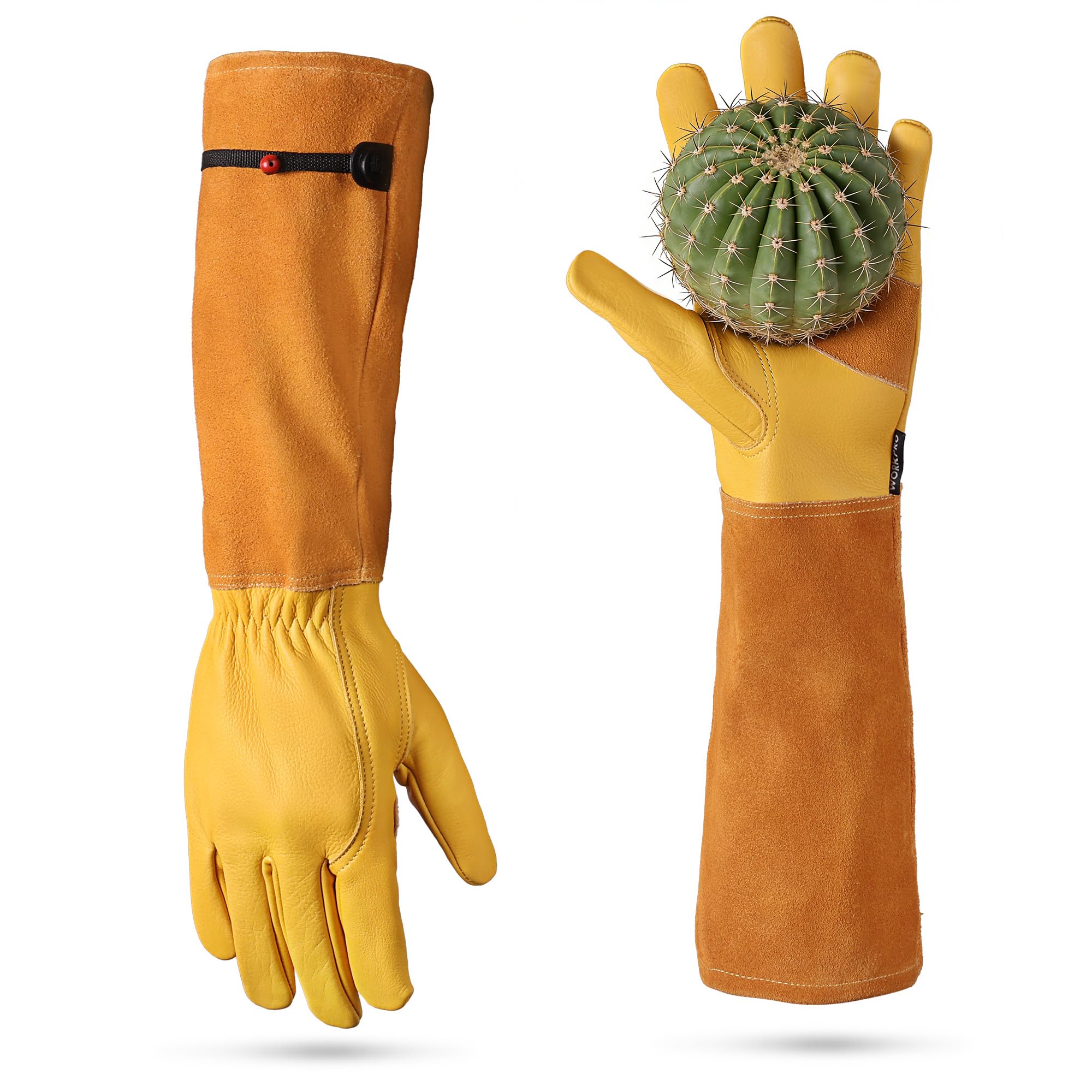
WORKPRO’s long leather gauntlet enters the ring with heavy-duty leather and reinforced stitching that reviewers consistently describe as tough and well-made. The leather covers both palm and back, and the cuff is long enough to protect the lower forearm. Users working with pyracantha bushes and climbing roses reported that the glove stopped every thorn bite and that the material resisted puncture even when handling sharp branches directly.
The flexibility is decent — the leather is thick but not stiff, allowing you to grip tools and handle plants without excessive resistance. A female reviewer with smaller hands found the small size almost uncomfortably tight, which aligns with the common pattern in this category to run snug. The wrist closure is elastic, but the glove stays put during active pulling and digging motions.
One standout detail: the 4.7-star average from a solid sample of verified buyers is the highest in the entire lineup. No claw tips here — this is a pure leather puncture-resistant gauntlet that works best when paired with a separate digging tool. For gardeners who want dependable thorn defense without the novelty of built-in claws, this is the most reassuring choice.
What works
- Highest average customer rating in the group
- Thick leather stops thorns from pyracantha and roses
- Reinforced stitching adds durability at stress points
What doesn’t
- Runs small — order at least one size larger than normal
- No built-in claws for direct digging
- Elastic wrist may not seal as tightly as Velcro
5. DLY Gardening Gloves for Women

DLY’s cowhide leather palm with foam padding delivers a cushioned grip that reduces hand fatigue during long pruning sessions. The back of the hand and forearm are made from bright floral canvas that breathes well, and the elastic wrist is paired with adjustable cuffs that can be cinched tight to prevent slipping. The three-finger touchscreen capability is genuinely functional — several reviewers confirmed they could answer calls or check instructions without pulling the gloves off.
Thorn resistance is focused on the palm and fingers; the canvas back is not puncture-proof. One reviewer noted getting poked on the top of the hand while reaching into blackberry bushes, so these are best used when you can keep the back of your hand facing away from thorns. The medium size runs slightly roomy in the fingers, which is helpful for those who want extra wiggle room but may reduce precision.
They are machine washable on a gentle cycle, and the floral patterns are a hit among those who want a cheerful aesthetic in the garden. For the price, you get a well-rounded leather gauntlet with modern conveniences, even if the thorn coverage isn’t 360 degrees.
What works
- Foam-padded cowhide palm reduces fatigue
- Touchscreen-compatible fingertips work reliably
- Adjustable cuffs create a secure dirt seal
What doesn’t
- Canvas back is not thorn-proof — only palm is protected
- Runs slightly large in the fingers
- Not fully waterproof; canvas absorbs moisture
6. WANCHI Gardening Gloves

WANCHI’s gardening glove uses a superfiber synthetic suede for the palm and fingers — a material that is lightweight, flexible, and quick-drying, but not genuine leather. The fabric is breathable nylon on the back and forearm, with an elastic wrist and adjustable Velcro cuff that keeps debris out. The manufacturer explicitly states these are not 100% resistant to cactus thorns, so they are best categorized as light-duty gloves for weeding, planting, and general yard cleanup rather than heavy brush defense.
One reviewer reported that a pair lasted roughly two years of regular use before the palm ripped, which is respectable for the price. The touchscreen fingertips work “in a pinch” according to users, though not with the same reliability as dedicated conductive thread. The green floral print is subtle and attractive, making them a popular gift option.
The medium size runs true to most women’s hand dimensions, and the snug fit allows fine motor tasks like planting seeds or handling small tools. If your primary concern is comfort and light protection rather than claw-level digging power, these are a pleasant, affordable entry point.
What works
- Lightweight and breathable for warm-weather gardening
- Velcro cuff provides a secure, adjustable seal
- Good dexterity for planting and seed handling
What doesn’t
- Synthetic suede wears faster than real leather
- Not suitable for heavy thorn or cactus work
- Touchscreen function is inconsistent
7. Trifabricy Gardening Gloves for Women

Trifabricy takes a different approach: a full-length cotton gauntlet with reinforced leather-like finger tabs and an adjustable bottom strap. The cotton fabric blocks soil allergens effectively — several users with skin sensitivities reported that these gloves stopped contact dermatitis from compost and potting soil. The long sleeve protects forearms from scrapes, though the material is not thorn-proof against dense brush.
The finger tabs are sturdy enough to prevent nails from breaking through the tip, which is a common complaint among gardeners who maintain manicured nails. The touchscreen capability exists but is tricky due to the bulky finger tips. The gauntlet runs large according to some reviews; one user noted that the forearm strap could be tighter. Machine washable and quick-drying.
For the price, these are a fantastic solution for gardeners whose primary enemy is soil allergens and scrapes rather than deep thorns. They lack the claw functionality of dedicated claw gloves, but the reinforced finger tabs give you reasonable durability for light digging. Best suited as a backup pair or for gardeners with sensitive skin.
What works
- Cotton fabric blocks soil allergens and irritants
- Long gauntlet length protects forearms
- Reinforced finger tabs protect nails from breaking
What doesn’t
- Not thorn-proof; cotton can be pierced by sharp stems
- Forearm strap could be tighter for a secure fit
- Touchscreen fingertips are too bulky
Hardware & Specs Guide
Claw Materials
The most common claw materials are thermoplastic rubber (TPR) and rigid nylon. TPR claws offer a flexible grip that bends with your finger motion, making them better for wrapping around roots. Nylon claws stay rigid and can scrape through compacted soil but may feel uncomfortable against the finger pad. The anchorage method matters: overmolded claws bond to the fabric at the molecular level, while glued-on claws are prone to peeling after exposure to moisture and repeated scraping. Always check whether the claw tips are stitched, overmolded, or simply glued — the latter will fail fastest in wet soil.
Gauntlet Length Classes
Standard garden gloves stop at the wrist, leaving the lower forearm exposed. Claw garden gloves fall into three length classes: short-cuff (2-3 inches above wrist, suitable for potted plants), mid-gauntlet (6-8 inches above wrist, good for roses and light brush), and full-gauntlet (10-12 inches, reaching nearly to the elbow, ideal for blackberries and dense thickets). Measure your forearm from wrist to elbow before choosing: a gauntlet that is too short will leave a gap that thorns exploit, while one that is too long may bunch and restrict movement.
FAQ
Can claw garden gloves be used for digging in hard clay soil?
How do I wash claw garden gloves without damaging the tips?
Final Thoughts: The Verdict
For most gardeners, the best claw garden gloves winner is the Wild Field Work with Claws because its molded TPR tips deliver immediate root-pulling power for the most common weeding tasks. If you want premium forearm protection for heavy thorny brush, grab the Legacy Gardens Goatskin. And for a budget-friendly, breathable option that handles light digging and daily yard work, nothing beats the WANCHI Gardening Gloves.