
Specs are compiled from manufacturer listings and verified buyer reviews and can change over time — please confirm the key details on the product page before buying.
A sudden late-spring frost can undo months of work in a single night. Garden row covers are your first and best defense, but the right one depends on whether you are fighting a hard freeze, shielding tender seedlings from insects, or coaxing tomatoes through a chilly autumn. The material weight, light transmission, and weave density separate a cover that saves your crop from one that just sits on the shelf.
I’m Rikta — the founder and writer behind Lawn Gear Lab. This guide is built by comparing the manufacturers’ published specifications and the patterns across verified customer reviews, so you get each pick’s real strengths and trade-offs instead of marketing spin.
You can plant earlier and harvest later without gambling on the weather when you pick a garden row cover that matches your local climate and your crop’s needs. The right best garden row covers handle everything from heavy frost protection to fine insect netting (a mesh that keeps bugs off your plants).
Our Picks at a Glance


How To Choose The Best Garden Row Covers
A row cover is not a single tool — it lives on a spectrum. On one end you have lightweight spun fabric that lets in 85% of sunlight and blocks a light frost. On the other end you have thick 1.77 oz/yd² blankets that trap ground heat and handle hard freezes. Getting this right starts with knowing your winter low and the crop’s cold tolerance.
Fabric weight: the single most important spec
Fabric weight, measured in ounces per square yard (oz/yd²), tells you exactly how much cold a cover can fend off. A 0.5 oz/yd² floating row cover offers a few degrees of protection (down to about 28°F) and lets plenty of light through. A 1.2 oz/yd² blanket can handle mid-20s. A 1.5 oz/yd² or heavier cover fights single-digit lows but blocks more light, so it is best for hardy vegetables or short-term emergency use. Always match the weight to your local overnight low.
Light transmission and breathability
A cover that blocks too much sun can stunt growth rather than help it. Most frost blankets transmit between 70% and 85% of available light — enough for winter greens, broccoli, and carrots, but too little for full-sun summer crops. Breathable non-woven polypropylene fabric allows air and moisture to pass through, preventing the condensation that can rot leaves under a plastic tarp. If you are covering plants for more than a day or two, breathability is non-negotiable.
Size and shape for your beds
Most garden row covers come in long rectangles (10 x 30 ft is the most common). You can cut them with scissors to fit any raised bed or hoop tunnel. A few brands offer zippered plant bags for individual shrubs or small trees. Measure your garden’s length and width and add at least a foot on each side for anchoring with soil, stones, or stakes. A cover that is too small will flap in the wind and let cold air sneak underneath.
Durability and wind resistance
Thin covers around 0.9 oz are the most prone to tearing when stretched tight or caught on a thorn. Heavier 1.5 oz fabrics withstand multiple seasons and repeated wind gusts. Anchoring with hoops or a simple frame reduces stress on the fabric and extends its life. A recurring owner note is that lightweight covers require gentle handling and proper weight at the corners to avoid becoming a sail.
Quick Comparison
| Model | Best For | Fabric Weight | Size | Item Weight | Amazon |
|---|---|---|---|---|---|
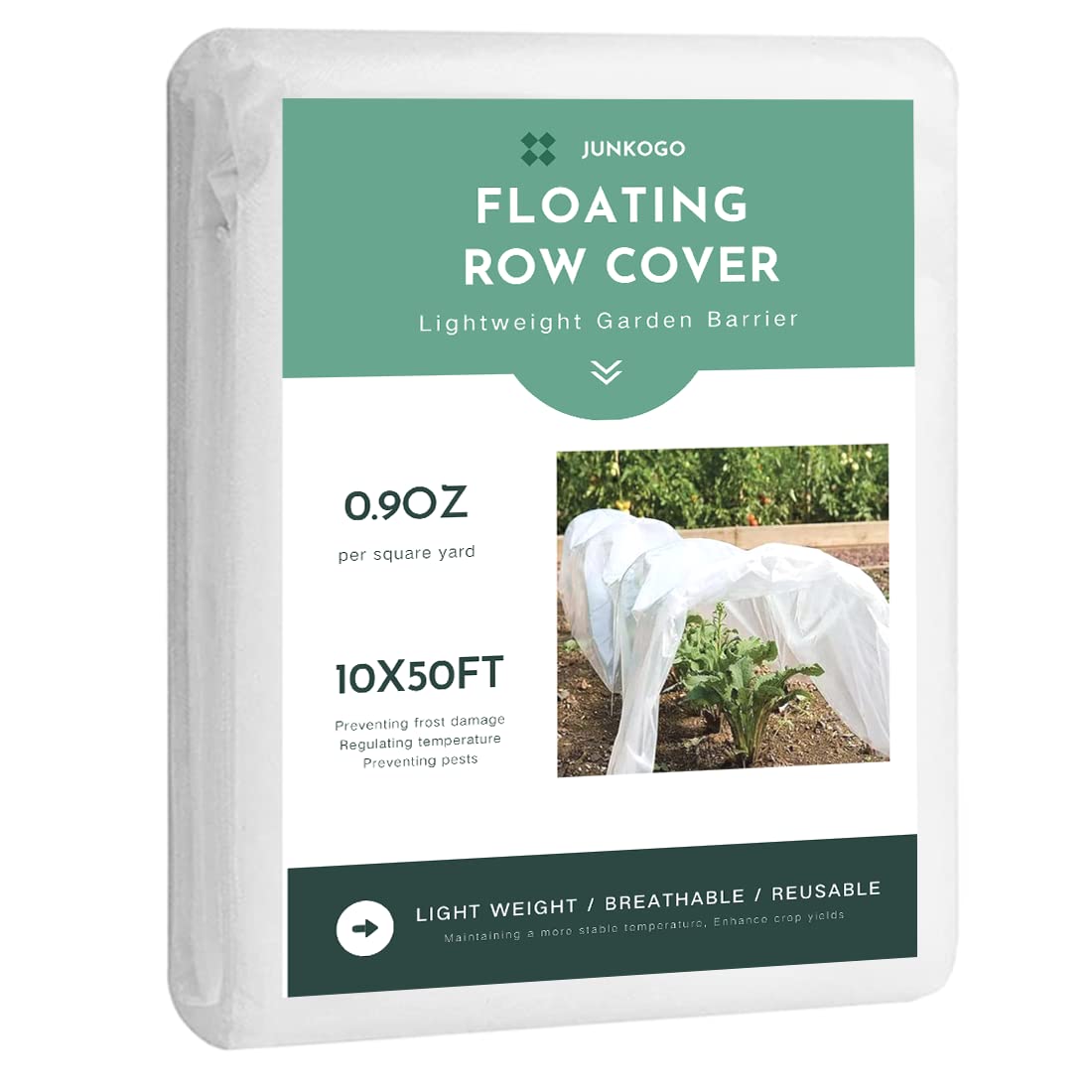
| JUNKOGO 0.9 oz★ Best Overall | Versatile all-season floating cover | 0.9 oz/yd² | 10 x 50 ft | 2.33 lbs | Amazon |
| FUZE 1.77 ozThickest Shield | Hard freezes & thick coverage | 1.77 oz/yd² | 8.2 x 33 ft | 3.43 lbs | Amazon |
| Gardzen 1.5 ozBest Value | Reusable all-around protection | 1.5 oz/yd² | 10 x 30 ft | 3.06 lbs | Amazon |
| AlpineReach 1.2 oz | Heavy-duty cold & UV defense | 1.2 oz/yd² | 10 x 30 ft | 2.46 lbs | Amazon |
| Garutom 1.1 oz | Great value with good light transmission | 1.1 oz/yd² | 10 x 33 ft | 15.7 oz | Amazon |
| Homoda 1.2 oz | Wide coverage for raised beds | 1.2 oz/yd² | 10 x 30 ft | 2.2 lbs | Amazon |
| Dalen Harvest Guard | Seed germination & bug barrier | — | 5 x 25 ft | 6.4 oz | Amazon |
| Cookmaster Ultra Fine Mesh | Pest exclusion (birds, bugs, squirrels) | — | 10 x 33 ft | 1.37 lbs | Amazon |
In‑Depth Reviews
1. JUNKOGO 10×50 FT Floating Row Cover
Our pick — over 4.5★ from 250+ verified ratings; the strongest balance of quality and price.
A 50-foot run of protection that earned its keep across two separate freezes.
A floating row cover that pulls double duty — winter frost shield and summer shade screen — is rare, but this 0.9 oz/yd² non-woven fabric does both. It allows essential air, moisture, and sunlight to reach the plants while trapping warmth against the ground during cold nights. At 10 feet wide and 50 feet long, it covers a full garden row or several raised beds in one pass without needing to piece together smaller sections.
Over 30 buyers report this cover performed well in actual freezing conditions. Several confirmed it kept plants alive and green through two separate winter freezes. A Vermont-area owner described it as a durable row cover that saved sensitive pineapple plants and a lemon tree from sub-freezing temperatures inside a damaged hoop house (a greenhouse-like frame covered in plastic). The fabric is lightweight enough to spread directly over crops without a frame, but buyers advise anchoring it with stones or stakes against high winds. A few owners note the fabric is thinner than traditional frost protection blankets — better suited as a floating row cover (laid directly on plants) than a hard-freeze fortress.
At 2.33 pounds, the whole roll is easy to carry to the garden, though it arrives folded rather than on a roll, which can make the first unboxing a bit unwieldy. For versatility and sheer coverage area, this is the pick that does the most jobs well.
Owners keep coming back for
- Proven performance through two winter freezes — plants stayed green
- Extra 7-foot working width means fewer seams and easier coverage
- Breathable fabric prevents overheating and moisture buildup under the cover
Fair warning from buyers
- Fabric is thin compared to dedicated frost blankets — vulnerable in extended hard freezes
- Arrives folded, not rolled, so it can be tricky to handle on first use
- Needs secure anchoring to avoid blowing away in strong wind
Reach for this if: You need a single cover that handles light frost in spring, shade in summer, and bug barrier duty throughout the season.
Think twice if: Your winters dip into the single digits — the 0.9 oz weight will not be enough for hard freezes without a frame and extra insulation.
2. FUZE 1.77 oz/yd² Plant Covers Freeze Protection
The heaviest fabric in the roundup — built for brutal northern winters, not gentle frosts.
When temperatures drop into the low twenties and stay there, a lightweight sheet will not cut it. This 1.77 oz/yd² blanket is the thickest option here, made from 98% non-woven polypropylene fabric plus a 2% eco-friendly UV protector that delivers UPF 30+ protection. It absorbs warmth during the day and locks it in overnight, which is exactly what you need in Zone 5b or colder climates. At 8.2 feet wide and 33 feet long, the fabric covers a substantial area without being oversized for a standard raised bed or hoop tunnel.
Buyers in Colorado and Boston put it through real tests. One owner in Zone 5b (a cold climate region) described it as high-quality, noting it survived a record-breaking winter with 4 feet of snow and a collapsed frame — and still the plants sprouted in spring. Another owner paired this blanket with 170W incandescent lights and a temperature controller, keeping a bed above 33°F while the outside air hit 24°F. The material is thick enough to resist tearing on rose thorns and holds up to multiple seasons. A few owners mention it does not significantly raise internal temperature on its own — it prevents frost formation rather than creating a greenhouse effect — so for deep cold you still need heat sources or a low tunnel hoop setup (a small frame covered with plastic). The fabric weight is appreciated across the board, with durability and frost protection tied as the most-praised features.
One caveat: the 8.2-foot width may be narrower than the standard 10-foot options, so measure your hoops before buying. For gardeners who face serious winter weather, this blanket is the closest thing to a guarantee you can buy.
Where this blanket shines
- 1.77 oz/yd² weight is the thickest in this guide — real protection for hard freezes
- UPF 30+ UV protection means it will not degrade after a season in the sun
- Proven in extreme conditions: 4 feet of snow and 24°F nights
What to know before buying
- Does not raise internal temperature much — it prevents frost formation, not warms the air
- 8.2 ft width may not fit standard 10-ft hoop tunnels without adjustment
- Heavier fabric blocks more light, so best used for short-term cold snaps with winter-hardy crops
Get this if: You live in a Zone 5 or colder climate and need a cover that stands up to deep freezes, heavy snow, and strong winds season after season.
Pass on it if: You only need a lightweight floating row cover for light spring frost or bug protection — this is overkill and the reduced light transmission can slow growth for summer crops.
3. Gardzen 1.5 oz Plant Covers Freeze Protection
Thicker than average, lighter than the heavyweights — this cover hits the balance for most gardeners.
At 1.5 oz/yd², the Gardzen cover sits right between the thin floating row covers and the ultra-thick winter blankets. It offers meaningful frost protection without completely blocking sunlight, making it a strong all-season option. The non-woven fabric is breathable and reusable, and the 10 x 30 ft size fits standard raised-bed layouts. You can also double up the fabric for extra warmth on the coldest nights — a trick owners in cold climates use to stretch the protection range.
The crowd favorite status here is clear: over 50 buyers mention plant protection as the top reason for their satisfaction, and quality comes second with over 30 mentions. One owner used it to overwinter 5-foot lemon and lime trees outdoors that would otherwise need to be wheeled inside. Another compared it directly to a cheaper green “planket” that disintegrated after one season — the Gardzen white cloth remained intact after a full summer of UV exposure and a winter of use. The zipper and drawstring on the plant-bag versions make wrapping individual shrubs quick. On the downside, some owners found durability mixed, with a few reporting that the fabric tore or pulled apart after heavy use. The freezing resistance aspect is flagged as the most negative single aspect, so this is not a single-digit-freeze solution without extra insulation or lights.
For the price and weight, this is the most balanced cover — capable of handling a typical mid-Atlantic or Pacific Northwest winter while still being light enough for spring row-cover use.
Best all-around pick: The Gardzen 1.5 oz delivers genuine frost protection for the majority of garden zones without the cost or light-blocking penalty of the heaviest blankets.
Not for extreme cold: In Zone 4 or below, or during prolonged single-digit snaps, you will need a thicker blanket or supplemental heat under this cover.
4. AlpineReach 1.2 oz Plant Covers Frost & Sun Protection
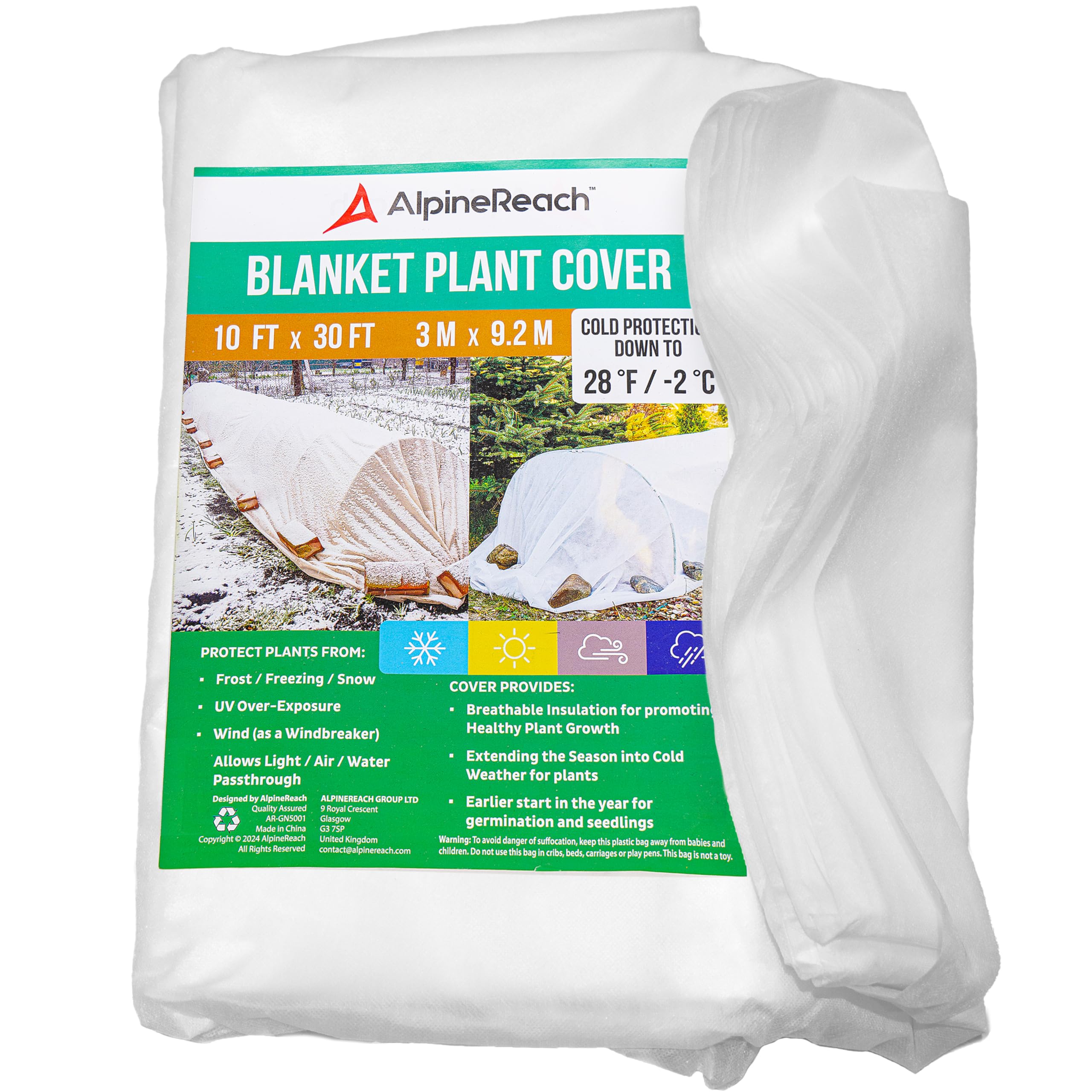
A 1.2 oz blanket that handles extreme swings — from 28°F frosts to winter UV scorch.
AlpineReach built this cover to do two things at once: protect against freezing temperatures and shield plants from unexpected winter sun exposure that can burn leaves. The 1.2 oz/yd² fabric creates an insulating microclimate while remaining breathable enough to let light, air, and water reach the soil. At 10 x 30 feet, it covers a large area, and the material is thick enough to withstand the thorns of roses — one owner noted the fabric did not tear when it snagged. Plant protection is the most-praised aspect by a wide margin, with over 50 owners giving it top marks for results in actual freezing conditions.
A buyer in north central Texas reported that this blanket, paired with spiral stakes, saved all of their Indian Hawthorns during a single-digit freeze — the plants remained green and sunlight still penetrated the weave. Another in Wyoming used it to protect bulbs, tulips, and roses from April freezes in the mid-20s and 8-inch wet snow. The quality score (over 30 mentions) backs up the material feel. Still, durability and material thickness receive mixed feedback: some owners say it is not as thick as they hoped, and a few report the fabric tearing under heavy wind. The 1.2 oz weight is good for typical Zone 6-8 winters, but like other mid-weight covers, it is not rated for prolonged arctic events without a frame.
If you face both frost and sunny winter days that can burn leaves, this dual-purpose cover saves you from buying two separate products.
Two-season strength
- Plant protection (58 mentions) and quality (34 mentions) are the top-rated aspects — real confidence from owners
- Withstood single-digit freezes in Texas and mid-20s temps in Wyoming
- UV protection prevents sunburn scorch during unexpected winter sun — a rare feature at this weight
Watch these points
- Durability feedback is mixed — proper anchoring is essential to avoid wind tears
- Material thickness disappointed a few owners who expected more heft at 1.2 oz
- Not designed for standing water — requires good drainage or staking to keep fabric off wet soil
Best fit if: Your winters bring a mix of freezing nights and sunny days — the UV protection is not marketing fluff here, it genuinely prevents leaf burn.
skip it if: You need a true heavy-duty blanket for weeks of sub-20°F weather without a hoop house.
5. Garutom 1.1 oz Plant Covers Freeze Protection

Light on the wallet, light on the plants — 85% light transmission with dependable frost protection.
The Garutom cover weighs in at 1.1 oz/yd², a middleweight that transmits 85% of available light — enough for winter vegetables and spring seedlings to keep growing actively. The non-woven polypropylene fabric is UV-stable and easy to cut with scissors to fit any garden shape. Available in three sizes (8 x 24 ft, 10 x 33 ft, and 10 x 50 ft), this is one of the more size-flexible options in the lineup. At 15.7 ounces for the 10 x 33 ft version, it is also one of the lightest covers for its area, making draping and repositioning easy.
Frost protection is the standout feature here — over 50 buyers highlight it, and the function and value scores are both strong. A Pacific Northwest owner used it through fall rains to extend pepper growing into November without tearing, and a Texas gardener confirmed it saved vegetables during freezing nights and folded up for storage afterward. Several owners note this cloth is not water-resistant, which is actually a benefit: you can water your garden right through the material without lifting it. The mixed feedback on durability and thickness is fair — this is not a heavy-duty blanket, and a few owners found the fabric thinner than expected. But for the price and the range of conditions it can handle (from frost to summer sun shield), it is a strong value pick.
For gardeners who need a single cover for most of the year and are willing to handle the heaviest freezes separately, this one earns its spot.
Best for budget-conscious growers: The Garutom covers a lot of ground for the money — literally — and the 85% light transmission means you can leave it on during the day without sacrificing growth.
Not a hard-freeze blanket: Durability is mixed; this cover is best suited for light to moderate frost protection and insect barrier duty, not weeks of arctic temps.
6. Homoda 1.2 oz Frost Blankets for Outdoor Plants
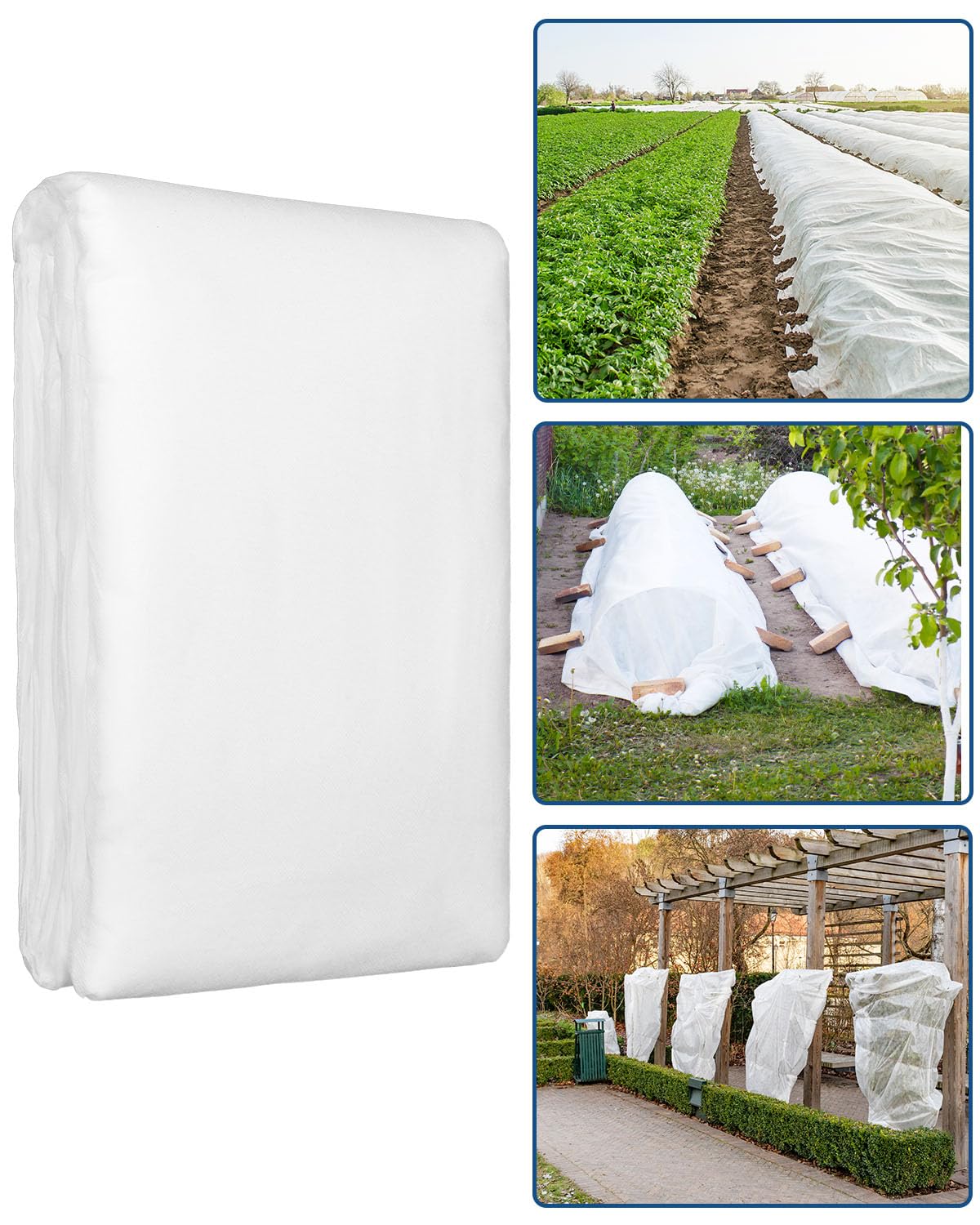
A solid 1.2 oz blanket that leans into durability — UV-stabilized and built for multiple seasons.
Homoda markets this as a thicker-than-average option, and at 2.2 pounds for the 10 x 30 ft size, the material has a reassuring heft. The upgraded polypropylene fabric (1.2 oz/yd²) incorporates anti-UV technology for stability in sunlight, and the blanket is designed to be draped, wrapped, or supported with a hoop. It is not water-resistant — which again is a feature for overhead watering — and there is no zipper or closure, just a straight drape-and-secure system.
Over 550 buyers rate this highly, and the customer consensus praises the quality and ease of use. A Michigan owner used it on raised beds with non-LED Christmas lights underneath for added warmth and reported everything survived the winter. Another owner in colder climates noted the material is strong and thick, protecting perennials and trees from extreme cold when wrapped or staked. The Homoda cover does have a limitation: it is rated for short-lived freezes, not prolonged arctic events. One owner confirmed it worked great for overnight lows, but 5 days of below-freezing weather proved too much, and the plant inside died. That is a realistic constraint for any 1.2 oz blanket — it buys you a few degrees, not a full climate relocation.
If you need a dependable everyday cover for typical Zone 6-7 winters and you value ease of spreading and staking, this is a confident pick.
Owners appreciate most
- Good quality material that is easy to spread, wrap, or stake over raised beds
- UV-stabilized to resist sun damage — holds up across seasons
- Works well with string lights or other low-watt heat sources for added warmth
Limitations to know
- Designed for short-duration freezes — prolonged sub-freezing temps can overwhelm it
- 1.2 oz weight is best for light to moderate frost, not deep winter in Zone 4
- No zipper or drawstring — relies on soil, stones, or staples for anchoring
Choose this if: You rely on intermittent frost protection through fall and spring and want a blanket that stays intact after multiple uses.
Look elsewhere if: Your garden faces weeks of single-digit lows — this cover is not built for that without a heated hoop house.
7. Dalen Harvest Guard Freeze Protection Plant Cover

The lightest cover here — best for seed starting, grass germination, and lightweight pest barriers.
The Harvest Guard is a different animal. At 5 feet wide and 25 feet long, it is narrower and shorter than the other covers, and the non-woven fabric weight is not listed — a sign that this is designed for floating over crops without support, not for standing up to heavy snow or hard freezes. It is made in the USA using materials from US suppliers, which matters to some buyers. The primary role is seed germination and season extension: trap heat and moisture to get seeds sprouting faster, protect tender seedlings from birds and insects, and keep grass seed from being eaten before it roots.
This cover earned a cult following among owners who use it year-round. A Northern California gardener reported that it enables year-round lettuce production, handling both deep freezes and 100°F heat without breaking down. Another owner used it to finally get grass to grow after birds kept eating the seed — the fabric solved the problem immediately. A Texas gardener saw rabbits avoid covered areas entirely. The caveat is that the fabric is thin and tears more easily than heavier blankets — a few owners mention ripping at corners where it was stapled during high winds. Using hoops and a 2×4 frame helps prevent this.
For seed starting, grass repair, and lightweight pest protection, the Harvest Guard is a specialized tool that does its job exceptionally well. Just do not expect it to handle a hard freeze solo.
Perfect for seed starters: If your main goal is getting grass to grow or protecting a fall lettuce patch from birds, this is the easiest tool for the job at just 6.4 ounces.
Not a frost blanket: The thin fabric tears in strong winds and offers minimal freeze protection — treat it as a lightweight season extender and bug net, not a winter survival blanket.
8. Cookmaster Ultra Fine Mesh Garden Netting

60 mesh per inch means zero bugs, birds, or squirrels — this is protection by exclusion, not warmth.
This product flips the script completely. Where every other cover in this list traps heat, the Cookmaster netting focuses purely on keeping pests out. The polyethylene mesh has 60 openings per inch — fine enough to block mosquitoes, aphids, and flea beetles while still allowing air, water, and light to reach the plants. The roll is 10 feet wide and 33 feet long, and the material is translucent so you can check on your crop without lifting the net. A review voice sums it up: “Successfully keeps squirrels and rabbits out of vegetable garden when attached to PVC with clips and stakes.”
Owners find the quality good and the bulk value impressive, but the most instructive feedback comes from the aspects: durability and thickness are flagged as mixed. The net is thin and tears more easily than fabric covers — one owner found it nearly impossible to cut with scissors and recommends sharp shears. Another noted that harvesting vegetables through the net is cumbersome because you have to lift and re-secure it. But for what it is designed to do — keep winged and furry pests off your greens — it works. The lack of hems means you can cut it into any shape or combine multiple pieces for a custom fit. One creative owner even used it as a sukkah wall.
If your garden problem is pests rather than cold, this is the right tool. Just do not ask it to do frost duty.
What it does best
- 60 mesh per inch blocks insects, birds, squirrels, and rabbits effectively
- Breathable mesh lets full sunlight and water through — no growth penalty
- One big no-hem panel can be cut to any size or shape without fraying
Real downsides from owners
- Thin material tears easily — handle gently and avoid sharp tools near it
- Harvesting requires lifting the entire panel, which gets tedious
- Near-impossible to cut with standard household scissors — use sharp fabric shears
Buy this if: Birds, bugs, or squirrels eat your crops before you do — this mesh stops them cold without any chemicals.
pass on it if: You need frost protection — this is netting, not a blanket, and offers no freeze defense whatsoever.
Understanding the Specs
Fabric weight (oz/yd²)
This is the single most important spec for any garden row cover. It tells you how much cold a blanket can hold off. A 0.9 oz/yd² cover provides a few degrees of protection and lets in the most light. A 1.2 oz/yd² blanket is the standard for moderate frosts. At 1.5 oz/yd² or above, you are buying serious cold protection — but you also block more sunlight, so use these for short bursts or hardy winter crops. Always match the weight to your typical overnight low.
Light transmission (percentage)
This spec tells you how much sunlight reaches your plants through the fabric. A cover transmitting 85% of light (like the Garutom 1.1 oz) is great for winter greens that still need to grow. Heavier blankets around 1.5 oz and above block more light, so they are best used for short-term freeze protection or crops that do not need full sun. If the data does not list a light transmission number, expect that heavier fabrics let less light through.
Mesh count (for netting)
When you see a mesh count like “60 mesh per inch,” it refers to the number of openings per linear inch — higher numbers mean finer netting that blocks smaller insects. Standard insect netting is around 30-40 mesh, while 60 mesh stops thrips and aphids. The trade-off is that very fine mesh can reduce airflow slightly and makes watering harder. Use insect netting when pest exclusion is your main goal, not frost protection.
UV protection / stabilization
Covers left in the sun for weeks or months need UV stabilizers to prevent the fabric from breaking down into dust. A UPF (Ultraviolet Protection Factor) rating like UPF 30+ means the fabric blocks the vast majority of UV rays, extending its life across multiple seasons. Without UV stabilization, a polypropylene row cover can become brittle after one summer of exposure. This is a key spec if you plan to leave the cover in place through spring and summer.
FAQ
Can I leave a garden row cover on during the day?
What is the difference between a floating row cover and a frost blanket?
How do I anchor a row cover so it does not blow away?
Will a row cover keep my plants alive in a hard freeze?
Can I use a row cover as a shade cloth in summer?
How do I clean and store a row cover so it lasts?
Is it better to get a wider cover like 10 ft or a narrower one like 5 ft?
Can I cut a row cover to fit an odd-shaped garden bed?
Which fabric weight do I need for Zone 7 versus Zone 4?
Final Thoughts: The Verdict
For most gardeners, the best garden row covers winner is the JUNKOGO 10×50 FT Floating Row Cover because it covers the most ground for the money, works through three seasons, and earned consistent real-world proof through multiple freezes. If you want the thickest brute-force protection against hard freezes, grab the FUZE 1.77 oz/yd² blanket. And for pest exclusion above all else — no birds, no bugs, no squirrels — the Cookmaster Ultra Fine Mesh Netting is the specialist that delivers without chemicals.
How We Picked
We do not accept paid placement. Every pick is matched to a real buyer and a real use-case; we do not hands-on test units.
Sources & Methodology
Specifications: manufacturer listings and product documentation. Review insights: verified customer reviews, as of July 2026. Pricing: not shown on this page (it changes often); check the current price via the retailer link.
As an Amazon Associate, Lawn Gear Lab earns from qualifying purchases. This does not affect which products we feature.