
Specs are compiled from manufacturer listings and verified buyer reviews and can change over time — please confirm the key details on the product page before buying.
Starting seeds indoors should feel like a superpower, not a battle with cracked plastic and dried-out soil. The right tray or kit keeps humidity steady, roots happy, and your windowsill schedule simple — skip the wrong one, and you spend spring nursing leggy sprouts instead of celebrating them.
I’m Rikta — the founder and writer behind Lawn Gear Lab. This guide is built by comparing the manufacturers’ published specifications and the patterns across verified customer reviews, so you get each pick’s real strengths and trade-offs instead of marketing spin.
Whether you are looking for your first humidity dome or a complete lighting setup, this roundup of the best garden seed starter options cuts through the noise to help you match the right product to your space and ambition.
Our Picks at a Glance

How To Choose The Best Garden Seed Starter
Every seed starter solves one core problem: giving a tiny seed the warm, moist, stable environment it needs to wake up. But the best choice for you depends on how many trays you plan to fill, where you put them, and if you want to re-use the setup next season.
Dome Thickness & Material
Standard humidity domes are thin and crack within a season. A heavy-duty dome, like the 3mm thick clear plastic on the AC Infinity pick, holds its shape, lets light through without yellowing, and survives being stacked in off-season storage. If you plan to start seeds every spring, paying extra for thick-walled plastic saves money over time.
Cell Count & Configuration
More cells does not automatically mean a better setup. A 120-cell tray packs many starts into a small footprint, but the individual cells are tiny — you will need to transplant sooner. Larger 6-cell trays give roots room to sprawl and let you pop out individual seedlings without disturbing neighbors. Think about what you are growing: leafy greens tolerate tight cells, tomatoes and peppers prefer elbow room.
Self-Watering vs Manual
A self-watering tray uses a capillary mat (a fabric wick) and a bottom reservoir to pull moisture up into the soil evenly. That removes the risk of washing away seeds with a heavy pour from above. Manual trays rely on you misting or bottom-watering on a schedule — perfectly fine if you check daily, but a self-watering system is a true low-maintenance advantage during busy weeks.
Quick Comparison
| Model | Best For | Dome Thickness | Cell Count | Special Feature | Amazon |
|---|---|---|---|---|---|
| AC Infinity Humidity Dome★ Best Overall | Heavy-Duty Germination | 3 mm | 40 (5×8) | Height Extension Panels | Amazon |
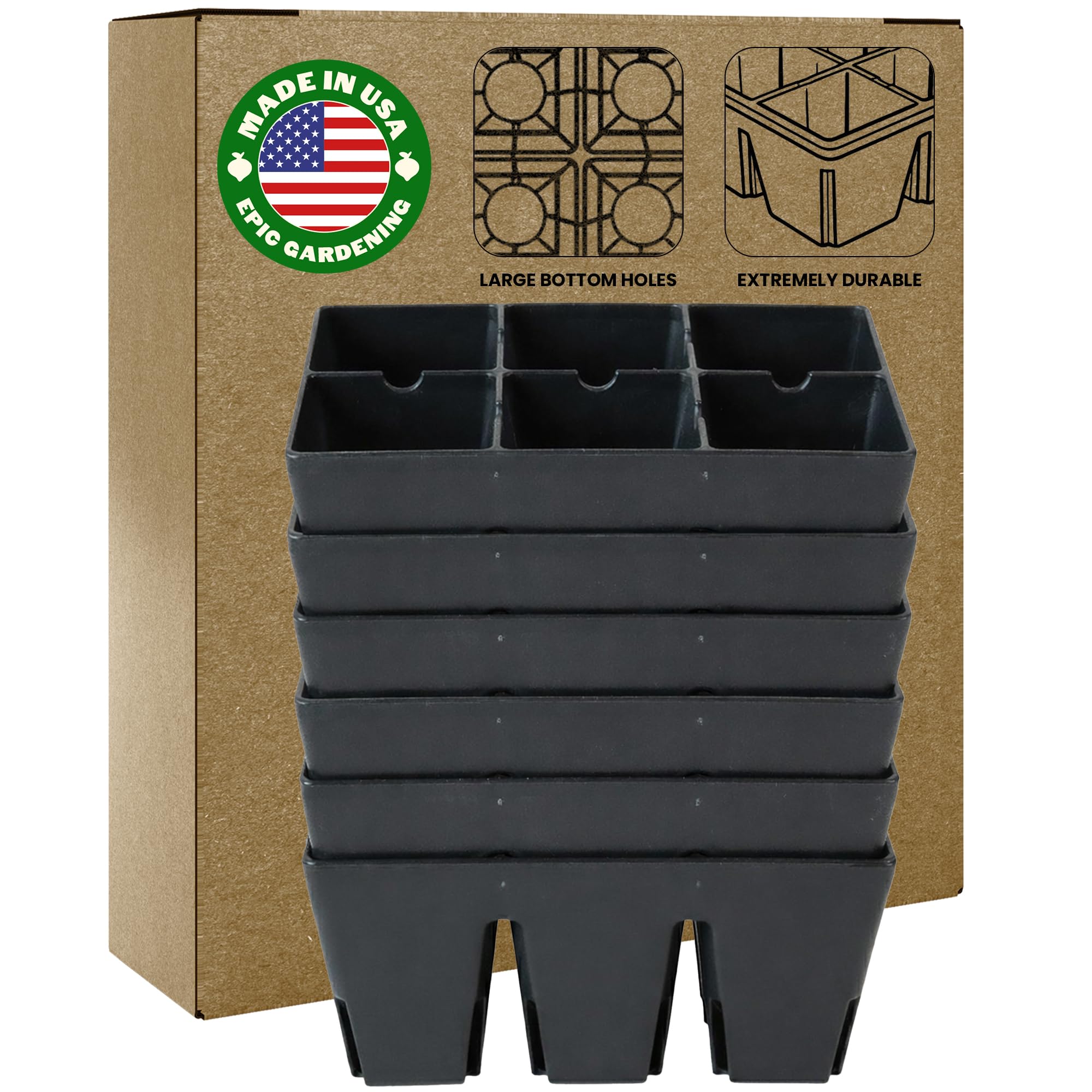
| Epic Gardening 6-Cell TraysTop Performer | Easy Transplanting | — | 36 (6 x 6 trays) | Air Pruning Slots | Amazon |
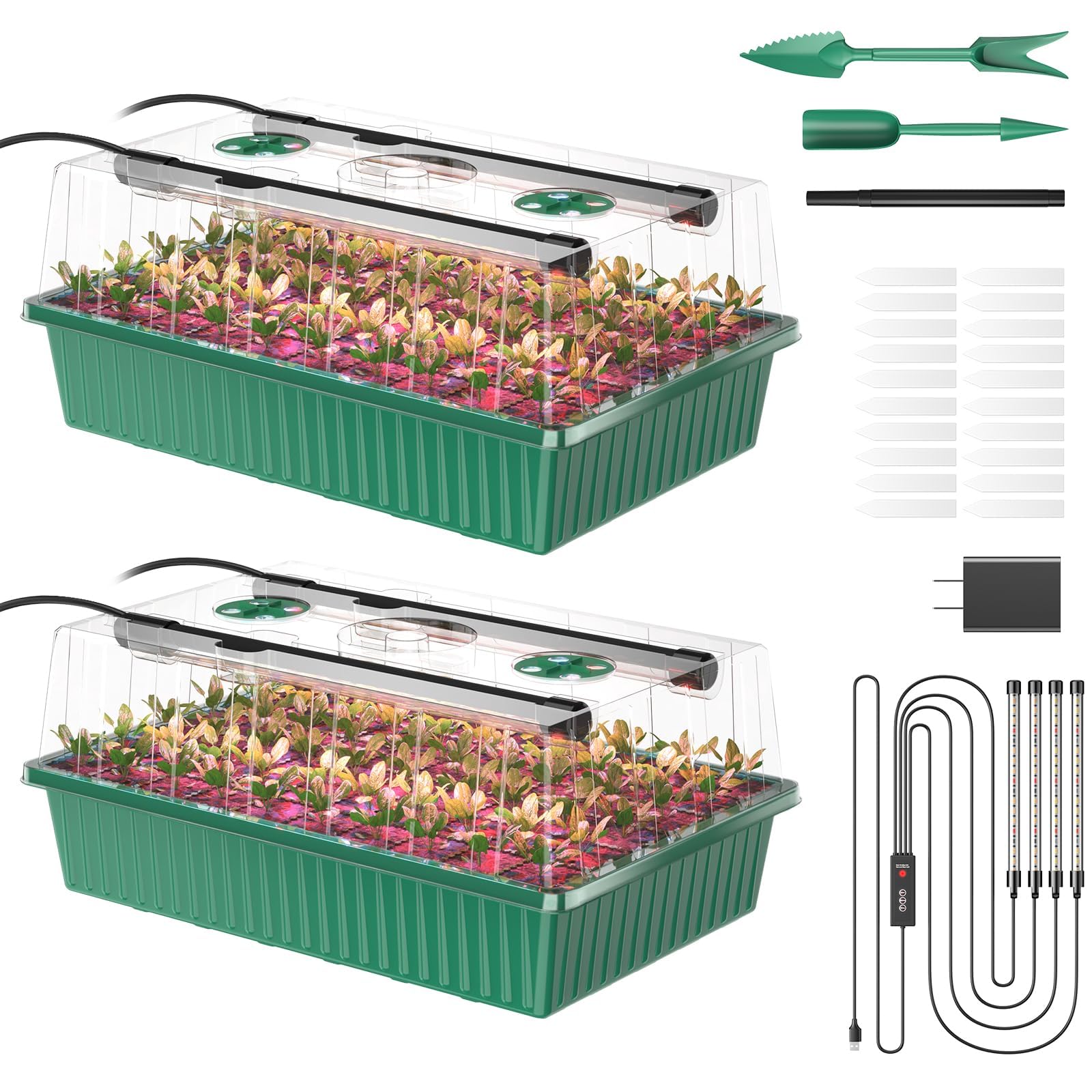
| Guioiby 120-Cell KitBest Value | All-in-One with Lights | — | 120 | Full-Spectrum LED / Timer | Amazon |
| SOLIGT Self-Watering 3-Pack | Hands-Off Watering | — | 72 (3 x 24) | Capillary Mat / Stands | Amazon |
| YJXFON 80-Cell Kit | High-Volume with Lights | — | 80 | Full-Spectrum LED / Timer | Amazon |
| Coconut Oasis 1440-Cell Set | Massive Seed Starting | — | 1440 (240 x 6-cell) | Flexible Soil Plugs | Amazon |
| Lush&Dew Medicinal Herb Chest | Seed Variety Collection | — | 40 Varieties | Wooden Storage Box | Amazon |
| Gardzen 10-Pack No-Hole Trays | Bottom Watering Trays | — | N/A (trays only) | No Drain Holes | Amazon |
| June Fox 60-Pack Pots | Individual Pot Transplants | — | 60 Pots + 60 Labels | Fits 18 per 1020 Flat | Amazon |
In‑Depth Reviews
1. AC Infinity Humidity Dome, Heavy-Duty Germination Kit
Our pick — over 4.5★ from 550+ verified ratings; the strongest balance of quality and price.
The single toughest dome on the market that serious growers finally stop replacing every season.
The defining trait here is the 3 mm thick dome — most kits use brittle plastic half that thickness. That heft means the dome resists cracking when you lift it, stays transparent for light penetration, and seals snugly against the drip tray. It supports up to 40 seedlings in a 5×8 cell pattern, and a built-in drip tray underneath prevents water from leaking onto your table.
What truly sets this apart from the SOLIGT and Guioiby kits below is the optional height extension panels. Seedlings that stretch tall before transplanting often get crushed under a standard dome — these panels raise the ceiling so leggy tomato and pepper starts stay upright. The multiple adjustable vents let you fine-tune airflow as the seedlings mature, gradually acclimating them to room conditions before they hit the garden.
Why You Grab This
- 3mm thick dome outlasts flimsy competitors and stays clear season after season
- Height extension panels save tall seedlings from being crushed under a short cap
- Drip tray is sturdy and leak-proof, protecting shelves and windowsills
What to Watch
- Can push 99% humidity inside if vents are left fully closed — requires daily airflow management
- Price feels steep compared to basic kits, but the build quality justifies the cost for repeat use
Your pick if: you start dozens of seeds every spring and want a kit that survives years of handling without cracking.
Look elsewhere if: you only start a few seeds once and want the cheapest possible option — this one pays off with repeated use.
2. Epic Gardening Reusable Seed Starter Tray (6-Pack)
A modular six-cell tray that makes transplanting a one-finger job with zero root damage.
Each 6-cell tray (you get six trays in the pack) features large finger holes on the bottom of every cell. You simply push gently from underneath, and the entire root ball pops out intact — no digging, no tearing. This design eliminates the transplant shock that slows down growth after moving starts to bigger pots, and owners note it is noticeably easier than prying seedlings out of standard trays.
The cells include air pruning slots on all four corners. Those slots encourage roots to self-prune when they hit open air, which prevents circling and promotes a denser, healthier root system. Each cell measures 1 9/16 inches wide and 2 1/4 inches deep, giving small to medium seeds a generous soil volume. The trays are made from UV-treated recycled plastic, so they resist becoming brittle under a grow light.
The honest trade-off reported is the compact cell size — owners mention it works great for small and medium seeds, but larger seedlings may need up-potting sooner than in a deeper 3-inch pot. The six trays fit snugly into a standard 10×20 nursery flat, though the flat is not included with this purchase.
Transplant champion: If you hate disturbing delicate roots during transplanting, this tray system removes the stress — literally one finger push and the seedling is free.
Reach for these if: you value zero-transplant-shock removal and want UV-stabilized trays that last for many seasons.
Skip these if: you need large, deep cells for long-rooted plants like tomatoes without a second up-potting.
3. Guioiby 120-Cell Seed Starter Kit with Grow Light
An all-in-one kit that stuffs a grow light and humidity dome into a single compact package.
Inside the box you get 2 seed trays (each with 60 cells), 2 clear base trays, 2 humidity domes, 4 adjustable grow light bars, a smart control system, 20 plant labels, 2 gardening tools, and a pen — practically everything except soil. The lights offer 5 brightness levels and 3 timer settings (3 hours, 6 hours, or 12 hours), so you can match the photoperiod to whatever you are sprouting without buying a separate lamp.
The domes feature adjustable vents, which let you dial in airflow as the seeds germinate. The base trays are clear, so you can see how much water has collected in the bottom. A feature owners specifically praise is the silicone cell bottoms — they are flexible, which makes pushing seedlings out far easier than rigid cell trays, and they are reusable across seasons.
A minor quibble from the reviews: the air valves on the dome can be tricky to snap into place on the first try. Some owners also note the dome is quite tall for typical seedlings, which means it takes up more vertical space on a shelf, but that same height gives leggy sprouts room to grow before hitting the top.
Lights included: The 4 full-spectrum LED bars and built-in timer make this a true plug-and-play station for anyone who does not already own grow lights — just add water and seeds.
Best for: beginners who want a complete indoor setup and appreciate having the grow lights integrated so they do not have to buy separate fixtures.
Skip if: you already own good grow lights — you are paying for the lighting hardware here, and a simpler tray-only kit would save money.
4. SOLIGT Self Watering Seed Starter Trays (3-Pack, 72 Cells)
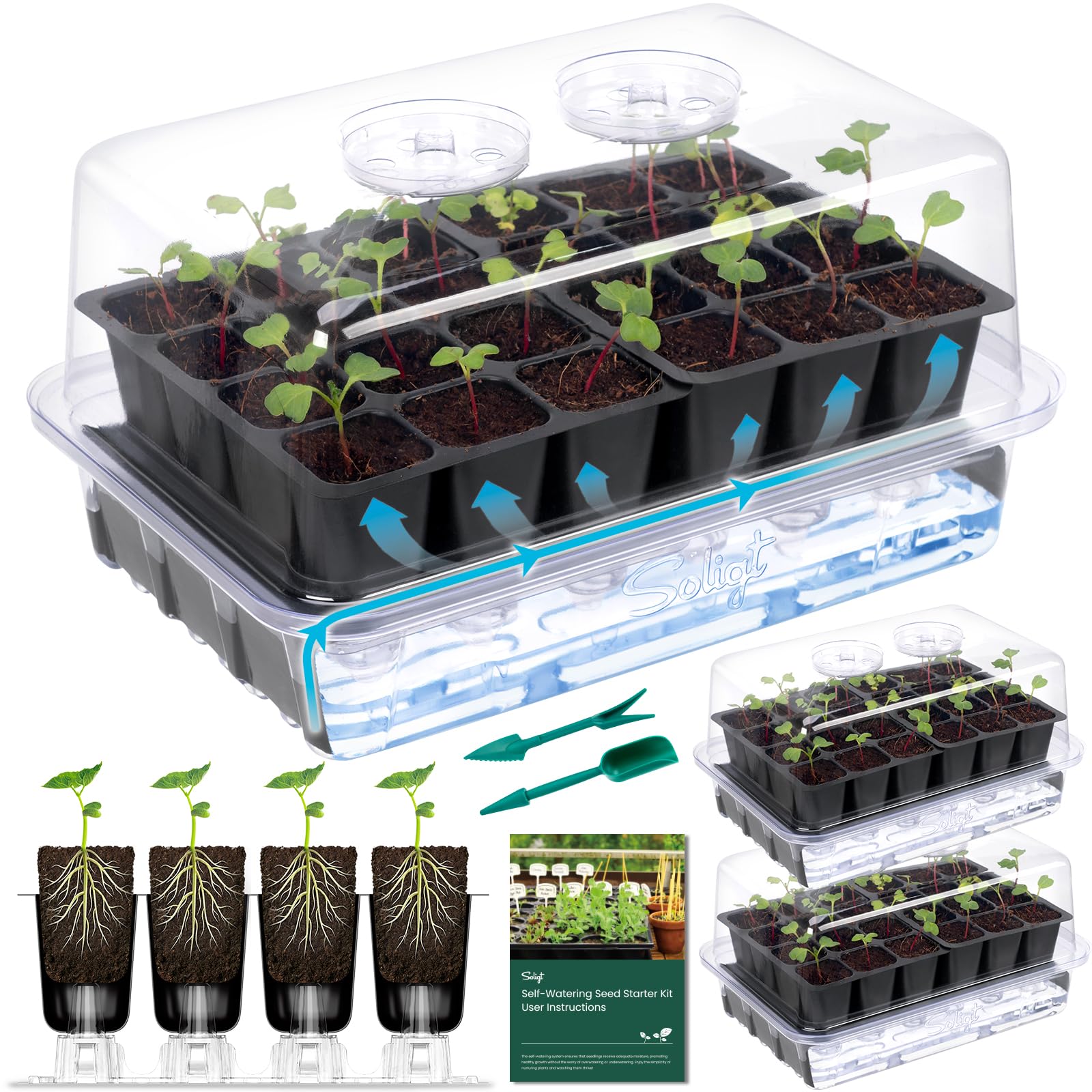
A self-watering system that pulls water from a reservoir so you barely touch a spray bottle.
Each of the three packs includes a clear bottom tray, a humidity dome, two 12-cell trays (24 cells per pack), two support stands, a capillary mat, and 100 plant labels. The capillary mat wicks water from the reservoir up into the soil cells evenly — you fill the bottom tray to about 3/4 inch deep, and the mat does the rest. Buyers report that this design holds moisture for days without the soil getting waterlogged on top.
The support stands double as soil block pushers, so you can compact your seed-starting mix before dropping seeds into the cells. Each cell measures 1.5 by 1.5 inches with a 2.17-inch depth, which gives roots a solid start. The trays are made from extra-thick plastic — reviewers mention they have not warped or cracked, unlike the flimsy trays some of them replaced.
The honest catch is that about 40% of seeds sprouted in 5 days for one owner using coconut coir and grow lights, which is fine but not lightning-fast. A few reviewers had to tape the dome lids to improve moisture retention, suggesting the seal could be tighter. Still, for anyone who travels or forgets to water, this hands-off system is a major upgrade over manual bottom-watering.
Low-maintenance winner: The capillary mat and transparent reservoir make this the easiest kit for gardeners who cannot mist seedlings twice a day.
Choose this if: you want a low-maintenance watering system and appreciate the extra-thick plastic that withstands repeated use.
Look elsewhere if: you need a perfectly airtight dome seal — the snap-fit is decent but not 100% humidity-tight for long periods.
5. YJXFON 80-Cell Seed Starter Kit with Grow Light (2-Pack)
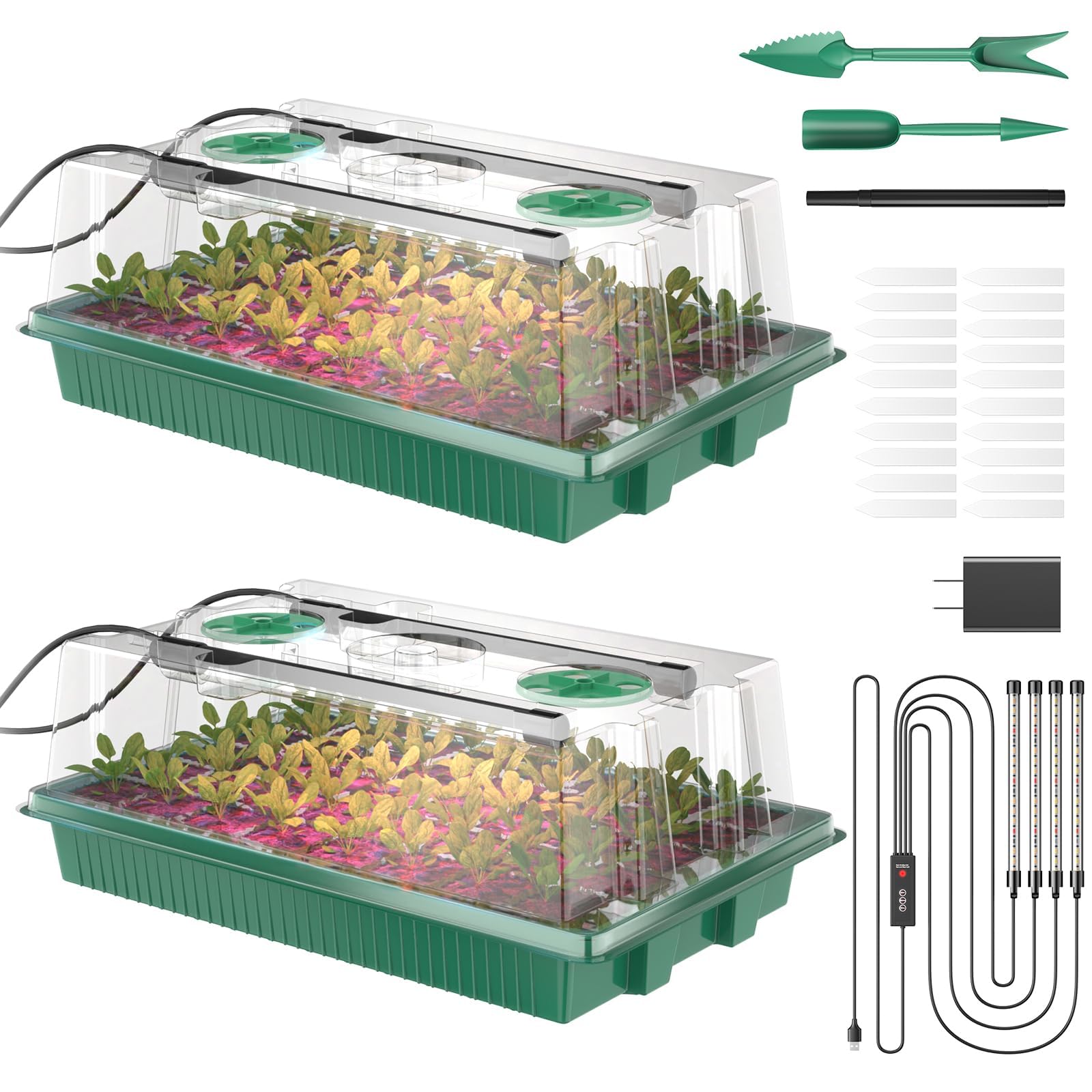
A 2-pack setup packing full-spectrum lights and 80 cells for the serious indoor seed starter.
This kit includes 2 seedling trays (40 cells each), 2 humidity domes, 4 plant grow lights, a smart control system, 2 base trays, 20 plant labels, 2 plant tools, and a pen. The full-spectrum LED strips mimic natural sunlight, and the control system offers adjustable brightness and timer settings — similar to the Guioiby kit above, but with 80 cells instead of 120, which gives each cell slightly more room for root development.
Owners consistently praise the build quality — the trays are cited for their sturdiness, especially the silicone-like bottom sections that let you push seedlings out without tearing roots. The domes have adjustable air vents, and the clear outer tray lets you see water levels at a glance. The high dome top provides extra clearance for plants that get leggy before you are ready to transplant.
A few owners mention the lights are not as strong as a dedicated grow fixture, so if you are starting light-hungry plants like tomatoes, keep the lights close — within a few inches of the dome. The snug-fitting lid can also be a little hard to open in tight shelf spaces, though this is a minor ergonomic complaint rather than a structural flaw.
All-in-one volume: With 80 cells, integrated lighting, and a timer, this is a strong turnkey solution for anyone starting a full windowsill nursery.
Pick this if: you need a complete lighting and tray system for under and want enough cells for a sturdy indoor nursery.
Skip if: you already have strong grow lights — the light bars here are convenient but not powerful enough to be your sole light source for high-light plants.
6. Coconut Oasis 1440 Cells Seedling Starter Trays (240, 6-Cell Trays)

A colossal 1440-cell supply that fits 1020 trays and keeps large projects moving all season.
This is not a dome or kit — it is a bulk pack of 240 individual 6-cell trays designed for high-volume seed starting. The flexible, durable soil plugs make it easy to pop out individual sprouts when it is time to transplant. The cells are on the smaller side, so you will want to transplant before roots get crowded, but that compact size lets you start hundreds of varieties in a small footprint.
The trays fit standard 1020 nursery flats after you separate them, which is the same dimension used in professional greenhouses. Owners mention the plastic is thin but holds its shape well, especially in hot conditions — one report notes they survived Texas heat across three seasons without falling apart. The pack includes 10 plant labels for organization.
The honest limitation is cell size: some growers wish for larger, rectangular cells that reduce the need for frequent watering and give roots more room to grow before transplanting. If you only need to start a dozen plants, this massive pack will leave you with trays for years — it is really aimed at ambitious gardeners or community planting projects.
Bulk powerhouse: At over 240 individual trays, this set is the most cost-effective way to start a huge garden from seed, especially if you already own 1020 flats.
Best for: serious gardeners who start hundreds of seeds each spring and want a reusable solution that matches standard greenhouse trays.
Not for: small-space or casual growers — you will be storing trays for years before you use them all.
7. Lush&Dew Ancestral Apothecary Medicinal Tea Herb Seed Chest

A beautifully curated seed collection in a wooden chest designed for the tea and herb enthusiast.
This is a seed variety collection rather than a tray or dome kit. Inside the reusable wooden storage box you find 40 labeled acrylic containers filled with Non-GMO heirloom herb seeds — oregano, catnip, lavender, basil, dill, calendula, motherwort, chamomile, and more. The total count exceeds 36,000 seeds, with most varieties containing over 100 seeds each. The chest includes a booklet with growing and usage recommendations.
Owners rave about the presentation: each container has a picture of the mature plant, making it easy to identify seedlings when they emerge. The sturdy wooden box with a clasp feels substantial and works well as a gift — several buyers mention giving it to avid gardeners who were thrilled with the variety and packaging. The seeds can be planted in USDA Zones 3 through 11, so they work across nearly all climates.
The most common honest feedback is that germination rates vary per variety. A few customers note that some seeds did not sprout, which can happen with any seed batch, but the quality rating among owners remains positive overall. This is a seed library, not a starter system — you still need trays, soil, and a dome to germinate them successfully.
Curation over quantity: The 40-variety herb focus is excellent for tea lovers and natural remedy enthusiasts, and the wooden storage box is genuinely gift-worthy.
Ideal for: gardeners who want a diverse herb library in a beautiful box, or as a thoughtful gift for someone already into medicinal plants and teas.
Skip if: you only need trays and domes to start vegetable seeds — this is a seed-only collection, not a growing kit.
8. Gardzen 10 Pack Seed Trays (No Drain Holes)
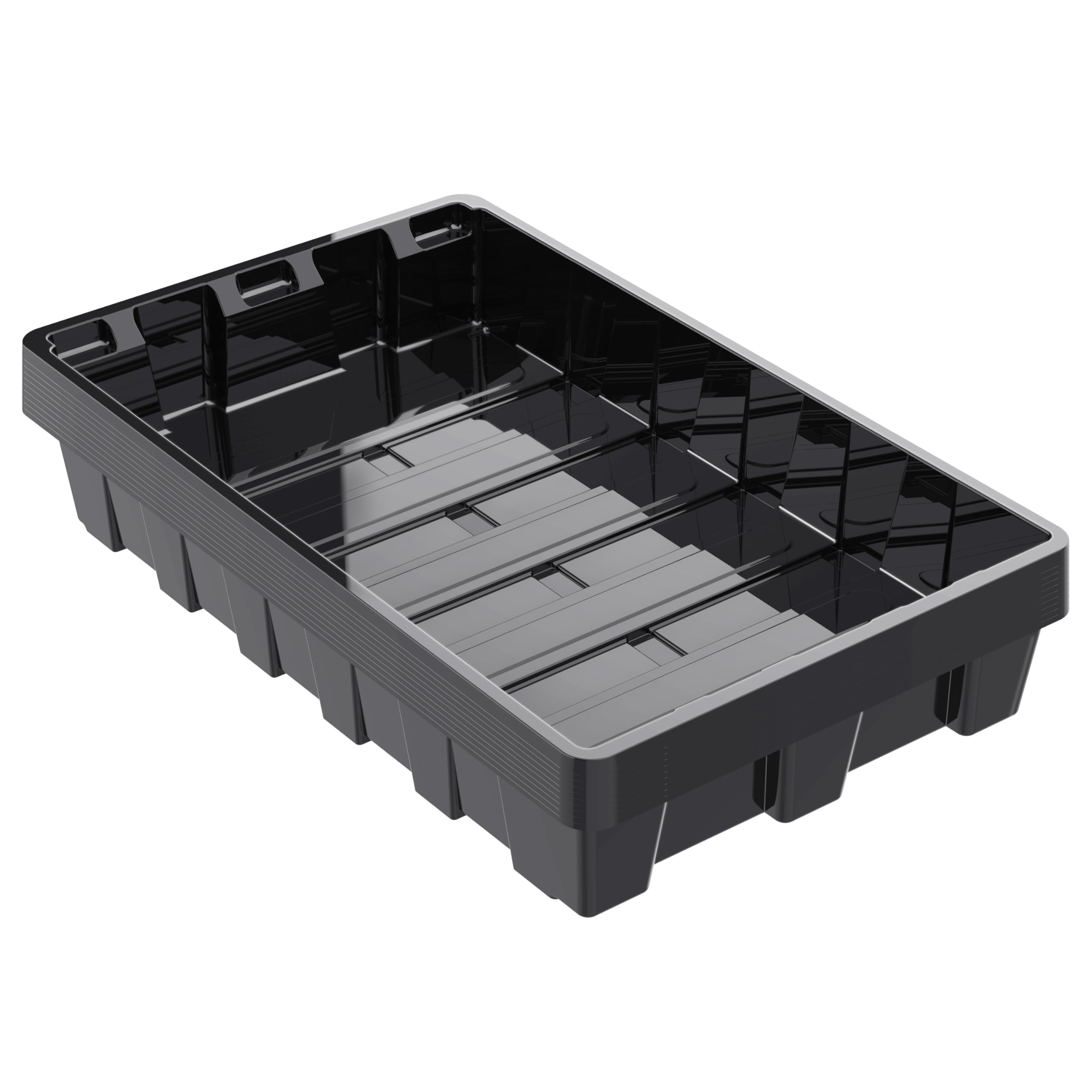
A simple, solid-bottom tray for catching drips and bottom-watering — nothing fancy, just functional.
Each tray measures 14.5 inches long by 9 inches wide by 1.85 inches high and is made from plastic with no drainage holes. That makes these ideal as drip catch trays under mesh-bottom seed flats, or for bottom-watering microgreens and small pots. The lack of holes means water pools inside, so you can let pots sit in a shallow reservoir without staining your shelf. Buyers confirm they are large enough to fit six standard 6-inch pots.
Opinions are mixed on the plastic thickness. Some buyers call them sturdy and well-made, using them for bottom-watering and transferring plants with confidence. Others describe the plastic as flimsy and brittle, noting that the trays crack if flexed too hard. The truth lies somewhere in the middle: they are inexpensive trays that work well as bottom-watering saucers, but they are not built for rough handling or heavy soil loads. For the price of a 10-pack, they serve their purpose without requiring a big investment.
Utility value: If you need a bunch of no-hole trays for watering overflow or microgreen production, this 10-pack is tough to top on a per-tray cost.
Get these if: you need multiple bottom-watering catch trays and treat them gently — they are perfect for light-duty use under pots.
Pass if: you plan to fill them with heavy soil and move them around frequently — a sturdier tray will survive the handling better.
9. June Fox Square Nursery Pots (60-Pack with 60 Labels)

Flexible, square 3.3-inch pots that fit a perfect 18 per standard flat and last multiple seasons.
These are individual nursery pots rather than a connected tray system. Each pot is 3.3 inches square, made from flexible plastic that makes it easy to squeeze the sides and slide out the root ball without tearing delicate roots. The square shape means they pack tightly together without wasted space — 18 pots fit snugly into a standard 1020 flat, so your shelf footprint stays efficient.
Each pot includes 8 recessed drainage holes that sit slightly raised off the flat bottom, which improves airflow under the pot and prevents roots from sitting in a puddle. The pack comes with 60 plastic plant labels that are waterproof and easy to write on. Owners consistently praise the durability, calling them a multi-year investment that survives being left outdoors over winter without cracking.
The only recurring complaint is an initial odor when the pots are fresh out of the package — reviewers describe it as a slight ashtray or plastic smell that dissipates after a day or two outdoors. This is a minor cosmetic issue that does not affect the pots’ performance. At this price for 60 pots, they represent strong value for anyone who prefers individual pots over connected cell trays.
Perfect fit: The square shape and 8 drainage holes make these pots practical for up-potting from seed cells into individual containers before moving outside.
Choose these if: you like individual pots for transplanting and want a thick, reusable set that fits 18 per standard flat — the labels are a nice bonus.
Skip if: an initial plastic smell bothers you, or if you prefer connected cell trays instead of individual pots for your workflow.
Understanding the Specs
Dome Thickness
Measured in millimeters, this tells you how durable the clear plastic cover is. A 3 mm thick dome (like in the AC Infinity) resists cracking when you lift it and stays transparent for years. Thin domes (around 1 mm) yellow, warp, and crack after a season or two under a grow light.
Self-Watering vs Manual
A self-watering tray uses a capillary mat (a fabric wick) and a bottom reservoir to pull moisture up into the soil. You fill the tray to a marked level, and the mat handles the rest. Manual trays need you to bottom-water by pouring water into the tray yourself or misting from above — which is fine for daily oversight but risky if you skip a day.
Air Pruning Slots
These are small openings at the corners or bottom of a cell that expose roots to air when they reach the edge. The root tip senses the drier air and stops growing, which forces the root to branch out into a denser, healthier mass inside the cell. Trays without these slots can let roots circle inside the cell, leading to transplant shock later.
Cell Count per Tray
The number of individual planting pockets in a tray. A 120-cell tray packs many starts into a small footprint but each cell is tiny, so you need to transplant within a couple of weeks. A 6-cell tray gives roots much more room to develop, but the tray footprint is larger per plant. Match cell size to what you are growing: greens handle tight cells, tomatoes and peppers need space.
FAQ
How long do seedlings need to stay under a humidity dome?
Can I reuse my seed starter trays next season?
Should I use a heat mat under my seed starting trays?
What is the best soil mix for seed starting?
How many seeds should I put in each cell?
Do I need a grow light if I have a sunny windowsill?
Will the AC Infinity dome fit a standard 1020 heat mat?
Why do my seed trays always crack after one season?
Can I use the Gardzen no-hole trays for microgreens?
How do I clean the Guioiby grow light bars?
Final Thoughts: The Verdict
Across the board, the garden seed starter winner is the AC Infinity Humidity Dome because its 3 mm thick walls and height extension panels offer a genuinely heavy-duty solution that survives multiple seasons. If you want a complete all-in-one kit with integrated lights, grab the Guioiby 120-Cell Kit. And for a hands-off watering experience, the SOLIGT Self-Watering 3-Pack is the one to reach for.
How We Picked
We do not accept paid placement. Every pick is matched to a real buyer and a real use-case; we do not hands-on test units.
Sources & Methodology
Specifications: manufacturer listings and product documentation. Review insights: verified customer reviews, as of July 2026. Pricing: not shown on this page (it changes often); check the current price via the retailer link.
As an Amazon Associate, Lawn Gear Lab earns from qualifying purchases. This does not affect which products we feature.