
Clearing fallen leaves from your yard does not have to mean hours of raking and bagging. A good yard blower vacuum sucks up leaves, shreds them into tiny pieces, and packs them into a bag, turning a weekend chore into a quick afternoon task. The challenge is picking the one that actually has the suction and mulching power to handle your yard without clogging or leaving half the pile behind.
I’m Rikta — the co-founder and writer behind Lawn Gear Lab. This guide is built by comparing the manufacturers’ published specifications and the patterns across verified customer reviews, so you get each pick’s real strengths and trade-offs instead of marketing spin.
You need a corded workhorse or a cordless battery-powered model, and this deep dive into the best yard blower vacuum options will help you find the right fit for your property and your budget.
How To Choose The Best Yard Blower Vacuum
Before you click “buy,” a handful of specs separate a tool that makes leaf cleanup easy from one that will leave you frustrated. Here is what to focus on.
Air Power: CFM vs. MPH
Think of CFM (cubic feet per minute) as the volume of air the machine moves, and MPH (miles per hour) as the speed at which that air travels. For blowing leaves off a lawn, you want high CFM (350+) to move a wide swath of leaves. For vacuuming, higher MPH helps suck debris up from the ground. A balanced machine offers strong numbers in both.
The Mulch Ratio
This number tells you how much the machine shrinks the volume of leaves. A 16:1 ratio means it grinds 16 bags worth of leaves down into one bag. A higher ratio means less time spent dumping the bag and more time cleaning. Anything 12:1 or higher is good for serious mulching. The material of the impeller (the blade that does the chopping) is also key — a metal impeller handles twigs and acorns far better than a plastic one over time.
Bag Capacity and Design
The collection bag’s size and how easy it is to empty directly affect your workflow. A larger bag means fewer trips to the compost pile, but it also gets heavier as it fills. Look for a bag with a shoulder strap to distribute the weight, and check whether the bag has a zipper on the bottom for quick dumping rather than having to wrestle it off the machine.
Quick Comparison
On smaller screens, swipe sideways to see the full table.
| Model | Category | Best For | Key Spec | Amazon |
|---|---|---|---|---|
| Greenworks 48V | Cordless | Power over large yards | 520 CFM / 12:1 ratio | Amazon |
| BLACK+DECKER BV6000 | Corded | Best value performer | 400 CFM / 250 MPH | Amazon |
| WORX WG509 | Corded | Best mulching power | 18:1 mulch ratio | Amazon |
| WORX WG505.2 | Corded | Direct-to-trash suction | LeafPro system | Amazon |
| PROYAMA 26cc | Gas | No-cord freedom | 412 CFM / 200 MPH | Amazon |
| SOYUS 3-in-1 | Cordless | Convenient cordless kit | 385 CFM / 45L bag | Amazon |
| Makita XBU07Z | Cordless | Compact light duty | 215 CFM suction | Amazon |
In-Depth Reviews
1. Greenworks 48V (24V x 2) Cordless Brushless Leaf Blower/Vacuum

520 CFM — the highest air flow in this lineup — makes the Greenworks 48V (24V x 2) Cordless Brushless Leaf Blower/Vacuum the top pick for anyone with a large yard and heavy tree cover who needs to move massive volumes of leaves in a single pass. The dual 24V batteries (two 4.0Ah packs) provide the runtime for bigger properties, and the included dual-port charger speeds up recharging.
A 12:1 mulch ratio grinds a pile of leaves down to a fraction of its original volume, while the brushless motor delivers quieter, more efficient operation. Buyers report it is a “standout for yard work” and that the vacuum mode “grinds leaves into small bits.” The 240 MPH top speed provides the extra punch needed to shift wet, matted leaves that lower-power machines slide over.
The honest trade-off is weight: at 10.25 pounds, it is the heaviest unit here, and owners mention it “gets a bit heavy as it vacuums up the leaves.” There is no included shoulder strap, which is a miss for a machine this size. If raw power and a complete battery system are your priority, this is the clear winner.
Why it’s great
- Highest CFM (520) in the roundup
- 12:1 mulch ratio reduces leaf volume drastically
- Comes with two batteries and dual charger
Good to know
- Heavy at 10.25 pounds
- No shoulder strap included
- Battery runtime is limited to about 15-30 minutes under load
2. BLACK+DECKER Leaf Blower Leaf Vacuum and Leaf Mulcher 3-in-1, Electric (BV6000)

The BLACK+DECKER BV6000 directly beats the WORX WG509 on pure air power, pushing 400 CFM at 250 MPH compared to the WORX’s 350 CFM and 210 MPH — that is a 14% higher air volume and a 19% faster air speed. For a mid-priced machine, that kind of performance is impressive and means it will clear leaves faster and suck debris up more aggressively. It is also lighter than the WORX, at 8.1 pounds versus 9.7 pounds, making it easier to handle on longer jobs.
The high-impact metal fan (the blade that does the shredding) means you can vacuum up small twigs and acorns without worrying about breaking the impeller. Reviewers praise its strong suction, with one buyer noting they “mulched 1500sf yard leaves into one 40-gal bag after 5-6 empties.” The disposable leaf bag system makes disposal simple — just tie and toss — though you will need to buy replacement bags over time.
Choose the BLACK+DECKER over the top pick if you value a lighter tool and unlimited corded runtime, and you do not want to spend up into the premium tier. Its 2-year warranty and proven reliability from thousands of reviews make it a low-risk, high-value choice.
Where it shines
- Strongest air power in the mid-range (400 CFM, 250 MPH)
- Lightweight at 8.1 pounds
- Metal fan handles twigs and small debris
Worth noting
- Disposable bags are an ongoing cost
- Can be dusty in vacuum mode — wear a mask
- Short power cord requires a heavy-duty extension
3. WORX Trivac 3 in 1 Electric Leaf Blower for Lawn Care (WG509)

For the homeowner whose primary goal is turning massive leaf piles into tiny bags of compost, the WORX WG509 is the machine to beat. Its 18:1 mulch ratio is the highest in this roundup, meaning it shrinks 18 bags of leaves down into one — so you spend far less time dumping the bag and more time cleaning. If you have a yard full of oak, maple, or sycamore leaves that pile up deep, this ratio is a massive time saver.
The metal impeller (the spinning mulching blade) handles the workload without wearing down, and the variable speed trigger lets you dial in the right power for light sweeping or heavy-duty blasting. One reviewer summed it up simply: “reduces two 32-gallon cans to 1/4 can.” The quick-release bag makes dumping easy, and the whole unit weighs 9.3 pounds — manageable for a session of yard work.
The caveat, echoed by many buyers, is that the blower function is the weakest part of this tool — it moves 350 CFM at 210 MPH, which is fine for light debris but falls short against wet or thick leaf mats. This is a machine you buy for its vacuum and mulching, not for heavy blowing.
What stands out
- Best-in-class 18:1 mulch ratio
- Metal impeller for durability
- Variable speed for control
The trade-offs
- Blower is weaker than the competition
- Bag fills quickly despite the high ratio
- Works best on dry leaves only
4. WORX Trivac 3 in 1 Electric Leaf Blower (WG505.2)

The single number that matters most in a blower vacuum is how much it reduces your trips to empty the bag, and the WG505.2 delivers a very strong 16:1 mulch ratio.
What you accept with this model is the same moderate air power as the WG509 (350 CFM, 210 MPH) and a higher weight of 9.7 pounds — 20% heavier than the BLACK+DECKER. Some customers note that the netting can come off during use, which is a minor design flaw. On the plus side, the one-second flip switch toggles between blower and vacuum instantly, making it easy to switch modes mid-job.
If the LeafPro direct-to-can feature sounds like it would change your workflow, this is worth the premium over the WG509. For pure mulching power at a lower price, the WG509 is the better bet.
The upsides
- LeafPro system lets you vacuum directly into a trash can
- 16:1 mulch ratio
- Instant flip-switch mode change
Keep in mind
- Heaviest corded option at 9.7 pounds
- Netting on LeafPro adapter can detach
- Not as strong as the BLACK+DECKER for blowing
5. PROYAMA Gas Powered Leaf Blower, 3-in-1 26cc
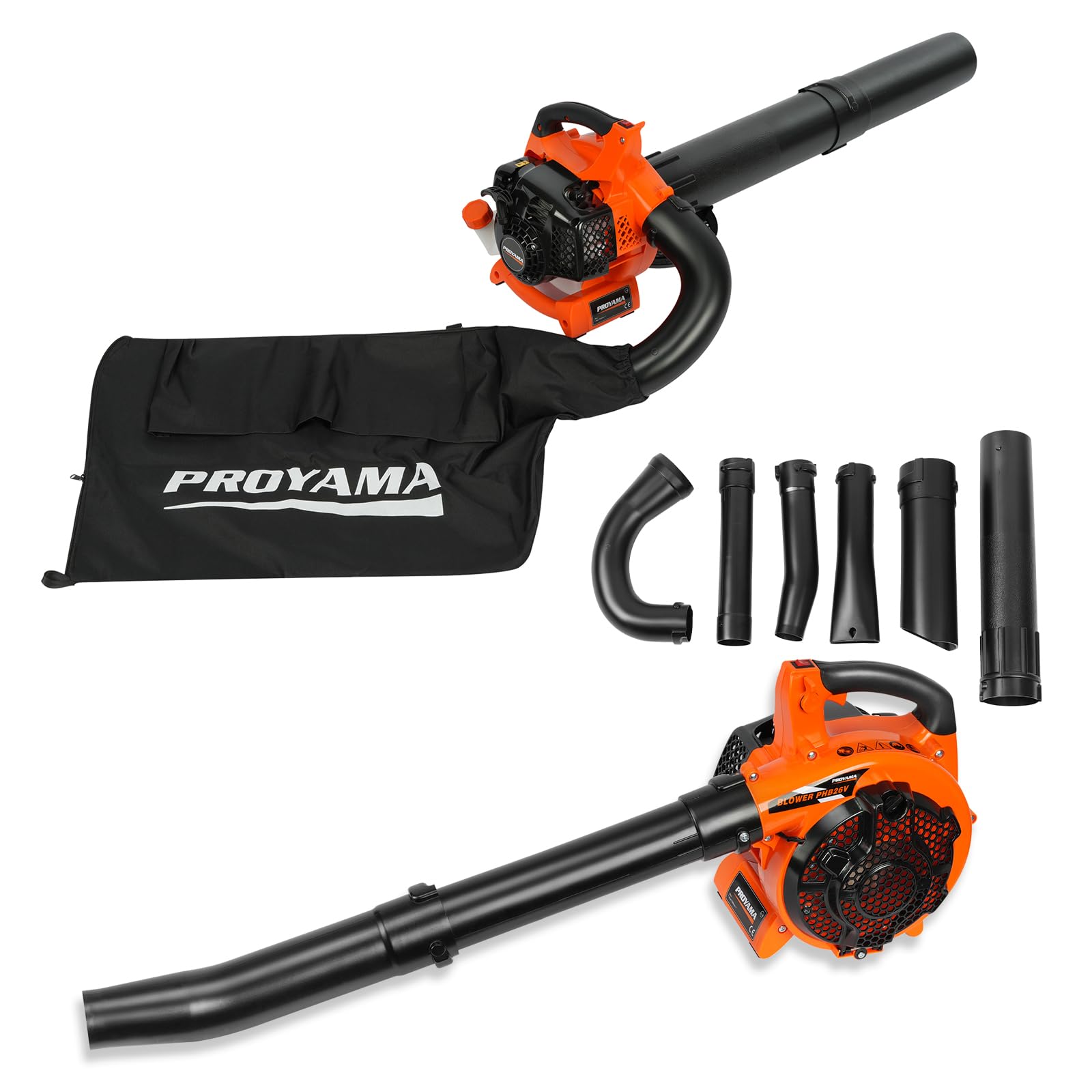
The PROYAMA is the only gas-powered option in this lineup, and it solves the biggest problem of cordless and corded machines: runtime and cord management. With a 26cc 2-cycle engine (a small, powerful gasoline motor that runs on a mix of gas and oil), you can work as long as you have fuel — no extension cord to drag around, no battery to run flat. Its 412 CFM and 200 MPH put it right in the same performance bracket as the top corded models.
What you give up is convenience: you need to mix the fuel (2-cycle oil and gasoline), winterize the engine if you store it, and deal with the noise and exhaust fumes. The vacuum mode works well, but reviewers point out the bag releases a fine dust, so a mask is essential. One owner called it “perfect for homeowners — way better than budget cordless versions.” The cruise control feature lets you lock the throttle to reduce hand fatigue.
This is the exact pick for someone who has a large property, hates managing batteries and extension cords, and is comfortable with basic small-engine maintenance. If you want grab-and-go simplicity, a cordless electric model like the Greenworks is a better fit. This is the exact budget buyer it is perfect for: the homeowner who wants gas-level power without paying premium brand prices and is willing to mix fuel and maintain a small engine.
Why we’d pick it
- Unlimited runtime with fuel
- Strong 412 CFM air volume
- Variable speed and cruise control
A few caveats
- Requires mixing gas and oil
- Noisier and heavier than electric options
- Bags can release fine dust in vacuum mode
6. SOYUS Cordless Leaf Blower & Vacuum 3-in-1
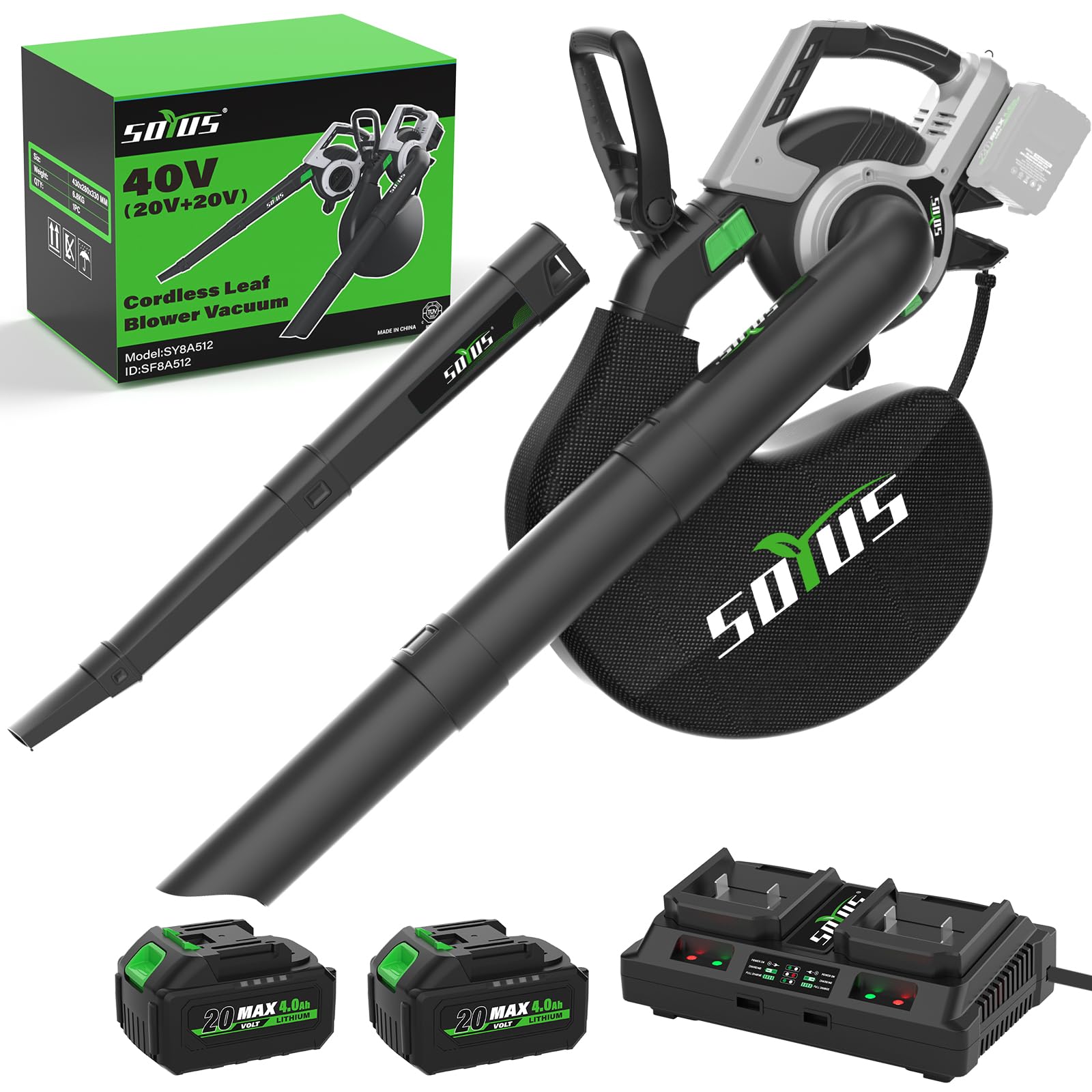
This SOYUS is perfect for a budget-conscious buyer who wants a complete cordless kit without paying the premium price of the Greenworks, and who is just starting to build a cordless yard tool collection. For the price of most bare-tool cordless units, the SOYUS gives you a complete kit: the blower/vacuum, two 20V 4.0Ah batteries, a charger, and a 45-liter collection bag. That is a lot of hardware for the money, and it makes this a compelling option if you are just starting to build a cordless yard tool collection. The brushless motor pushes up to 385 CFM, which is competitive with high-end cordless models.
The bag’s 45-liter capacity is generous, and the bottom zipper makes dumping easy without removing the bag. However, battery life is the main limiter here — shoppers say about 30 minutes of runtime at full speed, and one reviewer noted a battery failed after 11 months. The performance in vacuum mode also got mixed feedback, with one buyer calling it “completely worthless” for vacuuming, though others praised its mulching ability.
The SOYUS is perfect for a small yard or patio where the corded options are too restrictive, and you want the battery convenience without the premium price of the Greenworks. Just know that long-term reliability may not match the bigger brands.
Strong points
- Complete kit with two batteries and charger
- Good air volume for the price (385 CFM)
- Large 45L bag with bottom zipper
Before you buy
- Battery reliability concerns from reviewers
- Vacuum performance is inconsistent
- Batteries run out quickly at higher speeds
7. Makita XBU07Z 18V LXT Brushless Blower/Vacuum Mulcher

The Makita XBU07Z is a “tool only” model, meaning it does not ship with batteries or a charger — you supply your own from the Makita 18V LXT system. That makes it a smart buy if you already own Makita tools with compatible batteries, but a more expensive proposition if you are starting from scratch. Compared to the rest of the field, its 215 CFM of suction and 10:1 mulch ratio are the lowest numbers here, reflecting its design for lighter duty.
What the Makita lacks in raw power, it makes up for in finesse and quality. The brushless motor is quiet and efficient, and the integrated wheels on the vacuum nozzle help you glide across a patio or path without lifting the whole machine. Reviewers consistently report 10-15 minutes of runtime on a 5Ah battery, and one buyer called it “effective and well-designed” for smaller spaces. The 10-pound weight is manageable, and the wide-opening zipper on the bag makes emptying easy.
Choose the Makita if you have a townhouse patio, a tiny lawn, or just a few bushes to clean up. You are paying for Makita’s build quality and platform compatibility, not for class-leading power.
What we like
- Quiet and lightweight brushless motor
- Wheels on the nozzle for easy gliding
- Fits into the Makita 18V tool system
The downsides
- Tool only — no batteries or charger included
- Lowest air power and mulch ratio in the lineup
- Short runtime on a single battery (10-15 min)
Understanding the Specs
CFM vs MPH
CFM (cubic feet per minute) tells you the volume of air the machine moves — more CFM means you can clear a wider path of leaves with each sweep. MPH (miles per hour) tells you the speed of that air — more MPH helps dislodge wet or stuck debris. For a yard blower vacuum, strong numbers in both are ideal: at least 350 CFM and 200 MPH will handle most average-sized yards.
Mulch Ratio
This is the number that determines how much your leaf pile shrinks. A 16:1 ratio means 16 bags of leaves become just one bag of shredded mulch. A higher ratio means fewer trips to empty the bag and less material to dispose of. For serious mulching, look for 12:1 or higher — and always prefer a metal impeller (the blade inside) over plastic, as it handles twigs and acorns without breaking.
Corded vs Cordless vs Gas
Corded machines give you unlimited runtime and the highest power for the price, but you are tied to an extension cord. Cordless battery models offer freedom of movement but have limited runtime (usually 15-30 minutes) and cost more for equivalent power. Gas models offer unlimited range and runtime but require fuel mixing, produce more noise and fumes, and need seasonal maintenance. Pick based on your yard size: corded for most suburban lots, cordless for small or medium yards, gas for large rural properties.
Bag Capacity and Ergonomics
A larger collection bag means fewer trips to empty it, but the bag gets heavy as it fills — a shoulder strap helps distribute the weight. Look for a bag with a zipper at the bottom so you can dump it without taking the bag off the machine. Also check that the harness or strap is comfortable, since you will be carrying the bag’s weight on one shoulder for the duration of the job.
FAQ
Can a yard blower vacuum handle wet leaves?
Is a metal impeller better than a plastic one?
How long does a battery-powered blower vacuum last?
Do I really need a shoulder strap for the collection bag?
How do I switch between blower and vacuum mode?
Final Thoughts: The Verdict
If you want one dependable pick, the yard blower vacuum winner is the Greenworks 48V Cordless because it delivers the highest air volume (520 CFM) and comes with a complete battery system, making it the most capable tool for medium to large yards. If you want the best value and prefer corded power, grab the BLACK+DECKER BV6000 for its strong 400 CFM airflow and lighter 8.1-pound weight. And for the best mulching ratio, the standout is the WORX WG509 with its 18:1 reduction that turns massive leaf piles into tiny bags.