
Indoor worm composting promises rich soil for your plants, but the reality of a poorly designed bin can be a smelly, fruit-fly-infested chore. The difference between a thriving ecosystem and a frustrating mess often comes down to airflow control, tray design, and having a reliable method to separate castings from worms without a headache.
I’m Rikta — the co-founder and writer behind Lawn Gear Lab. My process for this guide involved analyzing seven worm farm systems across three design categories, cross-referencing manufacturer specs against real-world owner experiences to identify which models actually deliver on the promise of low-effort vermicomposting.
Whether you are a first-timer worried about odors or a seasoned composter looking to upgrade, this review of the best worm farm models will help you match your kitchen waste volume to the right system.
How To Choose The Best Worm Farm
Selecting the right worm farm is about matching the bin design to your waste output and your tolerance for maintenance. The three primary design categories are stacked tray systems, in-ground bins, and continuous-flow bags, each with distinct strengths.
Stacked Trays vs. Continuous Flow Bags
Stacked tray systems rely on worms migrating upward through trays as they finish processing lower ones. This works well for moderate waste but requires manual rotation. Continuous-flow bags like the Urban Worm Bag allow you to feed from the top and harvest finished castings from the bottom without disturbing the colony, making them ideal for larger households.
Moisture and Aeration Management
Excess moisture is the leading cause of odors and anaerobic conditions. Look for bins with drainage spigots for worm tea collection and ample ventilation slits. A drainage cloth or grate that prevents bedding from clogging the spigot is a critical feature often overlooked in budget models.
Capacity and Footprint for Your Space
Match the bin’s capacity to your kitchen waste. A 50-liter tower is suitable for a couple, while a family of four will benefit from a larger bag system. Measure your available floor space — some tall trays can become top-heavy, and bag systems require a sturdy frame.
Quick Comparison
On smaller screens, swipe sideways to see the full table.
| Model | Category | Best For | Key Spec | Amazon |
|---|---|---|---|---|
| Urban Worm Bag V2 | Continuous-Flow | High-volume, easy harvest | 150.75L capacity; 900D oxford fabric | Amazon |
| Blütezeit 5-Tray | Stacked Tray | All-in-one starter kit | 13.2 Gal; 5 trays; includes tools & meter | Amazon |
| VermiHut 5-Tray | Stacked Tray | Compact footprint with worm saver tray | 50L; HDPE; includes worm saver tray | Amazon |
| VIVOSUN 5-Layer | Stacked Tray | Kitchen counter composting | 50L; includes soil meter & gloves | Amazon |
| FCMP Outdoor Essential | Stacked Tray | Budget-friendly with moisture channels | 8 Gal; 2 trays; 52 migration tunnels | Amazon |
| Vego Garden In-Ground | In-Ground | Direct raised bed feeding | 7 Gal twin pack; BPA-free PP | Amazon |
| Worm Nerd WN55 | Stacked Tray | Apartment countertop use | 4 trays; 2.4 lbs; compact design | Amazon |
In‑Depth Reviews
7. Urban Worm Bag V2

The Urban Worm Bag V2 redefines convenience with a 150-liter breathable fabric bag that eliminates tray stacking entirely. Its 900D oxford construction provides durability while allowing passive airflow that drastically reduces the risk of anaerobic odor. The steel frame supports over 100 pounds, and the patented zipper-free bottom simplifies harvest to a single motion — no sifting worms from castings.
Experienced users report harvesting up to 2 gallons of light, fluffy castings with minimal effort after a few months of feeding. The breathable fabric requires moisture management — bedding can dry faster than plastic bins — but the trade-off is the absence of fruit flies even when scraps are not fully buried. The bag handles the waste of a family of four and the worm population self-regulates inside the large volume.
The stand assembly feels slightly wobbly according to some users, and the tubing for the frame could be sturdier. However, the company’s warranty and customer service consistently receive high marks, including replacement units for seam issues. For anyone serious about volume and ease, this is the most efficient design available.
What works
- Harvest castings without disturbing the worm colony.
- Excellent odor control with passive airflow.
- Very large capacity suitable for a family of four.
What doesn’t
- Frame can feel wobbly; may require a DIY reinforcement.
- Fabric requires careful moisture monitoring to prevent drying.
3. VermiHut 5-Tray
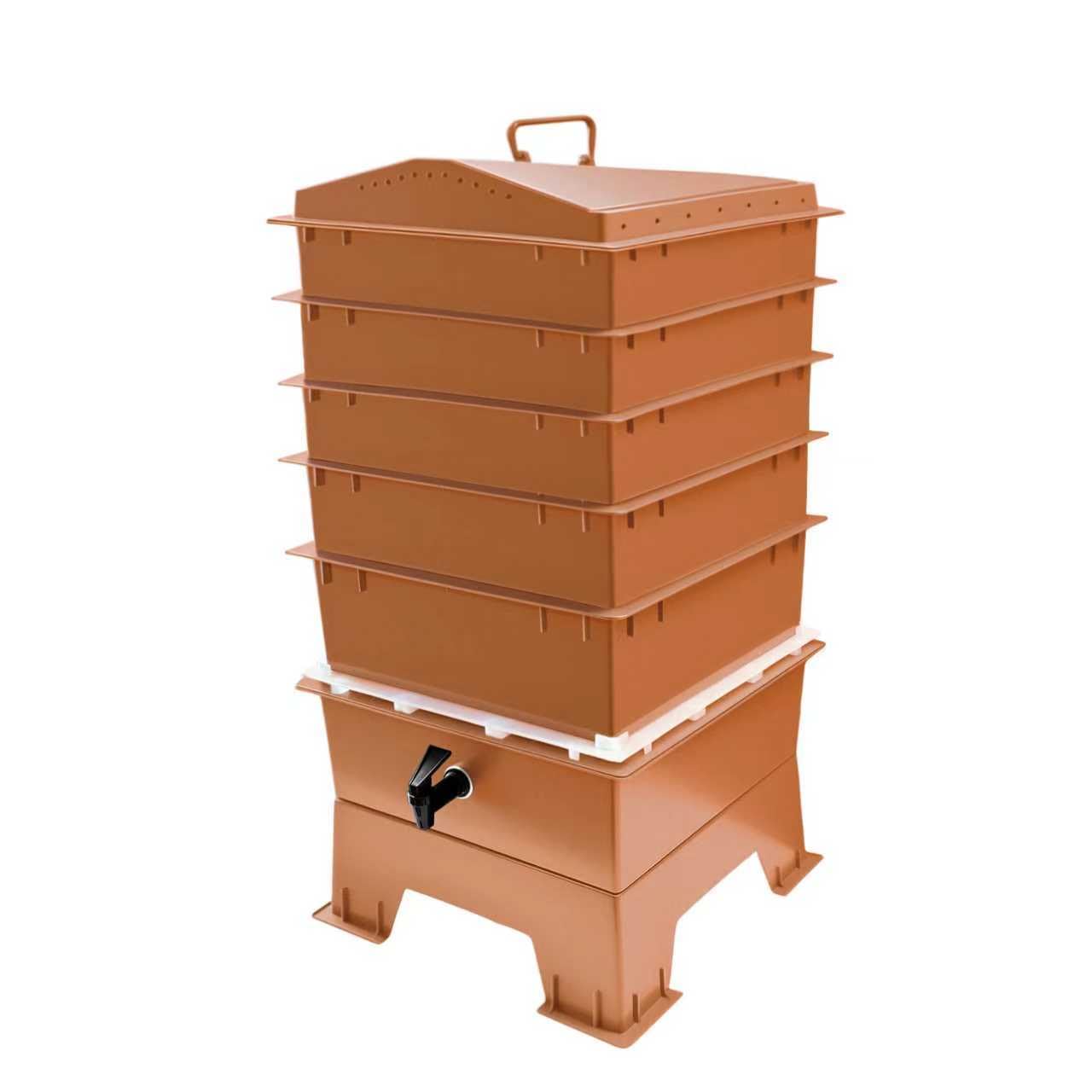
The VermiHut 5-Tray is a mature design that focuses on airflow and worker safety. Each tray has a grid floor and the system includes a dedicated worm saver tray that prevents worms from falling into the liquid reservoir. The HDPE material is UV-stable and resists cracking, making it suitable for both indoor and covered outdoor use.
Users praise the modularity — you can add or remove trays as your worm population grows. The spigot design includes a drain cloth that prevents the leachate from becoming sludgy, and the stackable trays allow 360-degree airflow through side ventilation slots. Composting speed is predictable, with harvestable castings available in each tray after roughly 2 months of feeding.
One common issue is that the stack becomes top-heavy when full, requiring careful balancing of moist bedding across all levels. The included coconut mat for covering can also arrive missing, though wet newspaper works as a substitute. Overall, this is a well-engineered mid-capacity system for gardeners who want a reliable, expandable tower.
What works
- Worm saver tray prevents accidental drowning in leachate.
- Excellent customer service and robust HDPE build.
- Expandable design allows tray additions over time.
What doesn’t
- Can become top-heavy requiring careful balancing.
- Some units may arrive missing the coconut fiber mat.
5. VIVOSUN 5-Layer Worm Compost Bin
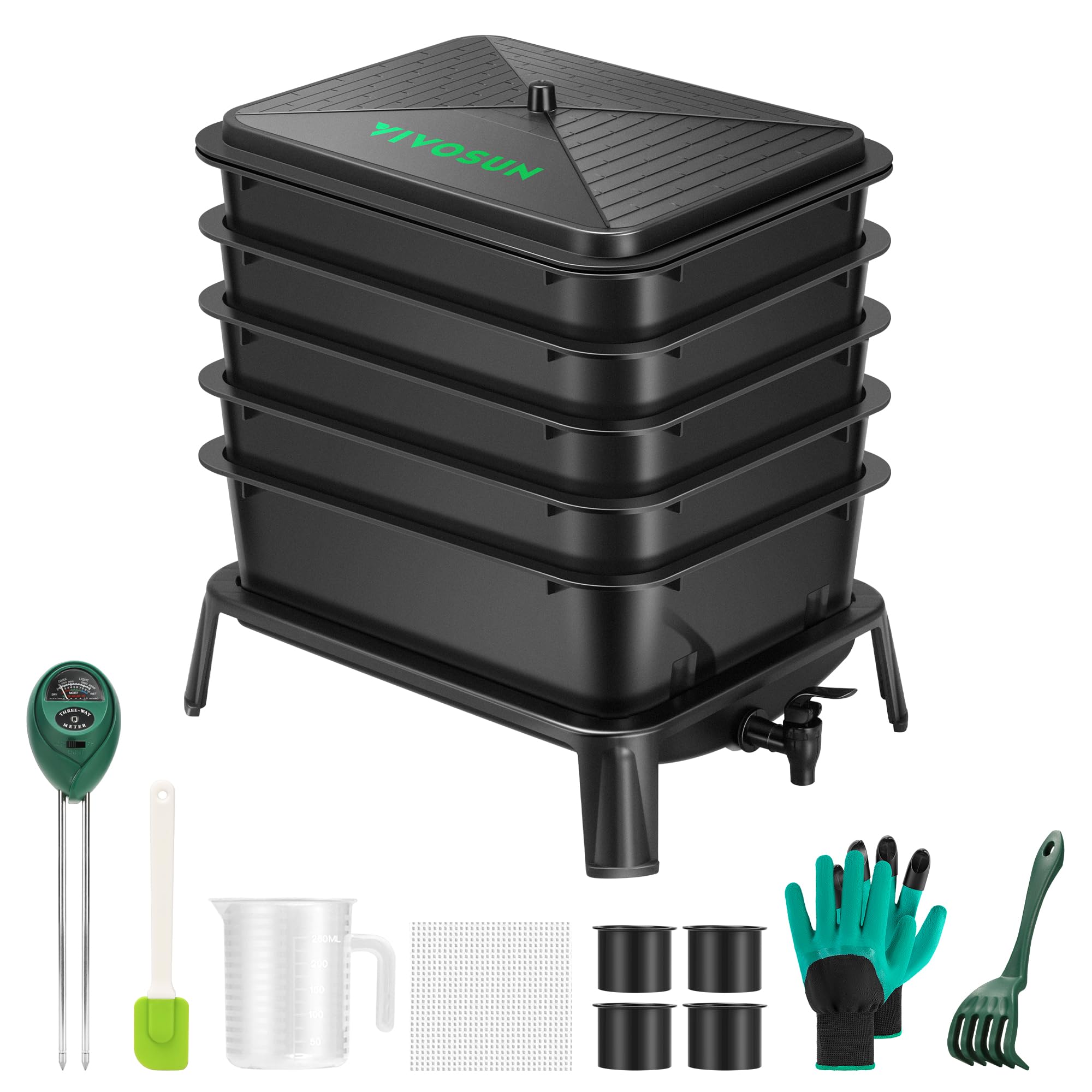
The VIVOSUN 5-Layer bin offers a 50-liter capacity with a compact footprint ideal for apartment kitchens or balconies. The PP plastic trays lock together securely, and the ventilation slits are placed to discourage worm escape while maintaining air exchange. Assembly takes under 10 minutes with the detailed instruction card.
The all-in-one package is generous — a 250ml measuring cup, soil moisture/light/pH meter, rubber scraper, rack, non-woven fabric, and gloves are included. The spigot for worm tea collection is located at the base tray, and the fabric layer prevents bedding from clogging the spout. Users report minimal odor when the bedding is kept at the right moisture level.
The main drawback is the small physical size of each tray — some experienced vermicomposters found the bin too small for their waste output despite the 50L spec. The instruction manual is also basic, requiring new users to do external research on tray rotation and casting harvesting. This is a solid entry-level choice for those who want a complete kit out of the box.
What works
- Comprehensive starter kit with soil meter and tools included.
- Quick 5-minute assembly with clear instructions.
- Compact size fits easily in small indoor spaces.
What doesn’t
- Smaller per-tray volume than some competitor models.
- Basic manual requires extra research for proper operation.
6. Blütezeit 5-Tray Worm Composter
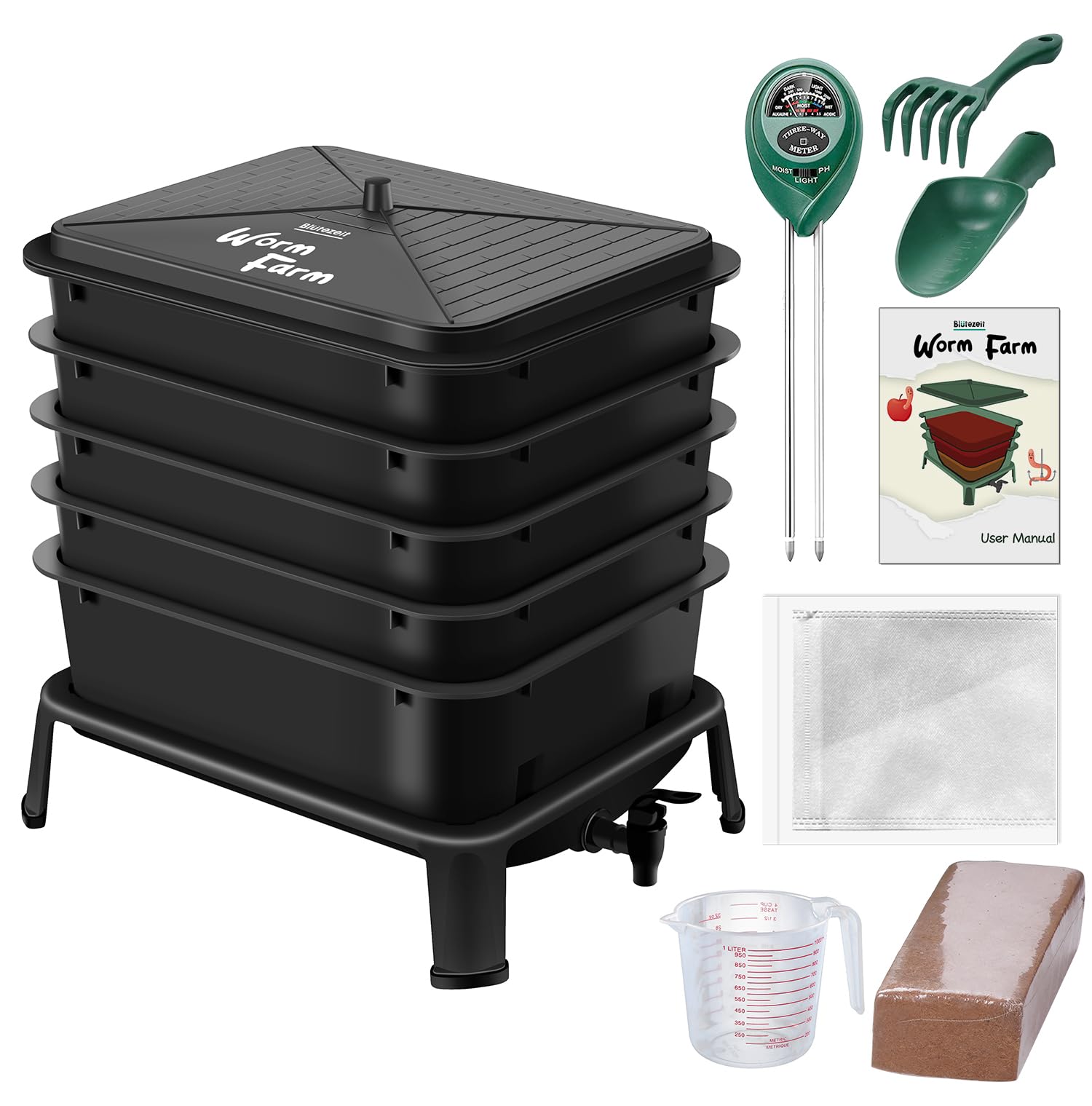
The Blütezeit 5-Tray composter is a feature-packed entry in the stacked tray category, offering a 13.2-gallon capacity in a rectangular footprint. The PP material is UV-resistant and odor-resistant, and each tray has precisely spaced air holes that allow 360-degree airflow. It ships with a turning fork, shovel, soil meter, coco-coir brick, and non-woven fabric for bedding coverage.
Users consistently note the absence of bad smells when the bin is managed properly. The soil meter is a useful addition for beginners who are unsure about moisture levels. The modular design means trays can be separated for individual harvesting, and the spigot at the bottom collects worm tea without leakage. The company’s customer service receives praise for resolving issues like missing spigot nuts promptly.
Experienced users point out that the bin does not fully seal — worms can escape through gaps between the lid and rim if the bin is overfilled. The clearance between the base tray and the ground is also minimal, limiting space for a collection container under the spigot. Despite these quirks, this is a complete kit that gets beginners composting on day one.
What works
- Comes with all accessories needed for immediate setup.
- Effective odor control with balanced ventilation layout.
- Modular trays allow piece-by-piece harvesting.
What doesn’t
- Lid does not fully seal; can allow worm escape.
- Limited clearance under the spigot for containers.
4. Vego Garden In-Ground Worm Composter
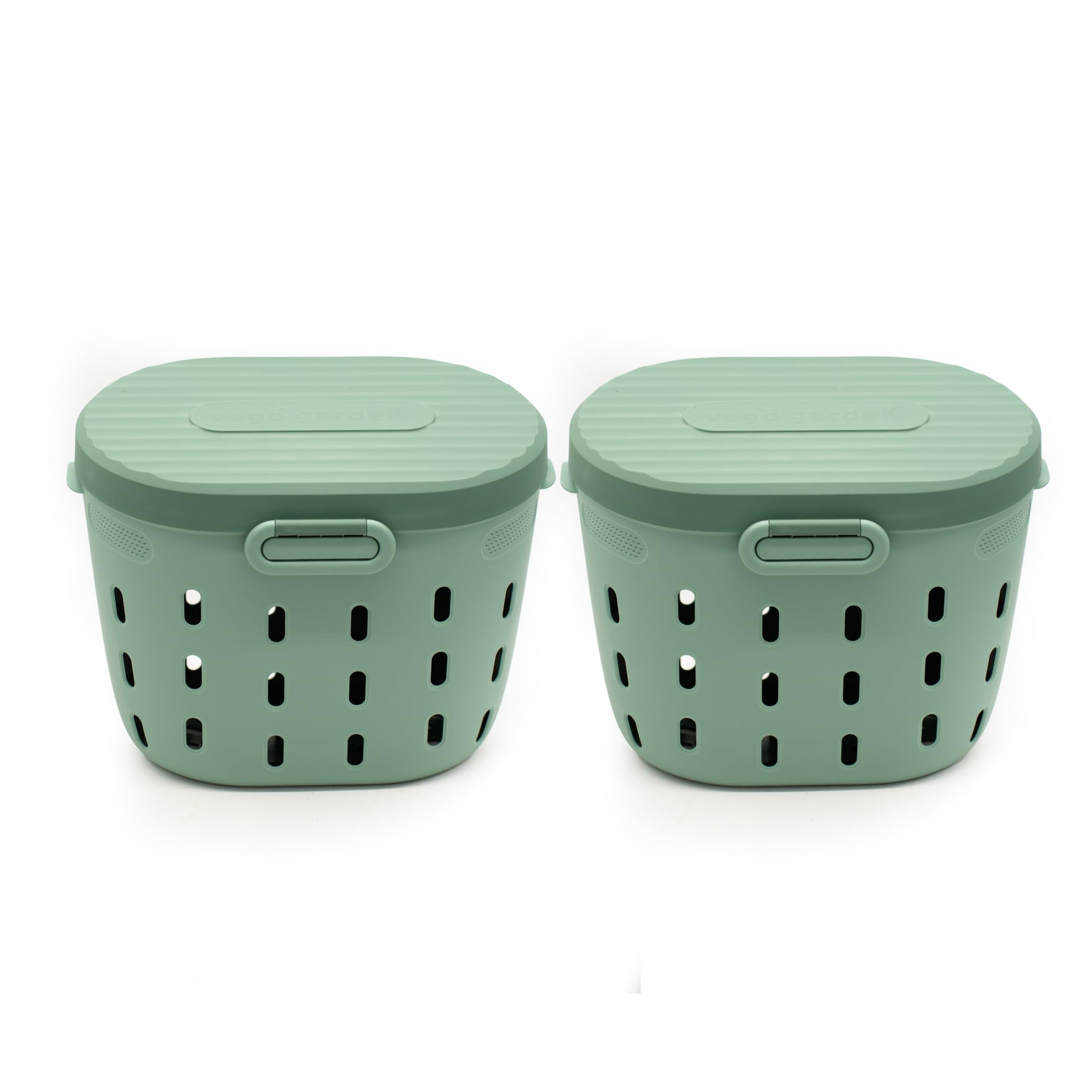
The Vego Garden In-Ground composter takes a completely different approach: instead of a free-standing bin, you bury this 7-gallon basket directly in your raised bed. The BPA-free polypropylene construction includes a lid that is tight enough to keep out raccoons and armadillos while allowing worms to enter and exit through ground-level openings.
Users report that this design eliminates the common problem of animals digging up outdoor compost piles. The system works by layering kitchen scraps with dirt and adding a heavy rock on top. Worms from the surrounding soil migrate into the basket to feed and then return to the bed, distributing castings directly to plant roots. The sage green color blends well with garden aesthetics.
The hinge mechanism on the lid can be stiff to align during opening and closing, and the basket does not have a spigot for collecting worm tea since it drains naturally into the soil. This is not a system for indoor use or for harvesting castings in bulk — it is specifically designed for in-bed nutrient cycling. Best for gardeners who prioritize direct soil enrichment over separate composting.
What works
- Directly feeds raised bed plants without extra handling.
- Critter-proof lid keeps out digging animals.
- Sturdy construction with multiple color options.
What doesn’t
- Hinge lip can be difficult to align and fasten.
- Cannot harvest bulk castings separately from the bed.
2. FCMP Outdoor Essential Living Composter
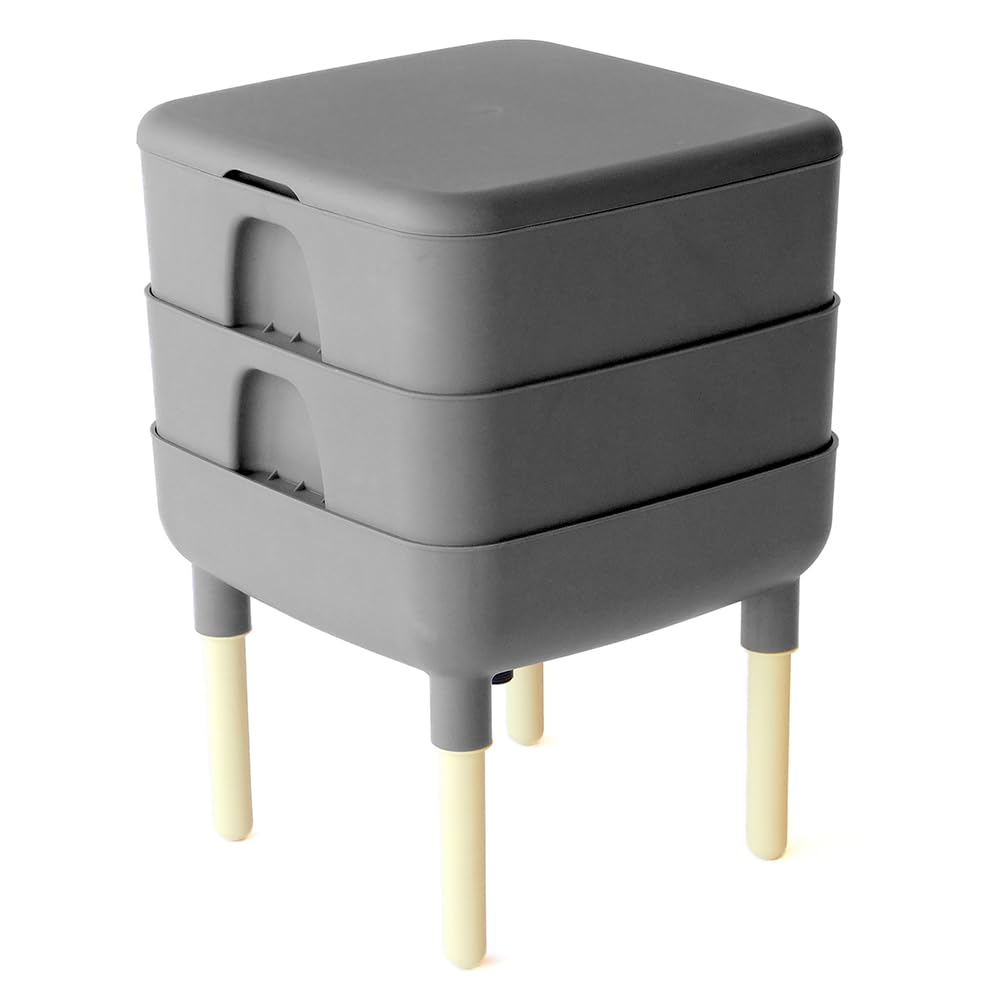
The FCMP Outdoor Essential is a 2-tray system built from recycled polypropylene with a UV-inhibitor for outdoor durability. Its standout feature is the moisture control water retention channel around each tray, which prevents the bedding from drying out along the edges — a common problem in shallow trays. The 52 migration tunnels provide ample routes for worms to move between levels.
This is a true entry-level unit that fits well in apartments or small kitchens. Users confirm that it produces no detectable odor when the correct carbon-to-nitrogen ratio is maintained, and the spigot for worm tea works reliably. The grey color and clean lines make it one of the better-looking bins on the market, which matters for indoor placement.
The filter area around the spigot can also become clogged with fine castings, requiring periodic cleaning. For a single person or couple just starting out, this is a low-risk, well-engineered introduction to vermicomposting.
What works
- Excellent moisture retention channels prevent edge drying.
- Attractive design fits indoor kitchen aesthetics.
- Made from recycled BPA-free polypropylene.
What doesn’t
- Small 8-gallon capacity limits waste volume.
- Spigot filter area can clog with fine material.
1. Worm Nerd WN55 4-Tray Kit

The Worm Nerd WN55 is the smallest unit in this lineup, measuring just 10 by 9 inches and standing 12 inches tall when fully assembled. This 4-tray system is purpose-built for ultra-compact spaces like a countertop or a dorm room shelf. The plastic construction is durable enough to prevent pest intrusion, and the included coco coir brick provides the initial bedding material.
Owners consistently mention how beginner-friendly the setup is, with a detailed 4-page guide covering moisture, food, light, pH, and temperature management. The tray system allows for basic layering, and the spigot at the bottom collects worm tea. The compact size is perfect for a single person who generates a small volume of fruit and vegetable scraps daily.
The biggest limitation is the pace of composting — because the trays are small, it can take 5 months before the second tray is ready to be added. Some users also found the legs too short to place a container under the spigot comfortably. Ants can become an issue in warmer climates if the bin is placed on the ground, but jar lids with oil under the legs solve this. This is a niche tool for the lowest-waste households.
What works
- Extremely compact footprint for countertop placement.
- Excellent beginner guide covers all essential aspects.
- Available in three colors to match decor.
What doesn’t
- Very small capacity; slow to fill a second tray.
- Short legs make spigot use awkward with standard containers.
Hardware & Specs Guide
Tray Count vs. Harvest Speed
More trays do not automatically mean faster composting. Worm migration between trays depends on consistent feeding and moisture. A system with 5 trays gives you more surface area for the worms to process waste, but the harvest cycle is only as fast as the lowest tray’s completion. Continuous-flow bags bypass this entirely by allowing top-feeding and bottom-harvesting simultaneously.
Material and Moisture Retention
High-density polyethylene (HDPE) and polypropylene (PP) are the standard plastics for worm bins. They are inert, BPA-free, and easy to clean. Fabric-based systems like the Urban Worm Bag breathe better, reducing odor risk, but require more frequent moisture monitoring. Plastic bins with water retention channels offer a middle ground, keeping the edges of the bedding from drying out.
Worm Tea Collection Systems
Leachate, known as worm tea, is a potent liquid fertilizer. A proper drainage system includes a spigot at the bottom tray and a filter fabric or grate to separate liquid from solid castings. Without a filter, the spigot can clog with fine particles. Some in-ground bins omit the spigot entirely, allowing the liquid to drain directly into the surrounding soil.
Footprint and Vertical Clearance
Measure your available space before choosing. Stacked tray towers can range from 12 to 22 inches tall and may become top-heavy. Bag systems with a steel frame require a footprint of roughly 27 inches square. Ensure there is enough clearance above the bin for removing top trays or filling the bag, and enough clearance below the spigot for a collection container.
FAQ
How do I prevent fruit flies in my worm farm without using chemicals?
What is the ideal moisture level for worm bin bedding?
How often should I harvest worm castings from a stacked tray system?
Final Thoughts: The Verdict
For most gardeners, the best worm farm winner is the Urban Worm Bag V2 because its continuous-flow design eliminates the most tedious parts of vermicomposting — sifting worms from castings and managing tray rotation. If you want a complete starter kit with all the accessories included, grab the Blütezeit 5-Tray kit. And for direct soil enrichment in raised beds without any separate harvesting, nothing beats the Vego Garden In-Ground composter.