
Specs are compiled from manufacturer listings and verified buyer reviews and can change over time — please confirm the key details on the product page before buying.
A worm bin turns kitchen scraps into the richest soil booster you can get, but a bad one turns your kitchen into something you will not describe at dinner. The real test is not a fancy brand name — it is whether the trays seal tight, the worms move up instead of escaping, and the spigot catches the liquid gold without clogging. This guide cuts through the five best models to show you which tower actually keeps worms working and smells where they belong (outside).
I’m Rikta — the founder and writer behind Lawn Gear Lab. This guide is built by comparing the manufacturers’ published specifications and the patterns across verified customer reviews, so you get each pick’s real strengths and trade-offs instead of marketing spin.
Whether you are filling your first tray or scaling up from a bucket, here is everything you need to know about which worm compost bin is worth the space — and which one will have you chasing escapees on the floor.
Quick Picks
- The Original VermiHut Classic Model 5-Tray Worm Composter Bin — Top Performer
- FCMP Outdoor – The Essential Living Composter, 2-Tray Worm Vermicomposter Bin — Best Indoor Fit
- Blütezeit 5-Tray Worm Compost Bin, 53QT Outdoor & Indoor Worm Composter — Best Accessory Set
- VIVOSUN 5-Layer Worm Compost Bin, 50L Worm Composter — Compact Footprint
- Original VermiHut 5-Tray Worm Composter (Terracotta) — Best Value
How To Choose The Best Worm Compost Bin
Buying your first worm bin is easy — keeping the worms alive and the smell out is the part that separates a good bin from a regret. Here are the three specs that make or break the experience.
Layer count and tray design matter more than total volume
A 50-liter capacity is only as useful as the stack it comes in. You want worms to migrate upward through trays as you add food so the bottom tray becomes pure castings you can pull out without sorting through live worms. Look for bins with multiple stacked trays (four or five) that have small conical tunnels (migration tunnels) molded into the floor of each tray — these let worms move up when the food runs out below. A bin with just two trays works but requires more manual harvesting and patience.
Ventilation and the dreaded fruit fly barrier
Every bin needs air holes — trays that are fully sealed turn anaerobic and smell like rotten compost, which defeats the whole purpose of keeping worms indoors. The best bins have slits or small vents on the sides and top of each tray. But ventilation is a two-way street: those same holes let fruit flies in. The fix is a top layer of dry peat, shredded newspaper, or a piece of non-woven fabric on the top tray so flies cannot reach the food scraps. Buyers report that this simple dry barrier solves 90% of fly issues in almost any bin.
Spigot design and liquid collection
Worm tea — the dark liquid that drains from active trays — is the most potent plant food you can make, but it is also the most common source of a messy kitchen floor. A good bin has a spigot at the bottom tray or reservoir base that lets you drain the tea without tilting the whole tower. Check that the spigot has a filter or a drain cloth inside so the liquid runs clear and worms stay in the bin. Owners mention that some spigots clog if the filter area is too small; a removable rack or base tray with a wide collection channel is a safer bet.
Quick Comparison
On smaller screens, swipe sideways to see the full table.
| Model | Best For | Capacity | Dimensions | Weight | Amazon |
|---|---|---|---|---|---|
| Original VermiHut Classic | Continuous harvest efficiency | 50 L | 16 x 16 x 27.5 in | HDPE | Amazon |
| FCMP Outdoor Essential Living | Year-round indoor odor control | 8 gal | 15 x 15 x 22 in | 4.4 kg | Amazon |
| Blütezeit 5-Tray | All-in-one starter kit extras | 50 L | 16.2 x 12.6 x 17 in | 7 lb | Amazon |
| VIVOSUN 5-Layer | Quick setup and compact footprint | 50 L | 12.3 x 13.18 x 23.54 in | 3.4 kg | Amazon |
| Original VermiHut (Terracotta) | Value for price with 5 trays | 50 L | 16 x 16 x 15 in | HDPE | Amazon |
In-Depth Reviews
1. The Original VermiHut Classic Model 5-Tray Worm Composter Bin
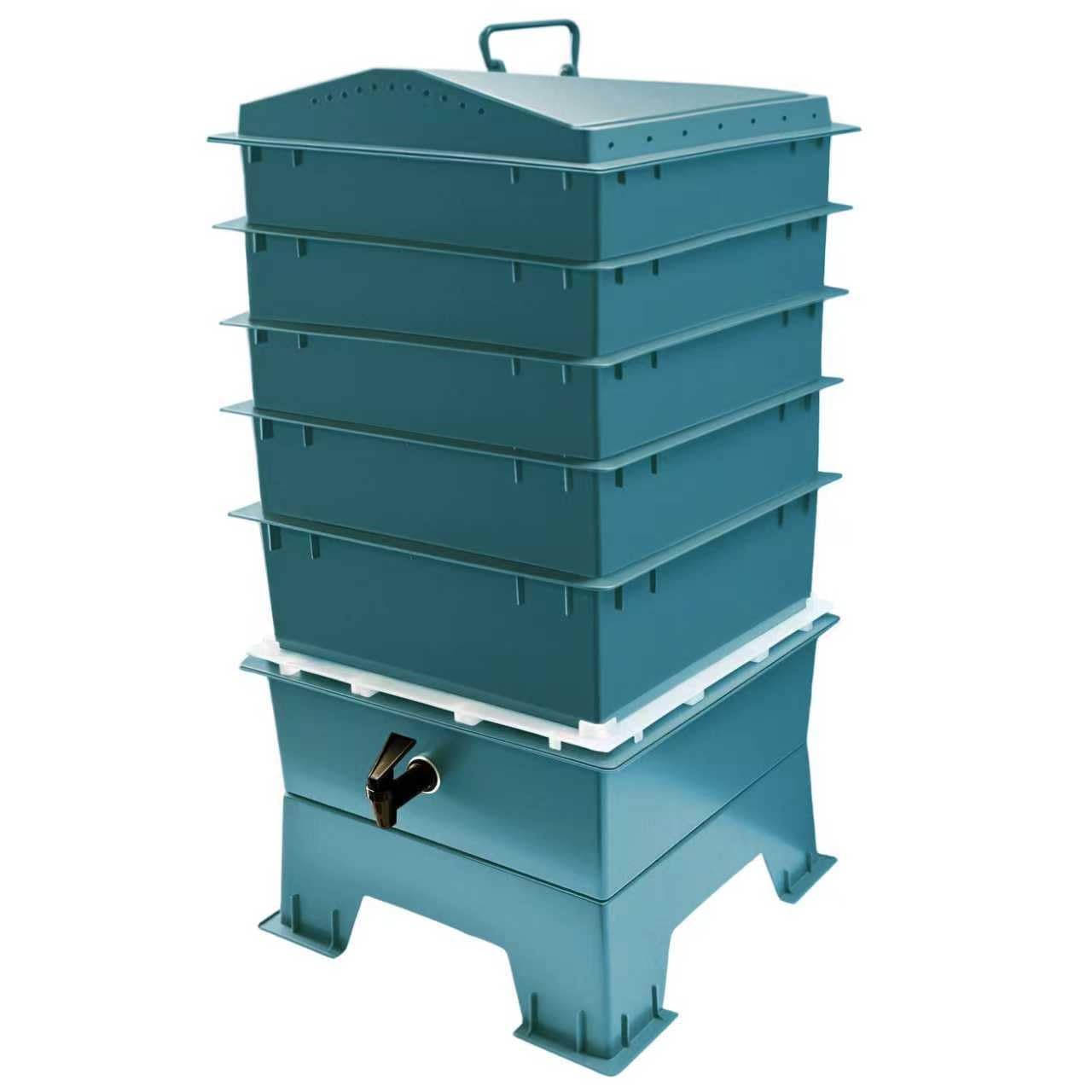
The five-tray tower that turns scraps into soil without stinking up the counter.
This is the bin experienced composters come back to after trying the cheap plastic versions. The VermiHut Classic stands at 27.5 inches tall with five trays, giving worms plenty of room to migrate upward while you harvest pure castings from the bottom. Made from high-density polyethylene (HDPE — a rigid, food-grade plastic that resists cracking in cold or heat), it is sturdier than the typical polypropylene (PP) bins that feel flimsy in direct sun. Customers note that after a few months the worms naturally migrate up, leaving the bottom tray filled only with finished compost.
There is a smart detail here that you do not see on cheaper models: the top tray holds a dry layer of peat moss or paper to block fruit flies from entering while still allowing airflow — no tape needed. Reviewers point out that a simple layer of dry peat or damp paper on the top tray eliminates fruit flies entirely. The spigot at the base makes collecting worm tea easy, and the foot pattern is wider than some other towers, which keeps it stable even when you stack all five trays full of bedding. One long-term owner reported the worms overwinter inside the bin and reappear healthy in spring, which speaks to the insulation of the HDPE walls.
Compared to the FCMP bin below, the VermiHut Classic holds 50 liters versus 8 gallons (roughly 30 liters) for a similar footprint. The main trade-off is that the HDPE material is heavier and costs more, and some owners say the stack can feel top-heavy — you will want to keep it on a sturdy shelf or the floor rather than a flimsy table. If you want a bin that will last years and handle a household’s worth of scraps, this is the one to grab.
Why it stands out
- Rigid HDPE build outlasts cheaper PP plastic bins
- Full 50-liter capacity fits a family kitchen
- Top dry layer blocks fruit flies naturally
The catch
- Can feel top-heavy when all five trays are full
- Spigot design works best with a drain cloth added
Who it serves: Anyone who plans to compost for years and wants a bin that will not crack or warp after a season of use.
Think twice if: Your space is limited to a low shelf — you need about 28 inches of vertical clearance for the full tower.
2. FCMP Outdoor – The Essential Living Composter, 2-Tray Worm Vermicomposter Bin
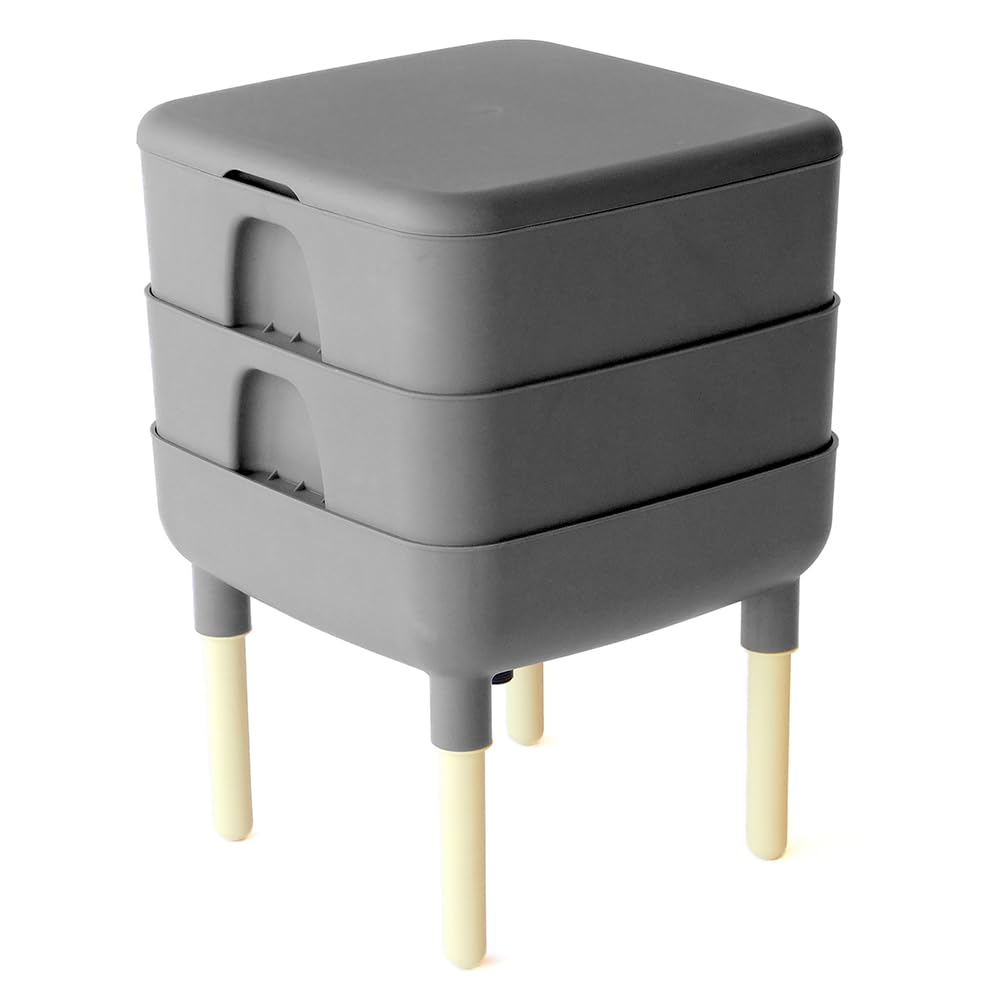
A compact two-tray tower that fits on a countertop and keeps smells out.
If you are not sure you want a five-foot worm factory in your kitchen, this is the bin to start with. The FCMP Essential Living Composter holds 8 gallons (roughly 30 liters) in a square footprint — 15 x 15 inches at the base and 22 inches tall — which means it slides onto a kitchen counter or a balcony corner without dominating the room. At 4.4 kg (about 9.7 lbs) empty, it is noticeably heavier than the VIVOSUN below (3.4 kg), but that weight comes from thicker molded polypropylene that feels solid. It is made in Canada from BPA-free, UV-inhibited recycled polypropylene, so it can sit in indirect sunlight near a window without the plastic yellowing or weakening.
The design includes 52 angled migration tunnels extending from the base of each tray, giving worms a direct path upward between levels. There is a moisture control water retention channel running around each tray that collects water along the edges so the bedding does not dry out near the ventilation slits — a clever fix for a common problem where the outer edge goes crispy while the middle stays wet. Shoppers say that after three months, worms were thriving on weekly kitchen scraps and trimmings with no foul smells. The spigot at the base collects worm tea, though multiple buyers mention the filter area clogs easily and gets messy — you may want to add a separate piece of window screen over the drain hole to keep the flow clear.
Compared to the Blütezeit all-in-one kit below, the FCMP has a simpler setup with no soil meter or turning fork, but it also has zero small parts to lose and the instructions are described as clear and beginner-friendly. It also carries a one-year limited replacement warranty on manufacturing defects, which is rare at this price tier. The limitation is that the two-tray system means you have to wait longer between harvests — you cannot rotate through trays as fast as a five-stack system.
Best for beginners who want a quiet start: The two-tray design forces patience and prevents overfeeding, which is the number one mistake new worm owners make.
The one catch: The spigot filter area clogs regularly — expect to clean it every few months or add a layer of window screen to prevent headaches.
3. Blütezeit 5-Tray Worm Compost Bin, 53QT Outdoor & Indoor Worm Composter

The starter kit that hands you everything except the worms.
This is the only bin on this list that includes a full accessory pack: a turning fork, a shovel, a soil meter (which measures moisture, pH, and light levels), a coco-coir brick (the bedding base you would otherwise buy separately), non-woven fabric (the fruit-fly barrier), anti-slip feet, a 250 ml cup, and a spigot for worm tea. At 16.2 x 12.6 x 17 inches (the shortest tower here at 17 inches tall), it sits low enough to fit under a sink cabinet while still holding 50 liters in five stacking trays. The dimensions show a more rectangular shape than the square VermiHut or FCMP bins — the 12.6-inch width is noticeably narrower than the 16-inch VermiHut models, making it easier to squeeze into a tight corner.
The bin is made from polypropylene (PP — a lightweight, recyclable plastic that is less rigid than HDPE but perfectly fine for indoor use). It weighs only 7 pounds empty, so moving it to drain or harvest is easy. Buyers report that the included soil meter is genuinely useful for beginners who are not sure how wet the bedding should be — keeping moisture in the middle zone of the meter avoids drowning the worms or drying them out. One reviewer noted setting it up in about five days, finding the worms healthy and active, and feeding them lettuce without issue. The coco-coir brick expands to a good volume of bedding right from the start, which removes the guesswork of sourcing your own peat or shredded paper.
Compared to the VIVOSUN below, the Blütezeit has a 17-inch height versus 23.54 inches — a 32% shorter gap, which makes it easier to stash on a shelf. The trade-off is that the trays are not as deep, so you may need to harvest more often. Some experienced owners mention that the seal between trays is not tight, and a few report worms escaping through the lid or sides during the first day. The solution is to weigh down the lid with a brick or place a layer of the included non-woven fabric between the lid and the top tray. If you are a first-timer who wants every tool and guide included in one box, this is the strongest value.
What you get in the box
- Turning fork, shovel, soil meter, coco-coir brick, fabric, spigot, cup, anti-slip feet
- Short 17-inch tower fits under cabinets
- Light 7 lb weight for easy moving
Where it stumbles
- Seal between lid and trays is not tight; some worms escape day one
- Trays are shallower than deeper 5-tray competitors
Perfect for a brand-new worm owner: The extras (soil meter, coco-coir, manual) save you from hunting down parts before you can start.
Not ideal if: You want a no-maintenance lid — you will need a weight on top or a layer of fabric to keep worms from finding daylight.
4. VIVOSUN 5-Layer Worm Compost Bin, 50L Worm Composter
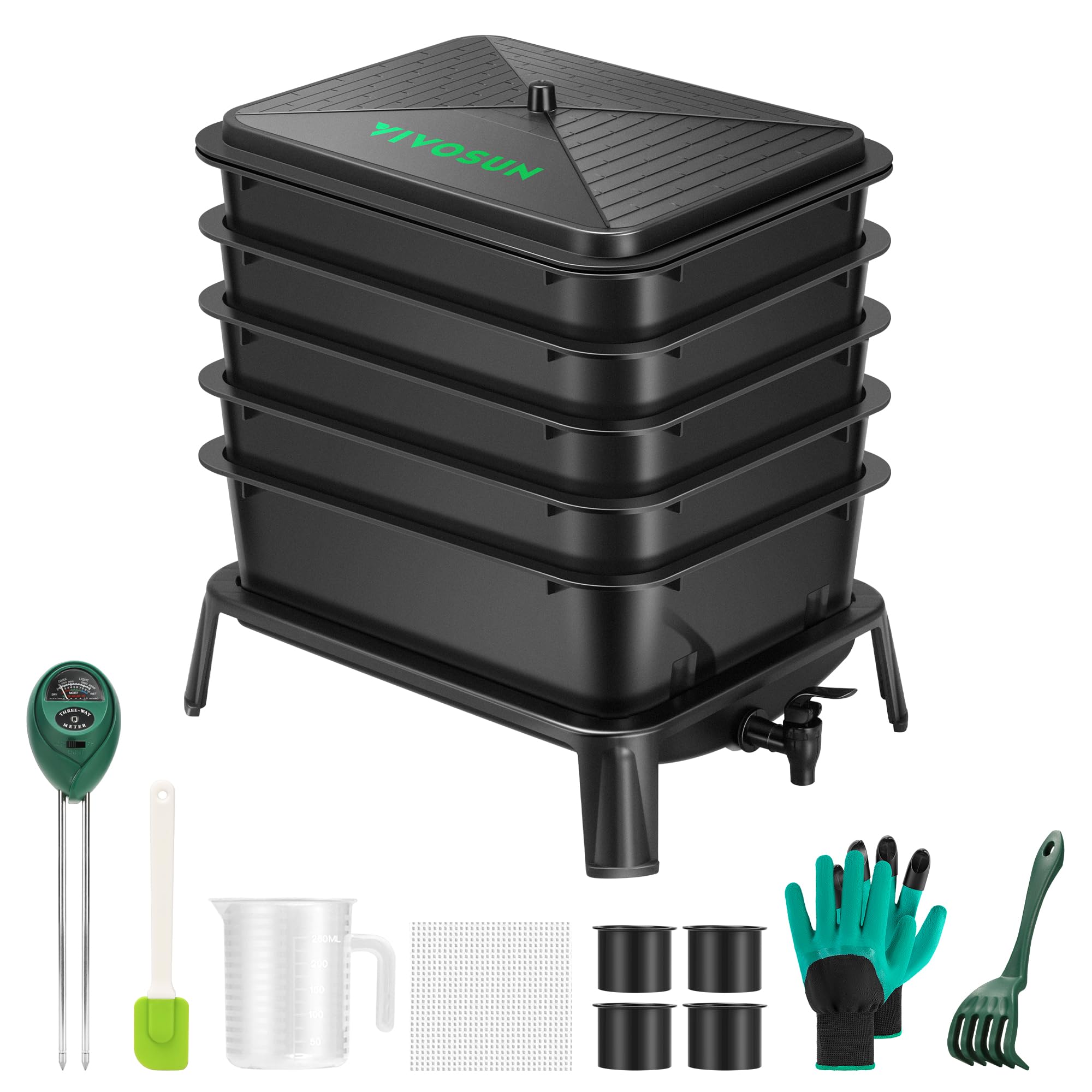
A five-layer tower that assembles in five minutes and takes one square foot of floor.
VIVOSUN designed this bin for the buyer who wants the capacity of five trays without the bulk of a 16-inch-wide base. The footprint measures just 12.3 x 13.18 inches — noticeably smaller than the 16 x 16 inch base of the VermiHut models — which means it fits on a narrow tabletop or in a gap between cabinets. At 23.54 inches tall (taller than the Blütezeit’s 17 inches by about 6.5 inches), the tower rises upward instead of outward, giving you that 50-liter volume in a slim column. The weight is just 3.4 kg (about 7.5 lbs), making it the lightest five-tray bin in this lineup — about 29% lighter than the FCMP’s 4.4 kg.
Assembly takes minutes: the instructions are printed clearly, and buyers confirm the setup is complete in about five minutes. The bin is constructed from polypropylene (PP) with integrated ventilation slits spaced around each tray — these are shaped to allow airflow while keeping flies out (though some customers note a mild plastic smell when new that fades after a few days of use). The base tray includes a spigot for draining worm tea, and the all-in-one package adds four anti-slip foot pads, a 250 ml measuring cup, a soil meter, a rack, a rubber scraper, a piece of non-woven fabric, and a pair of gloves. Compared to the Blütezeit kit, you get gloves and a scraper instead of a turning fork and shovel.
The compact base is great for tight spaces, but it also means the tower can tip more easily if you load trays unevenly or put heavy wet scraps on one side. Some reviewers point out that the bin is smaller than they expected despite the claimed 50-liter capacity — the slim footprint means each tray is shallower than wider models. If you are willing to do a little extra research on how to rotate trays (the manual covers assembly but is sparse on harvesting technique), this bin delivers solid value. One owner found it perfect for a garage corner, saying the quality was what they were looking for and it works well in a small space.
Who it fits: Apartment dwellers or anyone with a tight shelf who needs full 50-liter capacity in a narrow column.
What to watch for: The slim base can tip with heavy trays, and the manual omits the finer points of harvesting castings — plan to watch a short video tutorial.
5. Original VermiHut 5-Tray Worm Composter (Terracotta)
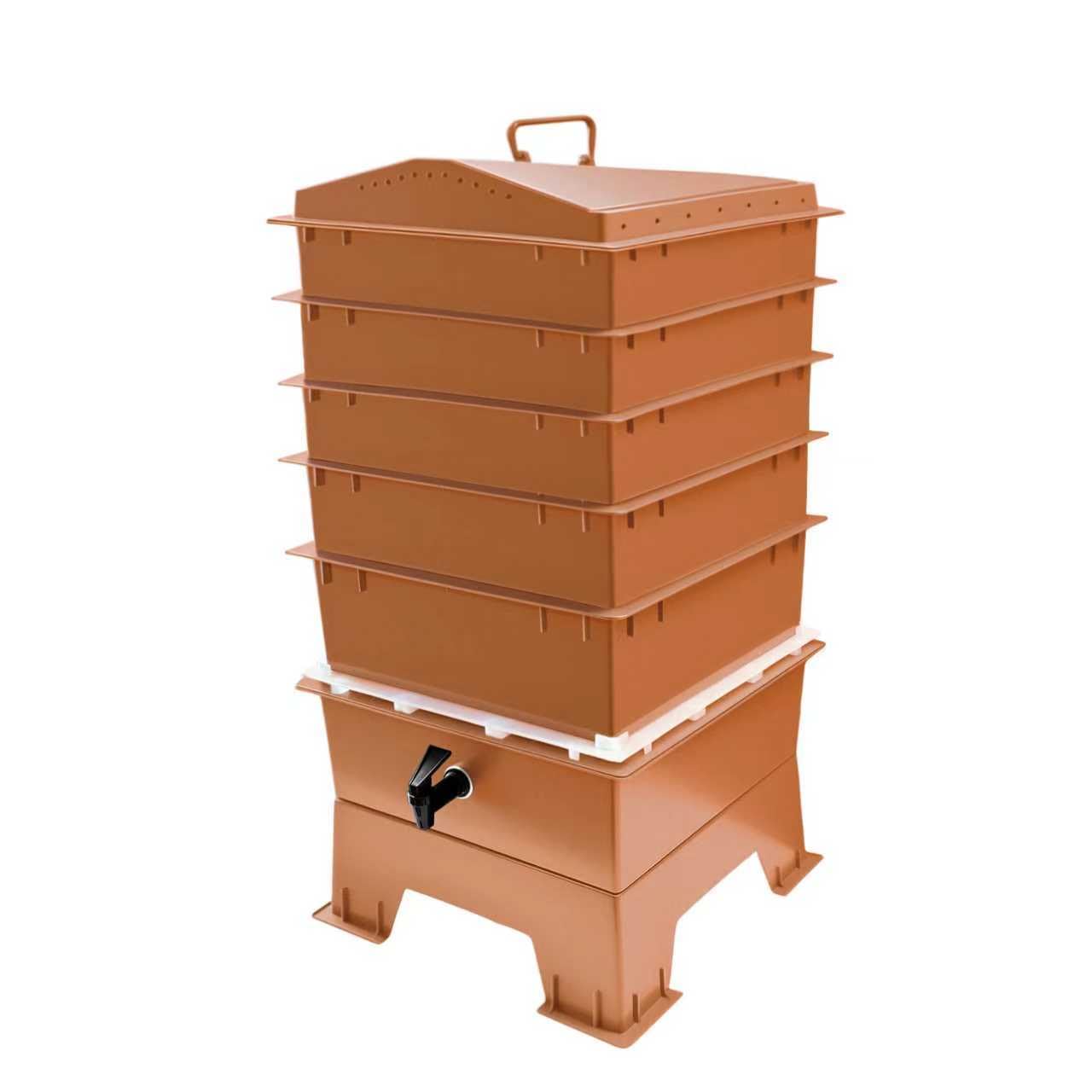
A five-tray workhorse with a small footprint and a full 50-liter appetite.
This is the same VermiHut brand as the Classic review above, but in a shorter tower and a lower price bracket — making it the most accessible way to get that trusted five-tray design. At 15 inches tall (versus the Classic’s 27.5 inches), the Terracotta model drops the extra height while keeping the same 16 x 16 inch footprint and the full 50-liter capacity. It is built from high-density polyethylene (HDPE), the same durable, food-grade plastic as the taller Classic, so you avoid the cracking issues that sometimes appear in the cheaper PP bins after a year of use. The terracotta color hides dirt better than the Classic’s dark green and blends in with a kitchen or garage shelf.
The design includes a worm saver tray — a small mesh or grate at the bottom that keeps worms from dropping into the liquid collection reservoir. This is a detail the Blütezeit and VIVOSUN bins do not include as a separate feature. Shoppers say that the drain cloth prevents worms from clogging the spigot, and one owner reported that after two months the worms had migrated upward naturally, leaving the bottom tray as pure castings. The setup is quick: one buyer described it as easy, and the customer service is noteworthy — one reviewer received a call from the seller to provide the manual, which suggests the company stands behind the product.
Compared to the Classic, this Terracotta model sits at the same 50-liter capacity but with a lower stack (15 inches vs 27.5 inches), so you get shorter individual trays. That is fine for a balcony or under a counter, but it means slightly less vertical space per tray for bedding. Some owners add spacers (like a piece of PVC pipe) between trays to prevent the plastic from pressing down on the worms and restricting airflow — a cheap DIY fix that experienced vermicomposters use anyway. If you want the trusted VermiHut name and five-tray volume without the full tower height, this is the entry point.
The highlights
- HDPE plastic is tougher and longer-lasting than PP
- Worm saver tray prevents worms from drowning in tea
- Customer service is responsive and proactive
The weak points
- Shorter trays may need spacers to prevent compaction
- Can tip if not placed on a stable flat surface
Pick this if: You want a five-tray bin with HDPE toughness at a cost closer to the PP competitors.
skip it if: You prefer a single tall tower — the Classic gives you more height per tray and is better for a standing-floor setup.
Understanding the Specs
HDPE vs PP (the plastic matters)
The raw material of your bin determines how long it lasts and whether it cracks in temperature swings. High-density polyethylene (HDPE) is a rigid, food-grade plastic that resists UV light, cold, and impact — it costs more but will not warp or split after a winter left in the garage. Polypropylene (PP) is lighter, cheaper, and still fully recyclable, but it can become brittle in direct sun or extreme cold. For an indoor bin that stays at room temperature, PP is perfectly fine; for a bin that moves between indoor and outdoor use, HDPE is the safer bet.
Liters vs gallons (capacity confusion)
Manufacturers switch between liters and gallons on the same product page, which makes comparison harder than it should be. One gallon equals about 3.8 liters. A 50-liter bin (the most common size for these five-tray towers) holds roughly 13 gallons of bedding and food scraps. An 8-gallon bin (like the FCMP) holds about 30 liters. A family of four producing about half a bucket of kitchen scraps per week will fill a 50-liter bin comfortably; a single person or couple can get away with a 30-liter bin. More capacity means fewer harvest cycles and more room for worms to breed.
FAQ
How many worms do I need to start a 50-liter bin?
Will a worm bin smell bad inside my kitchen?
How often do I need to harvest the worm castings?
Can I keep a worm bin outdoors in winter?
What should I feed the worms and what should I avoid?
Why are my worms trying to escape the bin?
What is worm tea and how do I use it?
How do I keep fruit flies from infesting the bin?
Is a two-tray or a five-tray system better for a beginner?
Final Thoughts: The Verdict
If you want one dependable pick, the best worm compost bin is the Original VermiHut Classic because its HDPE construction and tall five-tray design handle a family’s worth of scraps while keeping smells and flies out. If you want the same trusted five-tray system at a lower cost, grab the Terracotta VermiHut. And for a first-time buyer who wants every tool and instruction included, the Blütezeit delivers the best value-per-accessory.
How We Picked
We do not accept paid placement, and we did not hands-on test every unit. Instead, we match each pick to a real buyer and use-case by comparing the manufacturers’ published specifications against the patterns in verified customer reviews — so you get each pick’s real strengths and trade-offs instead of marketing copy.
Sources & Methodology
Specifications: manufacturer listings and product documentation. Review insights: verified customer reviews, as of July 2026. Pricing: not shown on this page (it changes often); check the current price via the retailer link.
As an Amazon Associate, Lawn Gear Lab earns from qualifying purchases. This does not affect which products we feature.