
Specs are compiled from manufacturer listings and verified buyer reviews and can change over time — please confirm the key details on the product page before buying.
The wrong wood can leach chemicals into your soil, which completely defeats the purpose of growing your own food. The right wood stays solid, resists rot, and keeps your growing space truly organic year after year.
I’m Rikta — the founder and writer behind Lawn Gear Lab. This guide is built by comparing the manufacturers’ published specifications and the patterns across verified customer reviews, so you get each pick’s real strengths and trade-offs instead of marketing spin.
The safest move is to stick with untreated wood that naturally handles moisture and insects, which is exactly what we sorted through to find the best wood for organic raised beds.
Quick Picks
- Infinite Cedar Premium Cedar Raised Garden Bed — Best Overall
- Greenes Fence Original Cedar improve Garden Bed — Top Performer
- Kdgarden Raised Garden Bed 48″x24″x33″ Large — Best Value
- FORTUNO Raised Garden Bed — Compact Pick
- BIRASIL Outdoor Wood Raised Garden Bed — Budget Champion
- Greenes Fence Classic Cedar Raised Garden Bed — Ground Level Champ
How To Choose The Best Wood For Organic Raised Beds
Picking the right wood for a raised bed is about balancing how long it lasts, what it is made of, and how deep the bed is for your plants. Here are the three things to check before you buy.
Untreated Wood Is Non‑Negotiable
Any wood that says “pressure‑treated” or lists chemical preservatives like CCA or ACQ should be left on the shelf. For organic growing, you need wood that is completely unfinished — no paint, no stain, no chemical additives. Cedar and fir are the two common safe options because they resist rot naturally without any treatment.
Board Thickness Affects Lifespan
Thinner boards (around ½ inch) are lighter and easier to move but may warp or split after a few wet winters. Thicker boards (around 1 inch) cost more but hold up much longer without bowing when filled with wet soil. If you want a bed that lasts beyond a couple of seasons, look for the thicker option.
Bed Depth Determines What You Can Grow
Shallow beds (around 7–11 inches deep) work well for lettuce, herbs, and flowers with shallow roots. Deeper beds (over 12 inches) give root vegetables like carrots and tomatoes room to grow down. improve beds on legs add height to save your back but typically have a shallower planting depth inside the frame.
Quick Comparison
| Model | Best For | Material | Dimensions | Soil Capacity | Amazon |
|---|---|---|---|---|---|
| Infinite Cedar 3’x6’x11″ | Long‑term durability | Cedar Wood | 72 x 36 x 11 in | 16.5 cubic ft | Amazon |
| Greenes Fence Original Cedar improve | Back‑saving improve growing | Cedar Wood | 24 x 48 x 31 in | 4.8 cubic ft | Amazon |
| Kdgarden Raised Garden Bed | improve large volume | Fir Wood | 48 x 24 x 33 in | 48 gallons | Amazon |
| FORTUNO Raised Garden Bed with Wheels | Mobility on patio or deck | Fir Wood | 24 x 48 x 33 in | 48 gallons | Amazon |
| BIRASIL Outdoor Wood Raised Garden Bed | Budget‑friendly value | Fir Wood | 24.4 x 48 x 30 in | — | Amazon |
| Greenes Fence Classic Cedar 2’x8’x10.5″ | Large ground‑level garden | Cedar Wood | 24 x 96 x 10.5 in | — | Amazon |
In‑Depth Reviews
1. Infinite Cedar Premium Cedar Raised Garden Bed – 3′ x 6′ x 11″

The thickest rot‑resistant frame you can buy for an organic bed.
This is the bed you buy once and stop thinking about. It is made from North American Western Red Cedar that is a full 1 inch thick — double the thickness of many budget beds — so it resists warping and rot for many seasons. The wood has no chemicals or stains added, making it completely safe for organic vegetables and herbs. It holds a generous 16.5 cubic feet of soil, giving you a large 3-foot by 6-foot growing area for sprawling plants like tomatoes and squash.
What sets this apart is the joinery. There are no screws or nails to loosen over time, and no dovetail corners that could break under the weight of wet soil. The frame stays solid through freeze-thaw cycles. Infinite Cedar backs this with a 5‑year warranty on workmanship and materials, which is rare for a wood garden bed.
Unlike the BIRASIL fir bed that buyers report needs reinforcement under heavy soil, this cedar frame is built to hold the weight from day one. The trade-off is that at 11 inches deep, it is a ground‑level bed — you will be bending down to tend your plants.
What makes it last
- 1‑inch‑thick Western Red Cedar resists rot naturally without treatment
- No screws, nails, or dovetail joints to break under load
- 5‑year warranty on materials and workmanship
- 16.5 cubic feet of soil capacity is huge for a single frame
Where it asks a trade‑off
- Only 11 inches deep — shallow for root vegetables like carrots
- Ground‑level design means bending or kneeling to garden
- Premium price reflects the thicker wood and USA craftsmanship
Reach for this if: you want the longest‑lasting organic bed and do not mind bending down to garden.
Look elsewhere if: you need an improve bed to save your back or need deeper soil for root crops.
2. Greenes Fence Original Cedar improve Garden Bed, 24″ W x 48″ L x 31″ H

The improve cedar bed that saves your back and smells like a sauna.
This raised bed lifts the growing surface to 31 inches tall, so you do not have to bend or kneel to tend your herbs and vegetables. The inside garden bed size is 47 inches long by 23.75 inches wide by 7.5 inches deep, holding up to 4.8 cubic feet of soil. It is made from untreated North American Cedar with a rustic finish, so there is zero risk of chemicals leaching into your organic soil.
Owners mention that it is a sturdy cedar planter, though the wood arrives splintery on the edges (one reviewer noted it smooths out with about 2 hours of sanding). The natural drainage happens through gaps between the bottom slats, and an included fabric liner helps keep soil contained. Assembly is quick — one owner mentioned only 4 screws are needed, with a rubber mallet helping the pieces seat snugly.
The BIRASIL bed below costs less and holds more overall volume, but this Greenes Fence model uses naturally rot-resistant cedar instead of fir, which gives it better long-term durability in wet soil.
What stands out: The 31‑inch height is ideal for anyone with back or knee issues — you can garden standing up.
What to know: The planting depth is only 7.5 inches, so stick to shallow‑root plants like lettuce, herbs, and flowers.
Go for this if: you need an improve cedar bed and are comfortable spending an hour sanding rough edges for a smooth finish.
Choose something else if: you want deeper soil for root vegetables or prefer wood that arrives fully smooth.
3. Kdgarden Raised Garden Bed 48″x24″x33″ Large Wood Planter Box

A generously sized improve bed at a price that undercuts the cedar options.
This raised bed gives you 48 gallons of planting space in a 48‑by‑24‑inch footprint, with a total height of 33 inches so you can garden without stooping. It is built from natural fir wood with no chemical additives, which keeps your growing medium safe for organic vegetables and herbs. The 2‑tier design includes a built-in storage shelf underneath for keeping trowels and gloves within reach.
The bed features drainage holes in the bottom, which helps prevent waterlogged roots during heavy rain. Assembly is straightforward with the included instructions and minimal tools. The fir wood is polished to a smooth finish, so you are less likely to deal with splinters compared to the rougher Greenes Fence cedar bed.
One important difference versus the Premium Pick: this bed uses fir rather than cedar, which means it is less naturally rot‑resistant. For an organic bed that stays dry and gets good airflow, fir will serve you well for several seasons, but it may not last as long as a thick cedar frame in consistently wet climates.
Why it is a strong value
- 48 gallons of capacity is enough for a diverse mix of vegetables and flowers
- Polished fir wood arrives smooth with minimal splinters
- Drainage holes prevent soggy soil
- 33‑inch height eliminates back strain
What to keep in mind
- Fir is less naturally rot‑resistant than cedar
- May need a sealant to extend lifespan in wet climates
Ideal for: a gardener who wants a large improve bed without paying cedar prices and is okay with applying a sealant every couple of years.
Not ideal for: someone who wants a set‑it‑and‑forget bed that handles wet weather with no maintenance.
4. FORTUNO Raised Garden Bed with Wheels 48″x24″x33″ Large Wood Planter Box
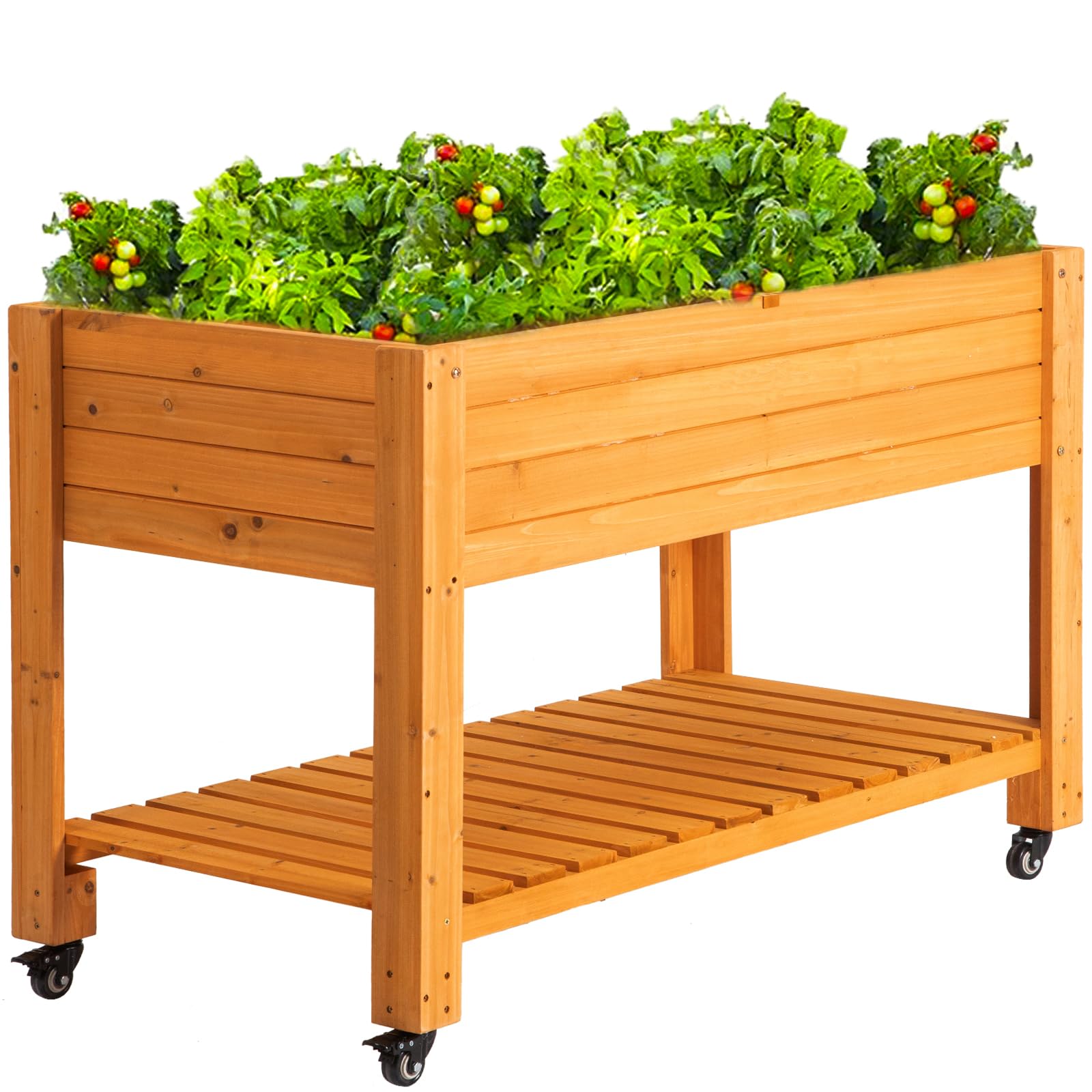
A mobile raised bed you can roll to follow the sun.
This is the only bed in the lineup that comes with four caster wheels, two of which lock, so you can move the entire planter around your patio or deck as the sunlight shifts. It holds 48 gallons of soil in a 48‑by‑24‑inch footprint and stands 33 inches tall, keeping you upright while you garden. The frame is made from natural fir wood with no chemical additives, polished smooth to prevent splinters.
The 2‑tier design includes a lower storage shelf for tools, and the package comes with a garden bed inner liner that prevents soil from washing out through the gaps. At 34 pounds, this is noticeably heavier than the BIRASIL bed (28 pounds), but the weight makes sense given the added mobility hardware. The improve structure also helps protect plants from pets and small animals.
One thing to consider: moving a fully loaded bed (48 gallons of wet soil plus plants) on casters requires a smooth, level surface. On grass or gravel, you will want to move it before filling it with soil.
What makes it different
- Four caster wheels with two locking brakes let you reposition the bed
- 48‑gallon capacity is large enough for a full vegetable garden
- Fir wood is polished smooth and free of chemical additives
- Includes a fabric liner to keep soil contained
What to watch for
- Wheels require a smooth, hard surface to roll when filled
- At 34 pounds, the empty frame is heavier than comparable non‑mobile beds
Best suited for: a patio or deck gardener who wants to chase the sun or move plants out of harsh weather.
skip it if: your bed will sit on grass or uneven ground where the wheels cannot roll.
5. BIRASIL Outdoor Wood Raised Garden Bed, improve Reinforced Large Planter Box (48”L, Natural Wood)

A surprisingly sturdy fir bed that has proven itself through snowy winters.
This raised bed measures 48.5 inches long by 24.4 inches wide by 30 inches tall, giving you a comfortable improve workspace without the higher price of cedar. It is built from non-paint, non-toxic 100% solid fir wood, which means no chemicals will leach into your organic soil. The frame includes an extra bottom shelf for storing tools and a non-woven fabric liner to keep soil contained while letting roots breathe.
Customers note that two of these beds lasted 2 years through snowy winters without any treatment, and the wood held up well. One owner mentioned they bought two more after the first pair performed so well. The assembly is straightforward with the included hardware — another reviewer called it easy to put together with an impact driver.
The main difference versus the Kdgarden bed above is size: the BIRASIL is slightly smaller (30 inches tall vs 33 inches). The BIRASIL has a 150-pound capacity rating, while the Kdgarden holds 48 gallons.. Both use fir wood, so neither will match cedar for natural rot resistance, but the BIRASIL costs less, making it a great entry point for someone trying improve organic gardening for the first time.
Why it earns its spot
- Proven durability — real reviewers point out 2 years through snow with no treatment
- Non-toxic fir wood is completely safe for organic vegetables
- Bottom shelf keeps tools handy while you garden
- Fabric liner and drainage holes prevent waterlogged soil
Where it cuts corners
- Fir wood needs sealing for longest life in wet climates
- Some owners noted the bottom rails are a potential weak point with wet soil
- Smaller capacity than similarly priced improve beds
A smart pick if: you are new to raised‑bed gardening and want a proven, affordable fir bed to start with.
Look past it if: you need the largest possible growing volume for the money.
6. Greenes Fence Classic Cedar Raised Garden Bed, 2′ x 8′ x 10.5″ (1/2″ Thick)
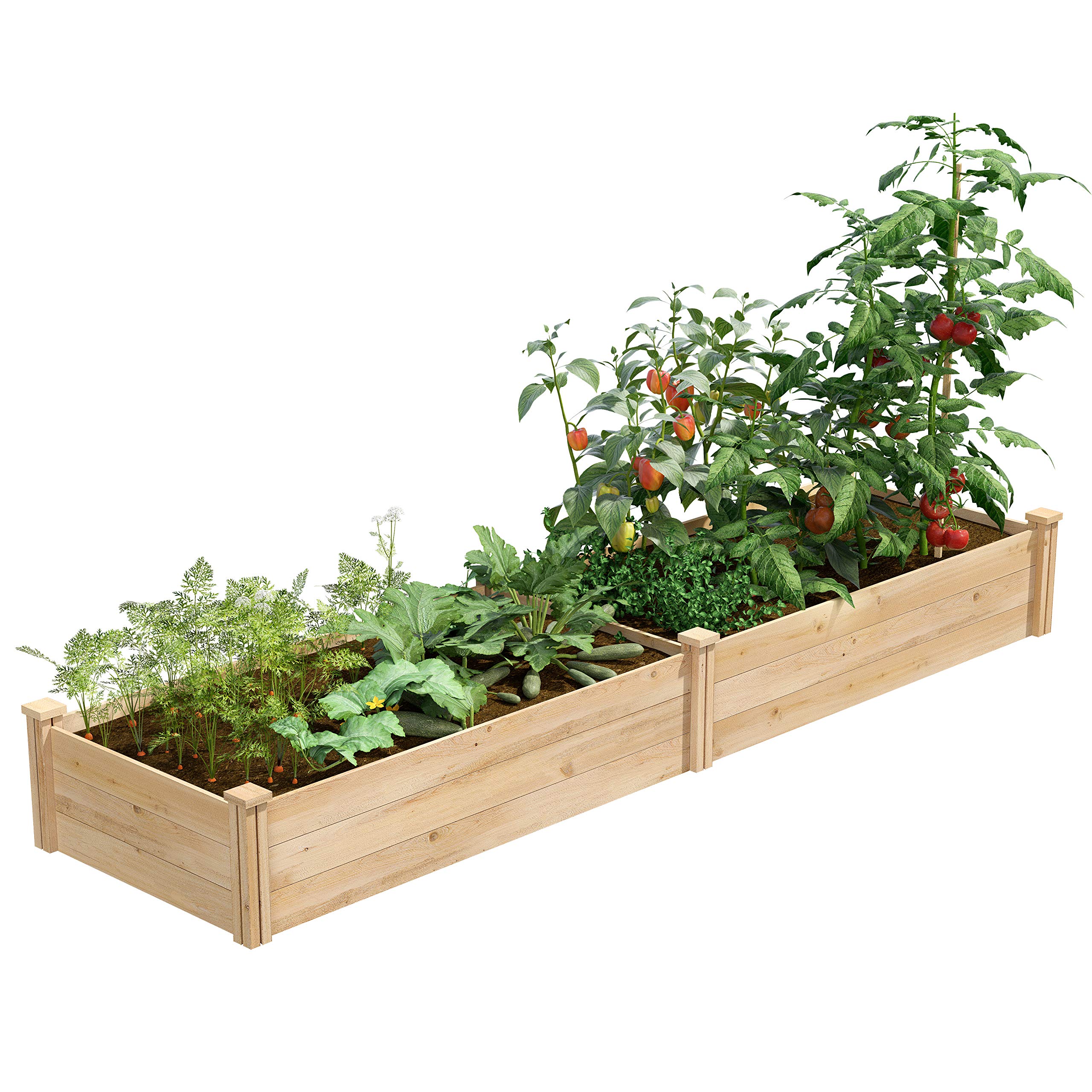
A long, low cedar frame that is easy to expand as your garden grows.
If you have the ground space and prefer a traditional ground‑level bed, this 2‑foot by 8‑foot frame gives you a massive 16‑square‑foot growing area. It is made from North American Cedar that is left untreated, so it is fully organic and safe for vegetables, herbs, and fruits. The boards are ½ inch thick and 3.5 inches tall, stacked to a total height of 10.5 inches — enough depth for most shallow‑root crops.
The standout feature here is the dovetail interlocking joints. Each board slides into the routed corner posts without any tools, and the frame can be stacked or connected with other Classic beds and add-on parts to create a larger garden. The corner posts measure 1.5 inches square and come with decorative 2.5‑inch‑square tops that screw on. Cedar naturally resists rot and insects, and the wood will weather to a silver-gray color over time if left unsealed.
Unlike the improve beds in this list, this one sits on the ground, so you will be bending or kneeling to plant and harvest. The ½‑inch board thickness also means it is lighter than the 1‑inch Infinite Cedar bed, but it is also more prone to warping over time in very wet soil.
The big advantage: dovetail joints allow tool‑free assembly and easy expansion — you can connect multiple beds to build a large garden layout.
The trade‑off: at 10.5 inches tall and ground‑level, it is best for herbs, lettuce, and flowers, not for deep‑root vegetables or gardeners who struggle to bend.
Grab this for: building a large ground‑level organic garden that you can expand over time with add‑on sections.
Skip this for: any scenario where you need an improve bed to avoid bending, or where thicker wood is needed for extreme wet climates.
Understanding the Specs
Cedar vs Fir Wood
These are the two untreated woods commonly used for organic raised beds. Cedar contains natural oils that resist rot and repel insects, so it lasts longer in contact with wet soil without any chemical treatment. Fir is less expensive and still safe for organic gardening, but it does not have the same natural rot resistance — it may need a food‑safe sealant to hold up beyond a couple of seasons in a wet climate.
Board Thickness
Thinner boards (around ½ inch) keep the bed lighter and cheaper, but they are more likely to warp or split as the soil inside expands and contracts with moisture and temperature changes. Thicker boards (around 1 inch) resist that bowing much better and generally add several years to the bed’s lifespan, especially in regions with freeze‑thaw cycles.
Soil Depth
This is the actual usable depth inside the bed (not the total height if it is improve). Around 7–11 inches is enough for most leafy greens, herbs, strawberries, and flowers. If you want to grow carrots, potatoes, or tomatoes, look for a bed with a depth of at least 12 inches so the roots have room to develop fully.
improve vs Ground Level
improve beds (usually 30–33 inches tall) let you garden while standing, which is a major benefit if you have back or knee issues. Ground‑level beds (usually 10–11 inches tall) offer a larger footprint for the price but require bending or kneeling. Both are fine for organic growing as long as the wood is untreated.
FAQ
Can I use pressure‑treated wood for organic raised beds?
Which lasts longer, cedar or fir?
How deep should a raised bed be for root vegetables?
Do I need to seal the wood on an organic raised bed?
Can I connect multiple Greenes Fence Classic beds together?
Will untreated cedar wood rot in the rain?
How much soil does an improve raised bed need?
Is fir wood safe for growing organic vegetables?
Final Thoughts: The Verdict
For the majority of shoppers, the wood for organic raised beds winner is the Infinite Cedar Premium Cedar Raised Garden Bed because the 1‑inch thick North American Western Red Cedar frame offers class-leading rot resistance and a 5‑year warranty. If you want a back‑saving improve bed, grab the Greenes Fence Original Cedar improve Garden Bed. And for a budget‑friendly start, the BIRASIL Outdoor Wood Raised Garden Bed has proven itself through real winters without treatment.
How We Picked
We do not accept paid placement. Every pick is matched to a real buyer and a real use-case; we do not hands-on test units.
Sources & Methodology
Specifications: manufacturer listings and product documentation. Review insights: verified customer reviews, as of July 2026. Pricing: not shown on this page (it changes often); check the current price via the retailer link.
As an Amazon Associate, Lawn Gear Lab earns from qualifying purchases. This does not affect which products we feature.