
Specs are compiled from manufacturer listings and verified buyer reviews and can change over time — please confirm the key details on the product page before buying.
Picking the wrong wood for your garden bed means you will feel it in your back every time you lean over—and watch the wood rot after one wet season. The real trick is finding a raised planter made from untreated solid wood that gives you a genuinely comfortable working height, holds enough soil for strong roots, and stays together through rain and sun without chemicals leaching into your vegetables. This guide breaks down the seven best options by their defining specs, so you know exactly which one fits your yard, your back, and your growing ambitions.
I’m Rikta — the founder and writer behind Lawn Gear Lab. This guide is built by comparing the manufacturers’ published specifications and the patterns across verified customer reviews, so you get each pick’s real strengths and trade-offs instead of marketing spin.
The key specs you need to compare are the wood species (the type of tree the wood comes from), the soil capacity (the amount of soil it holds, measured in cubic feet), the finished height (how tall the bed is from ground to rim), and how the bed handles drainage over time.
Our Picks at a Glance

How To Choose The Best Wood For Garden Beds
Your first decision is what the bed is made of. Untreated solid woods like cedar and fir resist moisture and insect damage without needing chemical preservatives, which is crucial when you are growing food. Softwoods like pine can work if you protect them with a food-safe sealant, but expect a shorter lifespan. Look for boards thick enough to hold soil pressure without bowing—at least 0.7 inches on the side panels gives you a sturdy feel.
Height: The difference between bending and standing
Your back is the real decider here. A bed that sits at 30 inches tall lets you garden without bending over, which is a standout if you have back pain or limited mobility. Ground-level beds around 10 to 16 inches are cheaper and hold more soil for the footprint, but they require you to kneel or stoop. If you plan to sit on the edge or use a stool, a height of 16 inches can still be comfortable for many people.
Soil capacity: Matching space to what you want to grow
The amount of soil a bed holds—measured in cubic feet (a cube that is 1 foot wide, 1 foot long, and 1 foot deep)—determines what root systems can thrive. For shallow-rooted herbs and lettuce, a capacity of 3 to 4 cubic feet is sufficient. Deep-rooted vegetables like tomatoes, peppers, and carrots need at least 6 to 8 cubic feet of soil to spread out. A larger capacity also means the soil stays moist longer between waterings during hot weeks.
Drainage and finishing
Waterlogged roots rot fast, so a good garden bed needs proper drainage holes or gaps at the bottom. Some beds come with a pre-installed liner (a permeable fabric or plastic sheet) that keeps soil from spilling while letting water pass through. Unfinished wood needs a protective coat of food-safe oil or paint to extend its life, but water-based finishes are safer for edible plants than chemical sealants. Check whether the wood is already painted or finished when it arrives—this saves you a weekend of work.
Quick Comparison
| Model | Best For | Soil Capacity | Height | Wood Type | Amazon |
|---|---|---|---|---|---|
| SoliWood Raised Garden Bed★ Best Overall | Best Overall Pick | 6 cubic feet | 30 inches | Cedar Wood | Amazon |
| Greenes Fence improve Garden BedPremium Cedar Build | Premium Cedar Build | 4.8 cubic feet | 31 inches | Cedar Wood | Amazon |
| AMERLIFE 8×4 Ft Raised Bed | Large Growing Area | 44 cubic feet | 15 inches | Fir Wood | Amazon |
| Yaheetech Wooden Raised Bed | Light & Sturdy Mid-Range | 5.47 cubic feet | 16 inches | Fir Wood | Amazon |
| DUMOS Raised Garden Bed | Back-Friendly improve Bed | 3.74 cubic feet | 30 inches | Fir Wood | Amazon |
| Crownland Outdoor Gardens Raised Bed | Long & Low Planter | — | 10 inches | Fir Wood | Amazon |
| Giantex Raised Garden Bed Set | Compact Set of Two | — | 10 inches | Pine Wood | Amazon |
In‑Depth Reviews
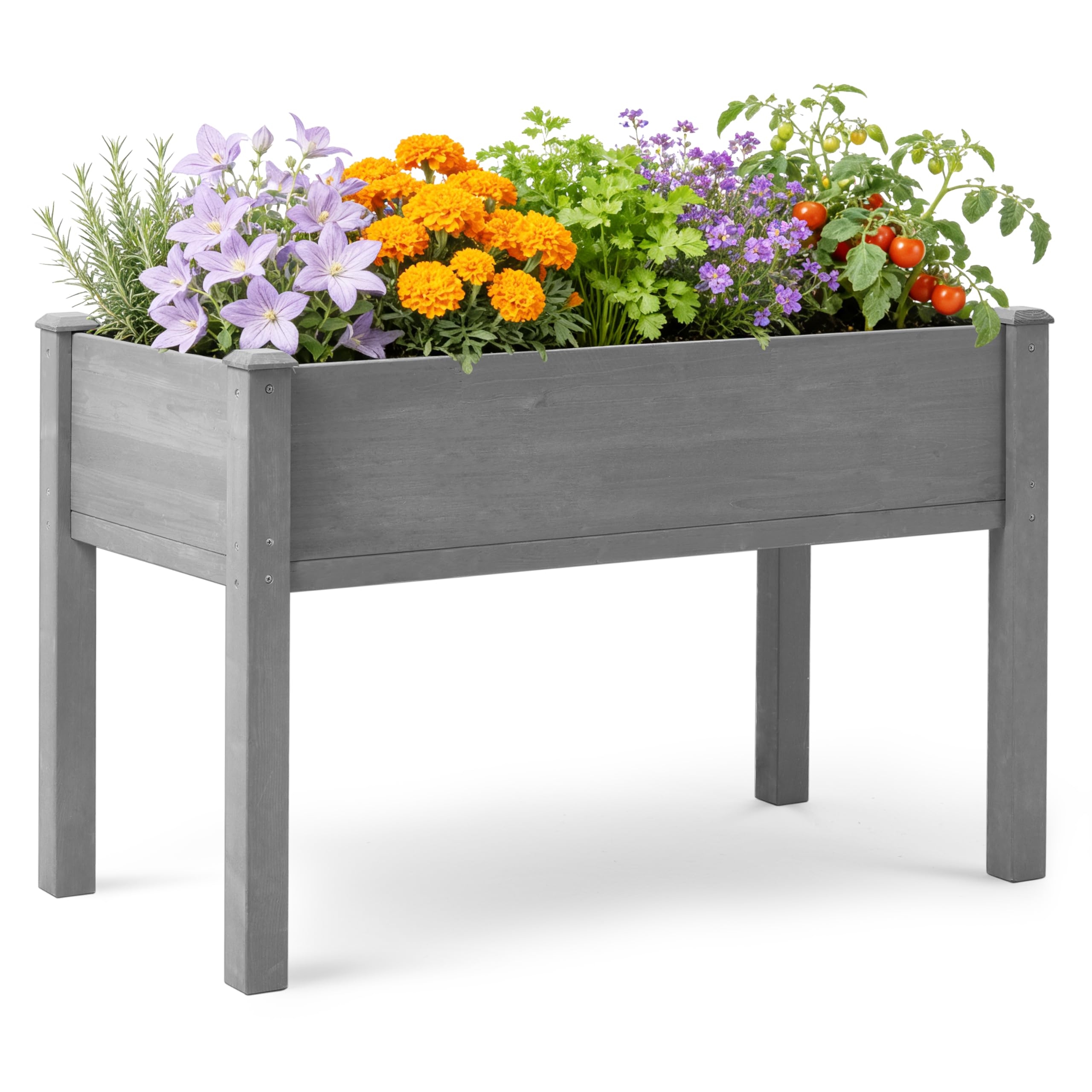
1. SoliWood Raised Garden Bed with Legs, 48x24x30
Our pick — over 4.5★ from 850+ verified ratings; the strongest balance of quality and price.
This cedar bed holds the most soil at a back-saving 30 inches, with a water-based finish you can trust for food.
If you want one bed that ticks every box—generous soil capacity, a comfortable working height, and a wood species that naturally resists rot—this SoliWood is the one. At 6 cubic feet, it holds enough soil for deep-rooted vegetables like tomatoes and peppers without cramping them. At 30 inches tall, you do not bend over at all. Buyers report that the assembly is easy even for a 76-year-old, because the pre-drilled holes line up perfectly and the frame comes together in about 30 minutes.
This bed is made from well-picked natural solid cedar with a grey water-based paint finish. Unlike seal paints or iron steel frames, this water-based coating does not release harmful substances into your fruits and vegetables. SoliWood claims it “lasts more longer.” At 38.9 pounds, the cedar frame is substantial enough to feel solid without being impossible to move when empty. The 2.4-inch pole legs and 0.7-inch frame panels give it a weight capacity of 300 lbs, so you can fill it with dense, wet soil.
One practical caution from owners: the wood can split slightly if you over-tighten screws during assembly, so drive them gently. But the overall feedback is overwhelmingly positive—it looks classy in a small yard, the grey color is better in person than in photos, and the included liner keeps soil tidy.
Why It Earns the Top Spot
- 6 cu. ft. capacity holds the most soil among improve picks
- 30-inch height means zero back strain while planting and weeding
- Natural cedar resists moisture and insects without chemical treatment
- Water-based finish is safe for edible gardens
The Trade-Off to Know
- Wood can split if screws are over-tightened during assembly
- At 38.9 pounds, it is heavier to move than the Yaheetech bed (20.2 lbs)
Your Best Bet If: You want a single improve bed with the most soil capacity, a back-friendly 30-inch height, and natural cedar that is safe for growing food.
Look Closer If: You need a very lightweight box to move around frequently, or you prefer a ground-level bed that spreads wider across the yard.
2. Greenes Fence Original Cedar improve Garden Bed
At 31 inches tall—the highest in this lineup—this untreated American cedar bed lets you garden from a seated position.
Greenes Fence takes a different approach: they use untreated North American cedar, made in the USA, with a rustic unfinished surface. The internal growing space measures 47 inches long by 23.75 inches wide by 7.5 inches deep, holding up to 4.8 cubic feet of soil. At 31 inches tall to the top of the frame, this is the highest bed in the lineup, which is ideal if you need to garden from a seated position or if you have serious back and knee issues.
Owners consistently mention the amazing cedar scent and the straightforward assembly. One reviewer noted that it only takes about 15 minutes with a rubber mallet, though a couple of the cap pieces may need a drill or screwdriver. The bottom drains through slats and an included fabric liner (a permeable cloth that keeps soil in while letting water out), so water flows freely while soil stays put. The trade-off here is that the lumber comes rough-cut and splintery—multiple buyers recommend wearing gloves and spending some time sanding the edges before filling it with soil.
Owners mention that when filled, this bed is quite heavy and holds roughly three 50-quart bags of soil. The natural drainage between the bottom slats and the tight side slats means you do not need to drill extra holes, but the unfinished cedar will weather to a silvery grey over time. Most owners feel it is a good value if it lasts three years or more, especially compared to cheaper options that fall apart after one season.
what separates it
- Untreated North American cedar is naturally rot- and insect-resistant
- 31-inch height is the tallest, perfect for seated or no-bend gardening
- Assembly is fast at roughly 15 minutes with basic tools
- Fabric liner and slatted bottom provide excellent drainage
Things to Plan For
- Rough-cut lumber requires sanding and gloves to avoid splinters
- At 7.5 inches deep, it is shallow for deep-rooted crops like carrots
Reach For This If: You want untreated American cedar with a tall frame, and you are okay spending a little time sanding the rough edges for a smooth finish.
skip it if: You need deep soil for root vegetables, or you prefer a ready-to-go bed that needs no prep work before planting.
3. AMERLIFE 8×4 Ft Wood Raised Garden Bed
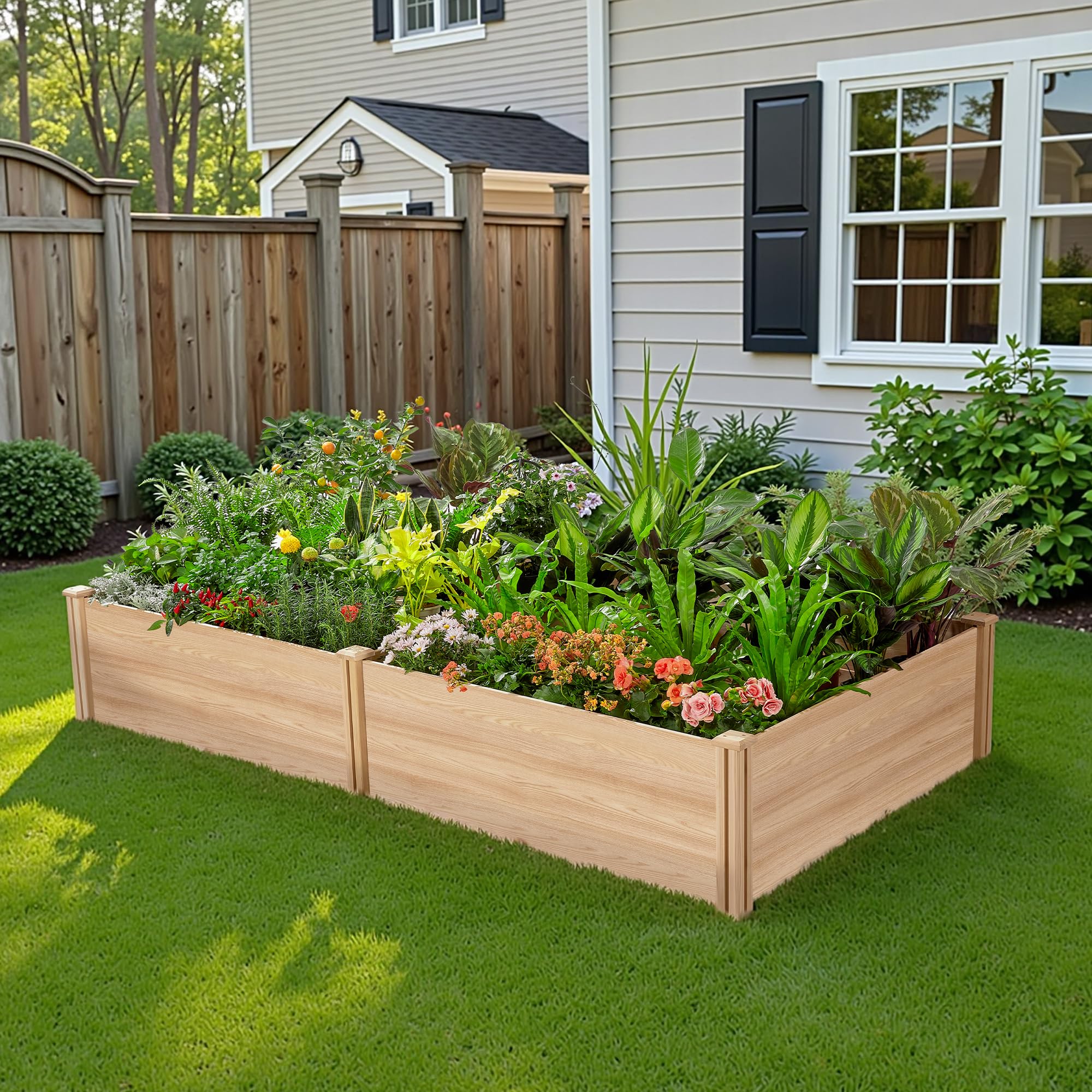
You get a massive 44 cubic feet of soil—at 44 cubic feet versus the SoliWood’s 6 cubic feet—with a tool-free assembly that takes 15 minutes.
This AMERLIFE bed is in a different league for sheer size. It spans 92.5 inches long by 45.5 inches wide, giving you 44 cubic feet of planting space with a 15-inch depth. That is 44 cubic feet, compared to the SoliWood’s 6 cubic feet. If you plan to grow a serious vegetable garden with rows of tomatoes, peppers, lettuce, and herbs all in one place, this is the bed that makes it happen. The 15-inch depth is enough for most root vegetables, though very deep-rooted plants like parsnips may still be cramped.
The construction is clever: it uses a mortise and tenon structure (a woodworking joint where a peg fits into a hole, no nails or screws needed) with a central divider, which means you do not need any tools to put it together. Buyers confirm that assembly takes less than 30 minutes, and many say it is straightforward even for one person. The bed is made from high-quality fir wood, which is naturally durable but unfinished. That means you should plan to apply a food-safe sealant to extend its life beyond a couple of seasons, especially in wet climates.
One owner noted that the center poles can develop cracks if you pull the boards in and out too much, but this does not seem to affect the overall usefulness of the bed. The open-base design allows water to drain freely, which is excellent for preventing root rot. At 45 pounds, this is a permanent fixture in your yard, not something you move around.
The Big Advantage
- 44 cu. ft. capacity is by far the largest growing area in this lineup
- Tool-free assembly with mortise and tenon joints saves time
- 15-inch depth supports a wide variety of vegetables and herbs
- Open-base drainage prevents water buildup
What You Give Up
- Unfinished fir needs a protective sealant to last multiple seasons
- At 45 pounds and 8 feet long, it is not portable or easy to reposition
Choose This For: A large, permanent vegetable patch that you can assemble in minutes without tools, and you are willing to seal the wood yourself.
Pass If: You need a portable bed, a tall improve design, or you do not want to apply a protective finish before planting.
4. Yaheetech 46″ L × 23.5″ W × 16″ H Wooden Raised Garden Bed
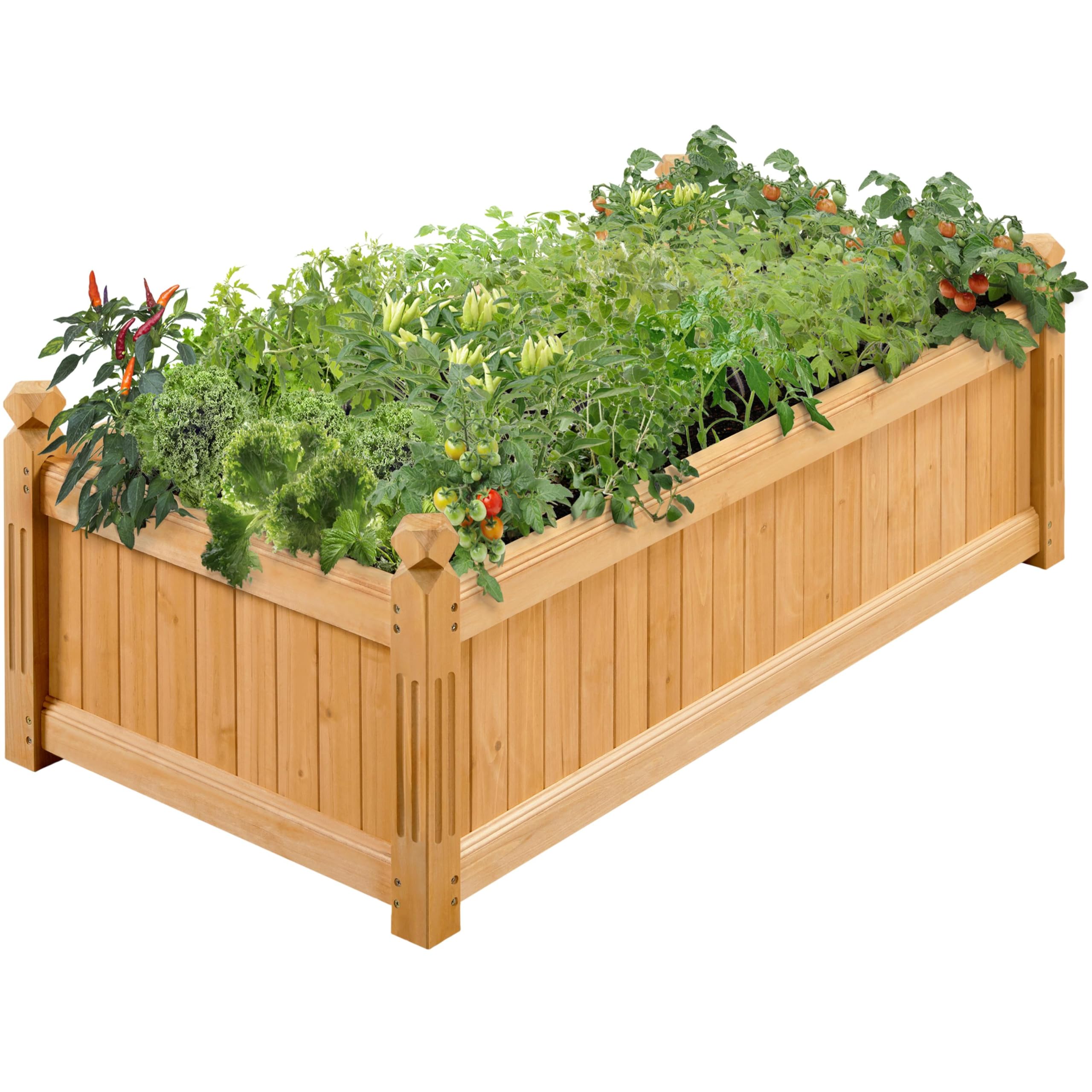
At 20.2 pounds, this fir bed is the lightest full-size pick—but still holds a solid 5.47 cubic feet of soil.
At 20.2 pounds, the Yaheetech bed is noticeably lighter than the SoliWood improve bed at 38.9 pounds, making it easy to move around your yard before filling it. Despite the light weight, it holds a respectable 5.47 cubic feet of soil, versus the DUMOS improve bed’s 3.74 cubic feet. The 16-inch height is a good middle ground—you will still need to bend or kneel to reach the center, but it is far easier on your back than planting directly in the ground.
This bed is constructed from durable fir wood with a fine spray painting finish that comes pre-painted in a light brown color. Owners say it is “very well made and sturdy” and that assembly is super easy, with only four screws required to put it together. One buyer in Colorado reported that they did not need to stain or treat the wood because of the dry climate. The side boards are single solid pieces, which prevents the soil leakage that can happen with beds made from multiple small slats.
The bottom has four-cornered drainage to prevent water buildup, though some owners note that the gaps between the bottom boards are wider than they would like. A simple landscape fabric or the included liner solves that issue. Customers note that their plants are loving it, and the box looks beautiful in the garden.
Where It Shines
- At 20.2 pounds, it is the lightest full-size bed in the lineup
- 5.47 cu. ft. capacity provides plenty of room for vegetables and flowers
- Pre-painted finish saves you a weekend of sealing work
- Single-piece side boards prevent soil leaks
The Minor Annoyance
- Bottom board gaps may need a liner to prevent soil from falling through
- 16-inch height still requires some bending compared to 30-inch beds
Best For: Gardeners who want a lightweight, pre-finished fir bed that is easy to assemble and move, with solid soil capacity for a ground-level box.
Not For: Anyone who needs a 30-inch improve design to avoid bending completely, or who wants ultra-deep soil for long-root vegetables.
5. DUMOS Raised Garden Bed 48x24x30 Inch
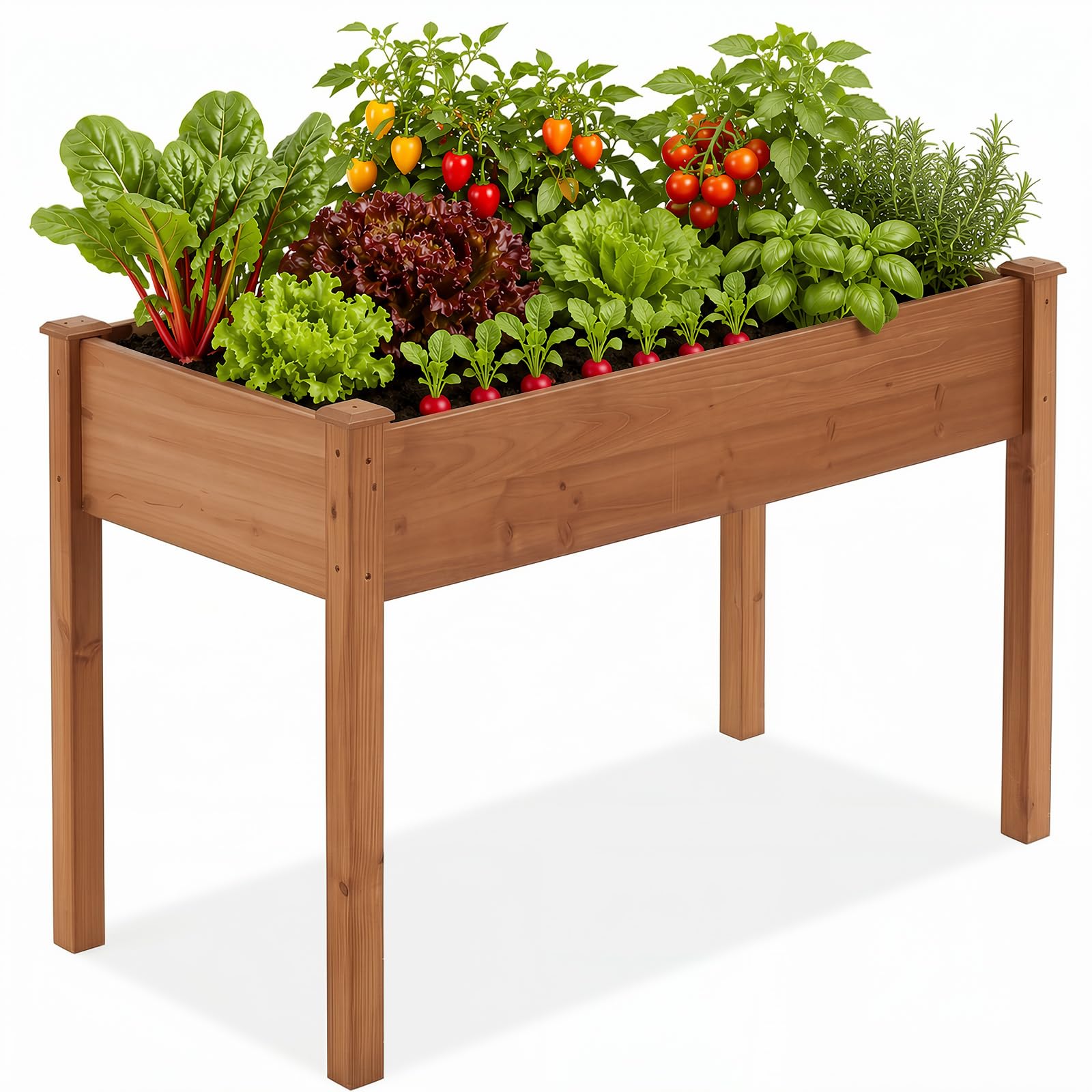
An improve fir bed at 30 inches that saves your back but holds less soil than the SoliWood—3.74 cubic feet vs. 6.
Like the SoliWood, the DUMOS raised bed sits at 30 inches tall, making it a genuine back-saver for anyone with back pain or limited mobility. Buyers specifically mention that the great height helps with back issues, and one owner noted that assembly is doable by a single person. It supports up to 200 pounds, which is enough for typical soil and plant loads.
The construction uses all-natural fir wood, which is weather-resistant and moisture-proof by nature, though some owners note that the wood is unfinished and needs sealing to last. One reviewer applied food-safe tung oil and used the included PEVA liner (a plastic-like fabric that resists moisture) on the sides only, leaving the bottom open for drainage. The bed features an intelligent drainage system with well-placed holes and gaps to prevent water accumulation. The included liner keeps soil from spilling while preserving drainage.
A minor quibble from some owners: the depth of the bed is only about 7 inches, which is shallow for deep-rooted plants. One customer wished the depth was more than 7 inches. Also, some users report it can feel a little wobbly when empty, though it holds the weight of soil and plants without issue once filled. Overall, the value is strong for an improve bed at this price tier.
Why It Works
- 30-inch height eliminates the need to bend, a real help for back pain
- Includes a liner and drainage holes for healthy root growth
- All-natural fir wood is weather-resistant without chemicals
- Easy assembly that one person can handle
The Catch
- At 3.74 cu. ft., soil capacity is noticeably lower than the top pick
- Shallow depth (roughly 7 inches) limits deep-rooted vegetables
- Some wobbliness when empty, though it is stable when filled
Grab This If: You need an affordable improve bed at 30 inches for herbs and shallow-root plants, and you appreciate the confidence from the included liner and drainage design.
Not Ideal For: Growing tomatoes, carrots, or other deep-root vegetables that need more than 7 inches of soil depth.
6. Crownland Outdoor Gardens 8 ft Raised Garden Bed

A 96-inch-long fir wood bed at a low 10-inch height—ideal for sprawling herb gardens along fences or pathways, but reviewers point out it only lasts one season.
If you want a long, low profile that hugs the ground and runs along a fence line or borders a pathway, the Crownland bed gives you 96 inches of length by 24 inches wide by 10 inches high. The shallow 10-inch height means you will be working close to the ground, so this is best for gardeners who are comfortable kneeling or using a garden stool. The bed is made from 100% natural solid fir wood with an unfinished surface, which is friendly to the environment and contains no harmful substances.
Assembly requires a mallet for tight slots because there are no predrilled holes except in the legs. Some buyers found that they needed a drill for the nails. Instructions advise assembling the box shape first, ensuring the post holes are on top, and tapping the rails in with a mallet. The bed includes dividers and a liner, which is a nice touch for organizing different plant varieties. The open-bottom design keeps water from pooling.
The real issue with this bed is longevity. Multiple shoppers say that it only lasted one season before falling apart. One buyer mentioned the wood rotted significantly after about three years, and another called it “not made well” and recommended switching to galvanized steel (steel coated with zinc to prevent rust). If you live in a dry climate and apply a weatherproofing treatment immediately, you might get more life out of it, but this is not a low-maintenance product.
What Makes It Unique
- 96-inch length covers a lot of ground for a linear garden bed
- 100% natural solid fir wood with no chemical treatments
- Includes dividers for organizing different plants
- Open-bottom design prevents waterlogging
The Hard Truth
- Multiple buyers report the bed only lasting one season before rotting
- Assembly is more involved—needs a mallet and possibly a drill
- Low 10-inch height requires kneeling or bending
Reach For This If: You need a very long, low planter for a fence line or border, and you are prepared to apply a weatherproofing treatment right away to extend its life.
pass on it if: You want a bed that lasts multiple seasons without extra maintenance, or you prefer a taller design that saves your back.
7. Giantex Outdoor Raised Garden Bed Set of 2
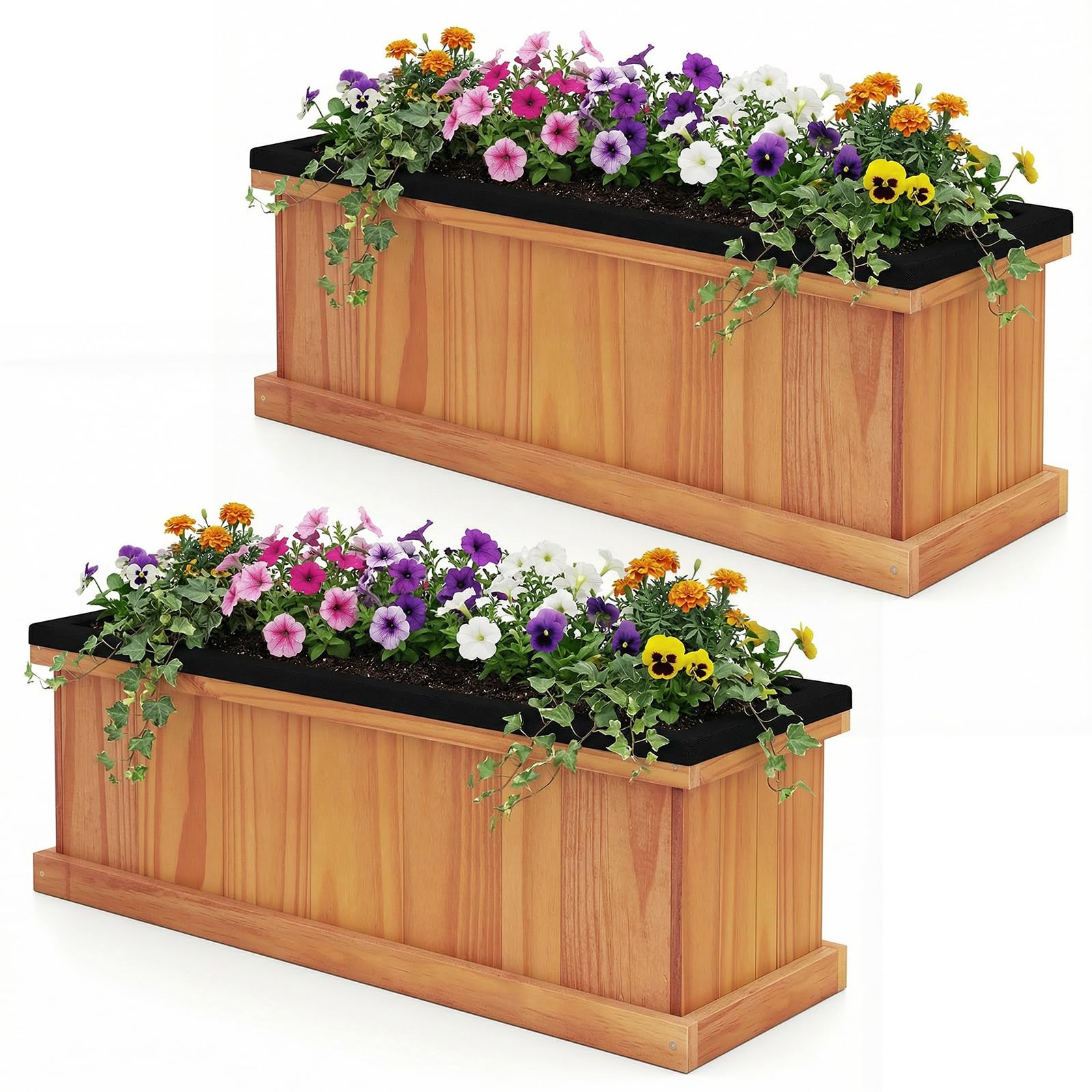
A pair of compact pine planters at 28 by 10 by 10 inches each—each box supports up to 88 pounds and assembles in 10 minutes.
For small-space gardening on a balcony, patio, or entryway, this Giantex set gives you two 28-inch by 10-inch by 10-inch boxes made from premium pine wood with a protective finish. Each planter supports up to 88 pounds, and the compact footprint means you can fit them on a narrow deck or next to a door. The pine wood is deform-resistant and splinter-free, with a warm natural color that owners say looks great in the garden.
Assembly is quick—owners mention taking about 10 minutes per box, and under 30 minutes to put together both. The planter comes with three built-in drainage holes and bottom gaps that promote proper water flow. The included liner prevents soil loss and keeps the wood from direct contact with wet soil, which should help the pine last longer. The removable bottom panel supports deep-root growth, though at 10 inches of depth, you are still limited to shallow-root plants like herbs, lettuce, and flowers.
One important note from a disappointed buyer: the bottom is not attached, so when you fill the box, soil and water can leak out at the edges. This owner found that the planter essentially functions as a facade for other pots placed inside. However, most other buyers had a positive experience, saying the planters made their plants look great and that the pre-drilled holes and liners were thoughtful features.
The Compact Advantage
- Comes as a set of two boxes, giving you flexible placement options
- Quick 10-minute assembly per box saves time
- Includes drainage holes and liners for healthy roots
- Pine wood has a protective finish that resists outdoor wear
What to Watch For
- Some customers note the bottom is not attached, allowing soil to leak
- At 10 inches tall, it is only suitable for shallow-root plants
- Small capacity limits how much you can grow per box
Best For: A compact pair of planters for herbs and flowers on a small balcony or patio, where quick assembly and included liners make setup easy.
Not For: Serious vegetable gardening, deep-root crops, or anyone who needs a sealed bottom that does not leak soil.
Understanding the Specs
Wood Species: Cedar vs Fir
Cedar is the gold standard for untreated garden beds because it contains natural oils that resist rot and repel insects without any chemical treatment. It tends to be lighter and more expensive than fir. Fir is also naturally durable and weather-resistant, but it benefits from a food-safe sealant or paint to extend its life beyond a couple of seasons. Pine is the softest and cheapest option, but it will break down fastest unless it is well-protected with a finish.
Height and Your Back
This is the spec that determines how comfortable your gardening experience will be. Beds at 30 to 31 inches let you stand upright while planting, weeding, and harvesting—no bending required. Beds at 15 to 16 inches still require some leaning forward, but are much easier on your back than ground-level beds. At 10 inches, you are basically gardening at ground level, which demands kneeling, squatting, or sitting on a low stool. Match the height to your mobility and comfort level.
Soil Capacity and Drainage
Soil capacity, measured in cubic feet, tells you how much growing medium you can fill the bed with. More cubic feet means deeper roots and more plants, but also more weight and a higher cost to fill the bed. Proper drainage is equally critical—look for pre-drilled holes, bottom gaps, or slatted bases that let excess water escape. A liner helps keep soil inside while still allowing water to flow through. Without good drainage, roots will rot and your plants will struggle.
Finish and Longevity
Some garden beds arrive pre-painted or with a water-based finish, which saves you the job of sealing the wood yourself. Unfinished beds need a protective coat of food-safe oil, tung oil, or exterior paint to stand up to rain and sun. Natural wood will weather to a grey patina over time, but sealing it slows the breakdown process significantly. If you want a bed that lasts three or more seasons without extra work, choose a pre-finished model or be ready to apply a sealant before filling it with soil.
FAQ
Can I use pressure-treated wood for a vegetable garden?
Which wood lasts the longest in a raised garden bed?
How deep should a raised garden bed be for tomatoes?
Do I need to seal or paint a wooden garden bed?
Can I place a wooden garden bed on concrete or a deck?
How many cubic feet of soil do I need for a 4×8 raised bed?
What is the best height for a raised garden bed to avoid back pain?
Can I leave a wooden garden bed outside in winter?
Is cedar worth the extra cost over fir or pine?
How do I prevent soil from leaking out of the bottom of a wooden planter?
Final Thoughts: The Verdict
For most buyers, the wood for garden beds winner is the SoliWood Raised Garden Bed because it combines natural cedar construction with a spacious 6 cubic feet of soil, a back-saving 30-inch height, and a water-based finish that is safe for edible gardens. If you want a