
Specs are compiled from manufacturer listings and verified buyer reviews and can change over time — please confirm the key details on the product page before buying.
You sink into the mud, your socks are soaked, and you spend more time rinsing off your boots than you do weeding. A good pair of garden boots should let you step into wet soil and muck without a second thought, then hose off clean in seconds. The right pair changes gardening from a messy chore into something you can do in any weather without ruining your day.
I’m Rikta — the founder and writer behind Lawn Gear Lab. This guide is built by comparing the manufacturers’ published specifications and the patterns across verified customer reviews, so you get each pick’s real strengths and trade-offs instead of marketing spin.
Whether you are pulling weeds in the rain, feeding animals in a muddy pen, or digging up your vegetable patch, you need a boot that seals water out, holds onto slippery ground, and does not weigh you down. These six picks are the most honest options for anyone searching for the best women’s garden boots that actually keep you dry and moving.
Quick Picks
- Trudave Rubber Boots for Women with Steel Shank — Best Overall
- Showave Women’s Garden Boots Rubber Rain Boots — Versatile Mid-Calf
- MUCK womens Originals Ankle — Premium Comfort
- Showave Women’s 6 Inch Ankle Deck Boots — Lightweight Ankle
- HISEA Women’s Ankle Rain Boots, Rubber Fishing Deck Boots — Budget Champion
- HISEA Women’s Waterproof Mid-Calf Rain Boots — Entry-Level Mid-Calf
How To Choose The Best Women’s Garden Boots
Grabbing any old rain boot from the hardware aisle is a gamble. Garden boots face mud, water, sharp tools, and hours of standing. A few key details separate a boot that lasts years from one that cracks or leaks in one wet season.
Height Matters More Than You Think
Ankle-height boots (around 6 inches) are great for light weeding and quick trips into damp grass. But if you kneel in wet soil or step into deeper mud, you want a mid-calf boot that sits above the muck line. Taller boots keep water from sloshing over the top when you squat or kneel.
Material Is The Real Waterproof Factor
Natural rubber is tough and flexible but can crack over time if not cared for. Neoprene (the same stretchy material used in wetsuits) adds warmth and a snug fit without chafing. Most good garden boots combine a neoprene inner bootie with a rubber outer shell for a waterproof seal that also breathes.
Traction Keeps You Upright
A flat sole is dangerous on wet grass and muddy slopes. Look for deep lugs (the raised treads on the bottom) that push mud out as you walk. A steel shank (a rigid strip built into the sole) adds stability so you do not feel every rock and root underfoot.
Weight Determines Fatigue
Heavy boots tire your legs fast when you are standing and walking all day. A boot that weighs around 1 pound per boot is noticeably easier to move in than a boot that weighs 4.5 pounds. If you do a lot of walking in your garden, lightweight builds are a real advantage.
Quick Comparison
| Model | Best For | Height | Weight | Material | Amazon |
|---|---|---|---|---|---|
| Trudave Rubber Boots | Heavy muddy work | Mid Calf | — | 6mm Neoprene / Rubber | Amazon |
| Showave Women’s Garden Boots | Versatile garden chores | Ankle / Mid Calf | — | Rubber | Amazon |
| MUCK Originals Ankle | Maximum comfort & durability | Ankle | 4.5 Pounds | Neoprene / Hand-Laid Rubber | Amazon |
| Showave 6″ Ankle Deck Boots | Lightweight casual wear | 6 inch | — | Neoprene Rubber | Amazon |
| HISEA Women’s Ankle Rain Boots | Value & portability | Ankle | 1 Pounds | Rubber | Amazon |
| HISEA Mid-Calf Rain Boots | Entry-level mid-calf | Mid-Calf | — | Rubber | Amazon |
In‑Depth Reviews
1. Trudave Rubber Boots for Women with Steel Shank
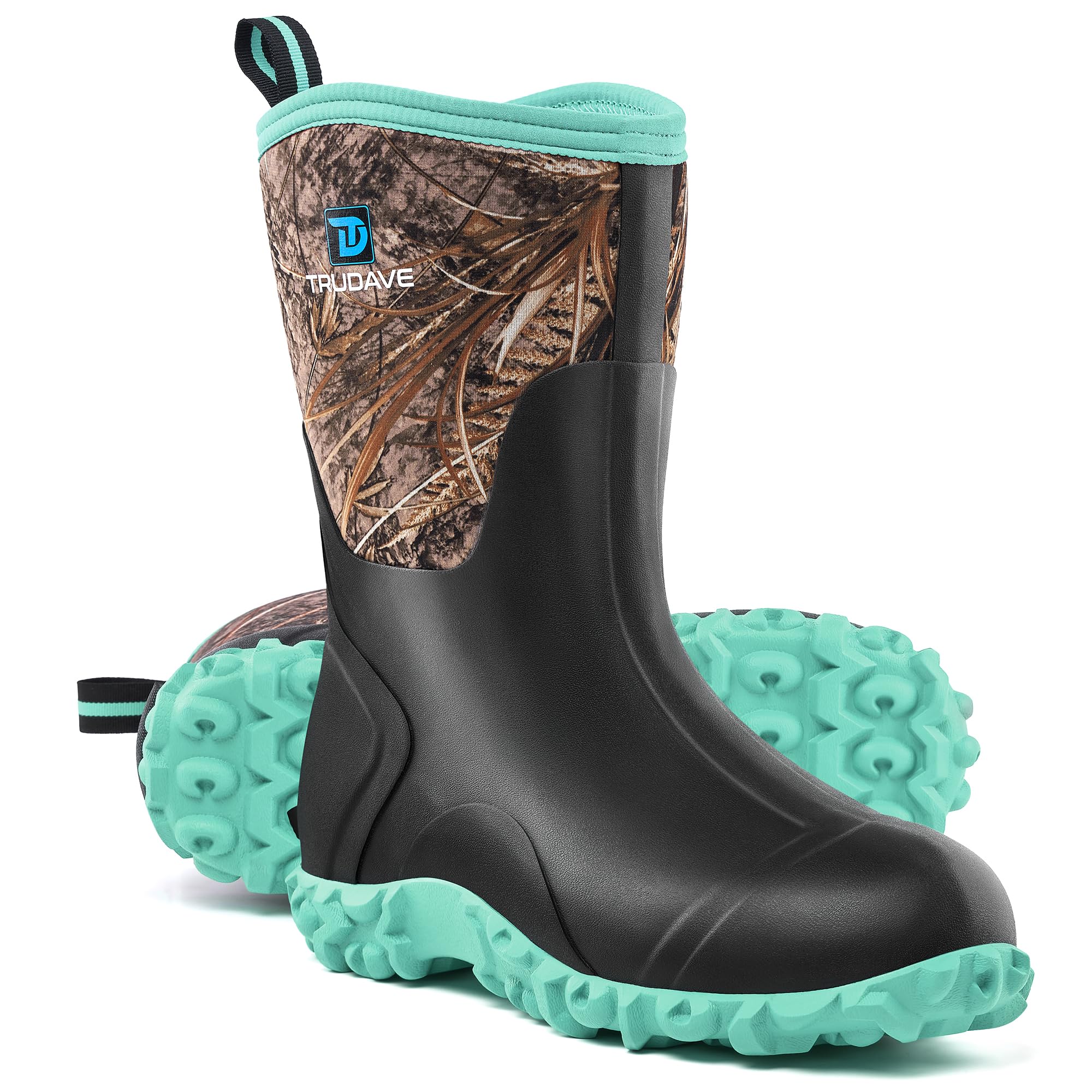
The mid-calf workhorse that laughs at muddy soil and sharp rocks.
This boot gives you a built-in steel shank (a rigid strip molded into the sole) that keeps your foot stable on uneven ground, so you feel less of every buried stone and root. The 6mm neoprene inner is soft and breathable, wrapped in a thickened rubber shell that is 100% waterproof — your feet stay dry even when you tread through standing water in the garden path.
Buyers report the anti-slip outsole has a deep tread pattern that grips wet mud and grass without caking up, meaning you are less likely to slip when carrying a heavy watering can. Unlike lighter ankle boots, this model gives you mid-calf coverage for kneeling in wet soil, and the pull tabs make it easy to yank on even with muddy hands.
The non-slip outsole and reinforced protective toe set it apart from simpler garden boots that offer no toe protection at all. It is a premium mid-calf option that covers more ground per step.
Built for the Mud
- Steel shank adds underfoot stability on uneven garden beds
- 6mm neoprene is soft, warm, and breathable for all-day wear
- Reinforced protective toe for accidental kicks against tools
A Few Trade-Offs
- Available only in women’s sizes 5 to 11
- Heavier build than ankle-height alternatives
Your mud-season pick: Choose this if your garden work involves wet soil, kneeling, and uneven ground — the steel shank and waterproof rubber shell handle all three without complaint.
A quick note: This is a mid-calf boot with more material, so it feels heavier than the lightweight ankle boots in the list.
2. Showave Women’s Garden Boots Rubber Rain Boots
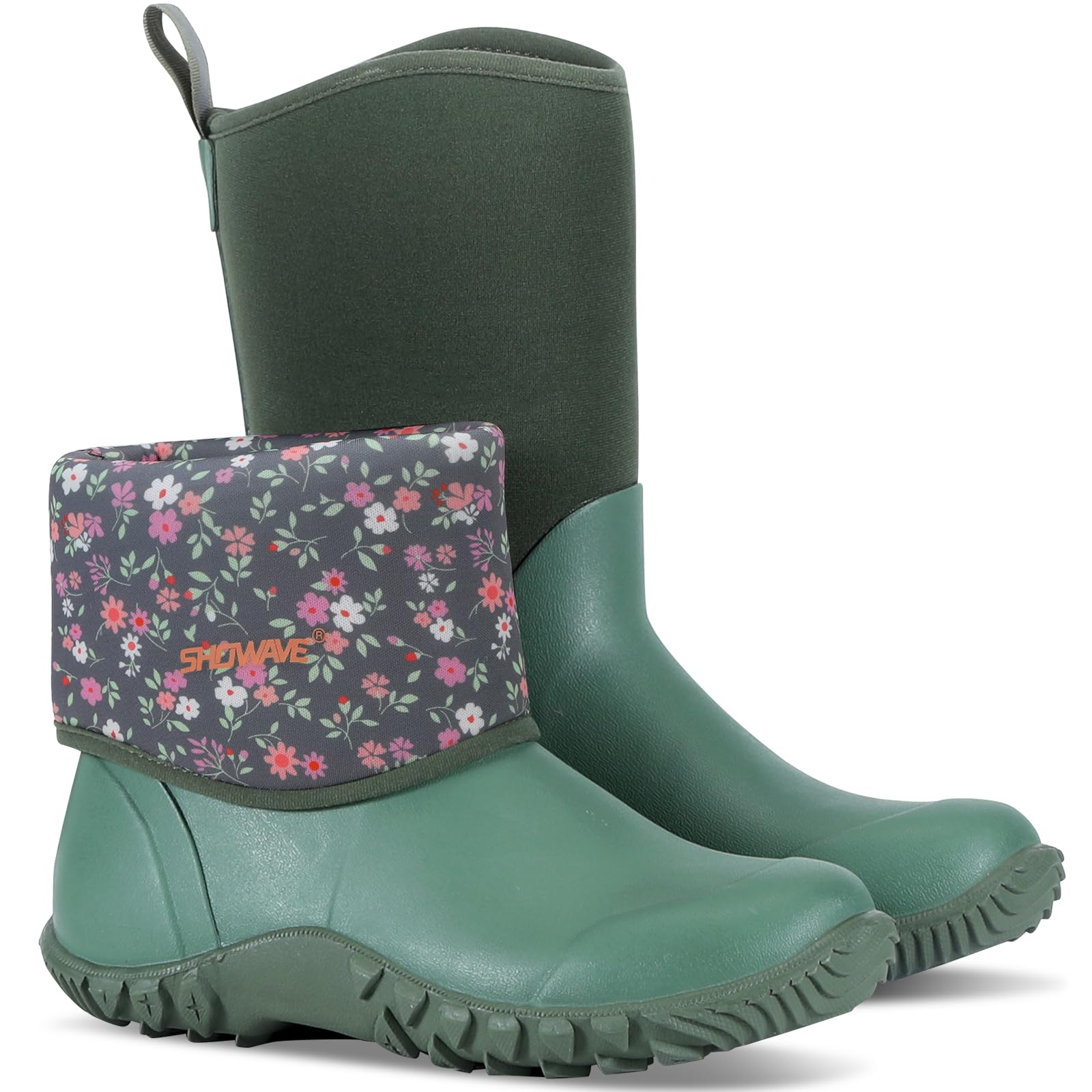
A rubber boot that shifts between ankle and mid-calf coverage for any task.
This boot gives you a choice of shaft height — wear it as an ankle boot for quick trips or pull it up to mid-calf when the mud gets deeper. It is fully waterproof and insulated, so your feet stay warm during chilly morning watering sessions and dry through afternoon showers. The rubber material hoses off clean in seconds.
Owners mention the fit is roomy enough for thicker socks, which is a welcome detail for colder months. Unlike the Trudave above, this model does not include a steel shank, so it is a better fit for lighter garden work like weeding, planting, and walking on flat soil rather than rocky terrain.
It shares the same waterproof and insulated features as the Showave ankle deck boots but offers that extra calf coverage when you need it. A flexible middle-ground option.
Why it fits most gardens: The adjustable height between ankle and mid-calf means one boot handles everything from dry weeding to wet muck without needing a second pair.
The honest trade-off: Without a steel shank, it is best for flat, soft ground — not for rocky or heavily uneven garden paths.
Grab these if: You want one boot that covers both light garden chores and wetter work, and you prefer a roomy fit for thicker socks.
Look elsewhere if: You need extra foot protection against sharp rocks or heavy tools — the Trudave with its steel shank is a stronger pick there.
3. MUCK womens Originals Ankle
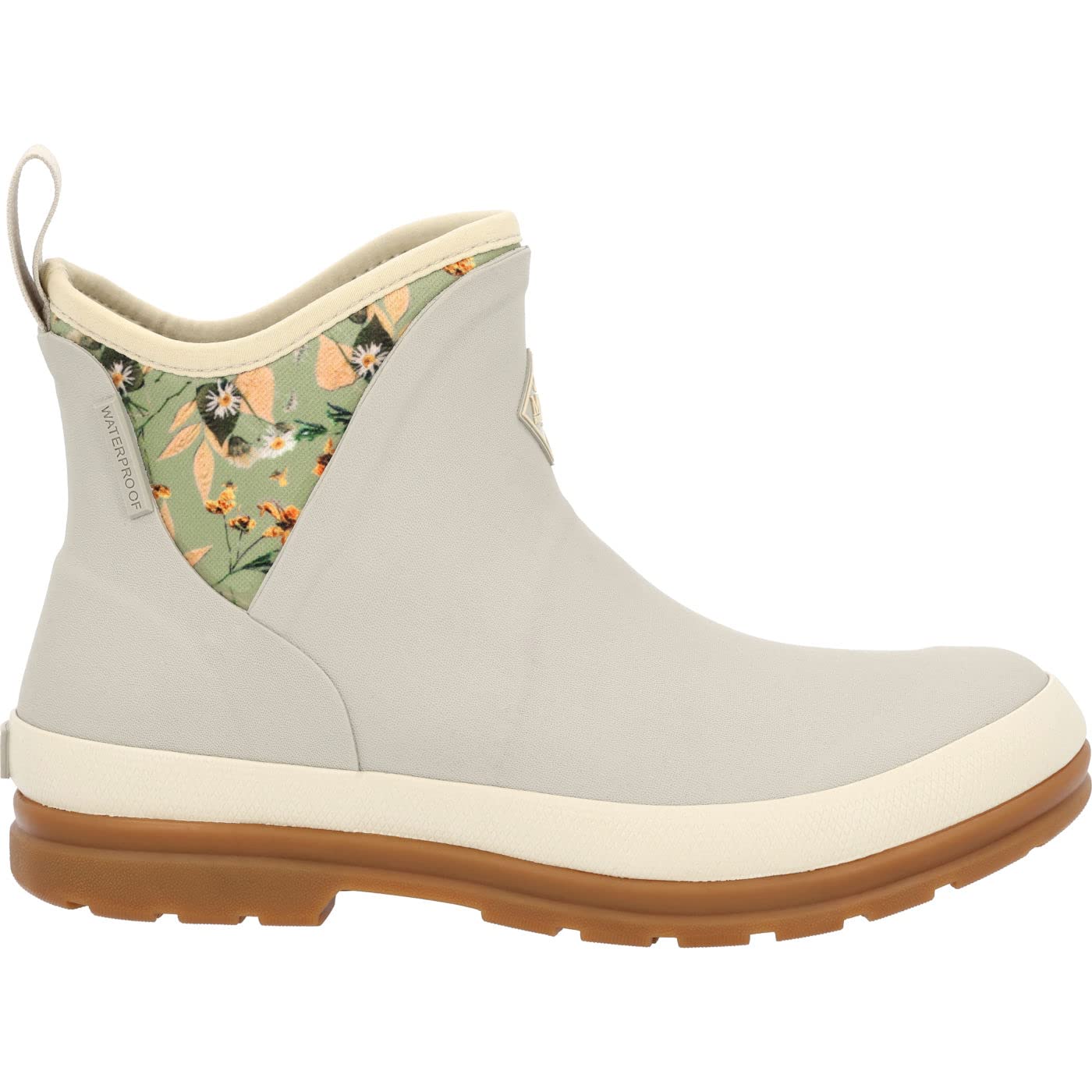
The iconic chore boot with memory foam that molds to your foot all day.
Inspired by MUCK’s full-size chore boot, this ankle-height version uses a full neoprene bootie wrapped in soft, hand-laid rubber built for comfort and protection. The molded PU footbed has a layer of memory foam treated with odor control and moisture management, so your feet stay dry and fresh even after hours of digging. Buyers consistently praise how the memory foam eliminates the usual hard floor feel of rubber boots.
A significant trade-off is the weight — at 4.5 pounds, this boot is noticeably heavier than lighter ankle boots. You trade some lightness for the thick neoprene, reinforced outsole with an innovative lug design that releases mud, and the premium comfort of the footbed.
The rubber outsole is built with lugs that push mud and debris out as you walk, so you carry less muck into the house. It is 100% waterproof and 100% muckproof, exactly as advertised.
All-Day Comfort
- Memory foam footbed with moisture-wicking and odor control
- Hand-laid rubber for durability and a natural fit
- Innovative lug design releases mud quickly
A Heavy Consideration
- Weighs 4.5 pounds — much heavier than lightweight ankle boots
- Ankle height only, so not for deep mud or kneeling
If comfort is king: Reach for these if you stand all day weeding or planting on hard ground — the memory foam footbed is class-leading in this list.
Skip them if: You walk long distances in your garden or need a lighter boot for quick tasks — the weight and ankle height limit them to closer, steadier work.
4. Showave Women’s 6 Inch Ankle Deck Boots
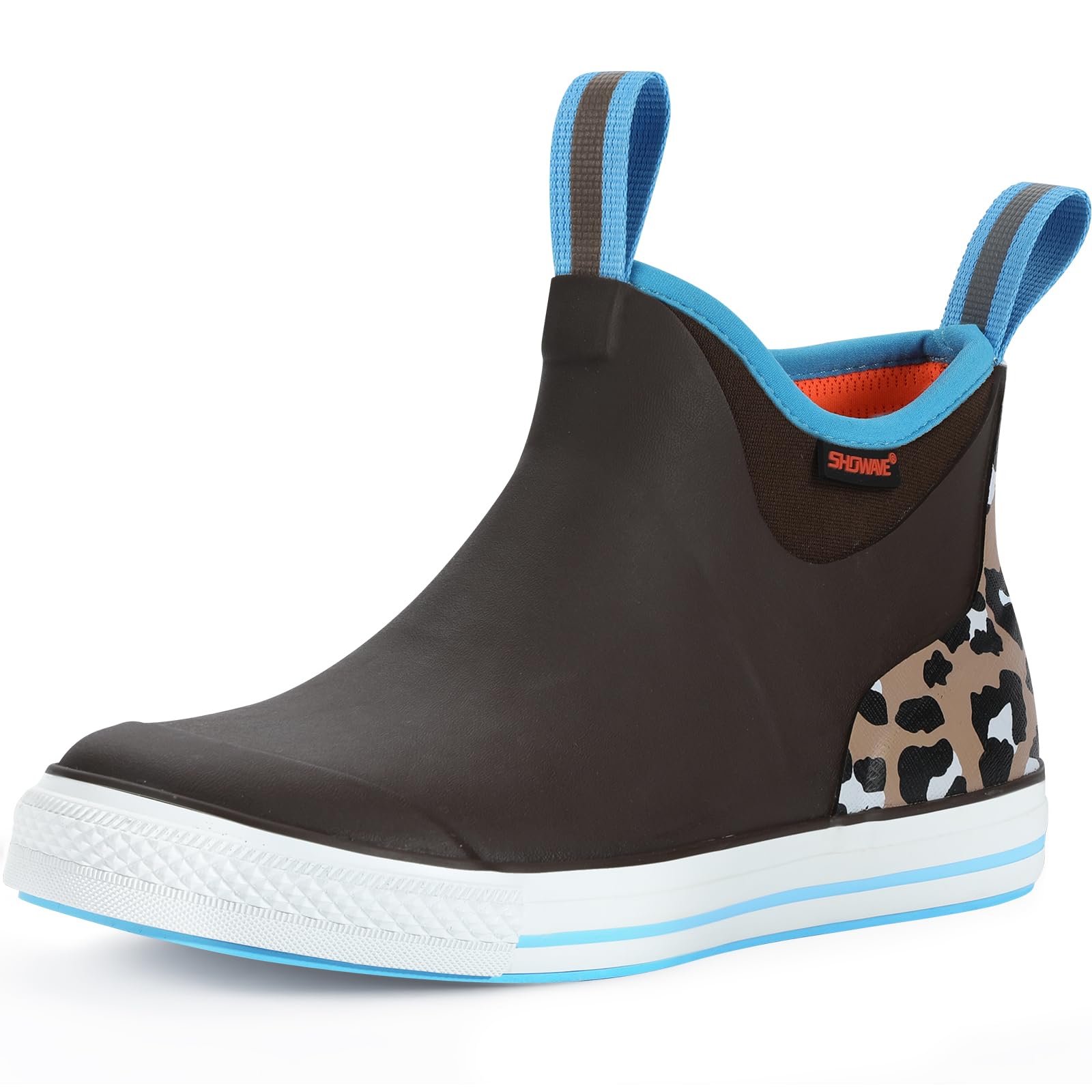
A no-fuss ankle deck boot that slips on fast and moves with you.
This boot is designed for quick changes — you step out of the house and into the garden without laces. At 6 inches tall, it clears wet grass and light mud, and the wide width design gives your toes room to splay. The neoprene rubber construction is breathable and waterproof, while the non-slip outsole keeps you steady on slick pavement.
Buyers mention the cushioned insole is comfortable enough for hours of weeding and planting, and the easy-on design is a real time-saver when you are going in and out of the house. However, this is an ankle-height boot, so it will not protect you from deeper mud — that is where the Trudave mid-calfs take over.
It includes extra protection around the toe and a breathable mesh liner to manage moisture, which is a step up from basic rubber rain boots that trap sweat.
Best for quick trips: The wide opening and slip-on design make these ideal for gardeners who step outside multiple times a day for short sessions — no wrestling with tight boots.
One thing to know: Ankle height means mud and water can get in if you squat or kneel in wet soil.
Reach for these if: You need a boot for light, frequent garden trips and you value a wide fit for comfort.
Look for a taller boot if: Your garden has deep mud or you kneel in wet beds regularly.
5. HISEA Women’s Ankle Rain Boots, Rubber Fishing Deck Boots

The featherweight ankle boot that weighs just 1 pound per pair.
At only 1 pound, these are the lightest boots in this lineup — you barely feel them on your feet as you move between flower beds. The reinforced rubber shell is 100% waterproof and the non-slip outsole handles wet grass and muddy paths. The reflective pull straps make them easy to pull on, even if your hands are dirty from potting soil.
Customers note the breathable moisture-wicking mesh liner helps keep feet from getting clammy on warm days — a common complaint with cheaper rubber boots. This boot is listed at 1 pound, while the MUCK Originals are listed at 4.5 pounds, which makes a huge difference when you are walking across a large garden or carrying tools. The trade-off is less cushioning and no insulation, so they are best for warmer weather and shorter sessions.
Molded and curved outsoles with memory foam insoles provide more arch support than you would expect at this price point, though it is not as plush as the MUCK’s memory foam footbed.
Light on Your Feet
- Listed at 1 pound, versus 4.5 pounds for the MUCK Originals
- Reflective pull straps for quick on/off in low light
- Breathable mesh liner reduces sweat buildup
Not for Cold or Heavy Work
- No insulation — not ideal for winter gardening
- Ankle height only, so mud can get in when kneeling
Perfect for warm-weather gardeners: Choose these if you want a boot that feels like nothing on your feet for quick weeding, watering, and potting during spring and summer.
Consider another boot for winter: Without insulation, your feet will get cold on frosty mornings — the Showave garden boots or Trudave are better for all-season use.
6. HISEA Women’s Waterproof Mid-Calf Rain Boots
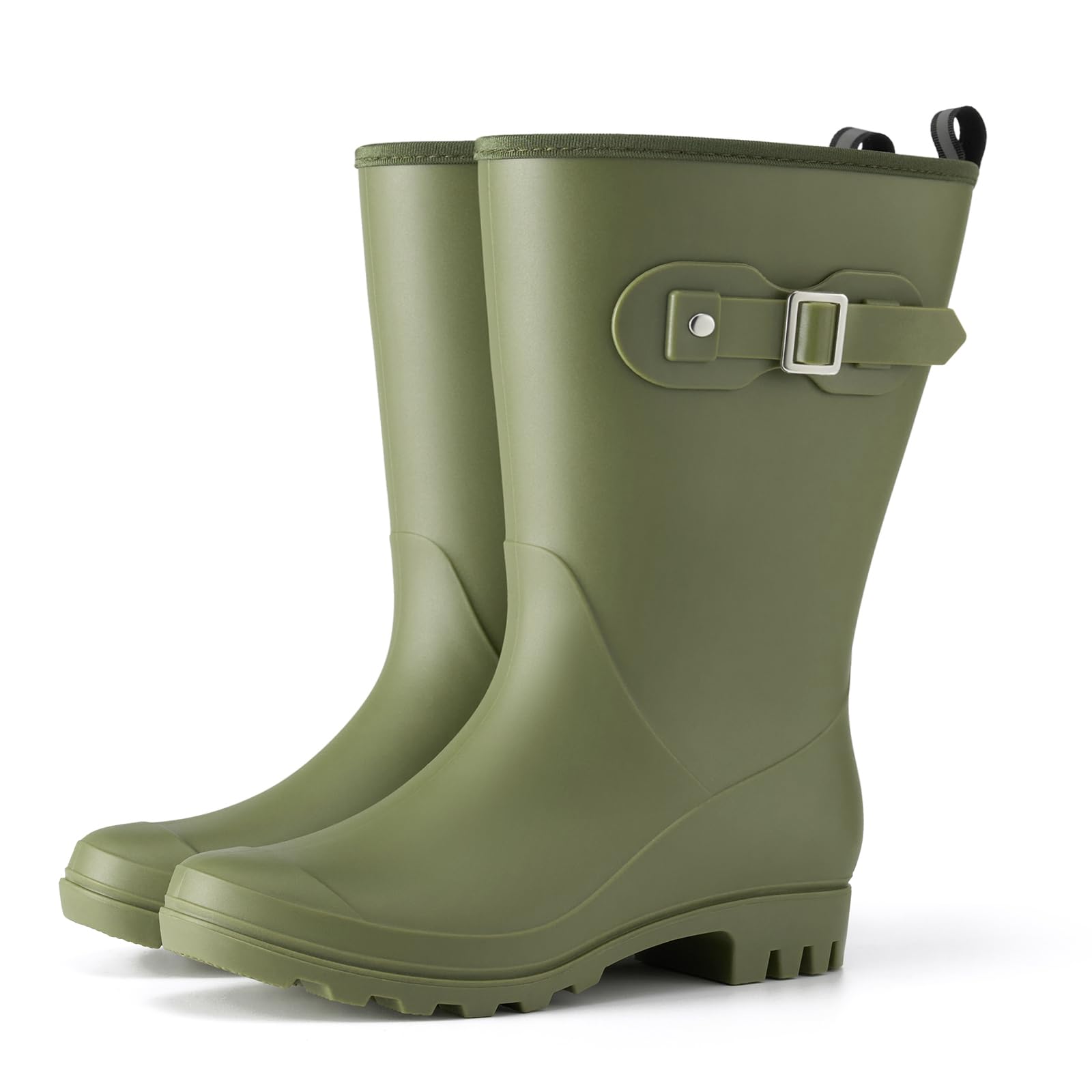
A budget-friendly mid-calf boot with wide-calf room for easy movement.
If you need mid-calf protection on a budget, this is the most affordable option in the list. The lightweight rubber construction and wide calf design accommodate thicker pants or curvier legs without pinching. The anti-slip sole provides traction on wet grass and packed soil, and the waterproof shell keeps moisture out during typical garden use.
Reviewers point out that these boots are comfortable for light gardening and farm work, and the mid-calf height means you can kneel in damp soil without water getting in. The obvious comparison is the Trudave — the HISEA lacks the steel shank, thicker neoprene, and reinforced toe of that premium pick. It is a simpler boot for lighter tasks.
As an entry-level option, it skips the memory foam insoles found on the HISEA ankle boots, so the interior is more basic. It does what it says — keeps your legs dry and your feet on the ground — without extra frills.
Built for the basics: This is a straightforward waterproof boot that covers your calf and stays upright, ideal for gardeners who need mid-calf height without spending on premium features.
Where it falls short: Less cushioning inside and no steel shank mean it is not for rocky ground or long standing sessions.
Choose this if: You need an affordable mid-calf boot for wet grass, shallow mud, and quick garden tasks — and you do not need extra arch support or insulation.
Upgrade to the Trudave if: Your garden has uneven terrain or you spend hours standing and need a steel shank for foot fatigue.
Understanding the Specs
Waterproof Construction
A garden boot is only useful if water stays out. Look for boots that state “100% waterproof” and pair a rubber outer shell with a neoprene inner bootie. The rubber blocks water, while the neoprene adds stretch and breathability so your feet do not sweat. Boots that rely on a single rubber layer can crack over time, so neoprene hybrids are more durable.
Outsole Traction & Lug Pattern
The tread pattern on the bottom of the boot determines how well you grip mud, wet grass, and slick concrete. Deep, widely spaced lugs (raised bumps) push mud out as you walk, so you do not slide. A flat sole or shallow tread is dangerous in wet conditions — always check for an anti-slip or non-slip outsole in the specs.
Boot Weight
Heavy boots tire your legs quickly. Garden boots range from about 1 pound per pair (like the HISEA ankle boots) up to 4.5 pounds (like the MUCK Originals). For large gardens and long sessions, lighter boots reduce fatigue. For heavy-duty work where protection matters more than speed, a heavier boot with a steel shank is a fair trade.
Shaft Height
The shaft is the part of the boot that goes up your leg. Ankle-height boots (around 6 inches) are fine for dry gardens and quick trips. Mid-calf boots (10-14 inches) are better if you kneel, step through deep mud, or work in wet conditions. Knee-high boots are for serious muck and standing water.
FAQ
Can I wear women’s garden boots all day without my feet hurting?
Are ankle-height garden boots enough for wet soil?
What is the difference between neoprene and rubber garden boots?
How do I clean garden boots after working in mud?
Will garden boots fit my calves if I have wider legs?
Do garden boots need to be insulated?
How long should a pair of garden boots last?
Can I use garden boots for other activities like fishing or hiking?
What does a steel shank do in a garden boot?
Are garden boots true to size for women?
Final Thoughts: The Verdict
Across the board, the best women’s garden boots winner is the Trudave Rubber Boots because the steel shank (a rigid metal strip in the sole), 6mm neoprene (a thick, flexible synthetic rubber), and mid-calf coverage handle everything from wet soil to rocky ground without compromise. If you want a lighter boot for quick, warm-weather gardening, grab the HISEA Women’s Ankle Rain Boots at just 1 pound. And for all-day comfort on hard ground, the memory foam footbed of the MUCK Originals Ankle is the most cushioned option here.
How We Picked
We do not accept paid placement. Every pick is matched to a real buyer and a real use-case; we do not hands-on test units.
Sources & Methodology
Specifications: manufacturer listings and product documentation. Review insights: verified customer reviews, as of July 2026. Pricing: not shown on this page (it changes often); check the current price via the retailer link.
As an Amazon Associate, Lawn Gear Lab earns from qualifying purchases. This does not affect which products we feature.