
If you spend half your Saturday bent over a lawn yanking dandelions, only to see them sprout back two weeks later, the real problem isn’t the weeds — it’s the tool you’re using. A proper weed puller grabs the entire taproot (the deep central root) so the plant dies for good, and it lets you do it standing fully upright so your knees and back don’t pay the price. The best ones use a 4-claw steel head with a foot pedal, drive the claws four inches into the soil, and close around the root so you pull the whole thing out in one smooth motion.
I’m Rikta — the co-founder and writer behind Lawn Gear Lab. This guide is built by comparing the manufacturers’ published specifications and the patterns across verified customer reviews, so you get each pick’s real strengths and trade-offs instead of marketing spin.
No more guessing which stand-up weeder actually removes the whole root without snapping the stem. After hours of sorting through the specs and real buyer experiences, I narrowed the field down to a shortlist of seven proven contenders so you can pick the right best weed puller for your yard without the back pain.
How To Choose The Best Weed Puller
Every stand-up weed puller works on the same basic idea: you center the claws over the weed, step on the foot pedal to push them into the ground, then pull or twist to yank the root out. But the details of the build, the claw design, and the handle quality separate the tools that last for years from the ones that break on your third weed. Here are the four things that matter most.
Claw Count and Material
Almost every serious weed puller uses four claws — that is the sweet spot for wrapping around a taproot securely without tearing the weed apart. What matters more is the material: hardened steel claws resist bending when you hit rocky or compacted soil, while thinner metal or plastic claws will bend or snap. Look for 100% steel construction in the working assembly, with no plastic parts in the mechanism that actually grips the root.
Handle Length and Adjustment
The whole point of a stand-up weeder is to avoid bending, so the handle needs to reach your standing height comfortably. For most people, a handle between 43 and 48 inches works well. Some models offer adjustable handles (typically from about 32 to 46 inches), which is useful if multiple people in the house will use the tool, or if you want to store it in a compact space by collapsing the sections. All-metal handles are more durable than bamboo or plastic in the long run, though a real bamboo handle can offer a comfortable, warm grip.
Weed Ejection System
After you pull a weed, you need to get it out of the claws. Some tools make you pull the weed out by hand, which is messy and slows you down. Better models include a weed ejection mechanism — either a spring-loaded pedal you step on to push the weed out, or a handle you squeeze or slide that releases the claws. A good ejection system makes the process flow faster, so you can pull weed after weed without stopping to pick debris out of the claws by hand.
Foot Pedal Design
The foot pedal is what drives the claws into the ground, so it needs to be sturdy enough to take your full weight without bending or breaking. Metal foot pedals with a textured, non-slip surface are safer and more durable than plastic pedals, which can crack or break under repeated pressure. The pedal should be wide enough that you can step on it comfortably even with a muddy boot, and positioned so your foot stays clear of the claws when you press down.
Quick Comparison
On smaller screens, swipe sideways to see the full table.
| Model | Category | Best For | Key Spec | Amazon |
|---|---|---|---|---|
| Rocklin 48″ | Premium | Deep taproots and long-term durability | 48″ handle, 4-inch claw depth | Amazon |
| Stand Up 46″ Adjustable | Mid-Range | Adjustable height for multiple users | 46″ adjustable handle, 3.39 lbs | Amazon |
| Weed Puller (Heavy Duty) | Mid-Range | Rust-resistant stainless steel build | 45″ handle, 3.27 lbs | Amazon |
| Allsetool 43.7″ with Eject | Mid-Range | Fast weed ejection without hand-cleaning | 43.7″ handle, 2 eject mechanisms | Amazon |
| SOMOLUX 52″ | Premium | Extra-tall reach for taller users | 52″ handle, serrated stainless claws | Amazon |
| Garden Weasel WeedPopper | Premium | Twist-action extraction in dry or rocky soil | 2 serrated tines, step & twist design | Amazon |
| Grampa’s Weeder Original | Premium | Proven 100-year-old design for soft soil | 45″ bamboo handle, 2.3 lbs | Amazon |
In‑Depth Reviews
1. Rocklin Stand Up Weed Puller Tool Long Handle 48″
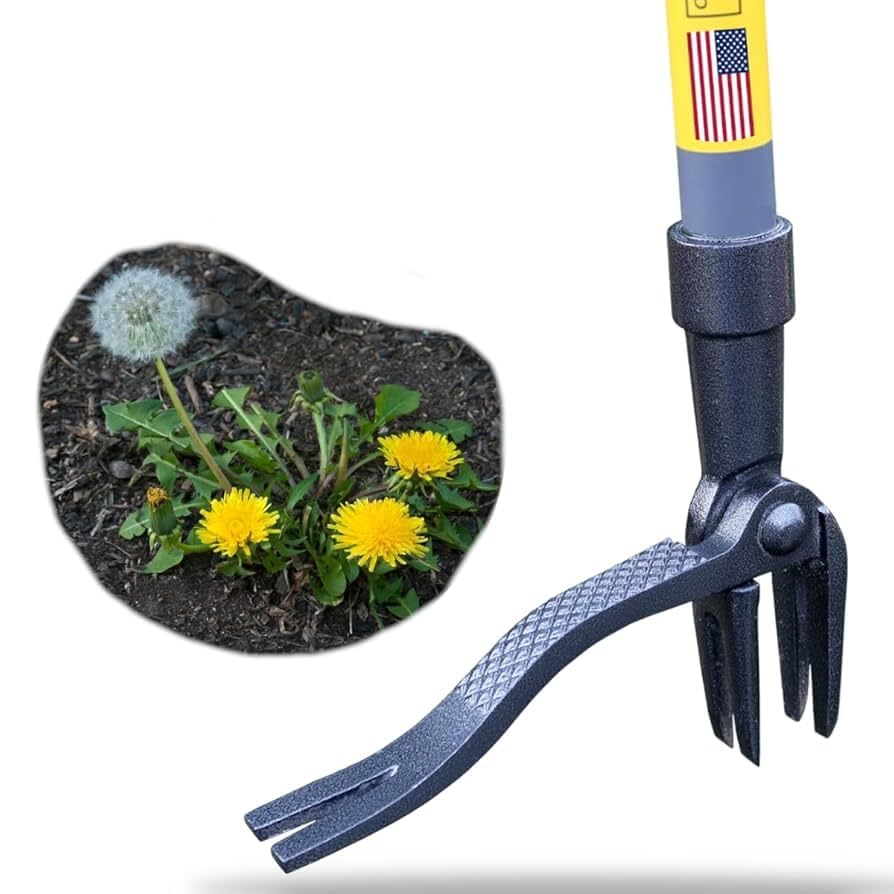
You get the most reliable root grip from the Rocklin because its 4-claw pincher head is made from hardened steel and drives 4 inches deep into the soil, closing around the entire taproot so the weed cannot snap. Buyers report it “removes the weeds and roots efficiently” in a single motion, making it ideal for deep-rooted dandelions, thistles, or dock weeds. The all-metal build uses precision-threaded handle sections and a rhino-coated head that stays tight over time, so you never have to stop mid-pull and re-tighten a joint. At just under 1.34 kg (about 3 pounds), it feels solid without being heavy. The 48-inch length keeps your back straight even if you are on the taller side. The main speed trade-off is that there is “no trigger to eject weeds” — you must remove the weed by hand after each pull. Some users note that the threads can loosen over time without a drop of thread-locking fluid (Loctite), which is a quick fix. Choose the Rocklin if you want a durable, no-plastic weeder that prioritizes root-gripping power over ejection speed. skip it if you plan to pull more than 50 weeds per session and hate stopping to clear the head by hand.
Why it’s great
- 100% hardened steel in the working assembly, zero plastic
- 48-inch handle reduces back strain for taller users
Good to know
- No weed ejection mechanism; you remove the weed by hand
- Threads may loosen without Loctite
2. Stand Up Weed Puller Tool, 46″ Adjustable All-Metal
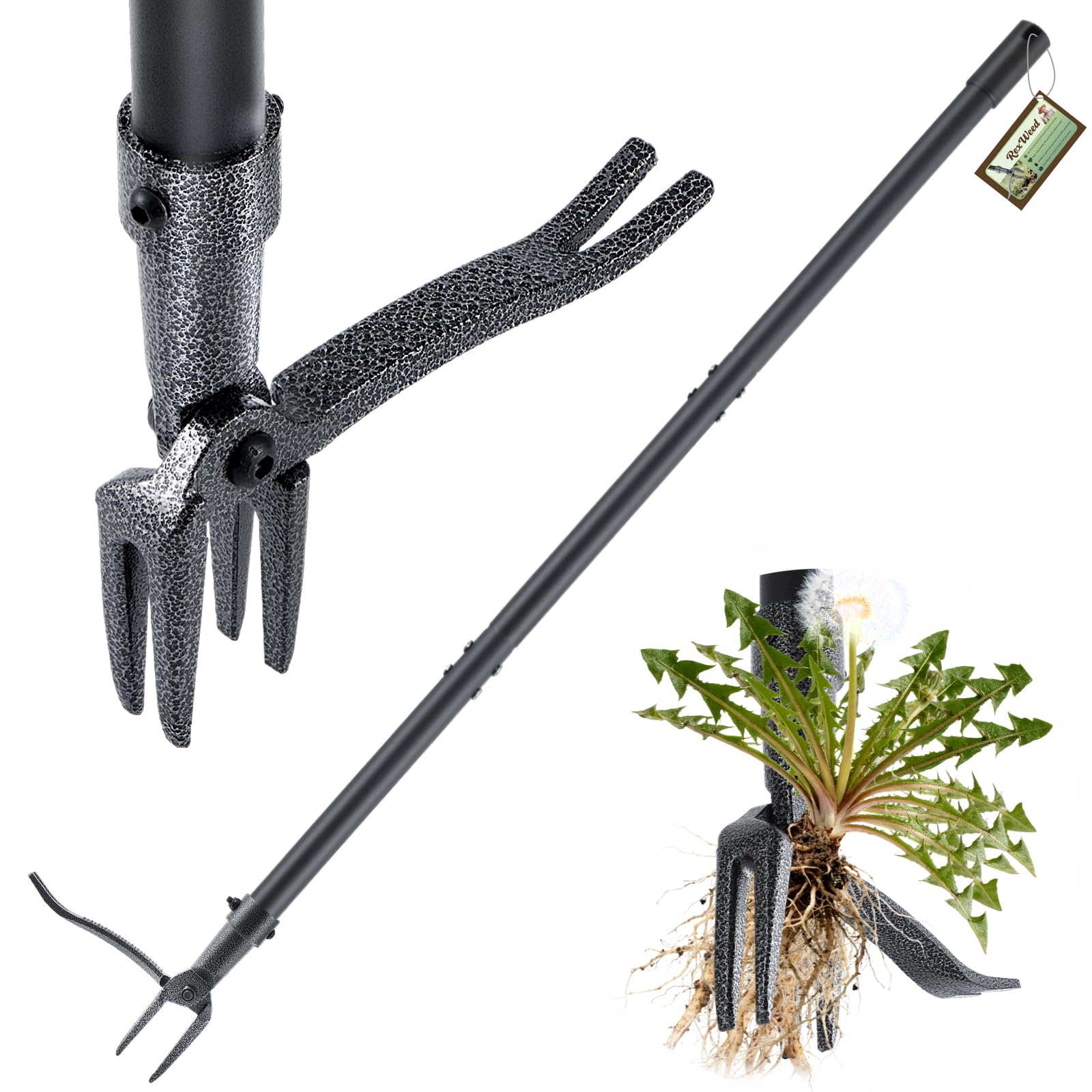
For a household with multiple users, the 46″ Adjustable is the clear choice because its handle adjusts from 32 to 46 inches, letting a shorter family member and someone over six feet both use it comfortably without bending. It weighs roughly the same as the Rocklin at 3.39 pounds, and its serrated claws are designed to grip deep roots so dandelions and thistles do not grow back. In real use, owners mention it “grabs the entire taproot (95%+ success)” when you center it correctly over the weed crown — an excellent success rate at this price tier. The all-metal construction with reinforced steel pipes handles rocky or compacted soil well without bending. The 3-section design collapses for compact storage in a shed or garage. Like the Rocklin, it has no built-in weed ejector. Some buyers also note it struggles with shallow-rooted weeds. If you share garden tools with a partner or want the flexibility of an adjustable handle without spending premium-level money, this is the smart mid-range choice. pass on it if your yard is mostly broad, shallow-rooted weeds.
Where it shines
- Adjustable 32-to-46-inch handle fits multiple user heights
- 95%+ taproot success rate reported by buyers
Worth noting
- Some customers note it struggles with shallow-rooted weeds
- No built-in weed ejector
3. Weed Puller Tool, Stand Up Heavy Duty with Long Handle
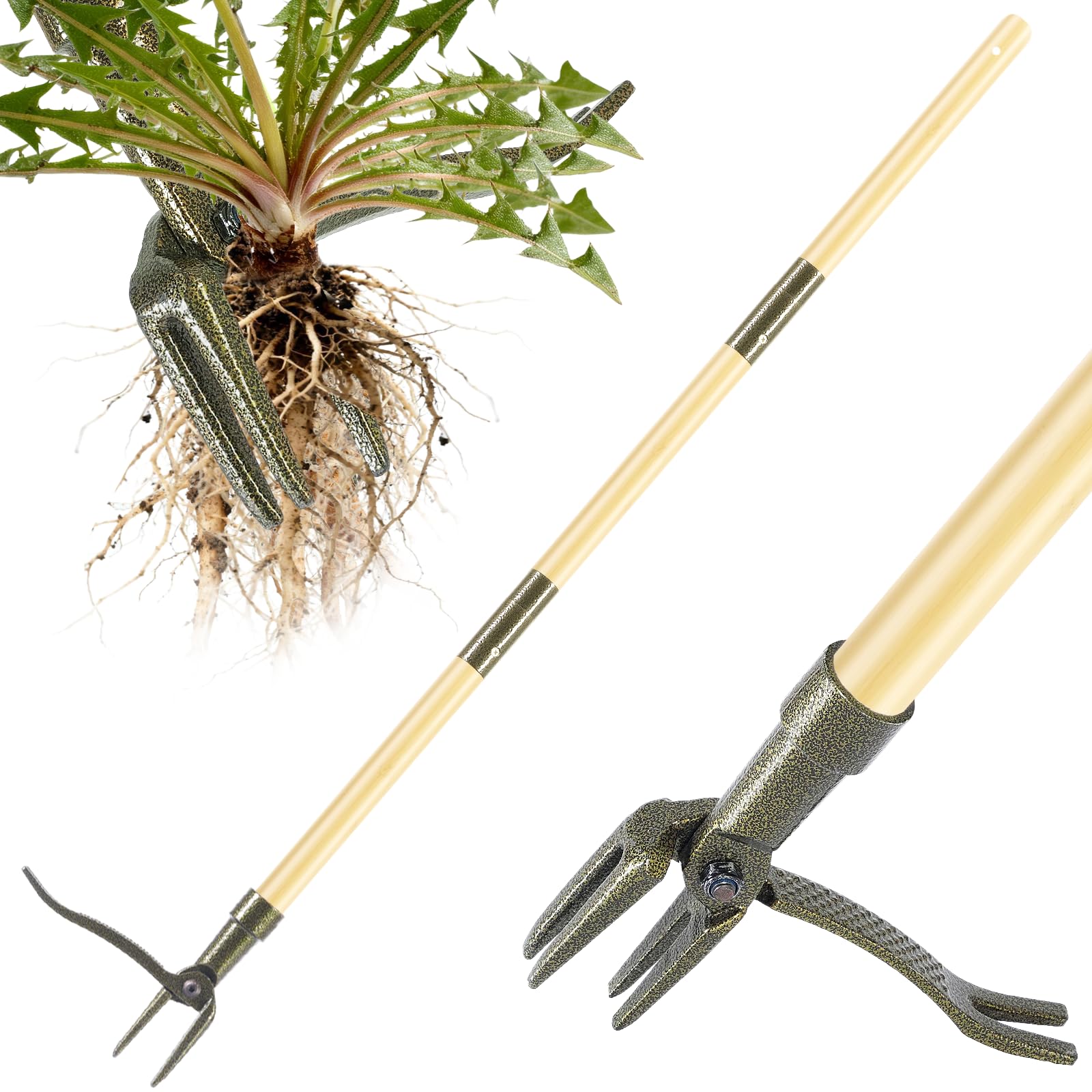
This 45-inch weeder is built for the buyer who values rust resistance above all else — its claws are made from high-strength stainless steel, making it a better choice in humid climates or if you tend to leave your tools out in the rain. At 3.27 pounds, it is about 10% lighter than the Rocklin while using a full 4-claw steel head design. Buyers confirm it “grabs the entire taproot (95%+ success with correct center positioning).” The foot pedal here is designed for automatic weed ejection — after you pull the weed, you step on the pedal again and the weed drops off, so you never have to touch the debris with your hands. Reviewers praise its “heavy-duty steel” and note it works well on dandelions, crabgrass, thistle, and plantain. One buyer points out that wider-spreading weeds with shallow root systems are harder to remove completely. A lifetime warranty adds peace of mind. If your climate is damp or you hate handling pulled weeds, this is the best combination of rust resistance and hands-free ejection. it’s not for you if your main problem is spreading-root weeds like creeping Charlie.
What stands out
- Stainless steel claws resist rust and moisture damage
- Foot pedal eject mechanism keeps hands clean
The trade-offs
- Less effective on spreading-root weeds vs taproots
- Some reviewers point out the handle can loosen with heavy use
4. Allsetool Weed Puller Tool with 2 Weed Eject Feature
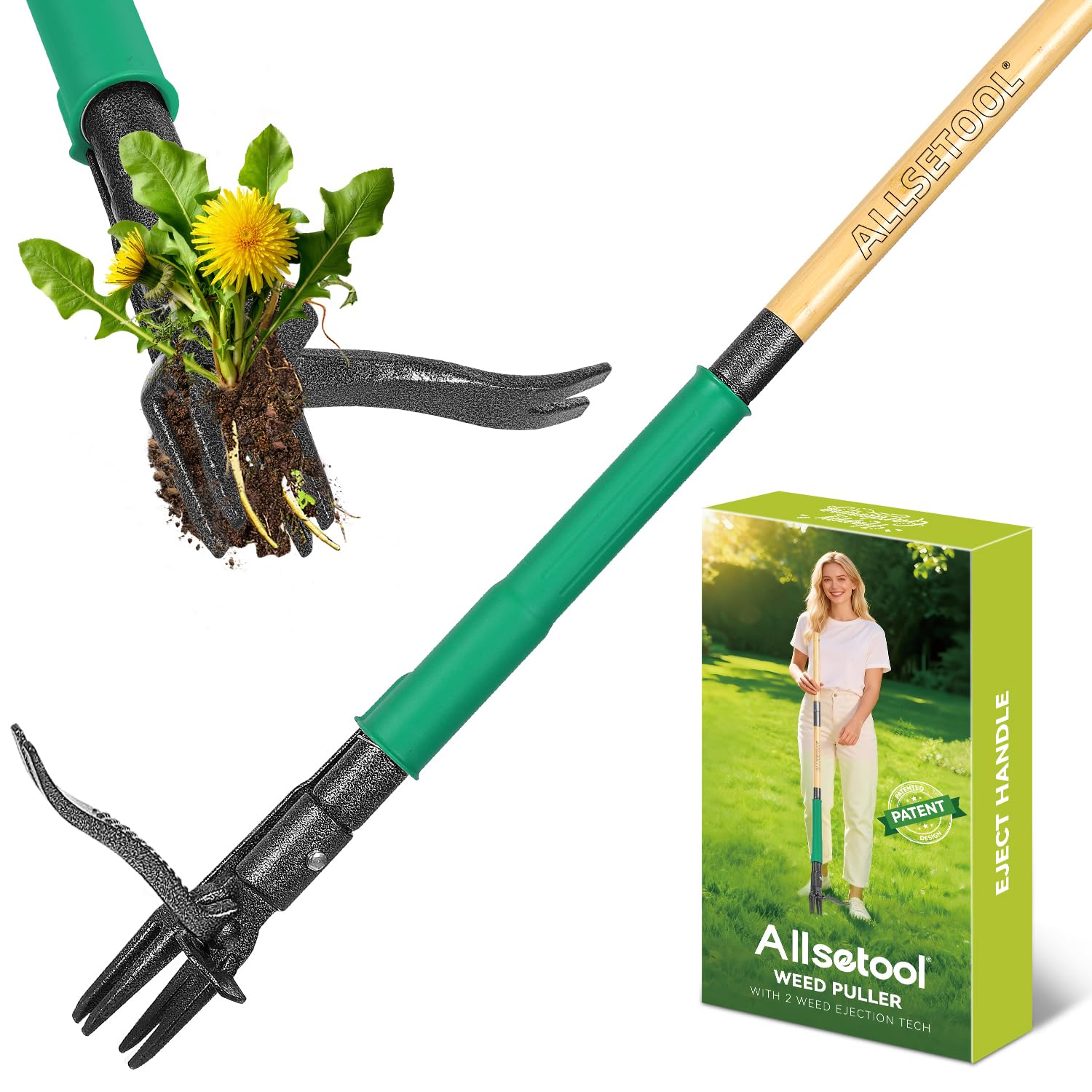
Speed matters most when you have 50 weeds to pull, and the Allsetool delivers with two separate ejection mechanisms — a handle you squeeze and a foot pedal you step on — so you never have to bend over or touch the weed to clear the claws. At 3.61 pounds, it is about 10% heavier than the similar-price stand-up model, but that weight comes from a metal foot pedal with a non-slip textured design that buyers describe as “sturdy” and easy to use even with muddy boots. The catch is that the tool’s 43.7-inch handle is shorter than most premium picks, so taller users (over 5’10”) may need to bend slightly. Shoppers say the tool is “addictive once mastered” for medium to large deep-rooted weeds, though the release mechanism sometimes needs manual help if a weed is particularly stubborn. For pure speed — pulling session after session without stopping to clear the head by hand — this is the best price-to-performance choice. look elsewhere if you are over 5’10” and cannot tolerate any bending.
The upsides
- Two eject options (handle and pedal) for fast workflow
- Metal foot pedal with non-slip texture is more durable than plastic
Keep in mind
- 43.7-inch handle may be short for very tall users
- Eject can occasionally require manual help on tough weeds
5. SOMOLUX 52″ Weed Puller Stand-up Weeder

If you are over six feet tall, the SOMOLUX’s 52-inch handle is the longest in this comparison — that extra four inches over the Rocklin means you can maintain a completely upright posture while weeding. The three-inch stainless steel claws feature serrated teeth (small sharp ridges along the claw edges) that grip the root more securely than smooth claws, especially on thicker taproots like crabgrass and thistle. That longer handle and better grip come with a slight increase in weight — buyers report it is “slightly heavy but necessary for sturdiness.” One reviewer points out that the bottom joint often becomes loose with extended use, but they add that it is a “minor issue easily fixed” with a screwdriver or thread-locking fluid. If you are tall or simply want the most reach and the best root grip from serrated claws, the SOMOLUX is the standout for you. Pick the Rocklin instead if you want a more tightly assembled all-metal build from the factory.
Why we’d pick it
- 52-inch handle is the longest available for tall users
- Serrated stainless claws grip taproots more securely
A few caveats
- Bottom joint can loosen with heavy use
- Heavier than most mid-range models
6. Garden Weasel WeedPopper Step & Twist

The Garden Weasel solves a different problem than the Rocklin — instead of a 4-claw grab, it uses two serrated tines (sharp-toothed blades) that you step down on and twist, cutting a plug of soil around the root and pulling the entire weed plus a bit of dirt out intact. This design works exceptionally well in dry, hard, or rocky soil where a standard 4-claw weeder cannot push its claws deep enough to grip the root. At just 2.2 pounds, it is the lightest tool in this comparison, and its all-metal one-piece construction has no plastic parts to break — a factor buyers highlight when comparing it to “the many knockoffs out there.” Reviewers report it works great on dandelions, plantain, spurge, and even in rock yards and along sidewalks. The thumb release ejects the dirt-and-weed plug quickly. The gentle caution is that the twisting action removes a small plug of soil each time, leaving small holes that need filling if you attack a large infestation. If your yard has hard-packed clay or rocky ground where the Rocklin’s claws cannot penetrate, the Garden Weasel’s step-and-twist approach is unmatched. steer clear if you have a large, soft lawn and want a faster no-hole method.
Strong points
- Step-and-twist action works in dry, hard, or rocky soil
- Lightest tool at 2.2 pounds, all-metal construction
Before you buy
- Removes a small plug of soil with each weed
- Foot piece can partially obscure tine alignment when stepping
7. Grampa’s Weeder – The Original Stand Up Weed Puller

Grampa’s Weeder has been around since 1913, and that longevity signals that the design — a 45-inch real bamboo handle with a 4-claw alloy steel head — has been refined over a century. It is the lightest premium pick at 2.3 pounds, and the bamboo handle absorbs vibration better than metal, making it more comfortable during long weeding sessions. The downside is that the manufacturer explicitly states it “may not perform as well on hard clay or rocky surfaces,” so this is not the tool if your yard is full of compacted dirt or stones. Buyers in their seventies report it “minimizes bending” and works great on dandelions and thistles after a good rain. There is no weed eject mechanism; you must remove it by hand. If you have soft, moist soil and want a lightweight, vibration-absorbing tool that has survived for generations, Grampa’s Weeder is the original for a reason. skip it if your soil is hard clay, rocky, or you need a tool that works immediately after a drought.
What we like
- Real bamboo handle is comfortable and absorbs vibration
- Proven 100-year-old design with a lifetime guarantee
The downsides
- Not effective in hard clay or rocky soil
- No weed eject mechanism; must remove by hand
Understanding the Specs
Claw Count and Depth
The number of claws on the head determines how well the tool grips different root types. Four claws is the standard for most weed pullers because they can wrap around a taproot (the single deep root of a dandelion or thistle) without breaking it. Some tools, like the Garden Weasel, use two serrated tines that cut a soil plug instead of gripping the root directly — this works better in hard soil but removes a small chunk of dirt with each weed. The depth the claws penetrate matters: the Rocklin’s 4-inch depth is enough for most taproots, while shallower claws may snap the root instead of pulling the whole thing out.
Handle Material and Height
Handle material affects both comfort and longevity. Alloy steel handles are the most durable and resist bending, but they can feel cold or slippery in wet weather. Bamboo handles (like on Grampa’s Weeder) are warmer and reduce vibration, making them more comfortable during long sessions, though they are less durable if left in the rain. The handle height determines whether you can stand fully upright while weeding: a 45-to-48-inch handle works for most people between 5’6″ and 5’10”, while taller users (over 6 feet) benefit from the SOMOLUX’s 52-inch handle. Adjustable handles (like the 46-inch model’s 32-to-46-inch range) let a single tool serve multiple user heights, which is ideal for shared households.
FAQ
Will a stand-up weed puller work in dry soil?
How do I know if a weed puller is removing the whole root?
What is the difference between a weed puller and a weed popper?
Final Thoughts: The Verdict
Across the board, the best weed puller winner is the Rocklin 48″ because its all-metal 4-claw head and 48-inch handle deliver consistent complete root removal without wobbling or loosening over time. If you want an adjustable handle to fit multiple family members, grab the 46″ Adjustable Stand Up Weed Puller. And for tough, dry, or rocky soil where standard claw weeders struggle, the standout is the Garden Weasel WeedPopper step-and-twist design.