
Briars, with their tangled thorns and resilient root systems, can turn a manageable patch of land into an impassable, painful mess within a single growing season. Generalized weed sprays often wilt the leaves but leave the woody crowns intact, allowing the briars to bounce back stronger. You need a specialized formula that penetrates thick canes and travels deep into the root network to truly stop the spread.
I’m Rikta — the co-founder and writer behind Lawn Gear Lab. I’ve spent countless hours comparing chemical formulations, studying triclopyr and glyphosate concentrations, and analyzing hundreds of owner field reports to separate the few genuinely effective briar-control herbicides from the many that simply disappoint on tough woody species.
Whether you are reclaiming an overgrown fence line or fighting a new blackberry patch, this guide cuts through the marketing to reveal the top-rated chemistry for actually killing briars. Here is my research-backed breakdown of the best weed killer for briars on the market right now.
How To Choose The Best Weed Killer For Briars
Briars are not like dandelions. Their woody stems and aggressive perennial roots demand a herbicide strategy that standard lawn weed killers cannot provide. Here are the critical factors to evaluate before making your purchase.
Active Ingredient: Triclopyr vs. Glyphosate vs. 2,4-D
Triclopyr is the gold standard for woody plants like blackberry, multiflora rose, and greenbrier because it mimics natural plant hormones, causing uncontrolled growth that kills the entire root mass. Glyphosate works but requires more precise application to avoid damaging desired plants. Standard 2,4-D is effective on broadleaf lawn weeds but often fails to penetrate the thick bark of mature briar canes. For the highest success rate, look for triclopyr as the primary ingredient.
Application Method: Ready-to-Use Wand vs. Concentrate
Ready-to-use sprayers, like the popular battery-powered wands, offer convenience for spot-treating a small number of briar patches in a maintained lawn. They are diluted and ideal for quick jobs. Concentrated formulas require mixing with water or diesel for basal bark treatments but provide far better value and effectiveness for large-scale infestations along fence lines or in overgrown pastures. For dense briar thickets, a concentrated triclopyr solution is almost always the right call.
Rainfastness and Soil Activity
A herbicide that washes off after a light shower wastes your effort and money. Look for products advertised as rainfast in 1-2 hours, which indicates the plant has absorbed enough chemical to be effective. Also consider whether the product has soil activity that can prevent new seeds from sprouting, or if it is strictly foliar-active. Some brush killers remain effective in the soil for weeks, preventing briar regrowth from buried seeds.
Quick Comparison
On smaller screens, swipe sideways to see the full table.
| Model | Category | Best For | Key Spec | Amazon |
|---|---|---|---|---|
| Southern Ag Crossbow | Concentrate | Large acreage & fence lines | 2.23 acres coverage | Amazon |
| Remedy Ultra Specialty | Concentrate | Pasture restoration & trees | Triclopyr concentrate | Amazon |
| Southern Ag Brush Killer | Concentrate | Stump & vine control | 8.8% Triclopyr | Amazon |
| Ortho Max Poison Ivy | Concentrate | Poison ivy & blackberry vines | 6 oz per gallon mix | Amazon |
| Monterey Brush & Vine | Concentrate | Stump prevention & vines | Includes measuring spoon | Amazon |
| Tordon RTU Brush Killer | Ready to Use | Cut stump treatment | 32 oz ready to use | Amazon |
| Ortho WeedClear Comfort Wand | Ready to Use | Lawn spot treatment | 20,480 sq ft coverage | Amazon |
In‑Depth Reviews
1. Southern Ag Crossbow Specialty Herbicide

The Crossbow from Southern Ag delivers a powerful one-two punch against briars by combining triclopyr with 2,4-D in a concentrated gallon that makes up to 96 gallons of spray solution. This translates to massive coverage of over two acres, making it the ideal choice for landowners dealing with large infestations along fence lines, pastures, or drainage ditches. Users consistently report complete briar and blackberry die-off within one to two weeks when applied at the recommended 1-2% dilution rate.
This formulation excels on woody species because the triclopyr travels systemically to the root system, while the 2,4-D provides rapid foliar burn and controls emerging broadleaf seedlings. Many owners highlight its effectiveness on tough vines and ivy when applied as a cut-stem treatment, and they appreciate its relatively short 3-day soil half-life compared to other persistent herbicides. The strong odor is a minor inconvenience for the level of control achieved.
For the price per gallon of finished spray, Crossbow offers unmatched value for serious brush management. Just be mindful of overspray, as it is non-selective and will damage any ornamental shrubs or trees it touches. A single spring application has kept briar regrowth at bay for entire seasons in many of the reported use cases.
What works
- Extremely economical for covering large areas at low mixing rates.
- Reliable systemic kill of briar roots, including blackberry and multiflora rose.
- Safer toxicological profile than many alternatives, with fast soil breakdown.
What doesn’t
- Strong chemical odor during and immediately after application.
- Not suitable as a lawn weed killer; will kill grass effectively.
2. Remedy Ultra Specialty Herbicide
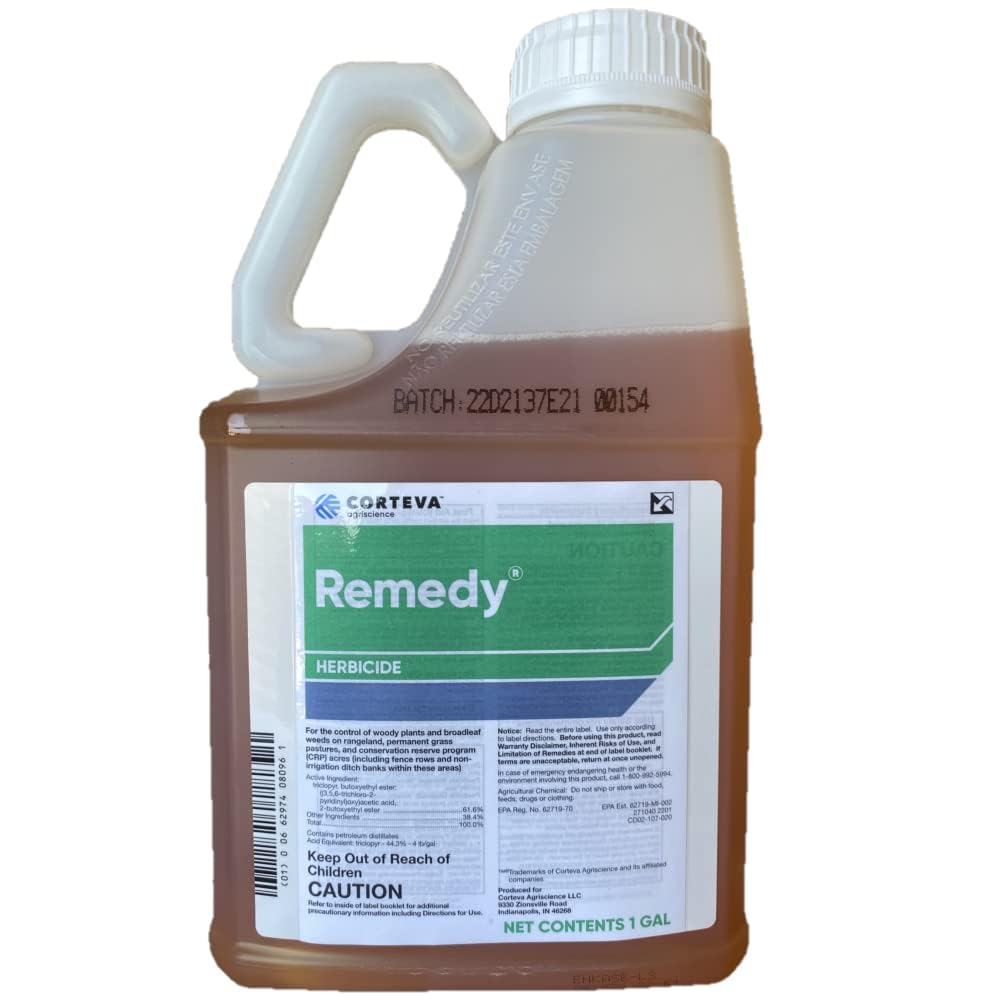
Remedy Ultra is a premium triclopyr-based herbicide from Dow AgroSciences, specifically formulated for rangeland and pasture brush control. Where this product shines is its flexibility in application methods — it can be used as a foliar spray or mixed with diesel for basal bark treatments on woody stems up to several inches in diameter. Owners tackling honey locust, multiflora rose, and blackberry thickets report that the basal bark method completely prevents resprouting, something many other chemicals struggle to achieve.
The low-odor formulation is a welcome improvement over older brush killers, making it more pleasant to work with on hot days. While the upfront cost is significant, a single gallon treats a substantial amount of brush, making the cost per acre competitive for large property owners. Users specifically note its effectiveness on cogon grass and other aggressive invasive species that laugh off weaker herbicides.
Because it is specialized for pasture and fence-line work, it does not discriminate between briars and desirable forage grasses. Plan your application carefully around grazing animals and pets. For the property owner who wants absolute, supreme control over woody brush and is willing to pay a premium for a professional-grade tool, the Remedy Ultra is a top-tier solution.
What works
- Excellent for basal bark applications to eliminate briar stumps.
- Long-lasting residual control prevents regrowth for months.
- Low odor makes large applications more manageable.
What doesn’t
- High price point can be a barrier for casual homeowners.
- Ineffective on general grassy weeds without tank mixing.
3. Southern Ag Brush Killer 8.8% Triclopyr

This straight triclopyr concentrate from Southern Ag is a bare-bones, no-frills solution for briar control that puts the active ingredient front and center. Users tackling poison ivy, sumac, and sassafras have had excellent results at a 4-6 ounce per gallon mix rate, while stubborn yaupon holly requires bumping to the 8-ounce maximum. The formula penetrates waxy leaves and woody bark, killing the root system of even the most tenacious briars within two to three weeks.
Experienced users love the fact that a single gallon of concentrate goes a long way, and many report zero regrowth at the eight-month mark after a single spring application. The lack of labeling on certain batches is a recurring complaint, so take photos of the mixing directions before discarding the box. Some users mix it with a surfactant for better leaf adhesion on glossy briar foliage.
For the price, this is one of the most cost-effective concentrated triclopyr options available. It requires careful measurement and a separate sprayer, but for anyone serious about clearing briar patches, the effectiveness is undeniable. If you have a large area with dense briars and prefer to mix your own solution, this is a strong contender.
What works
- High concentration of triclopyr provides reliable systemic root kill.
- Excellent value per gallon of concentrate for large properties.
- Effective on a wide range of woody weeds and invasive vines.
What doesn’t
- Frequent reports of shipments arriving without any labeling or instructions.
- Requires hot, dry weather for optimal absorption and effectiveness.
4. Ortho Max Poison Ivy & Tough Brush Killer

The Ortho Max Poison Ivy & Tough Brush Killer is a familiar name for homeowners who want a systemic solution that works within a reasonable time frame. The concentrate mixes at 6 fluid ounces per gallon and targets over 60 types of tough weeds, including the most notorious briars: wild blackberries, poison ivy, and kudzu. Users battling blackberry vines have reported seeing results within 24 hours of application, with complete die-off following in about a week.
Its biggest selling point is the 2-hour rainfast guarantee, which means you don’t have to worry about an unexpected shower ruining your hard work. The systemic action ensures that even if the top growth dies slowly (some report 3 weeks for full effect), the roots are shutting down. Many users with severe poison ivy allergies swear by this as their only go-to for eradication, applying it carefully with a pump sprayer to avoid contact.
Keep in mind that this product is non-selective and can damage or kill ornamental trees and shrubs if drift occurs. For the homeowner who needs a reliable, reasonably priced concentrate for spot-treating briars and poison ivy in the yard, this remains a popular and well-proven choice.
What works
- Quick rainfast time of 2 hours protects against weather interruptions.
- Effective on the most problematic woody weeds, including kudzu.
- Trusted brand with wide availability and clear mixing instructions.
What doesn’t
- Slow acting on some species, taking 3 weeks for full results.
- Weak on English ivy and dollarweed at standard mixing rates.
5. Monterey Brush and Vine Control

Monterey’s Brush and Vine Control is a triclopyr concentrate designed for homeowners who want effective briar control without the premium price tag of larger commercial jugs. The included measuring spoon simplifies the mixing process, which is a thoughtful touch for first-time users. It is intended for outdoor residential use only and should not be applied near edible crops, but it is extremely effective on poison ivy, blackberry, alder, and honeysuckle.
Customers consistently describe it as “killer stuff,” noting that a single pour on invasive shrubs and vines causes them to wilt and die within days. The root system is targeted effectively, preventing resprouting in most cases. A second application is sometimes needed for stubborn poison ivy patches, but most users are satisfied after the first treatment. The concentrated formula means a 32-ounce bottle goes much further than a ready-to-use sprayer.
The primary drawback is the need to wait 24 hours after application before rainfall, which can be tricky in humid climates. For the homeowner with a moderate briar problem who wants a straightforward, effective, and budget-friendly concentrate, the Monterey Brush and Vine Control is a solid choice that gets the job done without waste.
What works
- Comes with a measuring spoon for accurate and easy mixing.
- Highly effective on stumps, preventing resprouting of woody briars.
- Excellent value for the money compared to ready-to-use alternatives.
What doesn’t
- Requires a full 24 hours without rain for maximum effectiveness.
- Not for use on edible crops or gardens.
6. Tordon RTU Brush Killer

Tordon RTU is a ready-to-use brush killer that is particularly well-regarded for its effectiveness on freshly cut stumps. The active ingredient, picloram, is extremely potent at preventing resprouting, and many users report that a single application to a cut stump keeps it from ever growing back. It is the go-to choice for those battling invasive species like buckthorn, honeysuckle, and mulberry trees that constantly send up new shoots from the roots.
The ready-to-use formula eliminates the need for mixing and measuring, which is convenient for spot-treating a few stumps or isolated briar clumps. However, this convenience comes at a higher cost per ounce compared to concentrates, making it less economical for large-scale use. Users emphasize using nitrile gloves and applying it sparingly with a foam brush or squeeze bottle to avoid contaminating the surrounding soil.
For the person with a relatively small number of briar stumps or a few persistent woody weeds, the Tordon RTU is a simple and effective tool. Its strength is also its weakness — it is non-selective and can damage desirable trees if their roots intermingle with the treated area. Use it precisely and it will do exactly what it promises.
What works
- Extremely effective at preventing resprouting from cut stumps.
- No mixing required; convenient for quick spot applications.
- Powerful against invasive species like buckthorn and honeysuckle.
What doesn’t
- Higher price per ounce makes it less cost-effective for large areas.
- Very potent; can damage nearby desirable trees through root systems.
7. Ortho WeedClear Lawn Weed Killer (Comfort Wand)
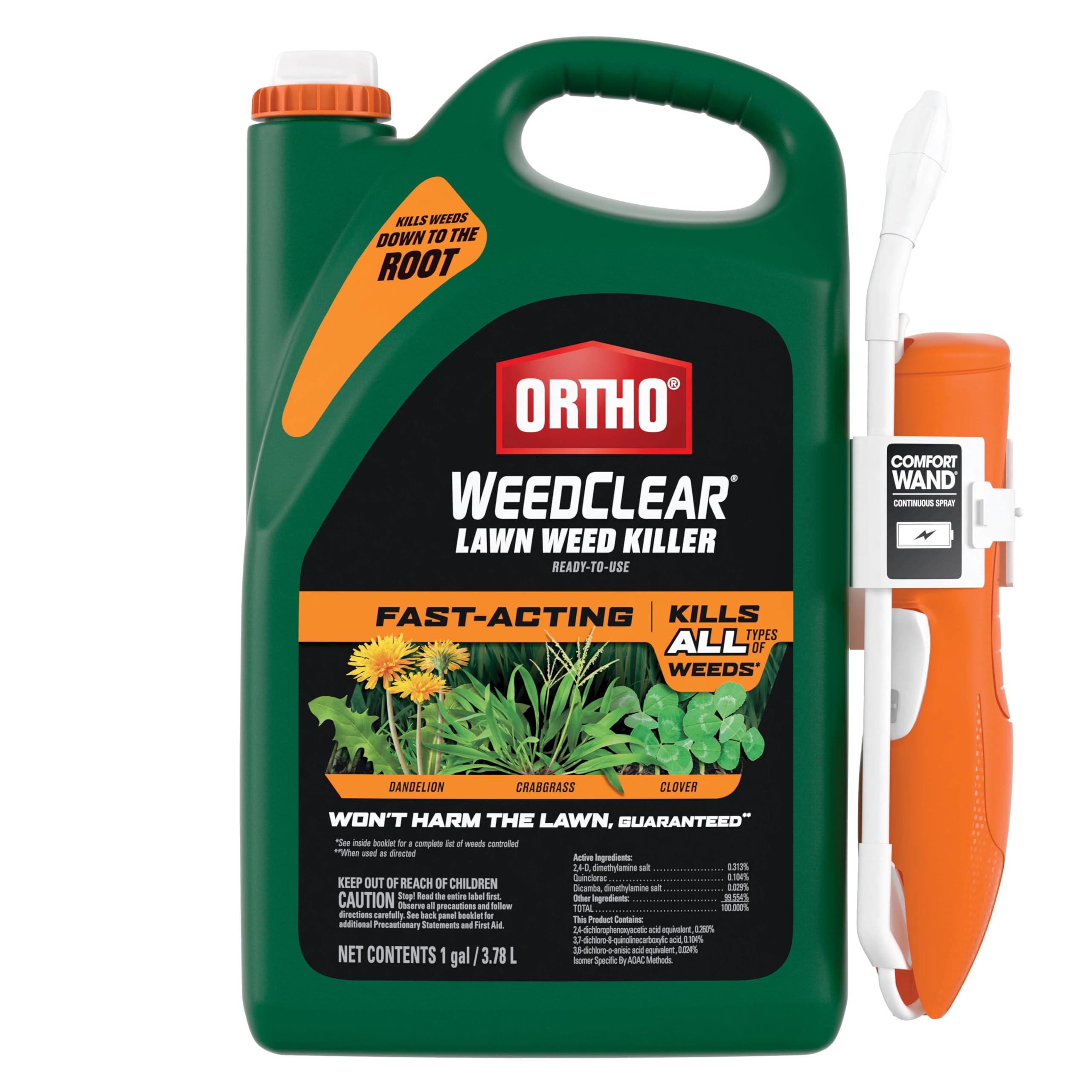
The Ortho WeedClear with the Comfort Wand is a lawn weed killer, not a dedicated brush killer, which is why it lands at this position. Its design is optimized for spot-treating soft-stemmed lawn weeds like dandelions and clover, and the active ingredients are not concentrated enough to penetrate the woody bark and thick canes of established briars. Users who have tried it on briars report very slow wilting and high rates of regrowth, often requiring multiple sprays.
The convenience of the battery-powered wand is unmatched for light lawn maintenance — it is ergonomic, easy to handle, and perfectly accurate for targeting weeds without hitting grass. It works wonderfully on the weeds it was designed for, but expecting it to tackle a blackberry thicket is asking too much. The positive reviews overwhelmingly focus on its effectiveness on dandelions and crabgrass, not on woody species.
This product is a good option only for a very specific scenario: a maintained lawn that has a few stray briar seedlings alongside many other broadleaf weeds. If your primary target is mature briars, skip this and go straight to a triclopyr concentrate. For general lawn weed control with a side of light briar suppression, it will do in a pinch.
What works
- Extremely convenient spot-treatment wand for lawn weeds.
- Fast-acting on soft-stemmed weeds like dandelions and clover.
- Won’t harm lawn grasses when used as directed.
What doesn’t
- Ineffective on woody briar canes and established brush.
- Formulation is too weak to provide true root kill on briars.
Hardware & Specs Guide
Triclopyr Concentration
This is the single most important spec for briar control. A higher concentration (like 8.8% in the Southern Ag Brush Killer) allows you to mix a smaller amount of concentrate per gallon to reach the effective rate. Ready-to-use formulas have a fixed, lower concentration that may not be sufficient for woody stems. Always check the active ingredient percentage before buying.
Coverage Area
Concentrates are measured by how many gallons of finished spray they produce. A 1-gallon concentrate of Crossbow makes up to 96 gallons of spray, covering over 2 acres. Ready-to-use products like the Ortho WeedClear Wand cover 20,480 square feet but cannot be mixed stronger. Match the coverage to the size of your briar infestation to avoid running out mid-job.
Rainfast Time
Rainfastness specifies how long the product needs to dry on the leaf before rain will wash it off. The best options for briar control are rainfast in 1-2 hours, which provides a practical window for application. Products with a 24-hour rainfast requirement are riskier in unpredictable weather and may need reapplication after a storm.
Application Method
Briars respond best to systemic treatments applied to the foliage or to a freshly cut stump. Ready-to-use wands are only good for foliar spot-treatment. Concentrates can be used in a pump sprayer for foliar work or applied undiluted with a brush to cut stumps. Consider your access to the briar patch — thick, thorny areas may be easier to treat with a sprayer from a distance.
FAQ
What is the most effective active ingredient for killing briars?
Can I use a standard lawn weed killer on briars?
When is the best time of year to apply briar killer?
Do I need to cut briars down before spraying?
Final Thoughts: The Verdict
For most gardeners and landowners, the overall best weed killer for briars is the Southern Ag Crossbow Specialty Herbicide because it delivers broad-spectrum, systemic control at the lowest cost per acre. If you prefer a premium professional-grade solution for pasture restoration and stubborn tree species, the Remedy Ultra Specialty Herbicide is the top pick. And for budget-conscious homeowners dealing with moderate infestations, the Monterey Brush and Vine Control with its included measuring spoon offers the best value and ease of use.