
Laying gravel without a proper weed barrier beneath it is an invitation for weeds to colonize your hardscape within weeks. The wrong fabric will tear during installation, degrade under UV exposure, or allow soil to migrate upward, creating a muddy mess that requires a full redo. A serious investment in gravel paths, driveways, or patios demands a geotextile-grade barrier that is engineered for the load, not a thin gardening cloth sold at the checkout aisle.
I’m Rikta — the co-founder and writer behind Lawn Gear Lab. My research process involves stress-testing manufacturer claims against ASTM standards, analyzing owner reports from hundreds of installations, and comparing fiber density, tensile strength, and UV resistance to separate materials built for gravel from material destined to fail.
After combing through lab data and real-world feedback, I’ve narrowed the field to the six most credible options to help you find the best weed barrier for under gravel for your specific project demands.
How To Choose The Best Weed Barrier For Under Gravel
Standard landscape fabric from the garden center is rarely adequate for gravel applications. Gravel exerts point-load pressure, meaning the fabric must resist punctures from sharp stone edges while also preventing soil from pumping upward through the gravel layer. The following criteria separate a real geotextile weed barrier from a decorative cloth.
Fabric Weight and Construction
Fabric weight typically ranges between 3 oz and 6 oz per square yard. Lighter 3 oz fabrics are suitable for decorative mulch or flower beds but often tear when sharp gravel is compacted on top. For gravel driveways or heavy foot-traffic paths, look for 4 oz or higher. The construction method matters just as much: woven polypropylene geotextiles provide superior tear resistance and load distribution compared to needle-punched non-wovens, which are designed more for drainage and soil separation.
Tensile Strength and Puncture Resistance
Tensile strength, measured in pounds per square inch or per strip width, indicates how much pulling force the fabric can withstand before tearing. For under gravel, a tensile strength of at least 200 lbs is a baseline; heavy commercial fabrics exceed 800 lbs. Puncture resistance prevents angular gravel pieces from punching through the fabric during compaction. A higher grab tensile strength (around 300 lbs or more) signals a fabric that can handle installation abuse and ongoing load.
UV Resistance
Even though the barrier is buried under gravel, UV resistance is critical during the installation window and near exposed edges. A fabric labeled UV-stabilized will retain at least 80 percent of its original strength after a standard 500-hour UV exposure test. Without this protection, the fabric becomes brittle within months if any portion is left exposed at the edges of the gravel bed, leading to tears that spread under the surface.
Water Permeability
Gravel beds rely on rapid drainage to prevent standing water and frost heave. The weed barrier must allow water to pass freely without clogging. Woven geotextiles typically offer flow rates in the range of 10 to 30 gallons per minute per square foot. If the fabric is too dense, water will pool on top of the barrier and eventually work its way through by carrying fine soil particles upward. Proper permeability keeps the gravel bed dry and stable year-round.
Roll Size and Coverage Area
Wider rolls reduce the number of seams, which are the most common failure points in any installation. A 6 ft or 13 ft wide roll can eliminate the need for overlapping strips, reducing labor and the risk of weeds exploiting gaps. Measure your project area in square feet and calculate the seam count before purchasing. Fewer seams mean fewer opportunities for weeds to penetrate and for gravel to shift unevenly.
Quick Comparison
On smaller screens, swipe sideways to see the full table.
| Model | Category | Best For | Key Spec | Amazon |
|---|---|---|---|---|
| Sandbaggy 6 ft x 100 ft | Premium Geotextile | Long-term gravel beds | 3 oz fabric, 50-year rated | Amazon |
| Doniks 13×115 ft | Heavy-Duty Commercial | Wide driveways | 5 oz, 800 lbs tensile strength | Amazon |
| Vanver 4×300 ft | Grid Design | Large area coverage | Micro-porous woven, 300 ft roll | Amazon |
| Grassclub 3×300 ft | Mid-Range Woven | Stabilizing walkways | 3.2 oz, 400 lbs tensile strength | Amazon |
| Winisok 4×100 ft | Entry-Level Woven | Light-duty gravel paths | 3.2 oz, 2-pack rolls | Amazon |
| MLZPU 4×100 ft | Budget Selection | Temporary or seasonal use | 3.2 oz woven dual-layer | Amazon |
In‑Depth Reviews
1. Sandbaggy 6 ft Wide Landscape Fabric
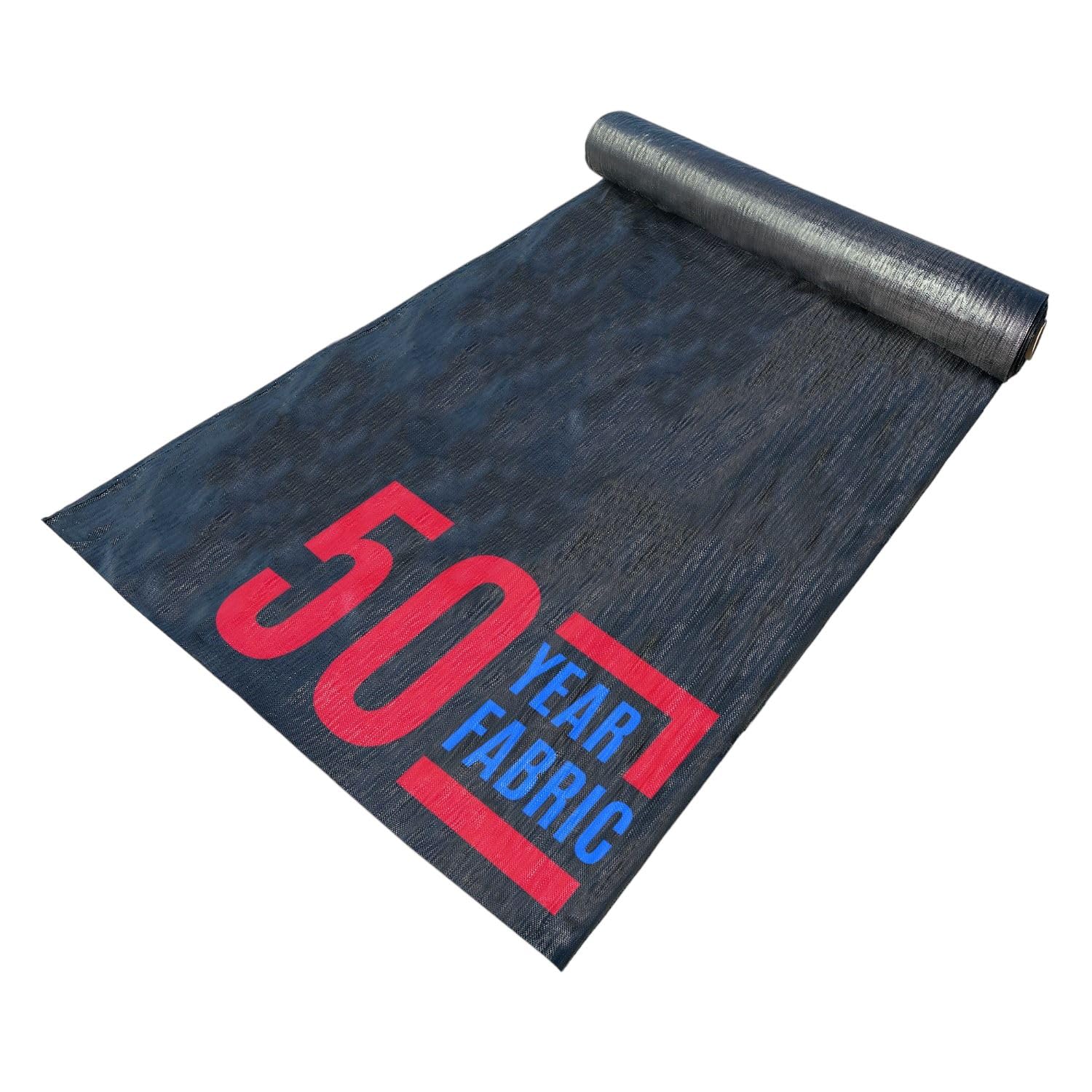
The Sandbaggy fabric is a commercial-grade, industrial-loom woven geotextile constructed from 100 percent virgin polypropylene. Measuring 6 ft wide and 100 ft long, it covers 600 square feet in a single pass, eliminating seams that create weak points under gravel. The 3 oz density is reinforced by a tight plain weave that resists punctures from angular stone, and the material is UV-stabilized to maintain at least 80 percent strength after 500 hours of exposure. Sandbaggy claims a 50-year lifespan when buried under at least 3 inches of gravel, supported by lab testing against ASTM standards.
Users consistently report that this fabric outperforms big-box store alternatives that degrade within two seasons. Multiple reviews note that it does not shed plastic fibers during cutting and that it remains intact after years of exposure under rock hardscapes. The 6 ft width simplifies layout even on windy days compared to narrower rolls that require multiple seams. One reviewer did note that when the fabric was delivered folded rather than rolled, it became cumbersome to lay flat, so confirmation of rolled packaging before ordering is advisable.
For permanent gravel installations where tearing out and replacing the barrier in a few years is not an option, the Sandbaggy fabric provides the highest confidence level in this price tier. The tensile strength is not formally published, but the woven construction and 50-year engineering claim put this in a different class than commodity fabric rolls from home improvement stores.
What works
- Full 6 ft width cuts seams dramatically for large areas
- UV-stabilized to withstand exposure during installation
- Users confirm durability beyond 2+ years under gravel
- Lab-tested against ASTM standards for quality assurance
What doesn’t
- Occasionally shipped folded instead of rolled, complicating layout
- Premium price point compared to lighter 3 oz entry-level fabrics
2. Doniks 13x115ft Driveway Fabric

At 5 oz per square yard and 13 ft wide, the Doniks fabric is built for wide gravel driveways and commercial-scale projects. The 115 ft length provides 1,495 square feet of coverage from a single roll, and the 800 lbs tensile strength rating is among the highest in this comparison. The woven polypropylene construction is designed to support heavy loads from vehicles without stretching or tearing, and the 13 ft width means a standard two-lane driveway can be covered in one continuous run with zero seams down the center.
Customer feedback highlights the fabric’s ability to prevent limestone and gravel from sinking into the subgrade over time. One owner used it for a large garden path with wood chips and reported that it retained moisture while eliminating weeds completely. A few reviewers note that the material is somewhat thin relative to expectations given the 5 oz claim, though it still performs well under compacted stone. The fabric frays noticeably at cut edges, so using a hot knife or torch to seal the cuts is recommended to preserve the integrity of the weave.
The Doniks is the go-to choice when covering a large area fast and when the subgrade is soft enough to benefit from the load distribution of a high-tensile-strength geotextile. The 800 lbs rating provides a wide safety margin for driveways that will see repeated vehicle traffic, and the 13 ft width is unmatched for minimizing seam failures in the middle of the driving lane.
What works
- Massive 13 ft width covers wide driveways in a single pass
- 800 lbs tensile strength offers real structural reinforcement
- 5 oz density resists punctures from sharp gravel
- Excellent water permeability prevents pooling on top
What doesn’t
- Frays heavily on cut edges without heat sealing
- Some buyers expected a thicker material feel for the 5 oz weight
3. Vanver 4ft x 300ft Landscape Fabric

The Vanver fabric distinguishes itself with a printed 13.4-by-13.4-inch grid that serves as a visual planting and alignment guide. Beneath the markings, the fabric is a narrow-weave micro-porous polypropylene that allows air and water permeability while creating a dense physical barrier against weed emergence. The 4 ft by 300 ft roll covers 1,200 square feet, making it practical for large garden areas or extended gravel paths where measurement accuracy matters during installation.
Owners consistently emphasize the durability compared to thinner fabrics from big-box retailers. Reviews mention that the fabric withstands heavy foot traffic and retains its shape under stones without tearing. The micro-porous weave stops weeds while allowing drainage, a balance that some competing fabrics fail to achieve. The grid lines are especially valued by those laying gravel around planting beds, as they allow precise spacing without a separate tape measure. On the downside, the 25.8-pound roll is bulky to maneuver, and the material is dense enough that a sharp utility knife or scissors are required for clean cuts.
For projects that combine gravel ground cover with integrated planting areas, the Vanver fabric eliminates the guesswork of spacing and reduces waste. The micro-porous construction also makes it one of the better options for preventing fine silt migration upward through the gravel, keeping the surface looking clean for longer.
What works
- Printed grid simplifies alignment for planting holes through fabric
- Micro-porous weave balances drainage with weed block
- Durable enough for heavy foot traffic on gravel
- Massive 300 ft length reduces number of seams in long runs
What doesn’t
- Bulky 25 lb roll is difficult to handle alone
- Requires sharp tools to cut cleanly without fraying
4. Grassclub 3ft x 300ft Weed Barrier Landscape Fabric

The Grassclub fabric is a 3.2 oz high-density woven polypropylene geotextile with a published 400 lbs tensile strength. At 3 ft wide and 300 ft long, the roll covers 900 square feet and is designed for applications including driveway stabilization, walkways, and vegetable beds. The 400 lbs tensile rating signals that this fabric can handle moderate gravel loads without tearing, though it is less robust than the 800 lbs fabrics at the top of this list. The material is marketed as eco-friendly, using polypropylene that will not decompose and release particles into the soil.
User feedback after one year shows effective weed suppression, with only one reported instance of a weed penetrating the fabric. Some reviewers note that water does not immediately pass through on first contact but beads up initially before soaking in after a few minutes. This suggests the fabric may have a slight hydrophobic surface coating that wears off after the first rain. Cutting with scissors or a box cutter works, but a propane torch or heated chisel is recommended to seal the cut edges and prevent unraveling.
The Grassclub fabric is a balanced option for medium-duty gravel areas where the 3 ft width is acceptable and the budget does not extend to premium-woven rolls. It delivers genuine geotextile performance at a mid-range price, though buyers installing under heavy traffic driveways should consider stepping up to a 5 oz fabric for the puncture safety margin.
What works
- Published 400 lbs tensile strength provides real load support
- High water permeability after initial wetting
- 900 sq ft coverage reduces per-square-foot cost
- Reported to suppress aggressive weeds like quack grass
What doesn’t
- Water beads up on first contact before soaking through
- Thinner than commercial 5 oz alternatives for heavy gravel
5. Winisok 4FT x 100FT Weed Barrier Landscape Fabric

The Winisok fabric is a 3.2 oz woven polypropylene barrier that ships as two 4 ft by 50 ft rolls, totaling 400 square feet. The manufacturer claims a service life of more than five years, and the fabric includes green alignment stripes for straight installation. It is positioned as a versatile option for landscaping, French drains, erosion control, and under gravel in light-traffic areas. The material is designed to be breathable and permeable, allowing irrigation water to pass through without pooling.
Users praise the thickness and the significant time savings it provides in garden maintenance. The fabric is heavy enough that a utility knife blade may dull after cutting a full roll, and a sharp pair of scissors is recommended for clean cuts that do not fray. A small number of reviews mention that the fabric can shred and leave plastic strands in the soil when pulled up, which is a consideration for temporary installations that will be removed seasonally. For permanent placement under gravel, the strands are less of a concern since the fabric will remain undisturbed.
The Winisok is the best entry-level option for smaller gravel areas like a narrow path or a patio border. The two-roll format makes it manageable for a single installer, and the cost per square foot is competitive for a 3.2 oz woven product. Just be sure to overlap the two rolls by at least 6 inches at the seam and secure with landscape staples to prevent weeds from exploiting the gap.
What works
- Thick 3.2 oz weave resists tearing during installation
- Green stripes simplify straight alignment and plant spacing
- Two separate rolls are easier to handle than one giant roll
- High permeability prevents water pooling above the barrier
What doesn’t
- Can shred and leave plastic strands when removed
- Requires sharp scissors rather than a standard box cutter for clean cuts
6. MLZPU 4ftx100ft Weed Barrier Landscape Fabric
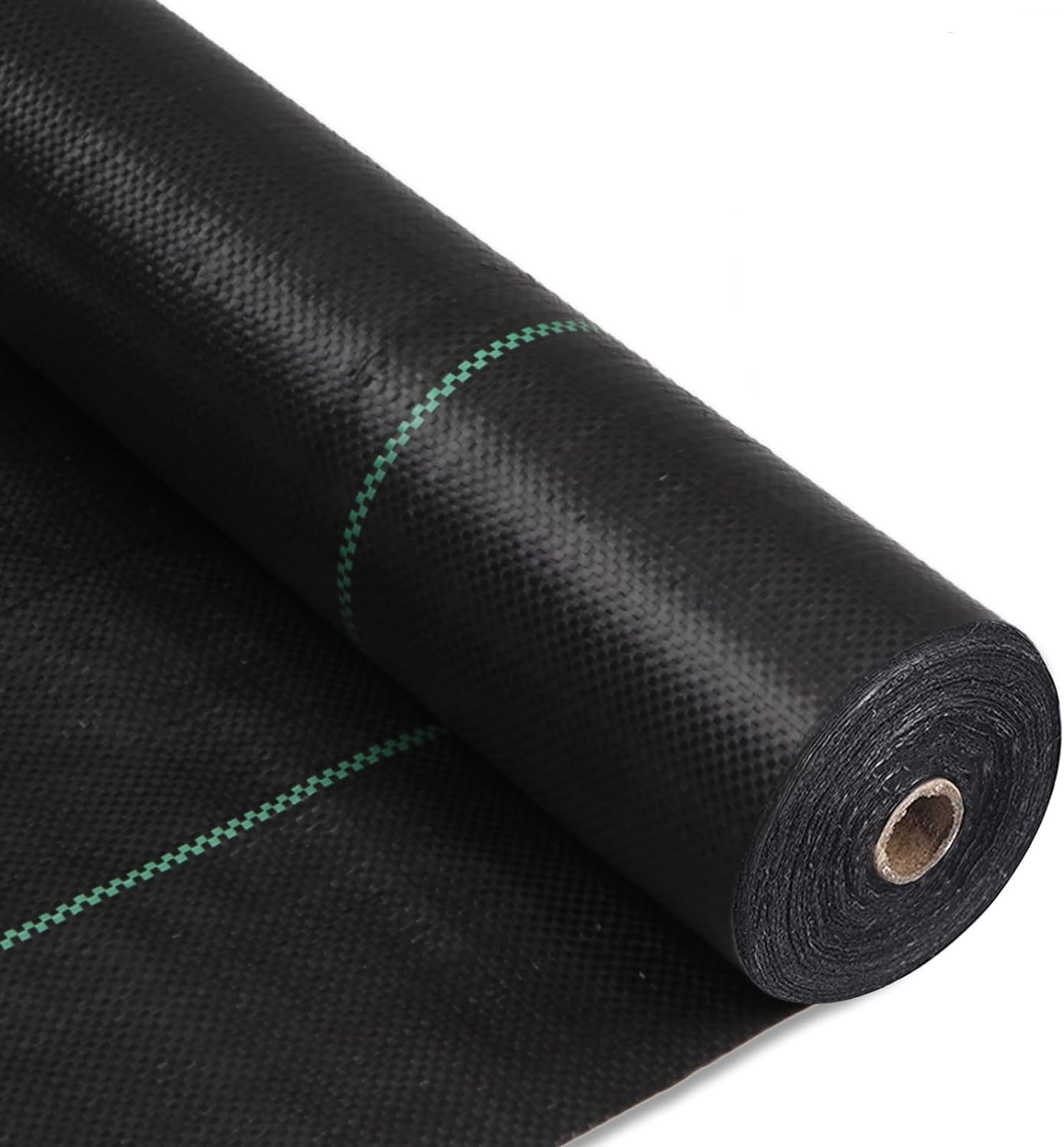
The MLZPU fabric is a 3.2 oz needle-punched dual-layer woven geotextile with UV-resistant properties, designed to prevent degradation under extended sun exposure during installation. The fabric measures 4 ft by 100 ft, covering 400 square feet, and is marketed as suitable for gravel, driveways, artificial grass, and flower beds. It is labeled as an eco-friendly polypropylene material that maintains soil moisture while blocking sunlight to weeds.
Owner experiences reveal a notable split: some report complete weed suppression after four months under gravel, while others found that the fabric tears easily at the folds and frays within a week in a mulch bed. The woven layer must be oriented facing up for proper UV protection and water permeability, a detail that is easy to overlook. A few reviews describe the material as light-duty and more appropriate for one-season vegetable garden use than permanent gravel installation. The included stakes received positive mentions for their quality, which adds a small convenience.
For temporary gravel projects or areas where the fabric can be replaced easily, the MLZPU offers the lowest entry cost. It is not recommended for driveways, heavy foot traffic paths, or any application where digging up the gravel to replace the barrier would be a major inconvenience. Consider it a seasonal solution rather than a permanent geotextile.
What works
- Very affordable entry price for covering 400 sq ft
- UV-resistant formulation protects during installation
- Included stakes are higher quality than typical staples
What doesn’t
- Tears easily at fold lines, not for permanent gravel use
- Frays noticeably within a week in exposed conditions
- Light-duty material unsuitable for driveways or heavy loads
Hardware & Specs Guide
Fabric Weight (oz/sq yd)
The weight of the fabric per square yard correlates directly with puncture resistance and longevity under gravel. A 3 oz fabric is adequate for light foot traffic and decorative gravel paths. A 5 oz or 6 oz fabric is required for driveways or areas where heavy wheel loads are expected. Heavier fabrics also resist UV degradation longer if any portion remains exposed. The Doniks at 5 oz and the Grassclub at 3.2 oz represent the high and middle of this range respectively, while the Sandbaggy at 3 oz compensates with a premium weave pattern.
Tensile Strength (lbs)
Tensile strength measures the force required to pull the fabric apart. For under-gravel applications, the fabric must resist both the downward force of the gravel and the lateral stress of compaction equipment. The Doniks fabric leads this category with 800 lbs, followed by the Grassclub at 400 lbs. Fabrics without a published tensile strength, like the Winisok and MLZPU, should be treated as light-duty options. A minimum of 200 lbs is a reasonable threshold for any gravel application that will see regular use.
Roll Width and Seam Reduction
Every seam is a potential failure point where weeds emerge and gravel shifts. The widest roll in this comparison is the Doniks at 13 ft, which can cover a standard two-lane driveway without a center seam. The Sandbaggy follows at 6 ft, allowing most single-path installations to be seam-free. The narrowest rolls at 3 ft and 4 ft require overlapping seams that must be stapled every 12 to 18 inches to prevent separation. Measuring your project width and matching the roll width to minimize seams is the single highest-impact decision for long-term performance.
UV Stabilization Rating
UV stabilization is expressed as the percentage of original tensile strength retained after a specified exposure period, typically 500 hours. The Sandbaggy fabric guarantees at least 80 percent retention, which is the benchmark for commercial-grade geotextiles. The MLZPU and Grassclub fabrics also claim UV resistance but do not publish the percentage retained. Without a published retention percentage, assume the fabric will become brittle within a single growing season if exposed at the edges of the gravel bed. Always order enough fabric to tuck the edges at least 6 inches under the gravel line.
FAQ
What thickness of weed barrier do I need under gravel for a driveway?
Should I overlap or butt the seams of weed barrier fabric under gravel?
Can I use regular landscape fabric under gravel?
How do I cut weed barrier fabric without it fraying?
Does weed barrier fabric need to be pinned down before adding gravel?
Final Thoughts: The Verdict
For most gravel projects, the weed barrier for under gravel winner is the Sandbaggy 6 ft x 100 ft Fabric because its 6 ft width eliminates seams in standard paths and the 50-year engineering claim provides the highest confidence for permanent installations. If you need to cover a wide driveway and want the strongest tensile support, grab the Doniks 13×115 ft Driveway Fabric. And for a budget-friendly solution that still offers woven geotextile performance on light-traffic paths, the Grassclub 3×300 ft Fabric gives you the best coverage for the cost.