
Specs are compiled from manufacturer listings and verified buyer reviews and can change over time — please confirm the key details on the product page before buying.
Pulling weeds every weekend is a losing game—you clear a patch only to see a fresh crop push through the next rain. A good weed barrier stops that cycle by blocking sunlight while letting water and air reach your plants’ roots. This guide cuts through the marketing noise to show you which rolls actually hold up, drain well, and save you real time in the garden.
I’m Rikta — the founder and writer behind Lawn Gear Lab. This guide is built by comparing the manufacturers’ published specifications and the patterns across verified customer reviews, so you get each pick’s real strengths and trade-offs instead of marketing spin.
To find the top contenders, I looked at weight per square yard, how well water passes through, and whether hundreds of buyers reported the fabric tearing or lasting. Here is my breakdown of the best weed barrier for garden use this season.
Our Picks at a Glance
How To Choose The Best Weed Barrier For Garden
Not all black fabric rolls work the same. You need to match the material weight, weave type, and permeability to your specific project — a flower bed has different needs than a gravel path.
Fabric Weight (oz per sq yd)
This number tells you how thick and tear-resistant the fabric is. A 3.2 oz barrier works fine under a thin layer of mulch in a flower bed, while a 5 oz fabric is heavy enough to hold up under rocks and foot traffic. Heavier weight also means fewer replacements over time.
Woven vs. Non-Woven Construction
Woven polypropylene fabrics (the most common type) are woven together like a very tight basket — they are strong and let water pass through the gaps. Some premium options add a non-woven layer on top to improve water absorption through molecular attraction, which helps if you have heavy clay soil.
UV Stabilization and Cover
UV rays break down cheap fabric within a season. Look for a UV-resistant formula, and plan to cover the barrier with at least 2-3 inches of mulch, stone, or soil so the sun never hits the fabric directly.
Quick Comparison
| Model | Best For | Weight | Size | Permeability | Amazon |
|---|---|---|---|---|---|
| VIVOSUN Premium 5oz★ Best Overall | Vegetable gardens | 5 oz | 3ft x 50ft | Dual-layer (high) | Amazon |
| Snail Weed Barrier 5ozPro Grade | Heavy-duty rock beds | 5 oz/sq yd | 4ft x 100ft | High (woven PP) | Amazon |
| Dewitt Professional Max | Commercial-scale rows | 4.1 oz/sq yd | 3ft x 250ft | Needle-punched | Amazon |
| Grassclub 3ft x 300ft | Long, wide pathways | 3.2 oz/sq yd | 3ft x 300ft | High (woven PP) | Amazon |
| UWIOFF 4ft x 100ft | Covering large beds affordably | 3.2 oz | 4ft x 100ft | High (PE fabric) | Amazon |
| Winisok 4FT x 100FT | Farming and erosion control | 3.2 oz | 4ft x 100ft | High (woven PP) | Amazon |
In-Depth Reviews
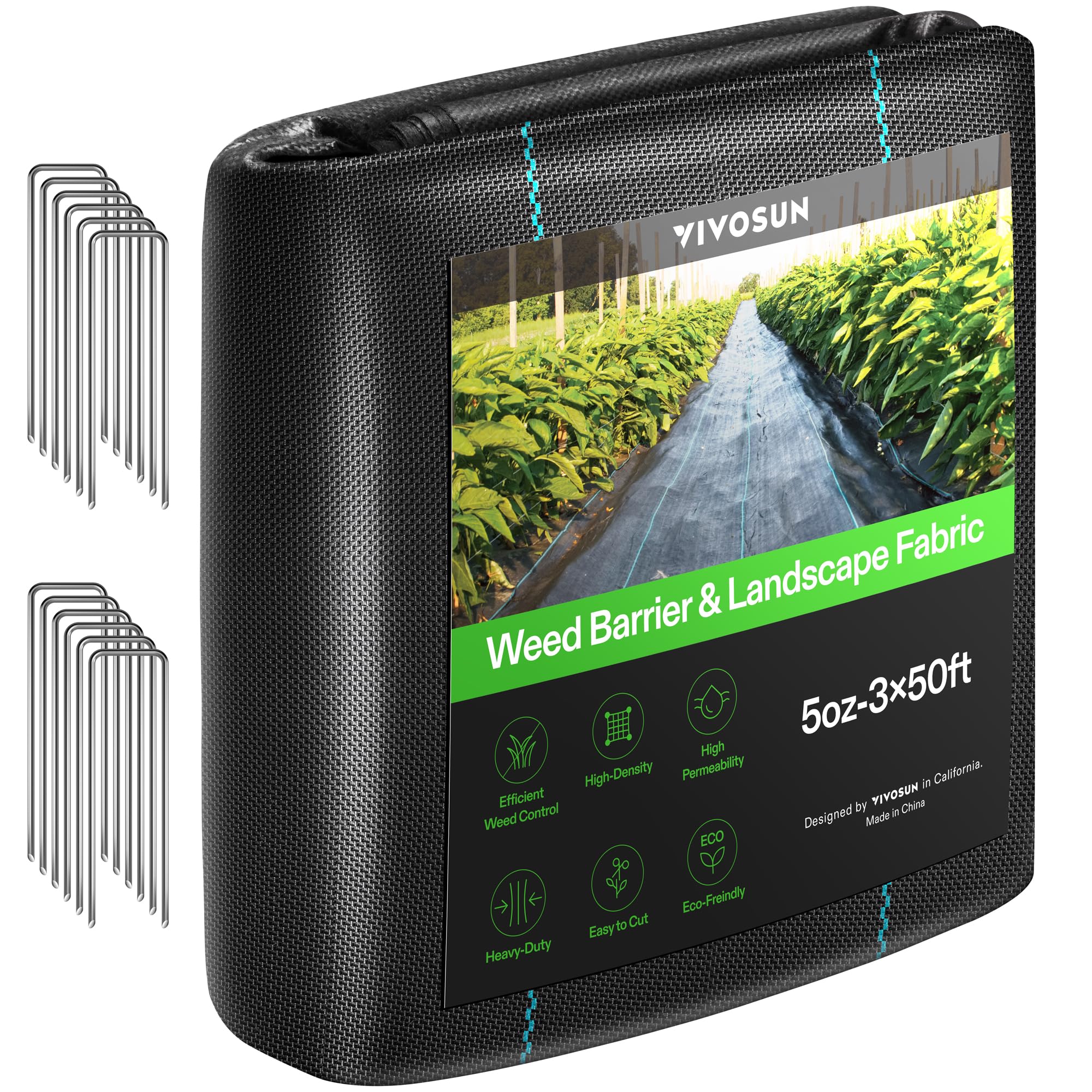
1. VIVOSUN Premium Weed Barrier Landscape Fabric Heavy Duty, 3ftx50ft 5oz
Our pick — over 4.5★ from 900+ verified ratings; the strongest balance of quality and price.
The dual-layer design that pulls water down while keeping sunlight off your weeds.
VIVOSUN’s 5 oz roll uses a clever trick — a non-woven layer on top and a woven layer on the bottom. The non-woven fibers draw water down through molecular attraction (a process called wicking), so moisture reaches the soil even if the fabric top looks dry. Customers note it passed a real-world storm test with “no water penetration after 2 days,” which means it can handle heavy rain without flooding your plants’ roots.
The cut edges fray less than many competitors thanks to the needle-punching process that bonds the layers together. It comes with 12 landscape staples (enough to get started) and green line guides every foot for lining up seedlings. At 3ft x 50ft, it is shorter than some rolls but easier for one person to handle alone.
Why it wins
- Dual-layer construction gives you 5 oz thickness plus superior water absorption
- Cut edges fray and unravel less than most woven-only fabrics
- Includes 12 staples and green alignment lines for fast set-up
The trade-off
- At 50 feet, you need multiple rolls for a large landscape bed
- Packaging may differ from the photo, but the product inside is identical
Ideal for: a vegetable garden with drip irrigation where you want fast drainage plus weed suppression. The water-wicking layer gives it a real edge over the standard 3.2 oz UWIOFF fabric.
Not the best for: covering a huge gravel driveway where 50-foot length means multiple seams.
2. Snail Weed Barrier Landscape Fabric Premium 5oz Pro
The 5-ounce heavyweight that turns a rock bed into a maintenance-free zone for years.
This pick is built from 5 oz per square yard of woven polypropylene (the heavy-duty stuff professionals use). That density makes it feel more like a tarp than a typical fabric, and buyers report it holds up under sharp gravel and heavy foot traffic without tears. One reviewer noted it is “much tougher than store-bought commercial grade from the big orange home improvement store.”
Water does not pool for long — the woven gaps let air and moisture through, so your soil stays aerated. It also comes with green helper lines every foot so you can space your plants in straight rows without measuring. At 4ft x 100ft, it covers a large flower bed or a decent vegetable patch in one unbroken piece.
What stands out
- Professional-grade 5 oz weight rivals heavy commercial fabrics
- High permeability keeps soil nourished while blocking weeds
- Green guide lines simplify plant alignment
The downside
- Owners mention it is hard to cut; you need a very sharp blade or a utility knife with a fresh edge
- Temporary water puddles can form during heavy rain before seeping through
Grab this for: large rock-covered areas, gravel walkways, or any spot where you want to install fabric once and forget about it for years. The density also outlasts the 3.2 oz options like the UWIOFF.
Pass if you: only need a small patch covered; this roll is long, and its thickness makes tight corner cuts tedious.
3. Grassclub 3ft x 300ft Weed Barrier Landscape Fabric Heavy Duty Premium

A 300-foot continuous roll for buyers who measure projects in acres, not flower beds.
At 900 square feet of coverage from a single roll, this is the fabric for long driveways, large retaining walls, or serious farm rows. It is made of 3.2 oz woven polypropylene with a 400 lbs tensile strength rating, meaning it can support a load of stones and gravel without stretching or tearing. Reviewers point out it is “really thick” and “kept the weeds at bay” even a year after installation.
The woven material lets air and water pass easily, so your soil does not turn into a swamp underneath. It is also marketed as an eco-friendly option because it helps prevent erosion — the fabric holds the soil in place on slopes while still allowing moisture through. At 13.77 pounds for the roll (compared to 5.2 pounds for VIVOSUN’s shorter 50ft roll), you feel the weight of the material when you carry it.
The big advantage
- 300 feet of coverage in one piece — fewer seams and overlaps
- 400 lbs tensile strength supports heavy rock and foot traffic
- Shoppers say it stays tough and weed-free after over a year of use
Watch out for
- At 3.2 oz, it is lighter than the Snail 5oz or VIVOSUN 5oz, so it may not last as long under sharp stones
- Unrolling a 13.77 lb roll solo is awkward — have a helper or use a pole
Reach for this if: you are tackling a massive project like a gravel driveway, a long path, or multiple garden rows and want a single continuous piece. The weight-to-length ratio is excellent for big areas.
Look elsewhere if: you need a heavier fabric for a patio underlayment; the 5oz Snail is better suited for high-traffic stone areas.
4. UWIOFF 4ft x 100ft Garden Weed Barrier Landscape Fabric
The wide-value roll that covers a lot of ground for not a lot of cash.
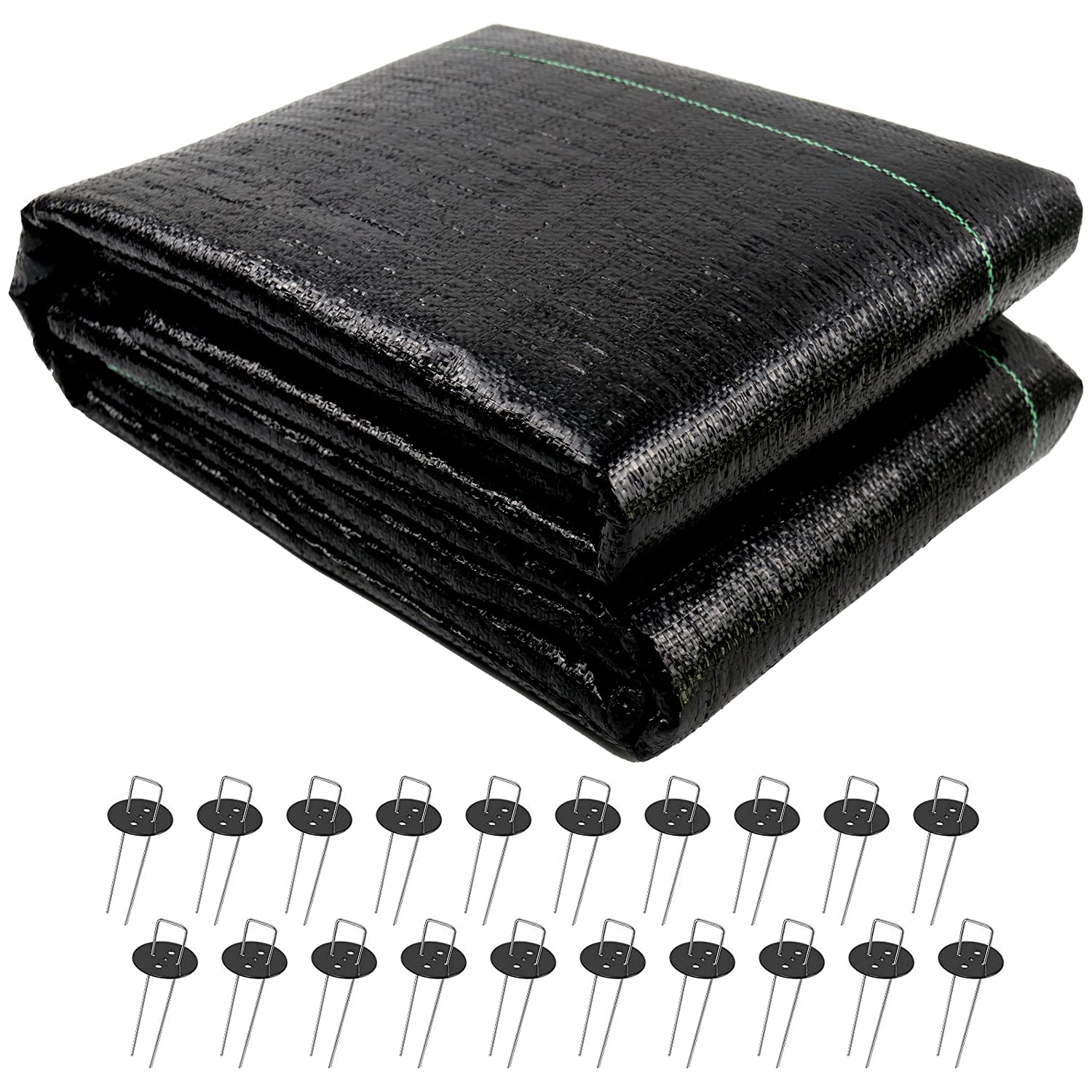
UWIOFF gives you a 4-foot width at a price that undercuts most 3-foot competitors. It uses 3.2 oz PE (polyethylene) fabric rather than the more common PP (polypropylene). The maker claims PE is more flexible and aging-resistant, and one buyer confirmed it provides “excellent weed barrier with no breakthrough” even under daily foot traffic. The green alignment stripes make cutting and plant spacing straightforward.
A real-world headache: the cut edges unravel easily. One reviewer solved this by using a butane torch to melt the edges shut, and another recommended black duct tape to seal the fraying ends. If you plan to cut this fabric into many small pieces, budget extra time for edge management. Covered with mulch, it holds up well, and water seeps through quickly after a rain.
Strong points
- Generous 4ft x 100ft size — wider than most options for big beds
- Flexible PE fabric lays flat and conforms to uneven ground
- Buyers report zero weed breakthrough and quick water drainage
The main drawback
- Frays significantly when cut; plan to seal edges with tape or a torch
- 3.2 oz weight is not as puncture-proof as 5 oz options from Snail or VIVOSUN
Perfect for: large flower beds or raised vegetable gardens where you want the widest coverage per dollar and you can lay the fabric in full-width strips without cutting.
Think twice if: your project involves many small, odd-shaped pieces; the unraveling problem makes this fabric frustrating to cut into intricate shapes.
5. Winisok 4FT x 100FT Weed Barrier Landscape Fabric, 3.2oz

Thick enough to stop weeds but requires a razor-sharp blade to cut.
This 3.2 oz woven polypropylene fabric comes as two 4ft x 50ft sheets (sold together as one 100ft total set), which makes handling easier than a single giant roll. Buyers describe it as “very thick weed barrier,” and one noted it “requires very sharp blade to cut” — the dull utility knife many people start with will struggle. It works great for French drains, retaining wall backfill, and erosion control in addition to standard garden beds.
You get low-maintenance irrigation because the fabric is breathable (lets water pass through), and the maker claims more than 5 years of weed control. One reviewer notes it “shreds easily, leaving plastic strands in soil” when cut with the wrong tool, so bring a fresh box-cutter blade or heavy-duty scissors. Once laid and mulched, though, it keeps the ground weed-free and your plants growing strong.
Where it shines
- Two separate 50ft rolls are easier to lift and position than one 100ft roll
- Thick enough to block sunlight and prevent weed emergence
- Versatile for landscaping, drainage, and construction projects
The catch
- Shreds and leaves plastic strands if you cut it with a dull blade
- 3.2 oz weight means it is not as heavy-duty as 5 oz professional-grade options
Best for: a farmer or gardener who needs two manageable sheets for separate planting areas and is prepared with a sharp tool for precise cuts.
Not for: a quick weekend project where you do not want to fuss with edge sealing or blade changes.
6. Dewitt Professional Max Weed Barrier Fabric 4.1 oz, 3 x 250 Feet

The 250-foot commercial roll that one reviewer expects to last 20 years.
Dewitt uses 4.1 oz woven polypropylene with a needle-punched construction — that means tiny needles punch holes through the fabric to create pores that let air, water, and nutrients pass through while keeping the structure stable. At 22.5 pounds, this is the heaviest roll in the lineup (the Grassclub 300ft roll is 13.77 pounds for reference). One buyer who grows watermelons, cantaloupes, and pumpkins uses it for planting rows and says it “eliminates hoeing and weeding.”
The fabric is UV-resistant but must be fully covered with mulch or stone — exposed edges will break down under direct sun. It has green lines spaced 12 inches apart for straight planting rows. A buyer who has used it for over 5 years reports that it still suppresses weeds with minimal maintenance, though they recommend cleaning dirt spills promptly to prevent random seeds from sprouting on top of the fabric.
The strengths
- Commercial-grade 4.1 oz weight with reinforced fibers resists tearing and punctures
- Needle-punched construction balances water permeability with strength
- Owners mention lasting 5+ years with minimal weed breakthrough
Consider carefully
- Heavy 22.5 lb roll demands a helper or a pole for unrolling
- One reviewer warns that tough weeds can still push through unless you lay a layer of cardboard or heavy mulch underneath
Choose this for: large-scale farm rows, commercial landscaping, or any installation where you want professional-grade performance and are willing to handle a heavy roll. The per-foot cost is low for the quality.
skip it if: you only have a single small flower bed — 250 feet is far too much fabric for a weekend project, and the weight makes it hard to manage alone.
Understanding the Specs
Fabric Weight (oz/sq yd)
This is the single most important number. A 3.2 oz fabric (like the UWIOFF or Winisok) works under a light layer of mulch in a decorative bed. A 5 oz fabric (like the Snail or VIVOSUN) handles sharp gravel, foot traffic, and years of sun exposure without tearing. Heavier fabric costs more upfront but saves you the headache of replacing a torn barrier in a season.
Permeability and Drainage
Weed barrier needs to let water through, or your plants’ roots will rot. Woven polypropylene has natural gaps that allow water and air to pass. Needle-punched fabrics (like the Dewitt) have tiny holes mechanically pressed through the material for even more drainage. VIVOSUN’s dual-layer fabric uses a wicking action that pulls moisture downward — a useful feature for clay-heavy soil that drains slowly.
FAQ
Do I need to remove existing weeds before laying down weed barrier?
Can I use weed barrier fabric under artificial grass?
Will a 3.2 oz fabric last more than one season?
How do I keep weed barrier fabric from fraying at the cut edges?
What is the difference between woven and non-woven landscape fabric?
Should I use staples or pegs to secure weed barrier fabric?
Can I plant directly through weed barrier fabric?
How does weed barrier compare to using cardboard or black plastic?
Will weed barrier fabric break down and harm the soil?
Final Thoughts: The Verdict
For most people, the best weed barrier for garden projects is the Snail Weed Barrier 5oz Pro because it combines professional-grade thickness with reliable water flow and a long roll that covers serious ground. If you want a dual-layer fabric that wicks water into the soil for better drainage in vegetable beds, grab the VIVOSUN Premium 5oz. And for covering a long driveway or a large farm row on a tight budget, the Grassclub 300ft roll gives you the most coverage per roll in the entire lineup.
How We Picked
We do not accept paid placement. Every pick is matched to a real buyer and a real use-case; we do not hands-on test units.
Sources & Methodology
Specifications: manufacturer listings and product documentation. Review insights: verified customer reviews, as of July 2026. Pricing: not shown on this page (it changes often); check the current price via the retailer link.
As an Amazon Associate, Lawn Gear Lab earns from qualifying purchases. This does not affect which products we feature.