
Nothing kills a weekend landscaping project faster than unrolling a flimsy weed barrier that tears the moment you stretch it over a rock. The wrong fabric lets sunlight through, fails under gravel weight, or deteriorates within a single season, leaving you to dig out rotted scraps embedded in the mud. A properly selected woven polypropylene cloth changes that equation entirely — blocking light, passing water, and staying intact under foot traffic and freeze-thaw cycles for years at a time.
I’m Rikta — the co-founder and writer behind Lawn Gear Lab. I’ve spent hundreds of hours comparing manufacturer specs, studying tensile strength ratings, analyzing ASTM test data, and reading through thousands of verified owner reports to separate the fabrics that truly suppress weeds from those that just look good on a product page.
This guide breaks down the seven top contenders so you can match the right density, roll length, and weave construction to your specific project. Whether you are lining a flower bed, laying a gravel pathway, or covering a vegetable patch, you need a reliable weed barrier cloth that withstands real-world conditions without falling apart mid-season.
How To Choose The Best Weed Barrier Cloth
Weed barrier cloth is not a one-size-fits-all purchase. The roll you pick must match the specific demands of your project — whether that involves heavy gravel, direct sun exposure, high foot traffic, or frequent rain. Understand these four factors before you buy.
Fabric Weight and Density
Fabric weight is measured in ounces per square yard (oz/sq yd). A 3.2 oz cloth suits general garden beds and light mulch applications, while 5 oz options deliver substantially greater puncture resistance and longer service life under rocks or artificial turf. Heavier fabric also blocks more light, which is the primary mechanism for stopping weed germination.
Woven vs. Non-Woven Construction
Woven polypropylene fabric provides high tensile strength and excellent water permeability because water passes through the gaps between the woven strands. Non-woven (felt-like) fabric filters water more slowly and can trap silt, but it resists root penetration better. Dual-layer designs combine a woven top with a non-woven bottom to balance permeability with weed blocking.
UV Stabilization and Lifespan
Exposure to sunlight degrades polypropylene over time. Premium fabrics include UV stabilizers that maintain structural integrity for years when covered with at least 3 inches of mulch or gravel. Fabrics marketed as “50-year” require continuous burial to achieve that lifespan — exposed edges fail much faster. Verify whether the fabric is rated for above-ground exposure if you plan to leave sections visible.
Roll Dimensions and Green Alignment Lines
Roll widths of 3 ft, 4 ft, and 6 ft accommodate different bed layouts. The total square footage determines how much area one roll covers. Green line guides printed every foot help you space plants evenly without measuring, which speeds up installation noticeably on larger projects.
Quick Comparison
On smaller screens, swipe sideways to see the full table.
| Model | Category | Best For | Key Spec | Amazon |
|---|---|---|---|---|
| VIVOSUN 5oz Dual-Layer | Premium Mid-Range | Flower beds and vegetable gardens needing high water flow | 5 oz/sq yd, dual-layer woven + non-woven | Amazon |
| Snail 5oz Pro | Premium Mid-Range | Heavy-duty ground cover under gravel or artificial grass | 5 oz/sq yd, 142 gsm woven polypropylene | Amazon |
| Sandbaggy 50-Year Fabric | Premium Long-Term | Permanent installations under driveways and heavy hardscape | 3 oz/sq yd, 100% virgin PP, 500 hr UV rating | Amazon |
| Pattiumo 3.2oz 3x300FT | Value Large Roll | Covering large areas with moderate traffic | 3.2 oz/sq yd, dual-layer woven needle punched | Amazon |
| Vanver 3.2oz 3x300FT | Value Large Roll | Pathways and flower beds needing anti-aging material | 3.2 oz/sq yd, 100% polypropylene warp/weft | Amazon |
| GRASSCLUB 3x300FT | Mid-Range Large Roll | Driveway stabilization and heavy-load support | 3.2 oz/sq yd, 400 lb tensile strength | Amazon |
| MLZPU 4x100FT | Entry-Level Roll | Seasonal vegetable gardens and light-duty beds | 3.2 oz/sq yd, woven dual-layer polypropylene | Amazon |
In‑Depth Reviews
1. VIVOSUN Premium Weed Barrier Landscape Fabric Heavy Duty
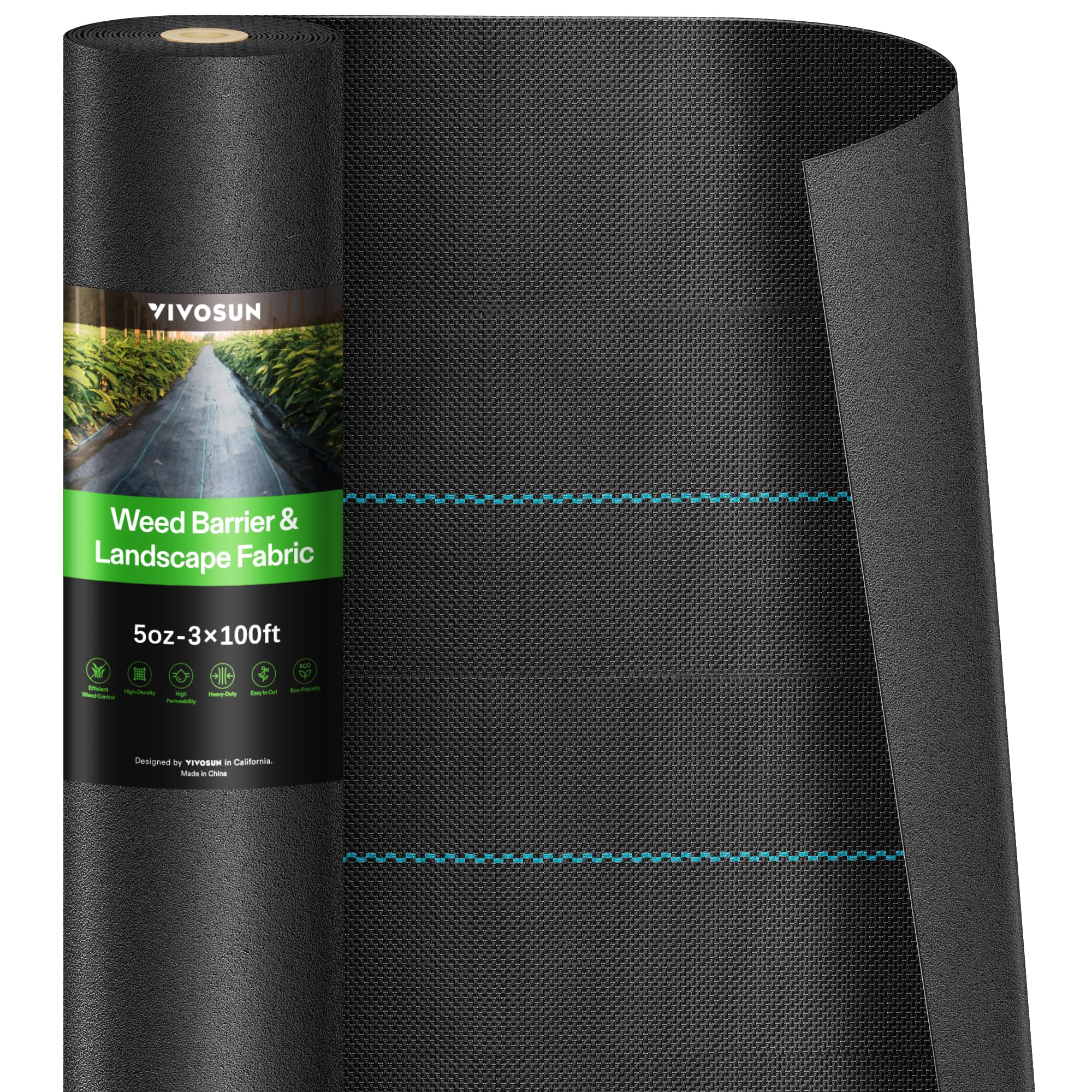
VIVOSUN’s 5 oz fabric uses an innovative dual-layer construction that bonds a woven top sheet to a non-woven fiber bottom through a needle-punching process. The non-woven layer draws water downward via molecular attraction — a design that achieves roughly six times the water permeability of standard woven ground covers. This makes it a standout choice for gardens where soil moisture and root aeration are critical, since standing water never pools on the surface.
At 3 ft wide and 100 ft long, the roll provides 300 sq ft of coverage with green line guides printed every foot to simplify plant alignment. Owner reports consistently note that the fabric stays flat, grips the ground well due to its fuzzy underside, and resists tearing during installation. Several users report it performed across two full growing seasons without visible degradation, even under daily foot traffic in raised bed aisles.
The woven layer blocks UV light effectively, and the cut edges fray less than typical single-layer fabrics because of the dual-layer bond. The primary trade-off is that cutting still produces some loose fibers, and the heftier material requires sharp shears for clean edges. For gardeners who prioritize water flow and dense weed suppression in flower beds or vegetable patches, this cloth hits the sweet spot.
What works
- Dual-layer design maximizes water permeability while blocking light
- Fuzzy bottom side grips the soil surface to prevent shifting
- Green alignment lines speed up plant spacing during installation
What doesn’t
- Cut edges produce some loose strands that require clean-up
- Heavier 5 oz density demands sharp scissors or a utility knife
2. Snail Weed Barrier Landscape Fabric Premium 5oz Pro

The Snail 5oz Pro delivers a dense 142 gsm woven polypropylene sheet that feels more like a flexible plastic tarp than a felt blanket. This rigidity translates into exceptional puncture resistance — users report laying it directly over established weeds and covering it with gravel, with zero breakthrough after months of pressure. The 4 ft width covers wider beds in fewer strips compared to standard 3 ft rolls, reducing seam overlap and potential weak points.
Water permeability is strong thanks to the open weave construction, and the UV-stabilized polypropylene withstands direct sun exposure better than many mid-weight competitors. Owners consistently note that the fabric stays intact through winter freeze-thaw cycles and remains reusable for a second season after being pulled up and relaid. The green stripe guides every foot simplify row spacing for vegetable plantings.
The main complaint centers on cutting difficulty — the toughness that makes it durable also requires a sharp blade and firm pressure to cut cleanly. Some users also caution that the material feels plastic-like and does not conform as naturally to uneven ground as softer fabrics. For permanent hardscape installations where long-term puncture resistance matters more than drape, this cloth earns its recommendation.
What works
- Dense 5 oz weave delivers class-leading puncture and tear resistance
- 4 ft wide roll reduces seams and installation time on large beds
- UV-stabilized material survives prolonged sun exposure without crumbling
What doesn’t
- Requires a very sharp blade; dull shears shred the edges
- Plastic-like feel does not drape smoothly over irregular terrain
3. Sandbaggy Landscape Fabric 50 Year Fabric
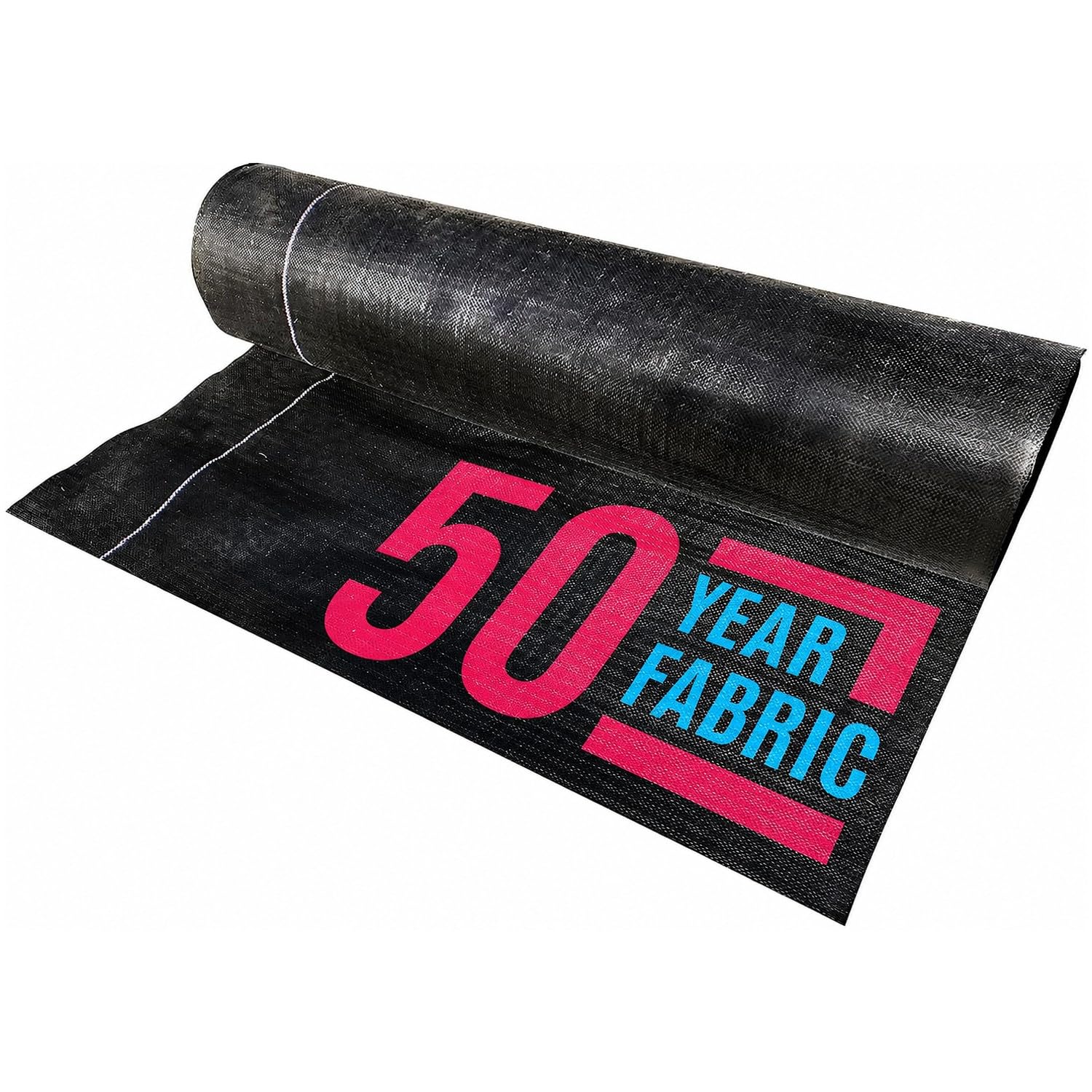
Sandbaggy builds its reputation on a 3 oz woven polypropylene fabric engineered to last five decades when buried under at least 3 inches of gravel or mulch. The material is woven on industrial looms from 100% virgin polypropylene resin and lab-tested under ASTM standards, maintaining a minimum of 80 percent tensile strength after 500 hours of UV exposure. This is the cloth that contractors and reforestation farmers choose for permanent installations where pulling up a failed barrier later would be prohibitively expensive.
The tight weave blocks sunlight to underlying weeds effectively while still allowing water to percolate through. Owner feedback consistently praises the tear resistance — the fabric does not rip when stretched over sharp rocks or staked into compacted soil. Many buyers specifically replaced deteriorated big-box store fabrics with Sandbaggy and report zero weed breakthrough even under heavy decomposed granite paths.
One notable downside involves packaging inconsistency: some rolls arrive folded rather than rolled, which creates stubborn crease lines and makes deployment difficult on windy days. The 3 oz weight is lighter than the 5 oz premium competitors, meaning it offers less immediate puncture resistance if you are installing under sharp-edged river rock. For permanent hardscape use where burial depth is adequate, the 50-year lifespan claim is the strongest in this lineup.
What works
- Engineered for 50+ year lifespan when properly buried under gravel
- ASTM-tested UV resistance with 80% strength retention at 500 hours
- High tensile weave trusted by farmers for reforestation and heavy-use areas
What doesn’t
- Occasionally shipped folded instead of rolled, causing stubborn creases
- 3 oz fabric offers less puncture resistance than heavy 5 oz alternatives
4. Pattiumo Weed Barrier Fabric 3x300FT

Pattiumo’s 3.2 oz dual-layer fabric uses a needle-punched woven construction that balances moderate weed suppression with easy handling. The material is noticeably softer and more pliable than the premium 5 oz options, which makes it easier to contour around raised bed corners, tree rings, and irregular garden shapes. At 300 ft long, a single roll covers a substantial 900 sq ft — enough for multiple medium-sized beds or a long driveway edge.
Water permeability is adequate for most garden applications, and the opaque weave blocks enough sunlight to stop annual weeds under a standard depth of mulch. Owners report that the fabric holds up well for two to three seasons under wood mulch and river rock, especially when edges are melted with a torch to prevent fraying. The green line guides every foot help with alignment, and the roll ships flat without being folded, which reduces installation headaches.
The 3.2 oz weight means it punctures more easily than 5 oz options if sharp rocks are pressed into it or if you walk heavily on it without mulch coverage. Some users note that weeds may still grow through gaps if the overlap between strips is less than 6 inches. For budget-conscious buyers covering a large area with moderate traffic, this fabric delivers reliable short-to-medium term performance.
What works
- 900 sq ft coverage from a single 300 ft roll handles large projects
- Softer drape conforms easily to irregular bed shapes and curves
- Flat-shipped roll avoids crease-induced weakness during install
What doesn’t
- Lighter 3.2 oz density punctures more easily under sharp rock
- Requires 6+ inch overlap between strips to fully block weeds
5. Vanver 3ftx300ft Garden Landscape Fabric
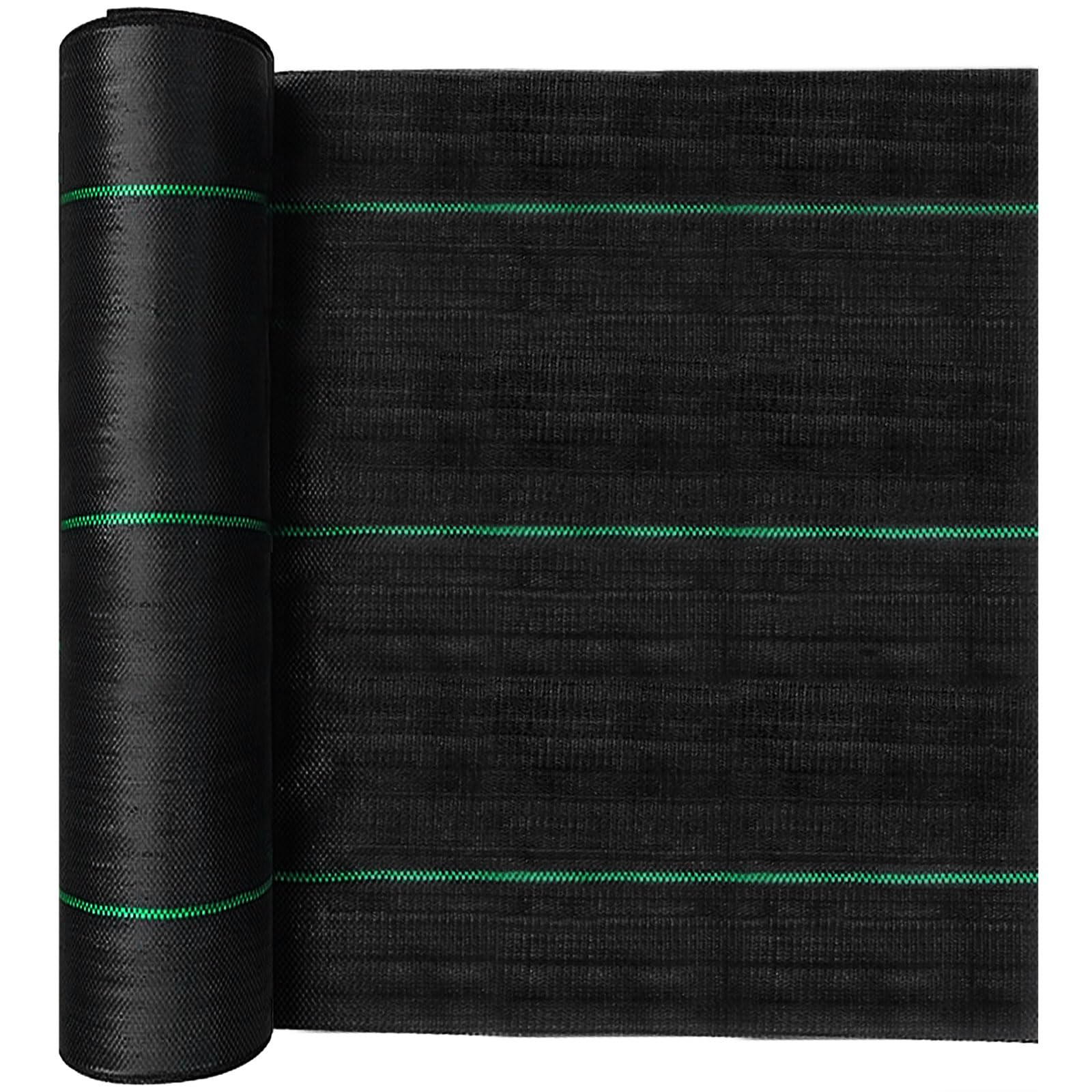
Vanver’s 3.2 oz fabric is warp-and-weft woven from 100 percent polypropylene, giving it a uniform grid structure that allows slow air and water exchange while keeping the underside dark. The manufacturer includes an anti-aging additive intended to extend the usable lifespan beyond standard entry-level fabrics, and several owners report it lasting through a full year under decomposed granite with minimal degradation. The 300 ft roll provides the same 900 sq ft of coverage as the Pattiumo, making it a direct competitor in the large-area value segment.
Installation is straightforward — the fabric unrolls smoothly, cuts easily with scissors, and accepts landscape staples without tearing at the puncture points. Users trying it as a base layer for artificial grass and walkways report that it suppresses weeds effectively when properly overlapped and staked. The green alignment lines are clearly printed and help keep rows straight during vegetable patch setup.
A recurring observation from owners is that a few weeds still manage to push through over time, particularly aggressive perennials like quack grass that find gaps in the weave. The anti-aging treatment helps, but the 3.2 oz fabric is not a permanent solution for high-weed-pressure environments. For flower beds and low-traffic pathways where you want good coverage per dollar, this cloth performs adequately.
What works
- Anti-aging additive extends usable life beyond basic entry-level fabrics
- Large 900 sq ft roll fits extensive beds and path projects
- Warp-and-weft weave allows uniform water passage without pooling
What doesn’t
- Aggressive perennial weeds can still penetrate the 3.2 oz weave
- Not intended for permanent installations under heavy rock loads
6. GRASSCLUB 3ft x 300ft Weed Barrier Landscape Fabric

GRASSCLUB markets this 3.2 oz woven fabric specifically for load-bearing applications, with a stated tensile strength of 400 lbs — significantly higher than typical landscape fabrics in this weight class. The enhanced strength comes from a tight cross-weave of polypropylene strands that resists stretching when supporting gravel, retaining walls, or light vehicle traffic. For driveway stabilization and gravel path base layers, this fabric offers a structural advantage that lighter weaves lack.
Water permeability is initially slow — several owners note that water beads up on the surface during the first few rains before the fabric wets out and allows flow. After the initial break-in period, drainage normalizes and the cloth passes moisture without erosion. The 300 ft roll provides 900 sq ft of coverage, and the fabric unrolls flat with minimal curling. Owners using it in vegetable gardens report excellent weed suppression after a year of service.
The main limitation is the same water beading behavior that surprises first-time users — if you need immediate percolation for newly planted beds, you may need to pre-wet the fabric or use drip irrigation underneath. The 3.2 oz density also means it offers less puncture resistance than heavier premium fabrics. For gravel driveways and paths where tensile strength matters more than sheer mass, this cloth is a strong value proposition.
What works
- 400 lb tensile strength handles gravel loads and foot traffic well
- Large 900 sq ft roll covers driveways and wide paths efficiently
- Woven structure stabilizes soil and prevents erosion under heavy rain
What doesn’t
- Water beads on the surface until the fabric breaks in after several rains
- 3.2 oz density not as puncture-resistant as 5 oz premium alternatives
7. MLZPU 4ftx100ft Weed Barrier Landscape Fabric
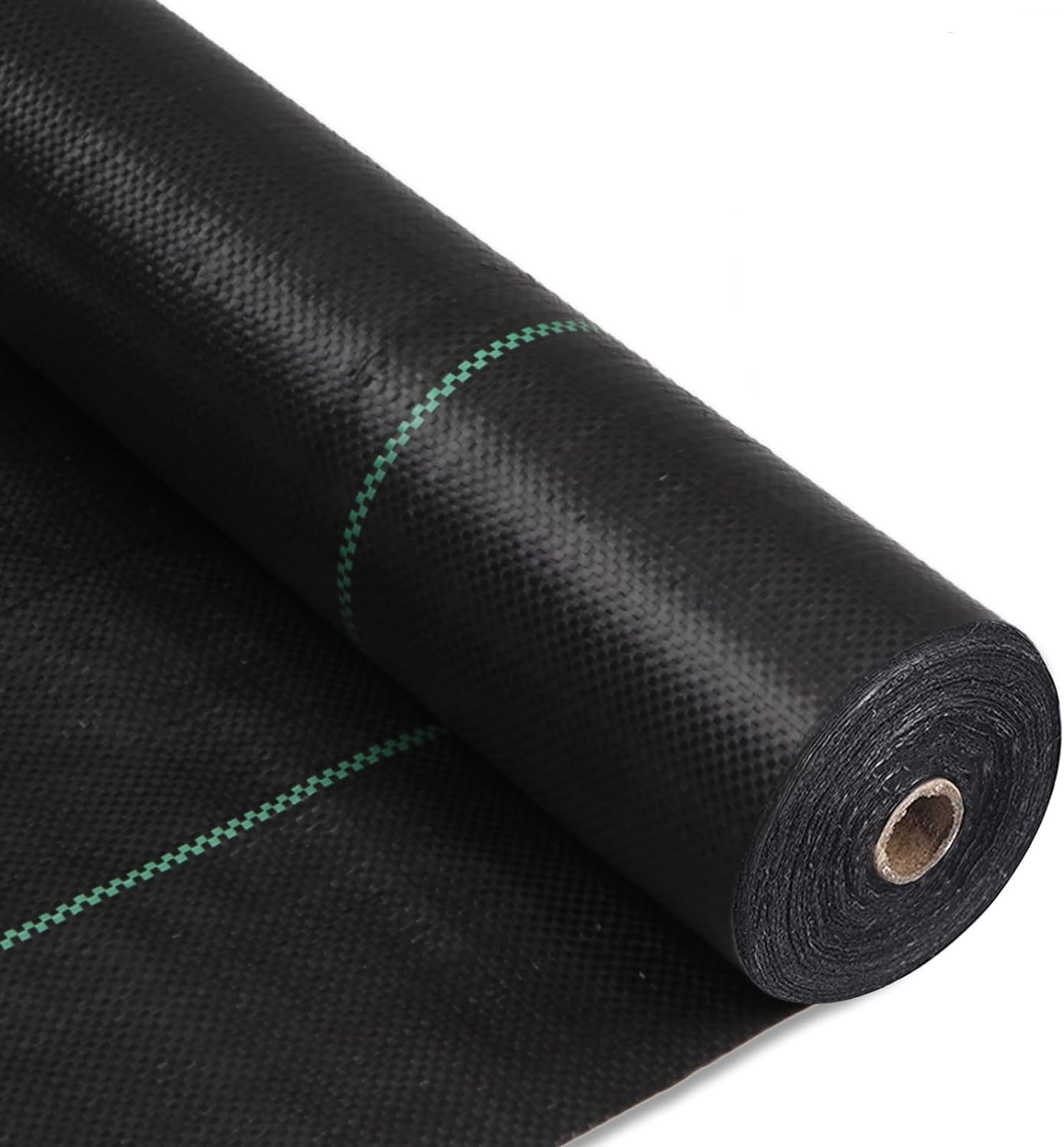
The MLZPU 4×100 ft roll offers an accessible entry point for homeowners tackling their first landscaping project. The fabric uses a 3.2 oz woven needle-punched dual-layer construction that blocks light and passes water, and the 4 ft width reduces the number of parallel strips needed for wide beds. Owners who used it for seasonal vegetable gardens report that it keeps weeds down effectively for one growing season when combined with a layer of mulch.
The fabric cuts easily with household scissors, and the included green alignment stripes help with plant spacing. Several buyers appreciated the responsive customer service — one reviewer noted that the seller issued a refund without prompting when the fabric showed early wear. The material is lightweight enough to move around during installation but still tough enough to resist tearing from moderate foot traffic.
The primary drawback is durability: multiple owners report that the fabric tears easily at fold points and begins fraying within a week when exposed to wind or repeated walking. The green stripes are also noted to be unevenly spaced, which can throw off plant alignment if you rely on them as guides. For one-season use in low-traffic beds, this roll provides functional coverage at a minimal investment, but it is not built for permanent or high-traffic installations.
What works
- 4 ft width covers beds faster with fewer seams than 3 ft rolls
- Lightweight material easy to cut and position during install
- Responsive customer service from the manufacturer
What doesn’t
- Frays and tears at fold points within days of installation
- Green alignment stripes are printed unevenly on some rolls
Hardware & Specs Guide
Fabric Weight (oz/sq yd)
This metric directly determines puncture resistance and light blockage. Entry-level fabrics hover around 3.2 oz/sq yd, which is adequate for annual flower beds and light mulch. Premium 5 oz/sq yd materials stop aggressive perennial weeds and withstand gravel pressure without tearing. The weight also influences how easily the fabric cuts and drapes — heavier options require sharper blades but deliver longer service life.
Tensile Strength (lbs)
Tensile strength measures how much pulling force the fabric can handle before tearing. Standard landscape fabrics range from 200 to 400 lbs. Higher tensile ratings matter for driveway stabilization, sloped terrain, and areas where the fabric spans gaps between stakes. Fabrics with 400+ lb tensile strength resist stretching when loaded with gravel or compacted by foot traffic.
Water Permeability Rating
Not all weed barriers pass water at the same rate. Dual-layer fabrics engineered with needle-punched non-woven bottoms can achieve permeability six times higher than standard single-layer woven cloth. High permeability prevents water from pooling on the surface, which protects plant roots from rot and keeps mulch from floating away during heavy rain. Low permeability fabrics may require drip irrigation installed underneath.
UV Stabilization Rating
Ultraviolet radiation degrades polypropylene over time, causing brittleness and cracking. Fabrics with UV stabilizers maintain structural integrity for years when covered. The industry benchmark is 80 percent strength retention after 500 hours of UV exposure. Fabrics exposed to direct sunlight without cover degrade much faster — typically within one year regardless of the rating. Burial under 3 inches of aggregate or mulch dramatically extends lifespan.
FAQ
Should I use woven or non-woven weed barrier cloth under gravel?
How much overlap do I need between strips of weed barrier cloth?
Can I put weed barrier cloth directly over existing weeds?
Why does water bead up on my new weed barrier instead of soaking through?
Final Thoughts: The Verdict
For most gardeners, the weed barrier cloth winner is the VIVOSUN Premium 5oz Dual-Layer because it combines industry-leading water permeability with dense weed suppression at a reasonable price per square foot. If you need maximum puncture resistance under gravel or artificial grass, grab the Snail 5oz Pro. And for permanent hardscape installations where the fabric must last decades, nothing beats the Sandbaggy 50-Year Fabric.