
Specs are compiled from manufacturer listings and verified buyer reviews and can change over time — please confirm the key details on the product page before buying.
You want your vegetables to grow big and healthy, but the world of manure can be confusing. What you are really looking for is something that feeds your soil without stinking up your yard or burning your plants, and the right bagged manure does exactly that by adding nutrients and improving the dirt’s texture.
I’m Rikta — the founder and writer behind Lawn Gear Lab. This guide is built by comparing the manufacturers’ published specifications and the patterns across verified customer reviews, so you get each pick’s real strengths and trade-offs instead of marketing spin.
These five manure options range from compact bags for small beds to large compost blends for bigger gardens, and this guide breaks down which one suits your specific needs. Here is what you need to know about the best vegetable garden manure for your plants.
Quick Picks
- Brut Cow Compost – Nutrient-Rich Composted Cow Manure Organic Soil Amendment — Best Overall
- Espoma Organic Cow Manure with Aged Forest Products – 1 Cubic Foot Bag — Premium Pick
- Black Kow Nitrogen Phosphate Composted Cow Manure Fertilizer for Soil, (8 qt) — Top Performer
- Horse Poop 100% Natural Aged Composted Manure | Unpasteurized, Sifted Premium Garden Soil Amendment — Compact Pick
- Organic Cow Manure Compost, Natural Fertilizer for Garden Beds, Raised Planters, Potted Plants (4 Quart) — Budget Champion
How To Choose The Best Vegetable Garden Manure
Picking the right manure for your vegetable garden depends on a few real-world decisions. You need to know what is inside the bag, how much you actually get, and whether it is ready to use straight away.
Animal Source Matters
Cow manure is the most common choice because it is balanced and gentle on plants. Horse manure is also popular but can contain more weed seeds if not properly composted. Both work well for vegetables when fully aged.
Composted vs. Fresh
Always choose composted or aged manure. Fresh manure is too strong and will burn your plant roots. Composted manure has already broken down, releasing nutrients slowly without the risk of burning.
Bag Size and Volume
Manure is sold by weight (pounds) and volume (quarts or cubic feet). A 10-pound bag might take up 10 quarts, while a 4-pound bag is about 4 quarts. Check the volume figure to see how much ground a bag will actually cover.
Quick Comparison
| Model | Best For | Volume | Weight | Unit Count | Amazon |
|---|---|---|---|---|---|
| Brut Cow Compost | Largest organic volume per bag | 10 Quarts | 10 Pounds | 192.0 Ounce | Amazon |
| Espoma Organic Cow Manure | Balanced 0.5-0.5-0.5 fertilizer | 1 Cubic Foot | — | — | Amazon |
| Black Kow Composted Cow Manure | Proven results for vegetables | 8 Quarts | 6 Pounds | — | Amazon |
| Horse Poop Aged Composted Manure | Finely sifted, odor-free horse manure | — | 4 Pounds | 64.0 Ounce | Amazon |
| Organic Cow Manure Compost | Small-batch organic cow manure | 4 Quarts | — | 128.0 Ounce | Amazon |
In‑Depth Reviews
1. Brut Cow Compost – Nutrient-Rich Composted Cow Manure Organic Soil Amendment

The biggest bag of pure composted cow manure you can buy for your garden beds.
You get 10 Quarts of material in a 10 Pound bag, which is 2.5x the volume of the smaller Organic Cow Manure Compost bag (4 Quarts). That gap matters when you are covering multiple raised beds or a vegetable patch. The compost is packed with nitrogen, calcium, and iron — nutrients that help vegetables and flowers grow bigger.
It is OMRI (Organic Materials Review Institute) listed, meaning an independent third party verified it meets organic standards. Buyers report it works well with potting soil and has no odor, so you can use it indoors or outdoors without dealing with strong smells. The texture is finely sifted, which makes it easy to mix into existing soil or use as a top dressing.
Unlike the Espoma blend below, this is pure composted cow manure with no added forest products — you get 100% manure, not a mix. One first-time grower mentioned they used a 3:2 ratio of this compost to soil and saw their tomato seeds grow noticeably fast.
Why you will like it
- 10 Quarts gives you the most volume per bag among these picks
- OMRI (Organic Materials Review Institute) listed certified organic for soil safety
- Odor-free and finely sifted for easy application
The trade-offs
- Some gardeners may prefer a fertilizer blend with added forest products
- Price is higher than smaller bags like Black Kow
Reach for this if: You have multiple raised beds or a medium vegetable garden and want the largest volume of certified organic composted cow manure per bag.
Look elsewhere if: You only need a small amount for a few potted plants — a compact bag like Horse Poop would cost less.
2. Espoma Organic Cow Manure with Aged Forest Products – 1 Cubic Foot Bag

A balanced 0.5-0.5-0.5 manure blend that improves soil moisture and aeration.
Espoma mixes dehydrated cow manure with aged forest products, so you get a dual-action soil amendment — it feeds your vegetables with the three major plant nutrients (nitrogen, phosphorus, and potassium at a 0.5-0.5-0.5 ratio) while also improving the soil’s ability to hold moisture and let air reach the roots. This is different from a pure manure like Brut Cow Compost because the forest products help with the physical structure of heavy or sandy soil.
The bag covers 1 Cubic Foot of space, which is a large volume for bigger gardens. Owners mention that adding it to patio pots helps them require less water, and one reviewer noted it worked wonderfully for roses and hibiscus. The manure is described as very rich and potent, so a little goes a long way.
This is a well-known brand — the Espoma Company has been in natural organics since 1929. Unlike the Horse Poop option which is sold by weight only, the 1 Cubic Foot bag gives you a clear volume measurement for planning coverage.
Why you will like it
- 0.5-0.5-0.5 NPK (nitrogen, phosphorus, potassium) analysis provides balanced nutrition
- Aged forest products boost moisture retention and aeration
- Large 1 Cubic Foot bag for extensive garden beds
The trade-offs
- Contains forest products, not pure manure
- Reviewers noted some sticks in the mix
Best for: Gardeners who want a complete soil conditioner that both feeds and improves soil texture, especially in heavy clay or sandy soils.
skip it if: You need 100% pure manure — go with the Brut Cow Compost instead.
3. Black Kow Nitrogen Phosphate Composted Cow Manure Fertilizer for Soil, (8 qt)

A mid-sized bag with millions of beneficial bacteria for root health.
Black Kow holds 8 Quarts and weighs 6 Pounds, sitting between the large 10 Quart Brut and the smaller 4 Quart Organic Cow Manure bag. It is specifically designed to improve both sandy and clay soils — it holds water and nutrients in sandy soil, and it breaks up hard clay so roots can breathe. The recommended mixing ratio is 1:1 with your existing soil.
What sets this manure apart is the mention of millions of beneficial bacteria that convert nitrogen and other nutrients into forms plants can easily use. One reviewer whose mother uses it in everything she plants said her flowers are always so pretty, and another confirmed “It really helped my garden veggies.” The smell is strong — reviewers admit it is terrible — but the results for plant growth make it worth it for many gardeners.
Black Kow is also much denser in volume per dollar than the 4 Quart Organic Cow Manure bag (a 2x gap in volume at 8 Quarts vs 4 Quarts). Some customers note it is “expensive but worth it,” which reflects the premium brand reputation.
What stands out
- 8 Quarts volume is a practical size for medium gardens
- Millions of beneficial bacteria improve nutrient availability
- Works on both sandy and clay-heavy soils
The catch
- Strong odor that some users find unpleasant
- Price is higher than some comparable bag sizes
Grab this for: Medium vegetable gardens where you need a proven brand that delivers visible growth results.
Consider something else if: You are sensitive to manure smell — the Brut or Horse Poop options are odor-free.
4. Horse Poop 100% Natural Aged Composted Manure | Unpasteurized, Sifted Premium Garden Soil Amendment
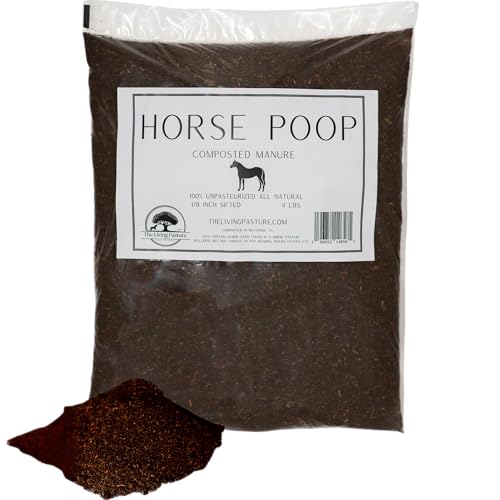
A finely sifted, odorless horse manure bag that blends into any soil easily.
This is your option if you want horse manure instead of cow manure. It is aged and composted, then sifted through 1/8 inch mesh, so there is no debris or large chunks to pick out. Reviewers point out it is “dry, odorless, clean horse manure with no debris; no sifting needed” — making it a clean and convenient choice for small gardens, potted plants, or even mushroom substrate.
The bag is 4 Pounds with a unit count of 64.0 Ounce, which is significantly smaller than the 10 Pound Brut Cow Compost (a 2.5x gap). But that smaller size works well for targeted use. One buyer mentioned it is “a bit pricey” but praised its consistency, and another said “my plants flourished very quickly” after using it. The material may contain small rocks or leaves from a natural pasture setting, but the sifting keeps it consistent.
If you want to make manure tea, this bag is labeled “unpasteurized” — meaning the natural microbes are still alive, which some gardeners prefer for brewing compost tea. The texture is fluffy, making it easy to blend into potting mixes for seed germination.
Why it works
- Finely sifted through 1/8 inch — no debris
- Odorless and clean for indoor or outdoor use
- Unpasteurized, so live microbes remain for compost tea
The limits
- 4 Pound bag is smaller than most cow manure options
- Some bags may have extra moisture or slight odor
Perfect for: Small-scale gardeners who want clean, odor-free horse manure for potted plants or compost tea.
Choose something else if: You need large volumes for a big vegetable garden — the Brut or Espoma bags give you more material.
5. Organic Cow Manure Compost, Natural Fertilizer for Garden Beds, Raised Planters, Potted Plants (4 Quart)
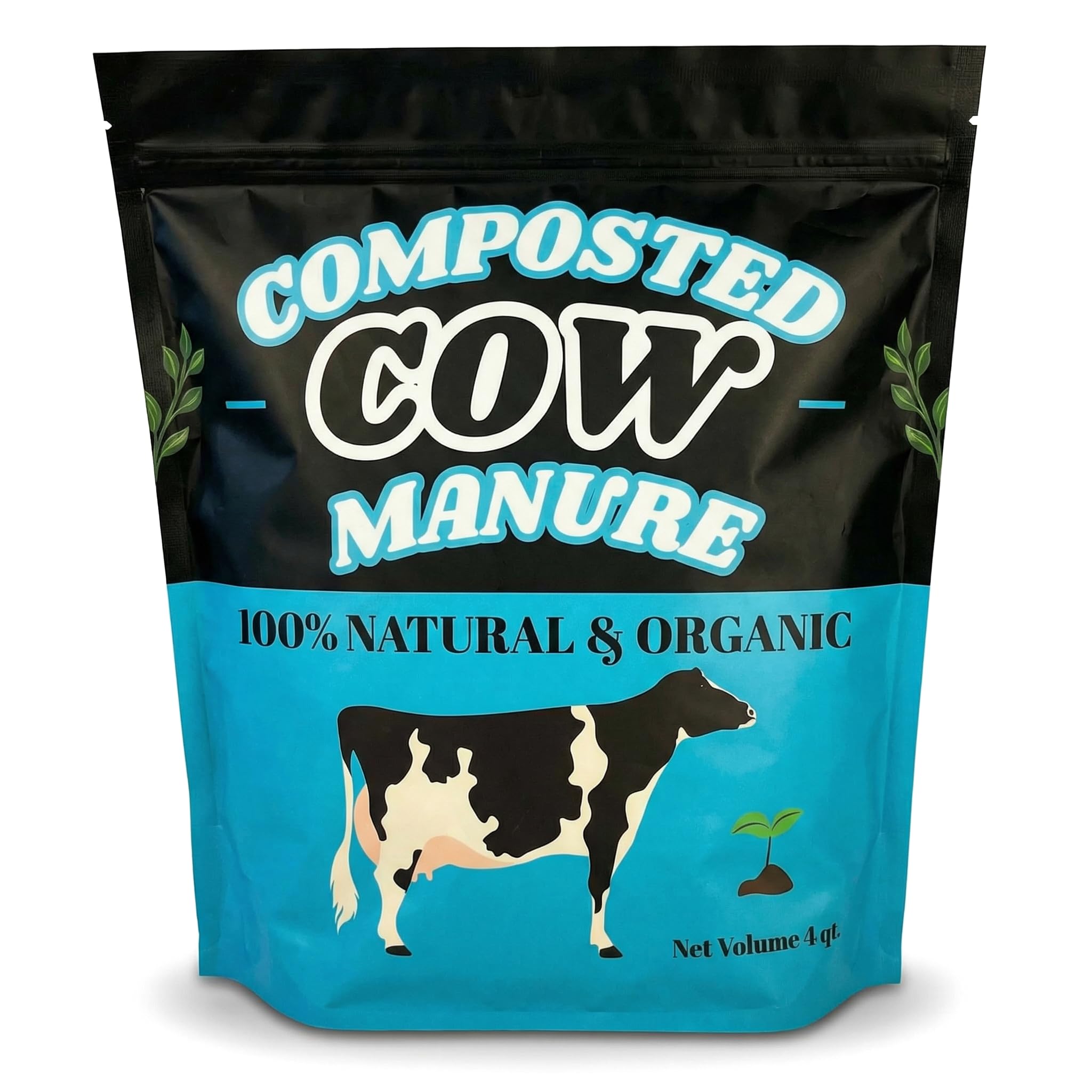
A small bag of organic cow manure that works but may feel overpriced for its size.
This 4 Quart bag from Home and Country USA is a compact option for small raised planters or a few potted plants. It is 100% organic composted cow manure with no chemicals or additives, and it comes from sustainable farms in the USA. The unit count is 128.0 Ounce, which sounds large, but the volume is only 4 Quarts — that is 2.5x smaller than the 10 Quarts you get with the Brut Cow Compost.
Reviews are mixed on value. One owner reported, “It was a lot smaller than I expected I will not order more,” while another noted it is “Good for all plants, overpriced for the bag size.” The manure is chunky and may need crumbling for small pots, but it has minimal odor. Some users were disappointed it does not smell like traditional cow manure. For the price, it works well nutritionally, but you are paying a premium for a relatively small volume.
If you only need a tiny bag for a windowsill herb garden, this could be fine. But if you have any larger garden plans, the Black Kow or Brut options give you much more volume for the money.
What works
- 100% organic composted cow manure with no chemicals
- Versatile use for vegetables, flowers, and lawns
- Minimal odor compared to fresh manure
What holds it back
- 4 Quarts is a small volume for the price
- Some bags arrived smaller than expected
Fine for: Small-scale gardeners who need a tiny bag for a single planter or a few pots.
Steer clear if: You want good value per quart — the Brut or Black Kow bags deliver much more material.
Understanding the Specs
Volume vs. Weight
Manure is sold in quarts, cubic feet, and pounds. Volume (quarts or cubic feet) tells you how much space the manure will cover, while weight (pounds) tells you the actual mass. Heavy, dense manure like Black Kow (6 Pounds for 8 Quarts) may provide more nutrients per scoop than fluffy, lightweight manure like Horse Poop (4 Pounds for a similar volume). Always compare volumes in quarts or cubic feet to judge how far a bag will stretch across your garden beds.
NPK Fertilizer Analysis
The three numbers — like 0.5-0.5-0.5 on the Espoma bag — stand for nitrogen, phosphorus, and potassium. These are the major nutrients your plants need. Nitrogen helps leaves grow green, phosphorus supports root development and blooms, and potassium improves overall plant health. The numbers are percentages, so 0.5 means half a percent of the bag is that nutrient. Most composted manures have low NPK (nitrogen, phosphorus, potassium) numbers because they are gentle soil amendments, not concentrated synthetic fertilizers. They improve the soil’s structure and microbial life first, then feed the plant gradually.
Composted vs. Aged
Both terms mean the manure has broken down over time, but “composted” usually implies a managed process with regular turning and aeration to speed up decomposition and kill weed seeds. “Aged” often means the manure sat in a pile for several months without active management. Both are safe for plants when done properly. Fresh manure is never safe because it is too high in ammonia and will burn roots. Look for bags that clearly say “composted” or “aged” on the label — any bag that does not mention this should be avoided for direct garden use.
OMRI Listing
The Organic Materials Review Institute (OMRI) is a nonprofit organization that verifies whether a product meets organic farming standards. If a bag of manure is OMRI listed, an independent inspector has confirmed it contains no prohibited synthetic chemicals or genetically modified organisms. This matters if you are growing vegetables for yourself and want to avoid any hidden additives. Among these products, only the Brut Cow Compost is explicitly OMRI listed, though several others advertise as “organic” or “natural.” OMRI listing is the most reliable way to verify organic claims.
FAQ
What is the difference between cow manure and horse manure for vegetable gardens?
How much manure do I need per square foot of garden bed?
Can I use bagged manure directly from the bag without mixing it into the soil?
How do I store an opened bag of manure without it smelling or attracting pests?
Is it safe to use bagged manure on seedlings and tender young plants?
Can I make compost tea from these bagged manures?
How long does an opened bag of composted manure stay fresh?
What is the 1:1 mixing ratio on the Black Kow bag mean?
Are there any risks of using manure from cows that may have been given antibiotics?
Why does one bag say “4 Pounds” while another says “64 Ounce” for the same product?
Final Thoughts: The Verdict
For most people, the best vegetable garden manure winner is the Brut Cow Compost because it gives you the largest volume of OMRI certified composted cow manure per bag — 10 Quarts of odor-free, finely sifted material that feeds your soil without burning plants. If you want a balanced soil conditioner that improves moisture and aeration, grab the Espoma Organic Cow Manure. And for small-scale gardeners who need clean, odorless horse manure for compost tea or potted plants, the Horse Poop Aged Composted Manure offers finely sifted material that blends in easily.
How We Picked
We do not accept paid placement. Every pick is matched to a real buyer and a real use-case; we do not hands-on test units.
Sources & Methodology
Specifications: manufacturer listings and product documentation. Review insights: verified customer reviews, as of July 2026. Pricing: not shown on this page (it changes often); check the current price via the retailer link.
As an Amazon Associate, Lawn Gear Lab earns from qualifying purchases. This does not affect which products we feature.