
Specs are compiled from manufacturer listings and verified buyer reviews and can change over time — please confirm the key details on the product page before buying.
Your vegetable garden soil needs the right cover to stay cool, hold moisture so you water less, and feed the microbes your tomatoes depend on. But which mulch you pick depends on one question: do you need to dump in organic matter fast, or just stop weeds from popping up this season?
I’m Rikta — the founder and writer behind Lawn Gear Lab. This guide is built by comparing the manufacturers’ published specifications and the patterns across verified customer reviews, so you get each pick’s real strengths and trade-offs instead of marketing spin.
You need the best type of mulch for vegetable garden that fits your planting setup and how much space you have.
Quick Picks
- Blue Ribbon Organics OMRI Certified Organic — Best Overall
- HealthiStraw GardenStraw, 3 cu ft — Best Coverage
- Plantonix Coco Coir 650gm Bricks (6-Pack) — Best Value
- R&M Organics Premium Organic Compost 10 lb — Quick Fix
- Blue Mountain Hay Organic Garden Straw (5 lb) — Neat & Tidy
- Out-Grow 1 Cubic Foot of 100% All Natural Wheat — Budget Straw
- 4 Pounds 100 Percent Natural Wheat Straw — Container Champ
How To Choose The Best Type Of Mulch For Vegetable Garden
A vegetable garden grows fast in a short window, so your mulch has to feed the soil, hold moisture, and break down before it becomes a tripping hazard in fall.
Compost vs Straw — Which Job Are You Feeding?
Compost-based mulches like the R&M Organics or Blue Ribbon Organics options are really a soil amendment. You spread a thin layer around plants, and worms and rain work the nutrients into the earth. Straw mulches work as a protective blanket. They keep the sun off the soil to cut evaporation, and they break down slowly so you do not have to reapply every few weeks.
Check the Seed Load
The top complaint across straw-mulch reviews is weed seeds. Wheat straw naturally carries grain seeds that can sprout in your beds. Brands like HealthiStraw filter their straw to remove “most” seeds, the brand claims, but no mechanical process catches every single one. If you are direct-sowing tiny seeds such as carrots or lettuce, a compost mulch is a safer bet, or be ready to pull a few rogue wheat stalks.
Coverage Math
A compressed bale of straw at 3 cubic feet (roughly 20 pounds) can cover up to 100 square feet at a 2–3 inch layer. A 10-pound bag of compost covers only about 0.31 cubic feet — enough for a few raised beds or large containers but not a whole plot. Measure your garden’s square footage before ordering, or you will end up with a half-mulched bed and a second shipping charge.
Quick Comparison
| Model | Best For | Weight | Volume | Material Type | Amazon |
|---|---|---|---|---|---|
| Blue Ribbon Organics Compost | Feeding hungry plants | 32–35 lb | 7.48 gal | Organic compost | Amazon |
| HealthiStraw GardenStraw | Large garden coverage | 6.71 kg | 3 cu ft | Wheat straw | Amazon |
| Plantonix Coco Coir Bricks | Seed starting & raised beds | 8.4 lb | 12.5 gal | Coconut coir | Amazon |
| R&M Organics Compost | Container & small beds | 10 lb | 0.31 cu ft | Dairy manure compost | Amazon |
| Blue Mountain Hay Straw | Potted plants & small areas | 5 lb | — | Organic straw | Amazon |
| Out-Grow Wheat Straw | Pet shelter & garden mulch | 64 oz | 1 cu ft | Wheat straw | Amazon |
| 4 lb Wheat Straw | Container gardens | 4.74 lb | — | Wheat straw | Amazon |
In‑Depth Reviews
1. Blue Ribbon Organics OMRI Certified Organic Compost

The bag of “black gold” that turns tired vegetable soil into a thriving ecosystem.
This compost feeds your soil and holds moisture without any weed seeds. Buyers report it looks, smells, and acts like premium earth, with no sticks, plastic, or glass — a frequent complaint with cheaper bagged composts. One reviewer called it “black gold.” The OMRI (Organic Materials Review Institute) certification means an independent group reviewed it for strict organic standards, so you can use it freely around your edibles.
At 7.48 gallons (32–35 pounds), the bag yields enough to amend several raised beds or a dozen large containers. Mixed at 1 part compost with 1/4 part perlite (a lightweight volcanic rock that improves drainage) and 1/4 part orchid bark, it creates a fast-draining yet moisture-retentive mix. The main trade-off is the higher cost per bag versus bulk compost from a landscape supplier, but for a small-to-mid-size vegetable garden, the quality and convenience are tough to beat.
What vegetable growers love
- OMRI certified for organic vegetable gardens
- Rich, dark texture with no visible contaminants
- Works as both a mulch layer and a soil amendment
The honest trade-off
- Pricier per cubic foot than bulk compost from a local landscape supplier
- Heavy bag (32–35 lb) may be awkward to carry to a far garden bed
Reach for this bag if: you want a single product that feeds the soil and mulches at the same time, and you trust OMRI certification for your edibles.
Look elsewhere if: you need to cover a very large garden bed — you will need more than one bag at this price.
2. HealthiStraw GardenStraw, 3 cu ft
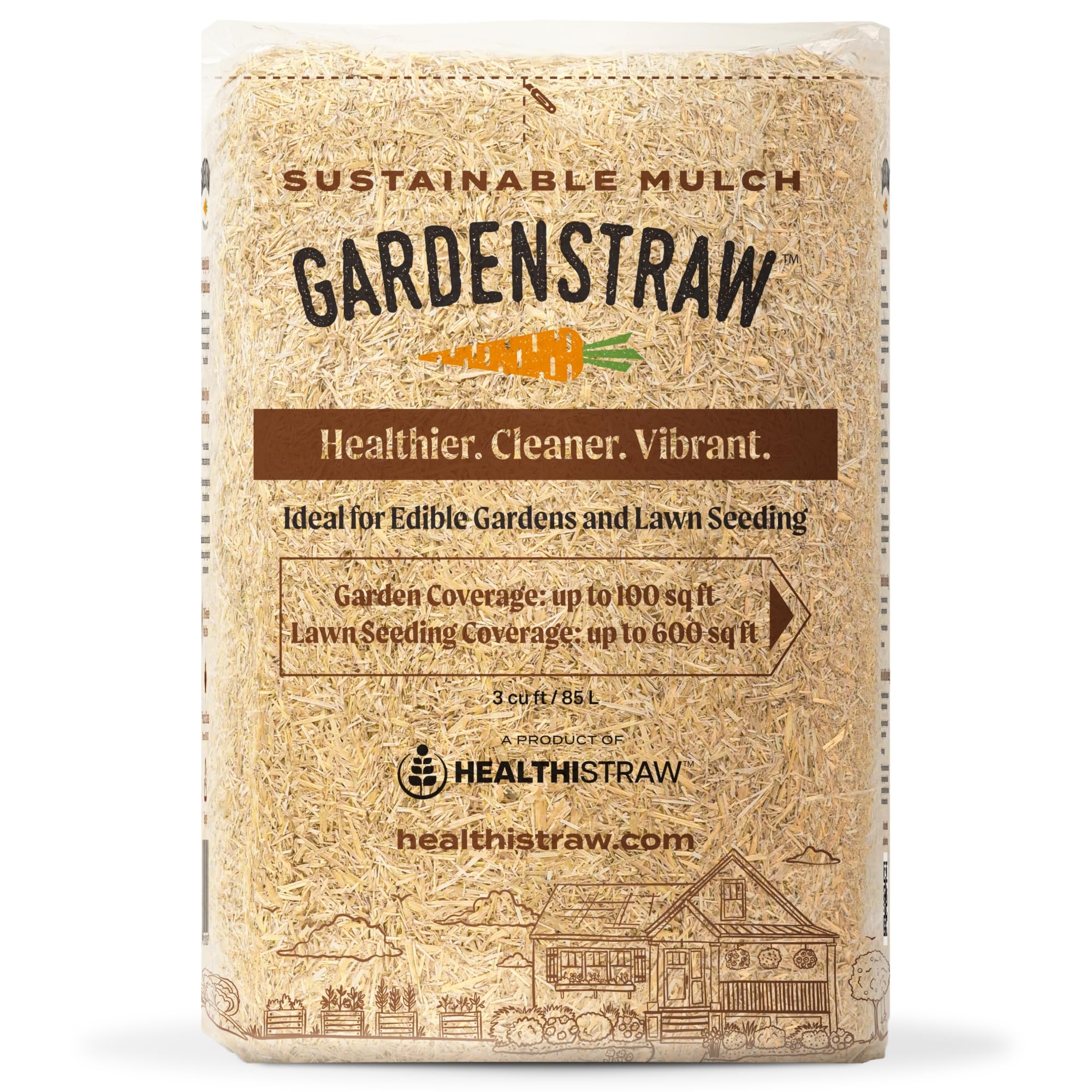
A compressed bale of clean straw that covers 100 square feet without blowing away in the wind.
This is your pick if you need to mulch a large area. The 3-cubic-foot bale of wheat straw is compressed and expands when opened. The manufacturer says it can cover up to 100 square feet at a 2–3 inch layer, or 600 square feet for a thin quarter-inch lawn seeding. The straw fibers are cut short so they interlock when watered, which stops them from scattering in a breeze — a clear advantage over the looser Out-Grow bale.
Buyers confirm it stays put and blocks weeds well. But despite filtering, a few wheat seeds can still pop up — one reviewer noted they pulled “so many seeds” from their planters. On the upside, those same owners noted the straw did not blow away during intense spring winds, which is a common headache with loose straw mulches.
The coverage advantage
- Compressed bale covers 100 sq ft at a 2–3 inch depth
- Specially cut fibers interlock to resist wind and rain
- Adds carbon to your compost pile when it breaks down
The seed caveat
- Some wheat seeds may still sprout in your beds
- Not a weed barrier — pests can burrow through the straw
Best for: vegetable gardeners with 50-plus square feet of raised beds who want a single bale instead of multiple bags.
skip it if: you are direct-sowing tiny seeds like carrots or lettuce, because stray wheat shoots can compete with your crop.
3. Plantonix Coco Coir 650gm Bricks (6-Pack)

Bricks of coconut fiber that expand 5x in water, giving you a neutral, seed-free mulch and soil amendment in one.
Coco coir — the fibrous material from coconut husks — is a renewable alternative to peat moss. These OMRI-listed bricks are pre-rinsed and pre-screened to remove sand, fiber chunks, and rocks. Each 1.4-pound brick expands with 1 gallon of hot water into a fluffy mulch that holds water without turning soggy. Owners mention this brand yields more usable volume than others after rehydrating, and seeds sprout faster in coir compared to standard potting soil. Unlike straw, coco coir carries virtually no weed seeds — a key advantage over the HealthiStraw bale for seed-starting.
It has a neutral pH around 6.0 and a high cation exchange capacity (CEC), which means it holds onto nutrients so your vegetables can grab them later. That makes it a great seed-starter medium and a lightweight mulch for raised beds. The 6-pack expands to about 12.5 gallons total, so it goes further than a single compost bag if you mix it with your soil.
Why it stands out
- Zero weed seeds — no rogue wheat stalks in your beds
- Neutral pH and high CEC improve nutrient uptake for vegetables
- Lightweight when dry, easy to store as compact bricks
What to consider
- Requires rehydrating and breaking apart before use — not a “dump and spread” product
- Lacks the nutrient content of compost; you still need to fertilize
Grab this pack if: you start a lot of seedlings indoors and want a clean, seed-free medium that also works as a top-dress mulch outdoors.
Think twice if: you prefer a ready-to-use mulch that needs zero prep — dry bricks take 15 minutes to expand.
4. R&M Organics Premium Organic Compost 10 lb Bag
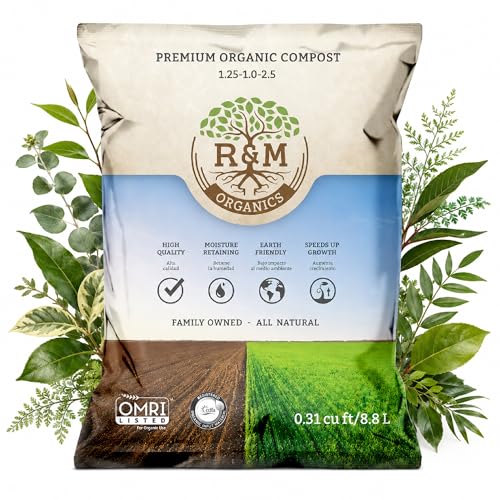
A 10-pound bag of dairy manure compost that revived a dying tomato plant in a week.
This compost uses fully processed dairy cow manure, aerated to reduce odor. The result is a clean, earthy-smelling amendment you can spread as a quarter-inch layer around your vegetables. One buyer mentioned it revived their ailing tomato plant: “yellow leaves turned green, new growth and flower buds appeared within a week of mixing into a 27-gallon planter.” That fast response comes from the high organic-matter content of the manure.
At 10 pounds (160 ounces), the bag covers only 0.31 cubic feet — enough for a few large containers or a single 4×4 raised bed. The R&M Organics bag is far smaller per dollar than the Blue Ribbon Organics compost; the Blue Ribbon’s 7.48 gallons dwarfs this 0.31 cubic feet. Mix it at a 5:1 ratio with your existing soil. If you want to cover a big plot, you will empty this bag fast.
What you get
- Fast-acting nutrient boost — tomatoes responded in 7 days
- Low odor, clean texture like fine topsoil
- Manageable 10 lb bag for container gardeners
The honest limit
- 0.31 cu ft volume is small for a large garden plot
- Expensive per cubic foot compared to bulk compost
Reach for this bag if: you have a few potted tomato plants or a small raised bed that needs a quick nutrient top-up mid-season.
Look elsewhere if: you need to mulch a 100-square-foot vegetable patch — you will run out fast.
5. Blue Mountain Hay Organic Garden Straw (5 lb)
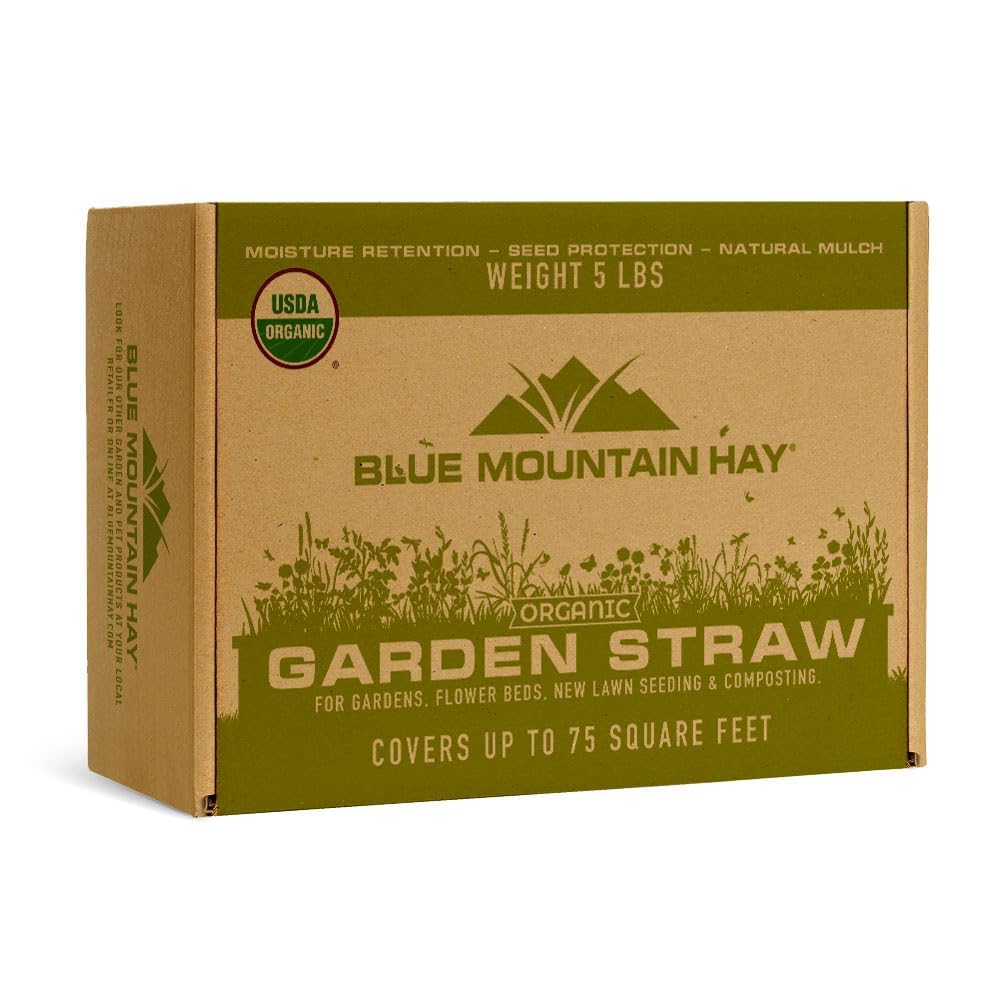
Compressed organic straw that comes clean and dust-free, perfect for topping off potted herbs and garlic beds.
This 5-pound box of organic garden straw is harvested and compressed for easy handling. Customers note it is very clean, soft, and free of dirt and bugs — one reviewer used it as a cover for onions, garlic, and potatoes and found a single 5-pound box was more than enough. The straw expands when opened and spreads evenly over the soil.
But be warned: one buyer had every raised bed sprout “massive grass shoots,” and the company did not respond for five days. Coverage also runs smaller than expected. One review notes the box covers about 100 square feet at a 1-inch depth, not the 300 square feet some might hope for. Stick to smaller gardens where you can inspect the straw before laying it down.
What works
- Clean, soft texture with low dust and no dirt
- Organic and pesticide-free for edible gardens
- Convenient compressed box for easy storage
The seed gamble
- Some batches may harbor grass seeds that sprout in beds
- Expensive for large areas — one box covers ~100 sq ft at best
Best for: container growers and small raised beds where you want clean organic straw and can inspect it before spreading.
pass on it if: you have a large vegetable garden and cannot afford the risk of grass seed contamination across hundreds of square feet.
6. Out-Grow 1 Cubic Foot of 100% All Natural Wheat Straw (4lbs)

A full cubic foot of wheat straw that doubles as garden mulch and winter insulation for outdoor cat shelters.
Out-Grow’s wheat straw is 100% natural with no additives or chemicals. One cubic foot (64 ounces) gives you a decent amount for small beds and flower pots. Buyers often use it for more than mulching — one owner said it worked well for an outdoor cat shelter during freezing nights because straw repels moisture rather than absorbing it. It is fluffier and less dense than the 3-cubic-foot HealthiStraw bale, making it easier to handle for smaller patches.
Other reviewers point out it keeps plants hydrated and is easy to spread. A few noted it can be messy during application, and one found a stray object mixed into the box. The brand controls quality from seed to harvest. At 64 ounces, it is lighter than the 4.74-pound wheat straw but fills the same 1-cubic-foot volume.
The upsides
- Free of chemicals and additives for organic gardens
- Multipurpose: garden mulch, pet bedding, and chicken coop insulation
- Low dust and minimal weed seeds according to most reviews
The downsides
- Some boxes may contain extra material or debris
- Lighter weight means less density per cubic foot than compressed bales
Reach for this if: you need a clean, chemical-free straw for a small vegetable patch and you want a brand that offers consistent quality.
Look elsewhere if: you need a dense, compressed bale that goes further — this is a loose-fill box, not a compacted block.
7. 4 Pounds 100 Percent Natural Wheat Straw (4 lbs.)

A fuss-free 4-pound bag of wheat straw that one gardener called “light as a feather” and perfect for container mulching.
This 4-pound bag of natural wheat straw is simple to open: one owner reported it arrives in a thin plastic bag you can lift out of the Amazon box and carry straight to the backyard — no untying or puncturing needed. It was clean, dry, and a light yellow that looked “swanky” in the garden. The straw effectively slowed evaporation in containers, cutting down watering frequency.
But the same review flagged two limits: the straw does not block pests (slugs and bugs burrowed through), and it may contain weed seeds that sprout. The reviewer had to pluck a few grassy stalks from mulched containers. At 4.74 pounds, it is heavier than the Out-Grow straw (64 ounces) but still very manageable. If you need a seed-free cover for containers, the Plantonix Coco Coir is a better bet.
What stands out
- Fuss-free plastic bag packaging — easy to carry and open
- Clean, dry straw that works well for container water retention
- Versatile for both garden mulching and pet bedding
What to watch for
- Not a weed barrier — pests and seeds can still get through
- Lightweight straw can scatter during windy application
Best for: container gardeners who value easy packaging and want a quick, lightweight mulch for a dozen pots.
it’s not for you if: you need seed-free straw — some buyers confirmed wheat seeds can germinate in their beds.
Understanding the Specs
Unit Count & Volume
Unit count is ounces or pounds of material, but volume (cubic feet or gallons) tells you how much ground it covers. A 10-pound bag of compost might be only 0.31 cubic feet, while a 3-cubic-foot bale of straw covers 100 square feet. Always match the volume to your garden’s size.
OMRI Certification
OMRI (Organic Materials Review Institute) means an independent group reviewed the product for use in certified organic production. For a vegetable garden, that guarantees the mulch or compost does not contain synthetic pesticides, herbicides, or GMOs. OMRI-listed products like the coco coir bricks or the Blue Ribbon compost are safe for edibles.
FAQ
Can I use regular bark mulch in a vegetable garden?
How deep should I spread straw mulch around vegetables?
Will wheat straw seeds turn into weeds in my garden?
How much compost do I need to mulch a 4×4 raised bed?
Can I use coco coir as a stand-alone mulch instead of mixing it with soil?
Is straw or hay better for a vegetable garden mulch?
How long does straw mulch last before it needs replacing?
Do I need to remove old mulch before applying new mulch?
What is the difference between compost used as mulch and compost mixed into soil?
Final Thoughts: The Verdict
Across the board, the best type of mulch for vegetable garden winner is the Blue Ribbon Organics Compost because it feeds the soil, carries OMRI certification, and has zero weed seeds. If you need broad coverage for a large garden, grab the HealthiStraw GardenStraw. And for a seed-starting to general-purpose mulch that weighs almost nothing when dry, the Plantonix Coco Coir Bricks offer the best value per cubic foot.
How We Picked
We do not accept paid placement. Every pick is matched to a real buyer and a real use-case; we do not hands-on test units.
Sources & Methodology
Specifications: manufacturer listings and product documentation. Review insights: verified customer reviews, as of July 2026. Pricing: not shown on this page (it changes often); check the current price via the retailer link.
As an Amazon Associate, Lawn Gear Lab earns from qualifying purchases. This does not affect which products we feature.