
A yellow, patchy lawn isn’t a sign of bad luck—it’s a sign of a missing nutrient profile. The difference between a thin, weed-prone yard and a thick, resilient turf comes down to a single decision: selecting the correct balance of nitrogen, phosphorus, and potassium. The wrong mix starves the grass or, worse, burns the blades and pollutes runoff. The right mix transforms the turf in weeks.
I’m Rikta — the co-founder and writer behind Lawn Gear Lab. I’ve spent hundreds of hours analyzing granular fertilizer labels, cross-referencing NPK data sheets, and reading through thousands of owner experiences to separate effective feeding schedules from marketing hype in this crowded category.
This guide breaks down the specific formulations and slow-release mechanisms that define a reliable type of fertilizer for lawn. If you want thick green grass without the burn lines, start here.
How To Choose The Best Type Of Fertilizer For Lawn
The three-digit NPK ratio on every bag is not a suggestion—it is a nutrient contract. Nitrogen drives leaf and blade growth, phosphorus fuels root establishment, and potassium builds disease and drought resistance. A 15-0-15 formula delivers heavy nitrogen and potassium with zero phosphorus, which is ideal for established lawns with already healthy soil. A 12-18-8 starter blend pushes phosphorus directly into new root zones for seeding or sodding projects. Matching the NPK profile to your lawn’s life stage prevents the three common failures: weak roots, thin canopies, and fertilizer burn.
Slow Release vs. Quick Release Nitrogen
The percentage of slow-release nitrogen (often listed as water-insoluble nitrogen or WIN) determines how long the grass feeds without surging. Products with 50 percent or more slow-release nitrogen spread the feed over 8 to 12 weeks, delivering steady color without a rapid growth spike that forces weekly mowing. Quick-release nitrogen produces a visible green-up in days but fades fast and increases the burn risk. High slow-release content also reduces nitrogen runoff into local waterways, a growing concern in many residential areas.
Phosphorus Content and Local Restrictions
Many states and municipalities restrict phosphorus application on established lawns because excess phosphorus runs off into storm drains and feeds algae blooms in lakes. A zero-phosphorus formula (the middle NPK number is 0, as in 27-0-5 or 16-0-8) is often the safest choice for routine maintenance unless a soil test confirms a deficiency. Starter fertilizers with higher phosphorus levels (like 12-18-8) are still widely available for new seed or sod, but should only be used when establishing fresh turf.
Bag Weight and Coverage Area
Coverage varies dramatically by formula weight and the application rate listed on the label. A 16-pound bag covering 5,000 square feet works for smaller lawns or targeted feedings, while a 45-pound bag covering 15,000 square feet suits larger properties without needing multiple bags. Always cross-check the recommended pounds per 1,000 square feet on the label—over-applying a high-nitrogen product in an attempt to stretch coverage weakens the root system and invites disease.
Quick Comparison
On smaller screens, swipe sideways to see the full table.
| Model | Category | Best For | Key Spec | Amazon |
|---|---|---|---|---|
| Yard Mastery 24-0-6 | Premium | Large lawns needing deep greening | 24% slow-release N, 45 lb | Amazon |
| The Andersons PGF 16-0-8 | Professional | Phosphorus-high soil correction | Humic DG, 8-week feed | Amazon |
| GreenView Fairway 27-0-5 | Premium | Large turf, surge-free feeding | 63% slow-release N | Amazon |
| Jonathan Green Veri-Green 12-18-8 | Starter | New seed and sod establishment | High-phosphorus humates | Amazon |
| Safer Brand Lawn Restore 9-0-2 | Organic | Pets and kids, non-burn feed | Corn gluten, natural N | Amazon |
| Ferti-lome Centipede 15-0-15 | Mid-Range | Centipede and warm-season lawns | Zero phosphorus, 5K sq ft | Amazon |
| Hi-Yield Grower’s Special 12-6-6 | Entry-Level | Ornamentals and shrub feeding | Slow-release, 10 lb bag | Amazon |
In‑Depth Reviews
1. Yard Mastery 24-0-6 Flagship Granular Fertilizer with 3% Iron

Yard Mastery built this Flagship formula around a 24-0-6 NPK profile with 24 percent slow-release nitrogen and 3 percent iron for deep greening without the usual surge. The Bio-Nite additive extends the microbial activity in the soil, which helps break down thatch and release locked-up nutrients. The 45-pound bag covers 15,000 square feet, making it a natural fit for larger properties looking to reduce reapplication frequency.
Owner feedback consistently highlights the immediate dark-green response within a week of application, with Bermuda grass owners reporting that the turf thickened enough to choke out persistent weeds after a single bag. The high slow-release percentage means the grass doesn’t shoot up at an unmanageable rate—users note a steady, uniform growth pattern rather than a frantic mowing cycle. The 6 percent potassium also contributes to drought tolerance during the peak summer heat.
The primary trade-off is the price tag, which sits above most mid-range competitors. The bag is heavy at 45 pounds, so handling and spreading require a good wheeled spreader and some physical effort. For anyone with a large lawn who wants professional-grade results without hiring a service, the Flagship delivers a consistent feed window that few consumer products match.
What works
- Deep green color visible within days of application
- High 24% slow-release nitrogen prevents burn and reduces mowing frequency
- 45-pound bag treats up to 15,000 square feet efficiently
What doesn’t
- Premium price point is higher than many standard fertilizers
- Heavy bag requires a sturdy spreader and careful handling
2. The Andersons Professional PGF 16-0-8 Fertilizer with Humic DG
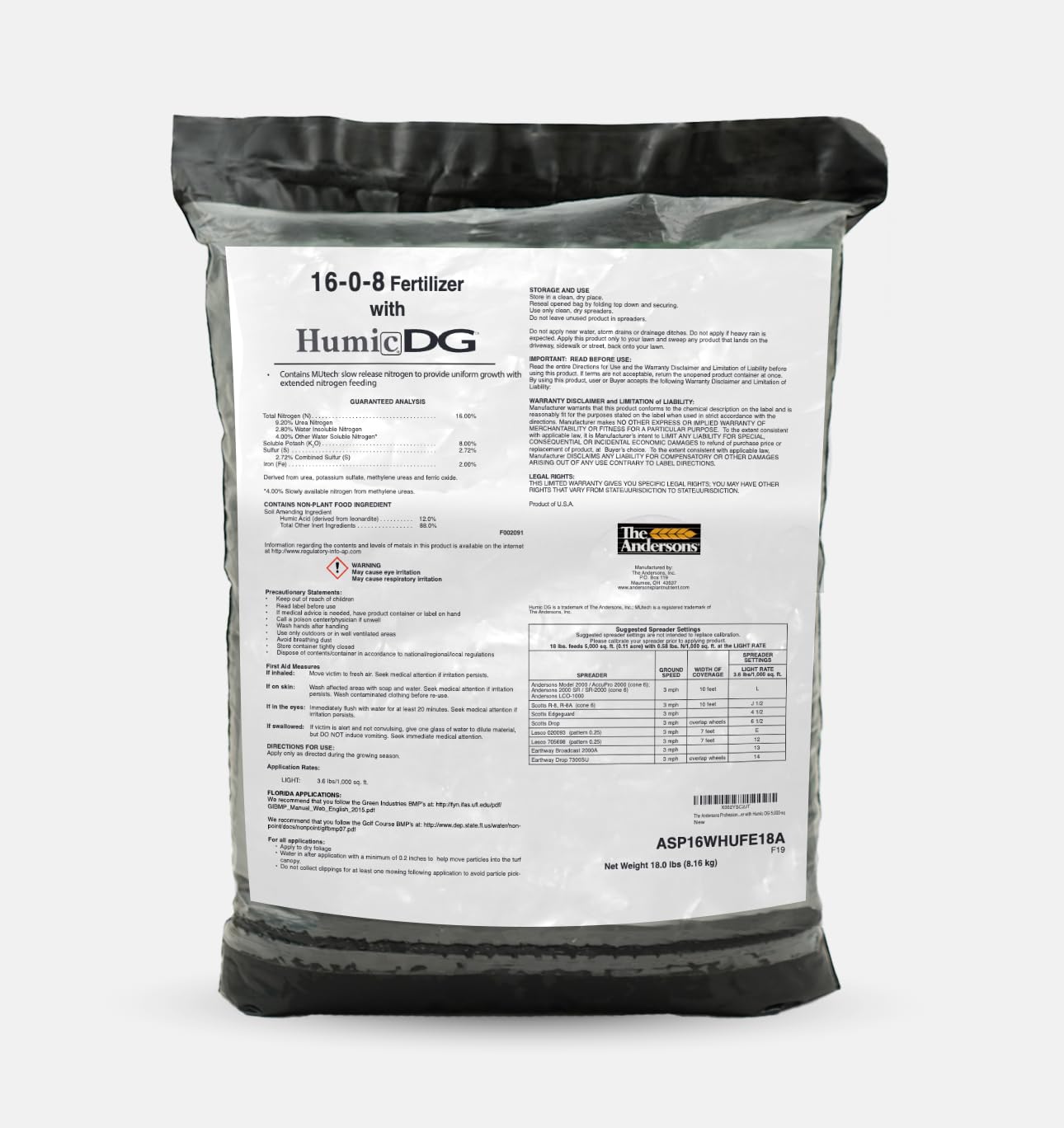
The Andersons PGF uses a Dispersible Granule (DG) technology that breaks down rapidly on contact with moisture, releasing the nutrients into the soil profile instead of sitting on the surface. The 16-0-8 analysis delivers a moderate nitrogen load with zero phosphorus and 8 percent potassium, making it an excellent choice for lawns where soil tests already show sufficient phosphorus levels. The Humic DG carrier improves cation exchange capacity, helping the grass roots access micronutrients already present in the soil.
The super-fine particle size is a standout feature—each square foot receives roughly twice as many particles as a standard granular product, which translates to more uniform greening and fewer streaky lines. Users transitioning from high-phosphorus blends to this zero-phosphorus formula report that the grass maintained the same density and color while eliminating the risk of runoff. The dual quick-release and slow-release nitrogen sources provide immediate color within three days and continued feeding for up to eight weeks.
The Andersons brand is not sold in California or Oregon due to local restrictions, so buyers in those states need to check alternative products. The 18-pound bag covers roughly 5,000 to 7,000 square feet depending on the application rate, which means large-lot owners will need multiple bags for a full feeding. For the homeowner who wants a professional-grade distribution system and a phosphorus-free maintenance feed, the PGF is hard to beat.
What works
- DG particles provide exceptionally even granule distribution during spreading
- Phosphorus-free formula is ideal for high-phosphorus soils and runoff-sensitive areas
- Humic DG unlocks existing soil nutrients for improved root efficiency
What doesn’t
- Not available for sale in California or Oregon
- Small bag size (18 lb) requires multiple units for larger properties
3. GreenView Fairway Formula Lawn Fertilizer 27-0-5

GreenView Fairway Formula targets the high-nitrogen crowd with a 27-0-5 NPK that delivers 63 percent of its nitrogen in a slow-release form. This ratio is designed to push dense blade growth without the sudden surge that forces weekly cutting. The 33-pound bag covers a massive 10,000 square feet, positioning it as a strong mid- to large-lawn solution that reduces the number of annual applications needed.
The zero-phosphorus composition protects nearby waterways and matches the growing regulatory trends in many suburban areas. Owner reports note that the grass responded with a dark green color within a few days, and the slow-release mechanism kept the lawn looking healthy through the hottest summer months. The formula works across all common grass types, including Bermuda, fescue, and zoysia, making it a flexible choice for mixed lawns.
Some users reported that the granules tend to clump slightly in high humidity, requiring a quick breakup before loading the spreader. The 27 percent nitrogen is aggressive for a novice applicator—overlapping passes can easily lead to dark striping or minor tip burn if the spreader calibration is off. For an experienced lawn caretaker looking for extended feeding intervals and strong color, this is a solid performer.
What works
- 63% slow-release nitrogen provides steady feeding for up to 12 weeks
- Excellent coverage—one 33 lb bag treats 10,000 square feet
- Phosphorus-free design complies with local runoff restrictions
What doesn’t
- Granules may clump in high humidity and require pre-breakup
- High 27% nitrogen demands precise spreader calibration to avoid burn
4. Jonathan Green Veri-Green Starter Fertilizer 12-18-8
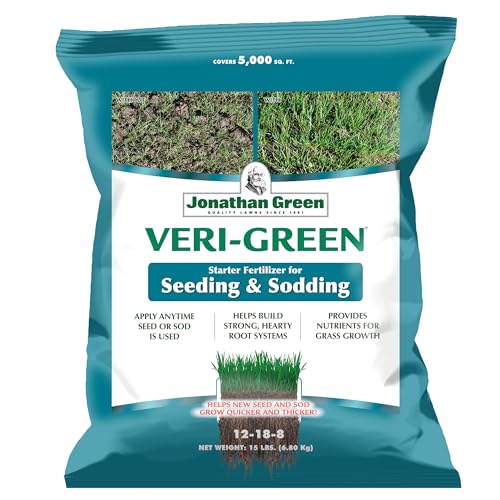
Jonathan Green positions this Veri-Green product specifically for the seeding and sodding window, and the 12-18-8 NPK ratio confirms the emphasis on phosphorus for root formation. The elevated middle number drives early root elongation, which is critical for seedlings that need to anchor before the heat of summer or the frost of fall. Humates in the formula improve nutrient uptake efficiency, pulling more value from the existing soil chemistry.
The 15-pound bag covers 5,000 square feet, and the recommended application schedule ties directly to the seeding date—applied the same day as the seed or sod goes down. Owner feedback highlights strong results on new lawns, with bare spots filling in faster than with standard balanced fertilizers. Users who combined this product with a high-quality seed blend reported full coverage and mowable grass within three to four weeks of spring seeding.
The high phosphorus content means this product should not be used as a routine maintenance feed on established lawns. Overuse of high-phosphorus fertilizer on mature turf contributes to runoff and soil imbalance. It is also worth noting that the feed window is approximately two months, so a follow-up application with a maintenance formula is needed to sustain growth through the season.
What works
- High 18% phosphorus drives fast root development in new seedlings and sod
- Humate additive increases the exchange and availability of soil nutrients
- Grass established quickly and filled bare spots within weeks of application
What doesn’t
- High phosphorus content is inappropriate for routine maintenance on established lawns
- Only provides feeding for up to 2 months before a follow-up is needed
5. Safer Brand Lawn Restore Natural Fertilizer 9-0-2
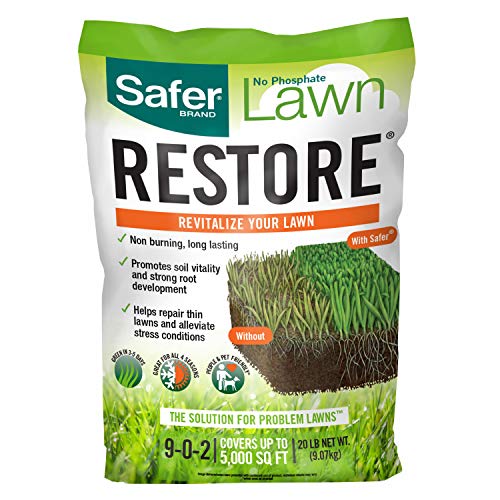
Safer Brand Lawn Restore uses a naturally derived 9-0-2 NPK formula built around corn gluten and other organic nitrogen sources that green the grass without burning the leaf tissue. The non-burning claim is the primary selling point—this product can be applied at the labeled rate without the risk of the yellow stripes or brown patches that synthetic high-nitrogen blends often leave behind. The 22-pound bag covers 5,000 square feet at the standard rate.
Owner feedback confirms the safety promise: multiple users report applying the product in late summer to rescue lawns that were previously burned by synthetic fertilizers, with visible recovery in as little as five days. The corn gluten content acts as a pre-emergent weed suppressor, though this also means the fertilizer will inhibit grass seed germination if applied at the same time. Users who plan to overseed should wait several weeks after application or seed first and wait for germination before applying.
The 9-0-2 analysis delivers a relatively low nitrogen punch compared to synthetic competitors, so the greening effect is more gradual and less dramatic. Users accustomed to the instant dark-green response of a high-nitrogen synthetic feed may find the color development slower. For pet owners, families with young children, or anyone looking to avoid chemical burn, this is the safest conventional option on the list.
What works
- Non-burning formula is safe for pets and kids immediately after application
- Corn gluten provides natural pre-emergent weed suppression
- Safe to use on lawns recovering from synthetic fertilizer burn
What doesn’t
- Low nitrogen content produces a slower, more gradual green-up than synthetic blends
- Corn gluten inhibits grass seed germination—cannot be used near overseeding
6. Fertilome Centipede Lawn Fertilizer 15-0-15
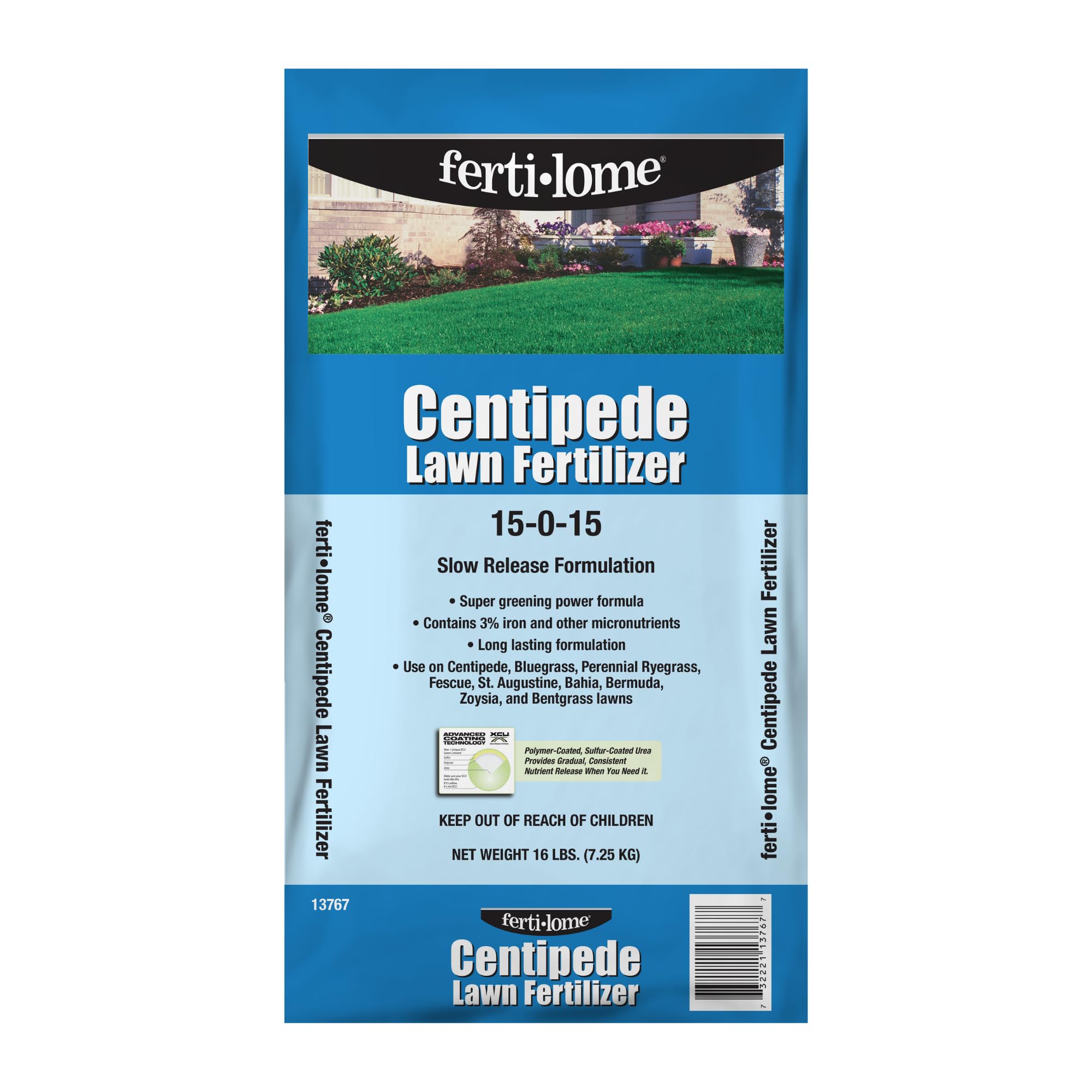
Ferti-lome formulated this 15-0-15 fertilizer specifically for centipede grass and other warm-season turf species that require low phosphorus levels. The equal nitrogen and potassium split (15 percent each) provides balanced blade growth and root resilience without pushing the yellowing or leaf tip dieback that high-phosphorus blends can cause on centipede lawns. The 16-pound bag covers 5,000 square feet, making it a focused solution for smaller warm-season lawns.
Customer reports from centipede grass owners describe a rapid transformation from pale yellow to deep green within the first week, with the lawn thickening noticeably through the growing season. One owner in North Carolina noted the lawn outperformed neighbors during a July heatwave, attributing the drought resistance to the potassium content. The slow-release nitrogen component prevents the rapid surge that would require frequent mowing, maintaining a manageable growth rate.
This is not a general-purpose fertilizer—it is calibrated for low-phosphorus grass species like centipede, St. Augustine, and Bahia. Applying it to a fescue or bluegrass lawn may produce suboptimal results. The bag instructs an application rate of 4 pounds per 1,000 square feet, and users should follow that number carefully—over-application on warm-season grasses can lead to excessive thatch buildup.
What works
- Zero-phosphorus formula matches the nutritional needs of centipede and warm-season grasses
- Balanced 15-0-15 ratio supports uniform growth and drought tolerance
- Quick green-up response with manageable mowing frequency
What doesn’t
- Specialized for warm-season grasses—less effective on cool-season turf types
- Over-application can contribute to thatch accumulation on centipede lawns
7. Hi-Yield Grower’s Special Fertilizer 12-6-6
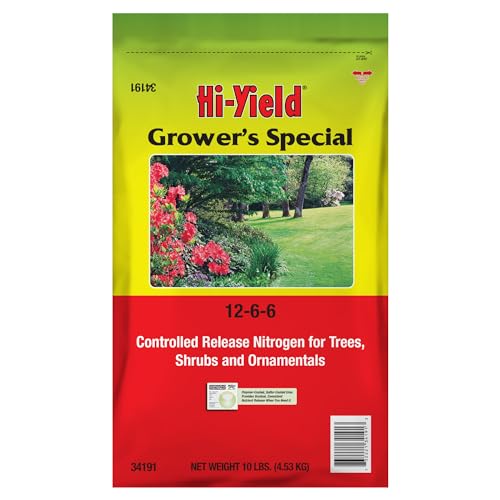
Hi-Yield Grower’s Special offers a 12-6-6 NPK analysis packed into a compact 10-pound bag, making it an accessible entry point for small flower beds, shrub borders, and container plants rather than a full-lawn feed. The slow-release nitrogen reduces the likelihood of fertilizer burn on sensitive ornamentals, and the balanced secondary numbers support general root and bloom development. The label specifies application every six weeks for container plants, with a spring and fall schedule for trees and shrubs.
Customer feedback leans heavily on the ornamental side—long-time users mention buying this product for decades for their magnolias, crepe myrtles, and holly bushes. The 12-6-6 ratio provides a moderate feeding that pushes leaf growth without forcing weak, leggy stems. The granular form is easy to measure and apply by hand or with a small hand spreader, and the 10-pound bag is light enough to store without taking up significant shelf space.
This is not designed for broad acreage lawn feeding—the small bag size and the 1 teaspoon per 6-inch pot application rate make it impractical for covering large turf areas. Users expecting a rapid full-lawn transformation will be disappointed by the small coverage footprint. For targeted feeding of landscape plants and container gardens, it delivers consistent, reliable results at a very accessible entry point.
What works
- Slow-release nitrogen formulation minimizes burn risk on sensitive ornamentals
- Easy-to-follow application chart for containers, trees, and shrubs
- Compact 10-pound bag is convenient for small-space storage and targeted feeding
What doesn’t
- Small bag size and low NPK concentration make it impractical for large lawn coverage
- 6-6 P-K ratio is too low for heavy-feeding flowering shrubs or high-density turf
Hardware & Specs Guide
NPK Ratio Interpretation
The three numbers on every bag stand for Nitrogen (N), Phosphorus (P), and Potassium (K). N drives leaf and stem growth. P supports root development and flowering. K improves disease resistance, drought tolerance, and overall plant vigor. A 16-0-8 blend has zero phosphorus, making it a safe maintenance feed for established lawns where soil P levels are already adequate.
Slow-Release Nitrogen Percentage
Listed as water-insoluble nitrogen (WIN) or sulfur-coated urea (SCU), this percentage determines how long the feed lasts. Products with 50 percent or higher slow-release nitrogen extend the feeding window to 8–12 weeks, reducing the number of applications per season and lowering the risk of nitrogen runoff. High slow-release content is preferred for sandy soils that leach nutrients quickly.
Coverage Rate per Bag
Coverage is calculated by dividing the bag weight by the recommended pounds per 1,000 square feet. A 33-pound bag with a 3-pound-per-1,000 rate covers 11,000 square feet. Over-applying to stretch coverage reduces the per-square-foot nutrient dose and weakens the grass. Always match the bag coverage to your actual lawn square footage.
Iron Content for Color
Iron (Fe) in a fertilizer formula produces a rapid dark-green color response within days, even when the nitrogen content is moderate. Products with 2–3 percent iron are popular for spring and summer applications because they deliver visual results while avoiding the growth surge of high-nitrogen feeds. Iron also helps correct chlorosis (yellowing) in high-pH soils.
FAQ
What does the NPK ratio 15-0-15 mean for my lawn?
How does slow-release nitrogen prevent fertilizer burn?
Why would I choose a phosphorus-free fertilizer for my lawn?
Can I use starter fertilizer on an established lawn?
How much fertilizer do I need per 1,000 square feet?
Final Thoughts: The Verdict
For most gardeners, the type of fertilizer for lawn winner is the Yard Mastery 24-0-6 because it combines a high slow-release nitrogen percentage with 3 percent iron for fast visual results and steady feeding that lasts. If you need a phosphorus-free professional-grade feed for precise nutrient management, grab the The Andersons PGF 16-0-8. And for a safe, non-burning organic feed that protects pets and children, nothing beats the Safer Brand Lawn Restore 9-0-2.