
Specs are compiled from manufacturer listings and verified buyer reviews and can change over time — please confirm the key details on the product page before buying.
You have probably had it happen — you tie up a tomato plant, and just as the fruit gets heavy, the twine snaps. Or the jute rots halfway through the season, leaving your cucumbers on the ground. Getting the right twine for gardening is about matching the string material to the job, not just grabbing the cheapest roll. This guide compares seven real options, from natural jute to heavy polypropylene, so you know exactly which one holds up under your weather and your crop weight.
I’m Rikta — the founder and writer behind Lawn Gear Lab. This guide is built by comparing the manufacturers’ published specifications and the patterns across verified customer reviews, so you get each pick’s real strengths and trade-offs instead of marketing spin.
Whether you are training pole beans up a trellis or baling hay, the measurable differences in tensile strength, diameter, length, and weather resistance separate a one-season twine from something that lasts years. This guide breaks down the best twine for gardening by looking at those exact numbers and real buyer experiences.
Quick Picks
- Strongman Baling Twine Roll – 3-Ply, 3600 Ft — Best Overall
- Rope and Cord Polypropylene Twine – 1000 ft — All-Weather Champion
- Natural 3mm Jute Twine String — Classic Natural Choice
- Coconut Fiber Twine (Coir Twine) – 200 Feet, 5mm — Premium Eco Durability
- Natural Jute Twine 656ft 4mm — Thick Jute Value
- Heavy Duty 200 lbs Strong Polypropylene Tomato — High-Strength Trellis
- 656 Ft x 6 MM Natural Jute Twine — Heavy Jute Rope
How To Choose The Best Twine For Gardening
Picking the right gardening twine depends on three things: what the string is made from, how thick it is, and how much weight it can hold before snapping. Here is what matters for your garden.
Material: Natural vs Synthetic
Natural twines — jute, hemp, and coir (coconut fiber) — are biodegradable, which is great for the environment, but they break down over time. Jute usually lasts one season outdoors. Coir, on the other hand, is naturally rot-resistant; buyers report it can last 2-3 years outdoors in New England weather. Synthetic polypropylene twine ignores moisture entirely — it is water-resistant, UV-resistant, and will not rot, which makes it ideal for greenhouses or permanent trellises.
Tensile Strength and Diameter
Tensile strength is the maximum load the string handles before breaking. Light jobs like tying up pepper plants need less than 50 lbs. Heavy tomato vines or baling hay need 135 lbs or more. The diameter matters, too — a 5mm coir twine is a full 67% thicker than a 3mm jute twine, which gives it more grip and resistance to cutting under load. Thicker twine is harder to tie tight knots with, though.
Length and Value
Think about how much you actually use in a season. A 656-foot roll of jute is plenty for a medium vegetable patch. If you have a large farm or trellis rows of hops, a 3600-foot heavy-duty roll saves you from buying replacement spools mid-season. The longer roll usually costs more upfront but gives you a lower cost per foot.
Quick Comparison
| Model | Best For | Material | Length | Diameter | Amazon |
|---|---|---|---|---|---|
| Strongman Baling Twine | Heavy-duty baling & large farms | Polypropylene | 3600 ft | — | Amazon |
| Rope and Cord Polypropylene | All-weather gardening & bundling | Polypropylene | 1000 ft | — | Amazon |
| Natural 3mm Jute Twine | Light plant support & crafts | Jute | 1000 ft | 3 mm | Amazon |
| Coconut Fiber (Coir) Twine | Long-lasting outdoor trellises | Coir | 200 ft | 5 mm | Amazon |
| Natural Jute Twine 656ft 4mm | Thick jute for DIY & decor | Jute | 656 ft | 4 mm | Amazon |
| Heavy Duty 200 lbs PP Twine | High-strength tomato trellising | Polypropylene | 656 ft | — | Amazon |
| 656 Ft x 6mm Natural Jute | Cat scratching posts & crafts | Jute | 656 ft | 6 mm | Amazon |
In‑Depth Reviews
1. Strongman Baling Twine Roll – 3-Ply, 3600 Ft
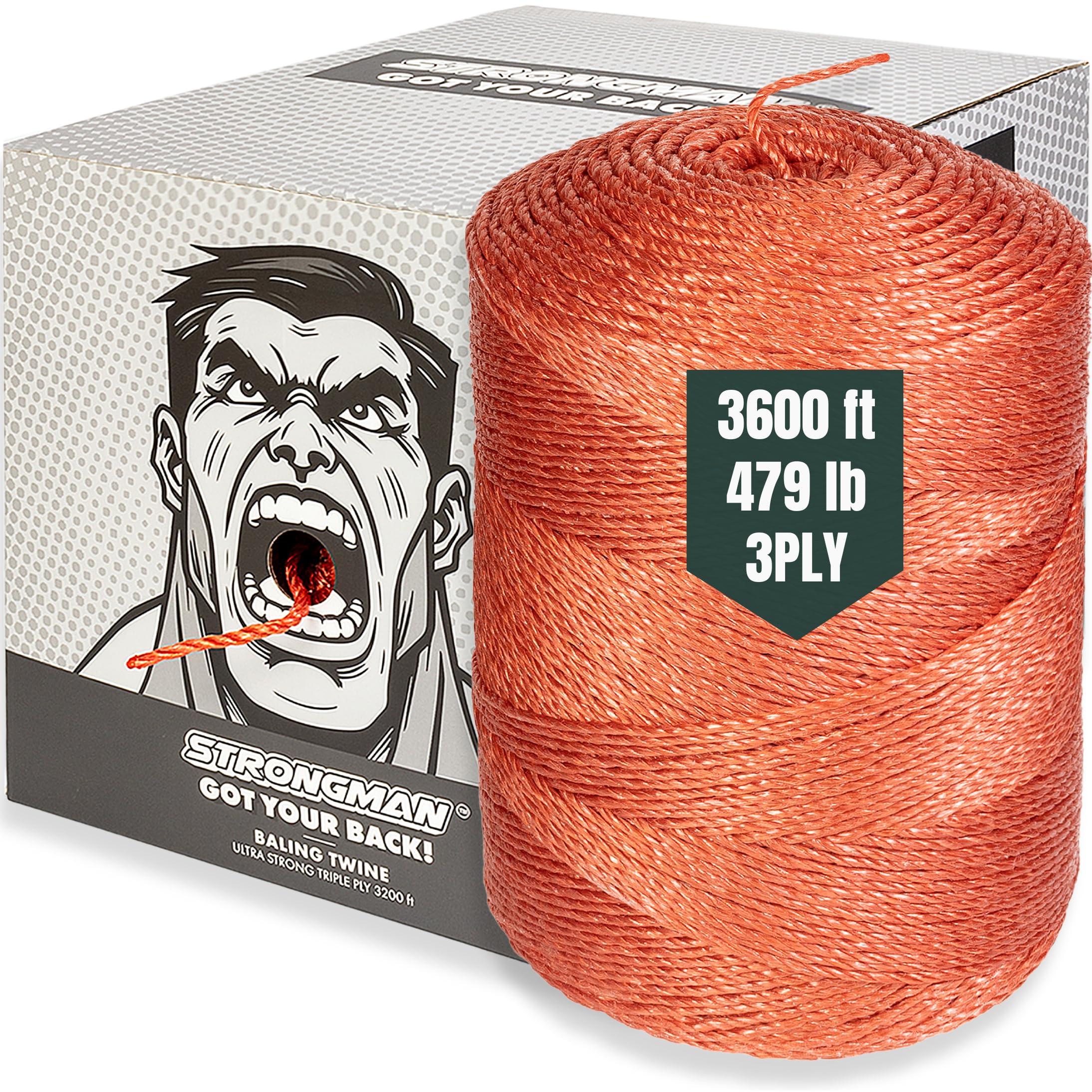
The farm-grade beast that holds 479 lbs and never tangles on the spool.
If you need serious muscle for baling hay, tying heavy bundles, or securing loads in a pickup, this roll leaves everything else behind. The 3-ply polypropylene construction delivers 479 lb tensile strength — far more than any garden twine, and enough to handle a full crop row without a single snap. It comes on a 3600 ft roll, so you will not be reordering halfway through the season. Owners mention that it holds knots perfectly without fraying or breaking, which is exactly what you want when you are tying off a heavy bale or lashing equipment.
The weather-resistant polypropylene stands up to moisture and UV without weakening, which makes it a clear choice for outdoor use that lasts. Unlike jute, which rots, this string stays strong season after season. The center-pull box system unspools smoothly without tangling, saving time during fast-paced work.
Farm-Ready Muscle
- 479 lb tensile strength is the strongest on this list.
- 3600 ft roll means you are set for large-scale jobs.
- UV and moisture resistant — lasts outdoors.
The Trade-Offs
- More expensive upfront than small garden rolls.
- Overkill if you only tie up a few tomato plants.
Reach for it if: you are a farmer, homesteader, or landscaper running large-scale tying jobs — this twine will not let you down.
Look elsewhere if: your garden fits in a 4×8 raised bed; a smaller, cheaper roll is plenty.
2. Rope and Cord Polypropylene Twine – 1000 ft

The weatherproof workhorse that ties tomatoes in the rain without rotting.
Unlike natural jute, which soaks up moisture and weakens, this polypropylene twine is abrasion-resistant and weather-resistant, so it stays strong even in damp greenhouses or through a wet season. With a 135 lb tensile strength, it easily handles heavy tomato vines, pepper plants, and even bundling yard waste. The 1000 ft tube delivers plenty for a medium garden and general home use — one buyer used it to tie together their own trellis netting and said it was very strong.
Compared to the premium Strongman roll above, this is a lighter, more manageable option for the average gardener. It is also significantly stronger than jute, as one reviewer noted, while being mess-free — it leaves no loose fibers. The single-ply white string has a high shine finish and is easy to cut, though a few buyers found the starting end tricky to locate on the tube.
Best for the money: if your garden gets rain or you work in a greenhouse, this polypropylene twine gives you reliable, rot-free support at a fair price per foot.
Grab this for: all-weather gardening, tying up plants, bundling cardboard, and general outdoor tasks.
skip it if: you need biodegradable twine for an organic garden bed.
3. Natural 3mm Jute Twine String, 1000-FT Hemp Rope for Gardening

The biodegradable 4-ply jute that is perfect for trellising peas without plastic.
For gardeners who want a completely natural, eco-friendly option that breaks down in the soil, this 3mm jute twine is the front-runner. It is made of 4 twisted strands of natural jute fiber, giving it good strength for light-to-medium duty — one buyer mentioned it worked perfectly for extending a trellis and that their peas grew over 2 feet above the enclosure. The 1000 ft spool gives you plenty for staking tomatoes, making netting, or wrapping gifts and crafts.
The catch with any jute is that it does not last forever outdoors. Buyers in humid climates like Florida say it holds up well through the season but may not survive a second year of heavy weight. At 3mm diameter, it is noticeably thinner than the 5mm coir option below, so it is better suited for lighter plants like peas, beans, and peppers than for heavy, sprawling vines.
Honest verdict: a great biodegradable twine for seasonal plant support, especially for vining crops. Just plan to replace it each year.
Pick this if: you want natural, compostable twine for annual garden supports and craft projects.
pass on it if: you need a permanent or multi-season trellis solution.
4. Coconut Fiber Twine (Coir Twine) – 200 Feet, 5mm

The 5mm coir twine that outlasts jute by years in the same weather.
If you want a natural fiber twine that actually lasts more than one season, this is it. Made from machine-spun coconut coir, it is naturally rot-resistant and heavy-duty — one buyer in New England reports it will last 2-3 years if left outside all year. At 5mm thick, it is substantially more sturdy than a standard 3mm jute twine, making it ideal for trellising heavy plants like tomatoes, cucumbers, and pole beans.
The rough texture of the coir gives climbing plants something to grip, and one owner reported it held knots well all season without breaking down. The 200 ft total length comes in 4 connected hanks, which is convenient for handling but shorter overall than jute spools — you might need multiple packs for a large garden. Compared to the 3mm jute above, this coir gives you 67% more diameter at the cost of running out sooner.
Worth the trade-off: the eco-friendly material and multi-year outdoor life make this the best natural twine for permanent or semi-permanent garden structures.
Best for: gardeners who want a natural, long-lasting trellis twine that can go 2-3 seasons.
Consider the alternative: if you need a longer continuous run, grab the 1000 ft jute spool instead.
5. Natural Jute Twine 656ft 4mm, 3Ply Twisted Thick Twine Rope
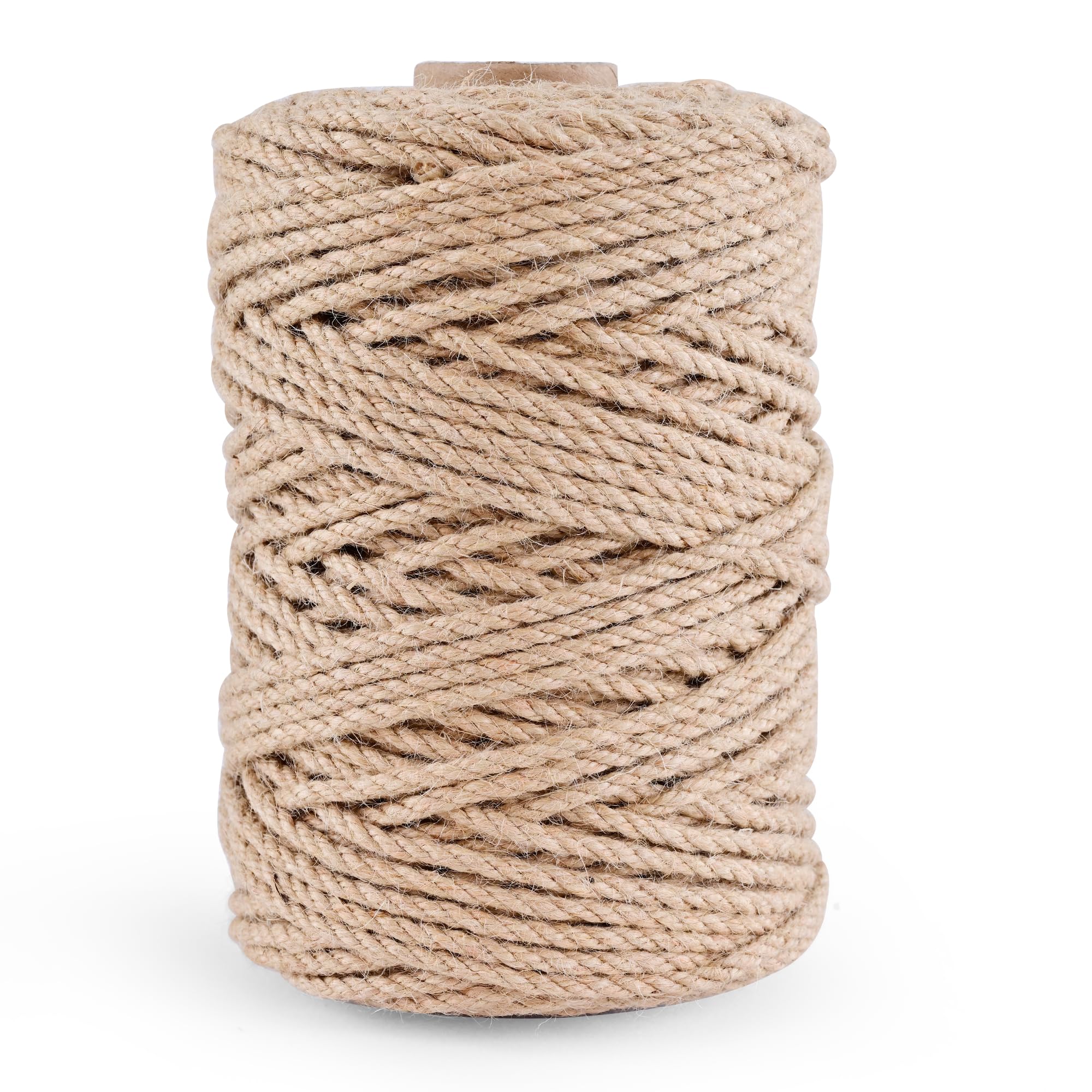
A step up in thickness from standard jute, with less fraying on the cut.
At 4mm, this 3-ply jute twine sits between the thinner 3mm jute and the bulky 6mm rope, making it a versatile middle ground for gardening, craft projects, and home decor. One buyer called it sturdy, noting it is tightly twisted and has minimal fraying compared to other jute options, and that it cuts cleanly without unravelling. The 656 ft roll is generous enough for a season of tying up vegetables plus wrapping some Christmas gifts.
The main limit here is the same as any jute — it is biodegradable, so it will break down over a year or so outdoors. It is also too thick for very small detailed projects, according to that same buyer, but that thickness gives you extra strength for supporting cucumbers and tomatoes.
Smart middle pick: if you want a natural jute that is noticeably heavier than the basic 3mm stuff but not as bulky as a 6mm rope, this is your balance.
Great for: vegetable trellising, gift wrapping, and DIY macramé that needs a visible natural look.
Not for: wet or humid climates where jute rots quickly — go polypropylene instead.
6. Heavy Duty 200 lbs Strong Polypropylene Tomato Twine, 656FT
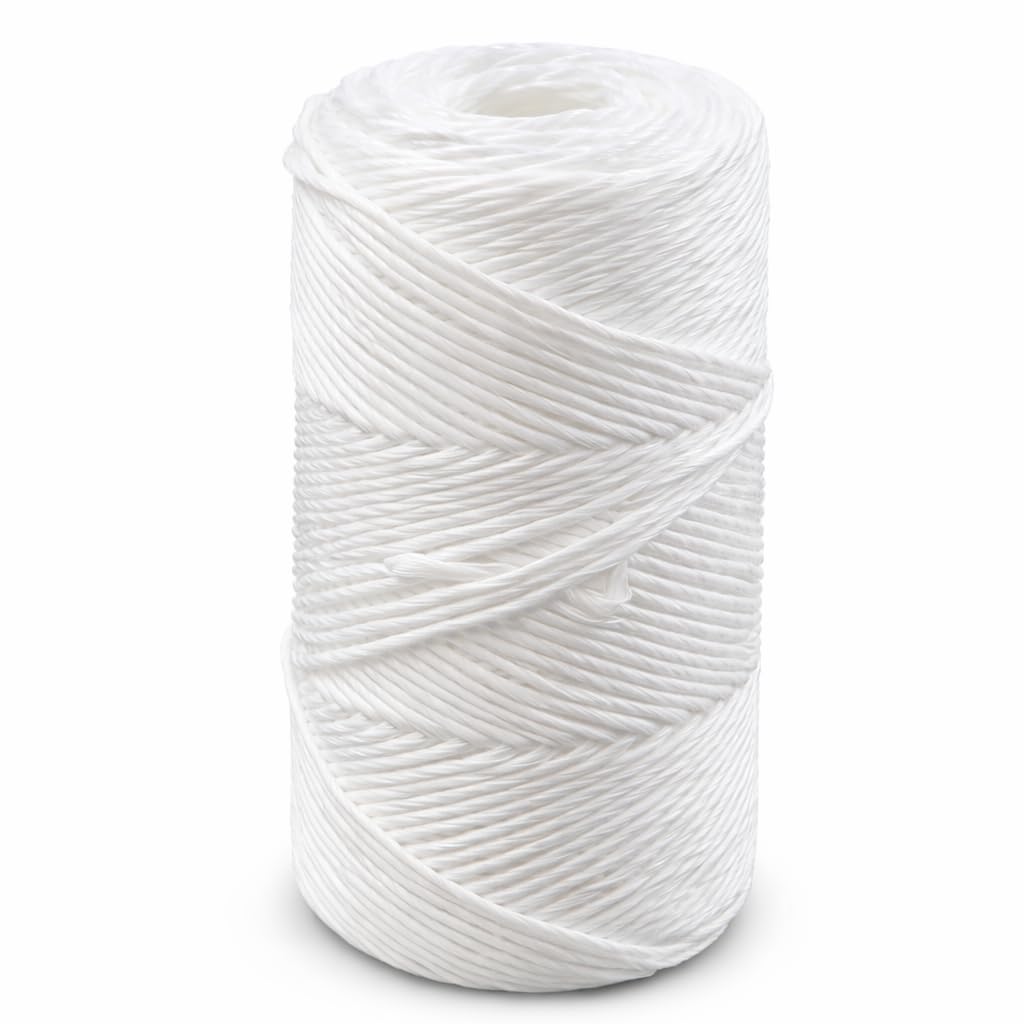
The 200 lb twine that refuses to fray, even after a full season in the sun.
This polypropylene twine is built specifically for heavy garden duty, with a 200 lb breaking strength that easily handles full-grown tomato plants loaded with fruit. The 2.0mm diameter version is what gives you that high strength, and it beats standard market twine (usually 130-140 lbs) significantly. Customers note that it does not fray or separate as much as other brands, which makes it easier to work with when you are tying up plants quickly.
The water-resistant polypropylene material works great in greenhouses and outdoor beds alike. A few reviewers noted that the twine is strong but difficult to tie off — the stiffness that gives it high strength also makes it less forgiving than softer jute for tight knots. It comes in a compact 656 ft spool that pulls smoothly without tangling.
The Strong Points
- 200 lb break strength beats most garden twines.
- Resists fraying and separation better than competitors.
- Weatherproof — stands up to rain and sun.
One Caveat
- Stiffer than jute, so tying tight knots takes more effort.
- Some buyers felt the price was higher than expected.
Choose this when: you have heavy-fruiting tomatoes, peppers, or melons that snap weaker string — this will not.
Pass on this if: you prefer a soft, knot-friendly natural twine for light plants.
7. 656 Ft x 6 MM Natural Jute Twine, 1/4” Heavy Duty Hemp Rope

The thickest natural jute on the list, braided from 12 strands for extra toughness.
At 6mm diameter, this is more rope than twine — it is braided from 12 strands, which makes it noticeably stronger and sturdier than most hemp ropes on the market. With 656 ft on the roll, it gives you enough material for large projects like wrapping cat scratching posts, creating climbing ropes, or fashioning heavy-duty garden hammocks. Buyers mention it is a lifetime supply for some uses, with two giant rolls totaling around 10 lbs.
This is the right pick if you need a thick, visible natural string for structural garden supports or DIY decor. Just be aware that it has a natural jute odor at first — reviewers point out it fades, but you may want to air it out before using indoors. The 6mm thickness is also too bulky for delicate plant ties or fine knot work.
Bottom line: this is the go-to if you need a heavy, visible jute rope for large garden frames, cat furniture, or craft projects — not for everyday tomato tying.
Best suited for: heavy-duty outdoor tying, wrapping large objects, or projects where you want a chunky natural look.
Not ideal for: delicate plant stems, fine crafts, or anyone who objects to jute’s natural scent.
Understanding the Specs
Material: Jute vs Coir vs Polypropylene
The material determines how long your twine lasts and where you can use it. Jute is a soft natural fiber that is biodegradable, which is fine for seasonal use but rots when left wet. Coir (coconut fiber) is also natural but much more rot-resistant — shoppers say it surviving 2-3 outdoor winters in New England. Polypropylene is a synthetic plastic that is completely waterproof and UV-resistant, making it last indefinitely outdoors, but it will not compost in your garden bed.
Tensile Strength and Diameter
Tensile strength is the maximum pulling load the string can handle before snapping, measured in pounds. Light garden twine might be 100 lbs, while a heavy-duty polypropylene twine can reach 479 lbs. Diameter is measured in millimeters — a thicker twine (5mm vs 3mm) is stronger and more abrasion-resistant, but harder to tie tight knots with. The trade-off is that thicker twine also uses more material per foot, so you get less length per roll.
FAQ
Will jute twine last more than one season in the garden?
What is the best twine for heavy tomato plants?
Can I use jute twine in a greenhouse?
What does 3-ply or 4-ply mean in twine?
Is polypropylene twine bad for the environment?
How do I stop my twine from tangling when I unwind it?
What is the difference between jute and sisal twine?
How much twine do I need for a vegetable garden?
Final Thoughts: The Verdict
For most gardeners, the twine for gardening winner is the Strongman Baling Twine because it delivers 479 lb strength and a 3600 ft roll for serious outdoor work. If you want a biodegradable option that naturally lasts multiple seasons, grab the Coconut Fiber Twine. And for budget-friendly all-weather gardening that will not rot, the Rope and Cord Polypropylene Twine is the smartest everyday choice.
How We Picked
We do not accept paid placement. Every pick is matched to a real buyer and a real use-case; we do not hands-on test units.
Sources & Methodology
Specifications: manufacturer listings and product documentation. Review insights: verified customer reviews, as of July 2026. Pricing: not shown on this page (it changes often); check the current price via the retailer link.
As an Amazon Associate, Lawn Gear Lab earns from qualifying purchases. This does not affect which products we feature.