
Specs are compiled from manufacturer listings and verified buyer reviews and can change over time — please confirm the key details on the product page before buying.
Reaching up into a thick canopy with a dull pair of hand pruners feels like a workout with no payoff. The best tree pruning tools solve two things at once: they save your hands from crushing fatigue and they slice through branches cleanly so the tree heals fast rather than tearing. Whether you are trimming a single low limb or cleaning the canopy after a storm, the real question is which cutting style and reach actually fit the wood you are dealing with.
I’m Rikta — the founder and writer behind Lawn Gear Lab. This guide is built by comparing the manufacturers’ published specifications and the patterns across verified customer reviews, so you get each pick’s real strengths and trade-offs instead of marketing spin.
Below you will find an honest breakdown of the top tree pruning tools on the market, covering anvil loppers, bypass loppers, a fast hand saw, and a battery-powered cordless option so you can match the right tool to the branch in front of you.
Quick Picks
- Corona Tools 14-Inch RazorTOOTH Pruning Saw — Best Overall
- JARDINEER Loppers for Tree Trimming Heavy Duty — Best Value
- GARTOL Heavy-Duty Extendable Loppers — Pro Reach
- Corona Tools 33″ Bypass Loppers — Premium Leverage
- Tree Trimmer Loppers – Double Ratcheting Bypass Pruners — Extension Combo
- BLACK+DECKER 20V MAX* Garden Loppers Cordless Chainsaw — Cordless Power
How To Choose The Best Tree Pruning Tools
Picking the right tree pruning tool depends on two things: the size of the branches you are cutting and whether the wood is alive or dead. The wrong tool makes the job harder and can damage the tree. Here are the three specs that matter most.
Blade Type: Anvil vs Bypass
An anvil blade has a sharp top edge that closes against a flat metal base, like a knife hitting a cutting board. It crushes dead wood and dry branches cleanly. A bypass blade slides past a lower jaw like a pair of scissors, giving a clean cut on live green wood that heals without tearing. If you are working on mixed branches, anvil is better for dead wood and bypass is better for live growth.
Ratchet Mechanisms and Cutting Force
A ratchet mechanism uses a gear system that lets you cut in stages — you squeeze, the blade locks in, you release and squeeze again. This multiplies your hand strength dramatically, so a 2-inch dead branch takes several light squeezes rather than one wrestle. If you have arthritis or you plan on cutting many branches in one session, look for a double or four-step ratchet system.
Reach and Handle Length
Longer handles give you more leverage and let you reach higher branches without a ladder, but they also add weight. Telescoping handles adjust from roughly 26 inches to 41 inches, which is useful for cleaning up a canopy from the ground. Fixed handles around 30 to 33 inches offer a balance of reach and control for mid-height branches.
Quick Comparison
| Model | Best For | Blade Type | Cutting Capacity | Weight | Amazon |
|---|---|---|---|---|---|
| Corona Tools 14″ RazorTOOTH Saw | One-handed hand-saw cutting | Serrated / RazorTOOTH | Up to 8 inches | 10.56 oz | Amazon |
| Corona Tools 33″ Bypass Loppers | Leverage on live 2-inch branches | Bypass (Forged Alloy Steel) | 2 inches | 4.3 lbs | Amazon |
| JARDINEER 30″ Anvil Loppers | Heavy dead wood with ratchet assist | Anvil (Carbon Steel) | 2 inches | 4.99 lbs | Amazon |
| Kings County Tools Double Ratchet Bypass | Green wood with telescoping reach | Bypass (Alloy Steel) | 2 inches | 3.8 lbs | Amazon |
| GARTOL Telescopic Anvil Lopper | Budget-friendly ratchet for 2.5″ cuts | Anvil (High Carbon Steel) | 2.5 inches | 1.88 kg (4.14 lbs) | Amazon |
| BLACK+DECKER 20V MAX Alligator Lopper | Battery-powered cutting up to 4 inches | Chain Saw (Scissor-action) | 4 inches | 6.8 lbs | Amazon |
In‑Depth Reviews
1. Corona Tools 14-Inch RazorTOOTH Pruning Saw

One hand, a curved saw, and an 8-inch branch are all it takes.
If you have ever wrestled a chainsaw into a tight crotch between two limbs, you know the frustration. This Corona hand saw sidesteps all of that with a 14-inch curved blade made of Japanese SK5 high-carbon steel that is chrome-plated to reduce friction — buyers report it cuts through 1 to 3-inch live branches on pine, maple, and birch quickly, and one reviewer called it “lightweight, aggressive blade cuts 1-3″ live branches quickly.” The three-sided RazorTOOTH technology removes more material per pass, so you are not grinding back and forth.
The pistol-grip handle is rubber-coated and designed for single-hand use, which matters when you are holding a branch with the other hand. The trade-off: some owners mention that the two small bolts attaching the handle can loosen over time, so a dab of thread-locker before the first use is a smart move.
Unlike the anvil or bypass loppers below that max out at 2 to 2.5 inches, this saw chews through branches up to 8 inches in diameter. It is the fastest way to clean up a storm-damaged limb without dragging a ladder or extension cord into the yard.
Straight-up decision: If you want one tool that handles everything from a thumb-thick twig to an 8-inch limb without plugging anything in, this is the pick.
The honest trade-off: It is a hand saw — you move your arm, not a motor. For dozens of cuts at shoulder height, your arm will feel it.
Reach for this if: You value speed and versatility from a single, lightweight hand tool that fits in a bucket.
Look elsewhere if: You need leverage for ground-level thick branches and prefer a two-handed lopper over a sawing motion.
2. JARDINEER Loppers for Tree Trimming Heavy Duty, 30″ Anvil Branch Cutter

A 4-year veteran in the Florida Keys that still cuts dead wood cleanly.
JARDINEER’s 30-inch anvil lopper brings a giant ratchet jaw that divides a hard cut into stages. One buyer wrote they “owed these loppers for 4 years, I have a large lot in the Florida Keys with over 100 trees and plants, I use them yea round, the extra blade is real handy, I simply sharpen on my grinder or file.” That longevity comes from the SK5 carbon steel blade, which stays sharp through heavy use, and the included spare blade that extends the cutting life further.
The weight makes sense when you are cutting thick dead wood: the solid steel handles give you the leverage needed to snap through 2-inch dry branches without the handles twisting. The anvil-style crushing action is ideal for dead limbs, but you will want a bypass style for live green wood to avoid tearing the bark.
One reviewer with arthritis mentioned it was “very easy to use,” which speaks to the ratchet mechanism’s ability to reduce hand strain. The catch: one reviewer noted a bolt came loose after heavy use, so a quick check before each session is wise.
Keeps on cutting
- Ratchet jaw multiplies force on thick dead branches.
- Includes a spare SK5 blade to extend service life.
- Solid steel handles resist bending under high leverage.
The weight you carry
- At 4.99 lbs versus the Corona 33″ bypass model at 4.3 lbs.
- Anvil blade can crush live bark if used on green wood.
Best for: A gardener who cuts thick dead wood regularly and wants a spare blade in the box from day one.
skip it if: You primarily prune live green branches — a bypass lopper will leave cleaner cuts on living wood.
3. GARTOL Heavy-Duty Extendable Loppers, 28″-41″ Telescopic Tree Trimmer
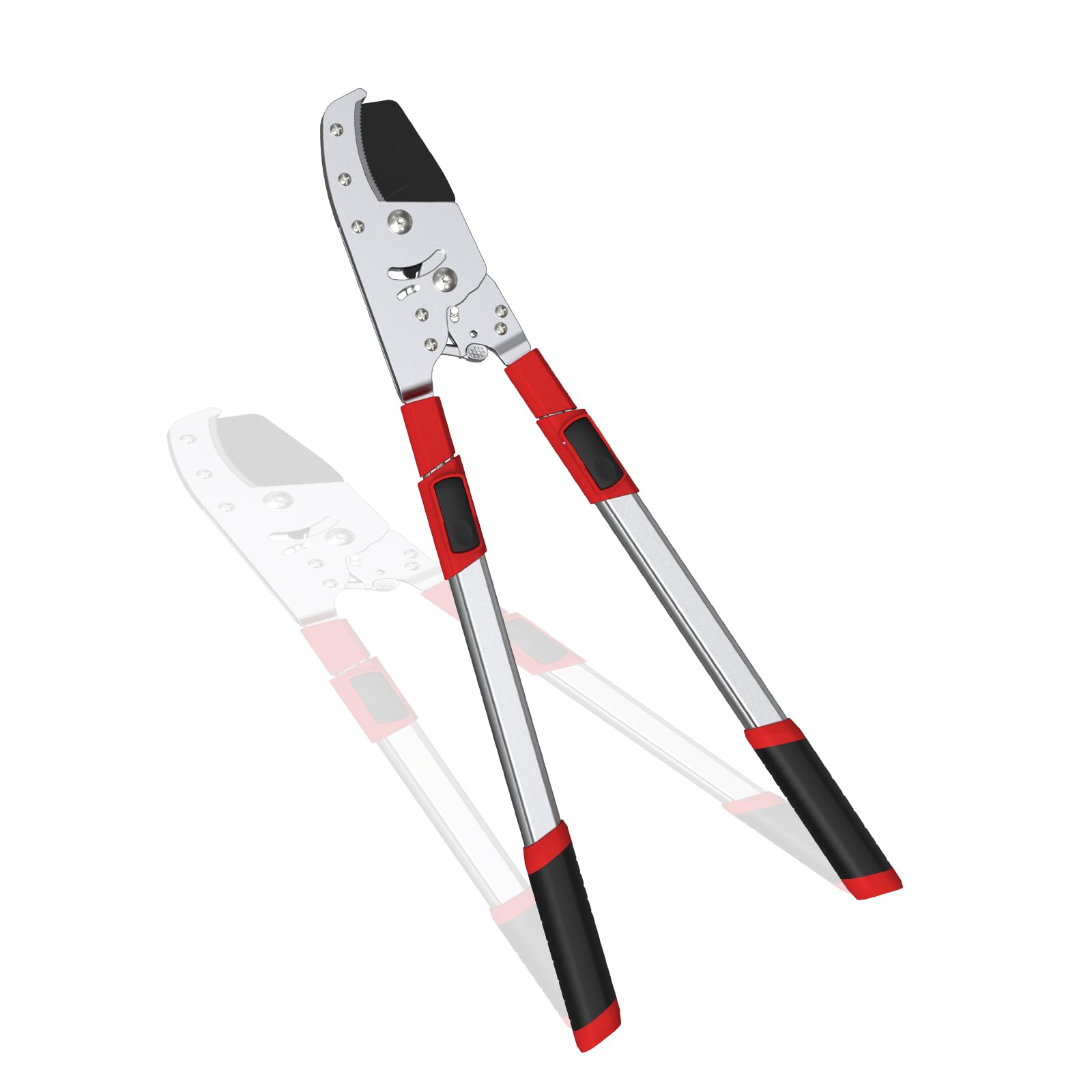
Extends 13 inches so you can reach high limbs without a ladder.
GARTOL’s anvil lopper telescopes from 28 inches to 41 inches, which means you can trim a branch 13 inches higher without moving the ladder. The 4-gear ratchet mechanism lets you cut through dry branches up to 2.5 inches in stages. One buyer mentioned it “very sharp, cuts 2.5″ branch easily” and another said the ratchet action “reduces effort.” The handles are lightweight tubular aluminum with soft TPR non-slip grips, so the extended length does not make the tool unmanageable.
At roughly 4.14 pounds, it sits between the heavier JARDINEER and the lighter Kings County loppers. The anvil-style cutting action is best for dead or dry wood, but reviewers mention it struggles with dense, slow-growing wood like boxwood. One owner reported a blade fractured after three months of light use, though GARTOL’s customer service sent replacement blades quickly. Another buyer had a blade snap on the second cut, so consistency is a question.
Compared to the Kings County Tools double ratchet bypass model, this GARTOL offers a 4-step ratchet versus a double, which some users find smoother on smaller branches. The telescoping reach also makes it the only lopper here that adjusts for tall canopies.
Best for the reach: If you have a maple or oak with branches starting at 7 feet, the telescoping handles get you there.
Watch for: A few reports of blade breakage; check the blade before trusting it on a big limb.
Reach for this if: Your pruning targets are high and you want to stay on the ground with a ratchet assist.
Look elsewhere if: You need a tool for daily professional use and want proven longevity from the start.
4. Corona Tools 33″ Bypass Loppers – Heavy-Duty Branch Cutter with DualLINK

A forged-steel bypass lopper built to outlast your current pair — and maybe your old Fiskars.
Corona’s DualLINK MAXFORGED mechanism increases leverage through a geared pivot, so a 2-inch live branch takes less force than a standard bypass lopper. The fully forged alloy steel blades resist bending and stay sharp longer than stamped blades. At 33 inches, the handles give you plenty of reach for medium-height branches without the complexity of a telescoping system. One reviewer called them “the best loppers ever” and another said they are “very well made” and will “last for many years.”
One buyer compared it directly to their 5-year-old Fiskars pair and noted “adequate build quality but no improvement in cutting effort vs. 5-year-old Fiskars.” That suggests the dual-link mechanism helps, but it does not eliminate effort on very thick branches. At 4.3 pounds, it is 0.69 pounds lighter than the JARDINEER anvil lopper, which makes a difference during a long session. The handles have impact-reducing bumpers and cushioned grips that absorb shock.
Unlike the JARDINEER anvil model above, this is a bypass lopper — the blade slides past the lower jaw, giving a clean cut on live green wood that heals faster. If most of your pruning is on living trees (oak, maple, birch), this is the better choice.
Clean cuts on live wood
- DualLINK MAXFORGED mechanism multiplies leverage.
- Forged alloy steel blades for durability.
- Impact-reducing bumpers on cushioned handles.
Not for dead wood
- Bypass blade can dull faster on dry, dead wood than an anvil.
- No ratchet mechanism — you need one clean squeeze.
Best for: A homeowner who prunes live trees and wants a durable, no-gimmick bypass lopper with a solid brand behind it.
pass on it if: You want a ratchet assist for arthritic hands or you mostly cut dead storm debris.
5. Tree Trimmer Loppers – Double Ratcheting Bypass Pruners – Extendable 26″ – 40″ by Kings County Tools
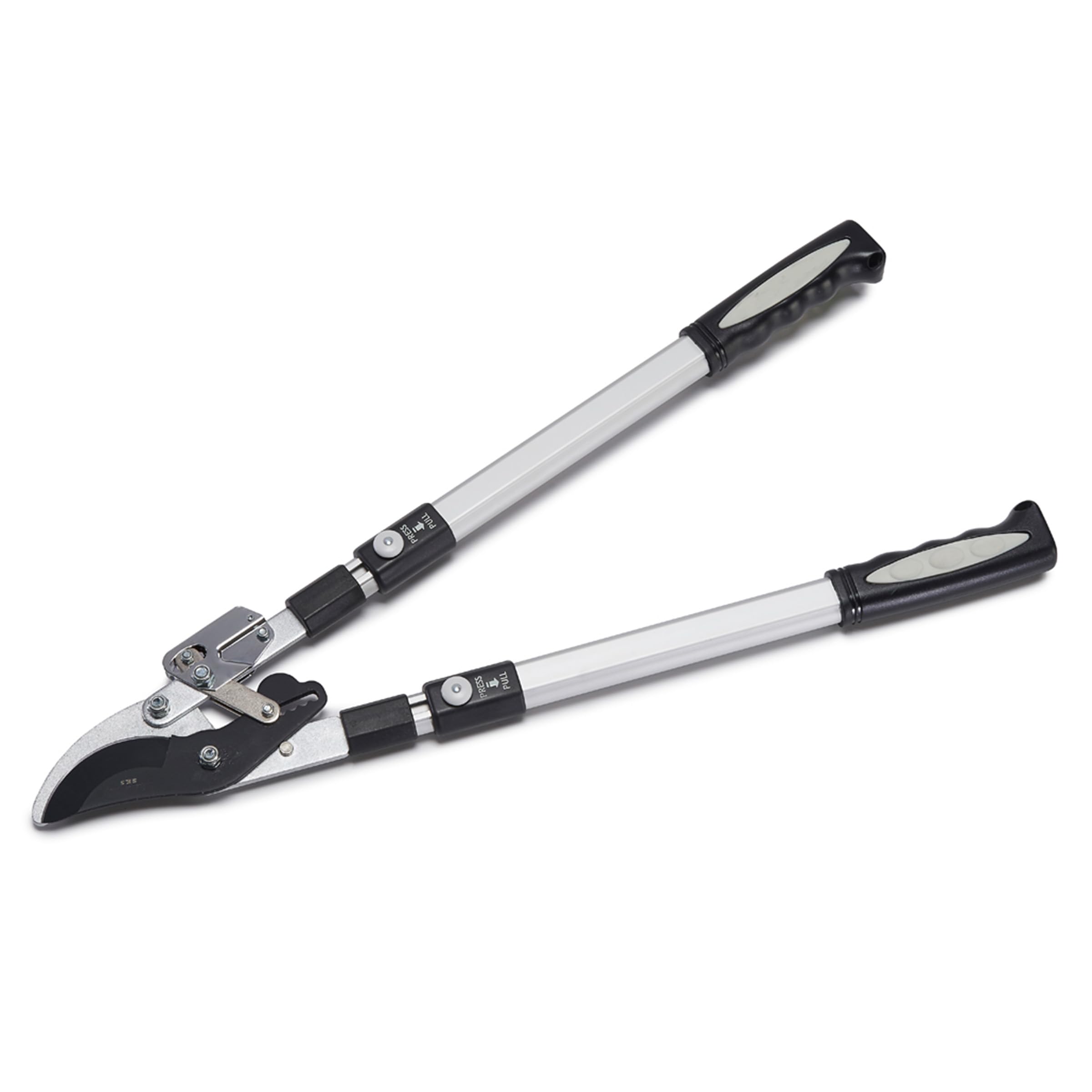
A bypass lopper that telescopes 14 inches and ratchets twice for green-wood grip.
Kings County Tools combines a double ratcheting mechanism with telescoping handles that extend from 26 inches to 40 inches. That makes it the only bypass lopper here with adjustable reach — the GARTOL above is anvil, while this one cuts green wood cleanly. At 3.8 pounds versus the JARDINEER anvil lopper at 4.99 lbs, which makes one-handed maneuvering easier when you are reaching up into a canopy.
The double ratchet mechanism lets you cut a 2-inch live branch by squeezing in stages. One customer observed it is “superior to flimsy brand-name loppers” and praised the “substantial cutting head cuts thick branches cleanly.” Another said the ratcheting action provides “extra torque” and that the extendable handles are “very sharp.” The telescoping arms use a push-button lock with six pin-locked positions, so you can dial in exactly the reach you need.
One thing to note: a buyer reported a blade broke on the third use cutting a 1-inch dead branch, though Kings County Tools replaced the entire lopper. Another reviewer said the tool is “pretty heavy compared to other units,” so while it is lighter than some, it is still a stout tool. The bypass blade is designed for wet, living wood, so stick to green branches for the best performance.
Best for the reach and cut combo: If you need to prune high live branches and want a ratchet assist, this is the one.
The trade-off: The telescoping mechanism adds complexity and a few ounces of weight compared to a fixed-handle lopper.
Reach for this if: You have tall live trees and want a ratcheting bypass lopper that extends up to 40 inches.
Look elsewhere if: You need a tool for dry dead wood only — the anvil-style GARTOL or JARDINEER would be better suited.
6. BLACK+DECKER 20V MAX* Garden Loppers Cordless Chainsaw, Alligator Lopper (LLP120)
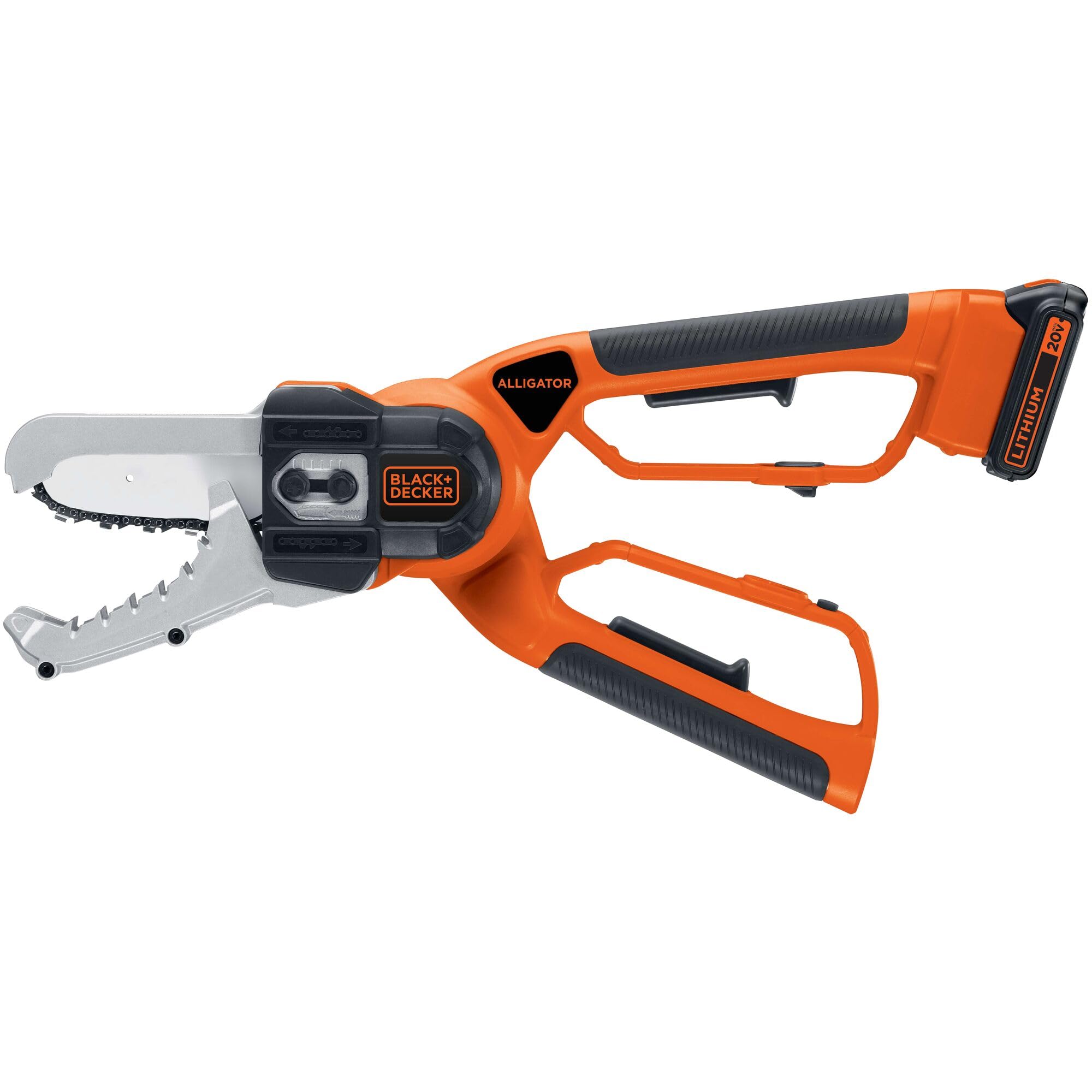
A battery-powered scissor-action lopper that chews through limbs up to 4 inches thick.
The BLACK+DECKER Alligator Lopper is a completely different kind of tool compared to every manual lopper in this list. Instead of squeezing handles, you pull a trigger and the clamping jaws grab the branch while the chain saw cuts it — all in one motion. It handles branches and logs up to 4 inches thick, which is double the capacity of any manual lopper here. Customers note it is “powerful, safe lopper for limbs up to 4” and call it a “fantastic little tool” that “beats hand pruning” for speed.
The 20V MAX lithium battery delivers up to 150 cuts per charge on 1.5-inch branches, according to the manufacturer. In real use, reviewers point out you get about 30 minutes of cutting time per charge, and the chain needs bar oil every 10 minutes. At 6.8 pounds versus the JARDINEER lopper at 4.99 lbs, but it does all the work for you — no ratchet squeezing required. The dual-hand switches prevent accidental starting, a safety feature buyers mention as a big plus.
The catch: one reviewer found the battery dead and unable to charge after sitting in the box for a year. Battery life is limited for large jobs, and the slow recharge means you will want a spare battery for extended sessions. It is also much louder than manual tools, though quieter than a full chainsaw.
Cutting speed
- Cuts branches up to 4 inches thick with scissor action.
- Up to 150 cuts per charge (1.5-inch branches).
- Dual-hand safety switches prevent accidental starts.
Battery quirks
- At 6.8 lbs it is the heaviest tool here — your arm will feel it.
- Needs bar oil every 10 minutes of cutting.
- Battery can die if stored unused for long periods.
Best for: A property owner with many medium branches (up to 4 inches) who wants to avoid hand fatigue entirely.
it’s not for you if: You only have a few small branches to trim each season or you dislike managing battery charging and bar oil refills.
Understanding the Specs
Cutting Capacity (Inches)
This is the thickest branch the tool can cut in one go, measured in inches of diameter. A 2-inch capacity handles most yard branches, while a 4-inch capacity like the BLACK+DECKER Alligator Lopper can cut a limb thick as a wrist. Exceeding the rated capacity dulls the blade faster and can damage the tool.
Blade Type: Anvil vs Bypass
An anvil blade crushes the branch against a flat metal surface, which is effective on dead, dry wood but can crush the bark on live branches. A bypass blade slides past the lower jaw like scissors, making a clean cut that heals quickly on living trees. The rule of thumb: bypass for green, anvil for dead.
Ratchet Mechanism (Single, Double, 4-Gear)
A ratchet mechanism turns one hard squeeze into several lighter squeezes by locking the blade in place as you release and re-squeeze. A double ratchet does two stages, while a 4-gear system does four. More gears mean less force per squeeze but more pumps to finish the cut.
Handle Length and Reach
Longer handles give you more leverage (which means less effort) and let you reach higher branches. Fixed 33-inch handles are good for mid-height branches. Telescoping handles that adjust from roughly 26 to 41 inches let you stay on the ground for higher cuts. The trade-off is weight: longer handles are heavier and harder to maneuver in tight spaces.
FAQ
What is the difference between anvil and bypass loppers?
Do I need a ratchet mechanism on my loppers?
Can I cut live branches with an anvil lopper?
How thick of a branch can I cut with these tools?
What does telescoping mean on loppers?
How do I maintain my pruning tools to keep them sharp?
Is a battery-powered lopper worth the extra cost?
Why does my lopper break after a few uses?
Can I use a hand saw instead of loppers?
What weight class of lopper should I look for as a beginner?
Final Thoughts: The Verdict
If you want one dependable pick, the tree pruning tools winner is the Corona Tools 14-Inch RazorTOOTH Pruning Saw because it handles anything from a thin twig to an 8-inch limb in one lightweight package without batteries or complex mechanics. If you need a clean cut on live green wood with maximum leverage, go with the Corona Tools 33″ Bypass Loppers with DualLINK. For heavy dead wood on a budget, the JARDINEER 30″ Anvil Loppers give you a spare blade and a ratchet jaw that keeps cutting year after year.
How We Picked
We do not accept paid placement. Every pick is matched to a real buyer and a real use-case; we do not hands-on test units.
Sources & Methodology
Specifications: manufacturer listings and product documentation. Review insights: verified customer reviews, as of July 2026. Pricing: not shown on this page (it changes often); check the current price via the retailer link.
As an Amazon Associate, Lawn Gear Lab earns from qualifying purchases. This does not affect which products we feature.