
A dull pair of tree pruning shears turns a quick trim into an arm-wrestling match with your oak. The wrong cut leaves a ragged wound that invites disease, while the right bypass or anvil action seals clean and heals fast. Whether you are deadheading roses or lopping a two-inch limb, the tool in your hand dictates how much effort exits your shoulder and how much vitality stays in the tree.
I’m Rikta — the co-founder and writer behind Lawn Gear Lab. My buying guides are built on hours of cross-referencing blade metallurgy, gear-ratio engineering, and verified owner feedback to isolate the handful of shears that actually outperform their price tier.
After comparing cutting capacities, handle lengths, and coating durability across seven different models, I’ve settled on the definitive list of the best tree pruning shears for everything from quick hand-trimming to high-reach branch removal.
How To Choose The Best Tree Pruning Shears
Walking into the pruning aisle blind leads most gardeners to grab whichever handle looks grippiest. A few key specifications separate a one-season frustration from a tool that still closes with authority five years in. Focus on blade type, cutting mechanism, and handle length first.
Bypass vs. Anvil: The Blade Decision
A bypass blade slides past a lower jaw like scissors — it makes a clean, precise cut that does not crush the stem. This is the correct choice for living, green wood because the wound heals faster. An anvil blade drives into a flat surface, essentially crushing the branch until it snaps. Anvil shears handle dead, dry, or hard wood well, but they leave a bruised edge on live growth that invites decay.
Compound Action, Ratchet, or Single Pivot
Standard bypass shears rely on lever length alone. Compound-action designs add an extra pivot point that multiplies force without lengthening the handle — you get more cutting power per squeeze. Ratcheting shears use a stepwise gear system that grabs the branch in stages, ideal for people with reduced hand strength or for cutting branches at the upper end of the shear’s capacity.
Handle Length and Reach
Hand pruners with 8- to 9-inch handles offer maximum control and precision for stems up to an inch thick. Loppers extend from 26 to 40 inches, trading some precision for leverage and reach. A 33-inch lopper lets you cut high limbs from the ground without a ladder, while telescoping handles add flexibility if you maintain trees at multiple heights.
Quick Comparison
On smaller screens, swipe sideways to see the full table.
| Model | Category | Best For | Key Spec | Amazon |
|---|---|---|---|---|
| Haus & Garten PowerPRO 29″ Bypass Lopper | Bypass Lopper | Compound leverage on 2-inch limbs | 3.3″ blade, Teflon-coated carbon steel | Amazon |
| Corona 33″ Bypass Lopper | Bypass Lopper | Long-reach power with minimal effort | DualLINK MAXFORGED gear, 2″ cut | Amazon |
| Kings County Tools Telescoping Lopper | Ratchet Bypass Lopper | Ratcheting torque on tall branches | 26”–40” telescoping, 2″ jaw | Amazon |
| Original LÖWE Anvil Pruner | Hand Anvil Pruner | Dry, dead, and hardwood cuts | 22mm cut, German carbon steel | Amazon |
| Haus & Garten EnduroPRO Hand Pruner | Hand Bypass Pruner | All-day hand pruning comfort | Titanium-coated blade, 1″ cut | Amazon |
| Spear & Jackson 4826RSA Anvil Lopper | Anvil Lopper | Budget-friendly heavy cutting | PTFE-coated carbon steel, 32mm cut | Amazon |
| JARDINEER Giant Lopper | Anvil Lopper | Extra-wide jaw for thick deadwood | Ratchet jaw, 2″ cut, SK5 spare blade | Amazon |
In‑Depth Reviews
1. Haus & Garten PowerPRO 29″ Bypass Lopper

The PowerPRO’s multiple pivot points triple the mechanical leverage at the blade, so a 2-inch limb feels like a 3/4-inch twig. The bypass design keeps live wood clean, and the Teflon coating prevents sap from gumming up the cut. The 29-inch powder-coated aluminum handles deliver extension without turning the tool into a back-breaking anchor — it weighs under 1.6 kg.
Users consistently report cutting branches up to an inch and a half with single-squeeze effort, and the blunt nose is the only limitation: fine tip work is not possible because the blades are designed for thick, open cuts. The jaws do not replace a hand pruner for rose stems or thin vine snips.
For anyone maintaining a yard with limbs in the 1- to 2-inch range, this is the sweet spot of construction and cutting force. The high-carbon steel holds an edge well, and several owners explicitly mention the head has not loosened after a full season of heavy trimming.
What works
- Compound mechanism triples force with minimal arm strain
- Teflon coating resists rust and sap buildup
- Lightweight aluminum handles reduce fatigue
What doesn’t
- Blunt nose design struggles with fine twig pruning
- Replacement blades not sold separately
2. Corona Tools 33″ Bypass Lopper

Corona built the DualLINK MAXFORGED mechanism into a 33-inch frame, giving you the longest effective leverage in this lineup without going to a telescoping pole. The precision-ground alloy steel blades are forged, not stamped, so they stay sharper longer and resist bending when you torque on a knotty crotch. Impact-reducing bumpers at the handle base cushion each cut’s end stroke.
Field reports confirm the lopper handles 2-inch hardwood with authority, but a small percentage of units have arrived with the blade edge bent inward, requiring a quick hammer pass to true it up. That is a quality-control miss on a tool that otherwise feels like a generational heirloom. The red cushioned grips stay secure even in wet gloves.
For the arborist or serious homeowner who wants to reach high limbs without a ladder, the extra length and gear multiplication make this a back-saver. It is heavier than the Haus & Garten unit at 4.3 pounds, but the cutting payoff is proportional.
What works
- Forged steel blades resist bending and hold a sharp edge
- 33-inch handles provide maximum leverage and overhead reach
- Impact bumpers reduce hand-arm fatigue on repetitive cuts
What doesn’t
- Occasional blade alignment issues out of the box
- Heavier than other premium loppers in this test
3. Kings County Tools Double Ratcheting Lopper
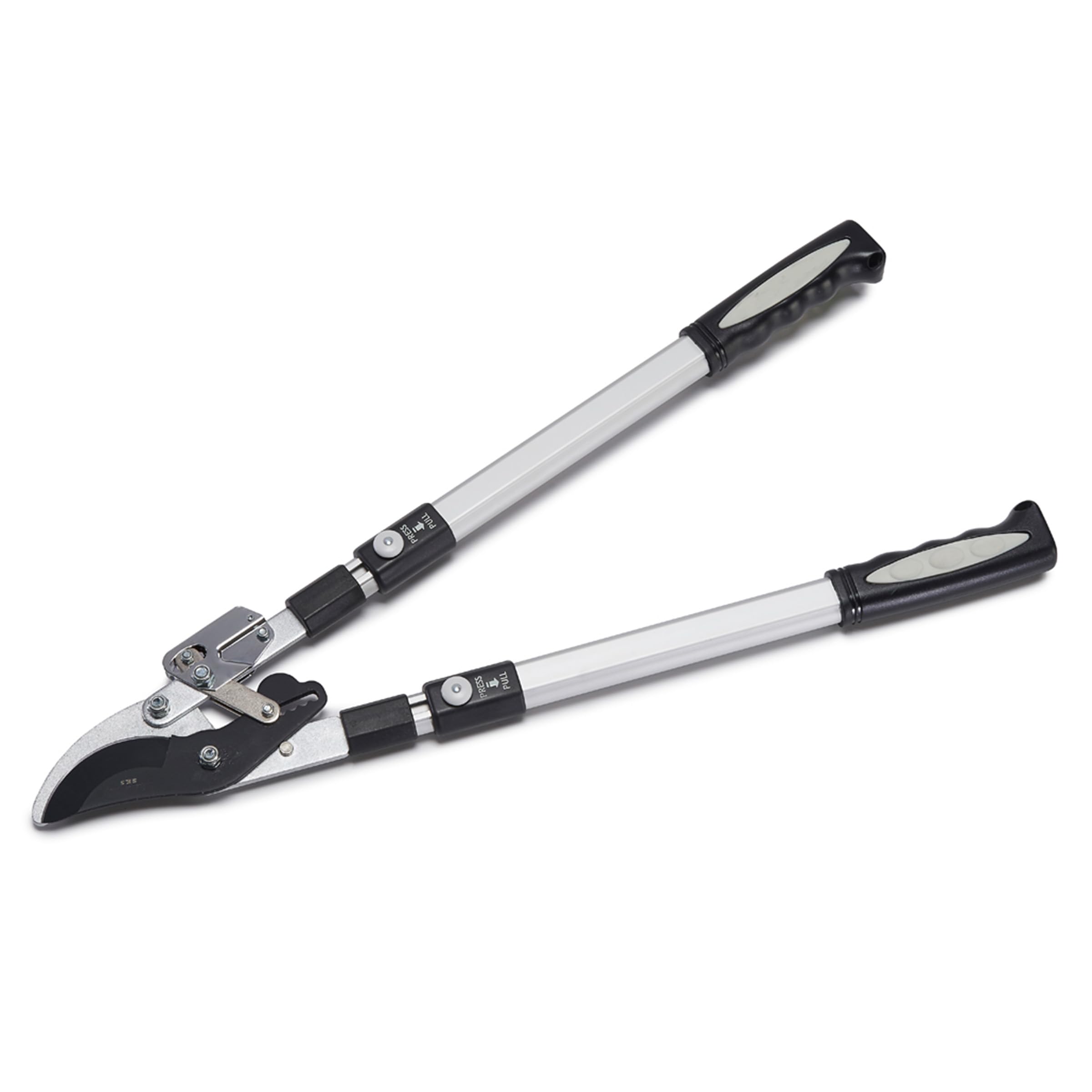
This is the only telescoping model in the roundup, and the double ratcheting mechanism makes it a legitimate option for users who lack upper-body strength or need extra torque on tough wood. The bypass blade is designed for green, living branches up to two inches. With handles extended to 40 inches, you can reach the center of a dense canopy without stretching.
Early reports were mixed: some owners experienced blade fracturing on dead wood near the one-inch mark, though the company resolved replacements quickly. Later production runs appear more consistent, and the ratchet action is praised by arthritis sufferers for distributing the cut across three discrete squeezes. The unit weighs nearly four pounds, so overhead work will fatigue your shoulders faster than a lighter fixed-length lopper.
If you regularly prune both ground-level shrubs and high limbs, the adjustable length eliminates the need for a second tool. The push-button extension locks firmly, and the rubberized grips do not slip when wet.
What works
- Ratcheting mechanism cuts thick limbs in gradual, low-effort steps
- Telescoping handles reach high branches without a ladder
- Replaceable bypass blade heads extend tool life
What doesn’t
- Heavy compared to fixed-length loppers
- Early units had blade chipping issues on dead wood
4. Original LÖWE Professional Anvil Pruner

LÖWE’s hand-held anvil pruner handles what bypass shears avoid: dry, dead, or rock-hard wood. The carbon steel blade carries a sliding lacquer coating for corrosion protection and reduced friction, and every part — blade, spring, lock — is replaceable. At 290 grams, it disappears into a holster, yet the 22-millimeter cutting capacity lets it chew through branches that would stall lesser anvil pruners.
Owners consistently call it the best pruner they have used, citing the solid, rattle-free construction. The one-finger safety lock is easy to flick open with a gloved hand. The anvil design does leave a crushed wound on green wood, so limit it to dead wood removal or heavy clearing tasks. The plastic handles are comfortable for medium to large hands but feel modest compared to the forged blade underneath.
Made in Germany with all parts available as spares, this is the buy-it-for-life choice for anyone who regularly cuts deadwood or thick bramble. It is not a daily rose pruner, but it is indispensable for tough cleanup.
What works
- Crushes dead and hardwood with no blade deflection
- Every component replaceable — true lifelong tool
- Smooth operation with zero looseness in the pivot
What doesn’t
- Anvil action bruises live wood, not ideal for green pruning
- Plastic handles feel less premium than the blade quality
5. Haus & Garten EnduroPRO Ergonomic Bypass Pruner
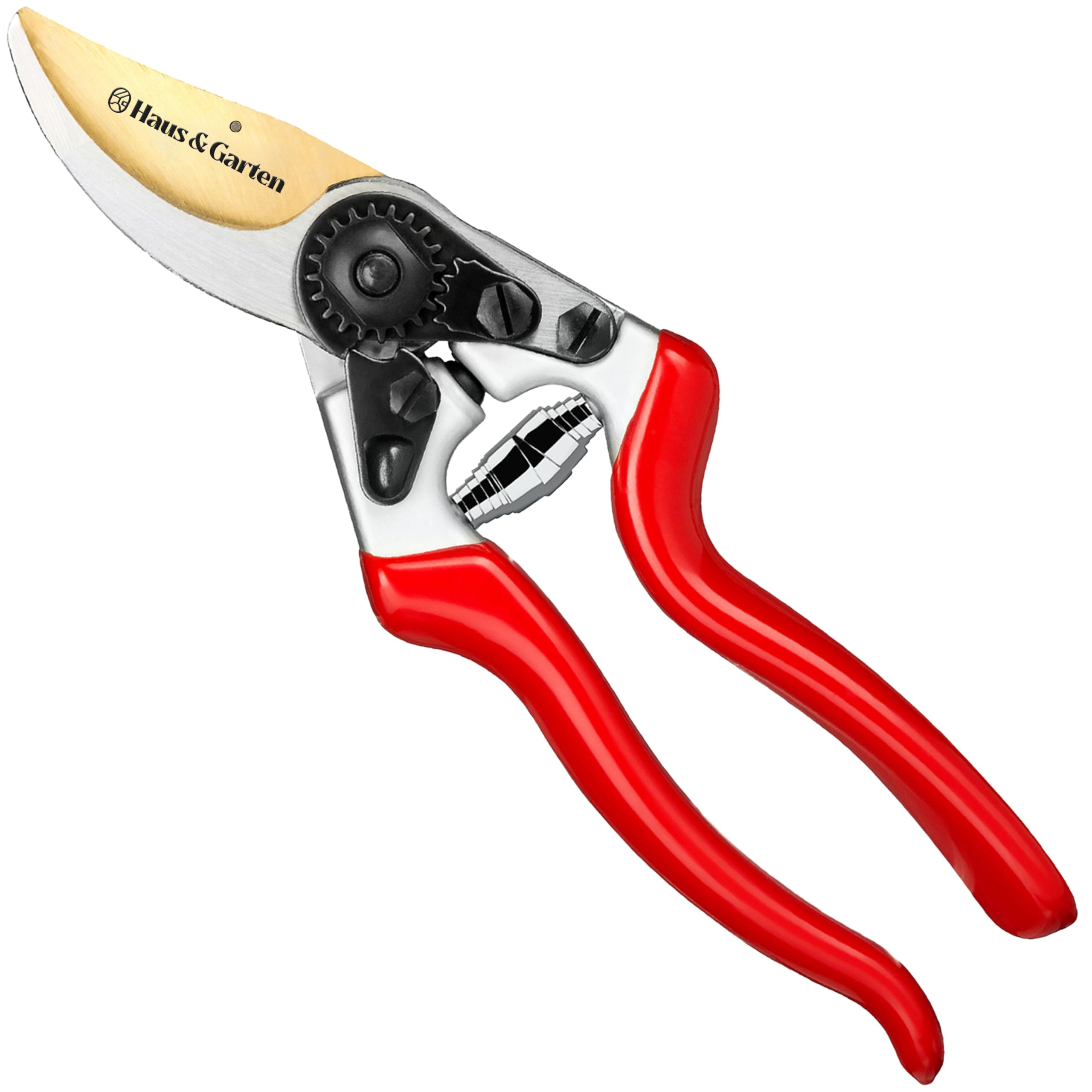
The EnduroPRO is the lightweight bypass hand pruner that punches above its price. Japanese-grade high-carbon steel with a titanium coating reduces friction and prevents rust, and the anodized aluminum body keeps the whole tool at 8.6 ounces. The ergonomic handle orientation aligns your wrist to reduce strain during extended trimming sessions — a detail that pays off when you are deadheading a long hedge.
Reviewers highlight that the blades arrive razor-sharp and stay that way through multiple seasons. The 1-inch cutting capacity handles most garden cleanup, though thicker branches require a lopper. Some users with arthritic hands wish the grips were larger, but the rubberized surface provides solid traction even with sweaty palms.
For the price, this is the best entry point into quality bypass pruners. The titanium coating is not just marketing — it noticeably reduces the drag you feel on sappy stems, and the red grips make the tool easy to spot when you set it down in the mulch.
What works
- Titanium coating reduces friction and resists sap adhesion
- Lightweight aluminum construction reduces hand fatigue
- Ergonomic wrist angle improves comfort during long pruning sessions
What doesn’t
- Handle diameter too small for some arthritic hands
- Limited to 1-inch cutting capacity
6. JARDINEER Giant Anvil Lopper 30″

The JARDINEER lopper uses a giant ratchet jaw to multiply force on every squeeze, making short work of thick, stubborn branches up to two inches. The anvil blade is optimized for dead, dry wood, and the set includes a spare SK5 carbon steel blade to double the tool’s service life. With 30-inch alloy steel handles and soft grips, it provides plenty of leverage for ground-level cutting.
Owner feedback spanning four years of use in a dense Florida landscape confirms the ratchet mechanism holds up under heavy, year-round trimming. The primary complaint involves a bolt that occasionally loosens during extended use, requiring periodic tightening. The extra blade is a genuine value-add, and the included smaller pruners (in the box) are a welcome bonus for quick follow-up snips.
For budget-conscious buyers facing a yard full of deadwood and overgrown shrubs, the JARDINEER delivers the most cutting capacity per dollar. The ratchet jaw effectively reduces the effort needed, making this viable for older gardeners or anyone recovering from hand strain.
What works
- Ratchet jaw dramatically reduces the force needed for thick cuts
- Includes a spare SK5 blade to replace the primary cutting edge
- Very affordable relative to cutting capacity and included accessories
What doesn’t
- Bolts can loosen and require periodic re-tightening
- Anvil blade is not ideal for live, green wood
7. Spear & Jackson Razorsharp Active Anvil Lopper
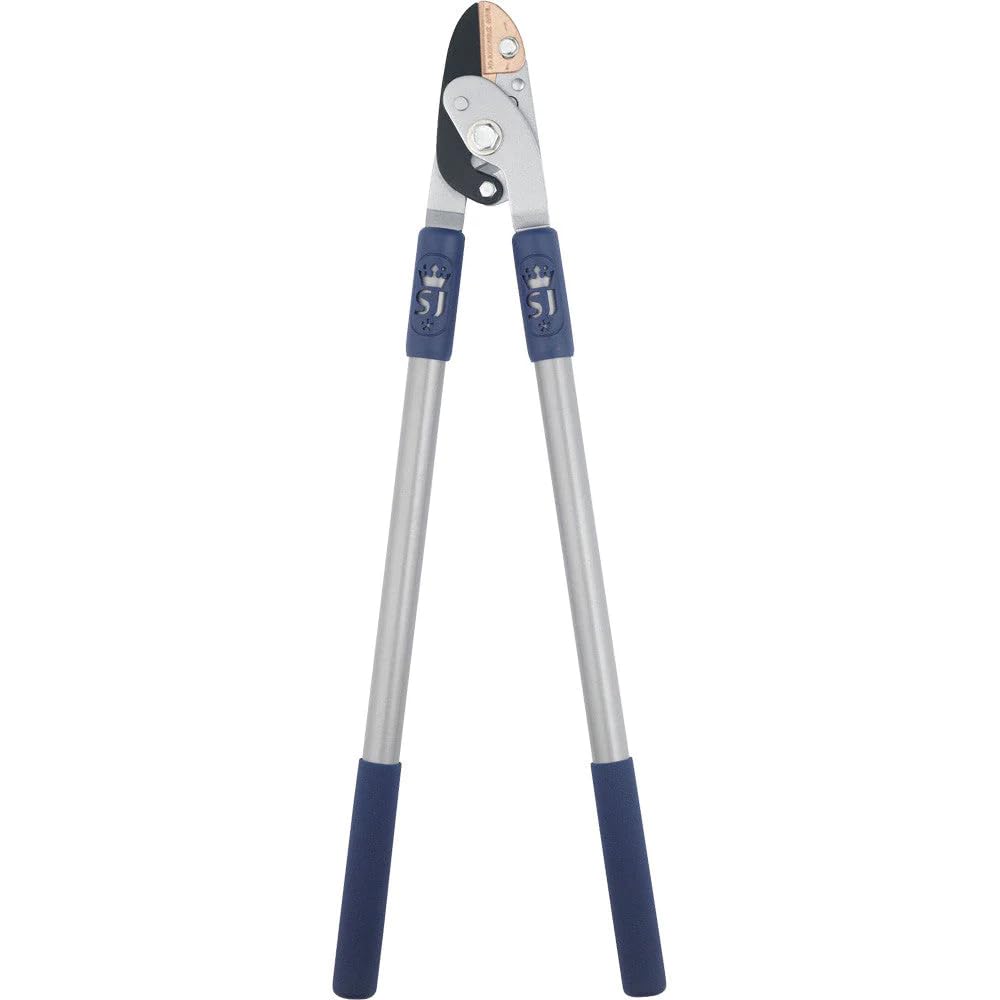
Spear & Jackson’s compound cutting action generates extra closing force without adding weight to the tubular steel handles. The hardened carbon steel blade is chrome-plated and finished with a PTFE coating for smooth, rust-resistant cuts. At 26 inches, this is the shortest lopper in the comparison, making it easier to maneuver in tight shrubbery but less effective for overhead reach.
Buyers confirm the blade is exceptionally sharp out of the box, though some found the 32-millimeter (1.26-inch) cutting capacity struggles on branches closer to the 1.5-inch mark. The shock absorber built into the head reduces jarring on each cut, and the soft-feel grips are comfortable for extended use. The simple anvil design has no complex pivot points to maintain, which owners appreciate for long-term reliability.
This is a solid mid-range anvil lopper for gardeners who prune primarily at arm’s length. The PTFE coating genuinely reduces drag, and the price-to-performance ratio is competitive, but the shorter handles and limited capacity make it a poor fit for heavy limbing or tall tree work.
What works
- Compound action provides good force multiplication for the size
- PTFE coating reduces rust and cut resistance
- Simple design with no complex hinges to fail over time
What doesn’t
- Short 26-inch handles limit overhead reach
- Cutting capacity struggles with branches over 1.25 inches
Hardware & Specs Guide
Blade Steel and Coatings
High-carbon steel (Japanese or SK5 grade) holds a sharp edge longer than stainless steel, but it requires coatings to resist rust. Titanium, Teflon, and PTFE coatings each reduce friction during the cut and prevent sap from bonding to the blade. Uncoated carbon steel is cheaper but demands frequent oiling and cleaning to avoid corrosion, especially in humid climates.
Cutting Capacity and Handle Ratio
A shear’s cutting capacity is a product of blade sharpness and handle leverage. Loppers with handles over 30 inches generate more torque, allowing a 2-inch cutting capacity with less user effort. Hand pruners with 8-inch handles typically max out at 1 inch. Compound-action and ratchet mechanisms alter the lever ratio, delivering higher effective force within the same handle length.
FAQ
Can I use anvil shears on live tree branches?
What does compound action mean on a lopper?
How do I clean and maintain pruning shear blades?
Should I choose a telescoping lopper or a fixed-length model?
Final Thoughts: The Verdict
For most gardeners, the tree pruning shears winner is the Haus & Garten PowerPRO 29″ Bypass Lopper because its compound-action mechanism converts a light squeeze into clean 2-inch cuts with minimal fatigue. If you want maximum leverage and reach, grab the Corona 33″ Bypass Lopper. And for tackling dead wood and heavy clearing, nothing beats the Original LÖWE Anvil Pruner.