
Weeds that sprout between rocks and pavers are stubborn, ugly, and a back-breaking nightmare to remove manually. You need a tool that reaches into tight crevices, grips the root, and yanks it out for good — without you having to kneel or spray harsh chemicals on your stonework.
I’m Rikta — the co-founder and writer behind Lawn Gear Lab. I’ve spent many hours comparing the mechanical advantages of claw designs, blade geometries, and handle lengths across dozens of weed removal tools, analyzing owner feedback to separate the tools that actually extract the full root from those that just snap the top off.
Whether you are dealing with a pea-gravel path or a flagstone patio, the right tool to remove weeds in rocks saves your joints and keeps your landscape looking pristine without resorting to herbicides.
How To Choose The Best Tool To Remove Weeds In Rocks
Selecting the right weeder for rocky terrain means matching the tool’s design to your specific ground texture — loose gravel needs a different approach than tight flagstone seams. Focus on three main factors: the head geometry, the handle length and material, and the soil conditions where you work most frequently.
Claw Count and Head Design
A 4-claw stand-up puller works brilliantly in soft or moderately firm soil after rain, gripping dandelion and thistle roots completely. However, in hard-packed gravel or between tightly laid stones, a sharp L-shaped crack weeder blade or a narrow scuffle hoe performs better because it can slice laterally without disturbing the rock layout. Look for serrated edges on claws — they provide superior grip on slick root surfaces.
Handle Length and Material
A handle between 43 and 55 inches lets you work standing upright, which is the primary reason to buy a long-handled tool. Aluminum and fiberglass shafts keep weight low (under 2.5 pounds) while resisting rust. Bamboo handles look classic and absorb vibration well, but check that the metal head attachment is reinforced — weak joints fail under the twisting torque needed for deep-rooted weeds.
Durability of the Eject Mechanism
If you choose a stand-up puller with a weed eject feature, examine whether the release uses a sliding collar, a foot pedal, or a thumb lever. Plastic components on the eject mechanism are common failure points under repeated heavy use — opt for models where the ejector is metal or has a replaceable part. A model without an ejector can still be cleared by tapping the head against the ground, which is slower but more durable over years of rocky soil use.
Quick Comparison
On smaller screens, swipe sideways to see the full table.
| Model | Category | Best For | Key Spec | Amazon |
|---|---|---|---|---|
| Fiskars 4-Claw Weeder | Stand-Up Puller | Permanent root removal | 4 serrated stainless steel claws | Amazon |
| Garden Weasel WeedPopper | Step & Twist Puller | Hard, dry soil | 2 serrated carbon steel tines | Amazon |
| Grampa’s Weeder Original | Stand-Up Puller | Dandelions in soft soil | 4-claw alloy steel head | Amazon |
| Allsetool Weed Puller | Stand-Up Puller | Budget-friendly deep root grip | 4-claw head with 2 eject mechanisms | Amazon |
| CobraHead Mini Weeder | Hand Tool | Precision work in flower beds | Curved forged steel blade | Amazon |
| Xtreme Weeder Scuffle Hoe | Scuffle Hoe | Clearing large gravel areas | Stainless steel V-blade | Amazon |
| BARAYSTUS Crack Weeder | Crevice Tool | Tight sidewalk and paver gaps | L-shaped high carbon steel blade | Amazon |
In‑Depth Reviews
1. Fiskars Stand-Up Weed Puller Tool, 4 Serrated Claws

The Fiskars 4-claw weeder is the gold standard for permanent root extraction in soft to moderately firm soil. The four serrated stainless steel claws grip the weed’s root structure more effectively than three-claw competitors, and the integrated viewing window lets you align the head precisely over the target before you step down. The offset handle reduces wrist strain during the twisting motion, and the aluminum shaft keeps the total weight at 2.5 pounds.
On rocky ground, this tool performs best when the soil is moist — a quick soak 30 minutes before work softens the ground so the claws penetrate without deflection. The eject slider pushes the weed plug cleanly out without requiring a second tug. Many users report filling a 30-gallon can in 20 minutes once they get the rocking motion down.
The only notable drawback is that the plastic eject lever at the base can snap under extreme force if you try to pry out large, woody roots instead of rocking them loose. Fiskars backs the tool with a lifetime warranty, but the plastic part is a known weak link. For typical dandelions and thistles in rocky beds, this tool remains the most efficient and ergonomic choice on the market.
What works
- Four serrated claws grip roots completely for permanent removal
- Offset handle and viewing window reduce strain and improve accuracy
- Lightweight aluminum handle with lifetime warranty
What doesn’t
- Plastic eject lever can break under extreme force on large roots
- Best results require moist soil; not ideal for hard clay without watering first
2. Xtreme Weeder Scuffle Hoe Cultivator
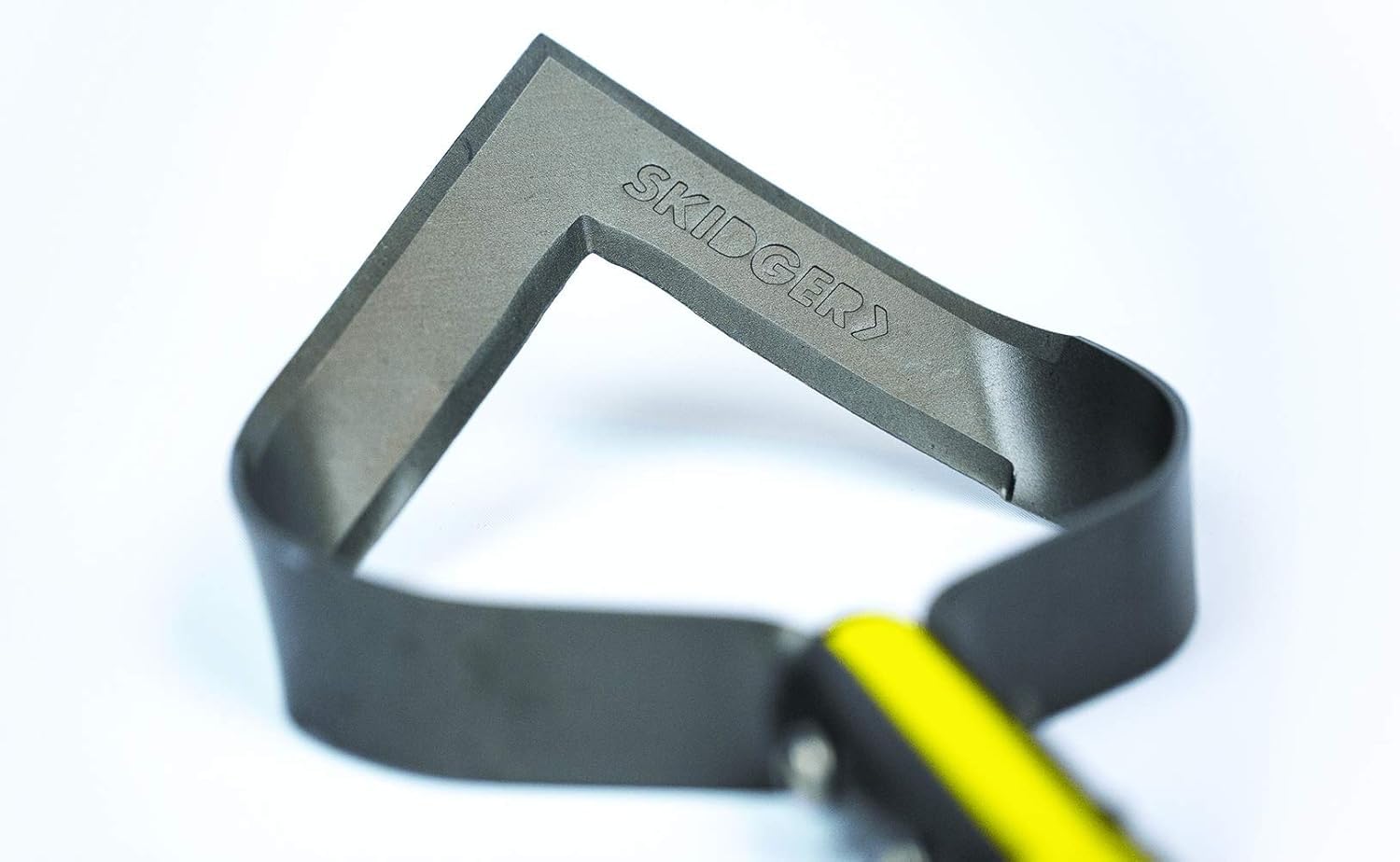
The Xtreme Weeder is not a puller — it is a scuffle hoe designed for a different motion that excels in loose rock, gravel, and bark mulch. Its sharp stainless steel V-blade sits under the surface and cuts weeds on both the push and pull stroke, disturbing only the top inch of soil. The open design allows rock and gravel to pass through the blade without clogging, unlike a solid hoe head.
At 54 inches, the fiberglass handle gives you excellent leverage for clearing large areas quickly without bending. The blade curvature lets you see exactly where the cutting edge is working, which is critical when you need to avoid hitting plants, hoses, or drip irrigation lines buried in the rock. The steel holds its edge well and is easy to re-sharpen with a file when it dulls.
The main limitation is that it severs the weed at the root crown rather than pulling the entire root out. This means persistent perennials like bindweed may regrow. For controlling annual weeds and young crabgrass in gravel paths, the Xtreme Weeder is incredibly fast and reduces physical strain compared to any handheld device.
What works
- Cuts weeds on both push and pull strokes for rapid coverage
- Open blade design sheds gravel and bark without clogging
- Long fiberglass handle provides excellent leverage with no bending required
What doesn’t
- Severs roots at the crown rather than extracting the entire root system
- Not effective on weeds growing in very tight crevices between stones
3. Garden Weasel WeedPopper Step & Twist

The Garden Weasel WeedPopper uses a unique two-tine step-and-twist action that excels in hard, dry soil where most claw pullers fail. You simply position the two serrated carbon steel tines over the weed, step down with your foot, and twist the handle — the tines rotate into the ground, gripping the root, and the weed pulls free with the attached dirt plug. The thumb-release eject mechanism pops the plug out without touching it.
This tool is particularly effective in rock yards and gravel beds because the narrow two-tine head slides between stones without displacing them. Users consistently report success on dandelions, plantain, stinging nettle, and spurge even in dry clay. The all-metal construction with no plastic structural parts makes it exceptionally durable — the only plastic component is the ergonomic grip on the handle.
The foot platform does make centering the tines over small weeds a little less intuitive than an open-frame design, and it extracts a slightly larger soil plug than a claw puller, which can be a concern in well-maintained lawns but is a non-issue in rock beds. For homeowners dealing with established weeds in compacted gravel, the WeedPopper delivers professional-grade extraction without requiring water-softened ground.
What works
- Step-and-twist action works in hard, dry soil without pre-watering
- All-metal construction with no plastic structural parts for maximum durability
- Narrow tines fit between rocks without disturbing the layout
What doesn’t
- Foot platform makes centering over small weeds slightly less precise
- Extracts a larger dirt plug compared to 4-claw pullers
4. Grampa’s Weeder Original Stand-Up Puller

Grampa’s Weeder is the original stand-up puller, a design that has been in continuous production since 1913. The 45-inch real bamboo handle feels warm and shock-absorbing in the hands, and the 4-claw alloy steel head is forged to be strong without being overly heavy at 2.3 pounds. This tool is purpose-built for dandelions and thistles growing in softer, well-watered soil.
The mechanism is elegantly simple: push the claws into the ground over the weed, lean the handle to the side to grip the root, and pull straight up. The claws close around the root as you lean, giving you a mechanical advantage that requires much less force than a straight vertical yank. On wet ground after a rain, this tool will pull the entire taproot of a large dandelion in one smooth motion.
Where it struggles is in hard clay, dry soil, or rocky terrain where the claws cannot penetrate fully. It also has no eject mechanism — you often need to tap the head or use your hand to remove the weed, which slows you down. For gardeners who maintain softer, irrigated beds with pea gravel or bark, this is a reliable, beautifully crafted tool backed by an unconditional lifetime guarantee.
What works
- Reinforced bamboo handle absorbs shock and feels comfortable
- Simple lean-and-pull mechanism requires less force than straight pulling
- Unconditional lifetime guarantee from an American family company
What doesn’t
- No eject mechanism; requires manual removal or tapping to clear head
- Performs poorly in dry, hard, or clay-heavy soil without pre-watering
5. Allsetool Weed Puller with 2 Weed Eject Feature
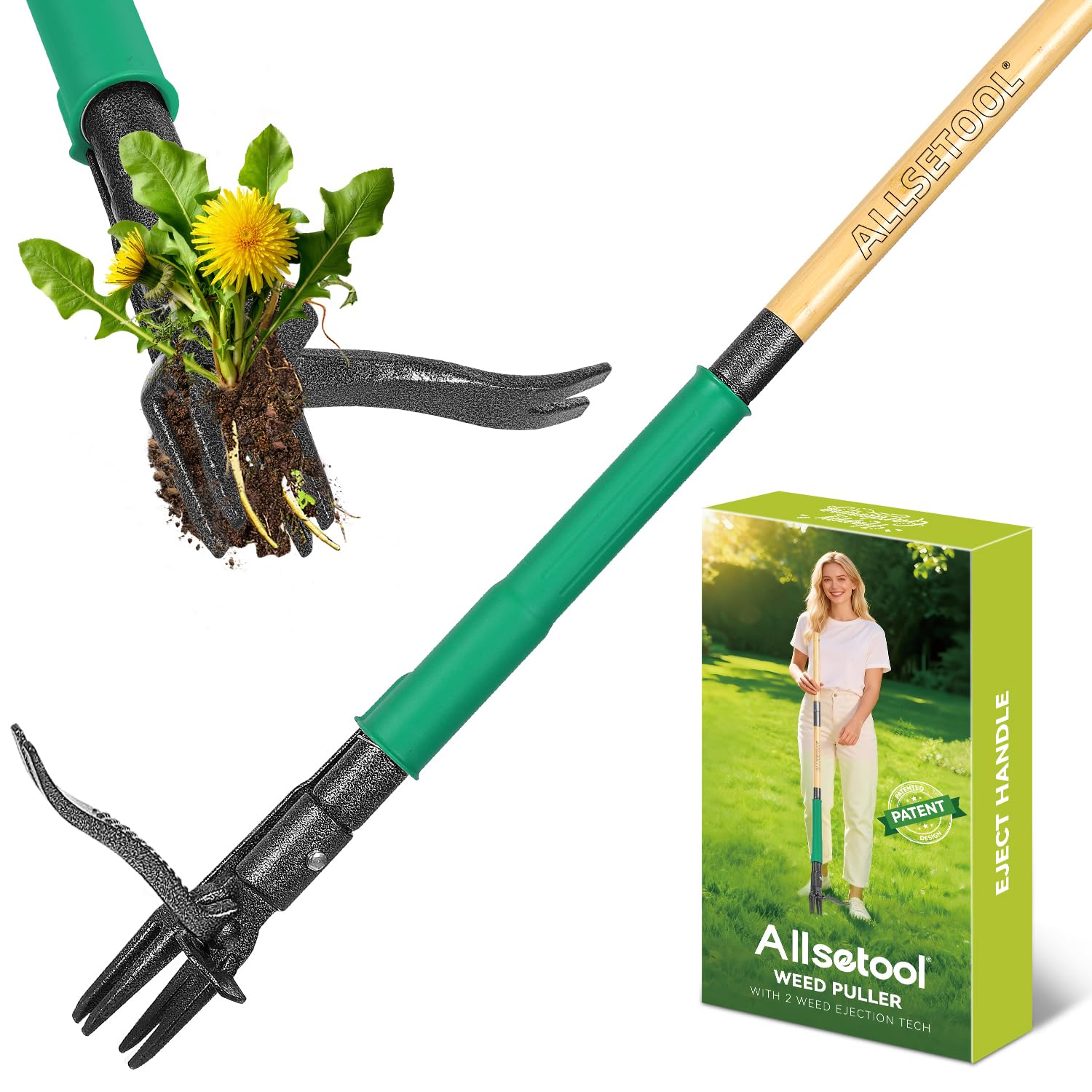
The Allsetool stand-up weeder brings two distinct eject mechanisms — a thumb-operated handle slide and a foot pedal — to the entry-level price tier, making it a compelling option for budget-conscious buyers. The 43.7-inch bamboo handle is wrapped for grip, and the 4-claw metal head includes a foot pedal with a non-slip textured surface that helps you drive the claws into the ground safely.
In practice, the dual eject system means you can clear the weed without bending regardless of whether your hands are full or gloved. The metal foot pedal is a durability upgrade over plastic pedals found on similarly priced tools. Users report that it works best when the ground is damp, pulling medium to large deep-rooted weeds like dandelions and thistles with satisfying results.
The main caveat is that the release mechanism can occasionally fail to eject the weed, requiring a manual push. Some users also note that the bamboo handle feels less substantial than premium alternatives, and the overall build quality reflects its position as a budget option. For occasional use in a small rock garden or patio border, it delivers excellent functionality at a very accessible price.
What works
- Two separate eject mechanisms for convenient weed clearing
- Metal foot pedal with non-slip texture for safe, forceful insertion
- Budget-friendly price for a 4-claw stand-up design
What doesn’t
- Bamboo handle feels less robust than premium aluminum or wood options
- Eject mechanism can fail occasionally, requiring manual removal
6. CobraHead Mini Weeder & Cultivator

The CobraHead Mini is not a stand-up tool — it is a handheld forged-steel weeder that weighs just 5 ounces, designed for precision work in tight spaces. Its curved, talon-like blade acts as a mini spade, stirrup hoe, and root hook all in one. In rock beds, it excels at digging out individual weeds from between closely spaced stones where no stand-up tool can reach.
The tempered alloy steel blade plows through compacted soil effortlessly, and the ergonomic recycled plastic handle works equally well in right or left hand. Made in the USA in Cambridge, Wisconsin, this tool has a loyal following among gardeners who value control over speed. It is particularly effective at removing the entire taproot of deep-rooted weeds without disturbing the surrounding rock or ornamental plants.
The trade-off is obvious: being a hand tool, it requires kneeling or bending, which defeats the primary ergonomic benefit of stand-up pullers. It also causes blisters if used without gloves for extended periods. For finishing work — the last few weeds in a tight corner or around drip emitters — the CobraHead is unmatched, but it is not a back-saving solution for large areas of rock.
What works
- Curved forged steel blade extracts deep taproots from tight crevices
- Lightweight at 5 ounces with a comfortable universal grip
- Versatile as a weeder, cultivator, and edger in confined spaces
What doesn’t
- Requires kneeling and bending — no ergonomic back support
- Can cause hand blisters during extended use without gloves
7. BARAYSTUS Crack Weeder, Stainless Steel Crevice Tool

The BARAYSTUS Crack Weeder is a purpose-built crevice tool with a 55-inch stainless steel handle and an L-shaped high carbon steel blade designed to slide into cracks as narrow as 0.1 inches. This is the right tool when your weeds are growing in the expansion joints of a concrete driveway, between flagstones, or in the gaps of a brick paver patio — places where a 4-claw puller simply cannot fit.
The sharp L-shaped blade works with a scraping and slicing motion rather than a pulling motion. You insert the blade into the crack, hook the weed stem, and slice sideways to sever the root just below the surface. The anti-rust coating on the blade helps it resist moisture damage, and the lightweight 1.6-pound construction makes it easy to handle for extended sessions.
Where it falls short is on older, uneven seams where the blade’s pointer can scratch stone surfaces if used aggressively. It also leaves behind root fragments in deeper cracks, meaning weeds may regrow faster than with a tool that extracts the entire root. For maintaining a clean, manicured look in paved areas and pathways without kneeling, this crevice weeder is the most specialized and effective choice.
What works
- Ultra-narrow L-shaped blade fits cracks as tight as 0.1 inches
- Long 55-inch handle eliminates bending for paved and rocky surfaces
- Anti-rust coated carbon steel stays sharp through frequent use
What doesn’t
- Sharp pointer can scratch stone and paver surfaces if used with too much force
- Severs roots rather than extracting them, allowing faster regrowth in deep cracks
Hardware & Specs Guide
Claw Count and Material
The number of claws directly determines gripping power in rocky soil. Four-claw heads distribute pressure evenly around the root, reducing the chance of the weed slipping out, while two-tine designs like the Garden Weasel are better for compacted soil because they penetrate harder ground. Stainless steel claws resist corrosion longer than alloy steel, especially when used in frequently watered rock beds.
Blade Geometry for Crevices
An L-shaped crack weeder or a narrow V-blade scuffle hoe excels in tight spaces because they cut horizontally rather than pulling vertically. The sharpness of the blade edge determines how cleanly it slices through fibrous roots — high carbon steel blades hold an edge for dozens of uses before needing a touch-up with a sharpening stone.
FAQ
Will a stand-up weed puller work on weeds growing in loose gravel?
How do I remove weeds without disturbing the rock mulch underneath?
What is the best way to prevent weeds from growing back in rock beds?
Final Thoughts: The Verdict
For most gardeners, the best tool to remove weeds in rocks winner is the Fiskars 4-Claw Stand-Up Weed Puller because its serrated stainless claws and ergonomic design provide the best balance of root extraction power and back-saving comfort in moist or moderately firm soil. If you work on hard, compacted ground that never softens, grab the Garden Weasel WeedPopper for its brute-force step-and-twist mechanism. And for clearing large gravel paths quickly, nothing beats the speed and reach of the Xtreme Weeder scuffle hoe.