
Specs are compiled from manufacturer listings and verified buyer reviews and can change over time — please confirm the key details on the product page before buying.
You have a patch of ground that is as hard as concrete, and every jab with a shovel just bounces off. That is the moment you need a dedicated tool that matches the job, not just more muscle. The right choice either turns that stubborn soil into a workable bed or leaves you sore and frustrated.
I’m Rikta — the founder and writer behind Lawn Gear Lab. This guide is built by comparing the manufacturers’ published specifications and the patterns across verified customer reviews, so you get each pick’s real strengths and trade-offs instead of marketing spin.
Whether your enemy is sun-baked clay, rocky ground, or a tangle of roots, these are the best manual and powered options for a tool to break up hard soil that actually gets the job done without you needing to fight it with a pickaxe all weekend.
Quick Picks
- Truper 5 lb Cutter Mattock (TH-5F / 31638) — Best Overall
- Bully Tools 5-Tine Broadfork (92627) — No-Bend Aerator
- 56″ Heavy Duty Broadfork (YOWPSY) — Heavy Clay Lever
- DEGGE Cordless Tiller Cultivator — Battery Champion
- SOARFLY Upgraded Cordless Tiller Cultivator (TC-01) — Budget-Friendly Power
- Truper Pick Mattock (TP 2 1/2F / 32655) — Light Precision Digger
How To Choose The Best Tool To Break Up Hard Soil
Picking the right tool means matching it to the ground you have. A heavy swinging mattock is a beast for deep trenching and root cutting, but a broadfork lets you aerate a garden bed without ever bending your back. Cordless tillers add speed for open spaces but can bog down in rocky clay. Here are the factors that separate a smart buy from a wasted swing.
Head Weight and Striking Force
Heavier heads drive deeper on each swing. A 5-pound head, like on the Truper Cutter Mattock, powers through packed clay and thick roots faster than a lighter 2.5-pound head, which is easier to control for precision trenching. Choose weight based on your stamina and the hardness of your soil.
Tines, Depth, and Leverage
For manual broadforks, tines made of 10-gauge steel (about 3.4mm thick) resist bending in rocky ground. A deeper tine length, typically 11 inches, lets you loosen compacted subsoil without creating a hardpan layer. On powered tillers, tilling depth (usually 6-7 inches per pass) determines whether the tool breaks through the hard crust or only scratches the surface.
Manual vs. Powered: Which One for You
Manual tools like mattocks and broadforks have no maintenance, no batteries, and work in any weather — but they demand your body. Cordless tillers offer speed and less physical strain on large, open areas, but they can stall on rocks, and battery runtimes (often 25-50 minutes of continuous use) limit how much ground you can cover in one session. Pick manual if you have a small garden bed or deep work; pick powered if you are opening up a new plot and want to finish before lunch.
Quick Comparison
| Model | Best For | Head / Power | Total Weight | Tilling Depth | Amazon |
|---|---|---|---|---|---|
| Truper 5 lb Cutter Mattock | Root slashing & heavy digging | 5 lb forged steel | 7.63 lb | Strike depth (swing) | Amazon |
| Bully Tools 5-Tine Broadfork | Soil aeration without bending | 10-ga steel (manual) | 11.8 lb | 11 in tines | Amazon |
| 56″ Heavy Duty Broadfork | Deep leverage on clay | Carbon steel (manual) | 17.76 lb | 11 in tines | Amazon |
| DEGGE Cordless Tiller | Battery-powered soil prep | 48 steel tines / 21V | — | 6.7 in | Amazon |
| SOARFLY Cordless Tiller | Efficient battery operation | 48 steel tines / 21V | — | 6.6 in | Amazon |
| Truper Pick Mattock | Precision prying & trenching | 2.5 lb forged steel | 5.25 lb | Strike depth (swing) | Amazon |
In‑Depth Reviews
1. Truper 5 lb Cutter Mattock (TH-5F / 31638)
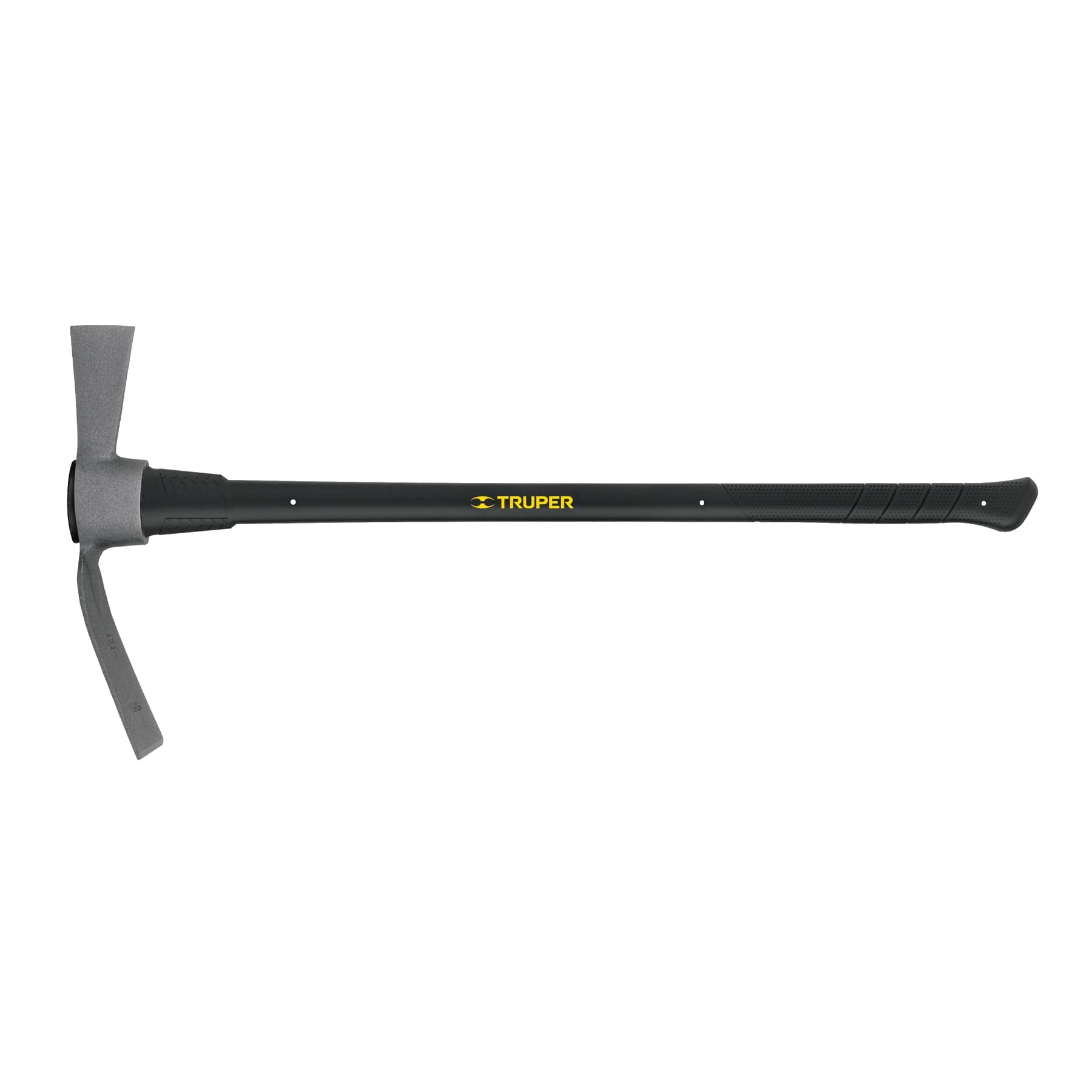
The heavy-swinging beast that turns buried roots into chopped mulch.
This is the tool you reach for when the ground laughs at a shovel. The 5-pound forged steel head gives you a one-two punch: a sharp vertical blade that slices through roots (buyers report it “cuts roots up to 3 inches”) and a wide horizontal mattock blade for excavating the hardest clay. That dual-head design lets you alternate between chopping and digging without swapping tools.
The 36-inch industrial-grade fiberglass handle resists rot, warp, and splinter, and the shock-absorbing grip dampens strike vibrations so your hands last through long sessions. That is a huge upgrade over wooden handles that can crack under extreme prying pressure. At 7.63 pounds, it is noticeably heavier than the 5.25-pound Truper Pick Mattock, but that extra weight powers deeper strikes with each swing.
Where it dominates
- 5 lb head drives deep into packed soil and clay on every swing.
- Sharp cutter blade severs roots up to 3 inches thick without dulling.
- Fiberglass handle with shock grip reduces joint fatigue significantly.
One thing to know
- Weight of 7.63 pounds can wear you out during a full day of overhead swinging.
Reach for it if: You have deep clay, buried roots, or need to clear land fast with pure striking force.
Look elsewhere if: You prefer a lighter, more controlled swing for precision trench work.
2. Bully Tools 5-Tine Broadfork (92627)

The ergonomic method that loosens subsoil without wrecking your back.
If you want to prepare a garden bed without destroying your soil structure, this broadfork is the answer. Its 10-gauge steel tines—about 3.4mm thick—are built from 100% Made In The USA steel, and the maker claims this design is durable against foreign competitors. You step on the 11-inch tines, your body weight drives them into the hardest ground, and then you simply rock the fiberglass handles back to aerate without lifting anything heavy.
Unlike a mattock that shatters soil, a broadfork lifts and loosens without inverting layers, which keeps the beneficial worm population happy and prevents that hardpan layer from forming. Owners mention it works excellently on compacted clay and root-filled soil, and the rubber grips on the fiberglass handles reduce hand fatigue. At 11.8 pounds it is heavy enough to bite in, but lighter than the 17.76-pound heavy-duty broadfork below, making it a more reasonable choice for longer sessions.
The strengths
- 10-gauge steel tines resist bending in rocky or rooty clay.
- Ergonomic rocking motion loosens 11 inches deep without lifting.
- Rubber grips and fiberglass handles with a wood core reduce fatigue.
Watch out for
- Bolt connection at handles can loosen; avoid over-torquing to prevent shearing.
Best for: Gardeners who want to aerate beds and break up hard clay without destroying soil life.
skip it if: You need to slice through buried tree roots or clear heavy brush, where a mattock is faster.
3. 56″ Heavy Duty Broadfork (YOWPSY)
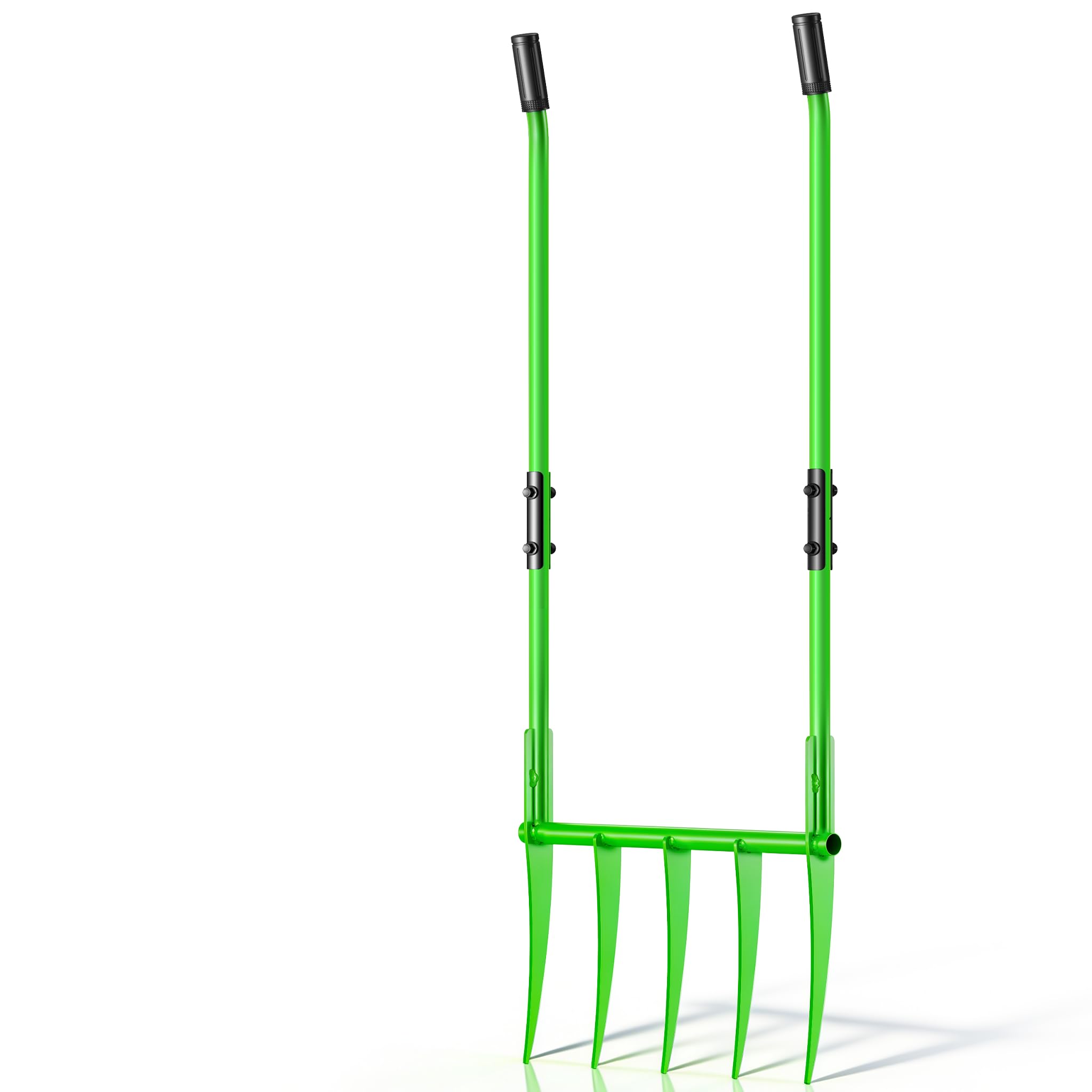
The heavyweight carbon-steel fork that demands muscle and returns power.
This broadfork is built for the toughest, rockiest clay you own. Its five tines are cut from a single steel plate and welded into one solid piece, so there is no wobble when you drive it in. At 17.76 pounds versus the Bully Tools broadfork at 11.8 pounds, that weight translates directly into penetrating force when you step on the 11-inch cambered tines.
The inward-folded handles give you better leverage for pulling back, and the rubber grips stay comfortable even during longer sessions. Customers note that a lightweight user can still use it effectively by wiggling side-to-side, and one person reported breaking up a clay-and-rock bed in two hours versus three days with a shovel. That said, a separate reviewer reported tines bending on golf-ball-sized rocks, so it has limits in extremely rocky soil.
What works
- Heavy 17.76 lb weight and cambered tines bite deep into compacted soil.
- Unibody steel construction resists flexing under extreme leverage.
- Inward-folded handles improve leverage and reduce fatigue.
The trade-off
- Tines can bend on medium-sized rocks in hard soil; not for boulder-filled ground.
Go for it when: You have dense, heavy clay and the body weight to drive deep tines without electricity.
Pass if: Your soil is full of golf-ball-sized rocks or if you need a lighter tool for daily use.
4. DEGGE Cordless Tiller Cultivator
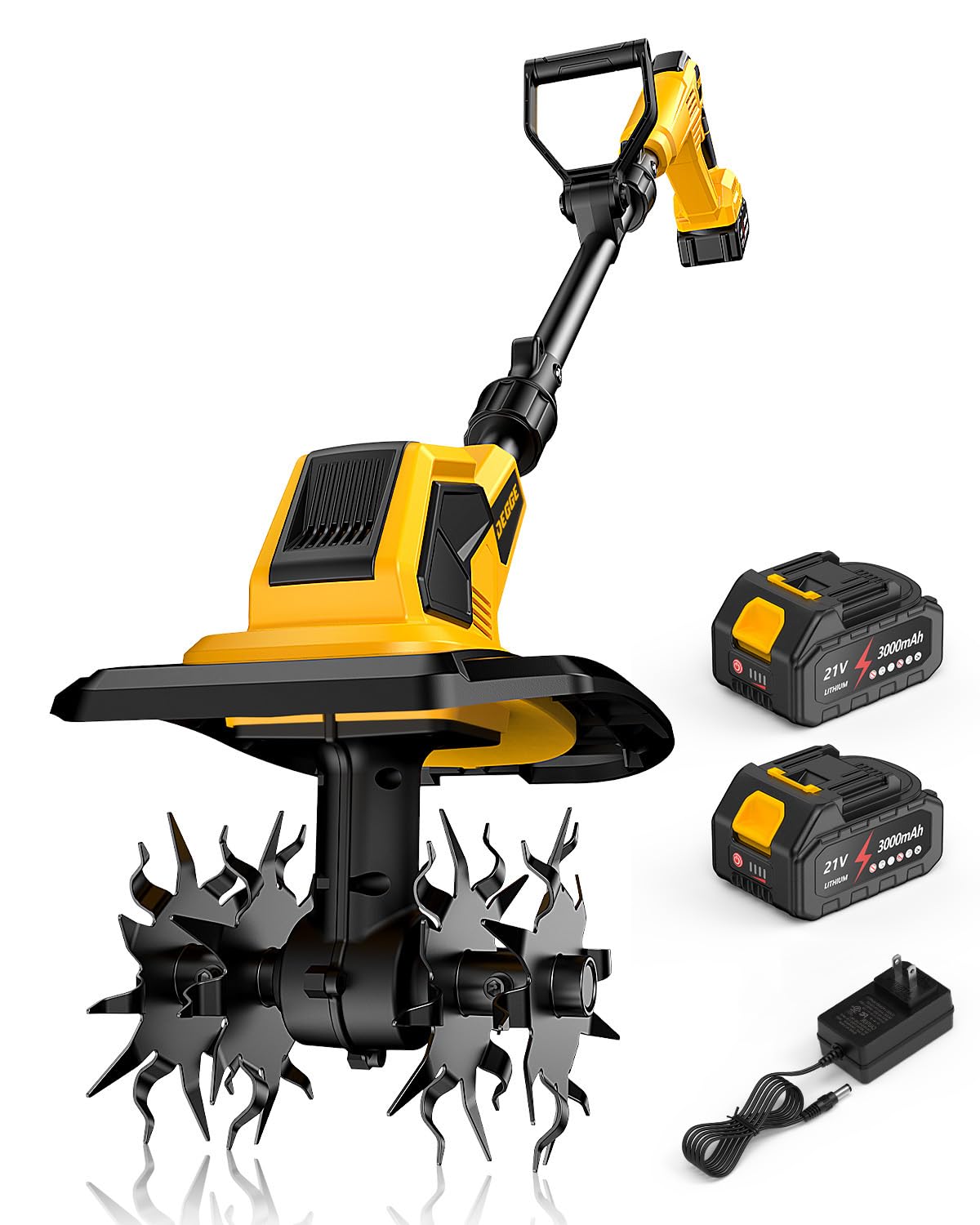
The no-gas starter that preps soil without the fumes or cord tangles.
When you want to open up a new garden bed without swinging a 5-pound head all morning, this cordless tiller does the heavy lifting. It runs on two 3.0Ah 21V batteries, while the SOARFLY tiller uses two 2.0Ah packs, and each battery delivers about 25 minutes of continuous tilling for a total of 50 minutes. The 48 hardened steel tines spin at high speed to dig 6.7 inches deep and 9 inches wide per pass, while the SOARFLY is listed at 6.6 inches deep.
The dual-button safety start prevents accidental activation, and assembly takes under 20 minutes. Because it is battery-powered, you get zero exhaust and much less vibration than a gas tiller. Reviewers point out it handles compacted dirt that has sat untouched all winter, and the battery charge indicator helps you track runtime. The smart gardening tip from the brand: water the hard soil a day ahead so the tines slip in without overworking the motor.
What sells it
- Dual 3.0Ah batteries give longer runtimes than cheaper 2.0Ah-pack tillers.
- 6.7-inch tilling depth breaks the hard crust in one or two passes.
- Quiet, fume-free operation suits small gardens and raised beds.
The catch
- Not powerful enough for rocky or extremely dense clay; wet the ground first.
Grab it for: Prepping medium garden plots, flower beds, and raised beds with less physical effort.
Skip if: Your soil is thick with rocks or you need the raw force of a heavy manual tool.
5. SOARFLY Upgraded Cordless Tiller Cultivator (TC-01)
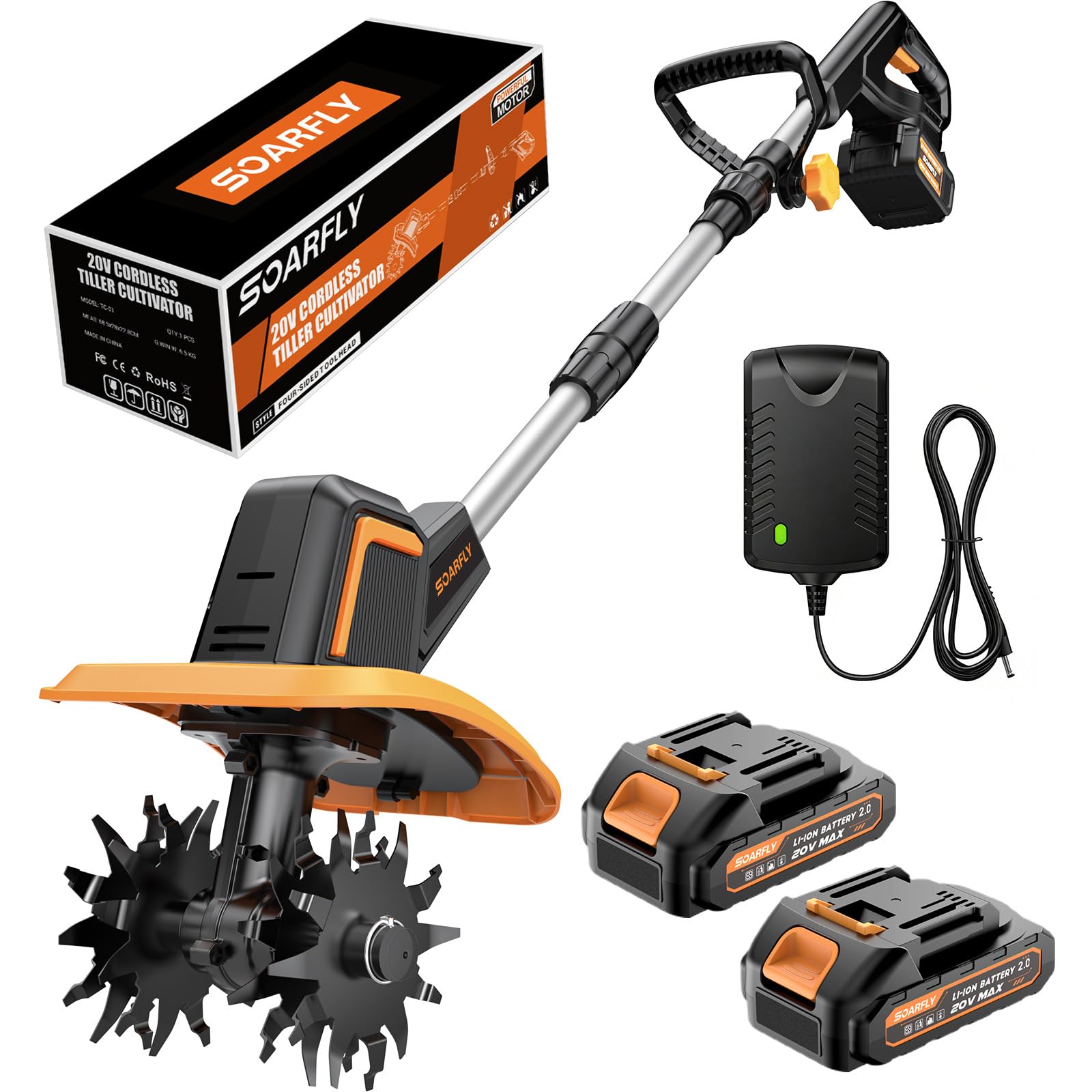
The lightweight electric starter that rips through soil without breaking a sweat.
If you are on a budget but want the speed advantage of a powered tiller, this model is worth a look. It packs a 360RPM pure copper motor and 48 steel tines in a compact frame, and it comes with two 2.0Ah batteries for extended runtime. The 9-inch tilling width and 6.6-inch depth are close to the DEGGE, and the two packs each hold 2.0Ah while the DEGGE uses 3.0Ah packs, so you will swap batteries more often on large jobs.
One honest catch from a buyer: “It only went down two inches in the 1st pass” on grassy soil, meaning you may need multiple passes to reach full depth on hard ground. Adjustable handle height and a customizable auxiliary handle reduce arm fatigue, and the dual safety switch prevents accidental startup. The orange plastic casing keeps the tool light, but it is not designed to handle large rocks without pausing to clear debris.
Why it earns a spot
- 360RPM pure copper motor provides solid tilling speed for small areas.
- Lightweight and portable with adjustable handles for different user heights.
- Dual 2.0Ah batteries offer up to 60 minutes total runtime (ideal for small plots).
The limit
- Batteries are smaller (2.0Ah vs 3.0Ah) compared to the DEGGE, requiring more swaps.
Choose it when: You want an affordable battery tiller for small garden beds and light cultivating.
Not for you if: You need deep, single-pass tilling in compacted clay or you have large areas to cover.
6. Truper Pick Mattock (TP 2 1/2F / 32655)
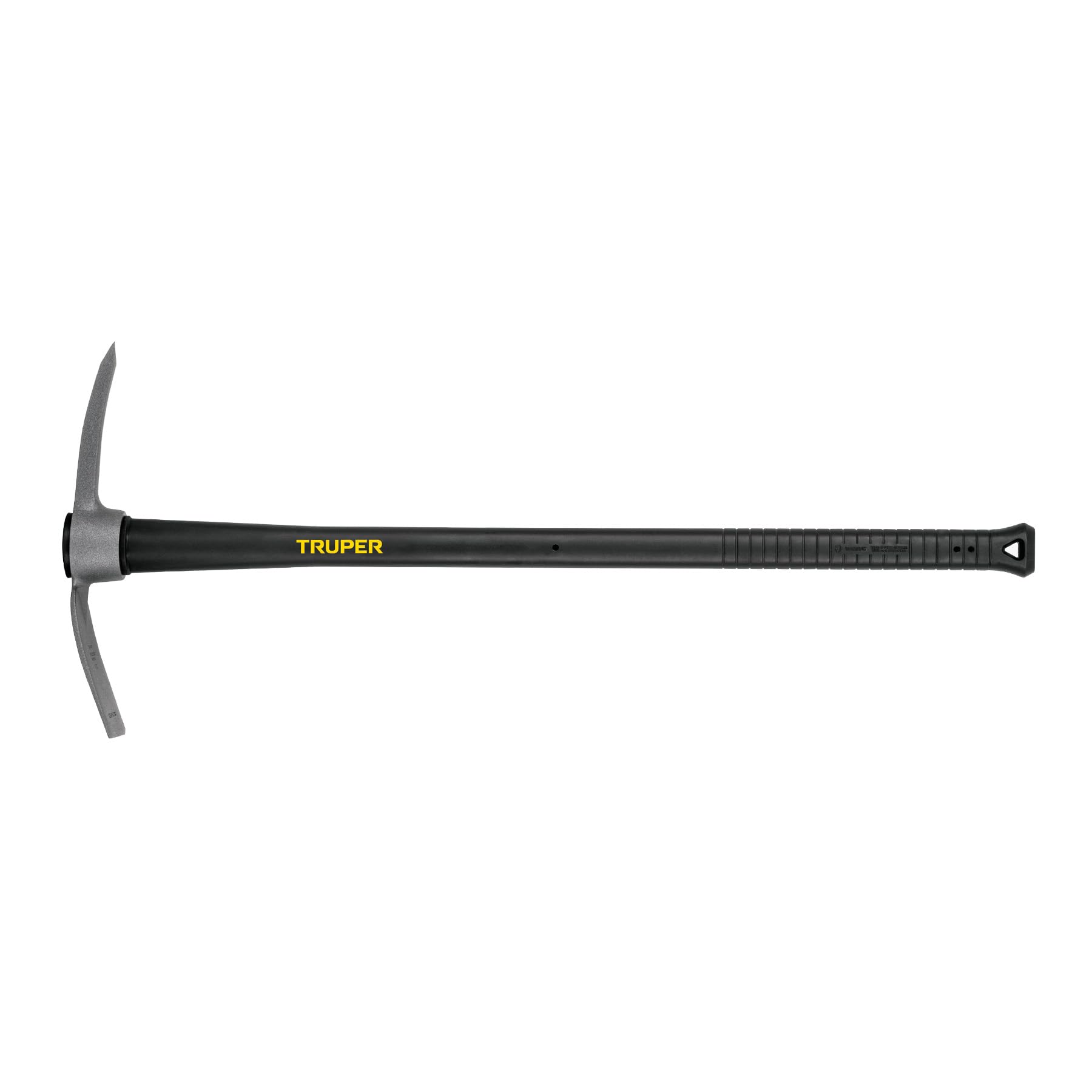
The lighter, more controlled strike that lets you work all afternoon.
Not every ground job needs the full 5-pound hammer. This pick mattock has a 2.5-pound head that is easier to swing for hours, and its design combines a pointed pick for prying rocks with a flat mattock blade for cutting roots. The 36-inch fiberglass handle is tough enough for industrial use, and the rubber cushion grip reduces hand fatigue during repetitive strikes.
One reviewer noted the 2.5-pound tool helped her dig a 3-4 foot wide, 12-inch deep hole in “2 hours vs 3-4 days” with a shovel. That is a massive time savings. The total weight of 5.25 pounds versus the 7.63-pound Truper Cutter Mattock helps you swing it faster and stay fresh longer. Just note that the fiberglass handle can burn a sliding hand, so gloves are recommended.
Why it stands out
- 2.5 lb head is ideal for smaller users or longer sessions without exhaustion.
- Pointed pick does a great job prying rocks out of clay soil.
- Fiberglass handle with rubber grip absorbs shock and resists weather.
The drawback
- Lighter head means less penetration on each swing compared to the 5 lb model.
Ideal for: Precision trenching, rock removal in clay, and anyone who wants a controllable swing for a full day of work.
Better options exist if: You need to slice thick roots or punch deep into extremely compacted ground.
Understanding the Specs
Head Weight and Impact Force
In a manual mattock, the head weight (measured in pounds) directly determines how deep each strike drives into the ground. A 5-pound head delivers more kinetic energy per swing, so it breaks up dense clay and cuts thick roots in fewer hits. A 2.5-pound head is easier to swing repeatedly and gives you more control, ideal for precision work like removing rocks from a trench. The right choice depends on your stamina and the soil’s density.
Tine Depth and Battery Capacity
For powered tillers, tilling depth (measured in inches per pass) tells you how deep the tines will cut in a single run. Deeper tines, like 6.7 inches, are better for breaking the hard crust in compacted soil. Battery capacity, measured in amp-hours (Ah), dictates how long you can work. A 3.0Ah pack stores more capacity than a 2.0Ah pack, meaning fewer swaps when you have a large plot to till. Always match the depth spec to the root depth of the weeds or grass you are trying to address.
FAQ
Will a mattock work better than a tiller on extremely hard clay?
How deep will a broadfork penetrate in compacted soil?
Can I use a cordless tiller on soil with rocks and roots?
What does head weight in a mattock actually mean for me?
How long do the batteries last in cordless soil tillers?
Is a broadfork better for my soil than a rototiller?
What does “cambered tines” mean and why does it matter?
Can I use a pick mattock for something besides breaking soil?
How do I maintain a fiberglass handle on a mattock or broadfork?
What is the best way to break new garden ground without a gas tiller?
Final Thoughts: The Verdict
For the majority of shoppers, the tool to break up hard soil winner is the Truper 5 lb Cutter Mattock because it combines a heavy 5-pound head with a shock-absorbing fiberglass handle and a sharp root-slicing blade — pure striking power for the toughest ground. If you want battery power for speed, grab the DEGGE Cordless Tiller for its 3.0Ah batteries and 6.7-inch tilling depth. And for soil aeration without wrecking your back, the standout is the Bully Tools 5-Tine Broadfork.
How We Picked
We do not accept paid placement. Every pick is matched to a real buyer and a real use-case; we do not hands-on test units.
Sources & Methodology
Specifications: manufacturer listings and product documentation. Review insights: verified customer reviews, as of July 2026. Pricing: not shown on this page (it changes often); check the current price via the retailer link.
As an Amazon Associate, Lawn Gear Lab earns from qualifying purchases. This does not affect which products we feature.