
Digging a straight, narrow trench for irrigation pipe, electrical conduit, or landscape edging demands a specific tool—not a general-purpose spade or a heavy mattock. The wrong blade width or handle geometry turns a straightforward project into hours of extra labor and back pain.
I’m Rikta — the co-founder and writer behind Lawn Gear Lab. My process for this guide involved comparing blade gauges, real-world customer reviews on soil penetration, and handle leverage ratings across dozens of models to isolate the seven best contenders for precise narrow trenching.
Whether you are burying drip line or installing low-voltage landscape lighting, this analysis of the current options reveals which tool for digging a trench delivers the best balance of durability, ergonomics, and cutting efficiency for your specific soil conditions.
How To Choose The Best Tool For Digging A Trench
Selecting a trenching shovel or edger comes down to matching blade shape, handle leverage, and material gauge to your specific digging environment. The following factors separate a tool that powers through compacted soil from one that fights you at every step.
Blade Profile and Width
The narrowest blades (2.5 to 4 inches) create cleaner walls and disturb less surrounding turf. A V-shaped tip concentrates force when penetrating hard ground, while a square-point design works better for squaring off trench ends. Wider blades (5+ inches) move more dirt per pass but sacrifice precision and require more effort in dense soil.
Handle Length and Grip Style
Longer handles (47-56 inches) reduce the bend angle at your waist, which lessens lower back strain during repetitive strokes. A D-grip or T-grip provides secure control when pulling soil upward; for deep trenching, a non-slip cushion grip on a fiberglass shaft maintains leverage in wet conditions. Avoid wooden handles in constantly moist environments—they crack and splinter faster than fiberglass.
Steel Gauge and Foot Platform
Gauge numbers tell you the thickness of the steel blade. A 13-gauge or 14-gauge blade offers a good trade-off between weight and durability for most residential soils. Thicker blades (11-12 gauge) handle rocky ground better but add weight. Wide foot platforms (2+ inches) let you apply full body weight without the blade twisting, a critical safety factor when cutting through root-heavy soil.
Quick Comparison
On smaller screens, swipe sideways to see the full table.
| Model | Category | Best For | Key Spec | Amazon |
|---|---|---|---|---|
| TABOR TOOLS J213A | Trench Shovel | Precise spot work with D-grip | 31-inch fiberglass handle | Amazon |
| Bully Tools 92719 | Trench Shovel | Durable narrow trenching | 3-inch 14-gauge blade | Amazon |
| Roamwild Multi-Digger | Edger/Fork | Lightweight soil cutting | Hybrid fork design | Amazon |
| Bully Tools 92251 | Lawn Edger | Sod cutting and edging | 12-gauge steel edge | Amazon |
| Truper 33436 | Trench Shovel | V-angle soil penetration | 4-inch 13-gauge blade | Amazon |
| HANTOP Square Spade | Flat Spade | Cutting through roots and ice | Sawtooth shovel head | Amazon |
| VNIMTI 4-Inch Shovel | Trench Shovel | Entry-level narrow digging | 4-inch V-shaped blade | Amazon |
In‑Depth Reviews
1. TABOR TOOLS J213A Trench Shovel

The TABOR TOOLS J213A earns the Best Overall position thanks to its purpose-built drain spade head with a sharp, pointed tip and squared sides that produce clean trench walls without disturbing surrounding soil. The head’s forward-turned step gives you a stable foot platform to push the narrow blade deep into compacted ground while maintaining precise control over the cut direction.
Its 31-inch fiberglass handle is shorter than several competitors, which reduces leverage over a deep trench but dramatically improves maneuverability when working in tight spaces like existing flower beds or sprinkler valve boxes. The non-slip D-grip accommodates a gloved hand comfortably and provides secure pulling power when clearing loosened soil from the channel.
Carbon steel construction with a rust-resistant powder coat ensures the blade stays sharp through multiple seasons of laying irrigation pipe or transplanting shrubs. Owner reports confirm the blade cuts through hard, rocky dirt with minimal effort and that the handle assembly remains solid even under repeated twisting motions.
What works
- Exceptional blade geometry for clean, straight trench walls
- Forward-turn step adds secure foot leverage without blade twist
- Lightweight enough for overhead work in narrow channels
What doesn’t
- Handle length limits leverage for taller users standing fully upright
- Not ideal for moving heavy, wet clay in large volumes
2. Bully Tools 92719 Trench Shovel
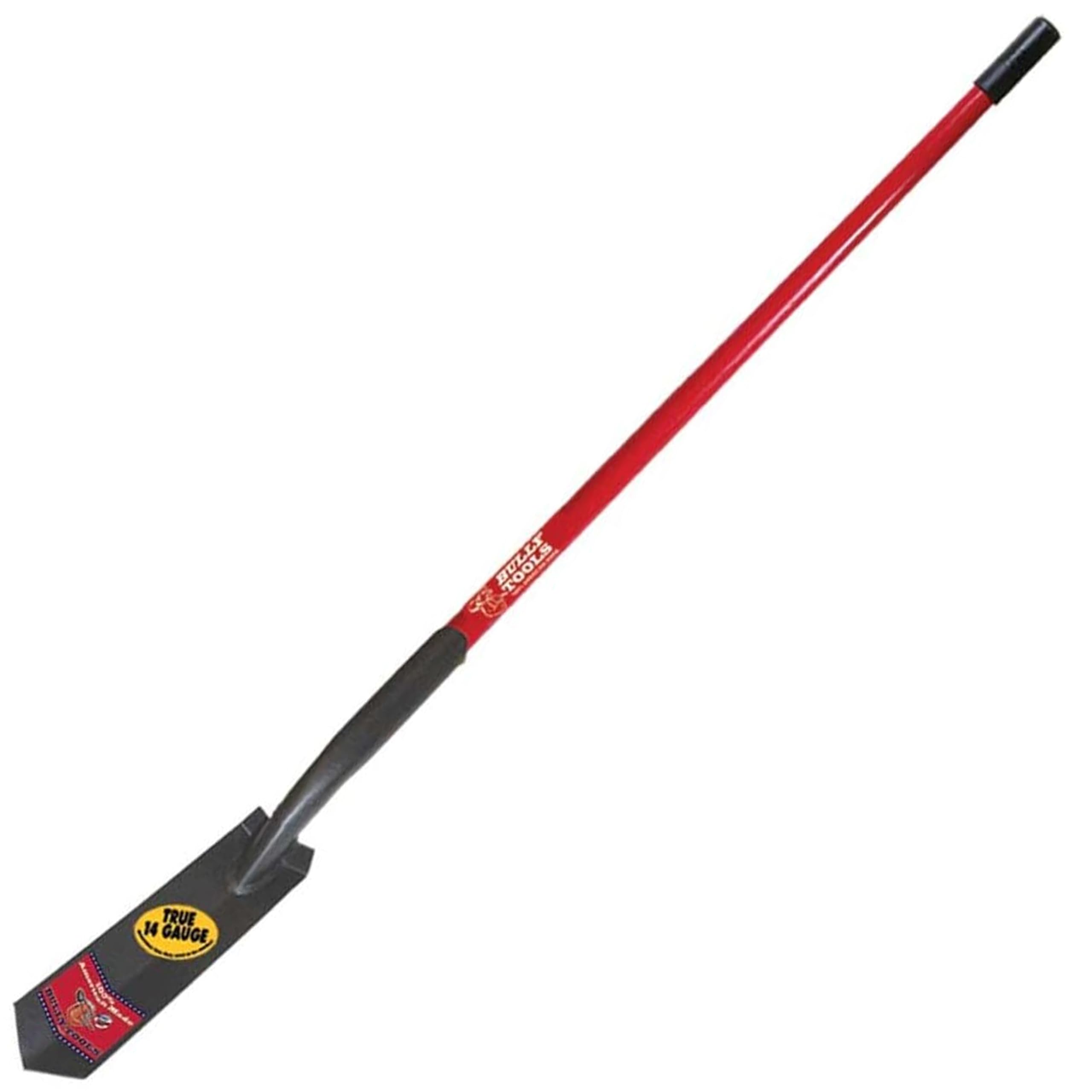
Bully Tools manufactures this trench shovel with 100% domestic steel at 14-gauge thickness, giving it up to 30% more toughness than imported equivalents. The 3-inch V-shaped blade concentrates force into a narrow channel, allowing it to slice through compacted soil and small roots without disturbing the surrounding trench walls.
The fiberglass handle is reinforced with a polyester veil to resist splintering, and the 47-inch overall length offers excellent leverage for users who want to dig while standing nearly upright. The powder-coated finish and rubber grip hold up well under repeated contact with damp earth, and the limited lifetime warranty backs the build quality.
Customer reports note that a previous unit survived ten years of light commercial use, and the blade weld held firm during heavy trenching tasks. The primary limitation is the 3-inch blade width—it excels at precise irrigation and conduit work but moves less soil per pass than a 4-inch option.
What works
- Thicker 14-gauge steel resists bending in rocky or root-heavy soil
- 47-inch handle minimizes back strain for average-height users
- Limited lifetime warranty reflects manufacturer confidence
What doesn’t
- 3-inch blade moves less dirt per pass compared to wider alternatives
- Weight increase from thicker steel may fatigue some users over long periods
3. Roamwild Multi-Digger Garden Edger

The Roamwild Multi-Digger blurs the line between an edger and a trenching fork with its diamond-pointed tines that incorporate clearing blades on the back edge. The hybrid design lets you dig into the soil, break up lumps with a twist, and clear the channel in a single motion—significantly reducing the number of strokes needed for shallow utility trenches.
Its AIR Light fiberglass shaft and dual-grip handle system give you two hand positions: a lower grip for precise edging work and a higher grip for maximum leverage when breaking hard ground. The extra-wide foot platforms provide a stable surface for applying body weight, and the serrated side edge cuts through turf and small roots efficiently.
Users report that the tool excels at edging along sidewalks and driveways and makes short work of cutting through bermuda grass when trenching for landscape wire. The lightweight design is a clear advantage over heavy steel edging shovels, though the unconventional shape may not suit users who want a classic trenching scoop for deep, continuous channels.
What works
- Dual-grip handle reduces fatigue during extended trenching sessions
- Wide foot platforms prevent blade twist on uneven ground
- Lump-clearing blades reduce secondary soil processing
What doesn’t
- Not designed for deep trenching beyond 6-8 inches
- Hybrid shape takes a short adjustment period for traditional shovel users
4. Bully Tools 92251 Lawn Edger

This 100% American-made lawn edger features a 12-gauge steel edge that is built to cut through tough turf, roots, and compacted soil without dulling. Its round-shaped blade and steel T-style grip provide excellent leverage for creating clean borders along sidewalks and flower beds while also functioning as a sod-cutting and light trenching tool.
The 61.5-inch overall length with a detachable 36-inch head gives taller users the ability to work without stooping, and the commercial-grade steel construction ensures it can withstand years of frequent landscaping use. The T-grip offers a secure hold, but unlike a D-grip, it may require more hand strength during extended trenching tasks.
Customer feedback consistently praises the factory-sharp edge and the tool’s ability to cut through thick grass and shallow roots with a single firm step. The main drawback for dedicated trenching is the blade shape—it works best for shallow V-channels and edging rather than deep, square-bottomed trenches.
What works
- Extremely durable 12-gauge steel resists bending and chipping
- Detachable head simplifies storage and transport
- Excellent leverage for tall users working on edging lines
What doesn’t
- Round blade is less effective for deep, square-bottom trenching
- T-grip can be less comfortable than D-grip during extended use
5. Truper TruPro 33436 Trenching Shovel

The Truper TruPro 33436 delivers a sharpened V-angled head that penetrates a variety of soils efficiently while a rivetless, crimped-steel collar ring ensures a solid connection between neck and handle. The 13-gauge blade offers a good middle ground between durability and weight, making it a strong candidate for medium-duty residential trenching projects.
The fiberglass handle with a non-slip cushion grip provides a comfortable hold in wet conditions, and the overall length of 56 inches reduces the need to bend over during operation. The sharpened edge smooths the bottom of the trench, which is a useful feature when laying conduit or pipe that requires a flat bed.
Users in sandy and gravelly soil report that the shovel is light enough for extended use while remaining sturdy enough to handle hard clay without flexing excessively. The main complaint is handle length—taller users may find the 48-inch shaft slightly short for a fully upright stance, and the non-removable label can be a nuisance.
What works
- Sharpened V-blade slices through mixed soil types effectively
- Riveless collar ring provides durable handle-to-blade connection
- Lightweight enough for all-day trenching without excessive fatigue
What doesn’t
- Handle length may feel short for users over 6 feet tall
- Label is difficult to remove and can peel off unattractively
6. HANTOP Flat Spade Shovel

The HANTOP square-point shovel distinguishes itself with a sawtooth blade designed to penetrate hard soil and break up hardened dirt clods. This feature makes it especially effective for trenching in areas with compacted clay or where you need to cut through thick turf and shallow roots.
The fiberglass handle and PP hand grip keep the tool reasonably light at 4.5 pounds, and the widened foot platforms provide secure control when driving the blade into stubborn ground. The 43-inch overall length helps with leverage, though it is shorter than many dedicated trenching shovels, which may require slightly more bending for taller users.
Customer reviews highlight the shovel’s ability to cut through “snowcrete” ice and banana tree roots, indicating the sawtooth edge is legitimately sharp and durable. The primary trade-off is that the flat square-point design is less specialized for maintaining narrow trench walls compared to a V-blade trenching shovel.
What works
- Sawtooth edge excels at cutting through roots and compacted soil
- Wide foot platforms provide stable force transfer
- Versatile for trenching, edging, and transplanting tasks
What doesn’t
- Square point is less precise for narrow, uniform trench channels
- 43-inch handle length may cause back strain for taller users
7. VNIMTI Trench Shovel

The VNIMTI trench shovel offers a 4-inch V-shaped blade made from high-carbon steel paired with a 56-inch fiberglass handle that significantly reduces bending and back stress. This combination creates an accessible entry point for homeowners who need a dedicated trenching tool without investing in premium-tier pricing.
The non-slip area on the top of the handle provides a secure grip even when wet, and the long shaft makes it suitable for average-height adults who want to stand as upright as possible during trenching. The V-shaped blade is suited for digging precise narrow channels for bubbler systems, shallow conduit, and small transplant holes.
User feedback notes that the narrow blade limits foot placement when stepping down, which can make trenching in hard-packed soil more physically demanding than wider alternatives. Some users also report that the shaft flexes more than they prefer under heavy load, which is a common trade-off at this tier.
What works
- Long 56-inch handle reduces back strain significantly
- V-shaped blade cuts clean, narrow channels in soft to medium soil
- High-carbon steel blade offers good durability for the tier
What doesn’t
- Narrow foot platform makes applying full weight difficult
- Shaft flexes noticeably under heavy load in compacted soil
Hardware & Specs Guide
Blade Gauge and Steel Type
The gauge number tells you the steel thickness; lower numbers mean thicker material. A 12-gauge blade is roughly 0.109 inches thick, while a 14-gauge blade is about 0.078 inches. For most residential trenching in loam or sandy soil, 13 or 14-gauge is adequate. If you consistently hit fieldstone or construction debris, step up to 12-gauge or look for 1050MN manganese steel which offers superior impact resistance without excessive weight.
Handle Length and Leverage
Handle length determines how upright you can stand while digging. A 48-inch handle suits users under 5-foot-10; 56-inch handles give taller diggers the mechanical advantage to pull soil without hunching. Fiberglass handles absorb vibration better than wood and do not rot in wet trenches. For deep trenching, avoid handles shorter than 43 inches unless you are working in tight spaces where maneuverability matters more than leverage.
FAQ
Is a trenching shovel better than a regular spade for digging a trench?
What blade width should I choose for laying 1-inch PVC conduit?
Final Thoughts: The Verdict
For most gardeners, the tool for digging a trench winner is the TABOR TOOLS J213A because its drain spade head cuts clean walls and the D-grip provides excellent control for precise channel work. If you want maximum durability for rocky soil, grab the Bully Tools 92719. And for lightweight shallow trenching and edging, nothing beats the Roamwild Multi-Digger.