
Cutting tree branches cleanly without damaging the bark or straining your arms requires a tool that matches both the wood density and branch height. Whether you face dry hardwood limbs or thick green growth, the wrong cutter can leave ragged wounds or force you onto an unsafe ladder — so choosing a tool with the right blade style, reach, and leverage ratio makes all the difference.
I’m Rikta — the co-founder and writer behind Lawn Gear Lab. After weeks of comparing blade alloys, ratchet mechanisms, telescopic reach ranges, and customer longevity reports, I built this guide to separate the tools that hold their edge from those that snap under pressure.
This deep analysis of seven manual cutters and pole saws represents the most thorough breakdown of the best tool for cutting tree branches, ranked by real cutting capacity, blade durability, and ergonomic design.
How To Choose The Best Tool For Cutting Tree Branches
Selecting a branch cutter isn’t about grabbing the longest handles you can find. Every tool has a sweet spot for wood diameter, green versus dead wood, and reach — and buying the wrong type means either mangling the branch or exhausting your arms on the second cut.
Bypass vs. Anvil: Which Blade Style Belongs in Your Hand
Bypass blades slide past each other like scissors, producing a clean edge that tree bark can seal quickly — ideal for green, living wood where you want the tree to heal without infection. Anvil blades crush the branch against a flat surface; they cut dead or dry wood effectively but can leave a bruised stump on living growth. If most of your cuts are live limbs under 2 inches, choose bypass. For clearing dead snags and dry hardwood, anvil serves fine.
Ratcheting: The Real Effort Multiplier
A single-step lopper requires full grip strength every time the handles close. A 4-gear ratcheting mechanism lets you squeeze in stages — the blade bites deeper with each pump — so you can sever a 2.5-inch dry limb without using a chainsaw. Look for models that specify the gear count (4-step is ideal) and test whether the ratchet engages reliably under load; cheaper ratchets skip teeth on dense wood.
Telescoping Reach and Handle Length
Fixed 33-inch handles offer maximum leverage for ground-level pruning, but telescoping arms that extend to 40 inches or more let you reach higher without climbing. However, extended poles add weight and flex — a 14-foot pole saw made of thin aluminum vibrates more than a reinforced epoxy resin model. For branches over 12 feet, a dedicated pole saw with a locking mechanism at the head beats a lopper every time.
Quick Comparison
On smaller screens, swipe sideways to see the full table.
| Model | Category | Best For | Key Spec | Amazon |
|---|---|---|---|---|
| FELCO F22 | Anvil Lopper | Professional daily use | 1.8″ cut, replaceable alloy blade | Amazon |
| LETYANGER 27ft Pole Saw | Pole Saw Set | Ultra-high branches | 27 ft reach, 65Mn steel blade | Amazon |
| Corona DualLINK 33″ | Bypass Lopper | Thick green limbs | 2″ cut, forged steel blades | Amazon |
| Kings County Tools | Bypass Lopper | Ratchet-assist green wood | 40″ telescopic, 2″ jaw | Amazon |
| STEELHEAD Gear-Bypass | Bypass Lopper | Shock-absorbing cuts | 40″ telescopic, 1.75″ cut | Amazon |
| GARTOL Ratcheting | Anvil Lopper | Dry hardwood pruning | 41″ telescopic, 2.5″ cut | Amazon |
| BlumeTrec Pole Saw | Pole Saw | High reach, light weight | 14.5 ft, Mn steel blade | Amazon |
In‑Depth Reviews
1. FELCO F22 Swiss Made Loppers
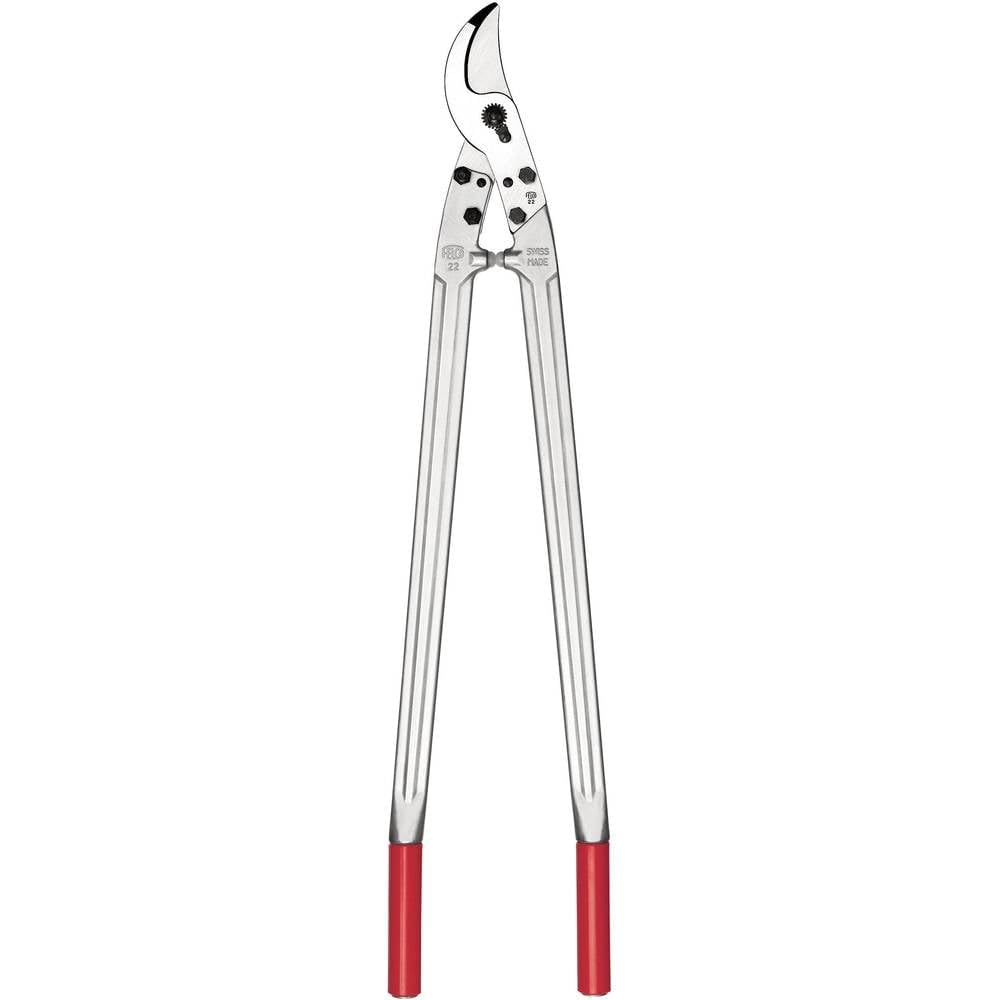
The FELCO F22 is the benchmark for arborist-grade branch cutting. Its 33-inch forged aluminum handles deliver exceptional leverage without the weight you’d expect from steel, and the anvil blade — capable of clean cuts up to 1.8 inches — uses an alloy steel edge that holds sharpness longer than any competitor in this roundup. A micrometric adjustment screw lets you dial in blade tension as the tool wears, extending usable life indefinitely.
Owners consistently report cutting 1- to 2-inch limbs for wood chippers and heavy pruning without muscle strain, and the rubberized grips include bumper guards that prevent hand pinching at full compression. Every part — blade, bolt, handle — is replaceable, which is why many users buy a second unit after realizing the first may outlive their shed.
The tradeoff is upfront cost and a 1.8-inch capacity that stops short of the 2.5-inch claims on cheaper ratcheting models. For the gardener who prunes daily or demands a tool that stays true to its alignment for decades, the F22 delivers consistent, fatigue-free performance that entry-level loppers cannot match.
What works
- Swiss-made alloy steel holds an edge across hundreds of cuts
- Forged aluminum handles offer maximum leverage at 3.3 pounds
- Fully rebuildable with manufacturer replacement parts
What doesn’t
- Cutting capacity limited to 1.8 inches — not for extra-thick deadwood
- Premium price places it beyond casual weekend pruners
2. LETYANGER 27ft Pole Saw Set

When branches sit 20 feet off the ground, the LETYANGER pole saw set eliminates the need for a ladder entirely. Its modular system includes seven epoxy resin poles that screw together to a maximum reach of 27 feet, plus two interchangeable heads — a 65Mn alloy steel saw for thick limbs and a scissor-style pruner for branches up to 1 inch. The pulley system on the pruner head redirects the pull force downward so you can cut overhead without fighting gravity.
Users praise the saw blade’s aggressive tooth geometry, which cuts through 3-inch palm fronds and rubber tree limbs without binding. The kit includes a spare saw blade with a sheath and a canvas carry bag, making transport and storage straightforward. At the full 27-foot extension the poles flex noticeably, but a 20-foot configuration (six poles) feels stable and manageable for most adults.
The main concern is that the scissor pruner head can twist loose during repetitive cuts unless you check the threaded connection. Some owners also note the bright yellow color, while intentional for safety, may not blend into every garden aesthetic. For the price, this is the most capable high-reach manual system available.
What works
- 27-foot reach tackles extremely tall branches safely from the ground
- 65Mn alloy steel saw blade resists rust and stays sharp for seasons
- Pulley-driven pruner head reduces pull effort on overhead cuts
What doesn’t
- Pole flex increases noticeably beyond 20-foot extension
- Pruner head can unscrew during repetitive use if not tightened fully
3. Corona DualLINK 33″ Bypass Lopper

Corona’s DualLINK MAXFORGED mechanism repositions the fulcrum inside the blade pivot, multiplying leverage without a ratcheting pawl — so every squeeze delivers the force of a much longer handle in a compact 33-inch package. The fully forged alloy steel blades resist bending under 2-inch hardwood loads, and the serrated edge grabs bark rather than sliding off. Cushioned grips with integrated bumpers absorb shock at the end of each cut, reducing hand and wrist fatigue during extended trimming sessions.
Long-time Corona owners describe these loppers as “indestructible,” with many reporting that a single pair handles everything from dense shrubbery to 2-inch tree limbs for years without blade deflection. The non-stick coating prevents sap and resin from gumming up the blades, keeping cuts clean and promoting faster healing on live branches.
The fixed 33-inch handles provide excellent leverage but do not extend — you cannot use these for high branches above shoulder level without stepping onto a platform. A few users upgrading from mid-range brands expected dramatic improvement and found the difference incremental rather than revolutionary, though build consistency remains well above average.
What works
- MAXFORGED fulcrum multiplies cutting force without ratchet complexity
- Forged alloy steel blades resist bending on dense 2-inch wood
- Shock-absorbing bumpers reduce joint fatigue during long sessions
What doesn’t
- Fixed 33-inch length cannot reach above shoulder height
- No ratchet mechanism for incremental force on extra-tough limbs
4. Kings County Tools Double Ratcheting Bypass Lopper
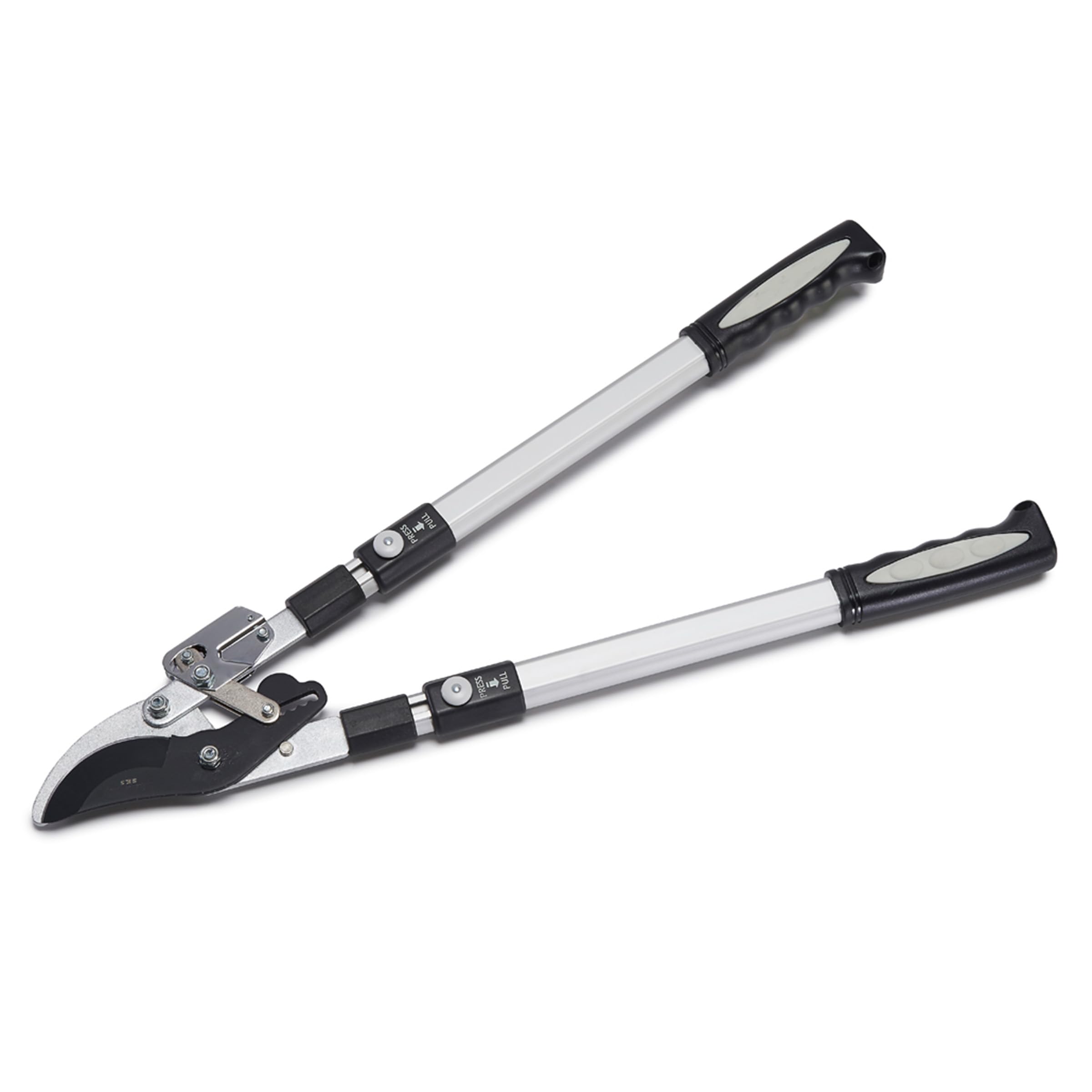
Kings County Tools engineered this bypass lopper specifically for green, living wood — the double ratcheting mechanism lets you pump the handles through a 2-inch limb in stages, converting each partial squeeze into deeper blade penetration. The telescopic handles extend from 26 to 40 inches with six pin-locked stops, meaning you can adjust leverage for thicker wood or longer reach without tools.
Reviews consistently highlight the cutting head’s substantial build — it feels heavier than equivalent ratcheting loppers but delivers reliable clean cuts on wet 1.5-inch branches where cheaper units would bind. The pinch-lock telescoping system stays secure through repeated cuts, unlike twist-lock mechanisms that slip under load. A buyer who broke the original blade on a dead branch reported that the company replaced the entire unit with responsive customer support.
The weight — nearly 4 pounds at full extension — is the primary drawback. Extended use overhead can fatigue shoulders faster than a lighter fixed-handle lopper. For ground-level pruning of thick green growth where ratcheting force matters most, this tool justifies its weight with dependable cutting action.
What works
- Double ratchet drive severs thick green limbs with staged force
- Telescoping handles lock securely at six pin positions
- Clean bypass cut promotes branch healing on live wood
What doesn’t
- Heavier than many fixed-handle loppers at nearly 4 pounds
- Blade durability reported as inconsistent on dead hardwood
5. STEELHEAD Gear-Bypass Limb & Branch Lopper

STEELHEAD’s gear-bypass lopper uses a compound ratcheting jaw that multiplies cutting force by a factor of three, letting you slice through limbs up to 1.75 inches with noticeably less effort than a standard bypass design. The telescoping arms extend from 27 to 40 inches using a tool-less locking collar, and the overmolded rubber handles fit a wide range of hand sizes without slipping — even in wet conditions.
Customers consistently call the locking mechanism “positive” and easy to operate, with the pin-lock design outlasting the twist-lock systems on previous tools they owned. The high-carbon steel blade carries a non-stick coating that resists sap buildup, and the US-based lifetime support — headquartered in Atlanta — provides peace of mind that budget imports cannot match. Several users report these loppers replace bulkier pruners with no loss in cutting power.
The cutting capacity of 1.75 inches means it won’t handle the thickest 2.5-inch dead branches that anvil-style cutters manage. Some users note that while the blade sharpness is adequate out of the box, it requires more frequent touch-ups than premium options like the FELCO F22. For the price, the gear-bypass mechanism and telescopic reach make this a smart mid-range investment.
What works
- Compound ratchet multiplies force 3x, reducing hand strain
- Telescoping handles extend to 40 inches for added reach
- Lifetime US-based customer support included
What doesn’t
- Cutting capacity limited to 1.75 inches
- Blade edge needs more frequent sharpening than premium steel
6. GARTOL Heavy-Duty Ratcheting Anvil Lopper
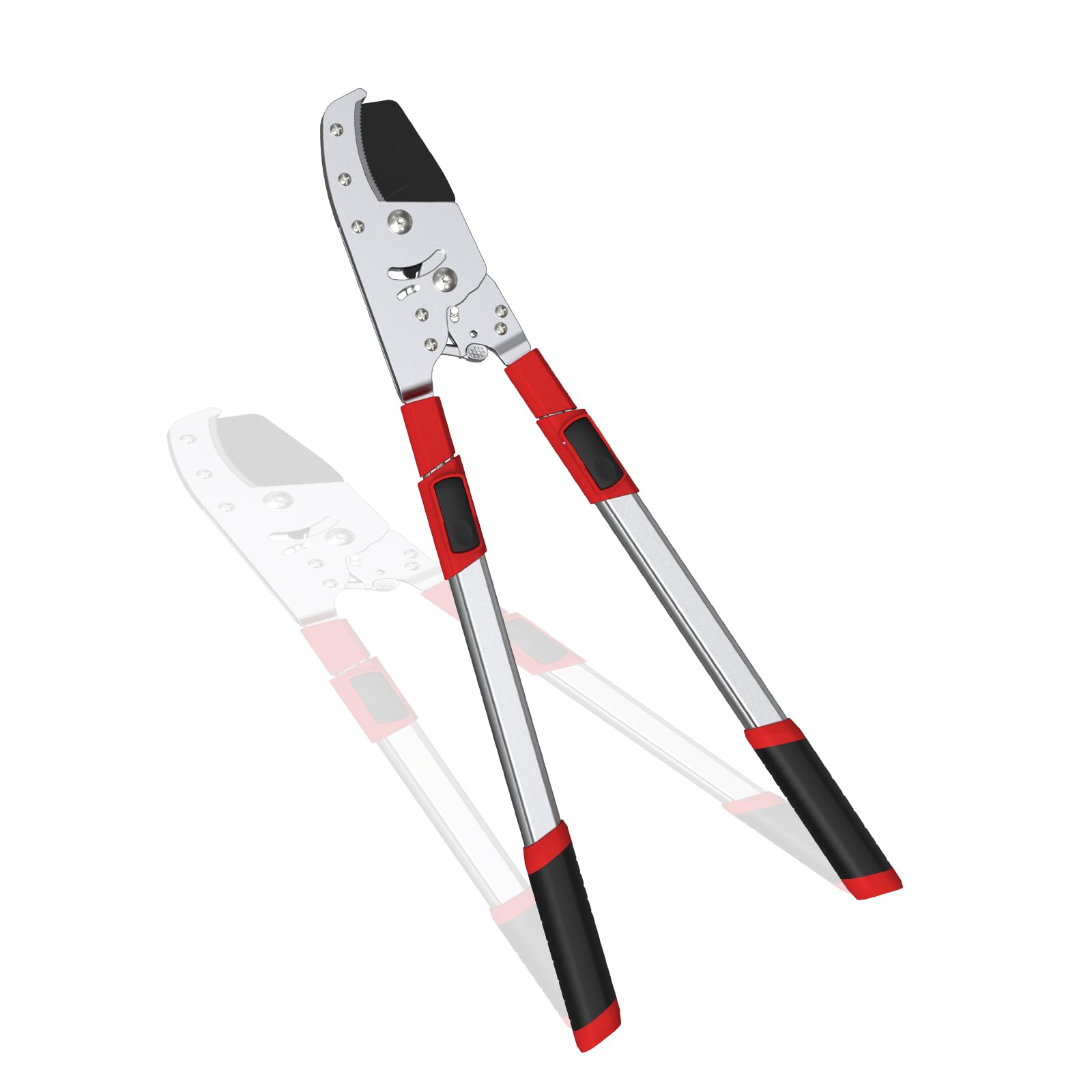
GARTOL’s anvil lopper stakes a strong claim for brute-force branch removal with a 4-gear ratchet system that chews through dry hardwood up to 2.5 inches thick — the largest capacity in this guide. The telescoping handles extend from 28 to 41 inches, giving both leverage and reach, while the high-carbon steel blade receives a heat treatment that keeps it sharp for initial heavy use. The TPR non-slip grips reduce hand fatigue during the multiple pump cycles needed to finish each cut.
Early reviews were enthusiastic about the blade’s out-of-box sharpness on 2-inch dry branches, and the ratchet mechanism allows users who dislike chainsaws to manage significant pruning tasks without power tools. The locking collar holds extension length reliably, and the aluminum construction keeps the weight manageable despite the oversized cutting capacity.
The reliability picture is mixed — several reports describe blade fracturing after light use on softwood, with the manufacturer responding by issuing replacement blades or full refunds. This suggests variable heat-treatment consistency on the steel. When the blade holds, performance is excellent for the price; when it fails, customer service has been responsive, but the inconvenience remains. For occasional pruning of thick deadwood on a tight budget, the raw capacity is unmatched.
What works
- 4-gear ratchet slices through 2.5-inch dry branches in stages
- Telescoping handles reach 41 inches for high or thick limbs
- Heat-treated high carbon steel blade is sharp out of box
What doesn’t
- Inconsistent blade hardness leads to occasional fracturing on small wood
- Anvil design bruises green wood, making it suboptimal for live pruning
7. BlumeTrec 14.5FT Pole Saw
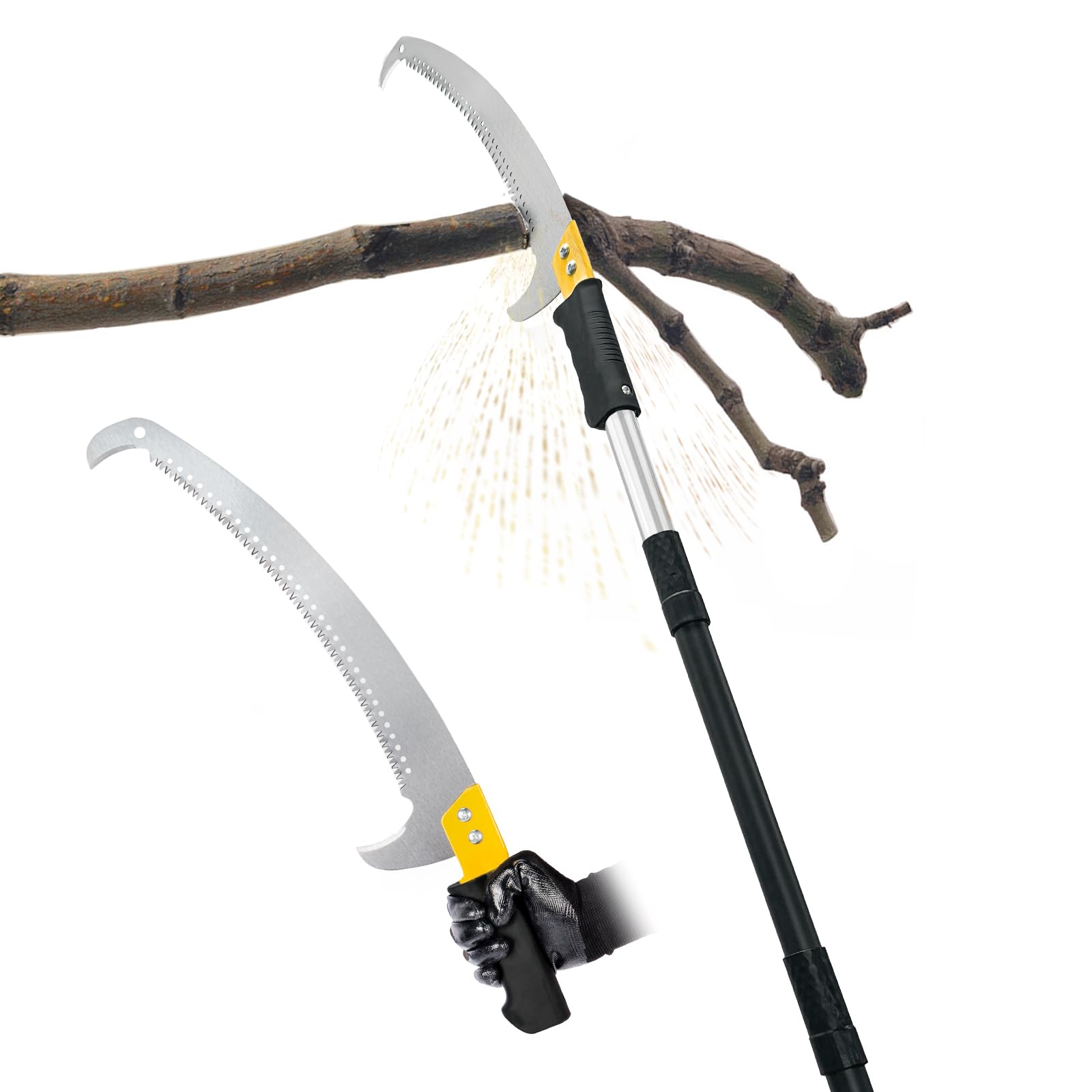
The BlumeTrec pole saw offers a lightweight, modular approach to high pruning at a budget-friendly price point. The manganese steel blade features a triple-sided edge with a double-sided barb that grips branches and cuts on both the push and pull strokes, making it faster than standard single-action saws. The stainless steel poles screw together to create a maximum working length of 14.5 feet, and the modular sections allow you to remove segments for close hand pruning or hatchet-style work.
Reviewers — including shorter users at 5’3″ — report that the saw cuts through 2- to 4-inch branches quickly and that the lightweight assembly makes extended overhead use feasible where a heavier pole would cause fatigue. The included mini tools and stickers add perceived value, and the powder-coated finish protects the poles from rust during outdoor storage.
Durability concerns emerge with the threaded connections: the poles can loosen during vigorous cutting if not tightened firmly, and the thin aluminum sections flex more than fiberglass alternatives at maximum extension. The blade remains functional after multiple trees but will eventually require replacement — no spare is included. For casual trimming of high branches on smaller properties, this saw delivers impressive clearance without requiring a ladder or a power tool.
What works
- Dual-sided barb cuts on push and pull strokes for faster trimming
- Lightweight modular design is easy for seniors and smaller users to handle
- 14.5-foot reach clears high branches without a ladder
What doesn’t
- Threaded pole sections can loosen during cutting if not fully tightened
- Blade needs eventual replacement; no spare included with the saw
Hardware & Specs Guide
Blade Steel Types — Mn Steel vs. High-Carbon vs. Alloy
Manganese steel (65Mn) offers superior rust resistance and edge retention for pole saw blades, especially in damp environments — it’s the preferred material for saws that stay outdoors. High-carbon steel (used in GARTOL) achieves excellent sharpness initially but can fracture if the heat-treatment process is inconsistent. Alloy steel (FELCO, Corona) delivers the best balance of hardness and toughness for lopper blades that must resist bending under 2-inch loads without chipping. For general use, alloy steel beats the others for longevity.
Ratcheting Gear Count and Mechanical Advantage
Every ratcheting mechanism uses a pawl-and-gear system that advances the blade deeper with each handle squeeze. A 4-gear system (GARTOL) provides four incremental bite stages, letting you cut through 2.5-inch wood with light hand pressure — but more gears mean more internal parts that can wear or jam. Double-ratchet loppers (Kings County) use two pawls for faster engagement. For cutting branches under 1.5 inches, standard single-step loppers are simpler and more reliable; for wood thicker than 2 inches, a ratcheting mechanism prevents arm fatigue.
Telescopic Locking Mechanisms — Pin-Lock vs. Twist-Lock
Pin-lock systems (STEELHEAD, Kings County) use spring-loaded buttons that seat into pre-drilled holes along the handle. They stay secure under load and never slip, but adjustment is limited to discrete positions spaced 2–3 inches apart. Twist-lock collars (common on budget poles) allow infinite adjustment but can loosen as you cut, causing the handle to collapse mid-swing. For heavy-duty loppers that will see thick branches, pin-lock is more reliable; for pole saws where smooth extension matters, a quality threaded twist-lock with a rubber O-ring can work if tightened properly with each use.
Handle Length vs. Cutting Force Physics
Longer handles multiply leverage — a 40-inch lopper delivers roughly 20% more cutting force at the blade than a 33-inch model with the same hand pressure, assuming identical pivot geometry. However, longer handles also increase the tool’s arc radius, making it harder to maneuver between tight branches. Fixed 33-inch handles offer the best combo of leverage and control for ground-level pruning. Telescopic models let you adjust on the fly but add weight and potential failure points at the locking joint. For most home gardeners, a fixed 33- to 36-inch handle paired with a sharp bypass blade handles 90% of branch-cutting tasks.
FAQ
Should I choose a bypass or anvil lopper for live tree branches?
How much ratchet force do I need for 2-inch thick branches?
Can a pole saw replace a lopper for high branches?
Final Thoughts: The Verdict
For most gardeners, the tool for cutting tree branches winner is the Corona DualLINK 33″ because its forged steel bypass blade and MAXFORGED leverage slice through 2-inch green limbs without needing a ratchet mechanism — the sweet spot of durability, cutting power, and manageable weight. If you want extended reach for high thick branches, grab the LETYANGER 27ft Pole Saw. And for professional daily use where blade replacement and rebuildability matter most, nothing beats the FELCO F22.