7 Best Summer Fertilizer For St Augustine Grass | Dark Green

Our readers keep the lights on and the potting soil stocked. As an Amazon Associate, I earn from qualifying purchases.

Specs are compiled from manufacturer listings and verified buyer reviews and can change over time — please confirm the key details on the product page before buying.

A quick note on sizes: not every pick below is the exact size or number you searched — where the exact one is scarce, the nearest same-type option that serves the same purpose is included so you get real, in-stock choices. Each pick’s actual specs are listed.

You want your St. Augustine grass to stay a deep green all through the hot months without going into shock from the wrong food. Feed it a fertilizer that is too strong and you risk scorching the blades. Pick one with the wrong nutrient balance and you feed the weeds or end up with a pale, patchy lawn. In summer heat, there is very little room for error. This guide cuts through the options to find the formulas that actually work for this particular grass.

I’m Rikta — the founder and writer behind Lawn Gear Lab. This guide is built by comparing the manufacturers’ published specifications and the patterns across verified customer reviews, so you get each pick’s real strengths and trade-offs instead of marketing spin.

You need a quick green-up, a slow-release feed for the whole season, or something organic to avoid burning in the sun — these picks cover all three. Here is the summer fertilizer for st augustine grass that earns a spot based on real specs and actual buyer results.

Our Picks at a Glance

Advanced 16-4-8 Balanced NPK Lawn Food
Best OverallAdvanced 16-4-8 Balanced NPK Lawn Food4.2★11,223 ratingsA well-rounded liquid feed with phosphorus and potassium that helped one buyer shrink bare spots even in a drought.Check Price on Amazon
PetraMax Neighbor’s Envy Grass Fertilizer
Also GreatPetraMax Neighbor’s Envy Grass Fertilizer4.3★606 ratingsA 7-in-1 liquid that turns your lawn dark green in under a week without the surge of growth that needs constant mowing. The big number on this one is the volume: 64 fluid ounces, giving you 8,000 square feet of coverage per bottle.Check Price on Amazon

How To Choose The Best Summer Fertilizer For St Augustine Grass

St. Augustine grass is a warm-season turf that thrives in heat, but it gets finicky in summer if the fertilizer is too strong or has the wrong nutrient balance. A high-nitrogen blast can cause rapid growth that invites disease, while a low-potassium formula leaves the grass vulnerable to drought and foot traffic. The best approach is matching the NPK ratio (Nitrogen-Phosphorus-Potassium) to what the lawn actually needs during the hottest months.

Look for a balanced or potassium-heavy NPK ratio

Nitrogen (N) drives green color and leaf growth, which you want — but too much pushes the grass to grow faster than it can root, making it weak in a drought. Phosphorus (P) is rarely needed in summer unless a soil test shows a deficit, so a “zero middle number” (like 28-0-0 or 8-0-0) is often fine. Potassium (K) is the summer secret weapon: it strengthens cell walls, improves drought tolerance, and helps the grass resist disease. A ratio with equal or higher potassium than nitrogen, like 10-0-20, is a strong choice for summer feeding.

Decide between liquid and granular

Liquid fertilizers, like the ones you attach to a hose, deliver nutrients almost immediately — you see a color change in a few days. They are great for a quick pick-me-up or for spot-treating yellow patches. Granular fertilizers release nutrients slowly, especially if they contain slow-release nitrogen, which keeps the lawn fed for weeks without a growth surge. Granulars also add organic matter to the soil over time. For summer, a granular with slow-release nitrogen reduces the risk of burning in high heat while keeping the grass steadily supplied.

Check the iron content

Iron is what gives St. Augustine that deep, dark green color without forcing extra leaf growth. A fertilizer that includes iron, especially in a liquid form, can green up a pale lawn in days. Many of the top-rated picks in this category list a specific iron percentage (like 2.5% or 6%), and buyers consistently report that iron-rich formulas produce the most visible results in summer, when heat stress often bleaches the color out of the grass. Iron also helps the lawn recover from minor nutrient deficiencies common in sandy or compacted soils.

Quick Comparison

Model Best For NPK Ratio Coverage Form Amazon
Advanced 16-4-8★ Best Overall Balanced nourishment + bare spot recovery 16-4-8 Liquid Concentrate Amazon
PetraMax Neighbor’s EnvyAlso Great Fast deep-green results 19-0-0 8,000 sq.ft. Liquid Concentrate Amazon
Maximum Green 28-0-0 Overnight green-up with attached sprayer 28-0-0 3,200 sq.ft. Liquid (Ready-to-use) Amazon
St. Augustine Grass Fertilizer (TPS) Targeted St. Augustine feed Low Liquid Concentrate Amazon
10-0-20 Emerald Lawn Fertilizer Stress & drought protection 10-0-20 4,500 sq.ft. Granules Amazon
Espoma Summer Revitalizer Organic summer feeding 8-0-0 5,000 sq.ft. Granules Amazon
SeedRanch St. Augustine 24-2-11 Large lawn season feed 24-2-11 12,000 sq.ft. Granules Amazon

In‑Depth Reviews

★ Best Overall

1. Advanced 16-4-8 Balanced NPK Lawn Food

Our pick — over 4★ from 11,000+ verified ratings; the strongest balance of quality and price.

16-4-8 NPK32 oz

A well-rounded liquid feed with phosphorus and potassium that helped one buyer shrink bare spots even in a drought.

Unlike the high-nitrogen-only formulas, this one gives you a full NPK profile of 16-4-8, meaning you get phosphorus (for root development) and potassium (for heat and drought tolerance) alongside the nitrogen. The liquid volume is 32 fluid ounces, about 946 mL, and you mix 3-5 fluid ounces per gallon of water — so a single bottle goes a long way if you are spot-treating or have a smaller lawn.

One verified buyer applied it in June and reported that it greened the lawn and shrank bare spots despite drought and heat, which is exactly the kind of stress recovery St. Augustine needs in summer. Another reviewer said it was “much better than any Scotts fertilizer I have ever used and it costs far less.” The formula includes seaweed and fish, which add organic matter to the soil. The catch, as a few buyers noted, is that the hose-end sprayer is not included, so you need your own or you dilute it manually — not quite as convenient as the attached-sprayer options.

Why it works

  • Contains phosphorus and potassium for roots and stress tolerance.
  • Includes seaweed and fish for organic soil enrichment.
  • Owners mention visible greening in under a week.

What to know

  • No hose-end sprayer included — needs separate mixing.
  • 32 oz bottle covers less area than the 64 oz PetraMax.

Choose this for: A balanced liquid feed that helps the lawn recover from summer stress while also encouraging root growth.

skip it if: You want an all-in-one bottle with a built-in sprayer for quick hose application.

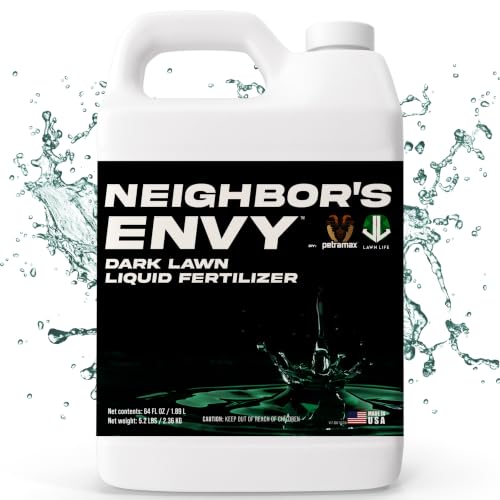
2. PetraMax Neighbor’s Envy Grass Fertilizer

7-in-1 Formula64 oz

A 7-in-1 liquid that turns your lawn dark green in under a week without the surge of growth that needs constant mowing.

The big number on this one is the volume: 64 fluid ounces, giving you 8,000 square feet of coverage per bottle. The PetraMax bottle contains 64 fluid ounces, compared to 32 fluid ounces for the Advanced 16-4-8 and the Maximum Green 28-0-0. The NPK analysis sits at 19-0-0, with 2.5% iron and humic acid blended in — that iron is what drives the deep color buyers rave about without relying purely on nitrogen to do it.

Buyers report that grass became thicker and darker green within 1-3 days of applying Neighbor’s Envy, and one reviewer noted their lawn was the thickest and darkest it had ever been by early June after combining it with overseeding. The formula also includes sea kelp and sulfur, which support root strength and drought resistance — useful for St. Augustine in peak summer heat. On the flip side, a few buyers found the price per bottle high for very large lawns, and noted that the fast green-up comes partly from staining, not just true greening, so reapplication every 2-4 weeks is needed for continued effect.

What stands out

  • 64 oz bottle covers 8,000 sq.ft. — doubles the volume of many competitors.
  • Contains 2.5% iron and humic acid for deep color.
  • Non-toxic, safe for pets and kids after drying.

The real trade-off

  • Fast color fades if not reapplied every few weeks.
  • Higher upfront cost per bottle than smaller liquid options.

Reach for this if: You want the fastest visible greening and the largest coverage per bottle, and you are willing to reapply monthly to keep the color.

Look elsewhere if: You need a slow-release granular that you can set and forget for 6-8 weeks.

Quick Green-Up

3. Maximum Green 28-0-0 High Nitrogen Liquid

28-0-0Attached Sprayer

The overnight green-up champion with a built-in sprayer — buyers saw results by the next afternoon.

This liquid comes ready to use with an attached sprayer that covers up to 3,200 square feet, and the mixing is zero: you hook it to the hose and spray. The NPK ratio is 28-0-0, with 70% of the nitrogen being quick-release for immediate uptake and 30% slow-release to keep feeding between applications. That rapid nitrogen hit is what produces the dramatic color change buyers describe.

One Florida buyer sprayed it around 5 PM and “by the next afternoon my entire front yard was already a very deep and beautiful green,” noting that a dead strip along the driveway sprouted new grass within days. Another reviewer mentioned it is pet-safe — you can let dogs back on the lawn right away — which matters for summer evenings. The attached sprayer makes it the easiest option to apply, but the 32-ounce bottle is small compared to the 64-ounce PetraMax, so if you have a larger lawn you will either need multiple bottles or a different solution. A minority of buyers said it did not make a difference, so results vary with soil condition.

Top strengths

  • Attached sprayer — no mixing, no extra tools.
  • 28% nitrogen with quick-release for instant greening.
  • Pet-safe once dry, no pellets for dogs to eat.

Keep in mind

  • 32 oz bottle covers just 3,200 sq.ft. — small for big lawns.
  • High nitrogen can push excess leaf growth if over-applied.

Best for: Spot-treating yellow patches or giving the lawn a fast, dramatic green-up with no mixing hassle.

Not ideal for: A full-season feeding plan — this is a booster, not a maintenance feed.

Specialist Pick

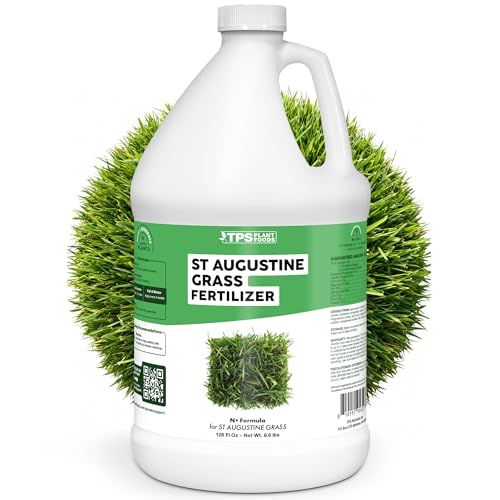
4. TPS St. Augustine Grass Fertilizer (1 Gallon)

128 ozSt. Augustine Specific

A gallon-sized liquid that is built specifically for St. Augustine, with a slower approach that keeps you cutting less.

This one stands out for its pure focus: it is labeled directly for St. Augustine grass, not just “all grass types.” The liquid volume is 128 fluid ounces — a full gallon, which is the biggest bottle in this list by liquid volume. That makes it a solid choice if you have a medium to large lawn and want a single bottle that will last several applications. It is designed to build strong roots for heat and wear resistance, which is exactly what St. Augustine needs in summer.

One buyer called it a “simple to use way to fertilize finicky St. Augustine,” noting that they water it down and use it twice as often to avoid over-watering, and that it produces a dark green color “just a little slower” — so less cutting and watering. Another reviewer said it greens up in about 4-5 days, especially on St. Augustine. The drawback is that the NPK ratio is not listed in the product specs, so you do not know the exact nutrient breakdown. A couple of buyers found it did not change a tough lawn situation, suggesting it works best when the lawn is not already severely stressed.

What you get

  • 128 oz per bottle — the largest liquid volume here.
  • Formulated specifically for St. Augustine grass.
  • Customers note it greens up in 4-5 days with less mowing.

A caution

  • NPK ratio is not disclosed in the product data.
  • Mixed results for severely stressed lawns.

Grab this for: A dedicated St. Augustine feed that gives you a gallon of liquid to work with, especially if you want a slower, steady green-up that reduces mowing frequency.

Pass if: You need the exact NPK numbers to match a soil test.

Stress Shield

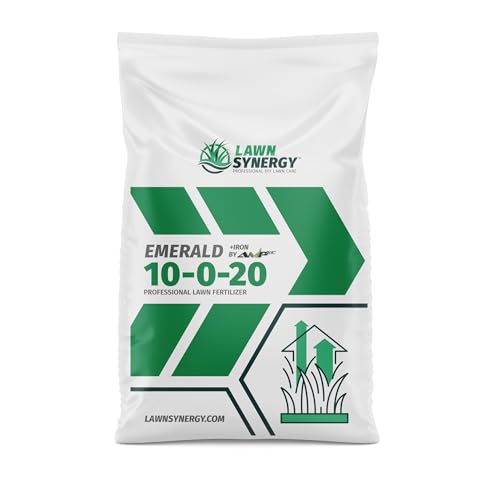
5. 10-0-20 Emerald Lawn Fertilizer (18 lbs)

10-0-20 NPKSlow-Release

A granular formula with double the potassium of nitrogen, built to protect St. Augustine from summer heat and disease.

This is the only pick here with a potassium-dominant NPK ratio: 10-0-20, plus iron and Nutrace micronutrients for deep green color. The idea is that potassium strengthens the cell walls and roots, making the grass more resistant to drought, disease, and wear — exactly what St. Augustine faces in summer. It covers up to 4,500 square feet from an 18-pound bag, and 45% of the nitrogen is slow-release, feeding steadily for up to 8 weeks without a growth surge.

Reviewers point out the lawn turned a deep green within a week, and one buyer mentioned they would definitely purchase again. The lack of phosphorus (the zero in the middle) is intentional — it is for lawns that already have enough phosphorus in the soil, so a soil test is a good idea before using this. The 18-pound bag is heavier than the liquid options, and you need a spreader to apply it, but the benefit is one application that lasts nearly two months, which is less work in the long run.

Why it stands out

  • Potassium-rich (20 K) to improve drought and disease resistance.
  • 45% slow-release nitrogen for up to 8 weeks of steady feeding.
  • Contains iron and micronutrients for deep green color.

Things to know

  • Requires a spreader and watering in.
  • Zero phosphorus — only use if your soil test shows sufficient P.

Pick this for: A low-maintenance, long-lasting summer feed that prioritizes stress protection over rapid growth.

Avoid if: You prefer liquid application or you need phosphorus for new sod or seeding.

Organic Choice

6. Espoma Organic Lawn Food Summer Revitalizer (30 lbs)

8-0-0 NPKOrganic Granules

An organic granular with iron and Bio-tone, designed to turn a yellow summer lawn green without harsh chemicals.

This is the only organic option in the lineup, made by the Espoma Company — a brand that has been in the natural organics space since 1929. The 30-pound bag covers up to 5,000 square feet, with an NPK of 8-0-0 that includes iron and their exclusive Bio-tone formula. It is approved for organic gardening and contains no sludges or toxic ingredients. The manufacturer says it will not burn lawns or leach out of the soil, which is a meaningful claim for summer heat when chemicals can scorch grass.

One reviewer who switched from chemical fertilizers said the Espoma Summer Revitalizer showed immediate improvement, and the real benefits increased the longer it was on, even through extreme temperatures. Another buyer noted the granules are “very large pieces,” so you need to adjust your spreader settings — the bag suggestions tend to be a bit light, according to that same reviewer. While the 8-0-0 ratio is lower in nitrogen than synthetic options, the trade-off is safety in heat and a slower, more natural greening process that builds soil health over time. Some buyers felt the price was high, but they also said it was worth it for the confidence and the lack of chemical runoff.

Best features

  • Organic, OMRI-listed for organic gardening.
  • Contains iron and Bio-tone for deep color without burn risk.
  • Safe for pets and won’t stain concrete.

What to watch

  • Large granules require careful spreader adjustment.
  • Lower nitrogen means slower green-up than synthetics.

Reach for this if: You prefer organic lawn care and want a summer feed that will not burn the grass or run off into the water table.

pass on it if: You need a fast, dramatic color change in under a week — the organic route takes more patience.

Big Lawn Feed

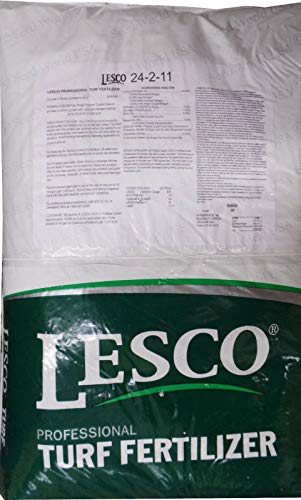
7. SeedRanch St. Augustine 24-2-11 Fertilizer (50 lbs)

24-2-116% Iron

A heavy-duty 50-pound granular with 6% iron, covering 12,000 square feet and turning neighbors green with envy.

This is the largest bag by weight in the list and the one with the highest coverage: 12,000 square feet from a 50-pound bag of granules. The NPK ratio is 24-2-11, which means high nitrogen for growth, low phosphorus (good if your soil already has it), and meaningful potassium for stress resistance. The standout spec here is the 6% iron content — the highest iron percentage of any pick in this guide — which is specifically listed for “excellent greening.”

Buyers consistently say it produces vigorous growth and a dark green color. One reviewer wrote, “My night is much greater with this fertilizer since I have St. Augustine grass. My neighbor’s envy my yard,” which echoes the sentiment of the PetraMax name. Another said the grass grew “vigorously with dark green color” after applying before heavy rain. The downside is the weight: a 50-pound bag takes some muscle to carry and load into a spreader, and you are committing to a large quantity. If you have a small lawn, you will have a lot left over. But for a large St. Augustine lawn, it is the most cost-effective per square foot.

What makes it big

  • 50 lbs covers 12,000 sq.ft. — the most coverage here.
  • 6% iron content for deep, dark green color.
  • 24-2-11 ratio with potassium for summer stress.

Consider before buying

  • 50 lb bag is heavy to transport and handle.
  • Too much for a small yard — better for 8,000+ sq.ft.

Ideal for: Large St. Augustine lawns where you want one bag to cover the whole yard with high iron for deep color.

Not for: Small lots or anyone who prefers liquid application over pushing a spreader.

Understanding the Specs

NPK Ratio — the nutrient balance

The three numbers on every fertilizer bag — for example, 16-4-8 or 28-0-0 — stand for Nitrogen (N), Phosphorus (P), and Potassium (K). Nitrogen is what gives the grass its green color and drives leaf growth. Phosphorus supports root development and is rarely needed in summer unless a soil test shows low levels. Potassium is the summer-critical nutrient: it helps the grass handle heat, drought, and disease. For St. Augustine in summer, a ratio with a higher third number (like 10-0-20) or zero phosphorus (like 28-0-0 or 8-0-0) is often the best bet because the grass needs stress protection more than root stimulation during the hot months.

Liquid vs Granular — how fast you want results

Liquid fertilizers (like the 32 oz or 64 oz bottles) deliver nutrients straight to the leaf and root zone almost immediately. You see a color change in 1-3 days. They are great for a quick fix or for spot-treating yellow patches. The trade-off is that the effect is shorter — you typically reapply every 2-4 weeks. Granular fertilizers (like the 18 lb, 30 lb, and 50 lb bags) release nutrients slowly, especially if they contain slow-release nitrogen. They feed the lawn for 6-8 weeks per application, which is less work overall. Granulars are better for building long-term soil health, but they need a spreader and watering in, and the results take a bit longer to show.

FAQ

Can I use a high-nitrogen fertilizer on St. Augustine in summer?
Yes, but with caution. High-nitrogen formulas like 28-0-0 can cause rapid leaf growth that makes the grass more susceptible to disease in humid summer weather. If you use one, water it in well and avoid applying when temperatures are above 95°F. Many St. Augustine owners prefer a balanced or potassium-heavy ratio for summer to avoid the growth surge.
How often should I fertilize St. Augustine in summer?
For liquid fertilizers, every 2-4 weeks is typical, as the effect wears off faster. For slow-release granulars, one application every 6-8 weeks is enough. Over-fertilizing can lead to thatch buildup and disease, so stick to the manufacturer’s schedule and never apply when the grass is under severe drought stress.
What does iron do for St. Augustine grass in summer?
Iron promotes deep green color without pushing leaf growth. It helps the grass recover from heat stress and nutrient deficiencies common in alkaline or sandy soils. Many summer fertilizers include iron specifically to maintain color during hot months when nitrogen alone can cause too much top growth.
Is organic or synthetic fertilizer better for summer St. Augustine?
Both work, but the choice depends on your approach. Organic fertilizers (like the Espoma Summer Revitalizer) break down slowly, feed the soil microbes, and have almost zero risk of burning the grass in heat. Synthetic formulas (like the 24-2-11 or the 16-4-8) deliver faster visible results but require careful watering and timing to avoid burn or runoff.
What is a “zero middle number” and why would I use it?
“Zero middle number” means the NPK ratio shows 0 in the phosphorus spot, like 28-0-0 or 10-0-20. Most established lawns already have enough phosphorus in the soil, and adding more can actually harm the environment by running off into waterways. A zero-P formula is fine for summer feeding if your soil test shows no phosphorus deficiency.
Can I mix liquid and granular fertilizer for summer St. Augustine?
Yes, and some homeowners do this. They apply a granular slow-release formula as the base feed (every 6-8 weeks) and use a liquid spray between applications for a quick color boost. Just watch the total nitrogen to avoid overloading the lawn. If the granular is high-nitrogen, skip the liquid booster for a few weeks.
Does St. Augustine need phosphorus in summer?
Rarely. Phosphorus is important for root development and new sod establishment, but for an established lawn in summer, the grass is focusing on leaf growth and stress survival. Unless a soil test shows a deficiency, a low-phosphorus or zero-phosphorus fertilizer is usually the better pick for summer feeding.
Will a high-potassium fertilizer prevent St. Augustine disease in summer?
A high-potassium formula (like 10-0-20) helps the grass build stronger cell walls and improve overall stress tolerance, which can reduce the severity of diseases like large patch or gray leaf spot. It is not a cure or preventive treatment, but a well-nourished lawn with adequate potassium is better equipped to resist and recover from disease pressure.
How do I apply granular fertilizer to St. Augustine without burning it?
Water the lawn lightly before applying, then spread the granules evenly using a broadcast or drop spreader set to the manufacturer’s recommended rate. After applying, water the lawn again with about 1/4 to 1/2 inch of water to wash the granules off the blades and into the soil. Avoid applying in the middle of a heatwave or when the grass is already heat-stressed and wilting.
What is the best time of day to fertilize St. Augustine in summer?
Early morning, before the sun gets intense, is the safest time. The grass is cooler, the soil is moist from overnight dew, and the fertilizer has time to absorb before the midday heat. Avoid late afternoon or evening applications, because the fertilizer sitting on damp grass overnight can encourage fungal growth.

Final Thoughts: The Verdict

For most people, the best summer fertilizer for st augustine grass is the PetraMax Neighbor’s Envy Grass Fertilizer because it combines the largest liquid volume, the highest coverage, and a proven 7-in-1 formula that shoppers say turns grass a deep, dark green in just a few days. If you want a slow-release granular that protects your lawn from summer stress and drought, grab the 10-0-20 Emerald Lawn Fertilizer. And for organic summer feeding without burn risk, the Espoma Organic Summer Revitalizer gives you confidence and a greener lawn in the long run.

How We Picked

We do not accept paid placement. Every pick is matched to a real buyer and a real use-case; we do not hands-on test units.

Sources & Methodology

Specifications: manufacturer listings and product documentation. Review insights: verified customer reviews, as of July 2026. Pricing: not shown on this page (it changes often); check the current price via the retailer link.

As an Amazon Associate, Lawn Gear Lab earns from qualifying purchases. This does not affect which products we feature.

Related Guides

Please use a real email you check. If it's fake or mistyped, your message won't reach us and we can't reply — wrong addresses are rejected automatically.