
A lawn with professional-grade stripes isn’t the result of luck or an expensive lawn service—it comes from choosing a machine with the right deck design, blade configuration, and weight distribution to bend grass in alternating directions. Too many homeowners assume any mower can produce a bold stripe, but the reality is that standard decks simply scatter clippings and leave no visual pattern. A dedicated striping mower uses a rolled deck edge or a weighted rear roller to lay the grass flat, creating the light-catching contrast that defines a manicured lawn.
I’m Rikta — the co-founder and writer behind Lawn Gear Lab. I’ve spent hundreds of hours dissecting manufacturer specs, comparing brushless motor torque curves, evaluating battery runtime under load, and analyzing thousands of owner reports to understand what separates a mower that fades from one that frames a lawn like a putting green.
Whether you manage a half-acre of tall fescue or a compact Bermuda lawn, this guide narrows the field to the machines that deliver repeatable, show-quality results. Here is the most researched breakdown of the best striping mower for any yard size and budget.
How To Choose The Best Striping Mower
Not every mower with a large engine or a high price tag can create the crisp, dark stripes that make a lawn look like a sports field. The striping effect comes from a combination of deck geometry, roller design, and blade speed rather than raw horsepower alone. Understanding these factors before you buy will keep you from overpaying for a machine that still leaves your lawn looking flat.
Deck design: flat versus rolled edge
A standard flat deck mower directs clippings out the side or into a bag, doing nothing to bend the grass blades. A striping mower uses a rounded or “rolled” rear edge that presses the grass down in one direction as you pass. That single design difference is what creates the alternating light and dark bands. If the mower lacks a built-in roller or a rolled deck lip, no amount of speed or blade sharpness will produce a stripe—you would need to add an aftermarket striping kit to the chassis.
Roller width and material
The rear roller is the primary tool for laying grass flat. Wider rollers (typically matching the deck width) distribute pressure evenly to prevent tire ruts and produce a uniform stripe. Rollers made from heavy-duty steel or composite polymers with a textured surface grip the turf without slipping, even on damp mornings. A thin, smooth roller may slide across the grass rather than pressing it down, resulting in faint, inconsistent lines.
Blade tip speed and cutting quality
A mower that tears the grass instead of cutting it cleanly will produce brown, ragged tips that ruin the stripe’s crisp appearance. High blade tip speed—measured in feet per second—determines how cleanly the blade severs each grass blade. Electric models with brushless motors often deliver higher and more consistent tip speeds than gas engines at idle, which is why many dedicated striping mowers are switching to battery platforms. Look for a mower that maintains its blade speed under load in thick grass, not just during a light pass.
Deck width and overlapping passes
Striping is a pattern game. A wider deck covers more ground per pass and reduces the number of turns, but it also makes the stripes wider. A 21-inch deck is the most common for residential yards because it produces a stripe width that looks proportional on a standard lawn. Wider decks (30 inches and above) are better suited to large, open properties where the visual proportion of the stripe still reads as intentional. A deck that is too narrow creates busy, cramped stripes, while an overly wide deck on a small lawn looks out of scale.
Quick Comparison
On smaller screens, swipe sideways to see the full table.
| Model | Category | Best For | Key Spec | Amazon |
|---|---|---|---|---|
| Toro 21-Inch 60V | Cordless Electric | Striping up to ½ acre | 21″ deck / SmartStow fold | Amazon |
| EGO Power+ LM2134SP-2 | Cordless Electric | Customizable Select Cut | 21″ deck / Dual 6.0Ah batteries | Amazon |
| WORX WR310 Vision | Robot Mower | Automated striped patterns | 8.7″ cut / RTK+AI Vision | Amazon |
| MOVA LiDAX Ultra 1000 | Robot Mower | Wire-free striping on ¼ acre | 8″ cut / 3D LiDAR+Vision | Amazon |
| Mammotion LUBA 3 1500H | Robot Mower | Steep-slope stripe patterns | 15.7″ cut / AWD 80% slope | Amazon |
| Segway Navimow X430 | Robot Mower | High-speed stripes on 1 acre | 17″ cut / 4WD Zero-Turn | Amazon |
| Husqvarna 410iQ | Robot Mower | Wire-free stripe automation | 9.4″ cut / EPOS RTK | Amazon |
| MechMaxx VBM78 | PTO Flail Mower | Ditch-bank and roadside striping | 78″ cut / Hammer flails | Amazon |
In‑Depth Reviews
1. Toro 21-Inch 60V Self-Propelled Electric Mower (21620)

The Toro 21620 proves a mid-range cordless mower can produce stripes that rival premium gas machines, thanks to its pro-level rolled-edge deck that lays grass down cleanly on every pass. The 21-inch cutting width is the sweet spot for residential lawns, allowing you to build a defined stripe pattern without making the lines too wide for the lot size. The 60-volt brushless motor holds blade speed well in thick grass, and the 50-minute runtime covers up to half an acre per charge—provided you keep the blade sharp and the grass dry.
The self-propelled system with adjustable speed control takes the fatigue out of long straight passes, and the 10-inch rear wheels provide the traction needed to maintain consistent stripe depth on uneven terrain. The SmartStow fold is a practical bonus for storage, but more importantly, the Recycler cutting system produces fine clippings that don’t clump on top of your fresh stripes. Owners consistently note that the battery holds up well during normal use, though a full yard larger than half an acre will require a second battery or a recharge break.
What keeps this mower from being flawless is the thin blade design and limited ground clearance. Some owners have reported the blade striking low-lying obstacles more easily than thicker gas-style blades, and the composite deck can flex under heavy side-loading on bumpy ground. The 4-hour recharge time means you cannot simply swap batteries and keep going—plan your mowing schedule accordingly. For the homeowner who wants show-quality stripes without the noise and maintenance of a gas engine, the Toro 21620 delivers the best balance of price, striping performance, and ease of use.
What works
- Pro-level rolled-edge deck produces deep, defined stripes
- Quiet brushless motor maintains blade speed under load
- SmartStow folding design saves garage space
What doesn’t
- Thin blade may chip on hidden rocks or roots
- Low ground clearance can scalp on uneven sections
- 4-hour charger means one-shot mowing per charge cycle
2. EGO Power+ LM2134SP-2 Select Cut 21-Inch
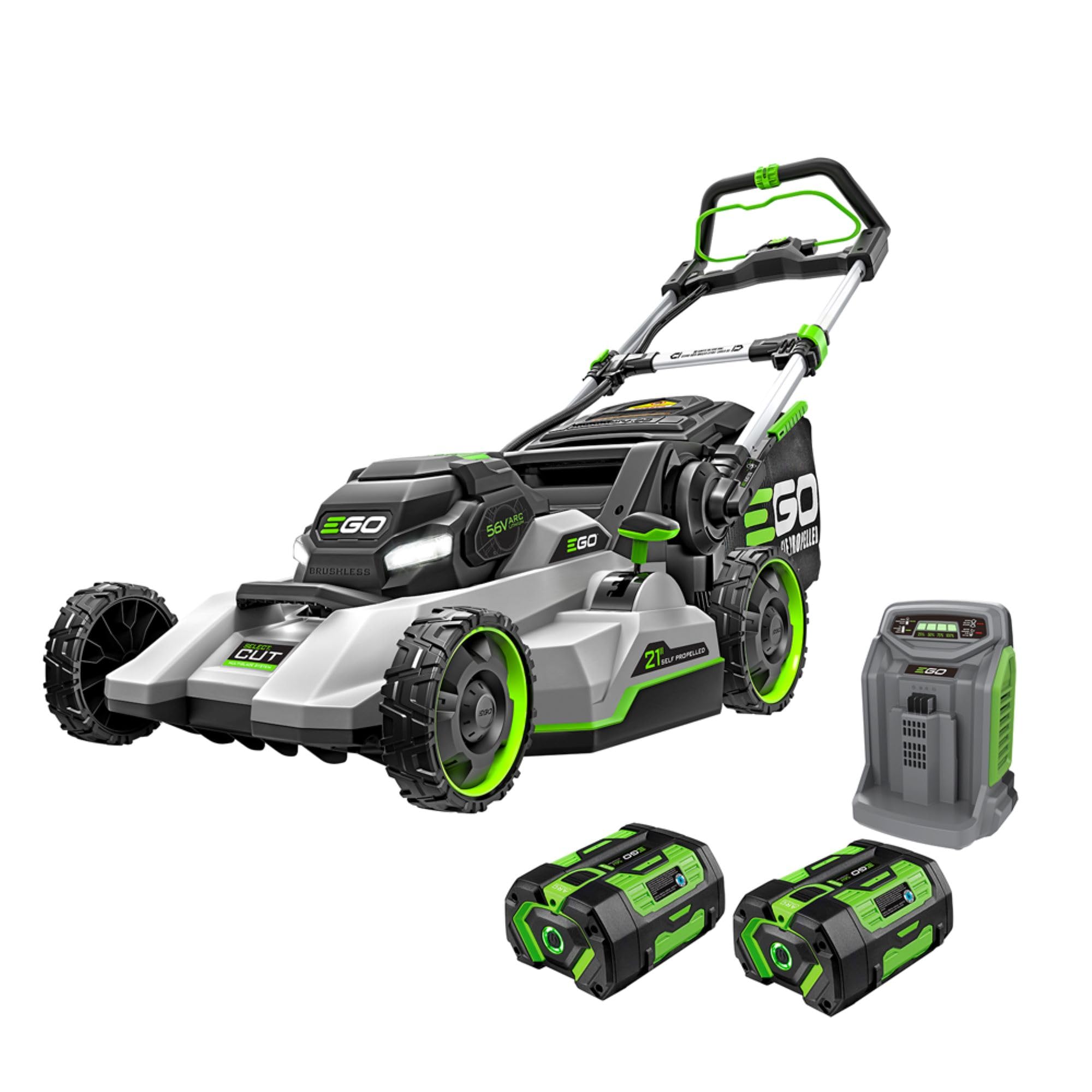
The EGO LM2134SP-2 combines a 21-inch deck with the Select Cut multi-blade system, letting you switch between a standard cutting blade and a high-lift blade that improves suction for more pronounced stripes. The 56-volt ARC Lithium platform is one of the most mature in the cordless space, and with two 6.0Ah batteries included, you get up to 100 minutes of runtime—enough to stripe a full half-acre without stopping. The Tough Drive self-propelled technology gives you finger-tip speed control from 0.9 to 3.1 MPH, which is ideal for maintaining a consistent pace during long stripe passes.
The eight-position height adjustment from 1.0 to 4.0 inches lets you fine-tune your cut for different grass types, and the LED headlights enable early-morning or evening striping sessions. Owners report that the high-lift blade dramatically improves the stripe definition compared to the standard mulching blade, making this mower a serious contender for anyone who wants both striping and bagging flexibility. The rapid charger refills a depleted battery in under an hour, so you can rotate between the two packs for continuous work on larger lawns.
The main drawbacks are weight and maneuverability. At 96 pounds, this is a heavy mower, and the rear-wheel drive requires you to disengage the motor when turning to avoid scuffing the turf. The thumb-activated “go forward” paddle can cause hand fatigue during extended use, especially if you are making frequent direction changes to create a checkerboard pattern. For the dedicated lawn enthusiast who values battery longevity and blade customization over outright weight savings, the EGO LM2134SP-2 is a premium all-around striping machine.
What works
- Select Cut blade system improves stripe suction with high-lift option
- Dual 6.0Ah batteries provide up to 100 minutes runtime
- Rapid charger refills battery in under 60 minutes
What doesn’t
- Heavy 96-pound chassis is tiring to maneuver
- Rear-wheel drive resists tight turning on stripes
- Thumb paddle can cause hand fatigue during long sessions
3. WORX WR310 Vision Cloud Robot Mower
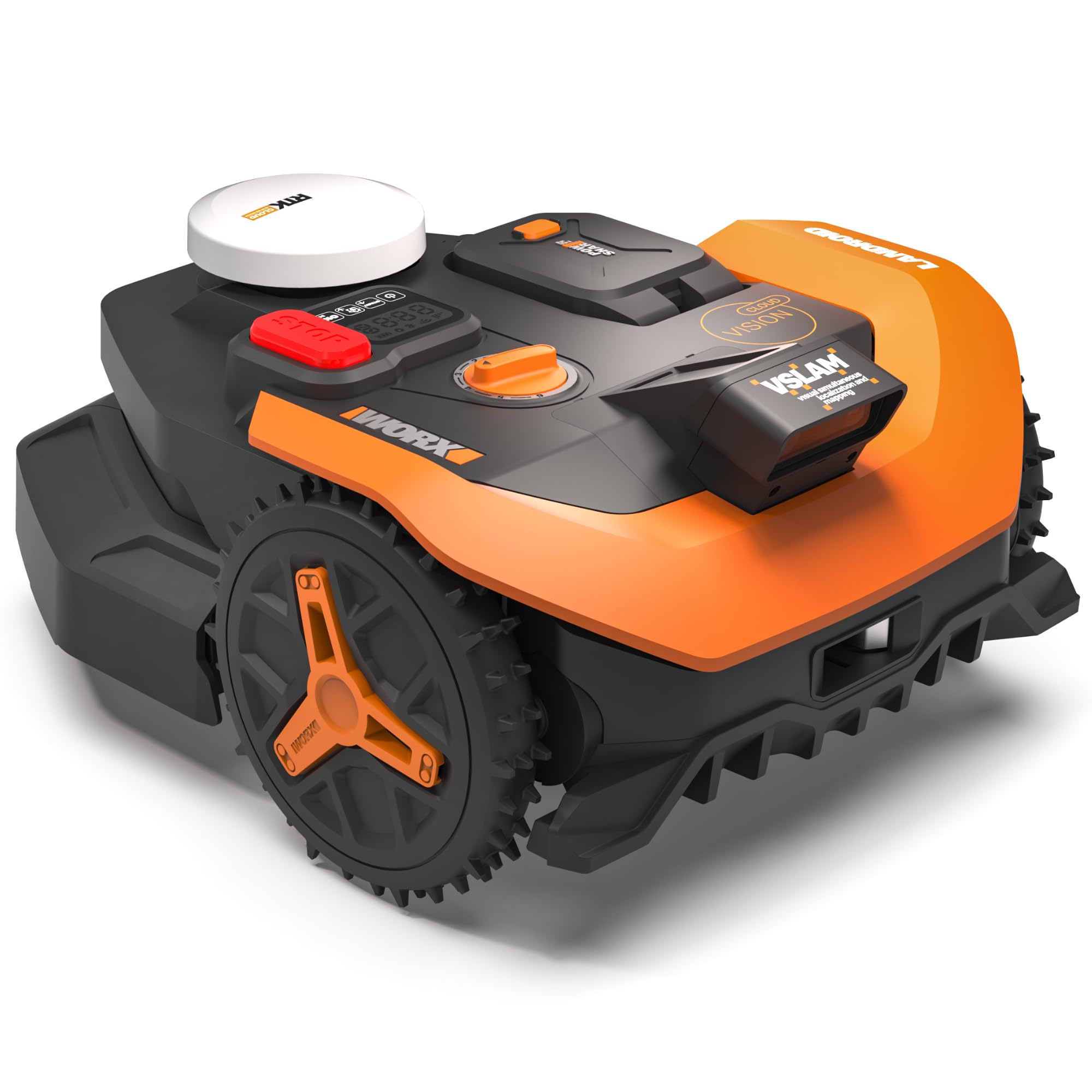
The WORX WR310 Vision Cloud is a wire-free robot mower that uses RTK cloud positioning and AI vision to mow in striped, checkerboard, diamond, or natural patterns—all managed from the app. The 8.7-inch cutting width is narrow by push-mower standards, but the robot compensates by mowing frequently (daily or every other day) to maintain a consistent stripe appearance. The centimeter-level RTK accuracy ensures that each pass aligns with the previous one, creating the uniform pattern that manual striping aims for but often misses due to human error.
Vision AI handles object avoidance using a neural network that processes up to 10 trillion operations per second, so the robot can navigate around sprinklers, toys, and flower beds without losing its stripe alignment. The auto-mapping feature analyzes your lawn’s shape and boundary types, then generates a mowing path that covers the entire area with smooth, parallel passes. Owners report that after the first two learning mows, the robot settles into a reliable pattern that leaves visible stripes across the entire lawn.
The biggest hurdle is the initial setup. The robot requires a dedicated 2.4 GHz wireless network and a 20-minute firmware update before it can start mapping. Several owners found the setup frustrating enough to consider returning the unit, though those who persisted through the process are overwhelmingly satisfied with the results. The 80-minute battery life is adequate for a quarter-acre but will require a return-to-base recharge for larger spaces. If you want hands-off stripings and are willing to invest an afternoon in the initial configuration, the WORX WR310 delivers consistent patterned results.
What works
- RTK-accurate straight passes create repeatable stripe patterns
- AI vision avoids obstacles and maintains pattern integrity
- Wire-free installation with auto-mapping convenience
What doesn’t
- Complex setup with mandatory firmware update and 2.4GHz network
- Narrow 8.7-inch deck requires frequent mowing for visible stripes
- Battery life requires recharge on yards over 0.25 acre
4. MOVA LiDAX Ultra 1000 Robot Mower
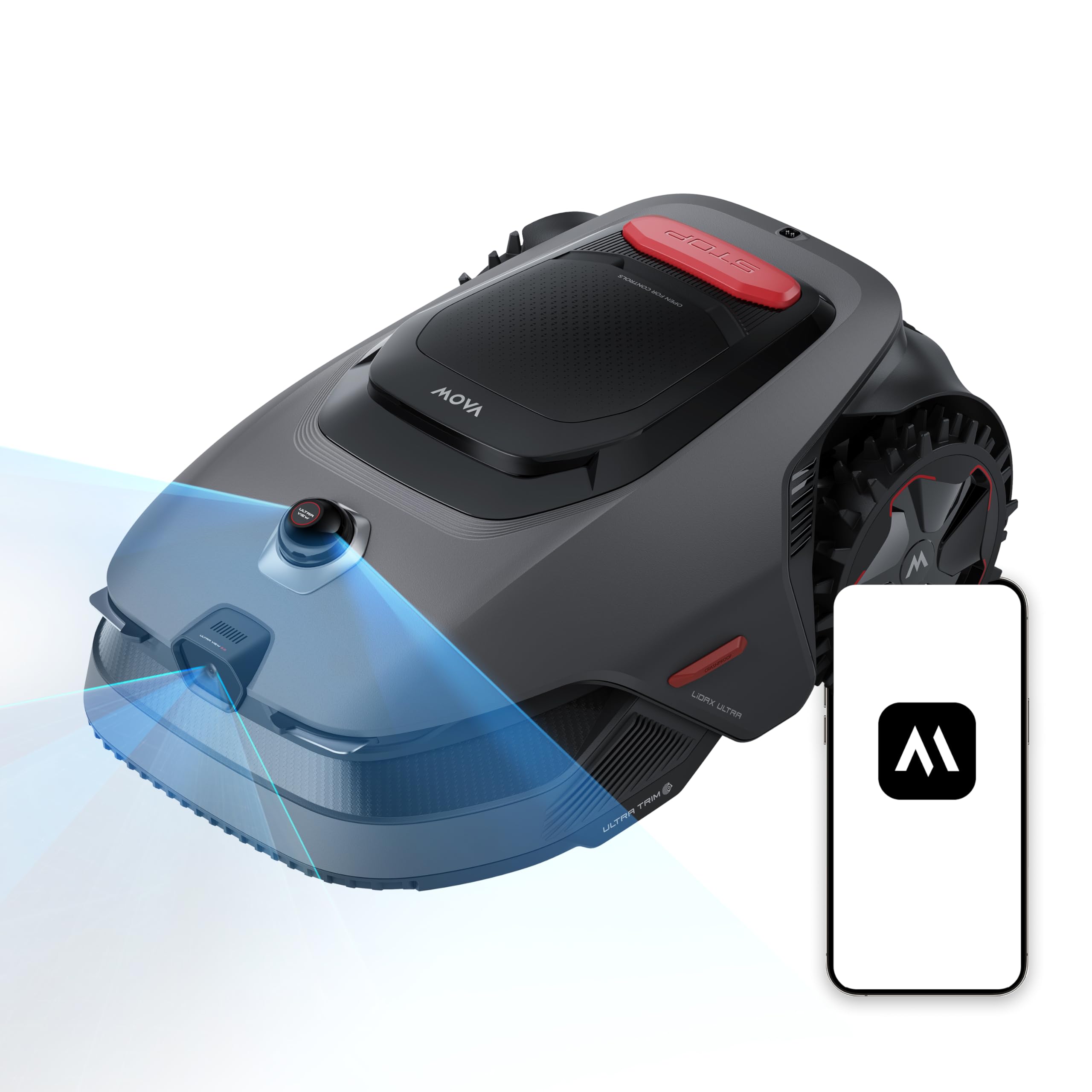
The MOVA LiDAX Ultra 1000 is a wire-free, RTK-free robot mower that relies on 360° 3D LiDAR and AI vision to create its own maps with centimeter accuracy. The absence of an RTK base station means you can set this mower up in about 20 minutes without burying wires or installing satellites, and the LiDAR works reliably even in total darkness for nighttime mowing. The smart U-shaped path planning covers the lawn in systematic passes that result in even striped lines rather than random wandering.
The UltraTrim 1.0 movable disc allows the mower to cut within two inches of walls and raised edges, drastically reducing the manual trimming you would typically need to maintain a clean stripe border. The off-road wheels and rear-wheel drive handle slopes up to 45%, and the IPX6 waterproof rating means you can hose the unit off after dewy mows. The 60-minute battery life covers a quarter-acre on a single charge, though larger yards will trigger an automatic return-to-base and resume sequence.
The app supports up to 150 managed zones and dual independent maps, which is excellent for properties with front and back yards separated by a driveway or fence. Some owners note that the movable disc reduces but does not eliminate all edge trimming, and the deep-spiked wheels can pick up mud if the ground is wet. The anti-theft protection with real-time GPS tracking adds peace of mind for a mower left in the yard. For buyers who want a truly wireless robot that can stripe in the dark without a reference station, the MOVA LiDAX Ultra 1000 is the most convenient option.
What works
- True wire-free, RTK-free setup with 3D LiDAR mapping
- UltraTrim disc cuts within 2 inches of edges for clean stripe borders
- Operates reliably in total darkness for nighttime pattern mowing
What doesn’t
- Some manual trimming still needed along complex borders
- Deep-spiked wheels collect mud in wet conditions
- 60-minute battery requires return-to-base on larger lawns
5. Mammotion LUBA 3 AWD 1500H
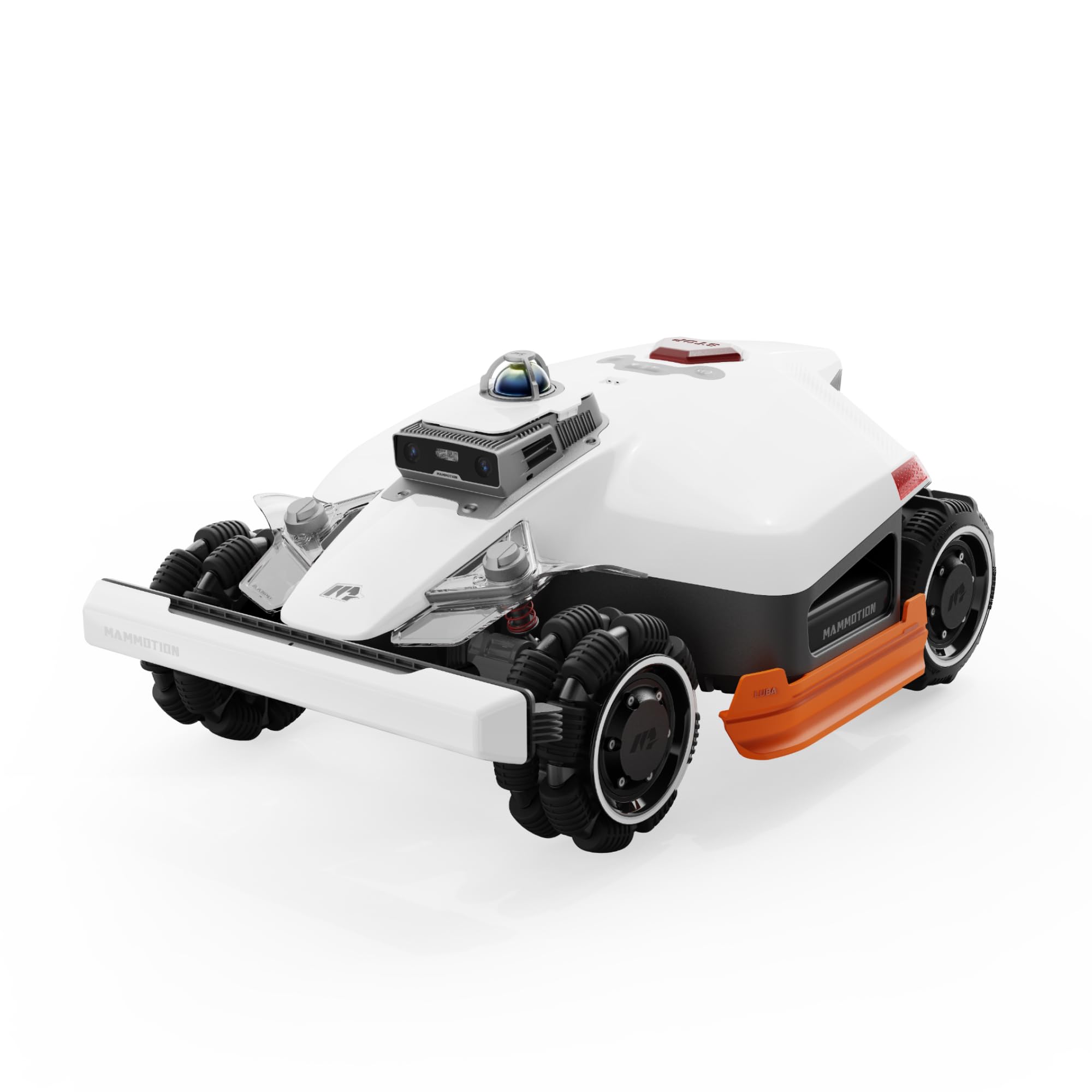
The Mammotion LUBA 3 AWD 1500H brings all-wheel drive and 360° LiDAR navigation to the striping conversation, handling slopes up to 80% (38.6°) while maintaining straight, evenly spaced lines. The four independent drive motors and omni wheel enable zero-radius pivots at the end of each stripe pass, eliminating the scuff marks that plague standard robot mowers during turns. The dual 88-watt cutting motors spin blades at high tip speeds that slice grass cleanly rather than tearing it, which is essential for crisp stripe definition.
The 9.4Ah lithium battery delivers up to 135 minutes of runtime, covering 400 square meters per hour in zigzag or checkerboard patterns. The AI vision system detects over 300 obstacle types and adjusts speed based on grass density, so the mower can push through a patch of thick tall fescue without bogging down and leaving a ragged stripe gap. Owners consistently report that the LUBA 3 produces straight, professional-looking lines on uneven terrain where other mowers would bounce and drift.
The cutoff width of 400mm (about 15.7 inches) is narrower than a standard push mower, meaning the stripes are proportionally tighter. Real-world battery performance runs closer to 80 minutes under heavy cutting conditions rather than the advertised 135 minutes, so factor that into your scheduling. The mower is also limited to its rated area by onboard memory rather than runtime alone—if your property is close to the 0.37-acre limit, you may need to buy the next size up. For sloped lawns where standard mowers lose traction and stripe quality, the LUBA 3 AWD is the most capable pattern-making machine available.
What works
- AWD traction maintains straight stripe lines on steep slopes
- Omni wheel allows zero-turn pivots without turf scuffing
- AI adjusts motor speed for dense grass patches
What doesn’t
- Narrow 15.7-inch cut produces tighter stripes than push mowers
- Real-world battery life is about 60% of the advertised 135 minutes
- Rated-area memory limit means buying up a size for larger lawns
6. Segway Navimow X430 4WD Robot Mower
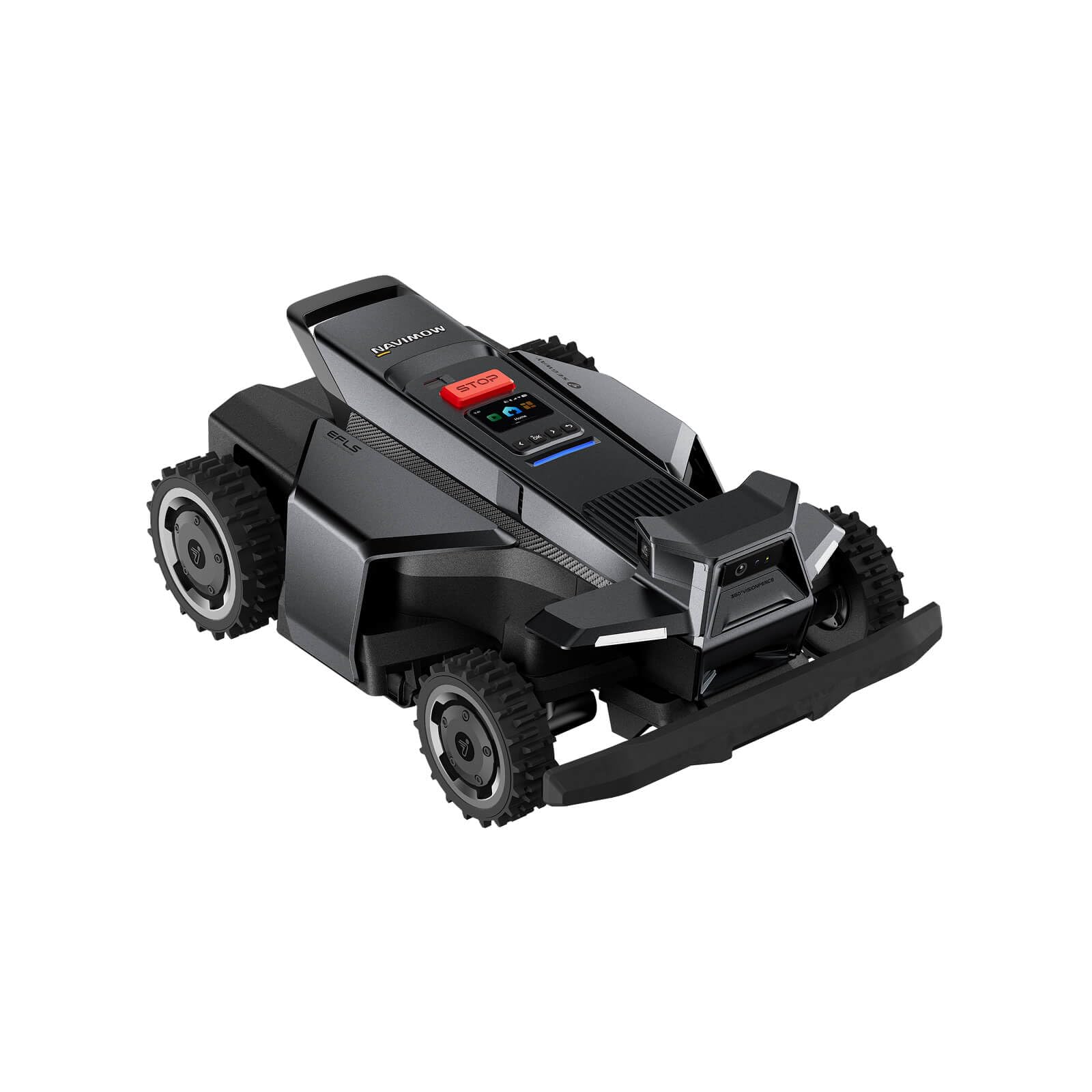
The Segway Navimow X430 is a 4WD robot mower designed for lawns up to one acre, making it one of the few robotic striping options that can handle larger properties without constant recharging. The 17-inch cutting width is wider than most robot mowers, giving you proportionally broader stripes that look appropriate on open lawns. The Xero-Turn AWD system uses eccentric front-wheel steering and traction control to pivot in place without tearing turf, so the stripe pattern stays clean across the transition from one pass to the next.
The dual 180-watt motors power two cutting discs with 12 blades, delivering the blade speed needed to cut through tall, dense grass without missing a beat. The EdgeSense technology reduces trimming margins to under two inches, meaning you get full stripe coverage all the way to the border. The EFLS tri-frequency Network RTK combined with 360° vision and VIO ensures centimeter-level accuracy even under tree cover, where GPS-only systems often drift and ruin stripe alignment. Owners praise the one-tap auto mapping and the ability to create no-go zones directly from the app.
The X430 is heavy at 63.7 pounds, and its large size makes it less suitable for intricate, tight landscapes. Some early adopters reported initial tracking and docking issues that were resolved with firmware updates, but the setup may require patience. The VisionFence obstacle detection identifies over 200 object types, though low-hanging branches can occasionally confuse the cameras. For homeowners with an acre of open grass who want show-quality stripes without pushing a mower themselves, the Navimow X430 is the most capable robot in this comparison.
What works
- Widest robot-mower cut at 17 inches for proportional stripes
- Zero-turn AWD prevents turf scuffing at pattern transitions
- Network RTK maintains accuracy under tree cover
What doesn’t
- Heavy chassis makes it less nimble in tight landscapes
- Initial setup may require firmware update patience
- Low-hanging branches can interfere with obstacle cameras
7. Husqvarna Automower 410iQ
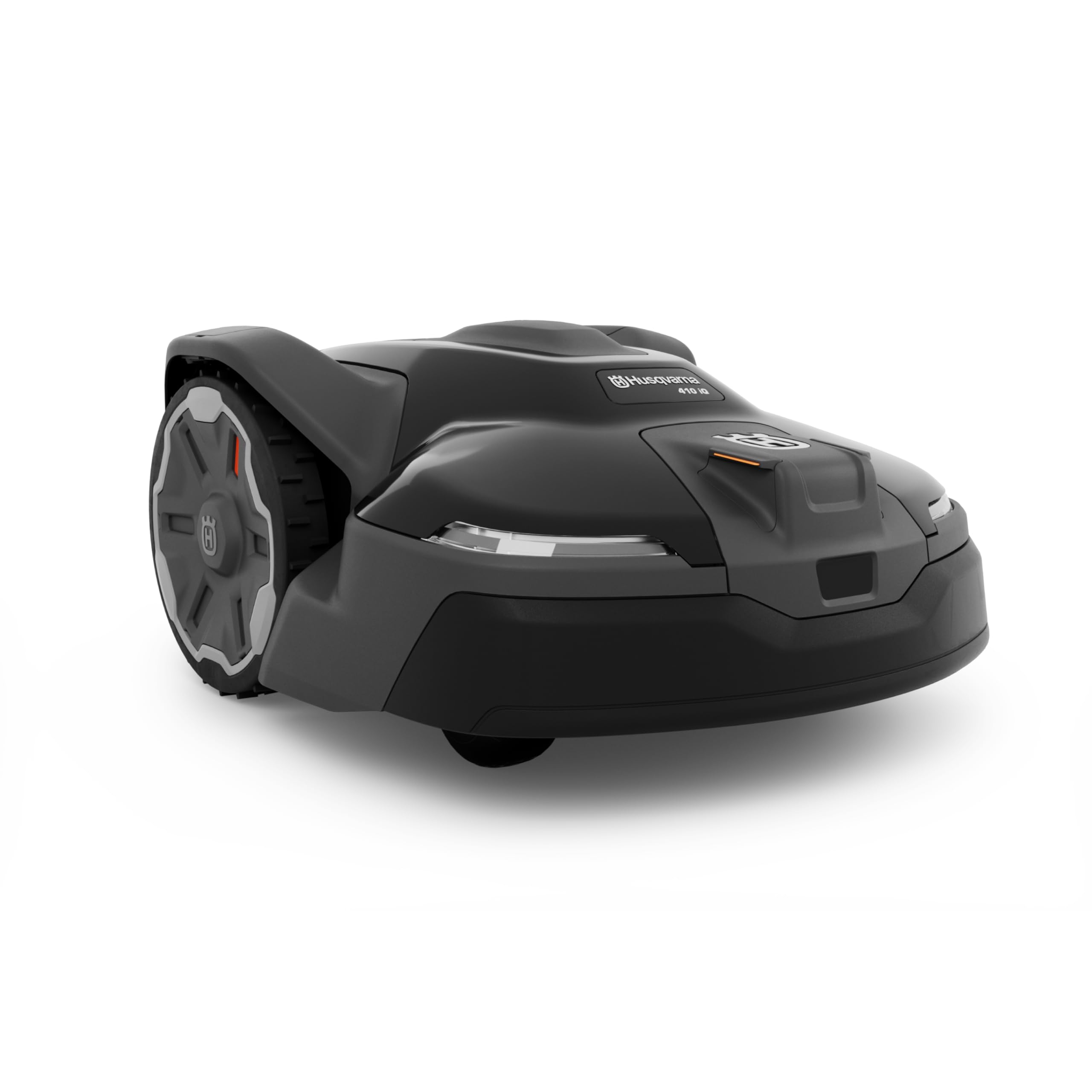
The Husqvarna Automower 410iQ uses the Exact Positioning Operating System (EPOS) to deliver centimeter-accurate location data, enabling it to mow in striped, checkerboard, or random patterns entirely without boundary wires. The 9.4-inch cutting width is on the narrow side, but the robot compensates by mowing frequently—daily cuts keep the grass uniform and the stripe pattern consistent over time. The Husqvarna Connect app gives you full control over cutting height (1.0 to 4.0 inches), mowing schedule, and pattern selection, all from your phone.
The onboard radar helps the mower avoid obstacles, and the durable bumper and larger wheels allow it to cross paths and driveways without damage. The auto-mapping feature uses satellite cloud positioning and does not require a separate reference station, which simplifies installation compared to other RTK-based systems. Owners who successfully set up the 410iQ report that it produces healthier, greener lawns through frequent cutting, and the striped pattern is visible almost immediately after the first patterned mow.
The primary complaint is GPS reliability in suburban or tree-dense yards. Several owners report that the mower loses GPS signal on the side of a house or under dense canopy, causing it to stop and wait for reconnection. The “Support by Wire” fallback function is supposed to fix this, but some users found the feature broken or the documentation incorrect. If you have a wide-open, half-acre lot with minimal tree cover, the 410iQ delivers the most refined wire-free striping experience from the brand that invented the robotic mower category.
What works
- EPOS centimeter accuracy enables wire-free striped pattern mowing
- Frequent cutting produces healthier turf and consistent striping
- Durable construction handles path and driveway crossings
What doesn’t
- GPS signal loss under tree cover or near buildings interrupts mowing
- Narrow 9.4-inch deck means tighter, more frequent stripe passes
- Setup struggle reported in yards with even moderate tree density
8. MechMaxx VBM78 78″ PTO Flail Mower
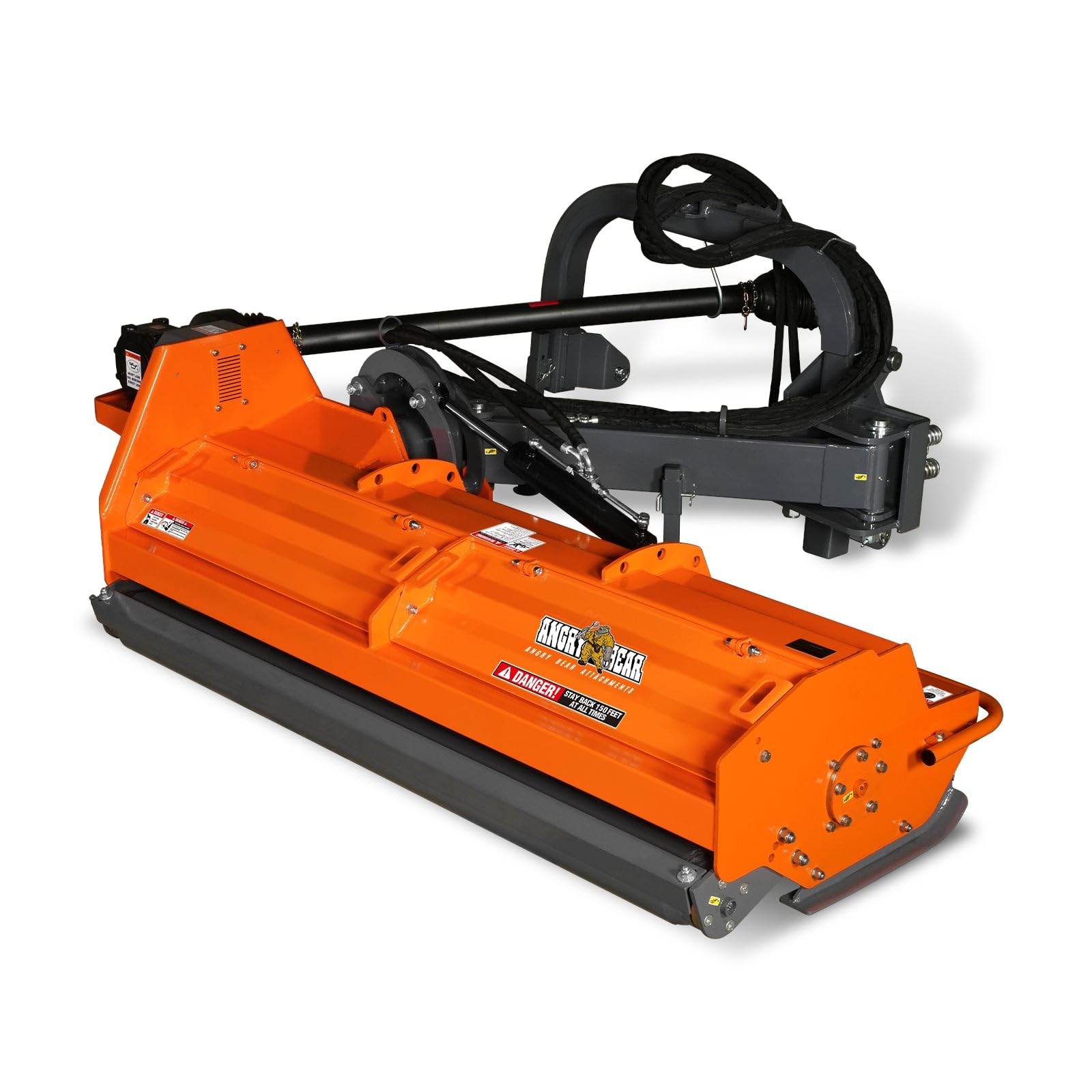
The MechMaxx VBM78 is a Category 2 PTO-driven flail mower designed for tractors in the 80-110 HP range, covering a 78-inch cutting swath that can stripe a ditch bank or roadside verge in a single pass. This is not a lawn-striping tool in the traditional sense—it is a heavy-duty machine for maintaining large-scale properties, banks, and right-of-ways where a finished mowing appearance still matters. The 18 forged hammer flails shred material up to six inches in diameter, and the finely chopped cuttings drop directly to the ground as fast-decomposing organic matter.
The offset design provides up to 122 inches of offset distance, and the 90-degree upward and 55-degree downward rotation angles allow the mower to follow the contour of steep embankments without scalping. The 65-horsepower CMR gearbox from Italy handles consistent PTO power without overheating, and the adjustable rear roller controls cutting height precisely to produce an even finish. Owners report that the flail mower actually cuts finer than a rotary lawn mower, producing a shredded texture that looks uniform when viewed from a distance.
The VBM78 requires assembly, and the 613-pound weight means you will need a forklift or loading dock for delivery. Some owners experienced a drum mount split after several uses, though the manufacturer provided replacement parts and reimbursement for professional repair. The gearbox must be filled with 90-weight oil before use, and the top link adjustment is critical to getting the correct cut height. For property owners managing acres of open land or municipal rights-of-way who want a consistent, clean finish from a flail system, the MechMaxx VBM78 delivers industrial-scale striping capability.
What works
- 78-inch swath covers large areas quickly with uniform shredding
- 90°/55° rotation angles follow embankment contours without scalping
- Hammer flails cut finer than rotary blades for a consistent finish
What doesn’t
- Requires assembly and heavy equipment for unloading
- Some reports of drum mount splitting under heavy use
- Gearbox oil and top link adjustment required before first use
Hardware & Specs Guide
Roller Diameter & Material
The roller is the primary tool for bending grass to create stripes. A larger diameter roller—typically 3 to 5 inches—distributes weight over a wider footprint, pressing grass down uniformly without leaving ruts. Steel rollers with textured surfaces grip the turf better than smooth plastic rollers, especially on damp grass. If the mower lacks a dedicated rear roller, the deck lip itself must be rolled (rounded) to achieve any striping effect at all.
Blade Tip Speed in FPS
Blade tip speed determines how cleanly the blade severs each grass blade. For crisp stripes without brown tips, the blade speed should remain above 200 feet per second under load. Electric brushless motors typically maintain more consistent tip speed than gas engines, which can bog down in thick grass. High tip speed also improves the lifting action that stands the grass up before the roller lays it down—a critical step for deep stripe contrast.
Deck Overlap Ratio
The overlap between the blade circle and the deck edge influences how well the mower transfers grass from the blade to the roller. A deck design that allows at least 1.5 inches of blade overlap past the deck wall ensures that lifted grass is directed squarely into the roller path rather than being thrown sideways. Mowers with poor overlap produce inconsistent stripes because the grass is not uniformly positioned before the roller presses it down.
Battery Capacity for Electric Models
For cordless striping mowers, the amp-hour (Ah) rating of the battery directly correlates to runtime under cutting load. A 6.0Ah battery at 56 volts provides roughly 336 watt-hours of energy—enough for about 45 to 60 minutes of mowing on a 21-inch deck. Running the self-propelled system continuously reduces that runtime by 15 to 20 percent. Buyers with lawns larger than half an acre should look for dual-battery kits or models with batteries that charge in under two hours.
FAQ
Can any mower create stripes, or do I need a specific deck design?
How often should I mow to maintain a striped appearance?
Why do my stripes disappear after a few days?
Do I need a striping kit for a robot mower, or does the robot create its own stripes?
Final Thoughts: The Verdict
For most gardeners, the striping mower winner is the Toro 21-Inch 60V because it combines a pro-level rolled-edge deck, quiet brushless power, and self-propelled ease at a price that undercuts most gas alternatives. If you want fully automated stripes without pushing a mower, the WORX WR310 Vision delivers RTK-accurate patterns from your phone. And for steep-slope properties where traction makes or breaks the stripe, the Mammotion LUBA 3 AWD holds its line while other machines slide and scuff. Whatever your yard size or grass type, the right deck design and blade speed are non-negotiable—and every product on this list delivers both.