
Garden straw is the single best way to suppress weeds, hold moisture in the soil, and protect tender roots from temperature swings — but only if you pick the right type and know why hay won’t work. A bad bale can introduce thousands of weed seeds into your beds, turning your mulch layer into a weed nursery that robs your vegetables of nutrients and water.
I’m Rikta — the co-founder and writer behind Lawn Gear Lab. I’ve spent hundreds of hours analyzing wheat straw processing methods, studying moisture retention data from controlled garden trials, and cross-referencing owner feedback to separate the clean, effective mulches from the dusty, seed-laden disappointments.
Whether you’re covering a vegetable patch, freshening up a flower bed, or protecting a patch of grass seed from washout, this guide breaks down the specs and real-world performance to help you choose the right straw for garden mulch.
How To Choose The Best Straw For Garden Mulch
Not all straw bales are created equal. The difference between a clean, effective mulch and a source of relentless weeds comes down to four key factors: the straw source, the processing method, the presence of a tackifier, and the compressed coverage ratio.
Straw Source: Wheat vs Other Grains
Wheat straw dominates the garden mulch category because it decomposes at a moderate pace — fast enough to feed soil microbes within a single season, slow enough to provide season-long weed suppression. Oat and barley straws break down faster and may introduce more allelopathic compounds that can inhibit seedling growth. Stick with 100% non-GMO wheat straw from reliable growers who control the crop from seed to harvest.
Processing: Dust-Free and Cleaned
The biggest complaint across every straw mulch review is the presence of weed seeds. Premium processors use mechanical filtering and air separation to remove as many seeds and dust particles as possible. Look for terms like “thoroughly cleaned,” “low dust,” and “allergen-free” in the product description. A bag that feels dusty when you open it will likely introduce grassy weeds that compete with your vegetables.
Tackifier vs No Tackifier
Tackifier is a natural bonding agent that helps straw fibers stick together once watered. Products with tackifier are designed for erosion control and lawn seeding — they resist wind and rain washout. For garden beds and raised vegetable plots, tackifier is optional and sometimes undesirable because it can slow decomposition in the compost pile. Choose tackified straw if you’re covering bare soil on a slope or protecting grass seed; choose clean, tackifier-free straw for established garden beds.
Compressed Coverage: Cubic Feet vs Actual Spread
A compressed 3-cubic-foot bale can expand to 10 or more cubic feet once fluffed. That means a single bale labeled “covers up to 500 sq ft” for lawn seeding (at a ¼-inch layer) may only cover 80–100 sq ft of a garden bed at the recommended 2–3 inch depth. Always check both the compressed volume and the expanded coverage claim to avoid ordering too little or overpaying for a tiny bale.
Quick Comparison
On smaller screens, swipe sideways to see the full table.
| Model | Category | Best For | Key Spec | Amazon |
|---|---|---|---|---|
| EZ-Straw Seeding Mulch | Tackified Straw | Lawn seeding & erosion control | 2.5 cu ft, tackifier bonded | Amazon |
| HealthiStraw GardenStraw | Clean Garden Straw | Vegetable & flower bed mulch | 3 cu ft, 100% wheat straw | Amazon |
| HealthiStraw FarmStraw Coarse Cut | Coarse Cut Bedding | Large garden beds & animal bedding | 3 cu ft, expands 10+ cu ft | Amazon |
| Out-Grow 1 Cu Ft Wheat Straw | Compact Bale | Small beds & pet shelters | 1 cu ft, 4 lbs total weight | Amazon |
| Brut Organic Aspen Mulch | Bark Mulch | Potted plants & containers | 10 qt, OMRI organic aspen bark | Amazon |
| 4 lb Wheat Straw Bale | Small Volume Straw | Small batch gardening & crafts | 4 lbs total, loose straw | Amazon |
| Gardener Select Seeding Straw | Tackified Seeding Straw | Slope erosion & seed protection | 2.5 cu ft, tackifier bonded | Amazon |
In‑Depth Reviews
1. EZ-Straw Seeding Mulch with Tackifier

This 2.5-cubic-foot bale is the top pick for anyone seeding a new lawn or patching bare spots. The integrated tackifier — a natural bonding agent — gives the straw a slight stickiness when dampened, causing the fibers to mat together and resist wind, rain, and bird activity. The straw is twice-cut for easier hand-spreading, and the UV-protected bag means you can store it outside without worrying about moisture damage.
Owner reviews consistently mention fast germination — grass appeared in as little as five days in one documented case — and the 99% weed-free guarantee holds up well. The bale covers up to 500 square feet at a thin seeding layer, making it an economical choice for typical suburban lawns. The organic processed straw is biodegradable, so once the grass establishes, there’s no cleanup required.
The tackifier can feel a bit messy during application, and some gardeners note that the straw doesn’t spread as evenly as loose straw. But for its primary job — protecting grass seed from washout and birds — this product delivers reliable results that justify its mid-range price point.
What works
- Tackifier keeps straw in place on slopes and in wind
- Consistent 99% weed-free performance
- Biodegradable — no cleanup after grass establishes
What doesn’t
- Tackifier can make straw cling to hands during application
- Not ideal for thick garden bed mulch layers
2. HealthiStraw GardenStraw 3 cu ft
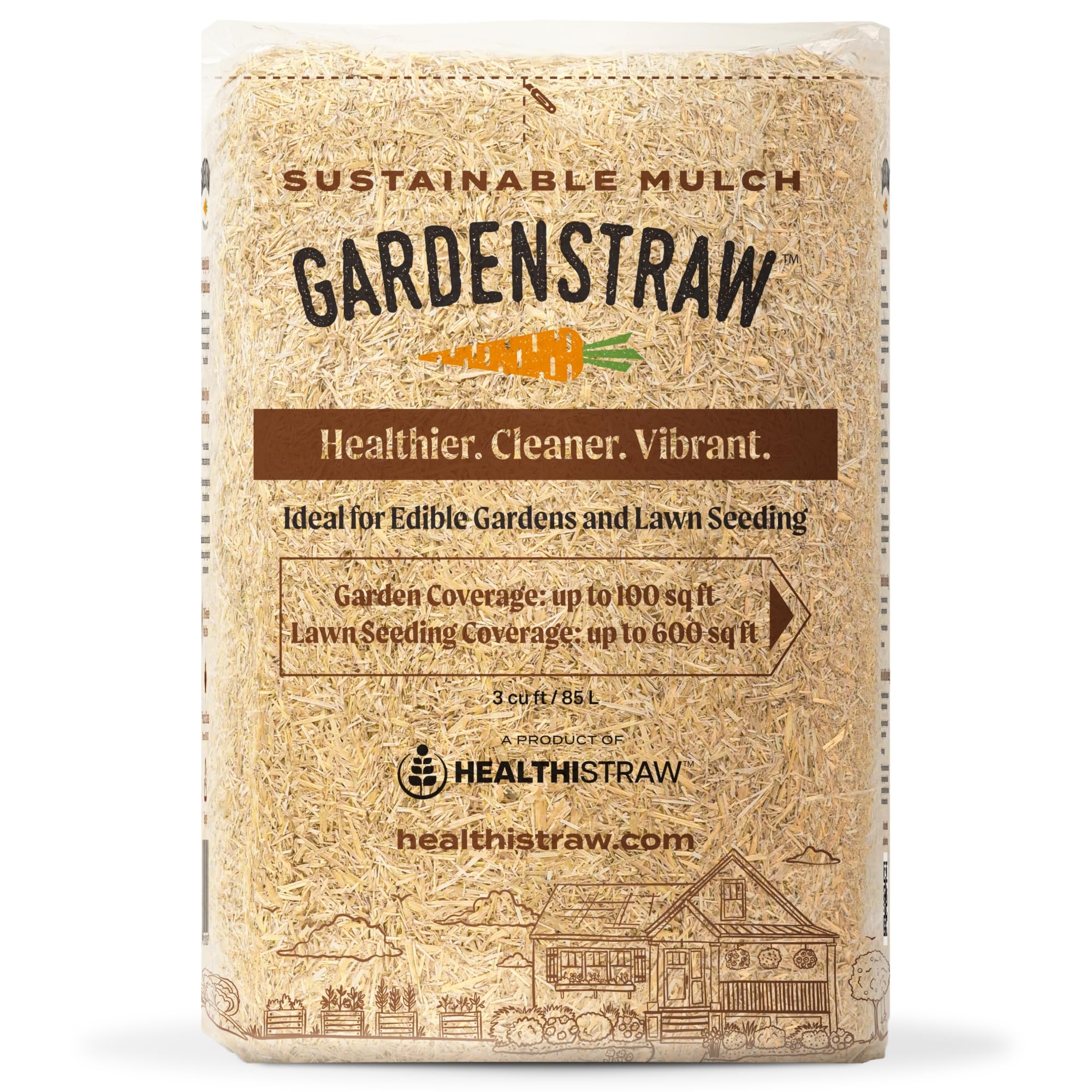
HealthiStraw’s GardenStraw is purpose-built for vegetable and flower beds. The 100% non-GMO wheat straw is mechanically filtered to remove dust and seeds, and multiple owner reports confirm minimal weed emergence even after months of use. The compressed 3-cubic-foot bale expands significantly when fluffed — enough to cover 100 square feet at a 2–3 inch depth, the recommended thickness for effective weed suppression and moisture retention.
Gardeners appreciate that the straw fibers interlock naturally when watered, staying put without chemical binders. The decomposition rate is fast enough to contribute carbon to your compost pile within a single growing season but slow enough to provide season-long coverage. The clean, light-color straw also reflects sunlight, keeping soil temperatures cooler during summer heat waves.
The biggest downside is that some batches contain a small number of grass seeds — not enough to overwhelm a bed, but worth noting if you’re maintaining a pristine ornamental garden. The bale is also bulky, measuring 27 x 18 x 12 inches when compressed, so storage space is a consideration.
What works
- Excellent moisture retention — reduces watering by up to 50%
- Minimal weed seeds compared to generic straw
- Decomposes quickly into compost-friendly organic matter
What doesn’t
- Some batches still contain a few grass seeds
- Bulky compressed bale requires storage space
3. HealthiStraw FarmStraw Coarse Cut 3 cu ft
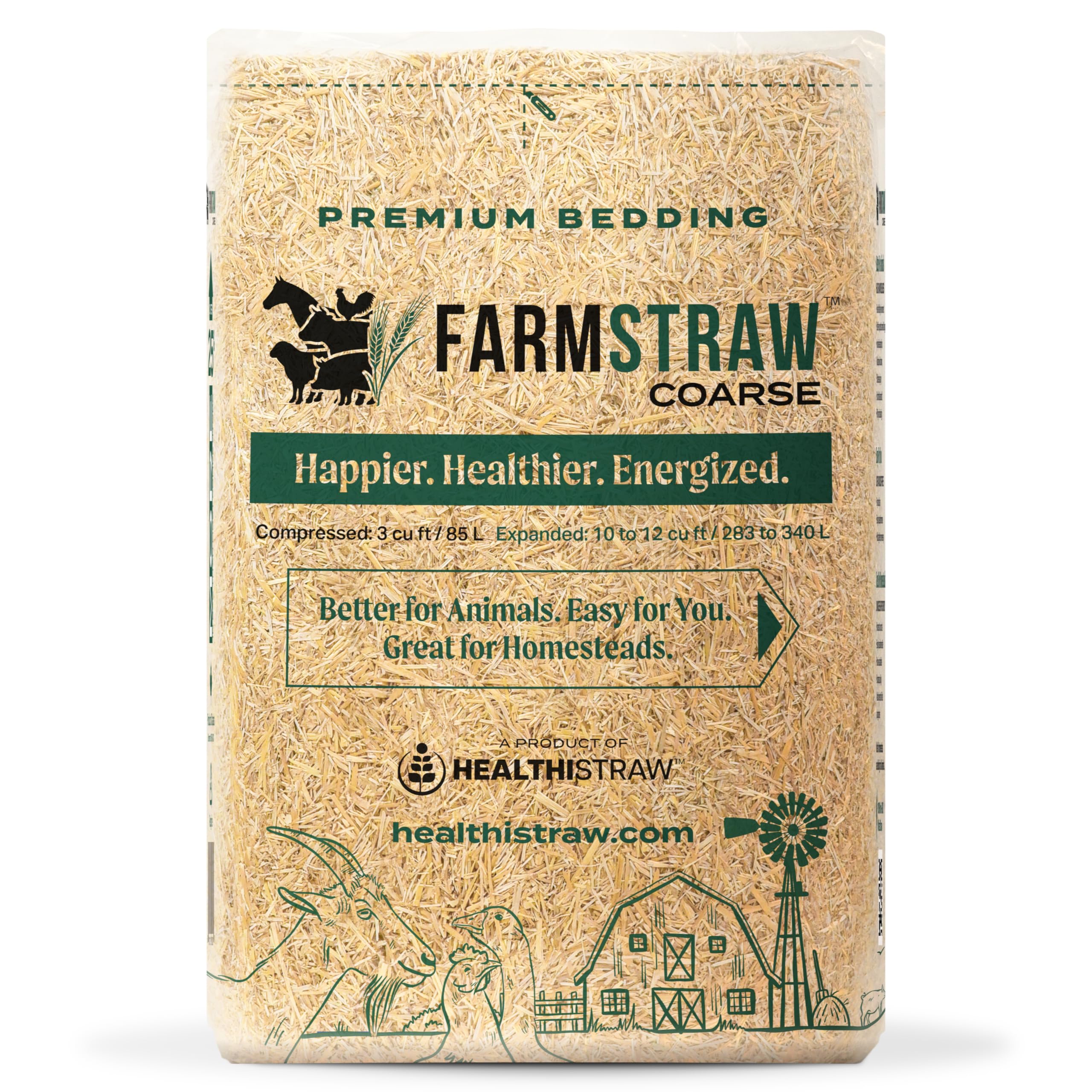
This coarse-cut wheat straw bale is the volume champion of the list. The 3-cubic-foot compressed bale fluffs up to more than 10 cubic feet of usable bedding or mulch, offering the best coverage-per-dollar among all the options. The straw is cut into 2–3 inch pieces that are split and bent for extra fluffiness and durability, creating a thick, insulating layer that works great for both garden application and animal shelter bedding.
The dust-free processing is a standout feature — multiple owners with respiratory sensitivities report no irritation during handling. The straw absorbs moisture from the bottom up while keeping the surface dry, which is crucial for outdoor cat shelters where wet bedding can freeze in winter. For garden use, the coarse cut allows better air circulation around plant stems compared to fine-cut straw, reducing the risk of fungal issues.
At a premium price point, this bale is best suited for gardeners covering large beds or anyone who also needs bedding for chickens, goats, or feral cat shelters. Some owners note the bag sealing tape can fail during shipping, but HealthiStraw’s customer service is consistently responsive about replacements.
What works
- Expands to 10+ cubic feet from one compressed bale
- Truly dust-free and allergen-free processing
- Coarse pieces provide good air circulation in garden beds
What doesn’t
- Bag sealing tape may fail during shipping
- Premium price point per bale
4. Out-Grow 1 Cubic Foot Wheat Straw

This 1-cubic-foot bale from Out-Grow is a practical entry point for gardeners with limited space. At just 4 pounds total weight, it’s easy to carry and spread, and the compressed format means a single bag fills roughly a 2-foot by 4-foot bed at the recommended 3-inch depth. The 100% natural wheat straw is free of additives and chemicals, and the low-dust processing keeps handling mess to a minimum.
Owner feedback highlights its effectiveness for outdoor cat shelters — straw repels moisture and won’t freeze like hay — as well as container gardening and mushroom cultivation. The straw arrives clean and light yellow, with minimal debris. Multiple users confirm it keeps plants hydrated by slowing evaporation significantly compared to bare soil.
The biggest drawback is the small volume. For anything beyond a single raised bed or a few containers, you’ll need multiple bags, quickly eroding the cost advantage. A few owners also report finding foreign objects in their boxes, suggesting quality control isn’t as tight as premium brands. Still, for small-scale projects or trial use, this is a reliable and affordable option.
What works
- Lightweight and easy to handle for small beds
- Clean, low-dust straw with minimal debris
- Effective moisture retention for container plants
What doesn’t
- Small volume — multiple bags needed for large beds
- Occasional foreign objects in packaging
5. Brut Organic Aspen Mulch 10 QT
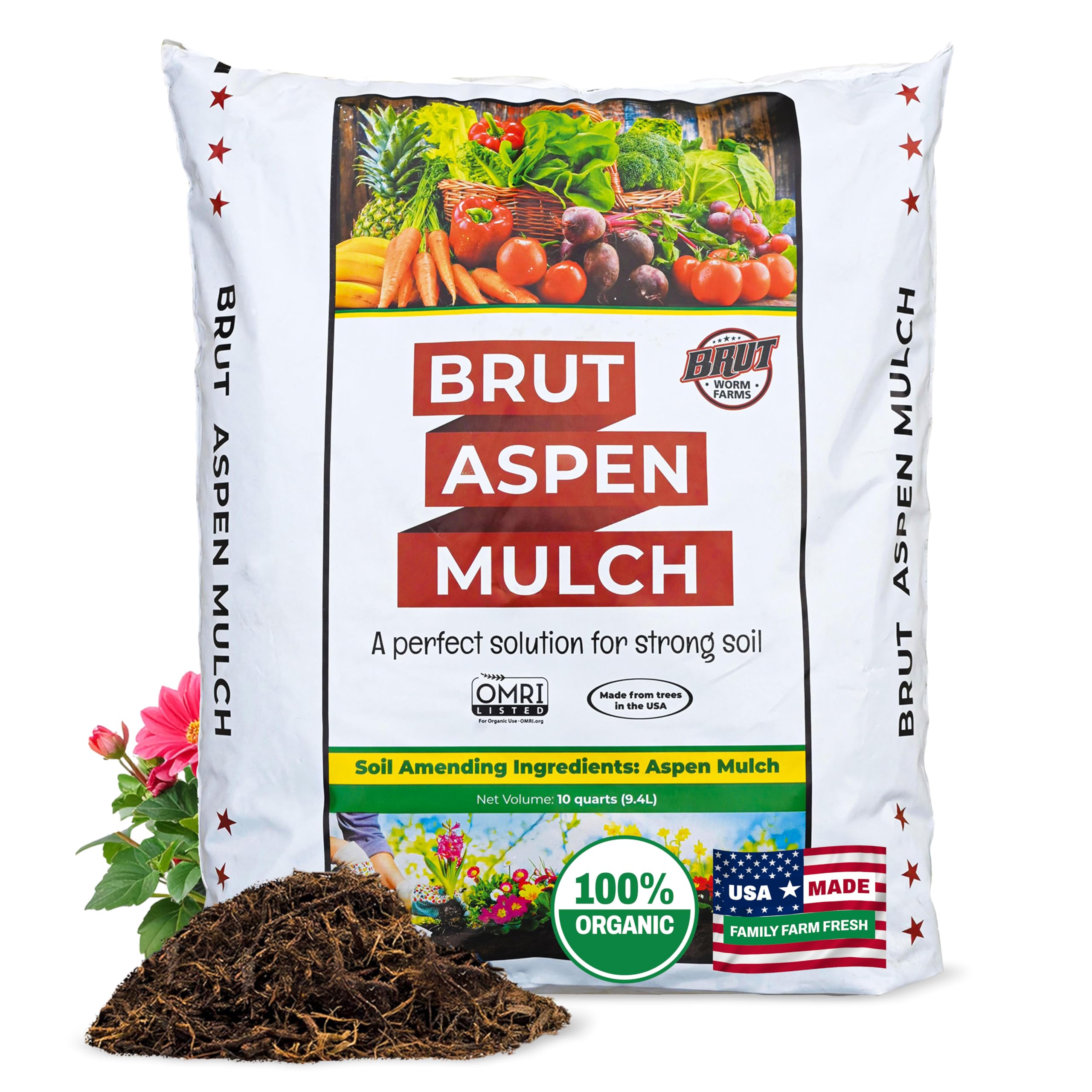
Brut Worm Farms offers something different here: an OMRI-listed organic aspen bark mulch rather than traditional wheat straw. The 10-quart bag delivers a fine-textured, odor-free bark that works exceptionally well in containers, raised bed tops, and potted plants. The high carbon content — 30% natural carbon — feeds beneficial soil microbes and promotes long-term soil health.
Gardeners report it halves watering frequency in containers and stays in place better than lightweight straw in windy locations. The clean, pure aspen bark doesn’t contain the seed issues common with straw, making it a safer choice for meticulous ornamental beds. The texture is closer to a fine compost than coarse wood chips, which helps it blend visually with soil surfaces.
The volume is the primary limitation. At 10 quarts, a single bag barely covers a single large planter or a small herb garden, and multiple owners note the bag looks smaller than expected. The price per cubic foot is significantly higher than wheat straw bales, so this is best reserved for decorative containers where appearance and seed-free performance justify the premium.
What works
- Zero weed seeds — ideal for ornamental containers
- OMRI-listed organic certification
- Odor-free and fine texture blends well visually
What doesn’t
- Small volume — expensive per cubic foot for large beds
- Not suitable for lawn seeding or erosion control
6. 4 Pounds 100 Percent Natural Wheat Straw

This 4-pound bag of loose wheat straw is the most budget-friendly entry point for gardeners who need a small quantity for container experiments, fall decorations, or mushroom cultivation. The straw arrives in fuss-free packaging — a simple plastic bag — and is clean, dry, and light yellow in color. It’s not compressed, so what you see is what you get.
Gardeners using it as container mulch report effective slowing of evaporation and gentle protection for young seedlings. The loose texture makes it easy to spread by hand into small pots and window boxes. Several owners also use it as outdoor pet bedding for stray cats, noting it repels moisture better than hay and provides natural insulation during cold winters.
The lack of processing means this straw may contain more weed seeds than the premium cleaned options. It’s also not suitable for large garden beds — you’d need several bags to achieve the recommended 3-inch mulch depth. The messy application and potential for seed germination make it best suited for temporary or decorative use rather than serious vegetable gardening.
What works
- Very affordable entry price for small projects
- Clean and dry upon arrival with minimal dust
- Effective for temporary container mulch and pet bedding
What doesn’t
- Higher weed seed content than processed straw
- Small volume — impractical for full garden beds
7. Gardener Select Seeding Straw with Tackifier

Gardener Select offers a tackifier-treated straw bale that competes directly with the EZ-Straw option for lawn seeding and erosion control. The 2.5-cubic-foot bale covers up to 500 square feet at a thin seeding layer, and the tackifier creates a natural mat that holds grass seed in place on slopes and in windy areas. The straw is 100% biodegradable and safe for pets and children.
The standout feedback from owners is the weed-free guarantee — multiple reviewers confirm they’ve never seen a single weed emerge from this product. The straw is uniform in cut and easy to spread by hand or with a rake, and the tackifier activates well when lightly watered, creating a stable protective blanket over fresh seed. The bale is also UV-protected, so outdoor storage won’t degrade it.
The main trade-off is the higher price point — this is the most expensive option per cubic foot. For gardeners who only need a single bale for overseeding a small lawn, the cost is reasonable. But for large-scale seeding projects, the EZ-Straw bale offers identical coverage at a noticeably lower cost, making this a niche pick for buyers who prioritize the proven weed-free track record over absolute value.
What works
- Reliably weed-free — verified by multiple long-term users
- Tackifier creates stable mat that resists wind and rain
- UV-protected bag for outdoor storage
What doesn’t
- Premium price per cubic foot compared to competitors
- Not ideal for thick garden bed mulch applications
Hardware & Specs Guide
Compressed vs Expanded Volume
Many straw bales are compressed to reduce shipping costs, expanding significantly when opened. A 3-cubic-foot compressed bale from HealthiStraw expands to over 10 cubic feet when fluffed. Always check both numbers: the compressed volume tells you how much space the bag occupies in storage, while the expanded volume tells you how much actual mulch you’ll get. For garden beds requiring a 2–3 inch depth, plan on 1 cubic foot of expanded straw covering roughly 4–6 square feet.
Tackifier Chemistry
Tackifier is a natural, water-activated bonding agent — usually derived from plant starches or gums — that causes straw fibers to stick together once dampened. This creates a protective mat that resists wind displacement and water runoff. Tackifier-treated straws like EZ-Straw and Gardener Select are ideal for slope erosion control and lawn seeding. For garden beds, the tackifier can slow decomposition slightly and may interfere with compost pile integration, making untackified straw a better choice for vegetable gardens.
Weed Seed Content
The single most common frustration with straw mulch is the introduction of weed seeds. Cheap, unprocessed straw can contain hundreds of seeds per pound — mostly grass species that compete directly with garden vegetables. Premium processors use mechanical sieves, air columns, and electrostatic separators to remove seeds. Look for products explicitly labeled “99% weed-free” or “thoroughly cleaned,” and check owner reviews for mentions of unexpected grass growth. OMRI-listed products like the Brut aspen mulch are inherently seed-free.
Moisture Retention Rate
Straw mulch reduces soil evaporation by shading the ground and creating a vapor barrier at the soil-straw interface. Well-processed wheat straw can reduce watering frequency by 40–50% in vegetable beds. The retention rate depends on layer thickness — 2 inches is the minimum for meaningful water conservation, with 3–4 inches providing maximum benefit. Loose, fluffy straw retains more moisture than compacted straw because the air pockets slow water migration. Bark mulches like aspen have lower water-holding capacity but last longer without decomposing.
FAQ
What is the difference between straw and hay for garden mulch?
How much straw mulch do I need for a 4×8 raised bed?
Will straw mulch attract termites or rodents?
How long does straw mulch last before it needs replacing?
Final Thoughts: The Verdict
For most gardeners, the straw for garden mulch winner is the HealthiStraw GardenStraw 3 cu ft because it delivers the best balance of weed-free processing, moisture retention, and garden-friendly decomposition without chemical binders. If you’re seeding a lawn or covering a slope, grab the EZ-Straw Seeding Mulch with Tackifier for its proven ability to hold seed in place. And for large garden beds or dual-use as animal bedding, nothing beats the HealthiStraw FarmStraw Coarse Cut for sheer volume and dust-free quality.