
That acrid, grassy-cilantro stench is the calling card of the brown marmorated stink bug, and if you are reading this, you likely already know the drill: one wrong move and your living room smells like a crushed weed for half an hour. The reason finding the right weapon is so frustrating is that stink bugs are armored — their tough exoskeleton shrugs off many contact sprays that work on ants or spiders, and the wrong chemical choice can leave you with a foul smell and a still-crawling bug.
I’m Rikta — the co-founder and writer behind Lawn Gear Lab. I have spent hundreds of hours cross-referencing concentrate ratios, droplet sizes, and active-ingredient lethality curves against verified owner experiences so you don’t have to guess which formula actually overcomes that shield.
Here, I break down seven formulas — from synthetic residual barriers to plant-powered knockdown sprays — to help you find the most effective spray for stink bugs that fits your home, your tolerance for chemical exposure, and the severity of your infestation.
How To Choose The Best Spray For Stink Bugs
Not all bug sprays are created equal when the target wears a heavy shield. Stink bugs have a hard, waxy cuticle that repels watery droplets, so the carrier solvent and the type of active ingredient matter more here than with softer-bodied insects like flies or aphids.
Contact Knockdown vs. Residual Barrier
Contact sprays kill on direct impact — ideal for the one or two bugs that sneak inside each day. Residual barrier sprays leave a dry film on window frames and baseboards that kills any stink bug that walks across it for weeks or months. For an active infestation, start with a contact spray; for prevention, choose a residual formula containing a pyrethroid like cypermethrin or lambda-cyhalothrin.
Active Ingredient Selection
Synthetic pyrethroids (cypermethrin, bifenthrin) are the gold standard for stink bugs because they penetrate the waxy shell and disrupt the nervous system rapidly. Natural-origin sprays rely on peppermint oil, geraniol, or lemongrass oil — these work on contact via suffocation or dehydration but leave no long-term kill residue. Match the ingredient to your tolerance for synthetic chemistry and the infestation pressure you are facing.
Application Format and Coverage
Ready-to-use aerosol cans are the most convenient for spot-treating visible bugs on walls or curtains. Concentrates that you mix into a gallon of water give you better value per ounce and allow you to treat exterior eaves, window frames, and siding with a hose-end or pump sprayer. If spraying indoors, prioritize an odor-free or essential-oil formula to avoid fumigating your own living space.
Quick Comparison
On smaller screens, swipe sideways to see the full table.
| Model | Category | Best For | Key Spec | Amazon |
|---|---|---|---|---|
| Ortho Home Defense MAX | Residual Barrier | Long-term indoor perimeter | 12-month residual on nonporous surfaces | Amazon |
| CSI Cyper WSP | Concentrate | Large-area exterior treatment | 40% cypermethrin / 24-48 gal per tub | Amazon |
| Mighty Mint Gallon | Natural Repellent | Pet-safe perimeter spray | 128 oz ready-to-use bottle | Amazon |
| BugMD Peppermint Oil | Natural Contact | Quick indoor spot treatment | 4% pure peppermint essential oil | Amazon |
| Wondercide Ant & Roach | Natural Aerosol | Spot-treatment near pets | Lemongrass & geraniol active | Amazon |
| Harris 5 Minute Bed Bug | Residual Contact | Indoor mattress & furniture | 5-min kill / 30-day residual | Amazon |
| Smart Grower Peppermint | Natural Repellent | Multi-pest deterrent | Extra-strength peppermint oil | Amazon |
In‑Depth Reviews
1. Ortho Home Defense MAX Insect Killer Spray (2-Pack)

The Ortho Home Defense MAX is the benchmark for indoor perimeter defense because it creates an invisible dry film that keeps killing stink bugs for up to twelve months on nonporous surfaces like baseboards, window frames, and door thresholds. The odor-free formula means you can treat your living room without driving your family outside, and the non-staining property preserves paint and trim. Owner reports confirm that a single application in spring eliminates the seasonal stink bug invasion that would otherwise require daily spot-spraying.
The active ingredient is a fast-acting pyrethroid that penetrates the stink bug’s shell within seconds of contact. Users who sprayed a one-foot band up and one-foot out around their foundation saw a complete wall of protection that intercepted bugs before they ever entered the living space. The 24-ounce trigger bottle gives you enough reach for a typical 2,000-square-foot home perimeter, and the two-pack covers multiple floors or a house plus a detached garage.
Watch for the nozzle — a small number of users reported that the spray stream can clog if the bottle sits unused for several months, so an occasional quick purge keeps the channel clear. For the sheer duration of control and the absence of chemical odor, this is the most convenient long-term solution for stink bugs that you can buy off the shelf.
What works
- Twelve-month residual keeps stink bugs dead without reapplication
- Odorless and non-staining, safe for indoor baseboards and woodwork
- Kills listed insects in under five seconds on contact
What doesn’t
- Trigger nozzle can clog if left unused for months
- Not a concentrate — cannot be mixed for hose-end sprayers
2. CSI Cyper WSP Cypermethrin Water-Soluble Packets (4-Pack)

The CSI Cyper WSP concentrate is the gold standard for anyone serious about wiping out a heavy stink bug population around the exterior of their home. Each water-soluble packet contains 40% cypermethrin, a potent pyrethroid that dissolves cleanly in one gallon of water to produce a ready-to-spray solution. A single tub yields enough finished liquid to treat roughly 24 to 48 gallons of spray, depending on the mixing ratio you choose, which makes this the highest-value formula for large properties or rental units.
Users consistently report that this is the only product that stops Japanese beetles and stink bugs dead in their tracks and keeps them gone for weeks. The residual effect holds up through rain better than most homeowner-grade aerosols because the cypermethrin binds to porous surfaces like siding and wood. It has virtually no odor after drying, and the powder format eliminates the risk of aerosol cans losing pressure halfway through a job.
The biggest trade-off is that the wet solution can stain painted white surfaces and fabrics, so you need to apply it carefully around window trim and keep pets off treated areas until the spray dries completely. For the sheer knockdown power and the ability to scale from a single story to a multi-acre perimeter, the Cyper WSP is the pro-tier choice that outperforms anything in a trigger bottle.
What works
- Extremely high 40% cypermethrin concentration for maximum knockdown
- Water-soluble packets are easy to measure and mix without dust
- Long residual that persists through mild rain exposure
What doesn’t
- Wet solution stains white paint and light-colored fabrics
- Requires a separate pump sprayer and safety gloves during mixing
3. Mighty Mint Gallon (128 oz) Insect and Pest Repellent Peppermint Oil

The Mighty Mint gallon is the most cost-effective entry into natural stink bug management because it delivers a full 128 ounces of ready-to-use spray at a per-ounce cost that undercuts every other natural competitor. The extra-concentrated peppermint oil formula works by coating the insect’s spiracles, suffocating stink bugs on contact while simultaneously leaving a scent barrier that deters new arrivals. Owners report that a weekly spray around door frames, window sills, and porch columns drastically reduces indoor sightings during peak autumn invasion season.
The gallon format is a strategic advantage — you can refill smaller trigger bottles for each floor of the house without having to remix or recalculate proportions. The peppermint scent is strong for about 20 minutes after application but fades into a clean, non-overpowering background note that many users describe as calming. Multiple reviews confirm that the spray is effective against stink bugs specifically, and the absence of synthetic pesticides makes it the go-to choice for households with cats, dogs, and small children.
The limitation is that this is a repellent and contact killer, not a residual poison — it will not kill stink bugs that cross a dry surface hours after application. For households with a minor, intermittent stink bug presence, the Mighty Mint gallon offers the best protection-to-safety ratio on the market, but severe infestations will still need a synthetic barrier spray for the exterior.
What works
- Massive 128-ounce bottle offers exceptional value per application
- Safe around pets and children with no synthetic chemical residue
- Pleasant peppermint scent acts as a natural deterrent between sprays
What doesn’t
- No long-term residual kill; requires reapplication every 5-7 days
- Scent can be overpowering in enclosed rooms for the first 20 minutes
4. BugMD Pet Safe Multi-Insect Killer & Repellent (Peppermint Oil)
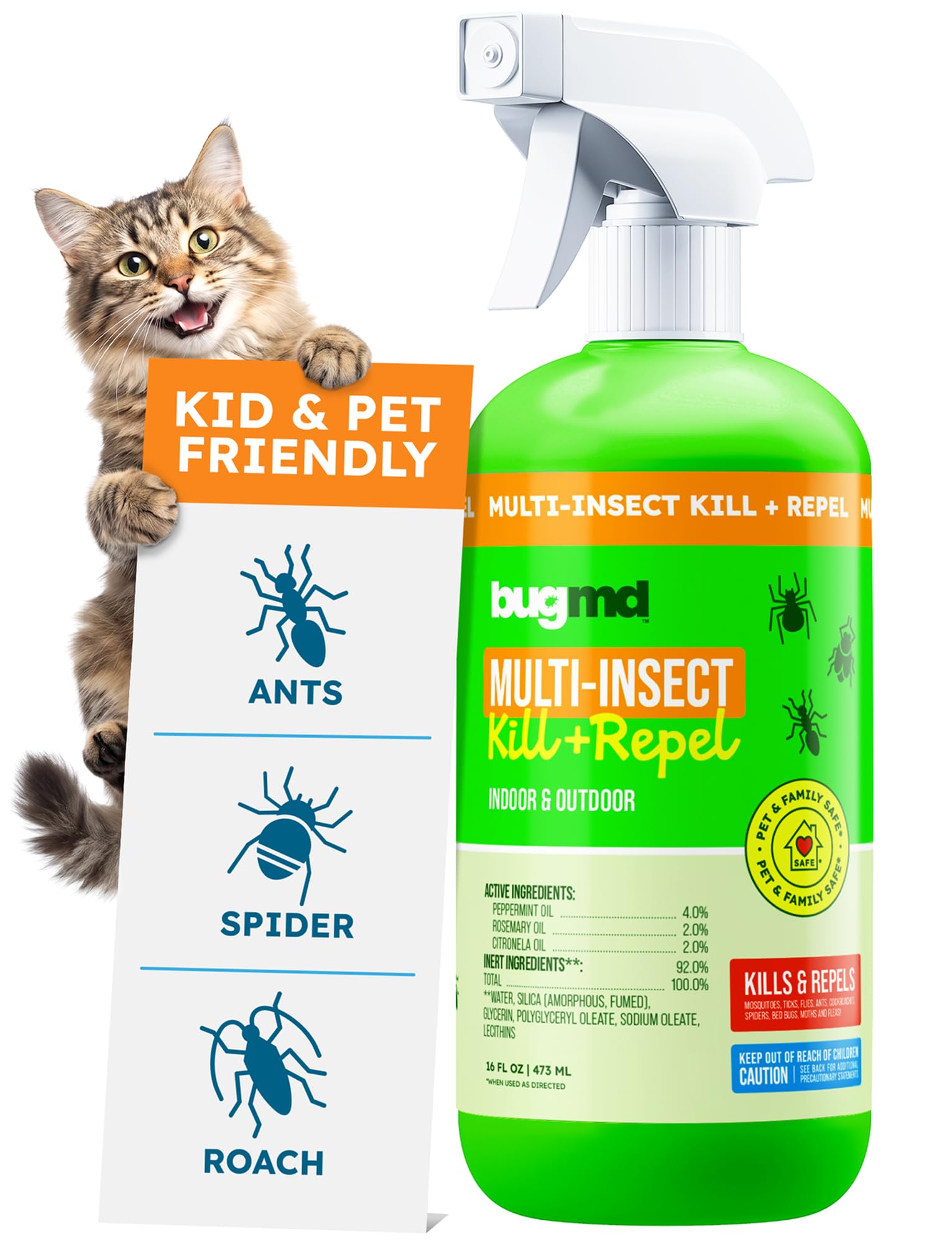
BugMD’s formula stakes out a specific niche: a 4% pure peppermint essential oil concentration that is high enough to kill stink bugs on contact yet gentle enough to spray around kids, dogs, and cats without triggering respiratory reactions. The blend also includes rosemary and citronella oils, which broaden the repellent spectrum and discourage stink bugs from lingering on treated entry points. Users who spot-treat kitchen windowsills and bathroom vents find that the fresh mint scent replaces the stale bug odor immediately, a psychological win that chemical sprays cannot offer.
The product works as both a contact killer and a short-term repellent barrier that lasts roughly three to five days before reapplication is necessary. The ready-to-use trigger bottle makes it easy to target individual bugs without overdosing the room with aerosol propellant. Several owners who switched from synthetic sprays to BugMD reported that their dogs stopped avoiding the baseboards after treatment, a subtle but telling indicator of how much less intrusive the plant-based formula is in the home environment.
On the downside, the citronella component produces a strong grassy aroma that some users find allergenic — a handful of reviewers noted skin irritation on their forearms after prolonged exposure during spraying. This is not a perimeter solution for large exterior areas; its true strength is as a daily-use indoor spot spray for homes where chemical sensitivity rules out synthetic pyrethroids.
What works
- High 4% peppermint oil concentration kills stink bugs on direct contact
- Pet-safe and plant-based with no harsh chemical smell near animals
- Fresh scent eliminates stink bug odor on treated surfaces
What doesn’t
- Citronella component can cause skin irritation in sensitive individuals
- Short residual window demands reapplication every 3-5 days
5. Harris 5 Minute Kill Time Bed Bug Killer Spray (32 oz)

Despite being marketed as a bed bug killer, the Harris formula is built around a broad-spectrum synthetic chemistry that works exceptionally well on stink bugs because it kills at all life stages — including eggs — and leaves a residual film that remains active for up to 30 days. The odorless, non-staining, water-based carrier makes it safe for use on mattresses, upholstery, curtains, and other fabric surfaces where stink bugs often hide when they sneak indoors. Users who sprayed a light mist across their window blind valances and curtain hems reported zero stink bug sightings for the following month.
The five-minute kill time is not a marketing exaggeration — verified owners confirm that direct application drops stink bugs within minutes, and the residual barrier continues to dispatch any bug that wanders across the dried film for weeks. The 32-ounce bottle covers a surprising number of interior surfaces because you do not need to soak the material; a light mist is enough to create the lethal barrier. This is a particularly strong choice for homes with stink bugs that congregate in bedrooms or near fabric-covered headboards.
The limitation is that the Harris spray is optimized for indoor mattresses and furniture, not for exterior perimeters or large open basements. If your primary invasion is happening on the outside of your home, you will need a different product; but for the specific scenario where stink bugs are getting into your living spaces and landing on fabric, the Harris formula is the most effective fabric-safe option available.
What works
- Kills stink bugs in under five minutes and eggs are also eliminated
- Odorless and non-staining, safe for mattresses, curtains, and upholstery
- Up to 30 days of residual protection from a single application
What doesn’t
- Not designed for exterior perimeter treatment or large open areas
- Higher price per ounce than multi-purpose insect concentrates
6. Wondercide Ant & Roach Aerosol Spray (10 oz 2-Pack)

The Wondercide aerosol is the most portable option in the lineup — two 10-ounce cans that you can stash in a kitchen drawer, a bathroom cabinet, and a garage shelf so you always have a contact killer within arm’s reach. The active ingredients are lemongrass oil and geraniol, both plant-based compounds that disrupt the stink bug’s cuticle and cause rapid dehydration. Users who dislike the lingering smell of peppermint-based sprays appreciate the lemongrass scent, which is lighter and more citrus-forward.
Performance on stink bugs is reliable for direct contact: a quick blast stops the bug in its tracks, and you can wipe the carcass away without triggering the defensive odor. The aerosol format delivers a fine mist that coats the insect’s entire body, which is critical for penetrating the shell. Owners of small dogs and cats consistently report zero adverse reactions, confirming the brand’s pet-safety claims even in multi-pet households.
The biggest complaint is mechanical: the nozzle on the aerosol can is prone to clogging halfway through the can, leaving 30% or more of the product inaccessible. The spray also leaves a slightly slippery residue on hard surfaces, which is a minor annoyance on kitchen counters. For the price, the two-pack offers a cheap entry point into natural pest control, but the can design means you may not get the full labeled volume out of each unit.
What works
- Compact aerosol cans store easily in multiple rooms for quick access
- Lemongrass and geraniol kill stink bugs on contact without harsh chemicals
- Proven safe around small dogs, cats, and children in real-world use
What doesn’t
- Nozzle frequently clogs before the can is empty, wasting product
- Residue can feel slightly slippery on kitchen counters and tile floors
7. Smart Grower Peppermint Oil Spray (16 FL OZ)
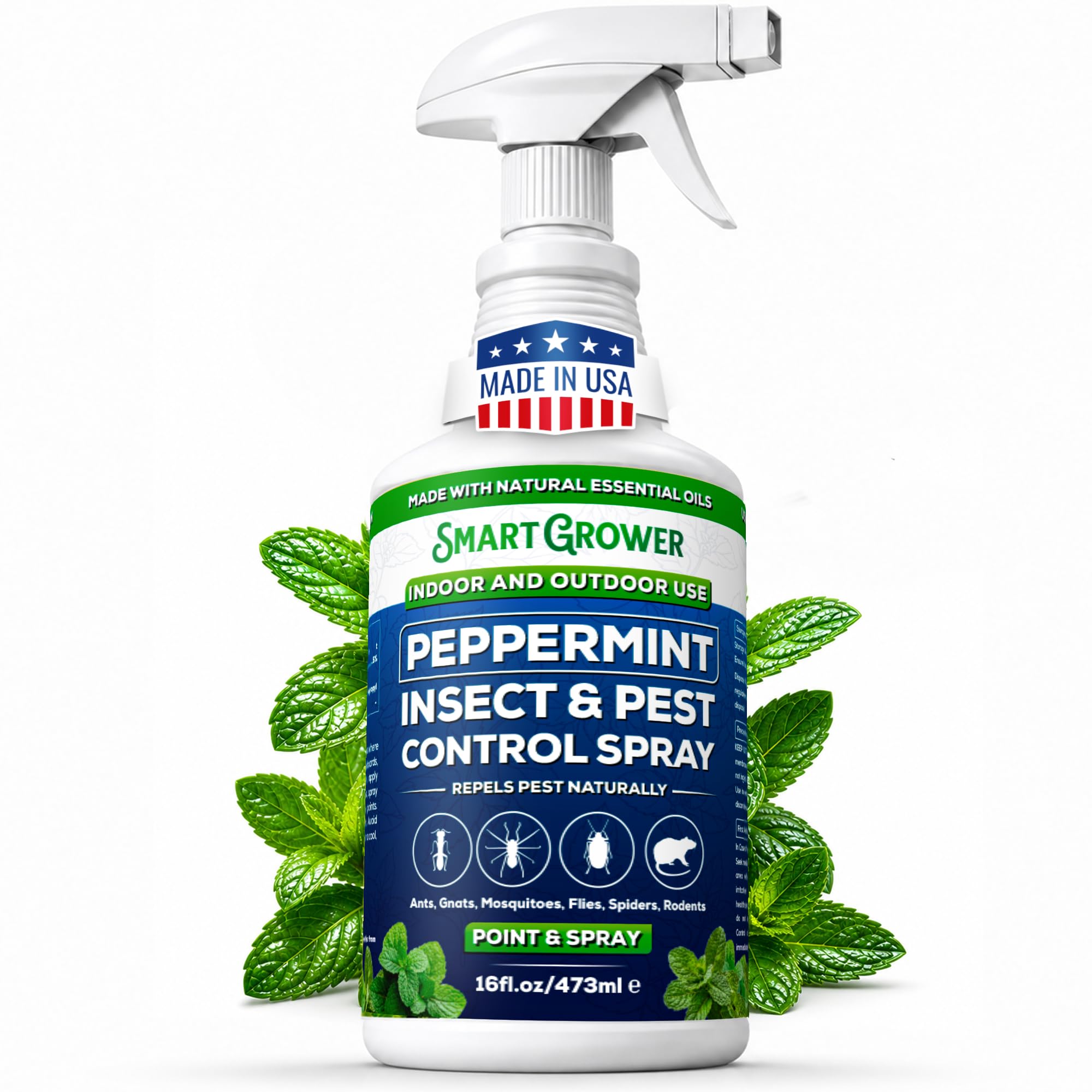
The Smart Grower formula positions itself as the “extra-strength” entry in the peppermint oil category, and the label delivers on that promise with a concentrated ready-to-use blend that requires zero mixing. The peppermint essential oil concentration is high enough to repel stink bugs on contact, and the 16-ounce trigger bottle fits neatly into a standard toolbox or pantry shelf. The manufacturer recommends spraying door frames, windowsills, attic vents, and basement cracks — exactly the points of entry where stink bugs stage their invasion.
Owner feedback confirms the formula works as a broad deterrent: several farm and ranch users reported that a single application around their porch door frames virtually eliminated the fly and stink bug congregation that had plagued them all summer. The peppermint scent is robust but pleasant, described as “aromatherapy-grade” rather than chemical-tasting. The bottle also doubles as a rodent repellent, which is a bonus for rural homes where mice and stink bugs share entry pathways.
The downsides are that the bottle can warp and leak if stored in a hot garage or direct sunlight, and the spray nozzle must be firmly tightened before first use to avoid accidental discharge. As with all essential-oil sprays, the effect is short-lived — you need to reapply every few days to maintain a consistent barrier. For a small, discreet, no-chemical spray that you can keep in the kitchen and deploy the moment a stink bug appears, this is a solid backup to a primary synthetic perimeter treatment.
What works
- Extra-strength peppermint oil repels stink bugs and many other pests
- Ready-to-use trigger bottle requires no mixing or measuring
- Pleasant peppermint scent doubles as an air freshener near entry points
What doesn’t
- Bottle can warp and leak if exposed to heat or direct sunlight
- Requires frequent reapplication every 2-3 days for continuous protection
Hardware & Specs Guide
Active Ingredient Type
Pyrethroids (cypermethrin, lambda-cyhalothrin) deliver the fastest knockdown and longest residual because they attack the insect’s nervous system and persist on dry surfaces for weeks. Essential oils (peppermint, lemongrass, geraniol) kill by coating the bug’s breathing tubes and dehydrating it, but they degrade quickly — typically within 24-72 hours. For stink bugs, pyrethroid-based formulas are the most effective choice for perimeter barriers; essential oils work best for immediate spot treatment.
Residual Duration
Residual life is measured in days or months depending on the carrier and the formulation technology. Concentrates like cypermethrin can last 2-4 weeks outdoors and up to 12 months on indoor nonporous surfaces if the formula is specifically engineered for longevity. Ready-to-use essential oil sprays offer no meaningful residual kill; they repel rather than kill after the liquid dries. Match the residual duration to your infestation frequency — chronic invasions demand synthetic residuals; occasional stragglers can be handled with short-residual natural products.
Application Method
Aerosol cans offer the fastest deployment for spot-treating visible bugs, but they lose pressure and are difficult to use for large perimeter sweeps. Trigger-spray bottles (pump-action) provide better control for baseboards and window frames and are refillable if you buy concentrate. Hose-end sprayers connected to a concentrated mix are the only efficient way to treat the entire exterior of a two-story house. Consider your physical reach — if you cannot spray the second-story eaves from the ground, a concentrate that you apply with a hose-end sprayer is the only practical solution.
Pet and Human Safety
EPA-registered synthetic sprays are safe indoors when used according to the label, but you must keep pets and family off treated surfaces until the spray dries completely — typically 30 minutes to 2 hours. Essential-oil sprays are generally considered safer around animals, but some oils (including peppermint and citronella) can cause respiratory distress in birds, reptiles, and small mammals like hamsters. Always read the full label for species-specific warnings; “natural” does not automatically mean harmless to every pet.
FAQ
Why do stink bugs seem immune to some bug sprays?
Can I use outdoor spray indoors for stink bugs?
How long does it take for peppermint oil spray to kill a stink bug?
What is the best way to apply a barrier spray around the exterior of my house?
Final Thoughts: The Verdict
For most gardeners, the spray for stink bugs winner is the Ortho Home Defense MAX because it combines a full year of residual protection with an odorless, non-staining formula that works indoors around the perimeter. If you want a concentrate that can cover a large property with professional-grade knockdown power, grab the CSI Cyper WSP. And for a pet-safe, natural option that keeps stink bugs out of your living spaces without synthetic chemistry, nothing beats the Mighty Mint Gallon.