
Squash bugs don’t nibble—they suck the life out of your vines, turning robust zucchini leaves into brittle brown shells practically overnight. The window to act is narrow: once their copper-colored eggs hatch beneath the leaves, the nymphs start feeding immediately, and a heavy infestation can collapse a mature plant in under a week. Finding a spray that penetrates their waxy bodies without torching your blossoms is the only path to a full harvest.
I’m Rikta — the co-founder and writer behind Lawn Gear Lab. For this guide, I compared seven leading spray formulations, cross-referencing active ingredient concentrations, contact versus systemic kill mechanisms, and owner-reported egg and nymph mortality rates to separate the treatments that actually protect your vine crops from the ones that just wet the leaves.
Whether you need a ready-to-use trigger bottle for a quick evening patrol or a concentrated solution for a sprawling patch, these are the best-performing options available now. Here is the comprehensive best spray for squash bugs buying guide.
How To Choose The Best Spray For Squash Bugs
Squash bugs are armored against many general-purpose sprays, so the standard “pick any bug killer” approach often fails. You need a formulation that either penetrates their tough exoskeleton on contact or moves through the plant tissue so feeding nymphs ingest a lethal dose. Here is what matters most when selecting a treatment.
Contact vs. Systemic Action
Contact sprays—typically carbaryl or pyrethrin-based—must hit the squash bug directly to work. They are effective for spot treatment but demand thorough coverage of leaf undersides and stems. Systemic insecticides like acephate are absorbed by the plant and kill nymphs as they feed. This approach catches hidden bugs but usually cannot be used on vegetable fruit; check the label for crop restrictions before applying.
Egg Stage Coverage
Most sprays do not kill squash bug eggs. The best strategy uses a product with some ovicidal activity or a reapplication schedule timed to the 7-to-10-day egg-hatching window. If a spray lacks egg-kill claims, plan a second application precisely when nymphs emerge, or the infestation will rebound quickly.
Edible Crop Safety & Residue
If you are treating zucchini, pumpkins, or winter squash, the pre-harvest interval (PHI) is critical. Neem oil and insecticidal soap have zero-day PHIs up to harvest day. Synthetic options like malathion and carbaryl require waiting several days. Always match the PHI to your harvest schedule to avoid consuming pesticide residues.
Formulation & Coverage Volume
Concentrates offer the lowest cost per gallon but require a dedicated sprayer and careful mixing. Ready-to-use trigger bottles are convenient for small patches under a dozen plants. For larger gardens, a concentrate that makes 16 gallons or more lets you treat the entire squash bed and the soil around it, where adult bugs hide overnight.
Quick Comparison
On smaller screens, swipe sideways to see the full table.
| Model | Category | Best For | Key Spec | Amazon |
|---|---|---|---|---|
| Bonide Systemic Insect Control | Systemic Concentrate | Deep protection for ornamental squash | Makes 16 gallons | Amazon |
| Garden Safe Fungicide3 | Neem Oil Combo | Fungus + bug control in one spray | 1 Gallon RTU | Amazon |
| Hi‑Yield 55% Malathion | Insecticide Concentrate | Broad-spectrum pest knockdown | 55% Malathion | Amazon |
| Safer Brand 3‑in‑1 Spray | Organic RTU | Organic vegetable gardens | OMRI Listed | Amazon |
| Botanical Tradesman Neem Oil | Cold-Pressed Concentrate | Budget-conscious organic spray | Makes 320 Fl Oz | Amazon |
| Sevin Concentrate | Contact Concentrate | Large area squash beds | Carbaryl concentrate | Amazon |
| Sevin Trigger Spray | RTU Contact | Small garden spot treatment | 32 oz RTU | Amazon |
In‑Depth Reviews
1. Bonide Systemic Insect Control

The Bonide Systemic Insect Control concentrate is the heaviest hitter on this list because it works from inside the plant. The active ingredient acephate is absorbed by roots and foliage, so when squash bug nymphs pierce stems and leaves to feed, they ingest a lethal dose—regardless of whether you hit them directly with the spray. One 16-ounce bottle makes a full 16 gallons of solution, enough to drench a sprawling patch of winter squash and the surrounding soil several times over.
Squash bug eggs often survive contact sprays, but the systemic nature of acephate means that nymphs emerging days after application still die. This product is not labeled for vegetable fruit, making it best suited for ornamental squash, pumpkin patches grown for decor, or early-season prevention before fruit sets. Owner reports consistently note immediate knockdown of fungus gnats, thrips, and spider mites, with visible results within 24 hours of the first soak.
The smell is the biggest practical downside—several users describe it as “dumpster-like,” so mixing outdoors is mandatory. It also requires a dedicated sprayer that you do not use for edible crops afterward, since acephate residues linger in equipment. For growers with ornamental beds who need a set-and-forget systemic barrier, this concentrate delivers unmatched persistence.
What works
- Systemic action kills nymphs that contact sprays miss
- One bottle yields 16 gallons of finished spray
- Fast knockdown reported within 24 hours
What doesn’t
- Strong odor requires outdoor use
- Not labeled for use on vegetables or fruit crops
- Residue can burn leaves if sprayed in full sun
2. Hi‑Yield 55% Malathion Spray
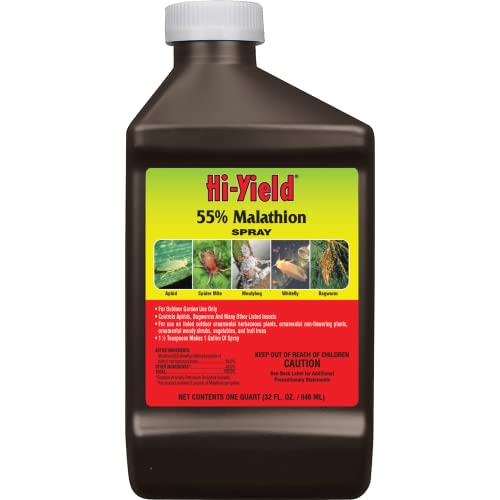
The Hi-Yield 55% Malathion concentrate is the organophosphate heavy artillery for squash bug outbreaks that have already reached adult-mating stage. At 55% malathion, this is not a gentle botanical mist—it is a broad-spectrum neurotoxin that penetrates the waxy cuticle of adult squash bugs and kills on contact. It is labeled for vegetables and fruit trees, making it one of the few synthetic concentrates that can be used on edible squash varieties when applied according to the pre-harvest interval.
Owner reports are emphatic about its effectiveness against stubborn scale, red spider mites, and mosquitoes, with one user calling it “kryptonite” for yard pests. The 32-ounce bottle mixes with water for hose-end or tank sprayer application, covering substantial garden acreage. It works best in calm, dry weather; rain within 24 hours washes the residue off leaves and reduces kill rates significantly.
The safety profile demands respect. Multiple reviewers mention using respirators and full protective gear, and one notes it is a “suspected carcinogen” that should be a last resort. It is undeniably effective, but the toxicity means it is best reserved for severe infestations where organic options have failed. For the home vegetable gardener who needs a nuclear option, this is the most potent per-ounce choice available.
What works
- Extremely high malathion concentration for rapid kill
- Labeled for use on vegetables and fruit trees
- Covers large areas when mixed per directions
What doesn’t
- Requires protective gear and careful handling
- Strong odor lingers post-application
- Rain within 24 hours reduces effectiveness
3. Garden Safe Fungicide3
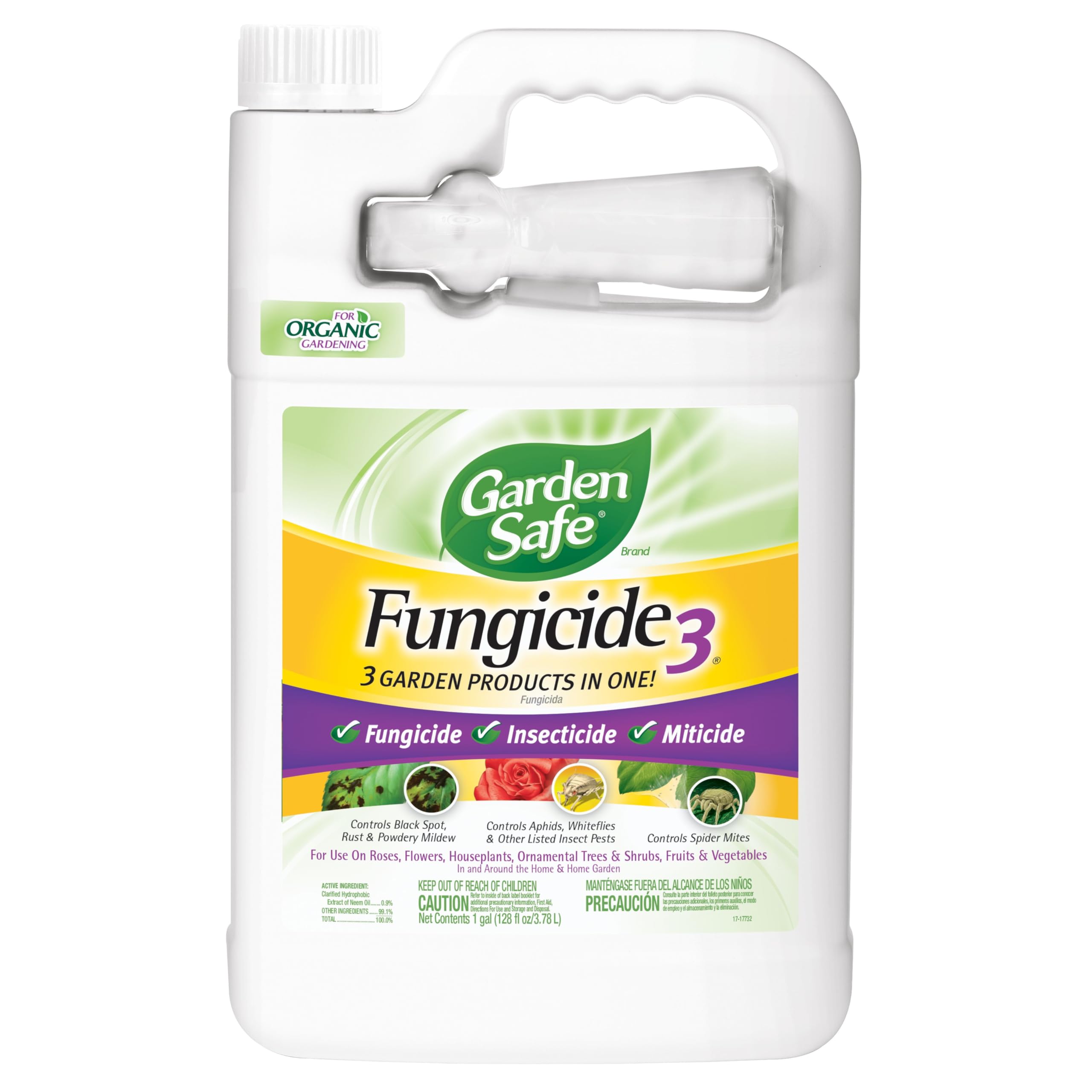
The Garden Safe Fungicide3 is a three-in-one ready-to-use spray that combines clarified hydrophobic neem oil extract with fungicidal properties. For squash bug control, the neem oil works by coating the insects’ breathing pores and disrupting feeding, while the fungicide component protects against powdery mildew and black spot—diseases that often follow squash bug damage. This gallon-size jug includes a sprayer attachment, making it a grab-and-go option for evening patrols.
Owner feedback is overwhelmingly positive for mildew prevention on hibiscus, roses, tomatoes, and blueberries, with one user describing it as “life-changing” for blossom and yield improvement. It is labeled for organic gardening and can be used up to the day of harvest, which is a major advantage for zucchini and summer squash that fruit continuously. The neem oil extract also kills eggs and larvae of listed insects, giving it some ovicidal activity that plain soap sprays lack.
The built-in sprayer is the weak link—multiple reports note it fails when the bottle is a quarter full, and the coiled hose design offers only a few inches of reach. Users recommend transferring the liquid to a quality pump sprayer for full leaf coverage. For organic gardeners who also battle fungal infections, this dual-action spray adds value that a standalone insecticide cannot match.
What works
- Fungicide and insecticide in one application
- Zero-day pre-harvest interval for edible crops
- Effective against powdery mildew alongside squash bugs
What doesn’t
- Built-in sprayer nozzle fails before bottle empties
- Best used preventively, not for heavy infestation
- Requires transfer to better sprayer for coverage
4. Safer Brand 3-in-1 Garden Spray

The Safer Brand 5452 combines insecticidal soap (potassium salts of fatty acids) with sulfur to create an OMRI-listed spray that kills soft-bodied nymphs on contact while controlling fungal diseases. For squash bugs specifically, the soap dissolves the waxy outer layer of nymphs, causing dehydration, while the sulfur disrupts mildew and leaf spot fungi that thrive on weakened plants. It is ready-to-use out of the bottle, eliminating mixing errors.
Owner reports highlight its effectiveness on cucumbers and roses, with users noting it prevents but does not reverse existing fungus damage. It is safe for use up to the day before harvest, which is critical for continuous-yield summer squash. The spray also controls aphids, spider mites, and whiteflies—common companion pests that often appear in the same beds as squash bugs.
The trigger sprayer is the recurring complaint. Multiple owners report the nozzle fails after one or two uses, leaving a mostly full bottle that cannot dispense. Transferring the liquid to a durable pump sprayer extends its usefulness. It requires thorough coverage of leaf undersides, and heavy rain can wash it off, but for organic gardeners who want a low-toxicity option with fungal protection, this is a solid, budget-friendly choice.
What works
- OMRI Listed for certified organic gardens
- Zero-day PHI for edible crops
- Dual action against insects and fungus
What doesn’t
- Spray nozzle commonly fails mid-bottle
- Ineffective against adult squash bugs with thick cuticles
- Washes off in heavy rain
5. Botanical Tradesman Neem Oil Spray

The Botanical Tradesman Neem Oil kit is a cold-pressed neem oil concentrate paired with a refillable 16-ounce trigger spray bottle. The 3.4-ounce neem bottle dilutes into roughly 338 fluid ounces of finished spray—about 20 refills—making it one of the most economical organic options per treatment. Cold pressing preserves azadirachtin, the compound that disrupts squash bug feeding and reproduction, giving this concentrate a true biological mode of action.
User reports confirm effectiveness against fungus gnats, whiteflies, and general garden pests, though several note the oil is very thick and requires hot water and mild soap to emulsify properly. The included spray bottle has adjustable nozzle settings, but users recommend transferring the diluted oil to a dedicated pump sprayer for better pressure. The strong neem aroma fades quickly after drying.
The main challenge is consistency—neem oil separates rapidly and requires frequent shaking during application. It also coats leaves with a thin sheen that can burn foliage if applied in direct afternoon sun. For the organic gardener willing to mix fresh batches weekly and spray at dusk, this kit offers the lowest per-gallon cost and a proven active ingredient that does not leave persistent synthetic residues on edible squash.
What works
- Extremely cost-effective per gallon of spray
- 100% cold-pressed neem oil with azadirachtin
- Zero PHI for edible crops
What doesn’t
- Oil requires hot water and soap for proper emulsion
- Can burn leaves if sprayed in hot sunlight
- Separates quickly; needs constant agitation
6. Sevin Concentrate Bug Killer

The Gardentech Sevin Concentrate is the classic carbaryl-based contact insecticide that has been a garden staple for decades. It kills squash bugs by disrupting their nervous system on contact, and it also provides residual protection on leaf surfaces for up to several weeks. The one-pint concentrate treats a large area of vegetables and ornamentals, making it a practical choice for growers who need to cover sprawling squash patches without mixing multiple batches.
Customer reviews are consistently positive for grasshopper, ant, and general pest control, with many users returning to the brand year after year. For squash bugs specifically, thorough coverage of leaf undersides and stem junctions is essential because carbaryl has no systemic activity—miss a bug, and it survives. The concentrate mixes easily with water and applies through any standard hose-end or tank sprayer.
The biggest drawback is its impact on pollinators. Carbaryl is highly toxic to bees, so it must never be sprayed on open flowers or during bloom. It also has a pre-harvest interval that varies by crop—usually three to seven days for squash—which limits its utility on plants you harvest daily. For early-season prevention before flowering, this is a cost-effective contact option that has proven reliable for generations of vegetable gardeners.
What works
- Proven carbaryl formula for broad-spectrum contact kill
- Concentrate covers large areas economically
- Easy to mix with any garden sprayer
What doesn’t
- Highly toxic to pollinators; avoid blooms
- Requires thorough coverage for effective contact kill
- PHI limits use on daily-harvest squash
7. Sevin Trigger Spray Bug Killer

The Sevin Ready-to-Use Trigger Spray offers the same carbaryl chemistry as the concentrate but in a no-mix, grab-and-go bottle. For a small garden bed with a dozen squash plants, this 32-ounce trigger bottle saves the hassle of measuring and mixing, letting you spray immediately upon spotting eggs or nymphs. It is labeled for over 100 insect pests, including squash bugs, and users report it saved their zucchini and flowers from complete defoliation.
Owner feedback is emphatic about its ease of use—”purchased over and over” and “works on so many things” appear frequently. It is particularly effective for Japanese beetles and leaf-eating caterpillars that often share squash beds. The spray stream reaches leaf undersides without needing a wand, which reduces application time during evening garden patrols.
The high cost per ounce compared to the concentrate version is the primary trade-off. A single 32-ounce bottle covers a limited area, and heavy infestations may require multiple bottles over a season. Like all carbaryl products, it is dangerous to bees if sprayed on open flowers. For the casual gardener with a small patch who values instant deployment over economy, this trigger bottle is the most convenient entry point into effective squash bug control.
What works
- No mixing required; spray straight from bottle
- Kills over 100 insect pest species
- Adjustable nozzle reaches leaf undersides
What doesn’t
- Higher cost per ounce than concentrate
- Small bottle coverage for large beds
- Bee toxic; must avoid open flowers
Hardware & Specs Guide
Contact vs. Systemic: Which Mode of Action?
Contact sprays like carbaryl (Sevin) and malathion kill squash bugs only when the droplets physically hit them. These work best for spot treatment and early infestations where you can see the bugs. Systemic insecticides (acephate in Bonide) are absorbed into the plant vascular system and kill nymphs as they feed—ideal for catching hidden bugs but restricted from use on fruit-bearing vegetables. For edible squash, stick with contact sprays that have an approved pre-harvest interval or use neem oil.
Active Ingredient Concentration & Coverage
Malathion at 55% concentration (Hi-Yield) is the strongest single-ingredient option, providing rapid knockdown but carrying higher toxicity risk. Carbaryl concentrates (Sevin) typically sit around 22–25% and offer broad-spectrum contact control. Neem oil concentrations vary; look for 100% cold-pressed neem oil with no added fillers for the best azadirachtin content. Always calculate how many gallons of finished spray a concentrate yields—16 gallons from 16 ounces (Bonide) is excellent value per treatment.
FAQ
Can I use Sevin concentrate on squash that already has fruit?
How often should I spray neem oil to control a squash bug infestation?
Will insecticidal soap kill adult squash bugs or only nymphs?
Final Thoughts: The Verdict
For most gardeners, the spray for squash bugs winner is the Bonide Systemic Insect Control because it catches hidden nymphs through internal plant absorption and offers the longest residual protection per application. If you need an organic option safe for daily harvest, grab the Garden Safe Fungicide3 for its dual insect-and-fungus control. And for severe outbreaks that demand a fast, broad-spectrum knockdown, nothing beats the Hi‑Yield 55% Malathion as a heavy-duty last resort.