
Spider mites are the stealth destroyers of indoor and outdoor gardens. They pierce leaf cells, drain the life out of foliage, and spin fine webbing that signals an infestation is already underway. Finding the right spray is a race against the clock.
I’m Rikta — the co-founder and writer behind Lawn Gear Lab. I’ve spent hundreds of hours researching pest-control chemistries, analyzing active-ingredient concentrations, and cross-referencing real owner experiences to separate sprays that deliver from those that just smell good.
Whether you’re treating a prized Monstera or a full vegetable bed, the right spray for spider mites needs to hit hard on contact, protect the plant tissue, and fit your growing style without leaving toxic residue.
How To Choose The Best Spray For Spider Mites
Spider mites are not insects; they are arachnids, which means many generic insecticides fail to control them. The spray’s active ingredient, formulation type, and application method determine whether you knock out the infestation or just tickle it.
Active Ingredient and Mode of Action
Look for miticides containing neem oil, Spinosad, sulfur, or insecticidal soaps. Neem oil works by smothering mites and disrupting their hormonal cycles, while Spinosad attacks the nervous system on contact. A product that works both as a contact killer and a residual protectant delivers the best results against fast-reproducing mite populations.
Concentrate vs. Ready-to-Use
Concentrates require mixing with water and often a surfactant, but they yield far more spray volume per dollar — ideal for large gardens or repeated weekly treatments. Ready-to-use bottles are convenient for quick spot-sprays on houseplants, but the cost per application is higher. For established infestations, a concentrate gives you control over the dilution strength.
Plant Safety and Residue
Spider mite sprays must be phyto-safe — they shouldn’t burn tender new growth or flower buds. Products that are OMRI-listed or FIFRA 25(b) exempt generally have a lower risk of phytotoxicity. Also consider whether the spray leaves a visible residue on leaves, which matters for ornamental plants displayed indoors.
Quick Comparison
On smaller screens, swipe sideways to see the full table.
| Model | Category | Best For | Key Spec | Amazon |
|---|---|---|---|---|
| Grower’s Ally Crop Defender 3 | Ready-to-Use | Quick contact kill | 24 oz RTU; OMRI-listed | Amazon |
| Bonide Neem Oil Concentrate | Concentrate | Long-term prevention | 16 oz; cold-pressed neem | Amazon |
| Monterey Neem Oil RTU | Ready-to-Use | Edible crop safety | 32 oz; harvest-day safe | Amazon |
| Evergreen Way Insecticide | Concentrate | Bio-based broad control | 16 oz; bio-based formula | Amazon |
| Botanical Tradesman Neem Kit | Concentrate Kit | Ease of mixing | 3.4 oz concentrate + sprayer | Amazon |
| Natural Guard Spinosad Soap | Ready-to-Spray | Broad insect control | 32 oz; dual-action soap | Amazon |
| Plantovika Pure Neem Oil | Concentrate | Budget DIY mixing | 16 oz; 100% cold-pressed | Amazon |
In‑Depth Reviews
1. Grower’s Ally Crop Defender 3
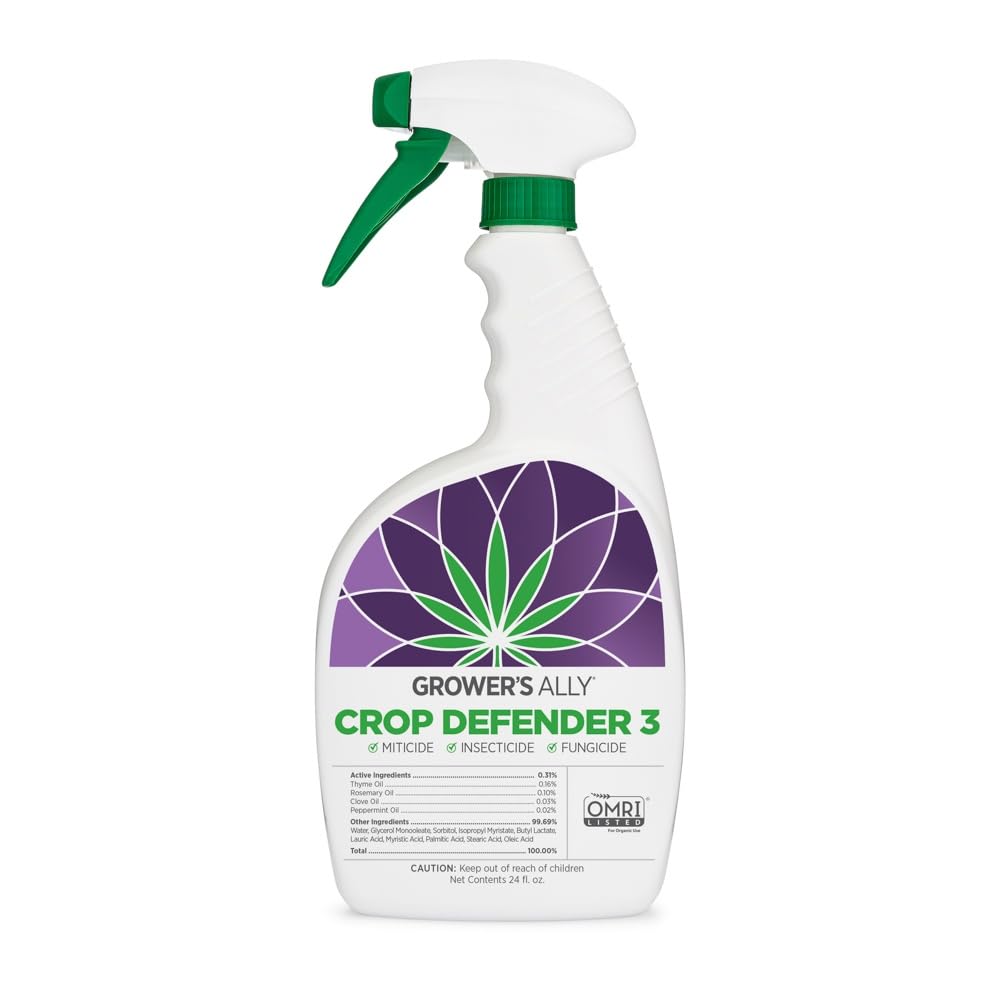
The Grower’s Ally Crop Defender 3 is a ready-to-use miticide that tackles spider mites, russet mites, thrips, and aphids on contact using a synergistic blend of botanical oils. At 24 ounces, it’s packaged for immediate use, and the built-in surfactant helps the spray spread evenly across leaf surfaces without additional mixing steps. Cultivators consistently report zero phytotoxicity even on delicate seedlings and flowering plants, which makes this an excellent choice for indoor growers who cannot risk leaf burn.
Because it is OMRI-listed and exempt under FIFRA 25(b), this spray contains no synthetic pesticides or heavy metals, so you can harvest vegetables on the same day you apply. Owner feedback highlights its strong performance on stubborn indoor mite infestations that DIY remedies failed to control. The pleasant botanical scent — unusual for a miticide — is a small bonus during application.
For growers who want a complete, no-mix solution that kills spider mites without stressing the plant, this is the most reliable ready-to-use option on the market. The price per ounce is higher than a concentrate, but the convenience and contact-kill speed justify the mid-range investment.
What works
- Immediate contact kill on spider mites and eggs
- Zero leaf burn even on tender seedlings
- Harvest-safe the same day
What doesn’t
- Small bottle for large outdoor gardens
- Higher cost per application than concentrates
2. Bonide Neem Oil Fungicide Miticide Insecticide Concentrate

Bonide’s 16-ounce neem oil concentrate is a staple in the organic gardening community for good reason. This cold-pressed formulation retains high azadirachtin levels that disrupt spider mite feeding and reproduction long after the initial spray. A single bottle mixed at the recommended rate yields gallons of finished spray, making it a premium value for anyone protecting a large vegetable patch, rose garden, or orchard.
Users report that consistent weekly applications keep mite populations in check and also prevent secondary fungal issues like powdery mildew. The oil leaves a faint residue that some find beneficial as a leaf shine. Note that neem oil must be emulsified with mild soap before adding water, so there is a learning curve for first-time users.
Bonide’s reputation for quality control and long shelf life gives this concentrate an edge over lesser-known brands. While it is not the cheapest neem per ounce, the reliability and proven miticide/fungicide dual action make it a top choice for serious gardeners who treat spider mites as a recurring seasonal problem.
What works
- High-purity cold-pressed neem oil
- Effective against both mites and powdery mildew
- Excellent value per gallon of mixed spray
What doesn’t
- Requires soap emulsifier during mixing
- Can burn sensitive plants if mixed too strong
3. Monterey Neem Oil RTU
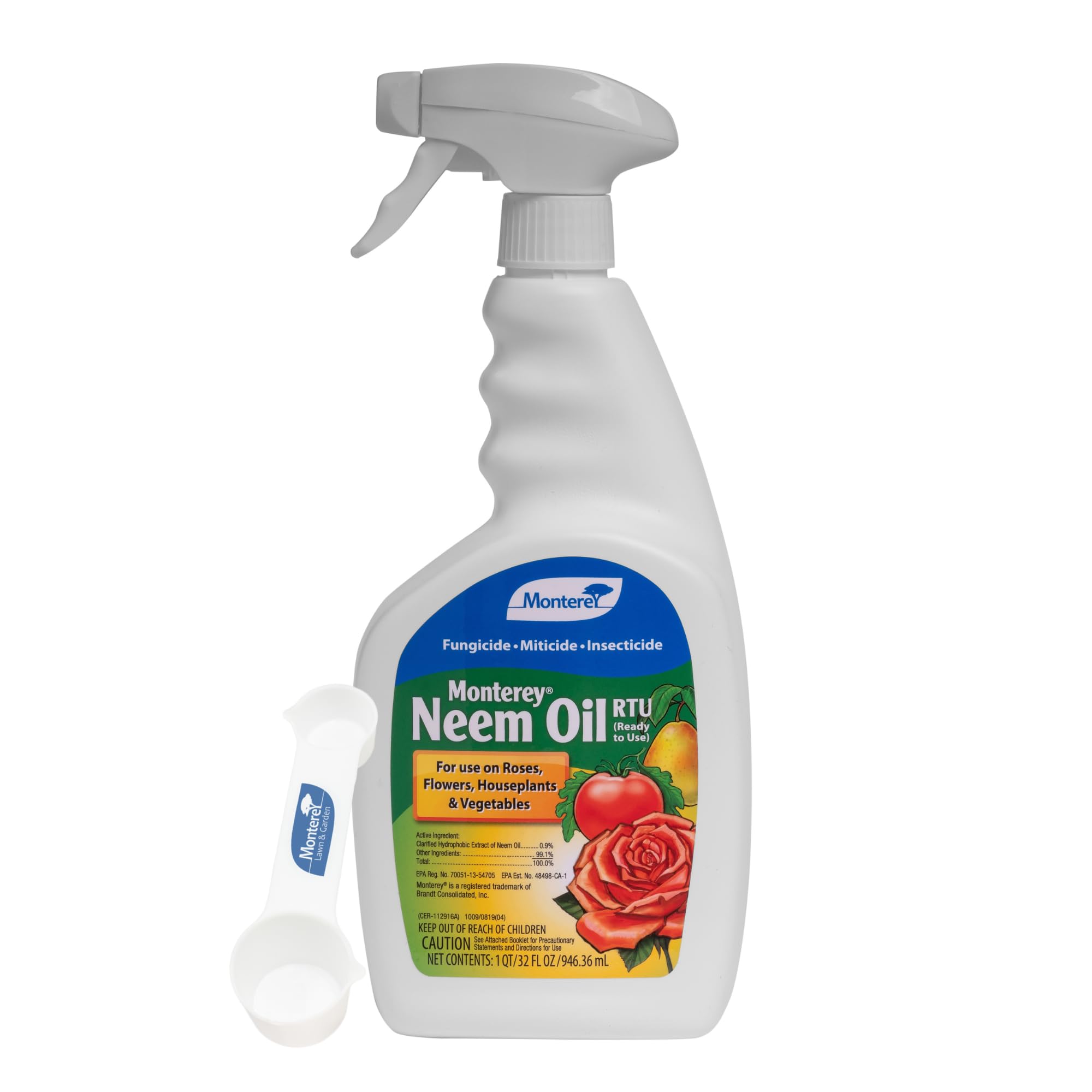
The Monterey Neem Oil RTU comes in a generous 32-ounce trigger spray bottle that needs no mixing — shake, spray, and it’s done. The formulation is broad-spectrum, controlling black spot, powdery mildew, rust, aphids, and spider mites. Because it is a neem-oil-based miticide, it treats both the adult mites and the fungal diseases that often follow mite feeding damage.
Home gardeners appreciate that this RTU spray is safe to use on fruits, vegetables, and herbs up to and including the day of harvest. The lack of mixing also eliminates measuring errors that can lead to leaf burn. Owners note the strong, earthy neem odor — typical for neem-based products — but confirm it dissipates once the spray dries.
For small-to-midsize gardens where convenience matters more than extreme economy, this stands as the best ready-to-use neem option. The sprayer nozzle provides good coverage on tomato plants, rose bushes, and containers, though the bottle may need refilling for large-scale applications.
What works
- No mixing needed — shake and spray
- Harvest-day safe for vegetables and herbs
- Targets mites plus fungal diseases
What doesn’t
- Strong neem odor while wet
- Not cost-efficient for treating large acreage
4. Evergreen Way Organic Insecticide & Fungicide

This advanced bio-based concentrate from Evergreen Way delivers a one-two punch against spider mites and the fungal infections they invite. The formula disrupts pest life cycles on contact while coating leaf surfaces to suppress future spore germination. Users have reported visible results within days — mites shrivel up seconds after the spray lands, and stressed foliage rebounds quickly.
The concentrate mixes with water in any sprayer — pump, hose-end, or battery — and yields multiple refills from the 16-ounce bottle. This makes it an economical choice for whole-garden coverage. Importantly, the spray is gentle enough for seedlings and sensitive herbs when diluted correctly, and owners note it has no strong lingering odor.
For organic growers who want a non-neem alternative that still checks the OMRI-friendly boxes, this product stands out. The near-instant kill speed combined with residual protection gives it versatility for both weekly prevention and emergency outbreak treatment.
What works
- Kills mites on contact within seconds
- No strong odor during or after spraying
- Concentrate provides multiple treatments
What doesn’t
- Must be mixed fresh for each use
- Results can vary by mite species strain
5. Botanical Tradesman Neem Oil Spray Kit

Botanical Tradesman solves the biggest friction point of neem oil use: the mixing step. This kit includes a 3.4-ounce bottle of cold-pressed neem oil concentrate plus a 16-ounce trigger spray bottle. The concentrate is undiluted and thick, but the included sprayer makes it simple to mix up small batches for spot-treating houseplants or container gardens.
The concentrate-to-water ratio yields approximately 338 ounces of finished spray, which is enough for 20 refills of the included sprayer. Owners report that regular use knocks down fungus gnat and whitefly populations while keeping spider mites in check. The oil is noticeably thick — warming the closed bottle in hot water before measuring helps it flow and emulsify more easily.
For anyone who wants a complete neem starter system without buying a separate spray bottle and surfactant, this kit delivers the best entry-level value. It trades raw bulk for convenience, making it ideal for growers managing 5-15 indoor plants rather than a full landscape.
What works
- Comes with a refillable trigger sprayer
- High-purity cold-pressed concentrate
- Simple dilution instructions for beginners
What doesn’t
- Thick oil is hard to mix cold
- Small concentrate bottle is not bulk-economical
6. Natural Guard Spinosad Soap

Natural Guard Spinosad Soap combines Spinosad, a naturally derived nerve toxin, with insecticidal soap for a two-pronged attack on spider mites and other soft-bodied pests. Spinosad targets the nervous system on contact, while the soap breaks down the mite’s protective outer layer, ensuring fast knockdown. This 32-ounce ready-to-spray formula works on vegetables, ornamentals, and greenhouses.
Owner feedback highlights its effectiveness against cactus beetles, aphids, and general garden pests, with results visible within minutes. One user noted a cactus beetle infestation cleared with a single spray and no reappearance over several days. The formula is also labeled for powdery mildew control, adding fungicidal value for gardens with multiple disease pressures.
For gardeners who want a non-neem option with a different mode of action, this soap-based miticide provides excellent coverage for medium-sized vegetable beds. The bottle is adequate for several full applications, but those with large gardens may find the ready-to-use format runs out quickly.
What works
- Fast knockdown on contact
- Effective on a wide range of garden insects
- Includes mildew control in the same spray
What doesn’t
- Not as potent on heavy spider mite infestations
- Bottle size can be limiting for large areas
7. Plantovika Pure Neem Oil

Plantovika’s 16-ounce pure neem oil is a straightforward, no-frills concentrate for gardeners who already know how to mix their own spray. It is 100% cold-pressed and unrefined, retaining the full profile of active compounds that repel and smother spider mites. Users report success using it on houseplants to eliminate mealybugs and white bugs, as well as for dogs with skin infections.
The strong, earthy aroma is typical of quality neem, and owners recommend adding a few drops of essential oil if the smell is bothersome. The concentrate requires dilution with water and dish soap before application, and the instructions suggest spraying every 2-3 weeks for mite prevention. Several reviewers confirmed that a single bottle lasts through many treatments.
For cost-conscious growers who already have spray equipment and a mild soap on hand, this is the most affordable entry into neem-based mite control. The trade-off is the extra mixing step and the need to measure carefully to avoid leaf burn on sensitive plants.
What works
- Lowest cost per ounce of pure neem
- Authentic cold-pressed extraction
- Versatile for plants and pet care
What doesn’t
- Requires mixing with soap and water
- Strong neem odor that lingers
Hardware & Specs Guide
Neem Oil Concentration
The azadirachtin content in neem oil determines how effectively it disrupts mite feeding and egg-laying. Cold-pressed, unrefined neem retains the highest levels of this active compound. Concentrates with no added water or vegetable oil supply the most potent dose per drop, which is critical when treating heavy infestations of spider mites that have developed partial resistance.
Surfactant Integration
A surfactant — usually a mild liquid soap — reduces water surface tension so the spray coats leaf undersides where mites hide. Some ready-to-use products, like Grower’s Ally Crop Defender 3, include a built-in surfactant, eliminating a mixing step. Without a surfactant, neem oil separates from water and fails to spread, leaving mites untouched despite thorough spraying.
FAQ
How often should I spray to fully eliminate spider mites?
Can I use neem oil on edible herbs and vegetables right up to harvest?
Will neem oil burn my plants if I mix it too strong?
Final Thoughts: The Verdict
For most gardeners, the spray for spider mites winner is the Grower’s Ally Crop Defender 3 because it kills on contact without burning plants and is harvest-day safe. If you want a long-lasting preventative concentrate that covers a huge area, grab the Bonide Neem Oil Concentrate. And for an instant-kill, low-odor bio-based formula that works in seconds, nothing beats the Evergreen Way Organic Insecticide.