
You spot it just as your squash blossoms are forming: a ghostly white coating dusting the leaves, soon turning them yellow and brittle. Powdery mildew is a fungal disease that thrives in humid conditions, and once it takes hold, it can spread across your entire garden within days. The right treatment stops it fast, and the wrong one leaves you spraying endlessly with no results.
I’m Rikta — the co-founder and writer behind Lawn Gear Lab. I’ve spent dozens of hours sifting through product labels, comparing active ingredients, studying horticultural disease-control data, and analyzing thousands of verified owner experiences to build this guide based on real-world efficacy against powdery mildew.
Whether you need a gentle biofungicide, a sulfur-based eradicator, or a triple-action spray that covers all bases, this guide breaks down the exact formula that suits your situation. If you’re looking for the best spray for powdery mildew, you’ll find the top contenders ranked by ingredient strength, safety profile, and ease of application.
How To Choose The Best Spray For Powdery Mildew
Not all fungicides work the same way. Some kill existing mildew on contact, while others prevent future infection by building a protective barrier or triggering the plant’s immune response. Choosing the right one depends on the severity of the outbreak, the type of plants you’re treating, and whether you need an organic solution.
Active Ingredient: Contact vs. Systemic
Contact fungicides like sulfur and neem oil knock down existing mildew spores immediately but can wash off in rain and may burn sensitive plants in high heat. Systemic biofungicides like Bacillus amyloliquefaciens work from within the plant tissue, offering longer-lasting protection without phytotoxicity. The best integrated approach often combines a contact spray for knockdown followed by a biofungicide for protection.
Concentrate vs. Ready-to-Use
Ready-to-use (RTU) sprays are convenient for spot treatments on a few plants, but the cost per application is significantly higher. Concentrates require measuring and mixing but stretch much further — a 16-ounce concentrate can yield up to 10 gallons of finished spray, making them far more economical for large gardens, vegetable patches, or repeated applications.
OMRI Listing and Harvest Timing
If you’re growing edible crops, check whether the product is OMRI Listed for organic gardening and what the pre-harvest interval is. Many biofungicides and botanical-oil sprays allow application up to the day of harvest, whereas sulfur may require a one-week waiting period. Also consider bee safety — avoid spraying open flowers with wide-spectrum fungicides during peak pollination hours.
Quick Comparison
On smaller screens, swipe sideways to see the full table.
| Model | Category | Best For | Key Spec | Amazon |
|---|---|---|---|---|
| Grower’s Ally Crop Defender 3 | Triple-Action | Foliar disease & mite control | Botanical oil blend (RTU) | Amazon |
| Bonide Revitalize Biofungicide | Biofungicide | Systemic prevention | Bacillus amyloliquefaciens (conc.) | Amazon |
| Earth’s Ally Disease Control | Citric Acid | Rose & tree diseases | Citric acid 32 oz concentrate | Amazon |
| Safer Brand 5450-6 Fungicide | Sulfur Spray | Heavy rust & mildew | Sulfur 32 oz RTU | Amazon |
| Southern Ag Bio Fungicide | Biological | Hydroponic & root rot | Bacillus amyloliquefaciens (conc.) | Amazon |
| Safer Garden 3-in-1 | Multi-Action | Insect/fungus combo | Soap + Sulfur 24 oz RTU | Amazon |
| Natria Neem Oil Spray | Neem Oil | Entry-level protection | Neem oil 0.9% RTU | Amazon |
In‑Depth Reviews
1. Grower’s Ally Crop Defender 3
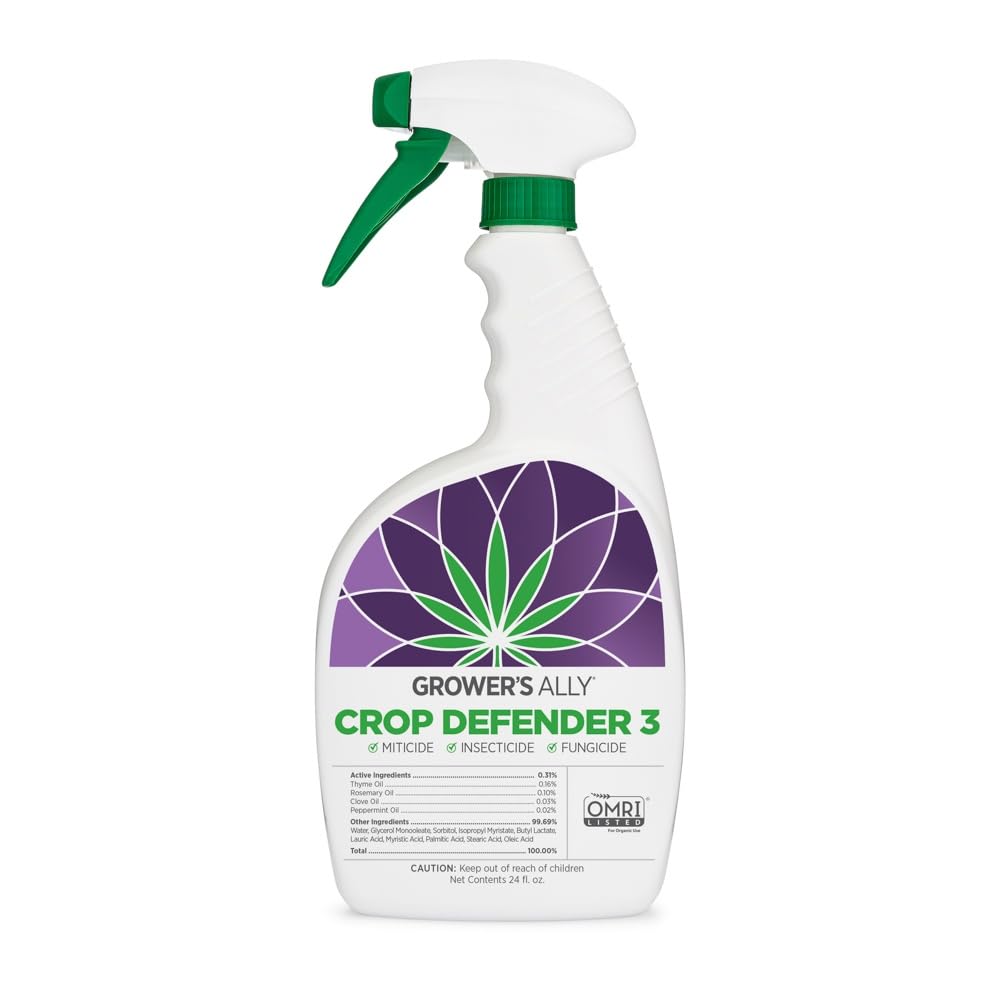
The Grower’s Ally Crop Defender 3 stands out as the most complete solution for powdery mildew because it combines miticide, insecticide, and fungicide action in a single ready-to-use spray. Its botanical oil blend — a synergistic mix of rosemary, clove, and other plant oils — kills mildew spores on contact while also smothering spider mites, russet mites, aphids, and thrips. This triple-action approach means you don’t need to buy separate sprays for different problems.
Owners consistently report that it does not burn leaves, even on sensitive seedlings, and the pleasant clove-spice scent is a welcome change from sulfur-based alternatives. The formula is OMRI Listed and FIFRA 25(b) exempt, meaning it leaves no residual solvents or heavy metals — safe to apply up to the day of harvest. Many indoor cultivators rely on this spray during the flowering cycle when many fungal outbreaks occur.
The main tradeoff is the ready-to-use format, which makes per-application cost higher than a concentrate for large gardens. For targeted treatment on a moderate collection of plants, however, the combination of efficacy, safety, and pleasant experience is unmatched in this category.
What works
- Triple-action against mildew, mites, and aphids
- Does not burn leaves even on tender seedlings
- Pleasant botanical scent compared to sulfur sprays
- OMRI Listed and safe for use until harvest day
What doesn’t
- Ready-to-use format is more expensive per application than concentrates
- May need weekly reapplications during heavy outbreaks
2. Bonide Revitalize Biofungicide

Bonide Revitalize Biofungicide takes a fundamentally different approach: instead of killing mildew spores on contact, it uses the beneficial bacterium Bacillus amyloliquefaciens strain D747 to colonize the leaf surface and trigger the plant’s own defensive immune response. This systemic protection means the plant actively resists powdery mildew, blight, anthracnose, and black spot from within rather than relying on a chemical barrier.
The 16-ounce concentrate mixes with water to make several gallons of finished spray, making it an economical choice for large vegetable patches, fruit trees, and ornamental gardens. Users report effective control of septoria leaf spot on tomatoes and notable improvement across a range of fungal issues. The product is approved for organic gardening and can be applied as a foliar spray or soil drench up to the day of harvest.
The primary feedback from long-term users is the strong bacterial odor — a sign that the live bacillus culture is active and viable. This smell dissipates after application but can be off-putting during mixing. For growers who prefer a preventive, biological strategy over a contact-kill approach, this is the standout option.
What works
- Systemic immune-boosting action prevents recurrence
- Concentrate format yields many gallons for large gardens
- Approved for organic use up to harvest day
- Can be used as foliar spray or soil drench
What doesn’t
- Strong bacterial odor during mixing and application
- Slow-acting compared to contact sprays for existing infections
3. Earth’s Ally Disease Control
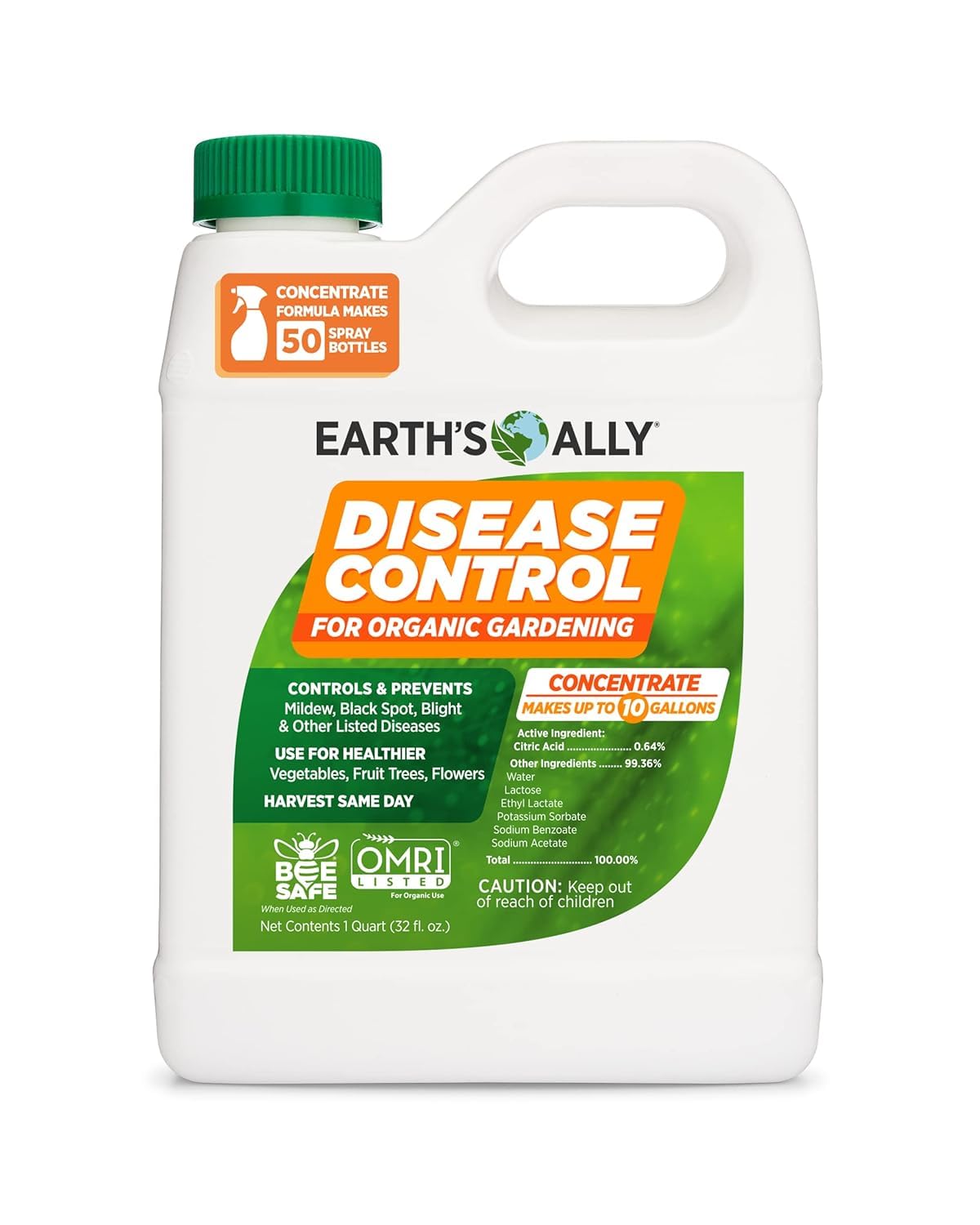
Earth’s Ally Disease Control uses citric acid as its active ingredient — a surprisingly effective compound that disrupts fungal cell membranes on contact. The 32-ounce concentrate dilutes to 10 gallons of ready-to-use spray, giving you an enormous amount of coverage for the investment. This makes it one of the most cost-efficient options for treating powdery mildew, downy mildew, blight, black spot, and leaf spot across a large property.
Rose growers in particular have reported visibly healthier foliage after just a few applications. The formula is OMRI Listed and contains no harsh synthetic chemicals, leaving no harmful residues on edible crops. Because citric acid is a contact fungicide, thorough coverage of both upper and lower leaf surfaces is essential for best results.
The main limitation is that citric acid breaks down quickly in sunlight and rain, so reapplication every 7-10 days is necessary during active outbreaks. It also lacks the insecticidal or miticidal properties of botanical oil blends, so you may need a separate product if spider mites or aphids are also present.
What works
- Extremely economical concentrate makes 10 gallons
- Citric acid is gentle on plants and leaves no residues
- OMRI Listed and safe for organic gardening
- Effective against black spot on roses and blight
What doesn’t
- Contact-only action requires thorough coverage and frequent reapplications
- No insect or mite control — separate product needed for pests
4. Safer Brand 5450-6 Garden Fungicide

It is particularly effective against powdery mildew, rust, and black spot on fruit trees, roses, and ornamental plants. The sulfur particles work by disrupting fungal spore germination on contact, providing a reliable knockdown for moderate to severe outbreaks.
Users treating cedar-apple rust on apple trees and fig rust have reported noticeable improvement after a single application. The formula is gentle enough for use on edibles when applied according to label directions, though a one-week pre-harvest interval applies. The larger 32-ounce bottle offers more coverage than typical 24-ounce RTU sprays without requiring mixing.
The drawbacks are well-documented: sulfur has a strong rotten-egg odor that lingers for a day or two after application, and it can burn plant foliage if applied when temperatures exceed 85°F. The included sprayer has also drawn criticism for clogging mid-bottle, which can waste product. For heavy-duty mildew and rust control where odor and heat restrictions are manageable, this remains a proven tool.
What works
- Highly effective against powdery mildew, rust, and black spot
- 32-ounce RTU bottle offers good coverage for mid-size gardens
- Proven century-old active ingredient with reliable results
What doesn’t
- Strong sulfur odor lingers for days after spraying
- Can burn foliage in temperatures over 85°F
- Sprayer nozzle prone to clogging before bottle is empty
5. Southern Ag Garden Friendly Bio Fungicide

Southern Ag’s Garden Friendly Bio Fungicide is a potent concentrate of Bacillus amyloliquefaciens strain D747 packed into a compact 8-ounce bottle. Despite the small size, this is a high-concentration formulation — users report using just 2 ml per 5 gallons of water — making it one of the most concentrated and cost-effective biological fungicides available. It is ideally suited for hydroponic systems, deep water culture (DWC), and root-rot prevention.
The bacterial culture actively outcompetes pathogenic fungi like pythium and powdery mildew, creating a protective micro-biome around roots and foliage. Hydroponic growers have reported that it solved chronic root rot and algae issues where other products failed. The strong bacterial smell is actually a positive indicator that the live culture is viable and potent.
For powdery mildew specifically, some users found it slowed spread on squash and cucumbers but did not fully eradicate existing infections on tomatoes. This makes it better suited as a preventive treatment or early-stage intervention rather than a heavy knockdown solution. The 8-ounce bottle goes a very long way, but measuring such small doses requires precision.
What works
- Extremely concentrated — 2 ml treats 5 gallons of water
- Ideal for hydroponic systems and root rot prevention
- Live bacillus culture provides long-lasting biological protection
- Cost-effective over many applications
What doesn’t
- Less effective for heavy existing powdery mildew on tomatoes
- Requires careful measuring with a dropper or syringe
- Strong bacterial odor during mixing
6. Safer Garden 3-in-1 Ready-to-Use

The Safer Garden 3-in-1 combines potassium salts of fatty acids (insecticidal soap) with sulfur to create a dual-action spray that controls powdery mildew, black spot, and rust while simultaneously killing soft-bodied insects like aphids, mealybugs, and spider mites. The soap weakens insect exoskeletons on contact, while the sulfur attacks fungal spores — all in a single 24-ounce ready-to-use bottle.
This multi-purpose formula is OMRI Listed for organic gardening and can be applied up to the day before harvest. Houseplant collectors with large hoyas collections have reported success in controlling suspected flat mites and fungal issues with bi-weekly applications. The formula is gentle on plants when applied according to directions, making it suitable for a wide variety of ornamentals and edibles.
The most consistent complaint across owner reviews is the spray bottle quality — many users reported that the nozzle stops drawing product, leaks around the trigger, or sprays unevenly. The sulfur smell is also quite strong and lingers. Despite the sprayer issues, the formula itself earns solid marks for broad-spectrum control at an entry-level price point.
What works
- Combines fungicide and insecticide in one spray
- OMRI Listed and safe for use until day before harvest
- Gentle on plants when used as directed
What doesn’t
- Spray nozzle frequently fails or leaks during use
- Strong sulfur odor that persists for days
- Bottle is not refillable — can’t transfer to a better sprayer
7. Natria Neem Oil Spray
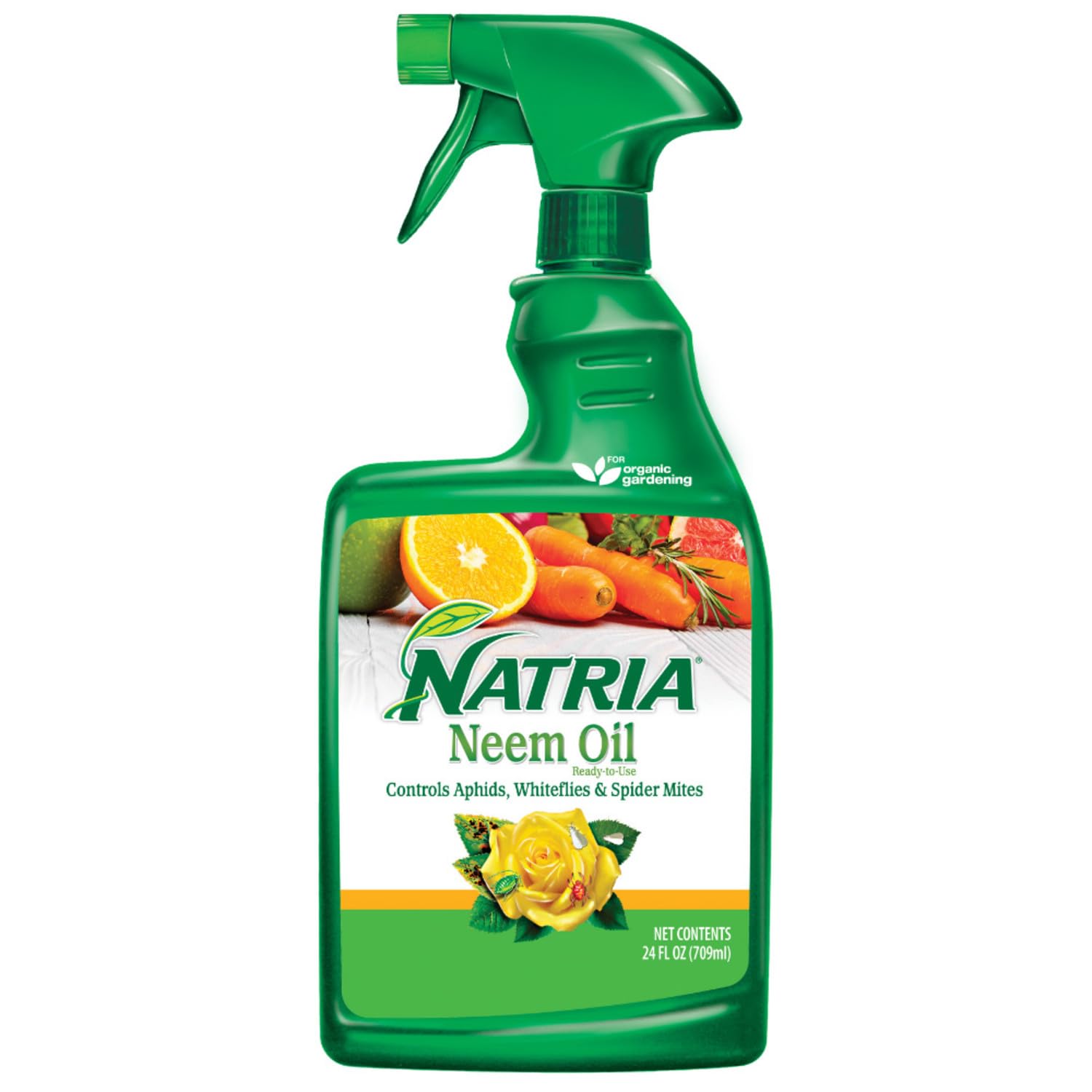
Natria Neem Oil Spray is a ready-to-use formula built around clarified hydrophobic extract of neem oil at 0.9%. Neem oil works by smothering fungal spores and disrupting the life cycle of soft-bodied insects, making it a decent dual-purpose option for minor powdery mildew outbreaks and common garden pests like aphids, whiteflies, and spider mites. The RTU trigger sprayer requires no mixing, so you can grab it and start treating immediately.
User feedback highlights solid results on vegetables, houseplants, and ornamentals for light to moderate pest pressure. Several reviewers noted that fruit flies disappeared after a single application, and plants appeared healthier overall. The natural neem base is gentle enough for indoor use and can be applied up to the day of harvest, though thorough washing is recommended before eating produce.
The limitations are tied to its mild formulation. At 0.9% neem oil, this spray is less potent than concentrated neem products or sulfur-based fungicides, which means it may require more frequent applications for active powdery mildew. Some users were uncertain whether it was fully controlling their tomato pests. For an introductory, low-maintenance spray that covers both fungal and insect concerns, this is a fine starting point.
What works
- Ready-to-use trigger spray with no mixing required
- Dual-action against mildew and common garden insects
- Natural neem oil is gentle on plants and safe for indoor use
- Can be applied up to day of harvest
What doesn’t
- Lower potency may struggle with heavy mildew outbreaks
- Neem odor can be strong for the first day or two
- Requires thorough coverage and frequent reapplication
Hardware & Specs Guide
Active Ingredient Chemistry
The active ingredient dictates how a spray works against powdery mildew. Sulfur (used in Safer Brand 5450-6) is a contact fungicide that disrupts spore germination but can burn foliage above 85°F. Neem oil (Natria) smothers spores on contact and deters insects but degrades quickly in UV light. Citric acid (Earth’s Ally) alters leaf surface pH to prevent spore attachment. Biofungicides like Bacillus amyloliquefaciens (Bonide Revitalize, Southern Ag) colonize leaf surfaces and trigger systemic acquired resistance in the plant itself.
Concentration Ratio & Yield
Ready-to-use (RTU) sprays are pre-diluted and convenient but generally cost more per application. Concentrates offer far better economics: Earth’s Ally Disease Control uses 6 tablespoons per gallon to make 10 gallons, while Southern Ag Bio Fungicide uses just 2 ml per 5 gallons. If you have a large garden, multiple raised beds, or a fruit tree orchard, a concentrate will save significant money over the growing season while reducing plastic waste from multiple RTU bottles.
OMRI Listing & Pre-Harvest Interval
OMRI Listing ensures the product meets organic farming standards. All products in this guide except Natria carry explicit OMRI certification. Pre-harvest interval (PHI) varies: most biofungicides and citric acid sprays allow application up to the day of harvest, while sulfur requires at least 7 days. Always check the product label for the specific crop you’re treating, as PHI can differ between fruiting vegetables, leafy greens, and root crops.
Application Timing & Temperature
Spray timing dramatically affects efficacy against powdery mildew. Apply contact fungicides (sulfur, neem, citric acid) early in the morning or late evening to avoid leaf burn and maximize wet-leaf contact time. Sulfur should never be applied when temperatures exceed 85°F or within two weeks of an oil-based spray. Biofungicides are more forgiving but benefit from application during cooler, overcast periods when UV degradation is minimal. Always spray both upper and lower leaf surfaces.
FAQ
Can I use baking soda and water instead of a commercial spray for powdery mildew?
How often should I spray for powdery mildew during an active outbreak?
Is it safe to spray for powdery mildew when flowers are open and bees are active?
Final Thoughts: The Verdict
For most gardeners, the spray for powdery mildew winner is the Grower’s Ally Crop Defender 3 because it combines triple-action control with a gentle botanical formula that won’t burn leaves and smells pleasant. If you want systemic preventive protection with long-lasting results, grab the Bonide Revitalize Biofungicide. And for the best economy on large-scale applications, nothing beats the Earth’s Ally Disease Control concentrate at 10 gallons per bottle.