
Specs are compiled from manufacturer listings and verified buyer reviews and can change over time — please confirm the key details on the product page before buying.
Forget wrestling with a spreader and hoping granular fertilizer doesn’t clump or miss spots. The real question is finding a formula with the right nitrogen kick, coverage area, and safety profile for your specific grass type — without hurting your lawn by burning it.
I’m Rikta — the founder and writer behind Lawn Gear Lab. This guide is built by comparing the manufacturers’ published specifications and the patterns across verified customer reviews, so you get each pick’s real strengths and trade-offs instead of marketing spin.
After comparing seven concentrated formulas across coverage range, nitrogen levels, and real-world buyer results, there is one clear winner for the spray fertilizer for lawns that balances speed, coverage, and value.
Quick Picks
- Stateside NitroHume Nitrogen 6-0-0 — Best Overall
- PetraMax Neighbor’s Envy 7-in-1 — Premium All-in-One
- Petramax 28-0-0 Liquid Nitrogen Fertilizer — Fast Green-Up
- Covington 10-10-10 NPK Liquid Fertilizer — Balanced All-Purpose
- Simple Lawn Solutions 0-0-25 High Potassium — Stress & Potassium
- FOOP Organic Liquid Lawn & Turf Food — Organic & Safe
- Scotts Liquid Green Max Lawn Food — Budget & Familiar
How To Choose The Best Spray Fertilizer For Lawns
Picking the wrong spray fertilizer can turn your lawn yellow, or worse, burn it. Here is what you need to check before you spray.
N-P-K Ratio: What Those Three Numbers Actually Mean
The three numbers on a fertilizer label — like 28-0-0 or 10-10-10 — represent the percentage of Nitrogen (N), Phosphorus (P), and Potassium (K). Nitrogen fuels leaf and blade growth for that dark green look. Phosphorus helps root development (though many lawns do not need extra). Potassium strengthens the grass against heat, drought, and disease. A high first number (like 28-0-0) is best for a quick green-up boost.
Coverage Area: How Much Lawn Per Bottle
A concentrated liquid fertilizer can cover anywhere from 2,000 sq. ft. to 16,000 sq. ft. per bottle. A larger coverage means fewer reapplications and less product to buy over the season. But a standard hose-end sprayer usually covers around 2,000–3,200 sq. ft., so if your yard is larger than that, you will either need a bigger bottle or a separate backpack sprayer.
Slow Release vs. Quick Release Nitrogen
Quick-release nitrogen greens up your grass fast — often in 3–5 days — but it can also burn your lawn if you apply too much. Slow-release nitrogen feeds the lawn steadily over several weeks, reducing burn risk and keeping the color even. Some premium fertilizers blend both: a portion for immediate color and a portion for continued feeding.
Quick Comparison
| Model | Best For | NPK Ratio | Coverage | Bottle Size | Amazon |
|---|---|---|---|---|---|
| NitroHume Nitrogen | Best Overall | 6-0-0 | 8,000–16,000 sq. ft. | 64 fl. oz. | Amazon |
| PetraMax Neighbor’s Envy | Premium All-in-One | — | 16,000 sq. ft. | 128 fl. oz. | Amazon |
| Petramax 28-0-0 | Fast Green-Up | 28-0-0 | 6,400–12,800 sq. ft. | 32 fl. oz. | Amazon |
| Covington 10-10-10 | Balanced All-Purpose | 10-10-10 | Full (concentrated) | 32 fl. oz. | Amazon |
| Simple Lawn Solutions 0-0-25 | Stress & Potassium | 0-0-25 | 3,200 sq. ft. | 32 fl. oz. | Amazon |
| FOOP Organic Liquid | Organic & Pet-Safe | — | 5,000 sq. ft. | 32 fl. oz. | Amazon |
| Scotts Liquid Green Max | Budget & Familiar Brand | — | 2,000 sq. ft. | 32 fl. oz. | Amazon |
In‑Depth Reviews
1. Stateside NitroHume Nitrogen 6-0-0
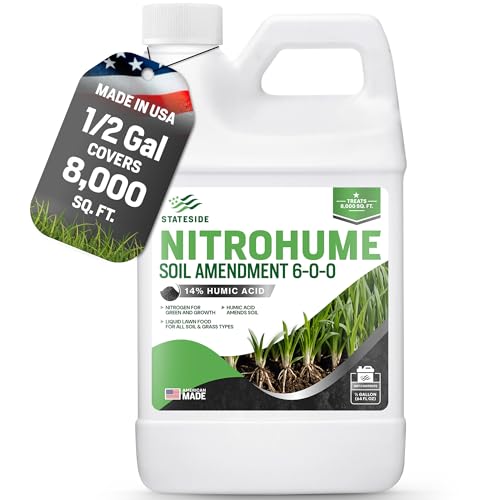
A half-gallon jug that feeds a third of an acre while staying affordable.
Covering 8,000 sq. ft. from a single 64-ounce bottle, this spray fertilizer gives you more turf per dollar than almost any competitor — buyers report it “goes on brown but after you water your lawn the product soaks into the ground and your grass turns green within a few days.” The 6-0-0 NPK ratio (nitrogen, no phosphorus, no potassium) is a straight greens-up formula, boosted further by humic acid (a soil-enriching organic compound that helps roots absorb nutrients).
Unlike the Simple Lawn Solutions 0-0-25, which is a niche potassium-only bottle at 32 fluid ounces covering just 3,200 sq. ft., the NitroHume delivers 64 fluid ounces and double the coverage for a similar price. The 1:128 mixing ratio (that is 1 part fertilizer to 128 parts water) is easy to use with a hose-end sprayer. It works on bermuda grass, St. Augustine, and zoysia, though the lack of slow-release tech means you should reapply every 1–2 months for sustained color.
What Stands Out
- Massive 64 oz bottle covers up to 16,000 sq. ft.
- Humic acid improves soil health beyond just feeding grass
- Fast greening effect within days per buyer feedback
One Limitation
- No slow-release nitrogen; requires regular monthly applications
Get this if: you want the biggest coverage per dollar and don’t mind a monthly spray routine for consistent deep green color.
Look elsewhere if: you need a slow-release formula that feeds for weeks without reapplication.
2. PetraMax Neighbor’s Envy 7-in-1
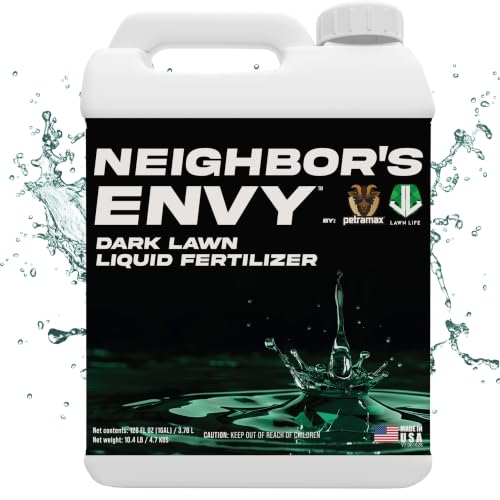
One jug that packs nitrogen, iron, humic acid, sea kelp, and potassium.
This is the all-in-one heavy hitter for anyone who wants deep green color plus root strength and stress resistance — all from one bottle. The 7-in-1 formula delivers 19% nitrogen for rapid growth, 2.5% iron for color depth, plus humic acid and sea kelp for soil health and drought resilience. The 1-gallon (128 fluid ounce) bottle covers 16,000 sq. ft., matching the NitroHume on coverage but with a far more complex nutrient profile. Owners mention “the really quick darkening is just staining,” but the mixture of nutrients is “elite” and hard to find elsewhere in one product.
At 9.5 pounds, this bottle is noticeably heavier than the lighter 32-ounce competitors like the Petramax 28-0-0, and the mixing ratio is 7:1 (7 parts water to 1 part fertilizer), so you will go through the concentrate faster with a hose-end sprayer. Still, the combination of quick results (7–14 days per the maker) and steady feeding makes it a favorite for serious lawn enthusiasts who want professional-grade results without buying four separate bottles.
Why It Shines
- 7 nutrients in one bottle saves mixing multiple products
- Iron for deep color, sea kelp for drought tolerance
- Covers 16,000 sq. ft. from a single gallon
The Trade-Off
- More expensive per bottle than basic nitrogen-only formulas
- Initial darkening is surface staining, not all biological greening
Best suited for: lawn owners who want a premium one-stop formula for color, root strength, and drought resistance without buying separate supplements.
Consider another if: you only need a simple nitrogen boost and want to spend less per season.
3. Petramax 28-0-0 Liquid Nitrogen Fertilizer

An ultra-high-nitrogen formula that turns yellow grass dark green fast.
If your lawn is pale and nitrogen-deficient, the 28-0-0 NPK ratio is the strongest nitrogen jolt on this list. The clever part is the 2-in-1 release tech: 70% is quick-release nitrogen for visible greening in days, and 30% is slow-release nitrogen so the grass keeps feeding between applications. That makes it far less risky than a pure quick-release formula like the NitroHume 6-0-0. One reviewer noted “my lawn has never been so green” after using it, and it works on both warm- and cold-season grass types.
The mixing ratio is simple — 5 oz per gallon for maintenance or 10 oz per gallon to fix nitrogen deficiency. At maintenance strength, a 32-ounce bottle treats up to 12,800 sq. ft., which is impressive for such a small bottle. The catch is you need your own sprayer (the maker recommends a PetraTools sprayer), as this is a concentrate that does not include a hose-end sprayer like the Simple Lawn Solutions bottle does.
Key Strengths
- 28-0-0 is the highest nitrogen ratio here for rapid greening
- 70/30 blend of quick and slow release prevents burning
- Covers up to 12,800 sq. ft. at maintenance rate
Watch Out For
- No included sprayer — you must supply your own
- Not a balanced feed; zero phosphorus or potassium
Reach for this if: your grass is pale and you want strong, fast greening with reduced burn risk thanks to the slow-release portion.
Pass on it if: you prefer a balanced all-purpose fertilizer that also feeds roots and flowers.
4. Covington 10-10-10 NPK Liquid Fertilizer

Equal parts nitrogen, phosphorus, and potassium for feeding everything from turf to tomatoes.
Most spray fertilizers on this list skew heavily toward nitrogen (like the 28-0-0 Petramax), but the Covington 10-10-10 is a true balanced formula. That means it feeds the grass blades (nitrogen), supports root growth (phosphorus), and strengthens the lawn against stress (potassium) all at once. Customers note it “works great” for lawns, flowers, and vegetable gardens alike, calling it “very versatile.” The low salt index (a measure of how much salt is in the fertilizer, which can burn roots at high levels) makes it gentler on soil.
The mixing ratio is 1:200 (very diluted), so a 32-ounce bottle goes a long way when used with a hose-end or pump sprayer. It is not the fastest greening option — the 10-10-10 is designed for steady, even growth rather than a dramatic 3-day color change like the Scotts Liquid Green Max promises. But if you want one bottle for your entire yard, garden beds, and houseplants, this is your pick.
Best Features
- Balanced 10-10-10 works on lawns, plants, and vegetables
- Low salt index reduces risk of root burn
- Made with food-grade ingredients
Shortcomings
- Not a high-nitrogen green-up, so color change is slower
- 32 oz bottle covers less area before refill than larger jugs
Choose this for: mixed gardening where you want one liquid feed to cover lawn, flowers, and vegetables without buying separate products.
skip it if: you need a dedicated high-nitrogen lawn booster for rapid green color.
5. Simple Lawn Solutions 0-0-25 High Potassium
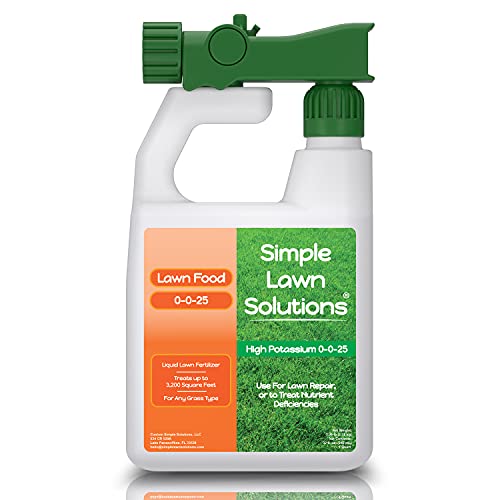
Zero nitrogen, heavy potassium — designed for summer stress, not spring green-up.
This is the specialist on the list. While most spray fertilizers pump nitrogen for green growth, the 0-0-25 formula skips nitrogen entirely and delivers a high dose of potassium. Potassium helps turf grass tolerate heat, drought, and cold, making this ideal for late-summer application when your lawn is under stress. Reviewers point out it “produced very green lawn without excessive growth requiring more frequent mowing,” which is the key benefit — it strengthens the grass you already have rather than forcing fast blade growth.
At 32 fluid ounces covering just 3,200 sq. ft., it is one of the smaller coverage options (the NitroHume covers more than double at 64 ounces for 8,000 sq. ft.). But it includes a ready-to-use hose-end sprayer, so you do not need extra equipment. One buyer mentioned their first unit was defective (sprayed only water), but the company sent a replacement immediately. It is a niche tool — perfect for fall preparation, not for a quick green boost in spring.
Why It Matters
- High potassium strengthens lawns against heat, drought, and cold
- Comes with a ready-to-use hose-end sprayer
- Does not cause excessive growth or frequent mowing
Considerations
- Zero nitrogen means no green-up effect
- Coverage is 3,200 sq. ft., smaller than many alternatives
Best for: summer and fall lawn stress prep when you want hardiness without forcing more growth and mowing.
Look elsewhere if: you want a nitrogen boost to green up a pale lawn this spring.
6. FOOP Organic Liquid Lawn & Turf Food
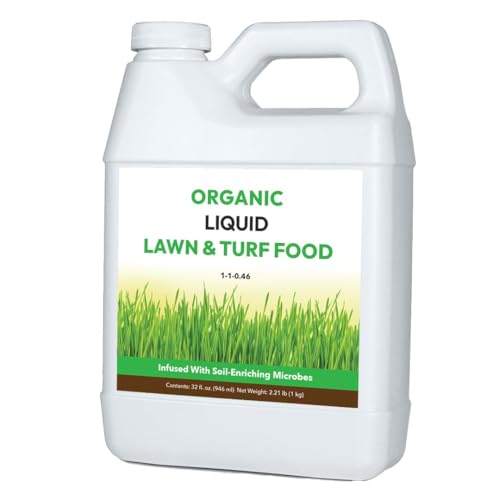
Certified organic ingredients that are kid and pet friendly from the first spray.
If you have children or pets who play on the lawn, the FOOP Organic Liquid Lawn & Turf Food is the only certified organic option here. It is made from fish manure, fish emulsion, sea kelp, volcanic ash, and mycorrhizal fungi (beneficial fungi that form a symbiotic relationship with plant roots to improve water and nutrient absorption). The 32-ounce bottle covers up to 5,000 sq. ft. at a 1:32 mixing ratio, and shoppers say “plants love it” with a mild smell that does not linger.
It is slower-acting than synthetic nitrogen fertilizers like the Petramax 28-0-0 — organic nutrients need soil microbes to break them down before grass can absorb them. But the broad nutrient spectrum (including calcium, magnesium, and silica) means healthier soil over the long term. The “mild smell” mentioned by buyers is worth noting: fish-based organic fertilizers can have a noticeable odor, though most say it dissipates quickly after watering.
Strong Points
- Certified organic, safe for kids and pets immediately after application
- Infused with soil-enriching microbes for long-term soil health
- Broad nutrient profile beyond just NPK
Weak Points
- Slower visible results than synthetic nitrogen formulas
- Mild fishy smell until watered in
Ideal for: families with kids or pets who want an organic lawn feed that enriches soil over time without synthetic chemicals.
Not for: anyone who needs a fast, dramatic green-up in under a week.
7. Scotts Liquid Green Max Lawn Food

A familiar brand with a 2-in-1 iron formula — but coverage is tight.
Scotts is a household name in lawn care, and the Liquid Green Max is a straightforward 2-in-1 fertilizer and iron supplement. It claims to green your lawn in 3 days and covers 2,000 sq. ft. from the 32-ounce bottle. The included hose-end sprayer makes application as simple as connecting, pointing, and spraying — no mixing required. Buyers report it “works pretty good” overall.
However, there is a real caution here. One owner reported that when applied to an aerated, reseeded lawn, it “caused increasing brown spots within a week.” This suggests the formula may be too strong for delicate or newly overseeded grass, or the iron concentration can stain. Also, at 2,000 sq. ft. per bottle, coverage is the smallest on this list — the NitroHume covers 8 times more in one bottle. If you have a large lawn, you will go through multiple bottles per application.
What Works
- Scotts brand is widely available and trusted
- 2-in-1 fertilizer and iron for deep green color
- No mixing — just attach to a hose
What Doesn’t
- Only 2,000 sq. ft. coverage per bottle — goes fast
- Can cause brown spots on newly seeded or aerated lawns per buyers
Consider if: you have a small lawn under 2,000 sq. ft. and want the ease of a no-mix hose-end spray from a trusted brand.
pass on it if: your lawn is larger, recently overseeded, or you want better value per square foot.
Understanding the Specs
NPK Ratio: The Three Numbers
The three numbers on a fertilizer label — like 6-0-0 or 28-0-0 — tell you the percentage of Nitrogen (first), Phosphorus (second), and Potassium (third). Nitrogen drives leaf and blade growth for green color. Phosphorus supports root and flower development. Potassium strengthens the grass against stress. A high first number is best for greening up; a balanced 10-10-10 is for general feeding; a 0-0-25 is a specialty stress treatment with no nitrogen.
Coverage: How Much Lawn Per Bottle
Coverage tells you how many square feet one bottle can treat at the recommended dilution. A 64-ounce bottle covering 8,000 sq. ft. (like the NitroHume) is efficient for medium to large yards. A 32-ounce bottle covering 2,000–3,200 sq. ft. (like the Scotts or Simple Lawn Solutions) is fine for small lawns but will run out fast on a half-acre lot. Always check coverage before buying to avoid running short mid-application.
Slow Release vs. Quick Release Nitrogen
Quick-release nitrogen dissolves fast and greens grass in days, but it can burn the lawn if over-applied. Slow-release nitrogen breaks down over weeks, feeding steadily with less risk. Some fertilizers (like the Petramax 28-0-0) use a blend: 70% quick for immediate color, 30% slow for sustained feeding. For a low-maintenance lawn, a partial slow-release formula reduces how often you need to reapply.
Mixing Ratio: Concentrate vs. Ready-to-Use
A mixing ratio like 1:128 means you mix 1 part fertilizer with 128 parts water. A higher ratio (like 1:10) means the concentrate is stronger and you use less per spray. Ready-to-use products like the Scotts Liquid Green Max require no mixing — just attach the bottle to a hose. Concentrates give you more control over strength and often better value per gallon, but they require a separate sprayer and measuring.
FAQ
Can I use spray fertilizer on a newly seeded lawn?
How often should I apply liquid spray fertilizer?
Can I spray fertilizer in the rain or before rain?
Will spray fertilizer burn my lawn if I use too much?
Is liquid fertilizer better than granular?
Can I use a spray fertilizer designed for lawns on my garden plants?
Is it safe for my pets to walk on the lawn after spraying?
What is the 0-0-25 formula used for?
How do I apply liquid fertilizer with a hose-end sprayer?
Does spray fertilizer need to be watered in after application?
Final Thoughts: The Verdict
For the majority of shoppers, the spray fertilizer for lawns winner is the Stateside NitroHume Nitrogen because it delivers the best coverage per dollar with fast greening and soil-enriching humic acid. If you want a premium all-in-one that combines nitrogen, iron, sea kelp, and potassium in one jug, grab the PetraMax Neighbor’s Envy. And for a quick nitrogen boost with reduced burn risk, the standout is the Petramax 28-0-0 with its 70/30 slow release blend.
How We Picked
We do not accept paid placement. Every pick is matched to a real buyer and a real use-case; we do not hands-on test units.
Sources & Methodology
Specifications: manufacturer listings and product documentation. Review insights: verified customer reviews, as of July 2026. Pricing: not shown on this page (it changes often); check the current price via the retailer link.
As an Amazon Associate, Lawn Gear Lab earns from qualifying purchases. This does not affect which products we feature.