
Specs are compiled from manufacturer listings and verified buyer reviews and can change over time — please confirm the key details on the product page before buying.
If you have ever watched a beloved houseplant slowly yellow, droop, and drown in its own pot, the culprit is almost always the dirt itself. Regular garden soil packs tight, suffocates roots, and holds water like a sponge — exactly the opposite of what most indoor and container plants need. That is why soilless mixes exist: they trade heavy topsoil for lightweight ingredients like peat moss, perlite, bark, and coco coir that let roots get air, drain fast, and still hold enough moisture to thrive.
I’m Rikta — the founder and writer behind Lawn Gear Lab. This guide is built by comparing the manufacturers’ published specifications and the patterns across verified customer reviews, so you get each pick’s real strengths and trade-offs instead of marketing spin.
Whether you are starting seeds, repotting a Monstera, or filling a raised bed, the right blend makes a massive difference in how your plants grow. Here is what you need to know to pick the best soilless potting mix for your garden or home.
Quick Picks
- Esbenshade’s Professional Lightweight Potting Mix, 44 Quart Bag — Best Overall
- Forbidden Cereal Aroid Potting Mix 6.5QT — Premium Pick
- MODELLOR Coco Coir Bricks, 4-Pack (5 lb) — Best Value
- Avalution 3-Pack Coco Coir Bricks — Budget Champion
How To Choose The Best Soilless Potting Mix
Switching from soil to a soilless mix changes how you water, feed, and even pot your plants. The key is matching the blend’s ingredients and texture to what you are growing.
Start with your plant type
Aroids like Monsteras, Philodendrons, and Hoyas want a very chunky, fast-draining mix with lots of bark and perlite — the kind of texture you can see through. Seedlings and microgreens prefer a finer, more uniform medium like coco coir that stays consistently moist. Succulents and cacti need an even grittier blend, high in perlite or pumice. For general container vegetables and flowers, a balanced blend of peat moss, perlite, and a little bark works well.
Consider your container and environment
Soil mixes are heavy and tend to compact, especially in large pots and raised beds. A lighter mix is easier to move and keeps roots happy. If you live somewhere dry or heat your home in winter, a mix that retains moisture well, like one with coco coir or sphagnum peat moss, reduces how often you need to water. In a humid or rainy climate, prioritize drainage above everything else.
Know the difference between bricks and bags
Compressed coco coir bricks are the most compact way to store a large volume of growing medium — you add water at home and they expand. Pre-mixed bags are ready to use straight from the bag but take up more shelf space. Bricks give you more control over the final texture and cost less per gallon for bulk projects.
Quick Comparison
On smaller screens, swipe sideways to see the full table.
| Model | Best For | Volume | Weight | Key Ingredient | Amazon |
|---|---|---|---|---|---|
| Esbenshade’s Professional 44qt | Large containers & raised beds | 44 Quarts | 22 Pounds | Peat Moss, Perlite, Bark | Amazon |
| Forbidden Cereal Aroid 6.5QT | Monsteras & tropical houseplants | 7.1 Liters | — | Bark, Coco Coir, Charcoal | Amazon |
| MODELLOR Coco Coir 4-Pack | Seed starting & microgreens | 9 Gallons | 5 Pounds | Triple-Washed Coco Coir | Amazon |
| Avalution 3-Pack Coco Coir | Budget-friendly bulk projects | 2.3 Gallons | 1.4 Pounds | Coco Coir | Amazon |
In‑Depth Reviews
1. Esbenshade’s Professional Lightweight Potting Mix, 44 Quart Bag
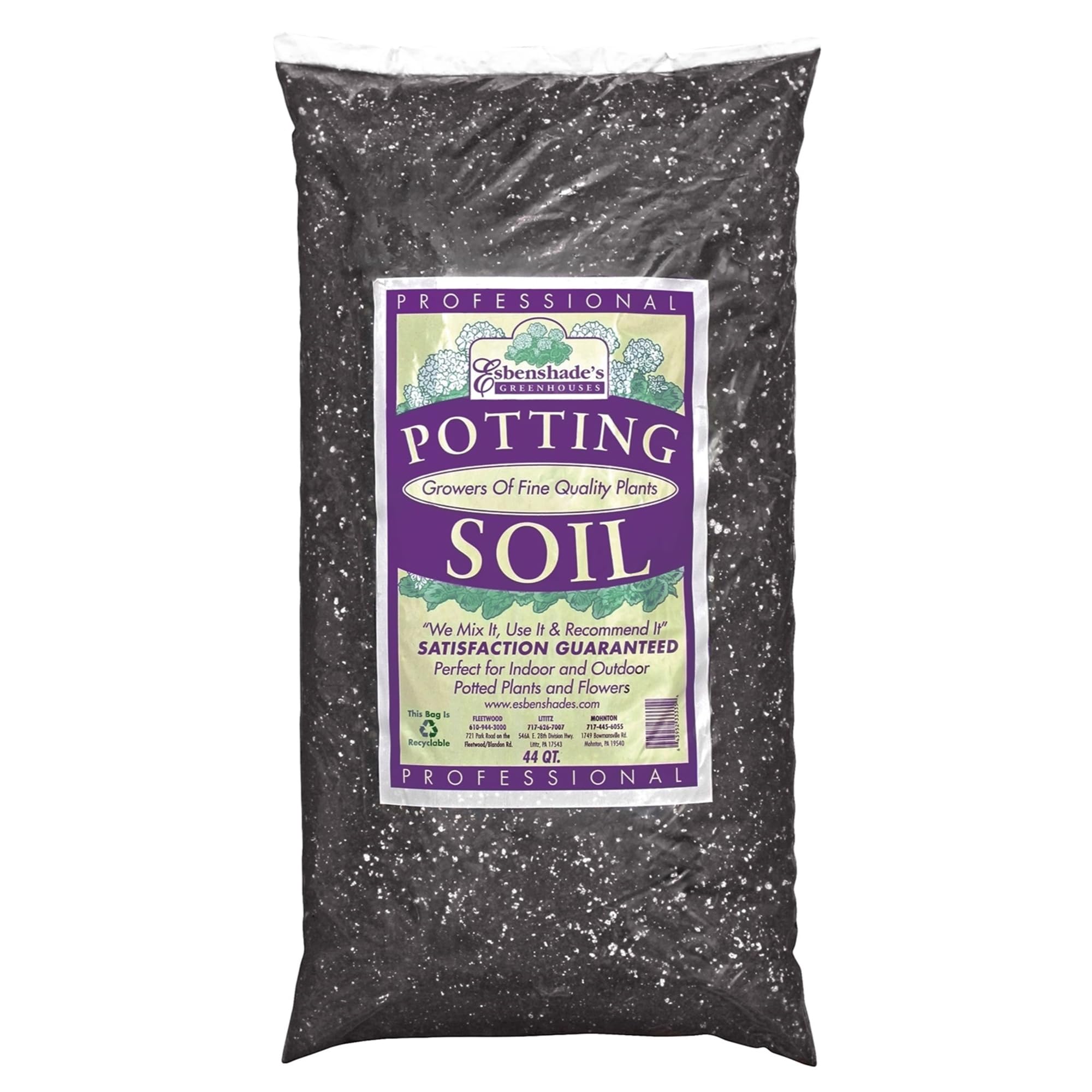
A 44-quart workhorse bag that lets mid-size gardeners skip the mixing entirely.
This mix gives you a proven, balanced recipe — Canadian sphagnum peat moss, perlite, pine bark, and lime — that arrives ready to use straight from the bag. It weighs 22 pounds per bag, making it noticeably heavier than a brick-based setup, but that is because it is already fully hydrated and aerated. Buyers report that plants such as peppers, tomatoes, and eggplant grew much better than when using Miracle-Gro or topsoil, which is a strong real-world vote of confidence. The 44-quart volume covers large container gardens and raised beds without needing multiple bags.
The trade-off is that you are paying for water weight and storage space compared to compressed bricks. One reviewer noted it contains more coconut fiber than they preferred, so if you want a peat-only texture, this blend may not be perfect. For most home gardeners, however, the convenience of opening a bag and potting immediately is worth the premium. It stays moist without compacting, which matters when you are filling a dozen pots in one afternoon.
Ready-to-go winner: A high-quality soilless blend that balances drainage, moisture, and workability for indoor, outdoor, and raised-bed use.
Storage squeeze: You carry all that volume from day one — not for tiny apartments or one-time seed starting.
Reach for this if: You have a medium to large garden and want the most consistent, pre-mixed soilless bag available.
Look elsewhere if: You need an ultra-lightweight medium to ship or store, or you only need a few quarts for a couple of pots.
2. Forbidden Cereal Aroid Potting Mix 6.5QT
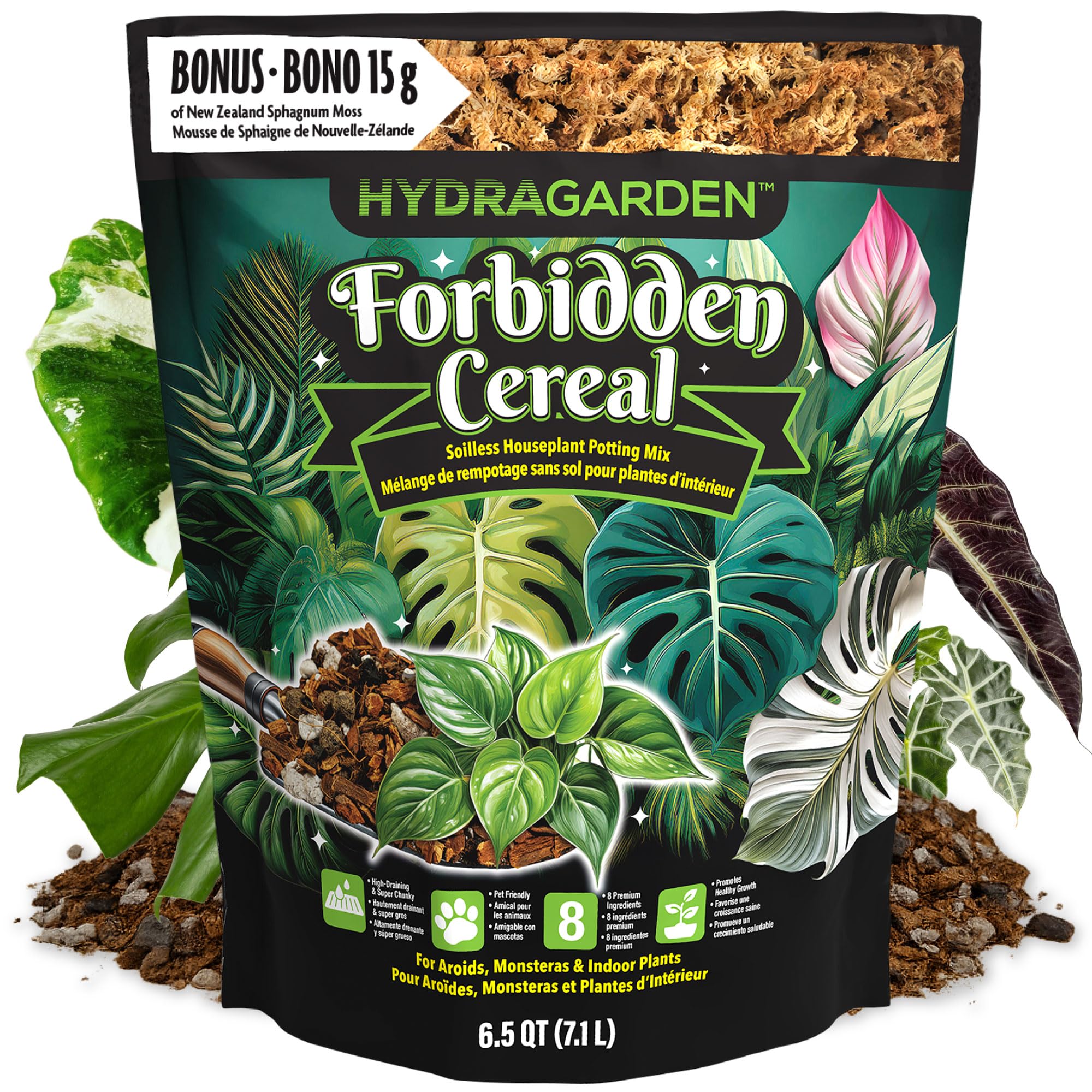
A chunky, all-organic blend for fussy tropicals that hate soggy feet.
Your fussy tropicals — Monsteras, Alocasias, Hoyas — need a mix that drains fast and stays loose, not dense. Forbidden Cereal gives you that with eight organic ingredients: hand-sorted Douglas fir bark (orchid bark), fine and coarse perlite, triple-washed coco coir, coconut fiber and chips, horticultural charcoal (biochar), earthworm castings, LECA clay balls (lightweight expanded clay aggregate), and New Zealand sphagnum moss. Owners mention a Monstera tripled in size in six months with thick, healthy roots using this soilless medium. The moss sits on top separately, so you can use it as a moisture-retaining topper or mix it in.
The catch here is portion size. At 7.1 liters, this bag is small — it is pricey per quart compared to the Esbenshade’s or any brick option. Some buyers mention that the chunks are fingernail-sized, which works well for big pots but can be too large for small nursery pots. For serious aroid collectors who want a custom-grade mix with zero peat (which tends to hold too much moisture), this blend removes the guesswork entirely.
Specialist aroid mix: Leafy, breathable, and packed with organic amendments — ready to use for high-value tropical houseplants.
Bag size reality: One bag only covers one or two large repots, and the price per quart is steep for general gardening.
Best for: Anyone repotting a fussy aroid or orchid who wants a no-mixing, peat-free, chunky formula.
Consider another if: You need to fill multiple pots or large containers on a budget.
3. MODELLOR Coco Coir Bricks, 4-Pack (5 lb)
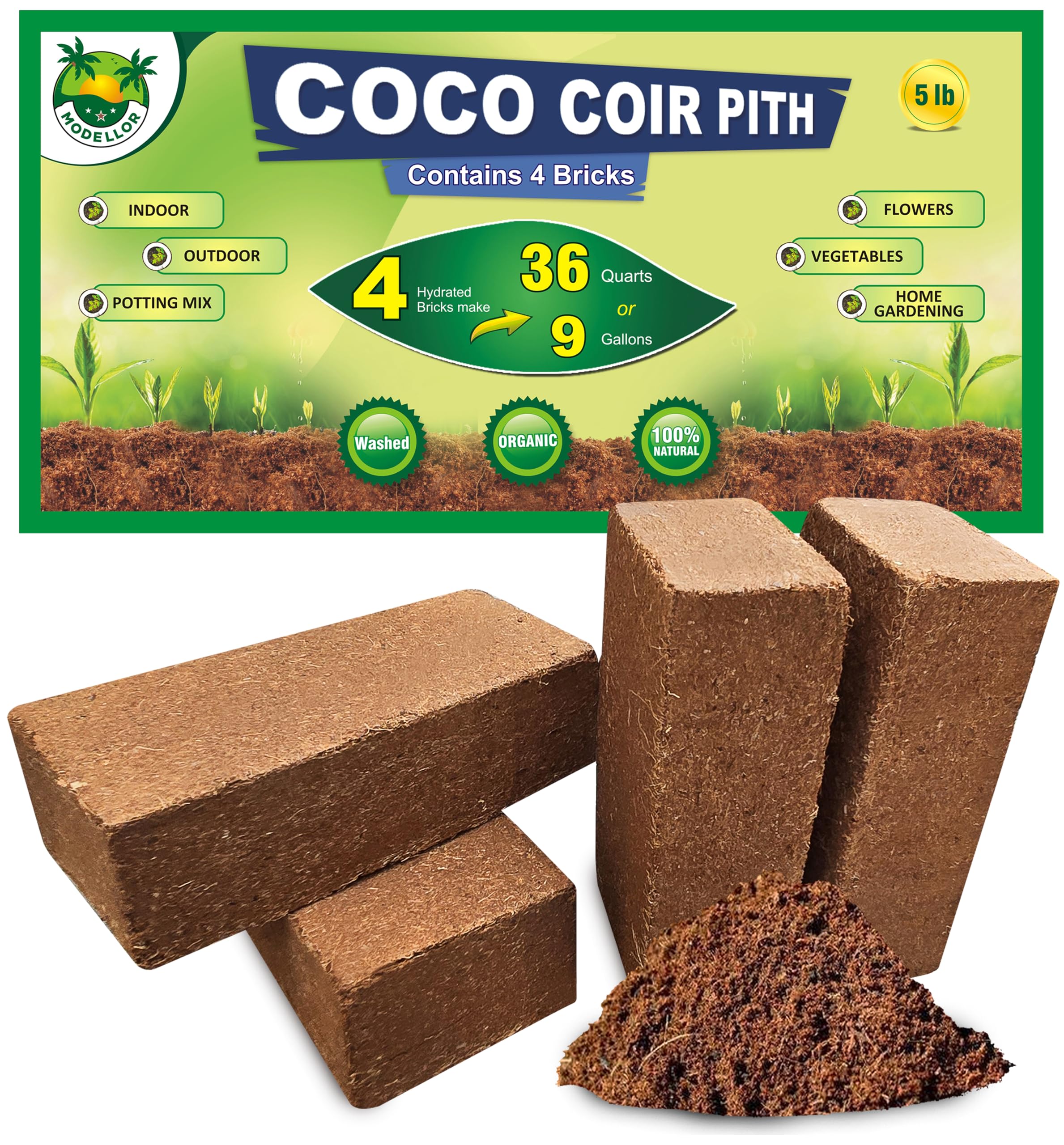
Four bricks that burst into 9 gallons of clean, pH-balanced coco coir.
If you want to store a season’s worth of medium in one small box, the MODELLOR 4-pack is tough to top. Each 5-pound total package expands to 9 gallons when hydrated — far more volume than pre-mixed bags. Compared to the 3-Pack Avalution bricks (which expand to only 2.3 gallons), this set gives you nearly four times the final volume from a similar-sized package. Customers note one brick alone expands to nearly 5 gallons. The triple-washed, low-EC (low electrical conductivity, meaning low salt content), pH-balanced fibers are odorless and debris-free, so they work well for seed starting and microgreens where cleanliness matters.
The main learning curve is preparation: you have to soak each brick in water and let it expand, which takes a few hours. Plant raves about the quick hydration, but if you need to pot something right now, pre-mixed bags are faster. Once expanded, the coir holds moisture without getting soggy (buyers mention it retains moisture without sogginess), and it mixes nicely with perlite or compost for a custom blend.
Why shoppers choose it
- 9 gallons from a 5-pound package — the most volume per weight in this list.
- Triple-washed and low-EC means no salt burn on delicate seedlings.
- Reviewers point out it hydrates fast, expands more than expected, and has no debris.
A little extra work
- Requires soaking and breaking apart before use — not ready out of the bag.
- Does not include perlite, bark, or nutrients; you need to mix your own amendments for aeration.
Take it home if: You want the most economical bulk medium for seed starting, microgreens, or mixing your own custom blends.
Leave it if: You prefer a ready-to-use mix with perlite and bark already blended in.
4. Avalution 3-Pack Coco Coir Bricks

A three-brick starter pack that weighs less than a bag of sugar — before you soak it.
At just 1.4 pounds total, this 3-pack of coco coir bricks is the lightest option on the list. It expands to 2.3 gallons of medium, which is enough to fill a standard bucket — a manageable volume for a few houseplants or a small raised-bed amendment. Shoppers say that the three blocks will fill a standard bucket and retain moisture very well, which makes this a solid entry point if you are new to soilless mixes. The bricks absorb up to 8 to 10 times their weight in water, so they hold moisture efficiently without leaving roots soggy.
The volume gap here is significant compared to the MODELLOR 4-pack. For roughly the same price per brick, the MODELLOR set yields 9 gallons versus 2.3 gallons. That makes the Avalution 3-pack less economical for large projects. It is best thought of as a budget-friendly, low-commitment option for someone who needs a small batch of clean coco coir for seed starting or mixing into a couple of pots. One reviewer notes that the bricks are hard to break dry and recommends soaking them in water overnight before breaking apart.
Starter coir pack: Pure coco coir with no additives, very light dry weight, and real moisture retention — good for small projects.
Volume vs others: A fraction of the final volume of the MODELLOR 4-pack, so it is best for low-volume needs.
Grab it for: A first test of coco coir, or for filling a single large pot plus a few seedlings.
Pass if: You need a full raised-bed worth of medium; the math on cost-per-gallon leans hard toward the MODELLOR bricks instead.
Understanding the Specs
Volume — Quarts, Gallons, or Liters
This number tells you how much growing medium you actually get after mixing. Pre-mixed bags like the 44-quart Esbenshade’s are ready to use. Coco coir bricks list their dry weight, but the final expanded volume varies widely — 2.3 gallons for the Avalution 3-pack versus 9 gallons for the MODELLOR 4-pack. Always check the expanded volume, not just the dry brick size, so you are not caught short.
Key Ingredients — What They Do
Peat moss (or Canadian sphagnum peat moss) holds water and provides structure but can be acidic; lime is added to balance pH. Perlite is the white volcanic glass that creates air pockets for drainage. Coco coir is a sustainable alternative to peat that absorbs up to 8-10 times its weight in water while staying airy. Bark and charcoal add chunkiness for aroid mixes. If a mix has earthworm castings, it also includes gentle organic nutrients.
FAQ
What exactly is a soilless potting mix?
Can I use soilless mix for outdoor raised beds?
How much water does a coco coir brick need to expand?
Is coco coir better than peat moss for my plants?
Can I reuse soilless potting mix from last season?
Why does my soilless mix have lime in it?
How do I know if a mix is chunky enough for Monsteras?
What does “low EC” mean on a coco coir label?
Can I mix my own soilless medium?
Why does the Forbidden Cereal mix have moss on top instead of mixed in?
Final Thoughts: The Verdict
Across the board, the soilless potting mix winner is the Esbenshade’s Professional 44-Quart Bag because it delivers a proven, balanced blend of peat, perlite, and bark in a ready-to-use volume that fits medium and large gardens without guesswork. If you want the most economical bulk medium for seed starting and custom blending, grab the MODELLOR Coco Coir 4-Pack. And for fussy tropical houseplants that demand the fastest drainage and richest organic ingredients, the Forbidden Cereal Aroid Mix 6.5QT is the one to pick.
How We Picked
We do not accept paid placement, and we did not hands-on test every unit. Instead, we match each pick to a real buyer and use-case by comparing the manufacturers’ published specifications against the patterns in verified customer reviews — so you get each pick’s real strengths and trade-offs instead of marketing copy.
Sources & Methodology
Specifications: manufacturer listings and product documentation. Review insights: verified customer reviews, as of July 2026. Pricing: not shown on this page (it changes often); check the current price via the retailer link.
As an Amazon Associate, Lawn Gear Lab earns from qualifying purchases. This does not affect which products we feature.