
Thin, patchy turf that refuses to thicken up is almost always a symptom of what is happening underneath the surface. Grass roots need a specific balance of drainage, aeration, and organic matter to establish deeply, and most general-purpose garden mixes or fill dirt simply lack the structure to support a dense lawn. The difference between a struggling yard and a carpet-like stand of grass often comes down to the physical and chemical makeup of the ground itself.
I’m Rikta — the co-founder and writer behind Lawn Gear Lab. I’ve spent hundreds of hours comparing soil composition data, studying horticultural research on root development, and analyzing owner feedback to isolate what separates an effective growing medium from one that produces weak, disease-prone grass.
This guide breaks down the top options based on real-world performance and measurable specs so you can confidently choose the best soil to grow grass for your specific lawn project.
How To Choose The Best Soil To Grow Grass
Selecting the right growing medium for grass is about matching the mix to your soil type, climate, and whether you are starting from seed, patching bare spots, or topdressing an entire lawn. The key factors are texture, nutrient content, and moisture behavior.
Texture and Drainage
Grass roots require a loamy structure that holds enough moisture to support germination but drains excess water to prevent rot. Sandy soils dry out too fast, while heavy clay compacts and suffocates roots. Look for a mix that contains organic matter or coir to improve aeration without becoming waterlogged.
Nutrient Profile and pH
Grass thrives when the pH stays between 6.0 and 7.0 and the soil contains a balanced supply of nitrogen, phosphorus, and potassium. Many lawn-specific topsoil products include a starter fertilizer. If the bag lacks added nutrients, plan to incorporate a slow-release feed at planting time.
Organic Content and Longevity
Organic matter such as compost, peat moss, or coconut coir improves microbial activity and nutrient retention. Coir-based products expand significantly when hydrated and tend to hold moisture longer than peat, making them a strong option for seed starting and topdressing in dry conditions.
Quick Comparison
On smaller screens, swipe sideways to see the full table.
| Model | Category | Best For | Key Spec | Amazon |
|---|---|---|---|---|
| Back to The Roots Organic Coir | Coco Coir Block | Large area topdressing | Expands to 51 qt | Amazon |
| Miracle-Gro Moisture Control Potting Mix | Potting Mix | Container grass & patches | Feeds up to 6 months | Amazon |
| Burpee Premium Organic Potting Mix | Organic Potting Mix | Organic container grass | Slow-release feed 3 months | Amazon |
| Jiffy Natural & Organic Seed Starting Mix | Seed Starting Mix | Germinating grass seed | Fine texture, no chunks | Amazon |
| Modellor Premium Super Washed Coco Coir | Coco Coir Bricks | Seed starting & amendments | 4 bricks yield 36 qt | Amazon |
| UBICON Easy Use Coco Coir | Coco Coir Bricks | Small patches & pots | 4 bricks yield 10 gal | Amazon |
In‑Depth Reviews
1. Back to The Roots Organic Coir, 51 Quart Expanding Soil

This compressed coconut coir block weighs just 10 pounds but hydrates into over 2 cubic feet of growing medium. The balanced pH and fine, uniform texture make it ideal for mixing into existing topsoil before seeding a new lawn or topdressing a thin area. Because it holds moisture without becoming soggy, grass seed stays consistently damp during germination.
Users consistently praise the clean, odorless quality and the absence of sticks, clumps, or debris. The expansion process is straightforward — placing the block in a large tote or contractor bag with water produces fluffy, aerated coir in under an hour. This efficiency makes it a strong candidate for anyone covering a substantial area without buying multiple bags of heavy pre-moistened soil.
The primary drawback is packaging. Several buyers reported that the outer bag can tear during shipping if the box is overpacked with other items. Once hydrated, the coir works perfectly, but the block itself benefits from careful handling before use.
What works
- Expands to a massive 51 quarts from a compact brick
- pH balanced and free of debris, sticks, or odors
- Retains moisture well while maintaining good aeration
What doesn’t
- Packaging can tear during shipping if not protected
- Requires a large container to hydrate the full block
2. Miracle-Gro Moisture Control Potting Mix, 8 qt (2-Pack)

Miracle-Gro’s Moisture Control formula is built around a blend of sphagnum peat moss, coir, and a wetting agent that absorbs up to a third more water than standard potting soil. This characteristic makes it a solid choice for small grass-growing projects in containers or for patching bare spots where consistent moisture is hard to maintain.
The included plant food feeds for up to six months, which removes the guesswork of early fertilization. The texture is crumbly and light, allowing grass roots to spread without resistance. Reviewers note that the bags arrive fresh, insect-free, and ready to use straight out of the packaging.
On the downside, the moisture control feature takes some adjustment — the soil can feel dry on the surface while remaining damp underneath, which may lead to overwatering if you rely solely on visual cues. It is also a potting mix rather than a true topsoil, so it works best for smaller or container-based grass setups.
What works
- Built-in moisture control reduces watering frequency
- Contains slow-release fertilizer that feeds for up to 6 months
- Light, crumbly texture supports root development
What doesn’t
- Surface can appear dry even when soil is still wet
- Designed for containers, not large lawn topdressing
3. Burpee Premium Organic Potting Mix, 9 Quarts

Burpee’s organic mix relies on coconut coir for moisture retention and includes a slow-release plant food that feeds for up to three months. The OMRI listing confirms it meets organic production standards, which matters for gardeners who want to avoid synthetic inputs when establishing grass near vegetable beds or edible landscapes.
The texture is fine and uniform with a balanced amount of perlite for drainage. Users report that the soil has no strong odor, no large wood chunks, and no visible insect activity. It works well for starting grass seed in small trays or for refreshing the top layer of container-grown turf.
The main limitation is the relatively small bag size. At 9 quarts, it covers only a modest area, so it is not practical for large lawn renovations unless you buy multiple units. The slow-release feed also runs out sooner than Miracle-Gro’s six-month formula, requiring a supplemental application for longer-season grass.
What works
- Organic certification for chemical-free gardening
- Fine, clean texture without debris or pests
- Good moisture retention from coconut coir
What doesn’t
- Small bag size limits use to containers or small patches
- Fertilizer only lasts 3 months before needing a boost
4. Jiffy Natural & Organic Seed Starting Soil Mix, 10 QT

Jiffy’s seed starting mix combines peat moss, vermiculite, and lime to create a lightweight, fine-grained medium that grass seedlings can push through without resistance. The peat moss holds up to 20 times its weight in water, while vermiculite prevents compaction and improves aeration — two factors that directly affect germination rates.
The lime addition helps stabilize pH, keeping it in the neutral range where cool-season and warm-season grasses alike establish best. Customers report excellent germination rates and healthy seedling growth, with no bark chunks or large particles that could block tiny roots.
Because this is a seed starting mix rather than a complete topsoil, it lacks the nutrient density needed for long-term grass growth. You will need to transplant seedlings into a richer mix or add fertilizer once the grass establishes. The 10-quart bag also goes quickly if you are filling multiple flats.
What works
- Ultra-fine texture ideal for germinating grass seed
- Vermiculite prevents compaction during early root growth
- pH-balanced with lime for neutral soil conditions
What doesn’t
- Low nutrient content requires supplemental feeding later
- Small volume limits use to seed trays and small patches
5. Modellor Premium Super Washed Coco Coir, 4 Bricks (5 lb)
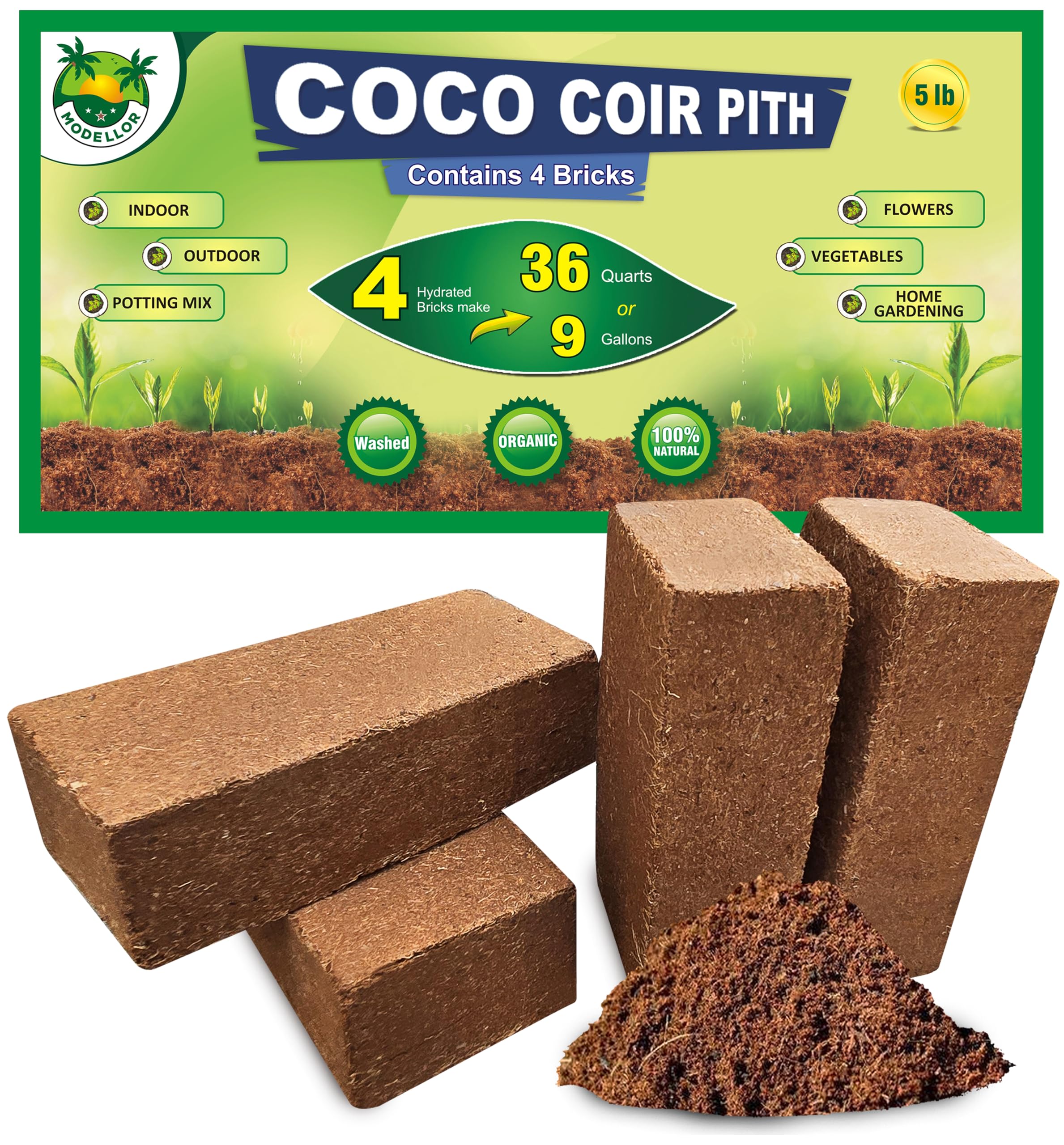
Modellor’s coir bricks are triple-washed and low in salt, which removes the need for extra rinsing before use. Each 1.25-pound brick expands to roughly 9 quarts when hydrated, giving a total yield of 36 quarts from the 5-pound set. The fluffy structure balances air and water, helping grass seed sprout quickly and roots grow deeper than they would in dense clay or compacted fill.
Users consistently mention the clean, odorless nature of the coir and the absence of bugs, sticks, or incomplete compost. The consistency is uniform brick to brick, and the expansion rate often exceeds expectations. It works well as a standalone growing medium for seed starting or as an amendment to loosen heavy native soil.
The bricks are quite hard when dry and require a good soak to break apart fully. Cutting or crumbling them before adding water speeds up hydration. Some users also note that the coir does not contain added nutrients, so you will need to mix in a balanced fertilizer for sustained grass growth.
What works
- Triple-washed with low salt content, no rinsing needed
- Consistent expansion and uniform texture
- Clean, odorless, and free of debris or pests
What doesn’t
- Bricks are hard and require soaking to break apart
- No added nutrients, so fertilizer must be mixed in
6. UBICON Easy Use Coco Coir, 4 Bricks Expands to 10 Gallons

UBICON’s coco coir set includes four smaller bricks that collectively expand to 10 gallons. The smaller brick size makes hydration faster and more manageable than single large blocks, which is helpful when you only need to prepare a small batch for patching a few bare spots or filling a container for grass.
The coir is free of chemicals, synthetic materials, and fungal spores, and it provides excellent aeration while retaining moisture. Users appreciate the ease of storage — the compact bricks take up far less shelf space than bags of pre-moistened soil. It also works well as a top layer to reduce weed growth and improve water retention in existing lawn beds.
The expanded volume is modest compared to larger coir products, so it is best suited for small-scale projects. Some users also note that the coir can take a while to fully absorb water, so breaking the bricks into smaller pieces before soaking speeds up the process.
What works
- Small bricks hydrate quickly for small batches
- Free of chemicals, weeds, and fungal spores
- Compact storage with no bulky bags
What doesn’t
- Total expanded volume is limited to 10 gallons
- Bricks need breaking up for faster hydration
Hardware & Specs Guide
Moisture Retention vs. Drainage
Grass roots need consistent moisture during germination but will rot in waterlogged soil. Coco coir products like the Back to the Roots block hold water well while maintaining air pockets, making them ideal for lawn applications where you want to reduce watering frequency without sacrificing drainage. Potting mixes with peat and vermiculite, such as Jiffy’s offering, provide similar benefits but break down faster over time.
Nutrient Content and Feed Duration
Some soils come with slow-release fertilizer already mixed in. Miracle-Gro’s formula feeds for up to six months, while Burpee’s organic mix lasts about three months. Coir bricks and seed-starting mixes generally contain no added nutrients, so you must apply a balanced starter fertilizer when using them for grass. Checking the nutrient profile before purchase saves a separate application step.
FAQ
Can I use regular potting mix to grow grass in my yard?
How much coco coir do I need to cover a bare patch of lawn?
Should I mix soil with compost before planting grass seed?
Final Thoughts: The Verdict
For most gardeners, the soil to grow grass winner is the Back to the Roots Organic Coir because it expands to a huge volume, maintains ideal moisture balance, and works as both a standalone medium and a soil amendment. If you want built-in fertilizer for container grass, grab the Miracle-Gro Moisture Control Potting Mix. And for organic seed starting with fine texture and pH balance, nothing beats the Jiffy Natural & Organic Seed Starting Mix.