
Winter sowing relies on a growing medium that remains loose, drains freely, and resists compaction through months of freezing and thawing cycles. The wrong soil turns into an ice block that drowns seeds or crusts over and prevents emergence. A proper mix holds just enough moisture for cold stratification without becoming a waterlogged mess when temperatures spike.
I’m Rikta — the co-founder and writer behind Lawn Gear Lab. I dedicate hours to comparing bagged specifications, studying horticultural data from university extension programs, and analyzing verified owner feedback to understand which formulations actually perform under harsh outdoor winter conditions.
After digging through dozens of products and hundreds of germination reports, I’ve narrowed the field to the seven best options for starting seeds in milk jugs and mini greenhouses. This guide covers the best soil for winter sowing and explains exactly what makes a mix succeed when temperatures drop below freezing.
How To Choose The Best Soil For Winter Sowing
Winter sowing places unique demands on a growing medium that indoor starting does not. The mix sits outside in jugs or trays through snow, rain, and repeated freezing. Choosing based on three critical factors separates high germination rates from total failure.
Texture and Drainage
The mix must stay loose and light after months of exposure. Heavy garden soil or dense potting mixes compact when wet and freeze into solid blocks that trap seeds. Look for a blend of peat moss or coco coir with perlite or vermiculite. These components create air pockets that allow water to drain while the mix remains fluffy enough for delicate roots to push through in early spring.
Moisture Retention Without Saturation
Seeds need consistent moisture during cold stratification, but standing water in a jug leads to rot and fungal diseases. Peat moss can hold up to twenty times its weight in water, making it ideal for winter sowing because it releases moisture slowly. Coco coir also holds water well but has a looser structure that resists waterlogging. Avoid mixes labeled as “moisture control” that contain water-retaining crystals — these can swell and create anaerobic pockets during freeze-thaw cycles.
Nutrient and pH Balance
Seedlings do not need fertilizer during the first few weeks of life, but the pH of the mix affects how well seeds germinate. Most seeds prefer a slightly acidic range between 5.5 and 6.5. Many peat-based mixes include lime to buffer the natural acidity of peat. A starting mix with too much added fertilizer can burn tender seedlings because they have no root system to absorb it. Stick with a soilless seed-starting formula that lists no added organic fertilizer or very minimal nutrient content.
Quick Comparison
On smaller screens, swipe sideways to see the full table.
| Model | Category | Best For | Key Spec | Amazon |
|---|---|---|---|---|
| Old Potters Germination Mix | Germination Mix | High-volume winter sowing | 24 quarts, 80-90% peat | Amazon |
| FoxFarm Light Warrior | Seed Starter | Premium root development | 12 quarts, soil microbes | Amazon |
| Hoffman Seed Starter | Soilless Mix | Fine texture for tiny seeds | 10 quarts, wetting agent | Amazon |
| Happy Trees Coco Coir & Perlite | Coir Blend | Peat-free winter sowing | 9 quarts, triple-washed | Amazon |
| Jiffy Organic Seed Starting Mix | Organic Mix | Reliable germination rates | 10 quarts, peat & vermiculite | Amazon |
| Modellor Coco Coir Bricks | Brick Coir | Compact storage, bulk value | 36 quarts expanded, pH balanced | Amazon |
| Midwest Hearth Potting Soil Mix | Ready Mix | Small batch winter sowing | 4 quarts, peat & perlite | Amazon |
In‑Depth Reviews
1. Old Potters Germination Mix with Peat Moss, Fine Perlite & Vermiculite
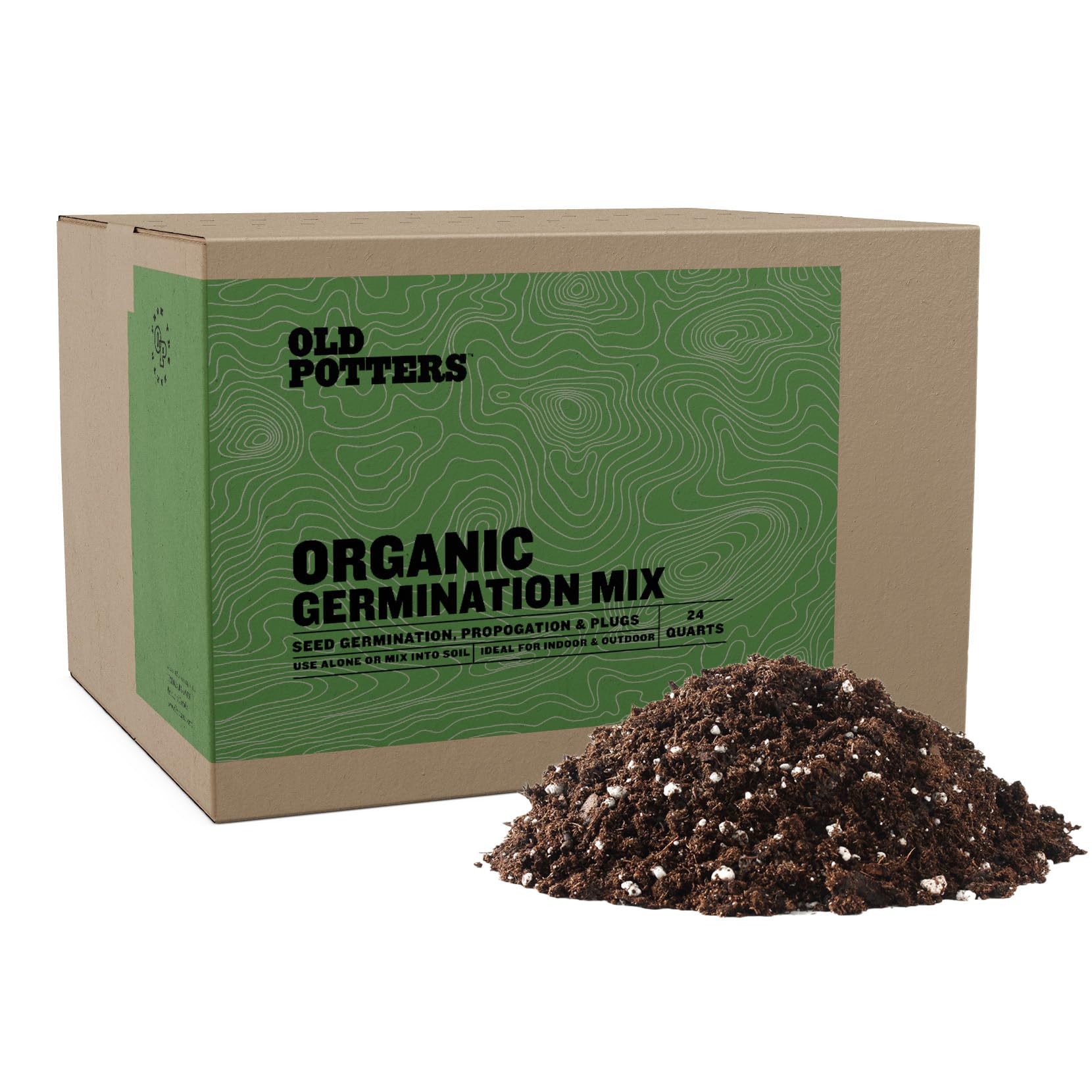
Old Potters delivers a purpose-built germination mix with an 80 to 90 percent fine Canadian sphagnum peat base, complemented by small-particle perlite and vermiculite. The composition avoids the coarse wood chunks and oversized bark pieces that plague many general-purpose seed starters. This fine texture matters critically for winter sowing because heavy particles settle and compact after repeated freezing, while the consistent small grade stays airy enough for delicate root tips to navigate. The included calcitic and dolomitic limestone buffers the pH into the 5.4 to 6.3 sweet spot, preventing the natural peat acidity from stunting germination.
The 24-quart bag provides enough volume to fill multiple milk jugs or a standard nursery flat, and the wetting agent ensures the peat rehydrates evenly on the first watering. User reports indicate germination rates consistently above 90 percent, with no complaints about fungus gnats or mold issues that plague mixes containing compost or manure. The low electrical conductivity of 1.0 to 1.5 mmhos/cm means the mix contains minimal soluble salts, which prevents root burn during the vulnerable early stages.
Budget-conscious winter sowers appreciate that this mix costs roughly the same per quart as brands offering smaller bags, while the premium-grade peat and perlite avoid the dust and debris found in economy alternatives.
What works
- Fine particle texture resists compaction through freeze-thaw cycles
- Large 24-quart bag fits high-volume sowing plans
- Balanced pH range supports a broad spectrum of perennial seeds
What doesn’t
- Perlite content can float to the surface during overhead watering
- Wetting agent may cause lighter water retention in very dry conditions
2. FoxFarm Light Warrior Seed Starter Growing Medium
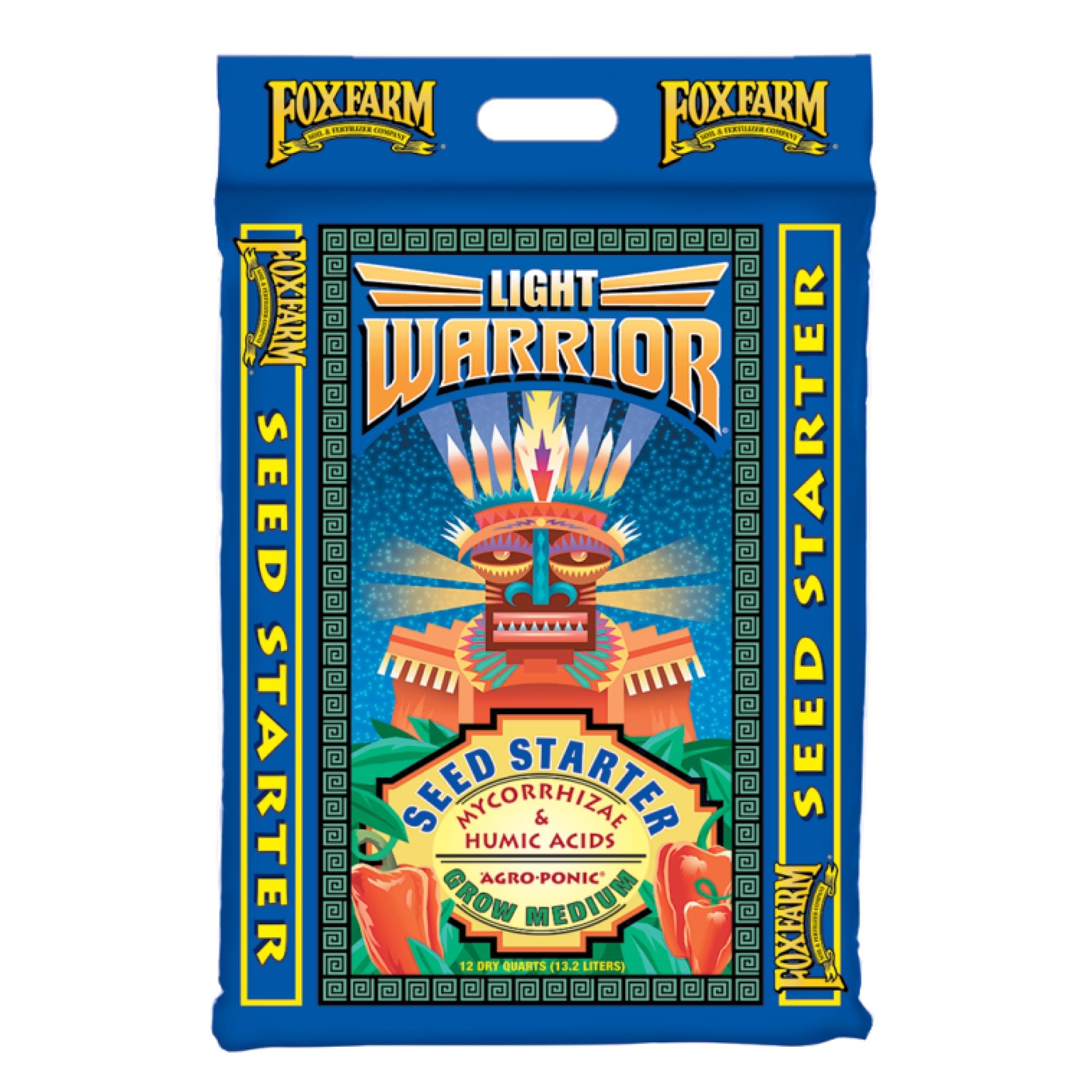
FoxFarm Light Warrior steps beyond basic peat and perlite by incorporating beneficial soil microbes, earthworm castings, oyster shell, and humic acid into the formulation. The microbial component can enhance root efficiency during the critical establishment phase, which matters in winter sowing when seedlings emerge into cold soil with limited biological activity. The bag contains 45 to 55 percent sphagnum peat moss as the base, with perlite providing drainage and aeration. This mix is ready for immediate use without needing to add any amendments.
Users consistently report exceptional germination rates and seedling vigor, with many noting that Light Warrior outperformed other starters in side-by-side trials. The product avoids the large bark pieces found in Miracle-Gro seed starting mix, which can create dry pockets in jugs. The addition of earthworm castings introduces a small amount of organic matter, but the fertilizer content remains low enough that it does not burn delicate seedlings during the first few weeks. The 12-quart bag fits well for gardeners starting two to four jugs of perennials or hardy annuals.
For winter sowers who want a mix that gives seedlings a head start on root colonization, the microbial content justifies the premium positioning. The product occupies a higher price tier than generic mixes, but the consistent results reduce the need for supplemental feeding during the early indoor growth phase.
What works
- Soil microbes and humic acid improve nutrient uptake in cold soil
- Fine texture with no oversized bark or wood chunks
- Ready-to-use formulation with no additional mixing required
What doesn’t
- Higher cost per quart compared to basic peat-perlite blends
- Minor dust content may require a mask when handling dry
3. Hoffman Seed Starter Potting & Planting Mix with Wetting Agent

Hoffman’s seed starter is a soilless mix formulated from six components blended to create the lightest, fluffiest texture in this category. The fine consistency minimizes debris and large particles, which is crucial for winter sowing because tiny seeds like lobelia, snapdragons, and poppies need direct contact with the medium to germinate. A built-in wetting agent ensures the peat rehydrates evenly, eliminating the dry patches that can occur when first filling jugs. The mix includes lime to reduce peat acidity, keeping the pH neutral for a wide range of dormant seeds that require cold stratification.
Experienced gardeners report that Hoffman consistently delivers 90 percent germination rates, with seedlings that show strong root development compared to denser potting soils. The mix absorbs water quickly without becoming soggy, and it retains moisture for longer periods than coco coir alone — an advantage during winter thaws when the jugs may not be checked for days. The bag contains no significant fertilizer, which is the correct formulation for seed starting because added nutrients can burn emerging radicles.
The 10-quart size works well for one or two flats of winter-sown seeds but runs small for large-scale projects. Users who mix it with additional perlite appreciate that it stretches the volume without sacrificing texture.
What works
- Finest particle consistency in its price range for tiny seeds
- Wetting agent prevents dry spots during initial hydration
- Minimal fertilizer content eliminates burn risk for seedlings
What doesn’t
- 10-quart bag is smaller than many competing brands
- Some users find it slightly expensive per quart
4. Happy Trees Coco Coir and Perlite Growing Medium
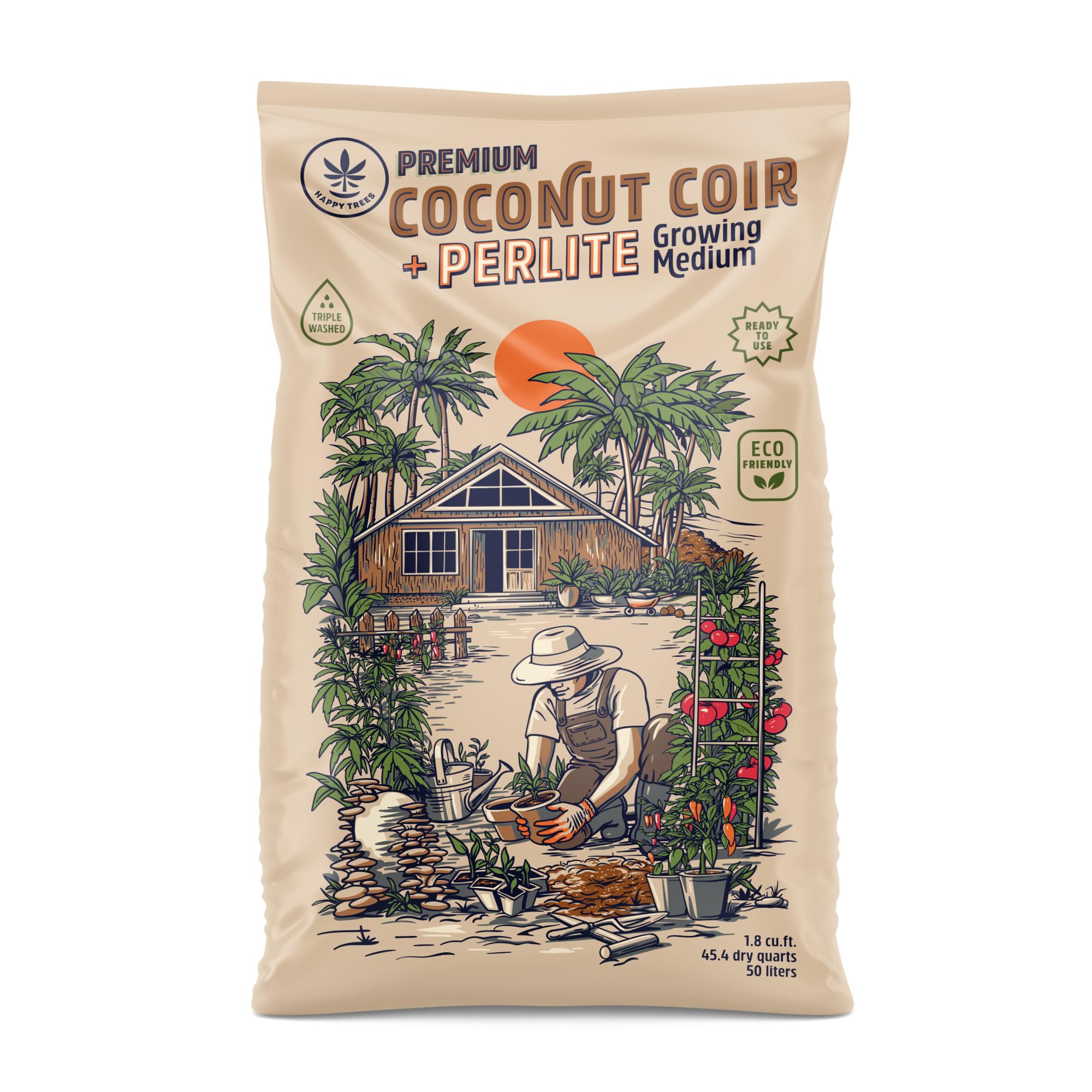
Happy Trees offers a peat-free alternative using a 70 percent coco coir and 30 percent perlite blend that arrives pre-expanded and ready to use. The triple-washing process reduces salt content to extremely low levels, eliminating the need to rinse before planting as many raw coir bricks require. Winter sowers avoiding peat for sustainability reasons will find this mix provides excellent aeration properties — the coir particles create a fluffy structure that resists compaction even after months of freeze-thaw cycling. The perlite fraction ensures water moves through the root zone without ponding, which reduces the risk of damping-off disease during cold, damp periods.
Users report that seeds germinate quickly in this medium, with strong root systems that fill the containers rapidly. The loose-fill bag eliminates the hassle of hydrating bricks, saving time during the winter sowing setup. The pH is pre-balanced, so there is no need for additional lime or pH adjustments. The natural buffering capacity of coco coir also resists mold growth, as it does not contain the organic debris found in compost-based mixes.
Some users note that the 9-quart bag runs small for large winter sowing sessions. Additionally, coco coir naturally breaks down faster than peat and may need to be replaced between seasons rather than reused.
What works
- Triple-washed for extremely low salt and EC levels
- Pre-expanded loose fill avoids brick hydration wait time
- Excellent drainage and aeration for freeze-thaw environments
What doesn’t
- 9-quart bag is small for high-volume winter sowing projects
- Some users wish the price was lower per quart
5. Jiffy Natural & Organic Seed Starting Soil Mix

Jiffy has been a staple in seed starting for decades, and their organic mix combines peat moss, vermiculite, and lime in a straightforward formula that works reliably for winter sowing. The peat component can absorb up to twenty times its weight in water, providing the steady moisture supply that seeds need during cold stratification. Vermiculite prevents compaction and adds air spaces that roots require in early spring when the mix begins to warm. The inclusion of lime stabilizes the pH, making it suitable for seeds that prefer neutral to slightly acidic conditions.
Gardeners report excellent germination rates across a wide range of annuals and perennials, with many noting that seedlings hold together well when transplanted from jugs to pots. The fine texture contains no large bark chunks, which prevents seeds from falling into air pockets where they cannot make contact with the medium. The 10-quart bag weighs only 16 ounces dry, confirming the lightweight, airy structure that winter sowers need for easy handling.
The product is slightly more expensive than generic garden soil, but the OMRI-listed organic certification adds value for growers seeking inputs suitable for produce starts. Some users find the volume small for filling multiple milk jugs, but it matches well with one or two overwintering projects.
What works
- Proven formula with decades of positive user feedback
- Organic certification for food-safe seedling production
- Fine texture supports strong root ball formation for transplanting
What doesn’t
- 10 quarts goes fast when filling multiple containers
- Vermiculite content may cause minor dust when pouring dry
6. Modellor Premium Super Washed Coco Coir Bricks
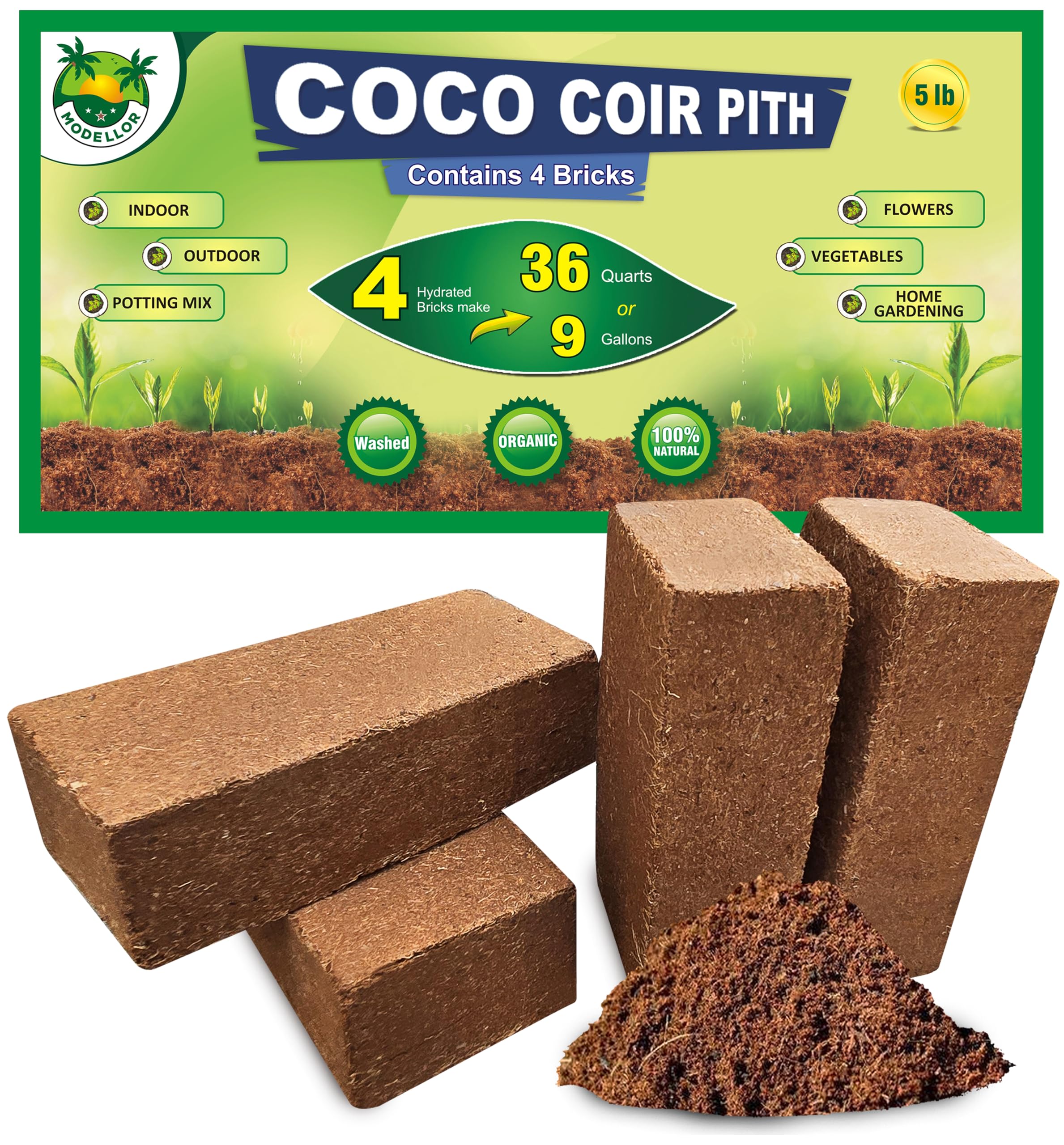
Modellor provides four 1.25-pound bricks that expand into 9 gallons or 36 quarts of coco coir, making this one of the highest-yielding options for winter sowers who need bulk volume. The triple-washed and pH-balanced format means the coir arrives with very low salt content, eliminating the need for pre-rinsing that many budget coir bricks require. Winter sowers appreciate the compact storage — four bricks take up less closet space than pre-expanded bags, and they can be hydrated in stages throughout the season. The fluffy structure balances water holding capacity with drainage, creating an environment where seeds remain moist but never waterlogged during freeze cycles.
Users consistently describe the coir as clean, odorless, and free from debris such as sticks or sand that appear in lower-quality bricks. The expansion ratio is reliable, with each brick producing about 9 quarts of medium when fully hydrated. Plants grown in this coir develop vigorous root systems, and the material works well for direct winter sowing in jugs as well as for seed starting indoors on heat mats. The organic, biodegradable nature appeals to gardeners avoiding peat harvesting.
The bricks require soaking for 15 to 20 minutes before use, which adds a minor prep step compared to loose-fill bags. Some users recommend breaking the bricks into smaller pieces before adding water to ensure even hydration.
What works
- 36 quarts of usable medium from a compact brick set
- Triple-washed for low salt content and clean results
- Excellent drainage properties for damp winter conditions
What doesn’t
- Requires pre-soaking and breaking apart before use
- Hard brick density can be difficult to break by hand
7. Midwest Hearth Premium Potting Soil Mix

Midwest Hearth offers a pre-mixed blend of peat moss, vermiculite, and perlite in a compact 4-quart bag that suits small-scale winter sowing projects. The formulation matches what professional growers use, with pH levels balanced for a broad spectrum of plant types. The lightweight, fluffy texture keeps seeds aerated and prevents the hard crusting that occurs when standard garden soil dries on the surface of jugs. The resealable bag is a thoughtful touch for winter sowers who use small amounts at a time over the course of several weeks.
User feedback emphasizes the clean, weed-free nature of the mix and the absence of bugs or fungal spores that sometimes accompany bagged soil from big-box retailers. The mix promotes rapid germination and strong root growth in common winter-sown flowers like petunias. The vermiculite component helps hold moisture during dry winter stretches when the jugs cannot be checked as frequently. The bag weighs under a kilogram, making it easy to handle when filling jugs on a cold morning.
The 4-quart volume fills only one or two gallon milk jugs, so it is best suited for gardeners running a small trial or a targeted perennial start. The per-quart cost is higher than bulk brick options, which makes it less economical for large-scale winter sowing sessions.
What works
- Lightweight, fluffy texture ideal for seed germination
- Resealable bag keeps unused mix fresh
- Clean and free from weeds, pests, and debris
What doesn’t
- Small bag size limits use to small projects
- Higher per-quart cost compared to bulk alternatives
Hardware & Specs Guide
Peat Moss Content
Peat moss forms the base of most winter-sowing mixes because it can absorb up to twenty times its weight in water. This property is critical for maintaining consistent moisture through weeks of cold stratification. Look for mixes containing at least 40 percent sphagnum peat moss, as products with lower amounts tend to dry out quickly in the wind and sun exposure that winter jugs experience.
Perlite vs Vermiculite
Perlite provides drainage and aeration by creating air pockets in the mix, while vermiculite absorbs several times its volume in water and prevents soil compaction. A balanced winter-sowing mix contains both — perlite keeps the structure open so water flows through, and vermiculite holds moisture near the seed zone. Mixes with only vermiculite can become waterlogged, while those with only perlite may drain too fast for cold-season stratification.
pH Range
Most seeds germinate best in a pH range of 5.5 to 6.5. Peat moss is naturally acidic with a pH around 3.5 to 4.5, so quality seed-starting mixes include lime or dolomitic limestone to buffer the pH upward. If a bag does not list lime as an ingredient, the mix will likely be too acidic for broad-spectrum winter sowing. Coco coir naturally sits near the neutral range, requiring less amendment.
Fertilizer Content
Seed-starting mixes should contain minimal to no added fertilizer. Seedlings do not need nutrients until they develop their first true leaves, and fertilizer salts can damage tender roots during the sensitive early stages. Mixes labeled as “potting soil” rather than “seed starter” often contain synthetic fertilizers that can burn seeds in cold conditions where microbial activity is low and nutrients do not break down naturally.
FAQ
Can I reuse winter sowing soil from last season?
Should I add fertilizer to my winter sowing mix before planting?
Is coco coir or peat moss better for cold winter sowing?
Why does my seed starting mix develop mold on top in winter jugs?
Final Thoughts: The Verdict
For most gardeners, the best soil for winter sowing winner is the Old Potters Germination Mix because its high peat content and fine particle structure maintain consistent moisture and aeration through entire freeze-thaw cycles. If you want a peat-free alternative with better drainage, grab the Happy Trees Coco Coir and Perlite. And for bulk winter sowing projects where storage space is tight, nothing beats the Modellor Coco Coir Bricks for the sheer volume of medium they produce from compact bricks.