
Specs are compiled from manufacturer listings and verified buyer reviews and can change over time — please confirm the key details on the product page before buying.
You can scatter wildflower seeds into bare dirt and hope, but the real secret to a meadow that actually pops is the soil you plant into. This guide sorts through the mixes that combine seed, plant food, and soil conditioners so you know exactly what to pour into your beds this season.
I’m Rikta — the founder and writer behind Lawn Gear Lab. This guide is built by comparing the manufacturers’ published specifications and the patterns across verified customer reviews, so you get each pick’s real strengths and trade-offs instead of marketing spin.
We break down the best blends, their honest germination track records, and what conditions each one needs. Here is everything you need to know about choosing the right soil for wildflowers before you buy a single bag.
Our Picks at a Glance
How To Choose The Best Soil For Wildflowers
Wildflowers are tough, but they aren’t magic. They need the right balance of drainage, nutrients, and seed-to-soil contact to germinate. Choosing a mix that bundles these elements saves you the guesswork of buying seed and fertilizer separately.
Decide Between Bare Seed and a 3-in-1 Mix
A standard seed packet expects you to prep the ground and add your own fertilizer. A 3-in-1 mix combines wildflower seed, plant food, and soil conditioners in one bag, so you simply scatter, water, and let the mix do the work. For a new bed, the bundled approach removes the most common beginner errors.
Match the Mix to Your Sunlight
Some wildflower blends are bred for full sun, while others thrive in shade. If your planting spot gets less than four hours of direct sun a day, a “shady” mix is the safer bet. Zinnias, by contrast, demand full sun and good airflow to avoid mildew, so check the sunlight exposure before you commit a whole bed.
Look at the Coverage and the Numbers
Coverage tells you how far a bag goes—some mixes spread over 600 square feet, others claim 1,000. The NPK ratio (nitrogen, phosphorus, potassium) tells you what the plant food feeds. A higher middle number, like phosphorus, encourages more and bigger blooms, which is exactly what you want from a flower mix.
Quick Comparison
| Model | Best For | Mix Type | Coverage | Sunlight | Amazon |
|---|---|---|---|---|---|
| Sunday Organic Potting Soil & Fertilizer★ Best Overall | Container blooms & beds | Soil + Fertilizer | 6-8 small pots / 50 sq ft | Versatile | Amazon |
| Earth Science Zinnia Mix | Full sun, vibrant color | 3-in-1 Seed Mix | 600 sq ft | Full Sun | Amazon |
| Earth Science Shady Mix | Shaded garden spots | 3-in-1 Seed Mix | 1,000 sq ft | 2-4 hours sun | Amazon |
In‑Depth Reviews
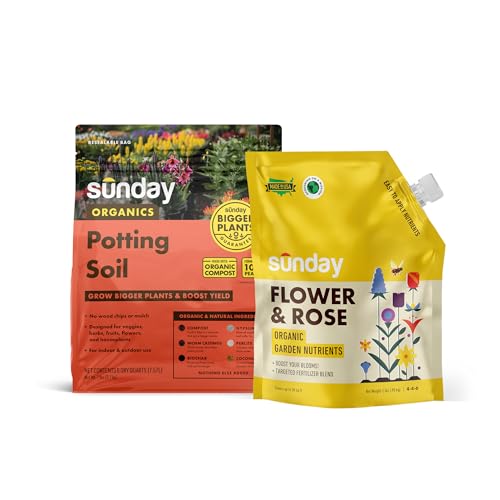
1. Sunday Organic Potting Soil and Flower Plant Food Bundle
Our pick — over 4.5★ from 20+ verified ratings; the strongest balance of quality and price.
The peat-free grower that gives your wildflowers a proper home to stretch their roots.
This bundle is built for anyone starting wildflowers in containers, raised beds, or houseplant pots rather than a sprawling lawn. You get an 8-quart bag of potting mix paired with a 2-pound bag of Flower & Bloom 4-4-6 NPK fertilizer, so the soil and the feeding plan arrive together and work as one system.
What wins people over is the soil recipe itself. It blends organic compost and worm castings for food, biochar and perlite for drainage, coconut coir to hold moisture, and gypsum for calcium — a six-ingredient mix that stays light and airy. Buyers report containers greening up in 2 weeks, with roses showing healthier foliage and fuller blooms.
The OMRI-listed label certifies organic ingredients without synthetic fillers, making it a safer choice around pets and family. The one honest trade-off: the 8-quart bag is modest, so if you are filling several large pots you will run through it quickly, and organic fertilizer can attract dogs if you don’t water it in well.
Our take: This is the set-and-forget option for gardeners who want certified organic ingredients and a proven feeding schedule without mixing their own amendments. It beats the seed mixes below if you want to control the soil itself rather than scatter seeds over an existing yard.
Reach for this if: You grow wildflowers and ornamentals in containers or small beds and want a peat-free, OMRI-listed soil with a matching organic fertilizer.
Look elsewhere if: You plan to cover a large open field, since the 8-quart bag is sized for a handful of pots, not an acre.
2. Earth Science Zinnia Wildflower Mix
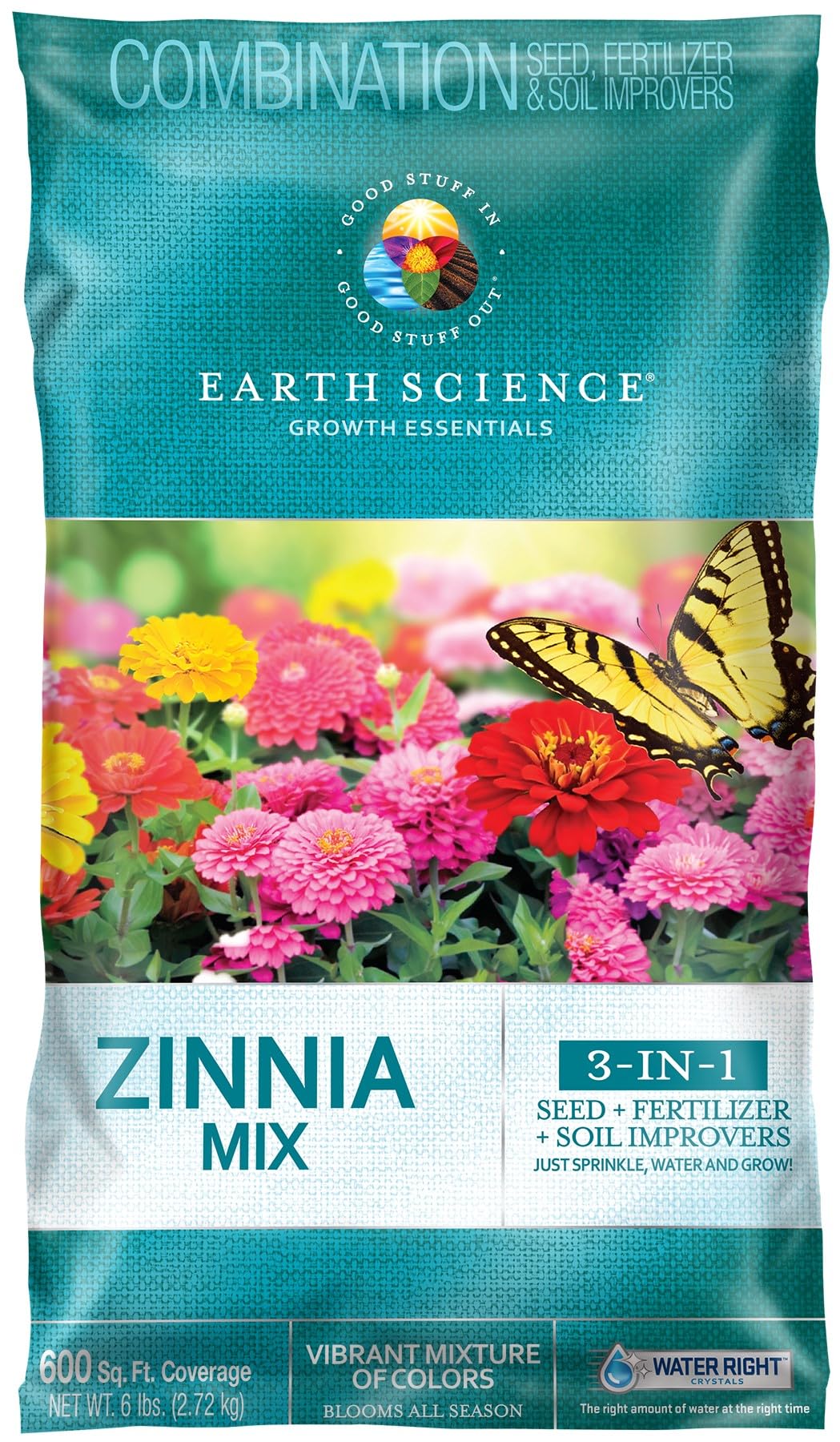
A full-sun zinnia mix that trades fussy soil prep for a simple scatter-and-water routine.
Zinnias are the workhorse of the summer garden — drought-tolerant, not picky about soil pH, and generous with blooms in orange, pink, purple, yellow, and red. This 6-pound bag combines 100% premium zinnia seeds with plant food and soil conditioners, covering roughly 600 square feet in a single application.
The reviews split hard on this one, so it deserves an honest read. Plenty of owners describe high germination rates and gorgeous blooms planted all around the house, and the mix earns praise as easy-peasy to direct sow. But a vocal group reports the opposite, with some seeing literally zero germination from a brand-new bag, and repeat buyers noting that a bag that performed beautifully one year produced nothing the next.
To get zinnias to bloom from summer to fall and attract pollinators, give them full sun and space them about 6 inches apart for airflow. This is a budget-friendly way to fill a sunny bed, but be ready for some inconsistency in seed performance — germination results clearly vary, so you may need to replant gaps.
What we see: A vibrant, pollinator-friendly zinnia mix with an enthusiastic fan base and a genuine germination gamble. It is the right energy for a full-sun border, but not the mix to bet an entire showcase bed on.
Choose it for: Carefree summer color in warm, sunny spots where zinnias are known to flourish and you don’t mind the occasional dead patch.
Be aware that: Germination is inconsistent bag to bag, so scatter a little extra and expect to reseed thin areas.
3. Earth Science Shady Wildflower Mix
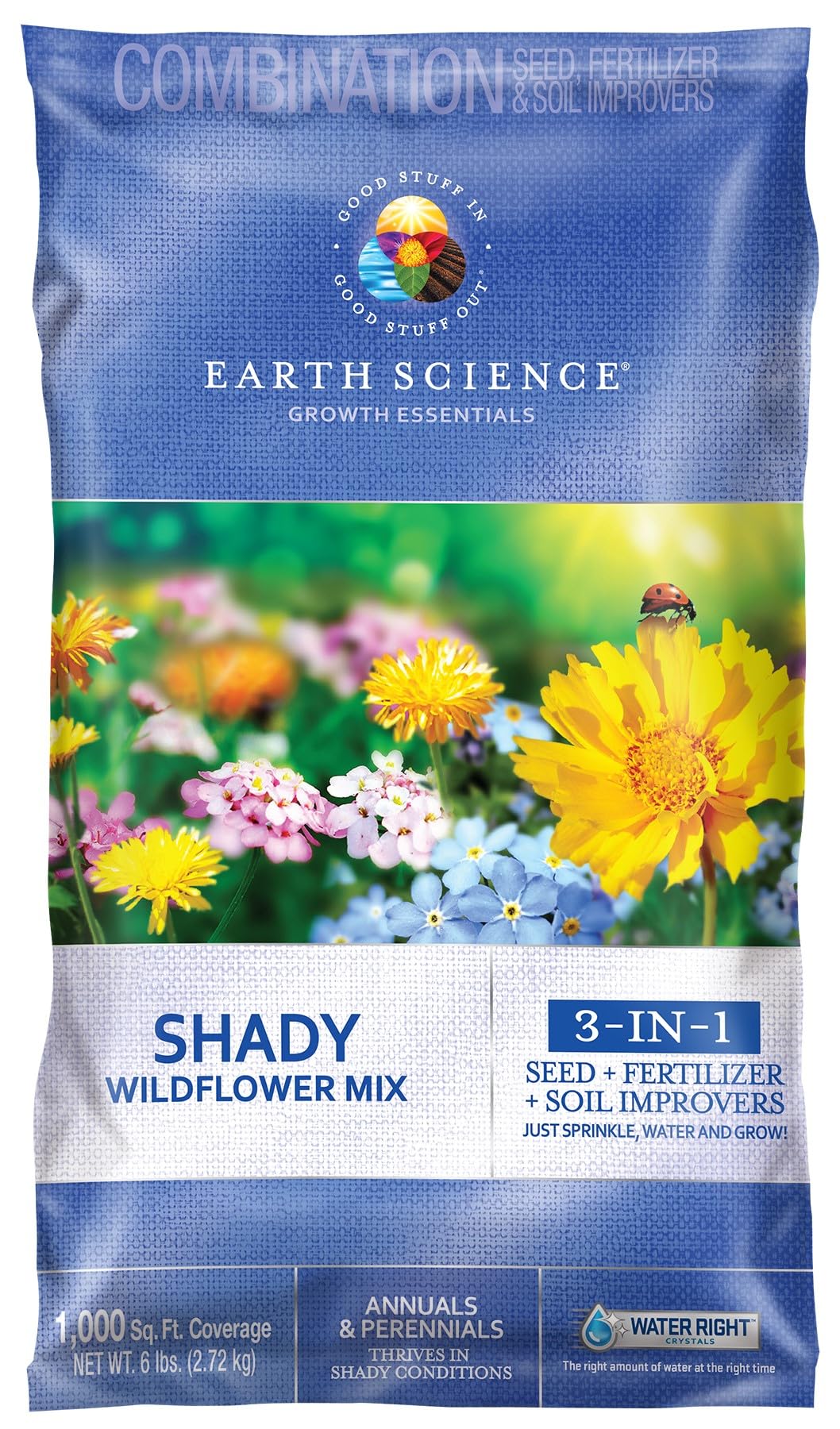
The 13-species blend made for the awkward shady corners where grass refuses to grow.
If your trouble spot is under a tree or along the north side of the house, this mix is purpose-built for it. The 6-pound bag combines wildflower seed, mulch, plant food, and soil conditioners, and it carries 13 shade-tolerant species from Chinese Forget-Me-Nots to Purple Coneflower. It covers about 1,000 square feet, which is the largest footprint of any pick here.
The clever bit is its patented Water Right Crystals. You water until the crystals expand and sparkle, then let them disappear as a signal it’s time to water again — a built-in moisture guide for anyone who tends to over or under water a shady bed. The mix only needs 2-4 hours of sunlight per day to perform.
Honesty requires flagging the mixed record: the single biggest complaint is germination failure, with some owners reporting not a single seed sprouted despite following the directions. The bag itself can have an unpleasant smell straight out of the pouch. Buyers who hit success spread the seeds just before rain and watched new wildflowers emerge among the grass within weeks, so timing and moisture clearly matter here.
Bottom line: Genuinely useful for shaded ground and the most generous coverage in this lineup, but germination is the project’s biggest risk. Treat it as an experiment and over-seed if you can.
Pick this if: You need to fill a large, low-sun area and want a self-contained mix with a built-in watering guide.
Pause if: You need reliable germination on a deadline — cover the ground and hope for rain, not a guaranteed carpet of flowers.
Understanding the Specs
NPK Ratio
NPK stands for nitrogen, phosphorus, and potassium — the three numbers on a fertilizer label. For wildflowers, you want the middle number (phosphorus) to be strong, because that is what drives bud and bloom development. A 4-4-6 formulation like the Sunday fertilizer pushes bigger, fuller flowers rather than just leafy growth.
Coverage Area
Coverage tells you how many square feet a single bag can handle, and it varies wildly — from 600 square feet on the zinnia mix to 1,000 on the shady blend. Measure your planting area before buying, because a bag that covers 600 square feet will not stretch to cover a 1,000-square-foot field without being spread too thin.
3-in-1 Mix vs. Separate Soil
A 3-in-1 bag bundles seeds, plant food, and soil conditioners so you just scatter and water. Separate soil and fertilizer, like the Sunday bundle, give you control over the growing medium itself — better for containers, but more steps if you are blanketing a yard. Match the format to the size of the project.
Sunlight Exposure
Wildflower mixes are bred for specific light. Zinnias demand full sun and about 6 inches of space between plants for airflow. Shady mixes need only 2-4 hours of sun a day. Check the bag’s sunlight rating against your planting spot before you commit, since this single factor drives most success or failure.
FAQ
Can I use a 3-in-1 wildflower mix anywhere in my yard?
How much ground will a 6-pound bag of wildflower mix cover?
What does the NPK number on flower fertilizer mean?
Is organic wildflower soil actually worth the extra cost?
Why do some wildflower seeds fail to germinate at all?
What is the difference between potting soil and a seed mix?
Will wildflower mixes come back every year?
How often should I water a new wildflower bed?
Final Thoughts: The Verdict
For the majority of shoppers, the soil for wildflowers winner is the Sunday Organic Potting Soil and Fertilizer Bundle because it removes the biggest variable in gardening — the growing medium — with a certified organic, peat-free recipe that buyers consistently see results from in as little as two weeks. If you want carefree full-sun color that draws pollinators all summer, grab the Earth Science Zinnia Mix for its vibrant 600-square-foot coverage. And if your planting spot is a shaded area where grass struggles, the Earth Science Shady Mix is the one to reach for, with 13 species bred for low light and a built-in watering guide.
How We Picked
We do not accept paid placement. Every pick is matched to a real buyer and a real use-case; we do not hands-on test units.
Sources & Methodology
Specifications: manufacturer listings and product documentation. Review insights: verified customer reviews, as of August 2026. Pricing: not shown on this page (it changes often); check the current price via the retailer link.
As an Amazon Associate, Lawn Gear Lab earns from qualifying purchases. This does not affect which products we feature.