
Specs are compiled from manufacturer listings and verified buyer reviews and can change over time — please confirm the key details on the product page before buying.
Venus flytraps are not like your other houseplants. They need soil that is poor, acidic, and completely free of fertilizer — the exact opposite of what a standard potting mix delivers. This guide sorts through the ready-to-use blends that actually match a flytrap’s boggy natural home, so you can repot with confidence instead of guessing.
I’m Rikta — the founder and writer behind Lawn Gear Lab. This guide is built by comparing the manufacturers’ published specifications and the patterns across verified customer reviews, so you get each pick’s real strengths and trade-offs instead of marketing spin.
Whether you are repotting a struggling seedling or building a full carnivorous bog garden, choosing the right soil for venus fly trap determines whether those jaws snap shut for years or rot at the roots in weeks.
Our Picks at a Glance
How To Choose The Best Soil For Venus Fly Trap
Venus flytraps evolved in the nutrient-poor bogs of the Carolinas, where their roots never touch rich soil. Give them standard potting mix and the fertilizer burns the roots; give them a blend of peat moss and perlite and they thrive. The trick is matching the mix to the plant’s natural habitat.
Check for zero fertilizer first
The single most important rule is that the bag must contain no added fertilizer. A flytrap gets its nutrients from the insects it traps, not from its roots. Any mix with slow-release granules or compost will cause root burn and a slow, sad decline. Every product on this list is explicitly nutrient-free.
Look at the peat-to-perlite ratio
Peat moss holds the moisture flytraps need, while perlite — those little white volcanic beads — keeps the mix airy and well-drained. A 50/50 blend is the classic recipe for good reason. Some brands swap in coco coir or sphagnum moss, which changes how often you need to water.
Match the volume to your pot count
A 1-quart bag fills roughly one 4-inch pot, while a 2-quart bag handles two or three. If you are planting a collection, buy the bigger 4-quart option from the start. Buyers consistently report that bags fill less than expected, so it pays to size up.
Quick Comparison
| Model | Best For | Volume | Base Ingredients | Added Fertilizer | Amazon |
|---|---|---|---|---|---|
| Gardenera Professional★ Best Overall | Single-plant repotting | 1 quart | Peat Moss, Coco Coir, Perlite | None | Amazon |
| BOG BOSS BlendPremium Pick | Bog gardens, bigger pots | 4 quarts | Nutrient-free custom blend | None | Amazon |
| Omitgoter Premium | Fast growth, no mixing | 2 quarts | Peat Moss, Perlite, Sphagnum, Sand | None | Amazon |
| Baby Violets Mix | Classic 50/50 recipe | 2 quarts | Peat Moss, Perlite | None | Amazon |
| Duspro 3-in-1 | Terrarium setups | 1.5 quarts | Forest Moss, Peat Moss, Perlite | None | Amazon |
| Leaves & Soul Blend | Quick fix, multi-species | 2.2 quarts | Peat Moss, Coco Coir, Perlite, Dolomite | None | Amazon |
| Josh’s Frogs Sprig & Stone | Large collections, seed starting | 4 quarts | Peat Moss, Perlite | None | Amazon |
In‑Depth Reviews
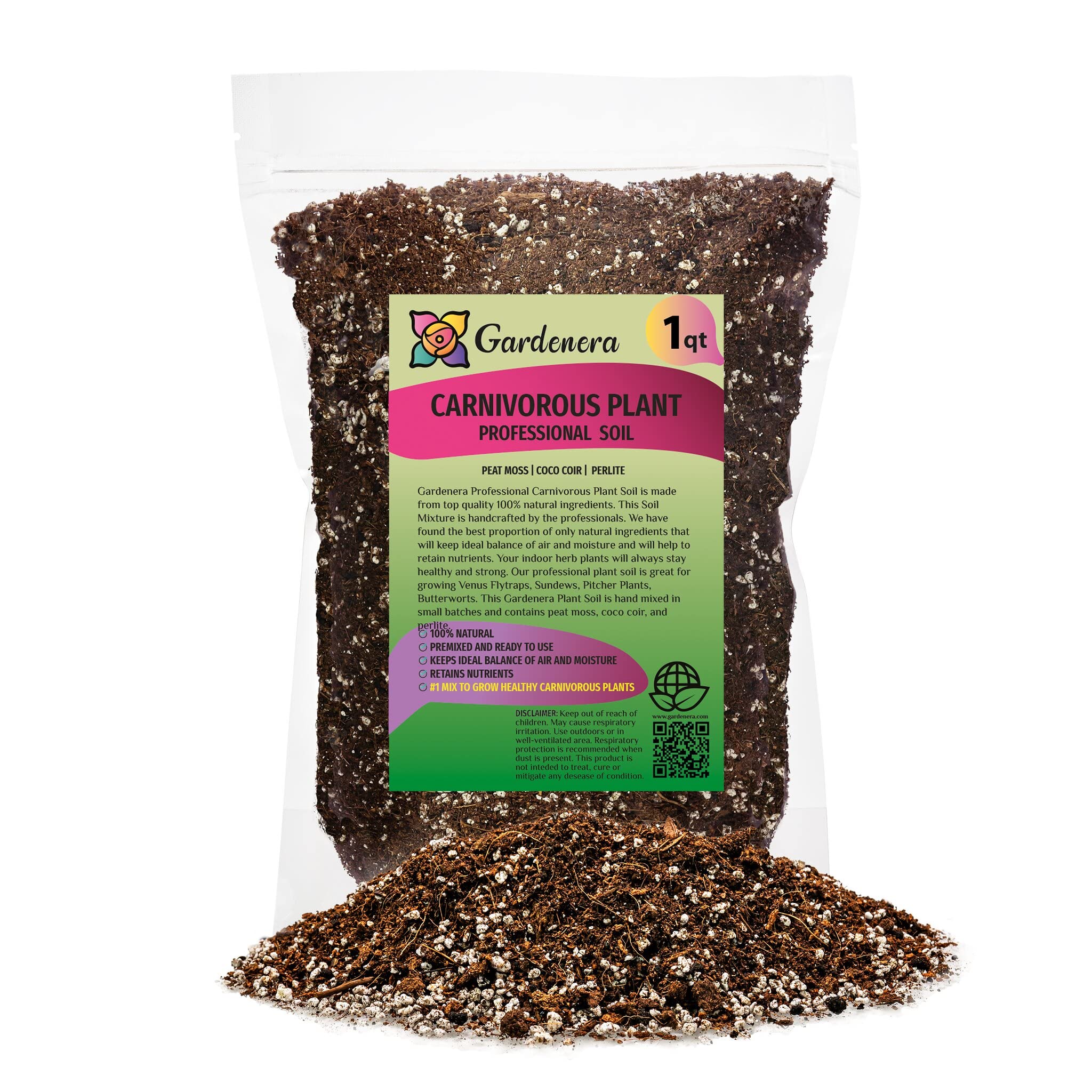
1. Gardenera Professional Carnivorous Plant Soil
Our pick — over 4.5★ from 150+ verified ratings; the strongest balance of quality and price.
The crowd favorite that had flytraps outgrowing their pots within a single month.
This 1-quart blend of peat moss, coco coir, and perlite gives you the classic recipe without any mixing — open the bag and repot. The peat, coir, and perlite blend drains freely to prevent over-watering while keeping roots aerated. Buyers report: “Had to repot after only 1 month because they were growing so fast.”
Made in the USA, this is the highest-rated option in this roundup, earning 4.7 stars from a crowd of nearly 200 owners — the strongest consensus of any pick here. The brand backs it with a refund-or-replacement promise if you are not satisfied. It is the best fit for anyone repotting a single plant or a small collection and wanting a proven, no-fuss result.
The honest trade-off is the bag size. At 1 quart, it is enough for roughly one 4-inch pot, so a serious collection will need multiple bags. For larger projects, the smart money is on mixing your own peat and perlite in bulk.
What wins owners over
- Documented rapid growth, with repotting needed after a month
- Drainage that prevents over-watering mistakes
- Made in the USA with a satisfaction guarantee
Who should buy bigger
- 1-quart volume fits only one or two small pots
- Multiple bags get pricey for large bog gardens
Reach for this if: you want the most proven, beginner-safe mix for a single flytrap or a couple of small pots.
Look elsewhere if: you are filling several pots at once — you will save money mixing your own.
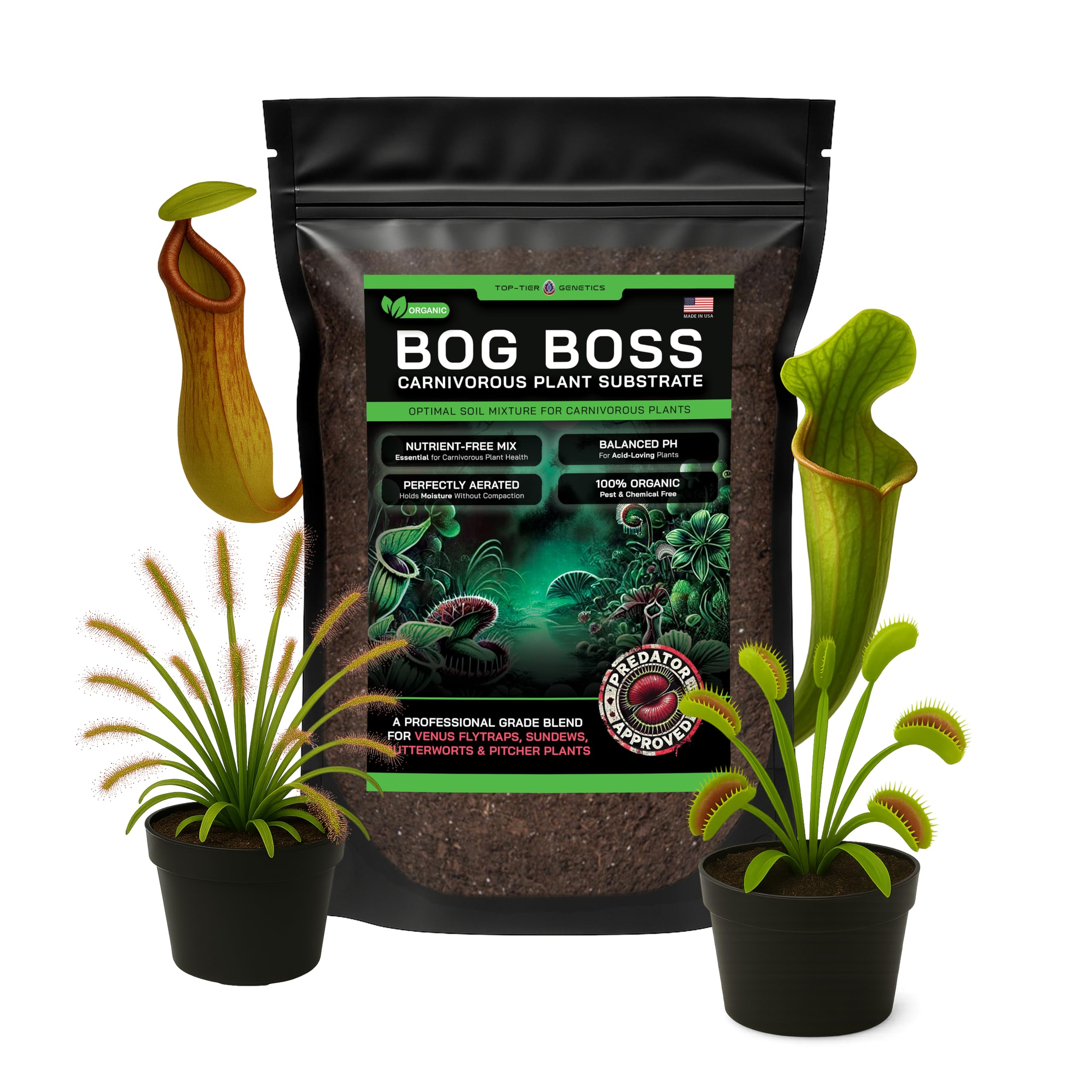
2. BOG BOSS Premium Carnivorous Plant Soil Blend
The 4-quart volume champ that revived a store-bought flytrap into nonstop new growth.
At 4 quarts, this blend from Top Tier Genetics gives you four times the volume of the Gardenera pick — enough to fill a small bog garden or repot several plants at once. It is formulated specifically for Venus Flytraps, Sundews, Nepenthes Pitcher Plants, and Butterworts, and it mimics a natural bog by being completely nutrient-free, which prevents fertilizer burn and root rot. The mix retains water well while draining properly, striking the balance flytraps need between damp and waterlogged.
What wins people over is plant health — owners mention flytraps putting out new growth “like crazy” after transplanting, even reviving a struggling store-bought plant that seemed beyond saving. It also holds its own against sphagnum moss as a terrarium substrate. Customers note the bag is compact and not cumbersome, which makes it easy to store between uses.
The main gripe is value — a few owners feel the price per quart runs high, and the 4-quart size disappears faster than you expect once you fill a few pots. It is a premium product, so match it to a premium project.
Why it stands out
- 4 quarts of ready-to-use mix for bigger projects
- Water retention that keeps roots consistently damp
- Revived struggling flytraps into vigorous growers
The trade-off
- Per-quart cost runs higher than value brands
- 4 quarts still fills fewer pots than you might expect
Best for: growers building a terrarium or bog garden who want generous volume and proven plant health results.
Think twice if: you are on a tight budget — the per-quart price is the highest here.
3. Josh’s Frogs Sprig & Stone Carnivorous Plant Soil

This 50/50 peat and perlite mix is the best-selling option here, backed by the largest owner base in this guide.
This 4-quart bag from Josh’s Frogs sticks to the classic recipe — a 50/50 blend of peat moss and perlite that is all-natural, acidic, and fertilizer-free. It is built for potting and transplanting bog-type carnivorous plants, and owners call that 50/50 ratio perfect for the job. The volume gives you the best coverage of any premium pick here, at double the quarts of the mid-range options below.
Owners who use it for their annual flytrap repotting report pulling the plants out to find long, healthy roots, with fresh growth appearing quickly after they go back in. It works fantastically for pitcher plants too, and it is a reliable medium for germinating Venus Fly Trap seeds (Dionaea muscipula). The bag holds about 4 quarts, which is decent but not enormous — a few reviewers point out it runs slightly pricey for the volume you get.
This is the pick with the deepest proven track record — 4.5 stars from a base of 700+ owners, the largest review count in this roundup. If you want a mix that thousands of growers have already vouched for, this is the safest buy.
Track-record play: the biggest owner base here — 700+ ratings at 4.5 stars — makes this the lowest-risk choice for a first-time flytrap owner, and the 50/50 recipe is exactly what seasoned growers mix themselves.
Choose this for: a proven, all-natural mix that handles multiple species and seed starting with zero guesswork.
Be aware: the per-quart cost is mid-range, and the 4-quart bag fills fewer pots than the size suggests.
4. Omitgoter Premium Carnivorous Plant Soil
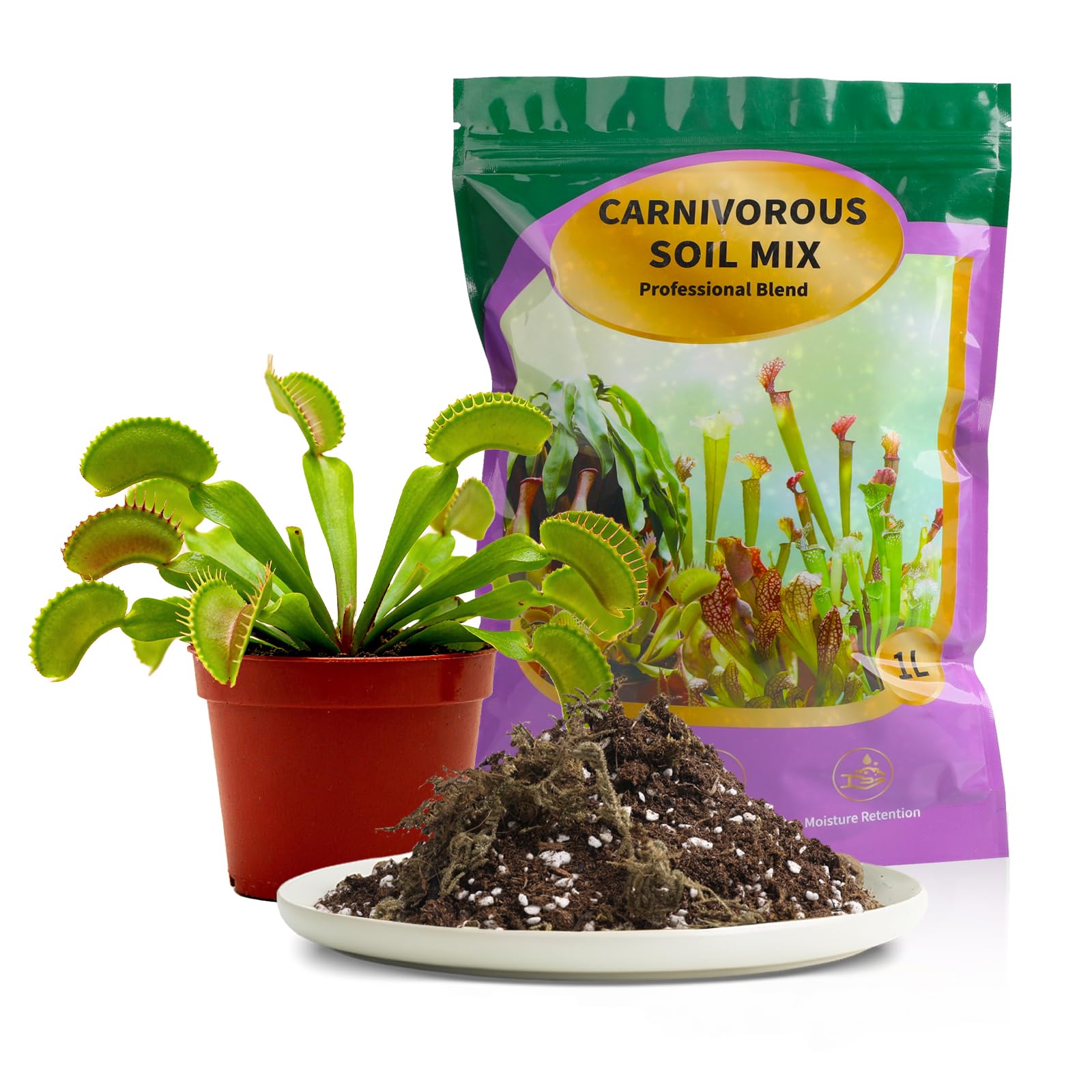
A 2-quart upgraded formula mixing four natural ingredients for fast-draining, low-nutrient growth.
Omitgoter blends peat moss, perlite, sphagnum moss, and horticultural sand into a 2-quart bag that is ready to use with no mixing required. The engineered structure drains fast to prevent waterlogging while keeping airflow high enough to stop root rot — conditions that mimic a natural bog. The 100% natural composition keeps it toxin-free for sensitive insect-eating plants, and the tailored pH and texture are designed specifically for Venus Fly Traps, Pitcher Plants, Sundews, and Butterworts.
What wins people over is the soil quality — shoppers say flytraps staying alive and thriving when paired with distilled water. The mix is a popular seed-starter too, though one buyer found it barely filled an 18-count egg tray. The recurring trade-off is size versus price: at 2 quarts, several owners found the bag smaller than expected and felt it was pricey for the amount, with one noting they could not fill even two 5-inch pots.
Match this pick to a small project — one or two plants, or seed starting — rather than a full collection.
What owners praise most
- Top-notch soil quality that keeps flytraps thriving
- Fast drainage that prevents waterlogging and root rot
- Four-ingredient blend with no mixing needed
Watch the volume
- 2 quarts fills barely one or two small pots
- Value-for-money scores land negative in owner feedback
Pick it if: you want a quality, ready-to-use blend for a single plant and do not mind paying a bit more per quart.
skip it if: you are repotting several pots — the small bag makes the per-quart cost hard to justify.
5. Baby Violets Carnivorous Plant Potting Soil Mix

A super-coarse 50/50 peat and perlite blend packed in a resealable zip bag.
This 2-quart mix from Baby Violets uses exactly 50% peat moss and 50% super-coarse perlite, with no extra additives and no fertilizers. The coarse perlite provides extra drainage and is chemically inert and sterile, giving you a lightweight, airy mix that is not dense or compacted. It works for Venus Fly Traps, Pitchers, Butterworts, Bladderworts, and Drosera, and the resealable clear poly zip bag keeps leftover soil dry for future repotting.
Owners confirm it fills 3 to 3.5-inch pots nicely and has helped sundews, pitchers, and flytraps alike. The catch is that peat is naturally hydrophobic — it repels water when dry — so buyers stress soaking the mix for 30 to 60 minutes before potting. One owner found it filled less than expected and advises buying the 2-quart bag even for a 1-quart pot. Another hit real trouble when water would not absorb after multiple attempts, so the pre-soak step is not optional.
This is the pick for growers who want the pure classic recipe at a fair volume and do not mind following the wetting instructions carefully.
Buyer insight: the pre-soak is everything here — owners who wet the mix first get great results across sundews, pitchers, and flytraps, while those who skipped it hit hydrophobic dry spots that refuse water.
Best for: growers who want the textbook 50/50 peat-perlite recipe and will follow the pre-soak step.
Not for: anyone who wants a grab-and-go mix — this one demands proper wetting before potting.
6. Duspro Carnivorous Plant Soil Mix 3-in-1
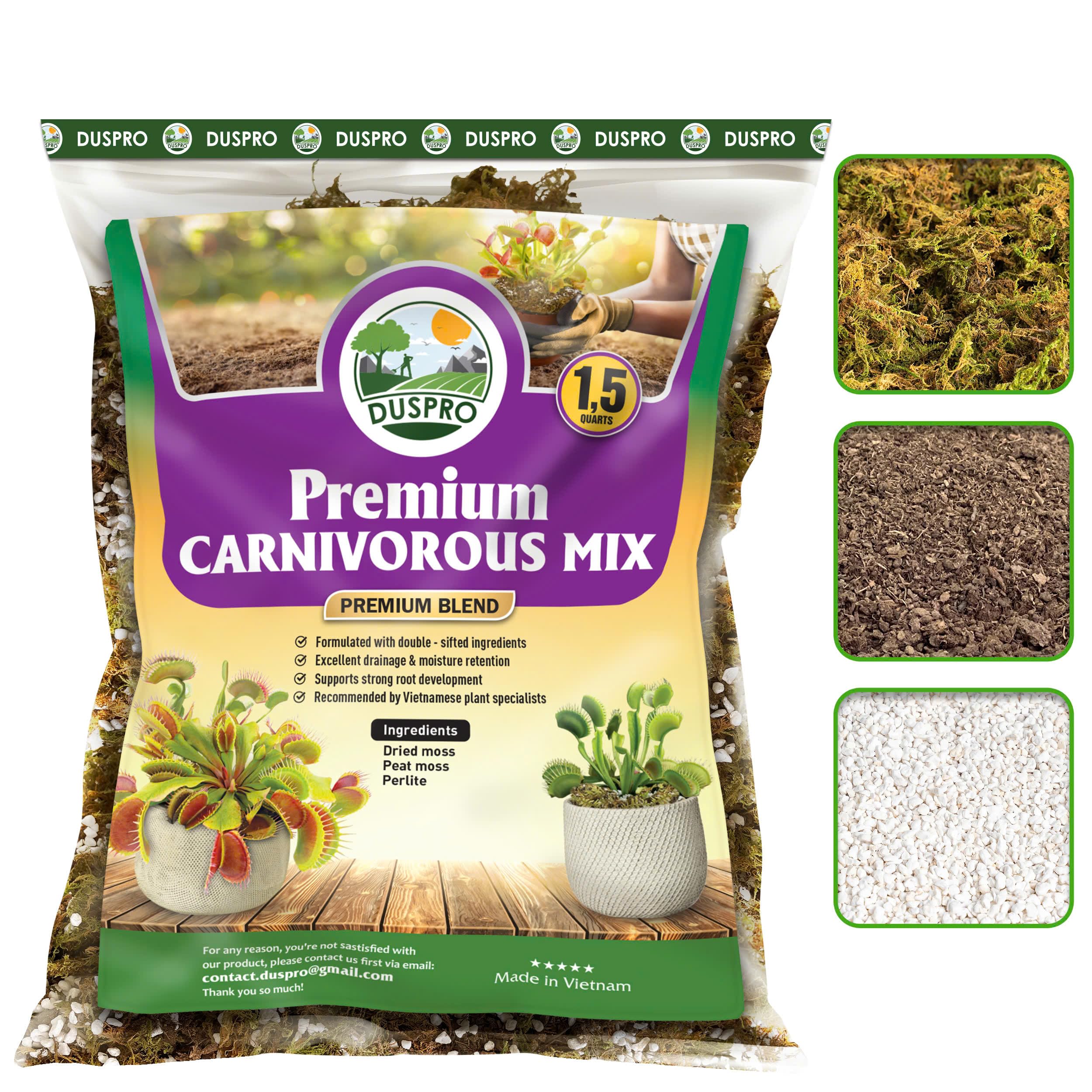
A hand-mixed moss-based blend where forest moss, peat moss, and perlite balance moisture and airflow.
Duspro blends dried moss, perlite, and peat moss using their standard formula, with the moss selected from natural forests and mixed by hand. The forest moss and peat moss hold moisture while the perlite opens up space around the roots, creating a moss-based texture with no added fertilizer. It is suitable for Venus flytraps, pitcher plants, Nepenthes, sundews, and butterworts, and the manufacturer recommends watering with rainwater, distilled water, or another low-mineral source.
Buyers report healthier plants, including faster growth and successful use with Nepenthes cuttings (a tropical pitcher plant). It shines in jar and terrarium setups, where it holds moisture cleanly without added fertilizers. The trade-off is the small volume: at 1.5 quarts, one buyer found it filled only about a quarter of what they needed. Instructions are also minimal — another owner “went with my gut” on layering moss for a pitcher plant transplant.
The mix is also a bit dusty when dry; buyers recommend wetting it down and wearing a mask when handling.
Why it works
- Hand-mixed moss blend with balanced drainage and airflow
- No added fertilizer for sensitive carnivorous roots
- Clean, reliable moisture for terrarium and jar setups
Know before buying
- 1.5 quarts fills only a few small pots
- Dusty texture — wet it down before handling
Reach for this if: you are building a terrarium or jar habitat and want a moss-based mix that holds moisture cleanly.
Look elsewhere if: you need volume for multiple pots — the 1.5-quart bag disappears fast.
7. Leaves & Soul Carnivorous Plant Potting Soil Mix

A 2.2-quart ready-to-use mix with the most ingredients per dollar in this lineup.
Leaves & Soul packs peat moss, coco coir, perlite, and dolomite into a 2.2-quart bag that is ready to use straight out of the package. The blend retains consistent moisture while allowing proper drainage, creating the damp-but-not-waterlogged environment carnivorous plants need. It supports airflow and oxygen delivery to the roots while preventing compaction, and it is made in the USA with a refund-or-replacement promise.
Owners confirm the mix works as described and holds moisture well, with one calling it “perfect” for carnivorous plants. It is a solid quick fix — one buyer needed soil in a hurry for a pitcher plant and used the mix with sphagnum moss at the bottom of the planter with good results. The caveat is effectiveness gets mixed feedback: while many say it works well, a few report it did not work for their specific plants. It is a generalist blend, not an ideal match for any single species.
The 2.2-quart size is a happy middle ground between the 1-quart and 4-quart bags, making it a fair entry point for a first-time flytrap owner on a budget.
The budget read: the most ingredients per dollar and a decent 2.2-quart volume make this the sensible low-cost starter — just remember it is a generalist mix, not a species-specific formula.
Pick it if: you want a budget-friendly, ready-to-use mix that handles a wide variety of carnivorous plants.
Know this: results vary by species — one buyer found it ideal for a pitcher plant in a hurry, while others saw mixed effectiveness.
Understanding the Specs
Peat Moss & Coco Coir
Peat moss is the classic base for flytrap soil because it is naturally acidic and holds moisture for a long time. Coco coir — made from coconut husks — is a sustainable alternative that also retains water well. Neither contains the nutrients that would burn a flytrap’s sensitive roots.
Perlite & Drainage
Perlite is the lightweight white volcanic bead that keeps soil airy. It creates open space around the roots so water drains quickly and oxygen gets in, which prevents the root rot that kills flytraps in dense, waterlogged mix. The classic recipe is roughly equal parts peat and perlite.
Volume in Quarts
Quarts tell you how many pots you can fill. A 1-quart bag handles roughly one 4-inch pot, a 2-quart bag fills two or three, and a 4-quart bag is the choice for a small collection or bog garden. Buyers consistently report bags fill less than expected, so sizing up is the safer move.
Nutrient-Free Formula
Carnivorous plants get their food from insects, not roots, so their soil must contain zero added fertilizer. Any mix with compost or slow-release granules will cause root burn. Every product here is explicitly labeled fertilizer-free, which is the non-negotiable requirement for a healthy flytrap.
FAQ
Can I use regular potting soil for my Venus flytrap?
How much soil do I need for one Venus flytrap?
Why is my peat-based soil not absorbing water?
What is the best peat to perlite ratio for flytraps?
Should I add fertilizer to carnivorous plant soil?
What water should I use for my flytrap?
How often do I need to repot my Venus flytrap?
Can one soil mix work for multiple carnivorous plant species?
Is coco coir as good as peat moss for flytraps?
Why does my flytrap soil grow mold?
Final Thoughts: The Verdict
For most buyers, the soil for venus fly trap winner is the Gardenera Professional because it pairs the highest owner rating with documented rapid growth in a ready-to-use 1-quart bag. If you need generous 4-quart volume for a bog garden, grab the BOG BOSS Blend. And for the largest proven owner base at a fair price, the Josh’s Frogs Sprig & Stone 50/50 mix is the one to reach for — the crowd favorite across 700+ owners at 4.5 stars makes it the lowest-risk buy for a first-time flytrap grower.
How We Picked
We do not accept paid placement. Every pick is matched to a real buyer and a real use-case; we do not hands-on test units.
Sources & Methodology
Specifications: manufacturer listings and product documentation. Review insights: verified customer reviews, as of August 2026. Pricing: not shown on this page (it changes often); check the current price via the retailer link.
As an Amazon Associate, Lawn Gear Lab earns from qualifying purchases. This does not affect which products we feature.