
Specs are compiled from manufacturer listings and verified buyer reviews and can change over time — please confirm the key details on the product page before buying.
You can turn a 5-gallon bucket into a tomato-producing machine, but only if you pick a soil that doesn’t turn to brick when it’s dry or stay swampy when it’s wet. Container roots cannot spread out to find food or air, so what you put in that pot matters more than anything else you do all season. You need a mix that holds moisture without suffocating the roots, provides steady nutrition from natural ingredients, and stays loose for months.
I’m Rikta — the founder and writer behind Lawn Gear Lab. This guide is built by comparing the manufacturers’ published specifications and the patterns across verified customer reviews, so you get each pick’s real strengths and trade-offs instead of marketing spin.
A great soil for tomatoes in containers balances rich organic matter with sharp drainage. To help you choose the best soil for tomatoes in containers we looked at proven brands like Espoma, Coast of Maine, and Miracle-Gro that offer consistent texture and real organic nutrients.
Quick Picks
- Espoma Organic Potting Soil Mix (8qt) — Best All-Around
- Espoma Organic Potting Soil Mix (2 Cubic Feet) — Big Bag Value
- Espoma Organic Potting Soil Mix (4qt) — Small Pot Starter
- Miracle-Gro Organic Outdoor Potting Mix — Quick-Feed Option
- Coast of Maine Organic Tomato & Vegetable — Premium Powerhouse
- Espoma Organic Potting Soil Mix (16qt, 4-Pack) — Multi-Pot Supply
How To Choose The Best Soil For Tomatoes In Containers
When you grow a tomato plant in a container, its roots can’t spread out to find water or food the way they do in the ground. So a few key qualities make the difference between a plant that limps along and one that produces fruit all season.
Weight and texture matter more than you think
You want a mix that feels light and crumbly between your fingers. Heavy, dense soil packs down inside a pot and squeezes out the air pockets roots need to breathe. Look for a mix with perlite (tiny white pebbles of expanded volcanic glass) — that keeps it loose so water drains and air circulates. Sphagnum peat moss or coconut coir do the same job by holding the structure open.
Organic ingredients feed your plant slowly
Tomatoes eat a lot, especially in a pot where every watering washes nutrients out the bottom. A mix with composted manure, earthworm castings (worm droppings rich in nutrients), kelp meal, or feather meal gives you a slow-release food supply. You will probably still need liquid fertilizer later, but starting with a rich base gives your plant a big head start.
Mycorrhizae help roots work harder
Some soils contain mycorrhizae — beneficial fungi that attach to plant roots and effectively extend their reach, helping the plant suck up more water and nutrients. If you choose a bag that lists endo and ecto mycorrhizae (the two main types that work with most vegetables), you give your tomato a biological boost that leads to stronger growth, and often more fruit.
Quick Comparison
| Model | Best For | Volume | Key Ingredient | Organic | Amazon |
|---|---|---|---|---|---|
| Espoma Organic Potting Mix (8qt) | Small batch & transplanting | 8 qt | Myco-tone | Yes | Amazon |
| Espoma Organic Potting Mix (2cf) | High-value bulk for serious growers | 2 Cubic Feet | Myco-tone | Yes | Amazon |
| Espoma Organic Potting Mix (4qt) | Small pots & seedlings | 4 qt | Myco-tone | Yes | Amazon |
| Miracle-Gro Organic Outdoor Potting Mix | Budget-friendly outdoor containers | 16 qt (2-Pack) | Quick-release natural fertilizer | Yes | Amazon |
| Coast of Maine Vegetable & Tomato Soil | Premium performance for heavy feeders | 20 qt | Composted manure | Yes | Amazon |
| Espoma Organic Potting Mix (16qt x4) | Multi-container value pack | 16 qt (4-Pack) | Myco-tone | Yes | Amazon |
In‑Depth Reviews
1. Espoma Organic Potting Soil Mix (8qt)

Its mycorrhizae (beneficial fungi for roots) give container tomatoes a biological edge you will not get from basic potting mix.
This 8-quart bag is the balance for the gardener with three or four medium containers. The blend of sphagnum peat moss, humus, and perlite keeps it airy so water does not pool. Buyers report it holds moisture well — one noted it kept their pothos soil moist for three days compared to two days with their previous brand. The addition of earthworm castings, alfalfa meal, kelp meal, and feather meal provides a slow-release nutrient base that feeds the plant for weeks without synthetic chemicals.
The real differentiator here is Myco-tone, which is Espoma’s proprietary mix of endo and ecto mycorrhizae (beneficial fungi that attach to roots and help them pull in more water and nutrients). This biological boost is especially useful in a container where roots can’t roam. One experienced gardener mentioned they have potted hundreds of plants with this brand and find it much easier to work with than others because it soaks up water instead of letting it run off the surface — a common problem with cheaper mixes.
Solid foundation: A nutrient-rich, peat-based organic mix with mycorrhizae that gives tomatoes a strong start in containers.
Trade-off: A few reviewers mention the smaller bag sizes feel pricey for the volume, so if you are filling a lot of big pots you might want to step up to the 2-cubic-foot version.
Bottom line: This is the mid-range pick for the home gardener who wants organic ingredients and mycorrhizae without buying a massive bag. If you have more than five large containers, the 2-cubic-foot bag gives you far better value per quart.
2. Espoma Organic Potting Soil Mix (2 Cubic Feet)

At about 60 quarts (roughly 2 cubic feet), this bag cuts the cost per quart sharply compared to the smaller 8-quart version.
This 2-cubic-foot bag is the same premium Espoma blend from the 8-quart version above, but in a size that makes sense if you are filling four or more large containers. The cost per quart drops noticeably compared to the smaller bags, and given that one reviewer noted they pot hundreds of plants a year and still choose this brand, the value for volume is tough to top. The mix itself is the same rich organic blend of sphagnum peat moss, humus, perlite, earthworm castings, alfalfa meal, kelp meal, and feather meal, plus the Myco-tone mycorrhizae.
Buyers consistently report that this soil stays light and fluffy, unlike some mixes that develop a dense crust on top. One reviewer switched from another brand specifically because it contained “large stick/wood pieces” and found the Espoma mix much cleaner, with no big chunks. Another gardener noted they have never seen a gnat infestation in the bag — a real worry with some organic soils that are stored too wet. The texture absorbs water easily rather than letting it bead up and run off, which is critical when you are trying to keep a container plant hydrated in the heat of summer.
Cost-effective quality: All the benefits of Espoma’s organic formula with Myco-tone at a much lower cost per quart than the small bags.
Only catch: If you only need a single bag for one plant, the large volume will sit open for months and could dry out or attract pests before you use it all.
Reach for this if: You are planting several containers and want the best organic formula on the market without paying small-bag markup. Grab the 4-quart bag instead if you need just a couple quarts for a single small pot — it is cheaper up front.
3. Espoma Organic Potting Soil Mix (4qt)
At only 4 quarts, this tests Espoma’s organic goodness without leaving you half a bag of leftover soil.
This is a perfect size for repotting a single tomato seedling into a one-gallon container or topping off soil that has settled. It contains the same exact organic formula as the larger bags — sphagnum peat moss, humus, perlite, earthworm castings, alfalfa meal, kelp meal, and feather meal with Myco-tone — so you get the full benefit of mycorrhizae even in a small batch. One buyer summed it up simply: “Love this for our plants.”
That said, this is the least economical option by volume. At 4 quarts versus 20 quarts, you pay a premium for the small package size. A few reviewers were surprised by how small the bag actually is — one called them “kiddy bags” and said they were disappointed. Still, for the gardener who only has one or two small pots and wants an organic mix without leftovers sitting around, this is a clean, no-waste choice. Buyers also note that unlike some other organic mixes, this bag has shown no signs of fungus gnat infestations.
Perfect for small jobs: High-quality organic mix in a compact bag that won’t leave you with half a bag of stale soil.
Trade-off: You pay more per quart than any other size, so only buy this if you genuinely don’t need more volume.
Best for: A single tomato start in a small container or mixing up a custom batch for just one plant. Go for the 8-quart or 2-cubic-foot bags if you are filling multiple large pots — they save you a lot of money.
4. Miracle-Gro Organic Outdoor Potting Mix (16qt, 2-Pack)

A budget-friendly organic option that includes quick-release fertilizer for outdoor container plants.
This two-pack gives you 32 quarts total of organic potting mix that already contains a quick-release natural fertilizer, meaning you get a feeding boost right at planting time that feeds for up to two months. The mix uses responsibly sourced peat (one hundred percent from certified producers) and is OMRI listed (Organic Materials Review Institute certified — an independent body that checks every ingredient meets organic farming standards), so it meets organic gardening rules. Each 16-quart bag fills one 12-inch pot, making this a straightforward grab-and-go option for container tomatoes.
Compared to the Espoma and Coast of Maine options above, the Miracle-Gro mix doesn’t include mycorrhizae or composted manure — it relies on its quick-release fertilizer instead of slow-release organic matter. That makes it a good entry-level organic option, but serious container tomato growers might find it runs out of steam faster. The mix is designed for outdoor containers specifically, and the peat-based texture drains well enough to avoid waterlogging in pots. At this price for a 2-pack, it is the most budget-conscious organic choice here.
What you get
- Quick-release natural fertilizer feeds for up to 2 months
- OMRI listed for organic gardening
- Responsibly sourced peat from certified producers
What you don’t
- No mycorrhizae or composted manure for long-term soil biology
- May need supplemental feeding later in the season for heavy-feeding tomatoes
Good for: The budget-minded organic gardener who wants a simple, no-mix potting soil with built-in food for the first couple of months. skip it if you want the deep organic richness of compost and mycorrhizae that premium blends like Espoma offer.
5. Coast of Maine Organic Tomato & Vegetable Planting Soil (20qt)
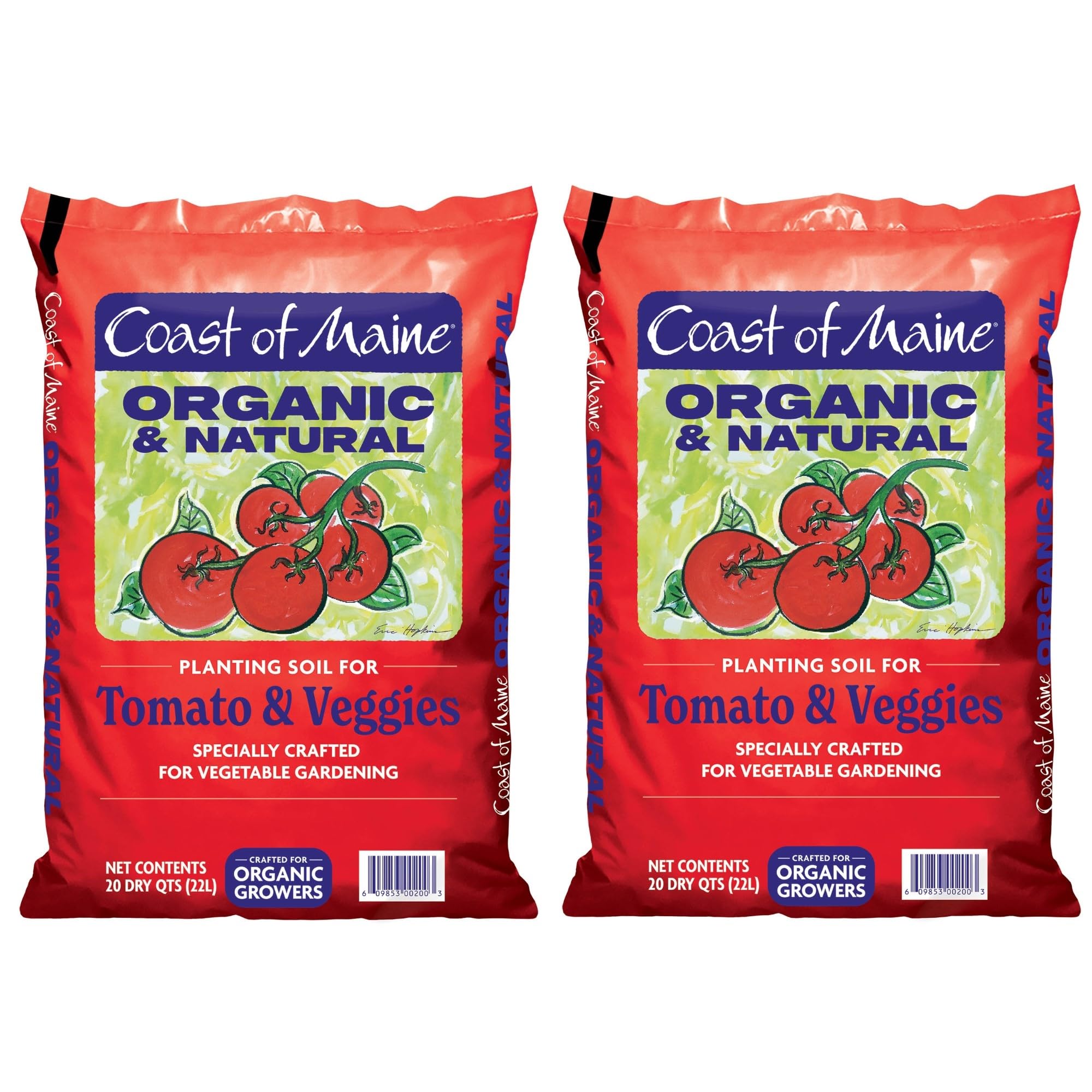
Composted manure is its primary ingredient, not peat — and owners mention visible growth within days.
This 20-quart bag from Coast of Maine stands apart because its primary ingredient is composted manure — not just peat or bark. The formula is specifically crafted for vegetables and tomatoes, and customers note the results are visible within days. One reviewer who grew up next to a dairy farm described it as “fabulous soil for vegetables” and noted they could see their plants start to grow within days of being transferred to pots containing this mix. It holds moisture well while also draining effectively, exactly what a container tomato needs during hot summer stretches.
Another buyer pointed out that the soil is lightweight compared to other mixes, a real perk when hauling bags or moving pots. Each 20-quart bag holds about enough to fill one 5-gallon pot, and reviewers report their tomatoes and zucchini are “thriving with no obvious stress.” The OMRI listing confirms organic compliance. The only complaint you will hear is that the bag is physically heavy — that 21-pound weight comes from the dense compost content — and that you might need to pick out larger twigs or uncomposted bits if you want a finer texture for shallow-rooted plants.
Compost-first formula: Uses composted manure as the base ingredient, giving your tomatoes a richer nutrient profile than peat-based mixes like the Espoma 8-quart.
A note: At 20 quarts compared to the 8-quart Espoma, making it a solid single-pot value despite the higher upfront cost.
Buy this if: You want a soil that visibly and quickly boosts growth — the composted manure makes a real difference. Keep in mind the bag is heavy, and you may find a few sticks that need picking out if you want a very fine finish.
6. Espoma Organic Potting Soil Mix (16qt, 4-Pack)
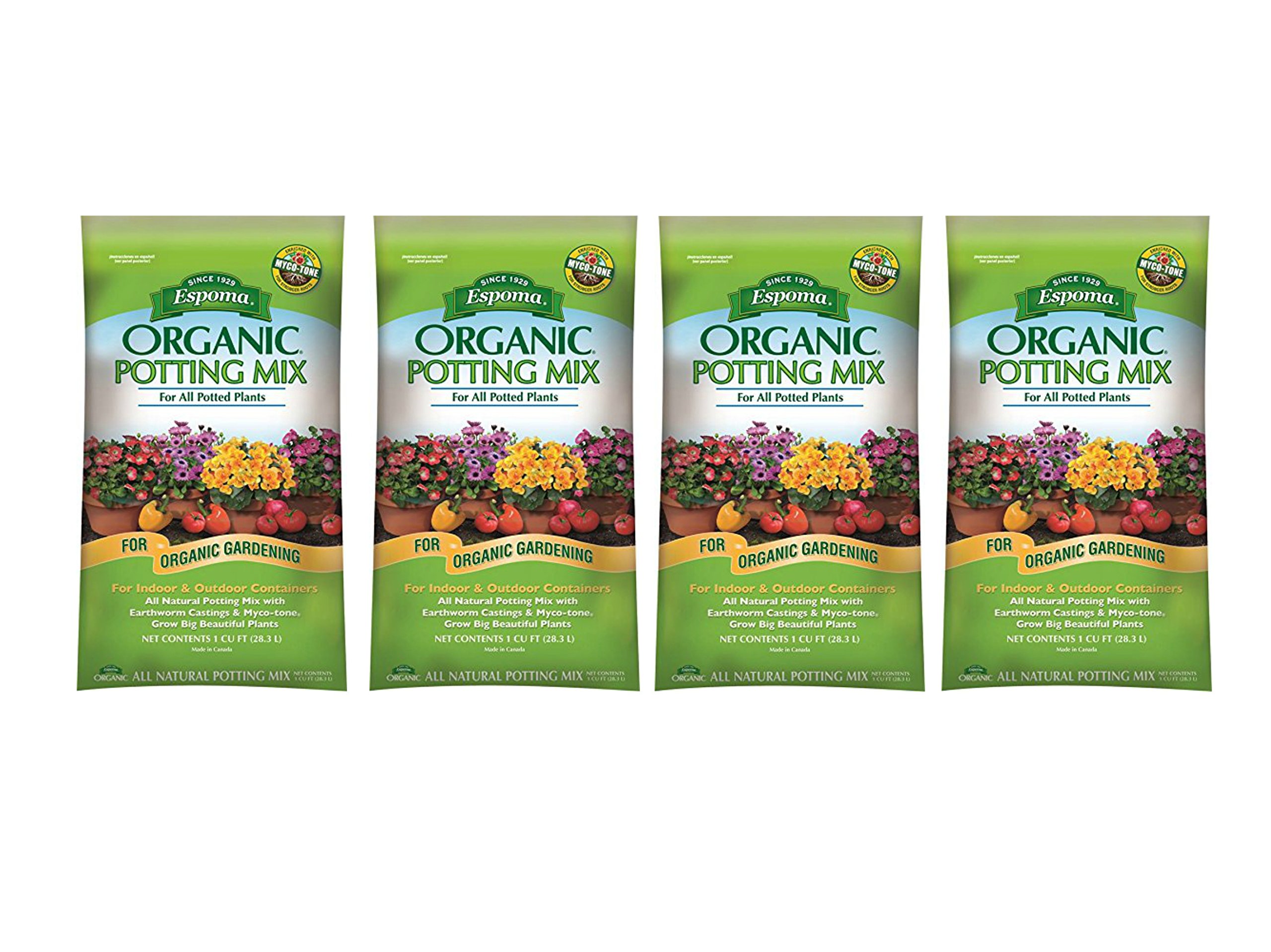
Four 16-quart bags mean you open one at a time and keep the rest sealed fresh for a full season.
This bundle is for the gardener who knows they need a lot of soil and wants the convenience of four separate bags rather than one giant 64-quart sack. Each 16-quart bag is easier to haul and store individually. The formula inside is the same one that the Espoma brand has built its reputation on — sphagnum peat moss, humus, perlite, earthworm castings, alfalfa meal, kelp meal, feather meal, and the Myco-tone mycorrhizae blend. Buyers call it a “high quality product by a premier company” and say they will continue buying it.
There is one caution that appears in the reviews: one buyer mentioned that the soil in their bag was hydrophobic (it repelled water rather than absorbing it), making watering a “nightmare.” That is a known risk with peat-based mixes that have been stored too long, especially in a multi-pack that might sit on a warehouse shelf. If you encounter it, you can fix it by wetting the soil slowly with warm water and a drop of dish soap, but it is worth noting. Another reviewer felt the product listing was misleading because the pictures showed 1-cubic-foot packages, while the actual bags are 16 quarts (which is smaller). So pay close attention to the quart size when you order.
Pros
- Four separate bags for convenient storage and staggered use
- Consistent Espoma formula with Myco-tone mycorrhizae
- Good value per quart compared to single 4-quart bags
Cons
- Risk of hydrophobic soil if bags have been stored a long time
- Packaging photos can be misleading about actual bag size
Ideal for: The committed container gardener who goes through multiple bags of soil in a season and wants the per-bag savings of a multi-pack. Be aware: check the bag condition when it arrives — you may need to rehydrate the soil if it feels dry and water-repellent.
Understanding the Specs
Volume (Quarts and Cubic Feet)
The volume of soil you buy directly determines how many pots you can fill. A single 5-gallon tomato pot needs roughly 16 to 20 quarts of soil. Smaller bags like 4 quarts are good for seedlings or top-ups, but a 20-quart bag is a true single-pot purchase for a full-size tomato plant. Bigger bags like 2 cubic feet (about 60 quarts) give you enough for three or four large pots at a much better price per quart.
Mycorrhizae
Mycorrhizae are beneficial fungi that form a partnership with plant roots. The fungi attach to the root system and effectively extend its reach, helping the plant pull in more water and nutrients from the soil than it could on its own. In a container, where roots are confined, this boost can mean the difference between a plant that survives and one that thrives. Espoma calls their blend Myco-tone and includes both endo and ecto types (the two main categories that work with most vegetables).
Organic Certification (OMRI)
OMRI stands for the Organic Materials Review Institute, an independent organization that evaluates products to confirm they meet organic farming standards. When you see an OMRI listing on a bag of potting soil, it means every ingredient has been reviewed and approved for use in organic gardening — no synthetic pesticides, no chemical fertilizers, no genetically modified ingredients. Both the Miracle-Gro Organic Outdoor and Coast of Maine soils carry this certification.
Drainage and Texture
Container soil needs to drain freely while still holding enough moisture between waterings. Ingredients like perlite (expanded volcanic glass that looks like tiny white pebbles) create air pockets that let water flow through and prevent the mix from compacting into a dense brick. Peat moss and compost hold moisture against the roots. A soil that is too heavy will suffocate roots; one that is too light (mostly bark) will dry out within hours on a hot day. The best tomato container soils strike a balance — they feel crumbly and dark, not dusty or chunky.
FAQ
Can I just use garden soil from my yard in containers for tomatoes?
How often should I replace the potting soil for my container tomatoes?
What is the difference between potting soil and potting mix?
Do I need to add fertilizer if my potting soil already has organic ingredients?
Can I use a general potting mix for tomatoes instead of a special vegetable mix?
How do I fix potting soil that has become hydrophobic and repels water?
How many quarts of soil do I need for a 5-gallon bucket tomato?
Is organic potting soil worth the higher price for container tomatoes?
Final Thoughts: The Verdict
For most home gardeners, the soil for tomatoes in containers winner is the Espoma Organic Potting Mix (8qt) because it combines proven organic ingredients, mycorrhizae for root health, and a manageable bag size that won’t leave you with too much or too little. If you want the nutrient density of composted manure, grab the Coast of Maine Vegetable & Tomato Soil. And for a budget-friendly organic option, the Miracle-Gro Organic Outdoor Potting Mix is a solid choice with built-in quick-release fertilizer.
How We Picked
We do not accept paid placement. Every pick is matched to a real buyer and a real use-case; we do not hands-on test units.
Sources & Methodology
Specifications: manufacturer listings and product documentation. Review insights: verified customer reviews, as of July 2026. Pricing: not shown on this page (it changes often); check the current price via the retailer link.
As an Amazon Associate, Lawn Gear Lab earns from qualifying purchases. This does not affect which products we feature.