
Your Thanksgiving cactus isn’t a true cactus, but its epiphytic roots demand one thing above all else: a soil that drains fast enough to mimic the bark crevices it clings to in the wild. The wrong mix — too dense, too moisture-retentive — will choke those fine roots and invite rot before the first bud sets.
I’m Rikta — the co-founder and writer behind Lawn Gear Lab. I’ve spent hundreds of hours studying soil composition data, parsing grower reports, and cross-referencing owner feedback to isolate the exact blend attributes that keep Schlumbergera roots aerated and blooming on schedule.
Whether you’re repotting a root-bound rescue or refreshing the medium on a decades-old specimen, this guide breaks down seven of the best commercial options so you can finally stop guessing and start getting consistent results. Let’s find the best soil for thanksgiving cactus that matches your plant’s exact needs.
How To Choose The Best Soil For Thanksgiving Cactus
Thanksgiving cacti are epiphytic plants native to Brazil’s cloud forests, where they grow on tree branches, not in thick clay. Their roots need consistent access to oxygen and water that flows past rather than pools. Choosing the right potting medium is the single most impactful decision you’ll make for this plant’s long-term health and its ability to set flower buds when the days shorten.
Drainage Speed & Aeration
The first spec to check is the mix’s ability to shed excess water. Look for ingredients like coarse perlite, pumice, lava rock, or orchid bark — these create open pore spaces that let oxygen reach the root zone. A mix that stays soggy past three days after watering is too dense for a Thanksgiving cactus and will suppress root respiration.
Moisture Retention Balance
While drainage is critical, the medium must still hold enough moisture between waterings to support the plant’s fleshy leaf segments. Sphagnum peat moss or coconut coir provides that sponge-like reserve. The ideal ratio is roughly 40–50 percent drainage particles to 50–60 percent organic moisture-holding material.
pH & Nutritional Profile
Thanksgiving cacti prefer a slightly acidic pH between 5.5 and 6.5. Pre-blended mixes formulated for cacti and succulents usually hit this range, but some mass-market brands skew too alkaline. If growth stalls or leaf margins turn yellow, test the pH and consider amending with a small amount of sulfur or peat.
Quick Comparison
On smaller screens, swipe sideways to see the full table.
| Model | Category | Best For | Key Spec | Amazon |
|---|---|---|---|---|
| Top Tier Genetics Premium Mix | Specialty | Schlumbergera-specific blend | 4 QTS bark/perlite/coir | Amazon |
| Miracle-Gro Cactus 3-Pack | Multi-Use | Large collections & bulk use | 24 QTS fast-draining formula | Amazon |
| Hoffman Organic 2-Pack | Organic | Root development & blooms | 10 QTS ready-to-use | Amazon |
| Midwest Hearth Blend | Mid-Range | Versatile indoor/outdoor use | 4 QTS peat/perlite/vermiculite | Amazon |
| FANTIAN Lava Stone Mix | Gritty Mix | Custom blending & top dressing | 5 lbs 1/4-inch particles | Amazon |
| Miracle-Gro Succulent Mix | Entry-Level | Beginner-friendly succulent care | 4 QTS peat & forest products | Amazon |
| Avalution Lava Rock Pebbles | Amendment | Aeration & drainage DIY | 2.4 lb horticultural pumice | Amazon |
In‑Depth Reviews
1. Top Tier Genetics Premium Christmas Cactus Soil
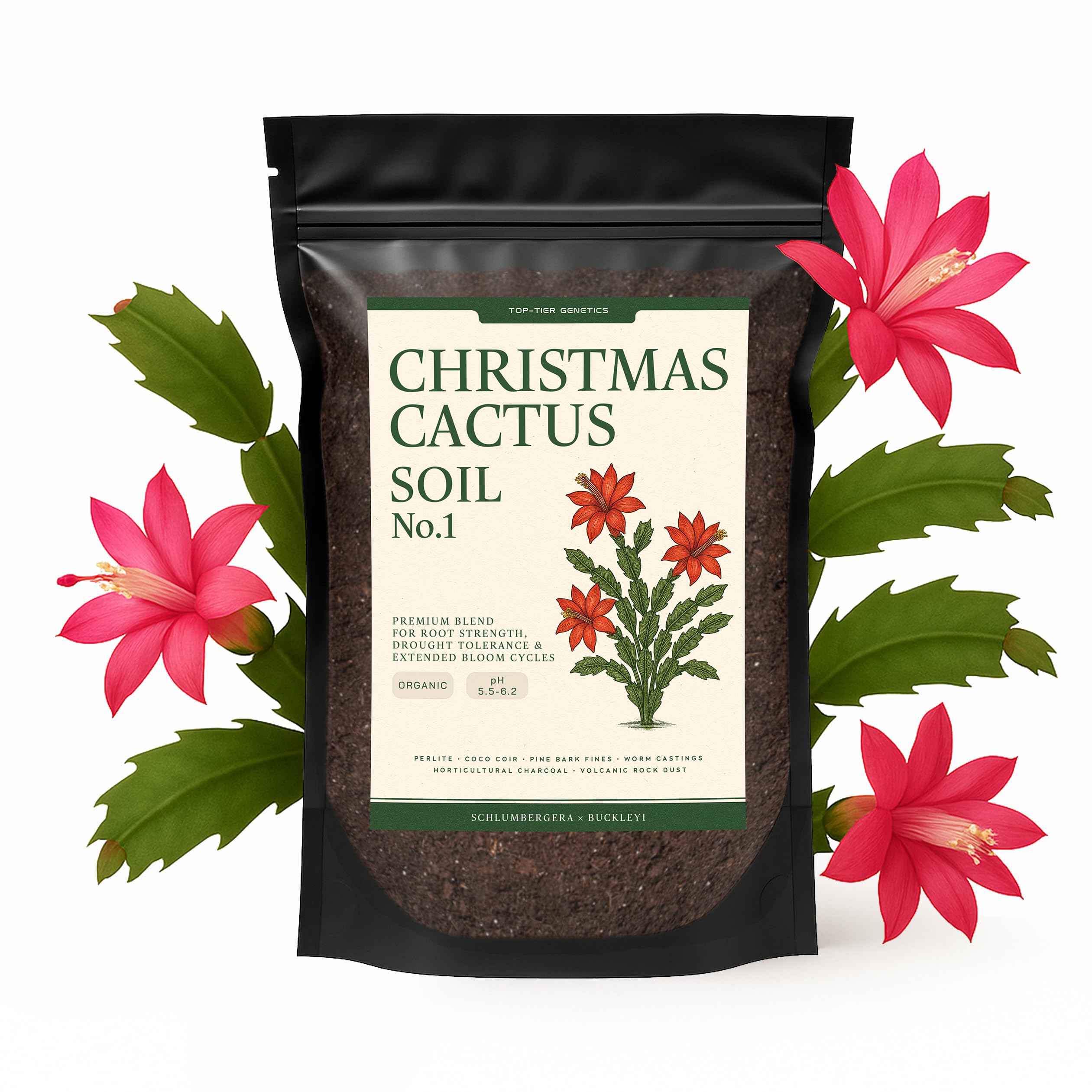
This is the only mix on the market explicitly formulated for Schlumbergera species, and it shows in the ingredient list. The blend combines orchid bark, coarse perlite, and coconut coir — creating a light, chunky texture that lets air circulate around every root while still holding enough moisture between waterings. Growers report that it prevents root rot far more reliably than generic succulent soils, and the organic materials supply steady nutrition that supports vibrant flower initiation.
The 4-quart bag is modest, covering only one to two standard pots, but the performance density is high. Users consistently note new growth and bud set within weeks of repotting. The mix arrives ready to use with no further amending required, which removes the guesswork for those unfamiliar with epiphytic care.
Where it falls short is volume — for a large collection you’ll need multiple bags. Additionally, some reviewers wished for a more pronounced bloom-boosting additive, though the base formula already provides excellent foundational nutrition for flowering. If you own a single prized Thanksgiving cactus and want the most targeted medium available, this is the clear choice.
What works
- Precisely blended for Schlumbergera root structure
- Excellent drainage prevents standing moisture and rot
- Light, airy texture promotes strong new growth
What doesn’t
- Only 2 quarts of actual medium per bag
- No specialized bloom-boosting ingredients added
2. Miracle-Gro Cactus, Palm and Citrus Potting Mix (3-Pack)

This three-pack provides the best cost-per-quart ratio for anyone maintaining multiple holiday cacti or other succulents. The fast-draining formula is enriched with Miracle-Gro Plant Food and works well across Thanksgiving, Christmas, and Easter cactus varieties. Many experienced growers confirm that it boosts growth and flower production when used as the primary growing medium.
The mix is ready to use straight from the bag, though some users choose to cut it with additional perlite or pumice for even faster drainage. Each 8-quart bag fills roughly two 8-inch containers, making this a practical solution for those who repot frequently. The granules are fine enough to settle around roots without creating large air pockets, yet coarse enough to avoid the dense, muddy texture of standard potting soil.
The biggest drawback is that the formula is not specifically designed for epiphytic cacti — it works well for desert cacti and palms, but Thanksgiving cactus owners may need to monitor moisture levels closely during the first watering cycle. If you own a mixed collection and want one bag to serve many plants, this is an economical option.
What works
- Excellent volume per dollar for multiple pots
- Fast-draining formula with integrated plant food
- Compatible with other succulents and tropical plants
What doesn’t
- Not optimized for epiphytic root systems
- Some users add extra perlite for better aeration
3. Hoffman Organic Cactus and Succulent Soil Mix (2-Pack)

Hoffman’s 10-quart, two-bag system offers one of the most natural blends on the market, with a composition that relies on peat moss and fine organic matter rather than synthetic additives. The soil is designed to encourage bloom development and root expansion without requiring any mixing or amending. It pours easily from the resealable bag and has a fluffy, lightweight consistency that resists compaction far longer than standard potting mixes.
Feedback from Thanksgiving cactus owners is positive — many report that their plants responded with vigorous new leaf segments and heavier bud set after repotting. The mix drains adequately for succulent use, but several users noted that it retains moisture longer than ideal for epiphytic cacti. Adding a handful of perlite or pumice before potting transforms this into an almost perfect medium for Schlumbergera.
On the downside, the texture can appear slightly dense straight out of the bag, and those who forget to augment it may deal with soggy conditions that stress the roots. For growers who prefer organic ingredients and are comfortable making small tweaks, this is a high-value, plant-safe foundation.
What works
- Organic formula supports healthy root and bloom development
- Large volume covers multiple repotting sessions
- Light, fluffy texture handles root penetration well
What doesn’t
- Retains more moisture than ideal out of the bag
- Most growers need to amend with extra drainage material
4. Midwest Hearth Cactus & Succulent Potting Soil Mix
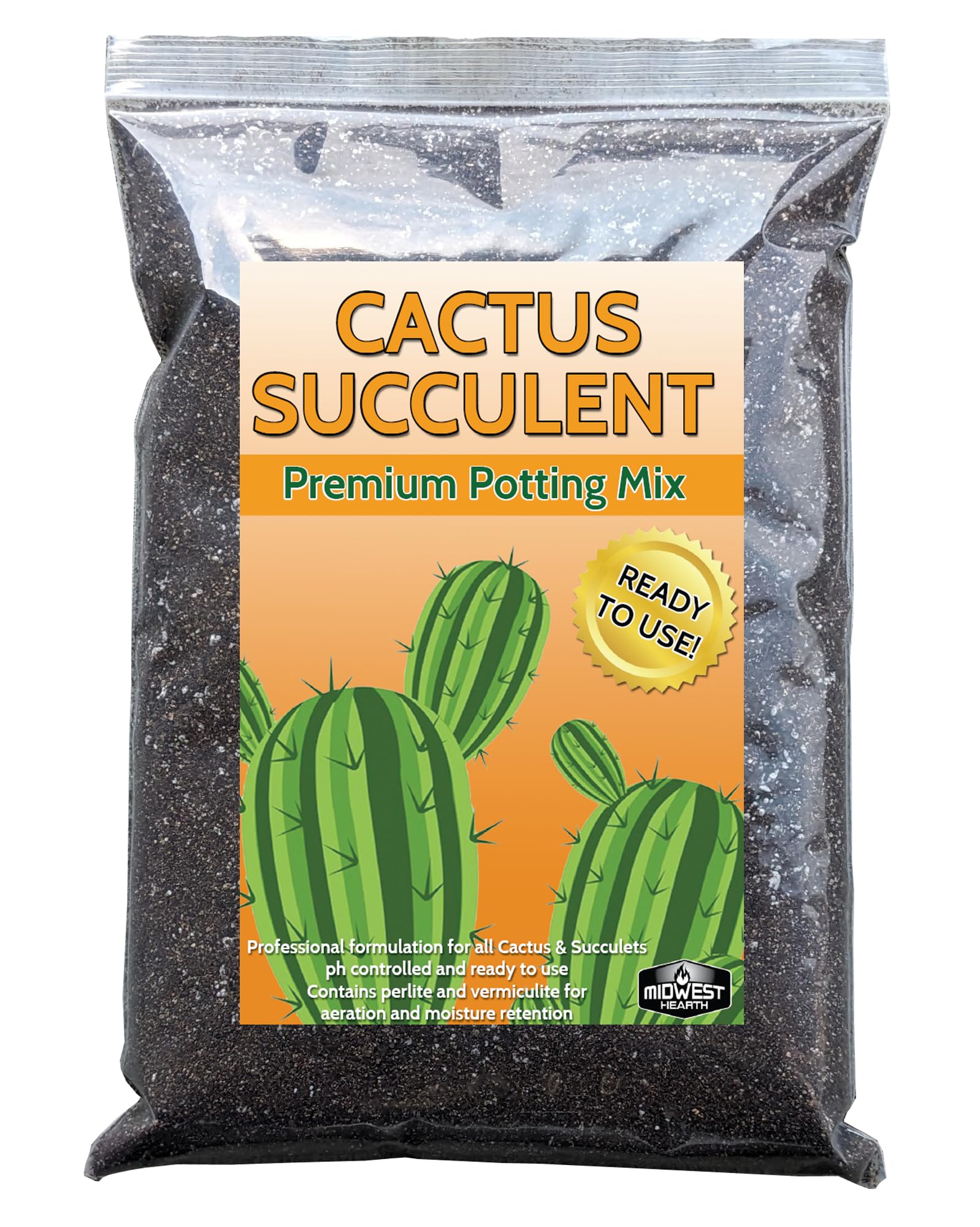
Midwest Hearth’s blend uses a triple mix of sphagnum peat moss, perlite, and vermiculite to hit a pH range that suits drought-tolerant plants without needing additional adjustment. The 4-quart bag is resealable and fills two to three standard pots, making it a convenient mid-range option for those with a few holiday cacti. The formula is ready to use straight from the bag — no shaking or mixing required.
Users appreciate how fast water passes through the medium while still leaving enough moisture for fleshy leaf segments to absorb. The fine perlite particles create consistent aeration without floating to the surface during watering. Several reviewers noted their Thanksgiving cactus produced new buds within a month of repotting, crediting the balanced drainage.
One annoyance reported is that the dry top layer can blow around if you keep the pot near an open window, creating a small mess on the sill. Additionally, while the ratio is solid for succulents, some growers still prefer to add a bit more bark for an epiphytic feel. If you want a no-fuss, pH-stable starting point, this is a strong contender.
What works
- Precise pH control prevents nutrient lockout
- Resealable bag keeps unused mix fresh
- Fast drainage and consistent aeration
What doesn’t
- Dry top layer can become dusty near air currents
- May need bark amendment for true epiphytic feel
5. FANTIAN Lava Stone Mix (5 lbs)
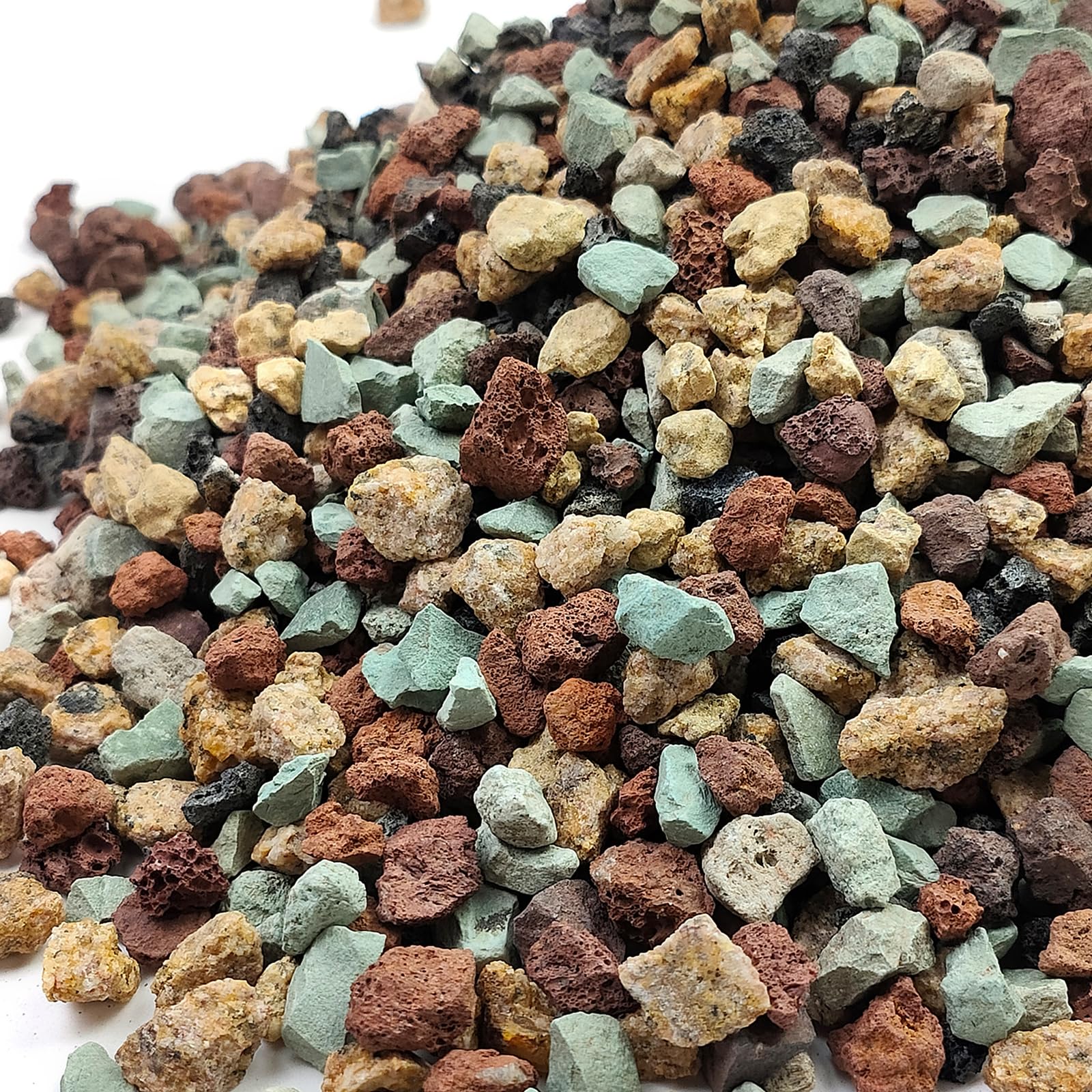
FANTIAN’s 5-pound bag of horticultural grit is not a complete potting mix — it is a mineral amendment designed to be blended with peat or coir to create a custom, high-drainage medium. The sifted 1/4-inch particles include lava stone, Maifanitum stone, and green zeolite, each contributing unique porosity and trace mineral content. For Thanksgiving cactus growers struggling with drainage in standard mixes, adding 20 to 30 percent of this grit transforms the root environment instantly.
The particles are lightweight yet stable, and they do not break down over time like perlite can. The blend works as both a soil amendment and a decorative top dressing that prevents fungus gnats from laying eggs in exposed organic matter. Users consistently praise its ability to eliminate waterlogging and improve oxygenation in dense soils.
The primary catch is that it requires careful rinsing before use due to fine dust created during processing. Also, it is not a standalone growing medium — you must pair it with an organic base. For the DIY-minded grower who wants complete control over their potting mix, this is an essential ingredient.
What works
- Extremely porous for maximum drainage improvement
- Versatile as amendment or top dressing
- Does not degrade or compact over time
What doesn’t
- Requires thorough rinsing to remove dust
- Must be blended with an organic base
6. Miracle-Gro Succulent Potting Mix

This is the most widely available succulent mix on the market and a common first purchase for new Thanksgiving cactus owners. It is formulated with sphagnum peat moss and processed forest products, plus a small amount of Miracle-Gro Plant Food for initial nutrition. The 4-quart bag fills one 8-inch container and is easy to work with — no strong odor, no sticky residues.
Where this mix falls short for Thanksgiving cactus is moisture retention. The high peat content keeps the soil wetter than what epiphytic roots prefer, and the texture tends to compact after several watering cycles. Experienced users often recommend cutting it with 25 to 30 percent perlite or pumice to bring drainage up to an acceptable level. Without that modification, root rot remains a real risk for less experienced caretakers.
For a standalone plant on a strict watering schedule, this mix works in a pinch. But it is clearly a general-purpose succulent product, not a specialized holiday cactus medium. If you are on a tight budget and willing to amend, it can work — just don’t expect optimal performance straight out of the bag.
What works
- Widely available and affordable
- Odorless and easy to handle
- Basic nutrition included for initial growth
What doesn’t
- Too moisture-retentive for epiphytic roots
- Compacts over time, reducing aeration
- Needs perlite amendment to be safe for Schlumbergera
7. Avalution Horticultural Lava Rock Pebbles

This 2.4-pound bag of pumice-style lava rock is a pure drainage additive, not a complete potting mix. The pebbles are small and subtle — perfect for blending into a peat or coir base to create a custom, fast-drying medium for Thanksgiving cactus. They also work beautifully as a top dressing that suppresses gnats and adds a clean, professional finish to potted plants.
Users who have used this product for semi-hydro setups or as a substitute for PON (Pumice, Organic matter, Nutritious) report excellent results when paired with succulent-specific soil blends. The stones are lightweight and do not compact, maintaining air pockets through repeated watering. For growers who prefer to design their own potting mix rather than buy a pre-made one, this provides the backbone of a well-aerated substrate.
The main drawback is the dust — the bag has fine particulate matter that requires rinsing before use to avoid clouding the soil during the first watering. Additionally, if used alone without an organic component, it lacks the moisture-holding capacity that Thanksgiving cactus needs. This is a targeted tool for the constructor, not a standalone solution.
What works
- Excellent aeration and drainage properties
- Great for custom soil blending projects
- Attractive as a top dressing for pots
What doesn’t
- Dusty out of the bag — must rinse thoroughly
- Not a complete mix; needs organic base
Hardware & Specs Guide
Drainage Particle Size
The size and type of inorganic particles in a mixing directly determine how quickly water passes through the root zone. For Thanksgiving cactus, particles in the 1/8-inch to 1/4-inch range (perlite, pumice, lava rock, or orchid bark) create the macro-pores that allow oxygen to reach fine feeder roots. Mixes that rely solely on sand or fine gravel tend to compact and suffocate roots over several months.
Organic Moisture Control
Sphagnum peat moss and coconut coir function as the water reservoir in any potting blend. Peat holds more water per volume but becomes hydrophobic when dry, while coir rewets easily and is more pH-stable. For epiphytic cacti, coir-heavy mixes dry slightly faster than peat-heavy ones, which lowers the risk of root rot in cooler indoor conditions or during winter dormancy.
FAQ
Can I use regular potting soil for Thanksgiving cactus?
How often should I repot my Thanksgiving cactus?
Does the soil pH matter for Thanksgiving cactus flowers?
Final Thoughts: The Verdict
For most gardeners, the best soil for thanksgiving cactus winner is the Top Tier Genetics Premium Christmas Cactus Soil because it is the only mix formulated explicitly for Schlumbergera’s epiphytic root needs, combining bark, perlite, and coir in a balanced, ready-to-use blend. If you want more volume for a mixed collection, grab the Miracle-Gro Cactus 3-Pack. And for the DIY-focused grower who wants total control over aeration, nothing beats the FANTIAN Lava Stone Mix as a drainage amendment.