
The difference between a sour, mealy strawberry and a sweet, deeply aromatic one often comes down to what’s happening below the surface. Strawberries are heavy feeders with shallow roots that demand a specific environment—slightly acidic, loose, well-draining, and rich in organic matter—to produce the concentrated sugars and complex flavors that make homegrown fruit worth the effort.
I’m Rikta — the co-founder and writer behind Lawn Gear Lab. I spend my time cross-referencing horticultural data, dissecting NPK ratios, studying micronutrient availability, and analyzing hundreds of verified owner reports to determine which products actually deliver on their promises for specific crops.
Strawberries have no tolerance for heavy clay or compacted mixes, and a wrong blend can stunt runners or cause root rot within weeks. I’ve consolidated the market into this actionable guide to the best soil for strawberries, evaluating everything from texture to long-term fertility so you can plant with confidence.
How To Choose The Best Soil For Strawberries
Selecting a growing medium for strawberries requires balancing water retention with aeration, providing a steady nutrient supply without overfeeding, and controlling pH within a narrow sweet spot. Here are the three factors that separate productive beds from disappointing ones.
Texture & Drainage Profile
Strawberry roots are fibrous and stay within the top 6–8 inches of soil, making them prone to waterlogging in dense mixes. A loose structure—coir, perlite, or aged bark fines—keeps oxygen flowing while holding enough moisture to support shallow root systems. Heavy clay or compacted garden soil will suffocate roots and promote fungal diseases like red stele.
NPK Ratio & Micronutrient Availability
Strawberries need a lower nitrogen ratio to avoid excessive leaf growth that delays flowering and reduces fruit size. A high potassium formula (like an 8-12-32 or something close) directly increases sugar content for sweeter berries. Calcium and magnesium are also critical for cell wall strength and preventing blossom-end issues. Chelated micronutrients (iron, zinc, manganese) ensure the plant can actually access them across a wider pH range.
Organic vs. Synthetic Release
Organic granular amendments release nutrients slowly as soil microbes break them down, reducing the risk of salt burn and supporting long-term soil biology. Synthetic water-soluble powders offer precise control and results within hours, but require careful measuring to avoid over-fertilization. For container growers, a water-soluble option provides flexibility; for in-ground beds, an organic top-dress or slow-release mix is often more practical.
Quick Comparison
On smaller screens, swipe sideways to see the full table.
| Model | Category | Best For | Key Spec | Amazon |
|---|---|---|---|---|
| Greenway Biotech 8-12-32 | Water-Soluble Powder | Sweeter, larger fruit | 32% Potassium | Amazon |
| BuildASoil 3-5-2 | Organic Granules | Soil biology & long-term fertility | 15 ingredients | Amazon |
| Down To Earth Acid Mix 4-3-6 | Organic Granules | Acidic pH maintenance | 4-3-6 formula | Amazon |
| Coast of Maine Veg & Tomato | Organic Potting Mix | All-in-one planting medium | 20 Qt volume | Amazon |
| Mountain Valley Seed Co. Coir Pucks | Compressed Coir | Aeration & moisture retention | 5.5 Qt per bag | Amazon |
| AVERGO Coir Discs | Compressed Coir | Small container mixes | 2.5 Qt expanded | Amazon |
| Doter Worm Castings | Organic Amendment | Nutrient boost & microbial life | 1.1 lbs of castings | Amazon |
In‑Depth Reviews
1. Greenway Biotech Strawberry Fertilizer 8-12-32
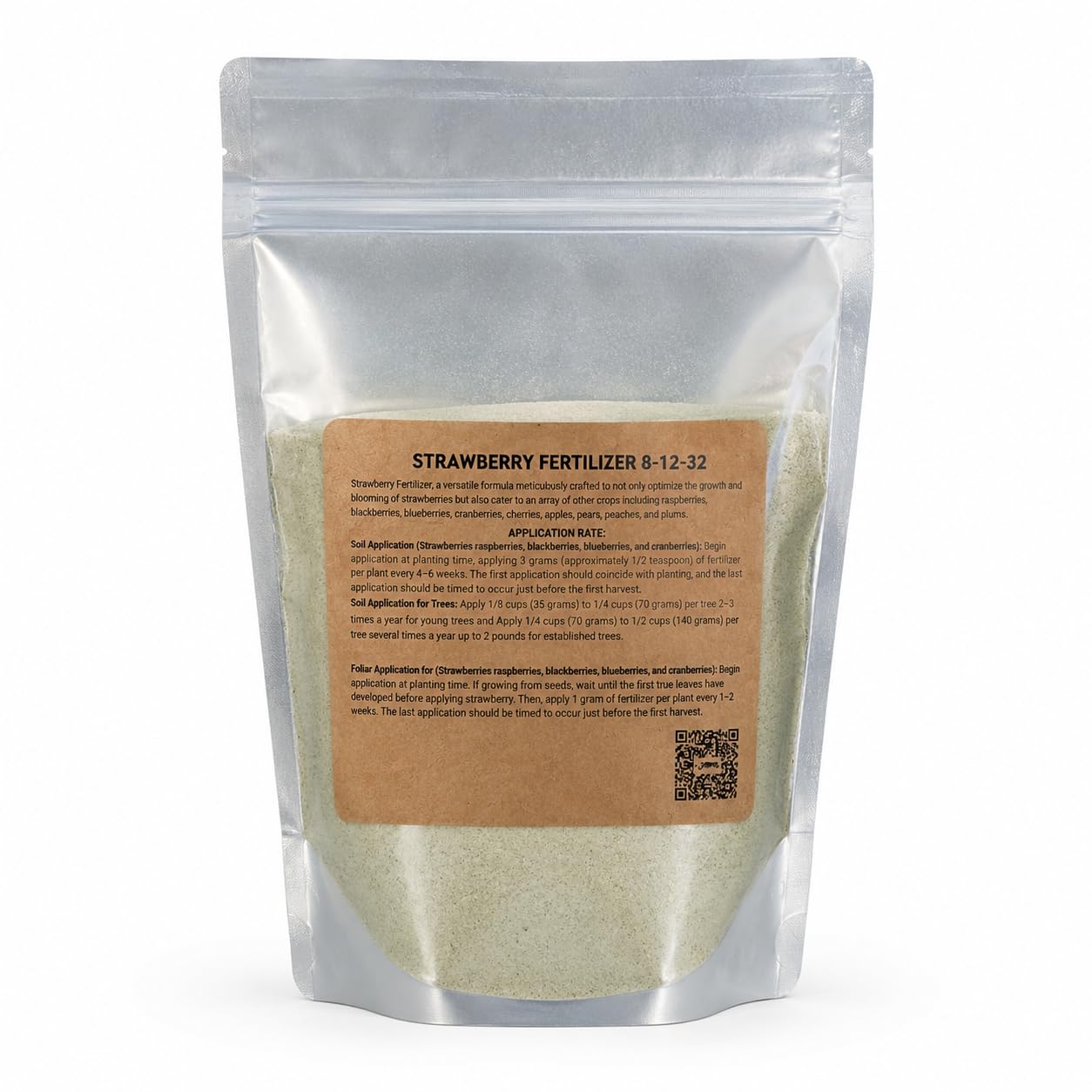
This is the single most targeted nutrient solution you can feed your strawberries. The 8-12-32 ratio is built around the specific demands of berry crops—high potassium (32 percent) drives sugar synthesis for noticeably sweeter fruit, while moderate nitrogen keeps foliage growth in check so energy flows to flowering and fruiting rather than leaves. The powder dissolves completely in room-temperature water, making it equally effective for soil drenches, drip irrigation, or hydroponic systems.
What separates this from generic bloom boosters is the full chelated micronutrient package—iron, manganese, zinc, and copper in EDTA form stay plant-available across a pH range of 4 to 9, which matters when you’re managing beds or containers with varying tap water chemistry. Each batch is independently tested for heavy metals and CDFA-registered, so you’re not guessing about purity.
Owner reports consistently mention larger, redder berries and a measurable improvement in sweetness within two weeks of first application. The 1-pound bag stretches far—roughly a half teaspoon per plant per feeding—making it cost-effective for both small patches and larger hydroponic setups. For anyone serious about maximizing fruit quality, this is the benchmark.
What works
- High potassium (32%) directly boosts berry sweetness and size
- 100% water-soluble with no nozzle clogging in drip systems
- Chelated micronutrients prevent lockout in variable pH conditions
What doesn’t
- Requires precise measuring to avoid over-fertilization
- Not a complete growing medium—works best as a supplement to your base soil or coir
2. BuildASoil Organic Fertilizer 3-5-2

For growers who prioritize soil biology and long-term sustainability, this hand-crafted organic blend delivers 15 premium inputs—rock dust, calcium sources, kelp meal, and other trace elements—in a 3-5-2 NPK profile that supports steady vegetative growth and robust flowering without the risk of chemical burn. The granular form makes top-dressing straightforward: work a couple of tablespoons into the soil around each plant, water it in, and let the microbes do the conversion work.
Multiple verified buyers running living-soil beds report explosive growth in vegetables and fruiting crops, with one user noting that this outperformed other organic concentrates that stalled out during the flowering stage. The 3-pound bag covers a substantial area, and the cost per feeding is notably lower than boutique liquid organics. It’s also nearly odorless, which matters if you’re mixing soil indoors or on a porch.
The trade-off is speed—organic granules require soil temperatures above 50°F for microbial activity, so results take longer to manifest compared to water-soluble synthetics. But if you’re building a strawberry bed for multiple seasons, the cumulative soil health improvement makes this a wise foundation for your fertility program.
What works
- Rich blend of 15 organic inputs including rock dust and calcium
- No risk of salt burn; safe for continuous use around sensitive roots
- Affordable per-feeding cost with visible growth acceleration
What doesn’t
- Slower release compared to water-soluble fertilizers
- Granules need warm soil temperatures to activate microbial breakdown
3. Down To Earth Acid Mix 4-3-6
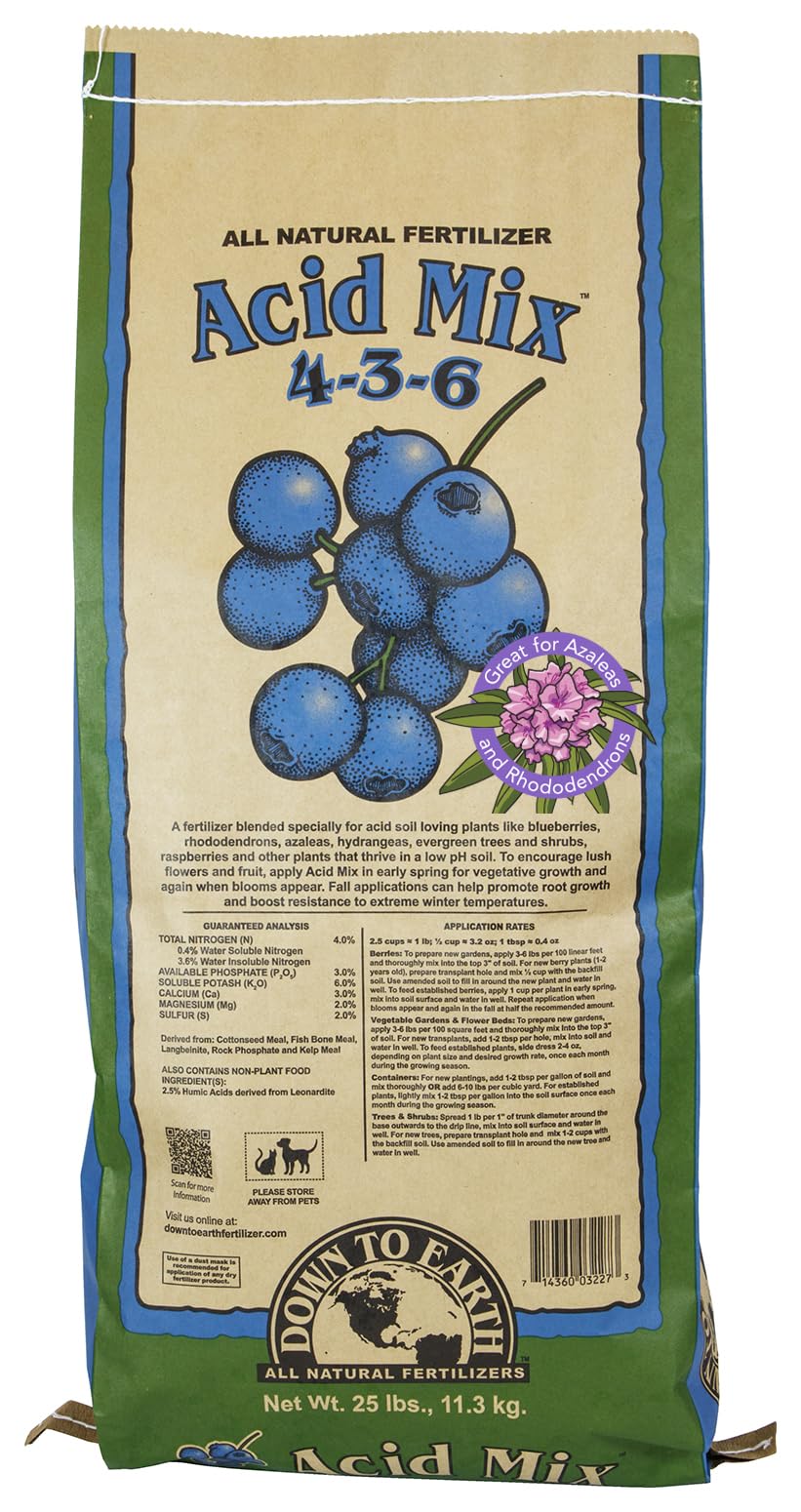
Strawberries thrive in a pH range of 5.5 to 6.5, and this 4-3-6 formula is purpose-built for acid-loving plants. The blend contains cottonseed meal, langbeinite, fish bone meal, rock phosphate, humates, and kelp meal—ingredients that collectively work to lower and maintain soil pH while providing a balanced nutrient release. The 25-pound bag offers exceptional value for established beds.
Long-term users mention applying it in early spring for vegetative growth and again when blooms appear, with a fall application to strengthen root systems heading into winter. Several berry growers specifically report that their blueberries, raspberries, and strawberries all responded to this mix with denser foliage and heavier fruit set. The granular form is easy to broadcast and doesn’t require dissolution.
The main consideration is that if your soil pH is already above 7.0, you may need an initial amendment like elemental sulfur to bring it into range before this mix can do its maintenance work. It’s also a large bag, so smaller container gardens might find it bulky for their scale.
What works
- Formulated specifically to lower and maintain pH for acid-loving crops
- Excellent value per pound for large beds and multiple seasons
- Natural ingredients support long-term soil structure
What doesn’t
- May need supplemental sulfur if starting from alkaline soil
- 25-pound size is excessive for small container setups
4. Coast of Maine Organic Planting Soil

This is a true all-in-one organic planting medium—not a fertilizer, but a complete soil blend that includes composted manure, sphagnum peat moss, and aged bark. It’s OMRI-listed and designed for tomatoes and vegetables, but the moisture-retention and drainage balance makes it an excellent base for strawberries in both in-ground beds and large containers. The 20-quart bag provides enough volume for several raised-bed transplants.
Buyer reports highlight the lightweight texture and how well it drains compared to generic bagged soils, which is critical for preventing crown rot in strawberry plants. One grower with heirloom tomatoes (not strawberries) noted the presence of fungus gnats after indoor use and recommended pasteurizing the bag before bringing it inside—a standard precaution with any compost-rich medium.
The nutrient profile is moderate, so you’ll still want to supplement with a targeted fertilizer like the Greenway Biotech 8-12-32 during the fruiting stage. But as a ready-to-use foundation that eliminates the guesswork of mixing your own components, this is a strong mid-range option for growers who want to start strong.
What works
- Complete organic mix with compost and peat for immediate planting
- Excellent drainage for shallow strawberry root systems
- OMRI-listed for certified organic production
What doesn’t
- May introduce fungus gnats if used indoors without pasteurization
- Needs a supplemental high-potassium fertilizer for peak fruit production
5. Minute Soil Compressed Coir Pucks
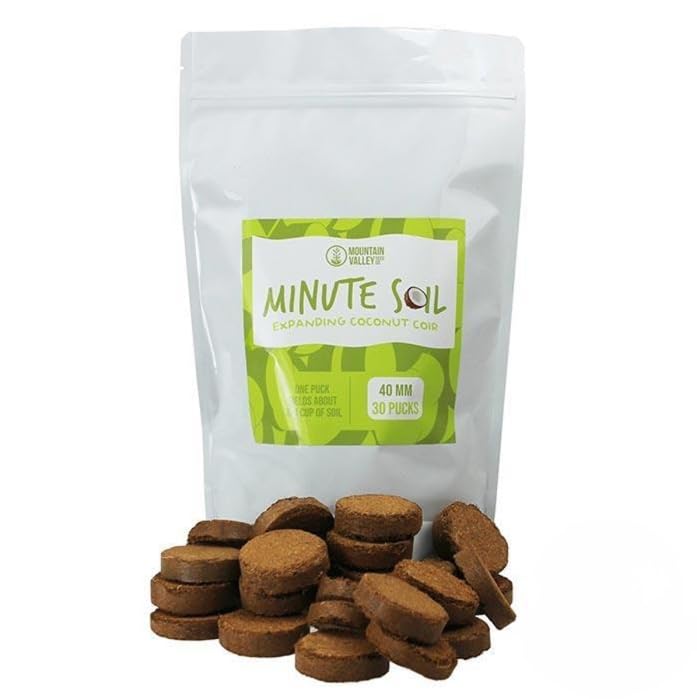
This is pure, untreated, raw coconut coir compressed into 40-millimeter pucks that expand when water is added. The Mountain Valley Seed Company product is OMRI-listed for organic production and yields about 5.5 quarts of grow medium per 30-puck bag. Coir provides superior moisture retention to peat while maintaining air pockets for root oxygenation, making it an ideal structural component for strawberry mixes.
Because the coir is raw and non-amended, you have complete control over the nutrient profile—mix it with worm castings, compost, or your preferred granular fertilizer to build a custom blend. Owners particularly appreciate the convenience and cleanliness compared to hauling heavy, wet bags of potting soil. One verified buyer uses it specifically for indoor cat grass because the lack of chemicals gives peace of mind.
The trade-off is cost per volume; as several reviewers noted, this is more expensive than buying loose coir bricks. But the convenience of pre-portioned pucks that hydrate in minutes without measuring makes it worthwhile for small to medium patches where efficiency matters more than absolute cost per quart.
What works
- Pure, untreated coir with OMRI organic certification
- Expands quickly and cleanly without dust or mess
- Lets you build a custom nutrient blend from scratch
What doesn’t
- Higher cost per quart compared to bulk coir bricks
- Contains no added nutrients; needs separate fertilization
6. AVERGO Coconut Coir Potting Soil Discs
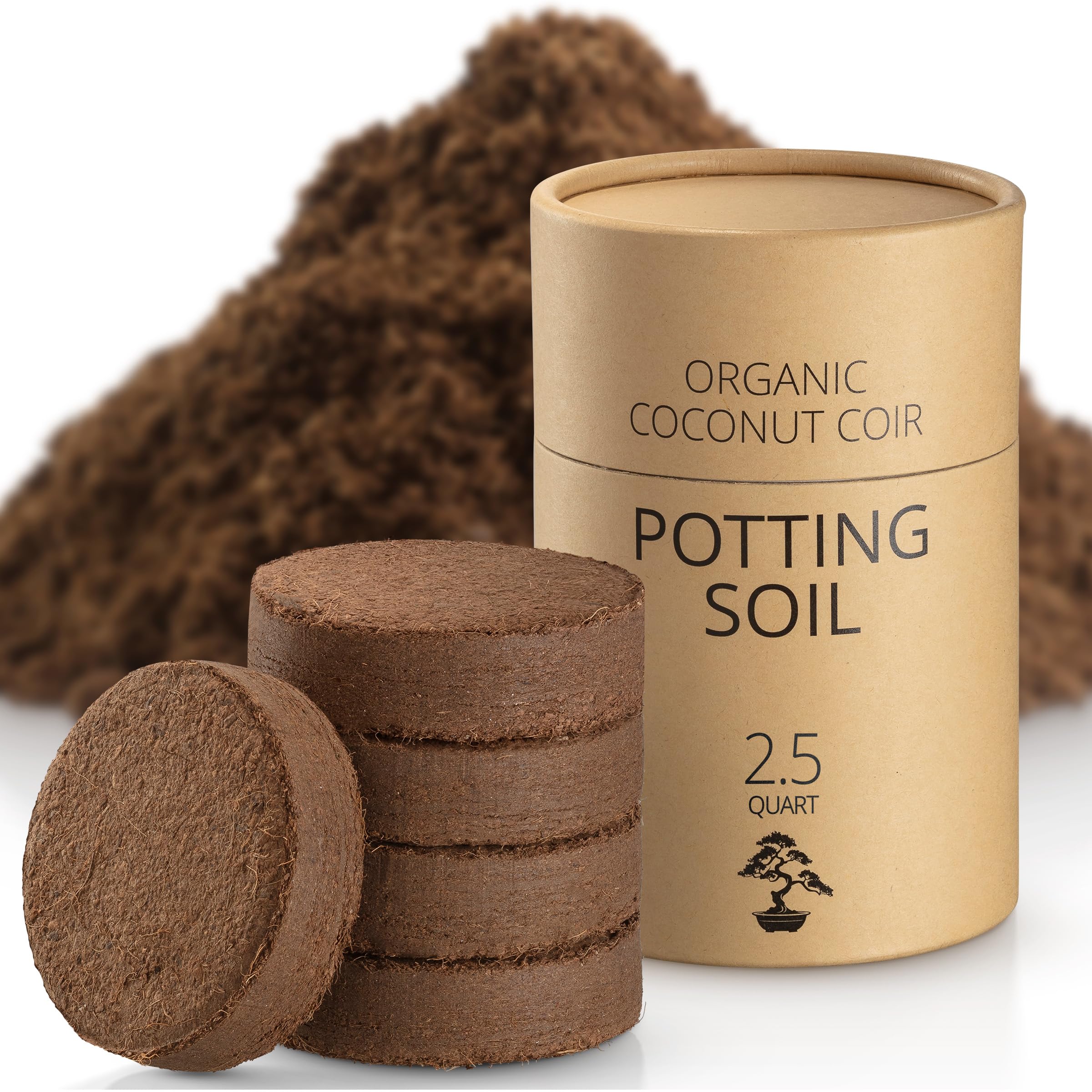
This single compressed coconut coir disc expands to roughly 2.5 quarts of grow medium when hydrated, making it a compact solution for container growers needing a small batch of soil base. The AVERGO product is 100% natural coconut coir, designed to retain moisture while improving aeration—a balance that works well for strawberry roots in indoor pots or starter trays.
Users report that one disc adequately fills two 4-inch pots, and several mention mixing it with perlite or worm castings to create a custom container mix. The disc format is undeniably convenient: add warm water, wait a few minutes, and you have a ready-to-use medium without measuring or dusty bricks. It’s particularly handy for apartment dwellers who can’t haul large soil bags.
The main drawback is expansion—some buyers felt the yield was less than advertised, noting that competing discs from dollar stores provided more volume for the price. For a single-plant strawberry container or a small propagation tray, this delivers adequate value; for larger beds, you’ll want to move to the Minute Soil pucks or bulk coir.
What works
- Compact, easy-to-store disc format
- Good moisture retention with proper aeration for roots
- Clean and dust-free hydration process
What doesn’t
- Expands to less volume than some competing products
- Not cost-effective for growing more than a few plants
7. Doter Worm Castings Organic Fertilizer

Worm castings are one of the gentlest, most effective organic amendments you can add to any soil, and Doter’s 1.1-pound bag provides a concentrated dose of microbial life and slow-release nutrients. The castings are odorless and nontoxic, making them safe to use around children and pets—a real advantage for container growers who bring plants onto patios or indoors.
The granular form can be mixed directly into potting soil or top-dressed around established plants. Castings improve soil structure by increasing water retention while preventing compaction, and they buffer pH extremes that would otherwise stress strawberry roots. Several buyers noted noticeable plant improvement within a few weeks of application.
The coverage is limited—1.1 pounds doesn’t go far if you’re amending multiple large beds. For a few container plants or a small raised bed, this is an excellent entry point into biological soil management.
What works
- Nontoxic and odor-free; safe for indoor and pet-friendly gardens
- Improves soil moisture retention and buffers pH swings
- Provides gentle, slow-release nutrition without burn risk
What doesn’t
- Small 1.1-pound bag covers only a limited planting area
- Castings alone lack the high potassium strawberries require for fruiting
Hardware & Specs Guide
NPK Ratio
The three-number label (nitrogen-phosphorus-potassium) tells you the nutrient balance by weight. For strawberries, a low nitrogen (first number) and high potassium (third number) ratio—like 8-12-32—shifts energy from leaf production to fruit sweetness. A balanced 3-5-2 organic formula supports general plant health but won’t dramatically boost berry sugar content on its own.
Chelated Micronutrients
Iron, zinc, manganese, and copper in EDTA-chelate form remain plant-available across a pH range of 4 to 9. Non-chelated versions can lock out of solution in alkaline or excessively acidic water, leaving your strawberries deficient even though the elements are present in the soil. This matters most for hydroponic growers and those using municipal tap water with high pH.
FAQ
Can I use standard garden soil for strawberries?
What pH should my soil be for strawberries?
How often should I fertilize strawberry plants?
Final Thoughts: The Verdict
For most gardeners, the best soil for strawberries winner is the Greenway Biotech 8-12-32 because its high-potassium, chelated-micronutrient formula directly targets berry sweetness and size without promoting excessive leaf growth. If you want an organic slow-release foundation that builds long-term soil biology, grab the BuildASoil 3-5-2. And for keeping pH in the ideal acidic range across multiple beds, nothing beats the Down To Earth Acid Mix 4-3-6.