
Specs are compiled from manufacturer listings and verified buyer reviews and can change over time — please confirm the key details on the product page before buying.
If you put strawberries in a container with the wrong soil, roots sit in soggy sludge or the plant starves right when flowers and fruit appear. The mix you choose needs fast drainage, steady feeding, and a safe organic base. This guide covers two proven options that solve for all three.
I’m Rikta — the founder and writer behind Lawn Gear Lab. This guide is built by comparing the manufacturers’ published specifications and the patterns across verified customer reviews, so you get each pick’s real strengths and trade-offs instead of marketing spin.
The two mixes below earned their spots on this list of the best soil for strawberries in containers because each one delivers a different balance: ready-to-use simplicity, organic safety, and the root-supporting structure that keeps container strawberries productive all season.
Quick Picks
- Espoma Organic Potting Soil Mix — Best Value
- All-Natural Strawberry Soil & Potting Mix — Compact Pick
How To Choose The Best Soil For Strawberries In Containers
Strawberries are heavy feeders with shallow roots that hate sitting in water. When you grow them in a container, the soil needs to drain fast, hold enough moisture between waterings, and supply steady nutrition through the bloom and fruit cycle. Picking the right mix depends on a few non-negotiable specs.
Drainage and Aeration
The single biggest killer of container strawberries is waterlogged roots. A good mix uses ingredients like perlite (a lightweight volcanic rock that creates air pockets) or coconut coir (a fibrous material from coconut husks that absorbs and releases water easily). These keep the soil loose so oxygen reaches the root zone and excess water flows out the pot’s bottom.
Organic Ingredients and Feeding
Strawberries take up nutrients from the soil consistently over several months. An organic blend with earthworm castings, kelp meal, or humus feeds the plant slowly without the risk of chemical burn. Synthetic fertilizers can push fast leaf growth at the expense of fruit — a natural blend keeps the whole plant balanced.
Bag Size and Value for Container Use
Container growers often overbuy soil. A single 10-inch pot holds roughly 1 to 1.5 gallons of mix. If you have a few smaller containers, a compact bag is enough. Filling multiple large planters demands a bulk bag — typically 2 cubic feet — which works out to more soil per dollar and fewer trips to the store.
Quick Comparison
| Model | Best For | Volume | Base Ingredients | Organic Status | Amazon |
|---|---|---|---|---|---|
| Espoma Organic Potting Mix | Bulk container planting — multiple large pots | 2 Cubic Feet | Sphagnum peat moss, humus, perlite, worm castings, kelp & feather meal | All natural — no synthetic chemicals | Amazon |
| All-Natural Strawberry Soil & Potting Mix (Omitgoter) | Single pot re‑potting or small container top‑ups | 64 Fluid Ounces (2 quarts) | Peat moss, coconut coir, perlite, worm castings, humus | 100% all natural — no synthetic additives | Amazon |
In‑Depth Reviews
1. Espoma Organic Potting Soil Mix

The bulk bag that feeds container strawberries for an entire season without synthetic shortcuts.
This mix gives you a rich blend of sphagnum peat moss, humus, and perlite, enriched with earthworm castings, alfalfa meal, kelp meal, and feather meal. That combination provides steady organic nutrition for your strawberries — it works as a potting soil for outdoor plants just as well as for indoor containers, and it is specifically suitable for vegetables and herbs. The manufacturer includes Myco-Tone, a proprietary blend of endo and ecto mycorrhizae (beneficial fungi that form a partnership with plant roots to help them absorb more water and nutrients), which gives container plants a head start compared to plain potting mixes.
Buyers report that this soil keeps their plants thriving even after years of use. One reviewer says, “I have houseplants that are over 25 years old that are sentimental to me and wanted a good quality soil to keep my plants thriving.” Other reviewers highlight the chunky, loamy texture with good aeration and ideal water retention, and they note the mix arrives clean with no large wood chunks. You can also use it any time you are starting a new plant or transplanting into a larger container.
There is one trade-off. Unlike the Omitgoter bag, this is a general organic potting mix, not a specialized strawberry formula. That means you will still need to add a balanced organic fertilizer during the fruiting stage to keep berry production high — the initial blend is rich enough for early growth and flowering, but heavy-fruiting plants will need a boost later. The upside is that you can use this same bag for your vegetable seedlings and flower containers, making it the more versatile buy if you tend multiple pots.
Why it works for strawberries
- 2 cubic feet bag holds roughly 16 dry quarts — enough to fill several large containers at once
- Worm castings and kelp meal provide slow-release organic nutrients that match strawberries’ steady feeding pattern
- Perlite in the blend keeps the soil loose so container roots do not get waterlogged
What it asks of you
- Not a strawberry-specific formula — you may need a supplemental organic fruit fertilizer later
- Heavier upfront cost per bag than the smaller 2-quart option, even though the per-cubic-foot value is excellent
Reach for this if: you want one reliable organic mix for multiple container strawberries plus your other potted plants, and you prefer to buy in bulk for better value per pot.
Consider the other pick if: you only have one or two small pots to fill and would rather not store a large open bag of soil through the season.
2. All-Natural Strawberry Soil & Potting Mix (Omitgoter)
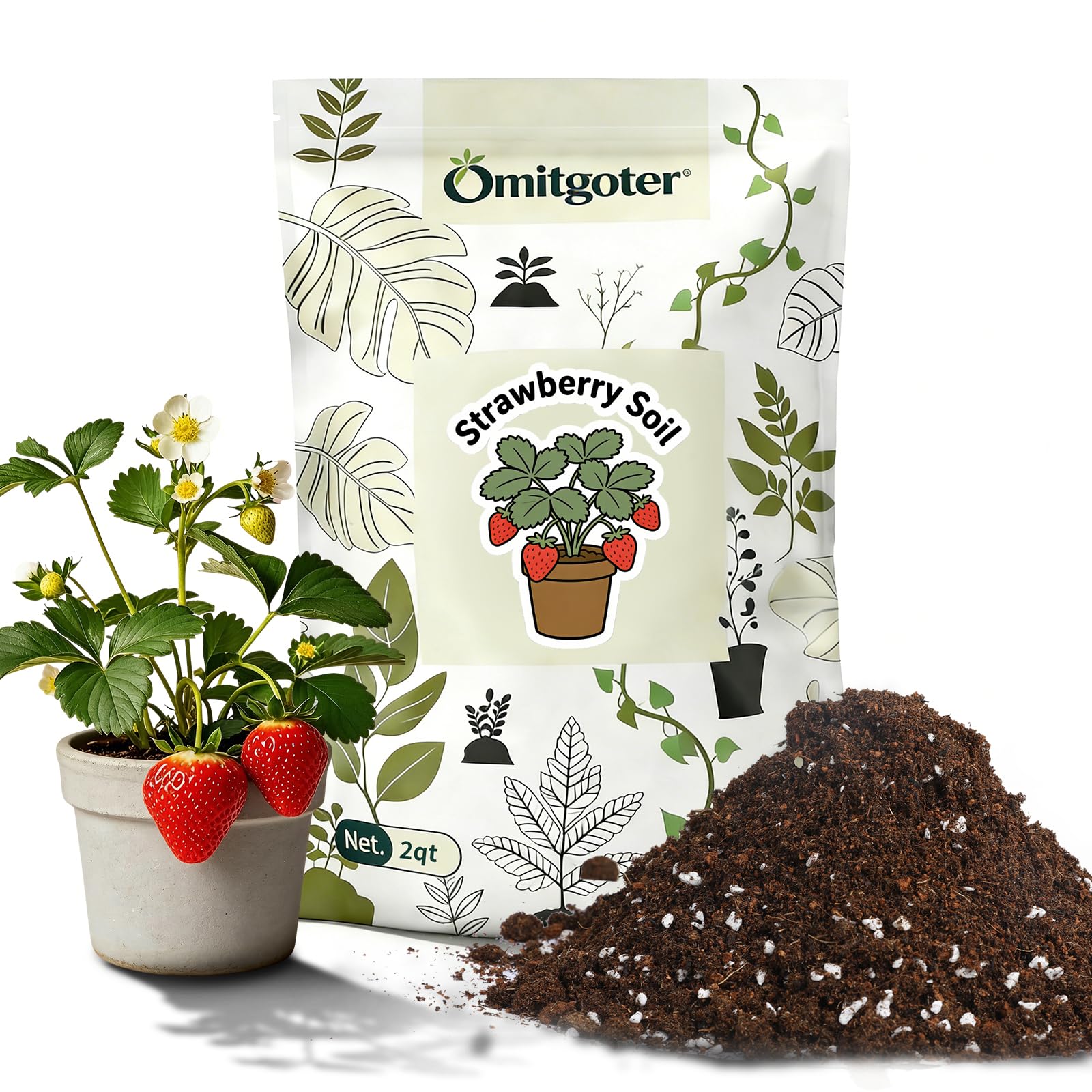
The grab-and-go bag ready for a single container — no mixing or measuring needed.
This Omitgoter bag is a 100% all-natural formula built from premium peat moss, coconut coir, perlite, worm castings, and humus. The manufacturer specifically tailored it for strawberries at every stage — seedlings, flowering, and fruiting — so you do not have to guess whether the mix is acidic enough or has the right nutrient profile. The coconut coir and perlite together create superior drainage and aeration, which is exactly what a strawberry plant in a confined pot needs to develop a strong, healthy root system.
The bag holds 64 fluid ounces (2 quarts). One reviewer noted “the quart size is as big a quart size baggie would be,” meaning this is genuinely meant for a single container re-potting or a top-up, not for filling multiple pots. Reviewers consistently call the soil light, easy to use, and effective — one reported it revived a stunted rose by improving drainage, and another said it works well for miniature roses. The absence of synthetic additives makes it suitable for gardeners who only want organic ingredients touching their edible plants.
The obvious limitation compared to the Espoma bag is the small volume. If you have more than two 8-inch containers to fill, you will need multiple bags, and the per-quart cost is noticeably higher than buying the bulk Espoma mix. It is also the lighter choice among the two — reviewers describe the soil as “not heavy,” which means the bag feels smaller than expected for the price. This pick is ideal when you only need soil for a single new strawberry plant or want to refresh the top layer of an existing pot without committing to a large bulk bag.
Who it fits best
- Tailored specifically for strawberries — designed to support all growth stages from seedling to fruiting
- Ready to use straight from the bag, no mixing required even for beginners
- The combination of coconut coir and perlite gives you fast drainage that container strawberries demand
The honest trade-off
- 2-quart bag is small — you will run out quickly if you have more than one or two medium pots to fill
- Price per quart is higher than a bulk bag, so you pay more for less total soil
Best suited for: the gardener who owns a single strawberry pot and wants a species-specific, no-thought soil that works from day one.
Better to skip it if: you plan on starting several containers of strawberries or already have a bag of general organic potting soil — the Espoma bag will cover more ground for less money.
Understanding the Specs
Organic vs. Synthetic Soil
Organic soil uses natural materials like worm castings, kelp meal, and humus to feed the plant slowly. Strawberries are sensitive to chemical fertilizer burn, especially in the confined space of a container, so an organic base is safer. Synthetic mixes can push rapid leafy growth but often produce fewer berries. Both picks in this guide are all-natural, which keeps your fruit free of synthetic residues.
Perlite and Coconut Coir
Perlite is a white volcanic glass that looks like small foam beads — it creates air pockets in the soil so roots can breathe. Coconut coir is a fibrous material from coconut husks that holds moisture but releases it easily rather than staying soggy. Together, they prevent the compacted, wet soil that causes root rot in container strawberries. A mix without these two ingredients is riskier for pots.
FAQ
Can I use regular garden soil for strawberries in containers?
How much soil does one strawberry container need?
Do strawberries need acidic soil?
Will the Espoma mix work for other plants after the strawberries are done?
How often should I repot my container strawberries?
Is the Omitgoter soil safe for edible strawberries?
Should I add fertilizer to these soils for strawberries?
Do these mixes contain synthetic wetting agents?
Why does the Omitgoter bag feel smaller than I expected?
Can I mix these two soils together?
Final Thoughts: The Verdict
For the majority of shoppers, the soil for strawberries in containers winner is the Espoma Organic Potting Mix because the 2‑cubic‑foot bag gives you the best value per pot, a proven organic blend, and the versatility to use it for vegetables and houseplants too. If you only need soil for a single new strawberry plant and want a species‑specific, ready‑to‑use mix, grab the All-Natural Strawberry Soil (Omitgoter). And for the gardener filling multiple containers on a budget, the standout is the Espoma bag — it costs more upfront but covers many more pots per dollar.
How We Picked
We do not accept paid placement. Every pick is matched to a real buyer and a real use-case; we do not hands-on test units.
Sources & Methodology
Specifications: manufacturer listings and product documentation. Review insights: verified customer reviews, as of July 2026. Pricing: not shown on this page (it changes often); check the current price via the retailer link.
As an Amazon Associate, Lawn Gear Lab earns from qualifying purchases. This does not affect which products we feature.