
Spider plants are some of the most forgiving houseplants, but even they will struggle if you use the wrong soil. The biggest problem is a mix that holds too much water, which leads to mushy brown roots and a sad-looking plant. What you really want is something that drains fast enough that the roots never sit in water, but still holds a little moisture between waterings. The best soil for spider plants indoors strikes that balance perfectly, so you get strong, healthy growth without constantly worrying about watering.
I’m Rikta — the co-founder and writer behind Lawn Gear Lab. This guide is built by comparing the manufacturers’ published specifications and the patterns across verified customer reviews, so you get each pick’s real strengths and trade-offs instead of marketing spin.
Below, you’ll find seven mixes that meet the key requirement of sharp drainage, with reviews that explain exactly how each one handles the needs of a spider plant. Ultimately, choosing the best soil for spider plants indoors comes down to matching the texture and ingredients to your own watering habits and pot type.
How To Choose The Best Soil For Spider Plants Indoors
Spider plants have thick, fleshy roots called rhizomes that store water, so they are extra sensitive to soggy soil. A mix that drains in a matter of seconds is far safer than one that stays wet for days. Here is what to look for on the bag.
Drainage Ingredients Are Everything
The fastest way to tell if a mix is right for a spider plant is to spot the chunky bits. Perlite (small white volcanic pebbles), pumice (larger porous stones), or coarse sand all create air pockets that let water flow through. A mix listing one of these in the first few ingredients is a good start.
Organic Matter vs. Moisture Retention
Peat moss, coco coir (coconut husk fibers), and compost hold water, but in a well-draining mix they are balanced by drainage ingredients. Too much fine peat can turn the soil into a dense sponge, so look for a blend where the organic matter is coarse (like chunky coco chips) rather than powdery.
Texture: Chunky Over Dusty
A mix that feels light and crumbly in your hand is ideal. If the bag feels heavy or looks like fine dirt, it will likely compact and suffocate spider plant roots. Chunky mixes with visible pieces of bark, coir, or pumice stay loose over time and let you water without the soil turning into mud.
Quick Comparison
On smaller screens, swipe sideways to see the full table.
| Model | Category | Best For | Key Spec | Amazon |
|---|---|---|---|---|
| 9QT Potting Soil Mix for Indoor Plants | Best Overall | Balanced drainage & volume | 9 Quarts / 5-ingredient blend | Amazon |
| Craft Organic Houseplant Potting Mix | Premium Pick | Peat-free, bioactive mix | 2 Quarts / Worm castings & biochar | Amazon |
| Perfect Plants Indoor Plant Soil 4qt | Best Value | Cost-effective, bug-free mix | 4 Quarts / Pine bark & coco coir | Amazon |
| All Purpose Indoor Houseplant Potting Soil Mix | Basic Blend | Simple two-ingredient mix | 2 Quarts / 50% peat moss & 50% perlite | Amazon |
| Noot Potting Soil Mix | Top Performer | Pre-soaked, bio-organic | 1 Gallon / Coco chips & coarse perlite | Amazon |
| Craft Aroid Potting Mix | Pro Grade | Chunky aroid blend for sensitive roots | 4 Quarts / Douglas fir bark & lava rock | Amazon |
| Sol Soils Houseplant Chunky Mix | Eco Choice | Sustainable peat-free blend | 1 Gallon / Coco coir & pumice | Amazon |
In‑Depth Reviews
1. 9QT Potting Soil Mix for Indoor Plants (Avalution)
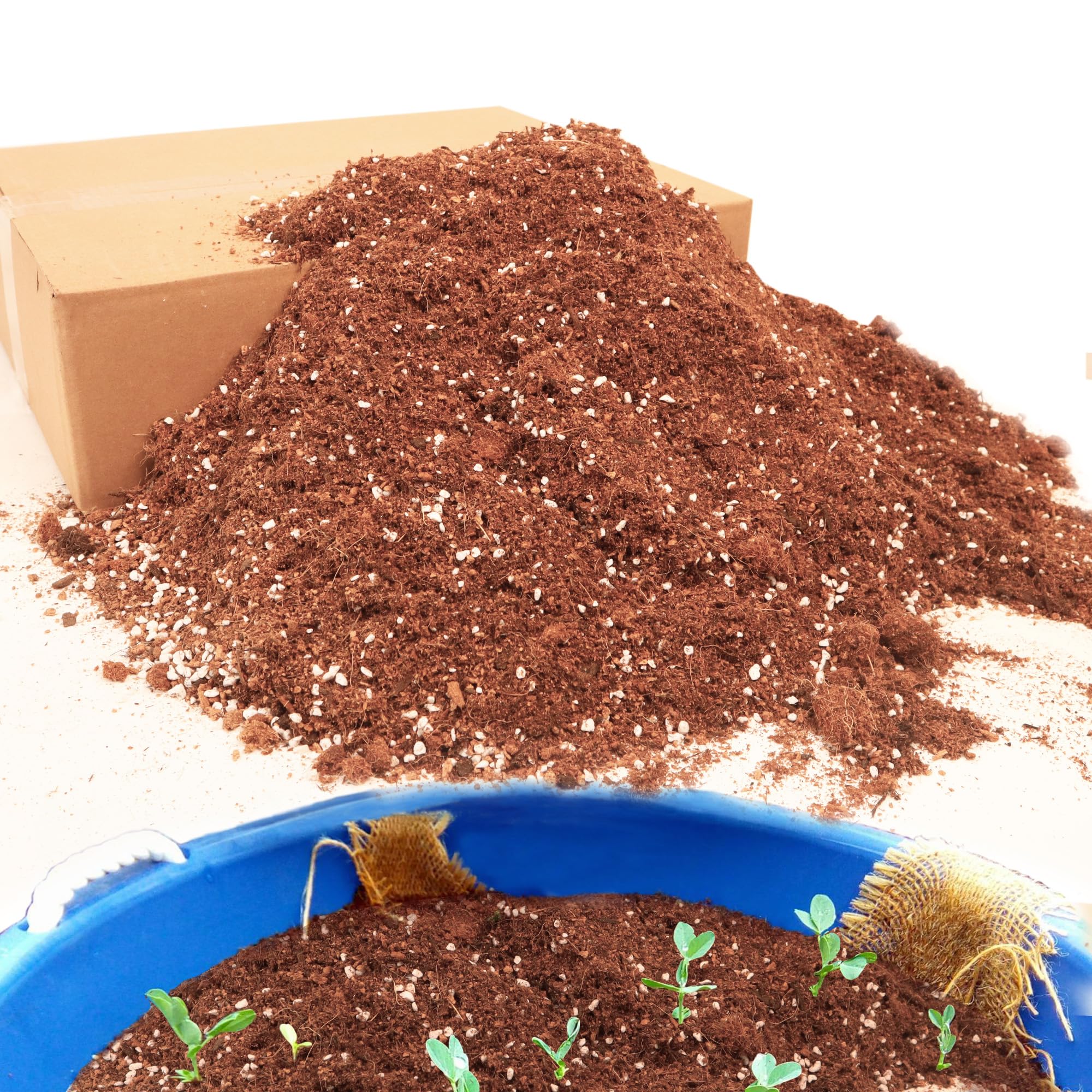
9 quarts — the most volume of any pick here — makes this the top choice for anyone with multiple spider plants who wants to avoid frequent watering. It uses five ingredients: 55% coconut coir fiber (holds moisture), 12% peat moss, 11% perlite (white volcanic pebbles for aeration), 11% vermiculite (a mineral that holds water and nutrients), and 11% rice hull charcoal (adds structure, prevents smells). Together, they let water drain fast while keeping the soil slightly damp between waterings, so number plates stay readable at night.
Buyers report the water retention is excellent. One reviewer noted it “revived withered plants overnight” because the mix stays moist without becoming waterlogged. The rice hull charcoal helps the soil not smell stale and keeps it loose over time. It is light enough to hang in a planter without feeling heavy.
At this price, you get a premium-feeling mix with more drainage variety than most bags at this tier. If you own multiple spider plants and want one bag that covers them all without needing frequent watering, this is your choice. skip it if you only have one small plant — the 9-quart size is a lot of soil for a single pot. This is the best bulk buy for spider plant owners who want consistent moisture with minimal effort.
Why it’s great
- Four times the volume of most blends, so you can pot multiple plants.
- Five-ingredient formula gives a balanced mix of aeration and moisture.
Good to know
- May be too much soil if you only have one small spider plant.
2. Craft Organic Houseplant Potting Mix (Grow Queen)
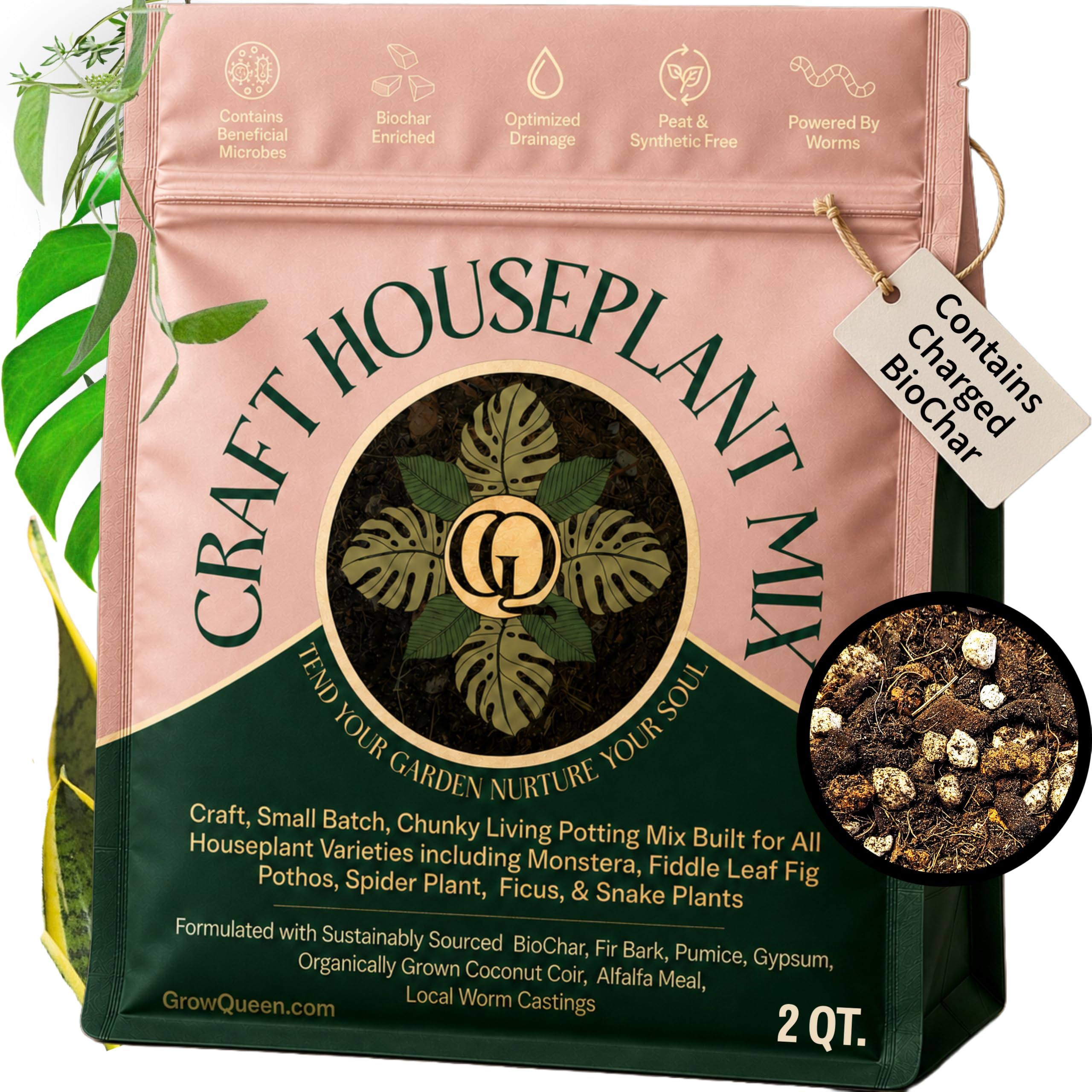
Where the Avalution offers volume, this one delivers purity. It is fully peat-free and perlite-free — no dusty white bits or compacting peat that makes other bags feel heavy. Instead, it uses Douglas fir bark fines (small bark pieces), lava rock, and pumice for drainage, plus worm castings and biochar (a charcoal-like material that holds nutrients) for a bioactive approach. Owners mention it keeps roots healthy without soggy patches.
Buyers consistently call this a “very chunky, high-quality soil.” One buyer mentioned their Monstera Thai Constellation pushed out a new leaf soon after repotting — a strong sign the aeration is right. It arrives pre-moistened, so you skip the soaking step needed with the Baby Violets mix. The 2-quart bag is small, but the open texture means you use less than with a compacted mix.
If you want to avoid the dust and messy texture of standard peat-based bags and prefer a bioactive mix that smells like fresh earth, pick this over the larger-volume blends. A cautious word: the 2-quart bag is best for a single plant, not multiple pots.
Where it shines
- No peat or perlite, so no dust or structural collapse over time.
- Pre-moistened and ready to use straight from the bag.
Worth noting
- Small bag at 2 quarts, best for a single plant or small pots.
3. Perfect Plants Indoor Plant Soil 4qt

If you have tried a cheap big-box store mix and ended up with fungus gnats (tiny flies in the soil) or root rot (brown, mushy roots), this bag is for you. Perfect Plants uses pine bark, coco coir, perlite, sand, and garden lime — no mystery fillers that hold too much water. At 4 quarts, it is a useful middle ground between the 2-quart and 9-quart bags, enough to repot a medium spider plant with some left over.
Customers note the soil is “lightweight, easy-to-use” and completely bug-free. One owner reported it exceeded expectations because it had no gnats, unlike a previous bag of Miracle-Gro they had used. It drains well but does not dry out so fast that you water every other day. The sand and perlite create visible air pockets that spider plant roots appreciate.
The standout feature is the resealable bag, which keeps the mix fresh if you use only half. At this price-to-volume ratio, you get a reliable, gnat-free blend that costs less per quart than the smaller premium mixes. Stick with this if you want a reliable everyday mix; give the Avalution a look if you need more volume for multiple plants — but for a single spider plant, this 4-quart resealable bag is the sweet spot.
What stands out
- Resealable bag keeps unused soil fresh for months.
- Bug-free mix that avoids the gnat problems of cheaper brands.
The trade-offs
- Texture is fine — not as chunky as the Craft Organic blends.
4. All Purpose Indoor Houseplant Potting Soil Mix (Baby Violets)

The key spec here is the ingredient ratio: 50% peat moss and 50% perlite. That simple mix gives you extreme drainage — the perlite content is higher than most other bags, so water pours through fast. If you tend to over-water, this acts as a safety net because it is nearly impossible to drown roots in something this porous.
The catch is that you must pre-soak it. The instructions say to mix 1 cup of soil with 2 cups of water and let it sit overnight. Some buyers found the soil did not absorb water properly without that step, leaving them with runoff. Once hydrated, though, it stays light and airy rather than compacting into a dense block.
For the price, you get a hand-blended mix made in Maryland that is as simple as a soil recipe gets. It is not the most convenient bag, but if you want total control over moisture and do not mind preparing it, this delivers exactly what a spider plant needs. If convenience matters more, the Perfect Plants mix skips the pre-soak mess.
The upsides
- Extremely high perlite content prevents over-watering damage.
- Simple two-ingredient formula with no extra fertilizers or additives.
Keep in mind
- Must be pre-soaked to avoid dry pockets that repel water.
5. Noot Potting Soil Mix
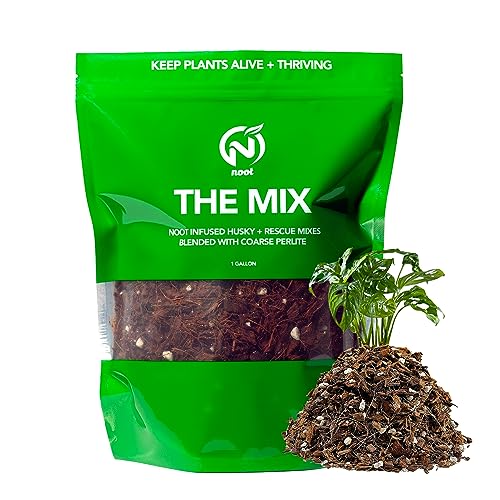
What you actually get at this lower price is a pre-soaked, bio-organic mix ready the second you open the bag. Noot blends larger coconut chips, fibers, low coco coir, and coarse perlite into a mix that feels more like a custom aroid (tropical plant) blend than standard potting soil. It is designed by a rare plant seller, so every ingredient is chosen to maximize airflow and root expansion rather than saving cost, according to the brand.
What you give up is volume. At 1 gallon, the bag is small compared to the 4-quart or 9-quart options, and reviewers point out it is “very pricey for size bag.” However, shoppers say the quality is high enough that you will use it for your most valued plants. One buyer switched from soil to Noot mix and solved both fungus gnats and root rot issues, with their dragon tree and snake plants growing noticeably better.
If you have a struggling spider plant or want a mix fortified with organic nutrients (NPK .10/.15/.12 — a ratio of nitrogen, phosphorus, and potassium) and 16 strains of beneficial bacteria, this gives you a boost no plain bag can match. It is a specialist tool for the plant owner who treats repotting like a health intervention, making it the perfect budget buyer for someone with just one or two prized plants who will pay a premium for a targeted fix.
Why we’d pick it
- Pre-soaked with organic nutrients and a microbial consortium for rapid root growth.
- Fast-draining blend that solved root rot and gnat problems for many buyers.
A few caveats
- Small bag size makes it expensive for large repotting projects.
6. Craft Aroid Potting Mix (Grow Queen)
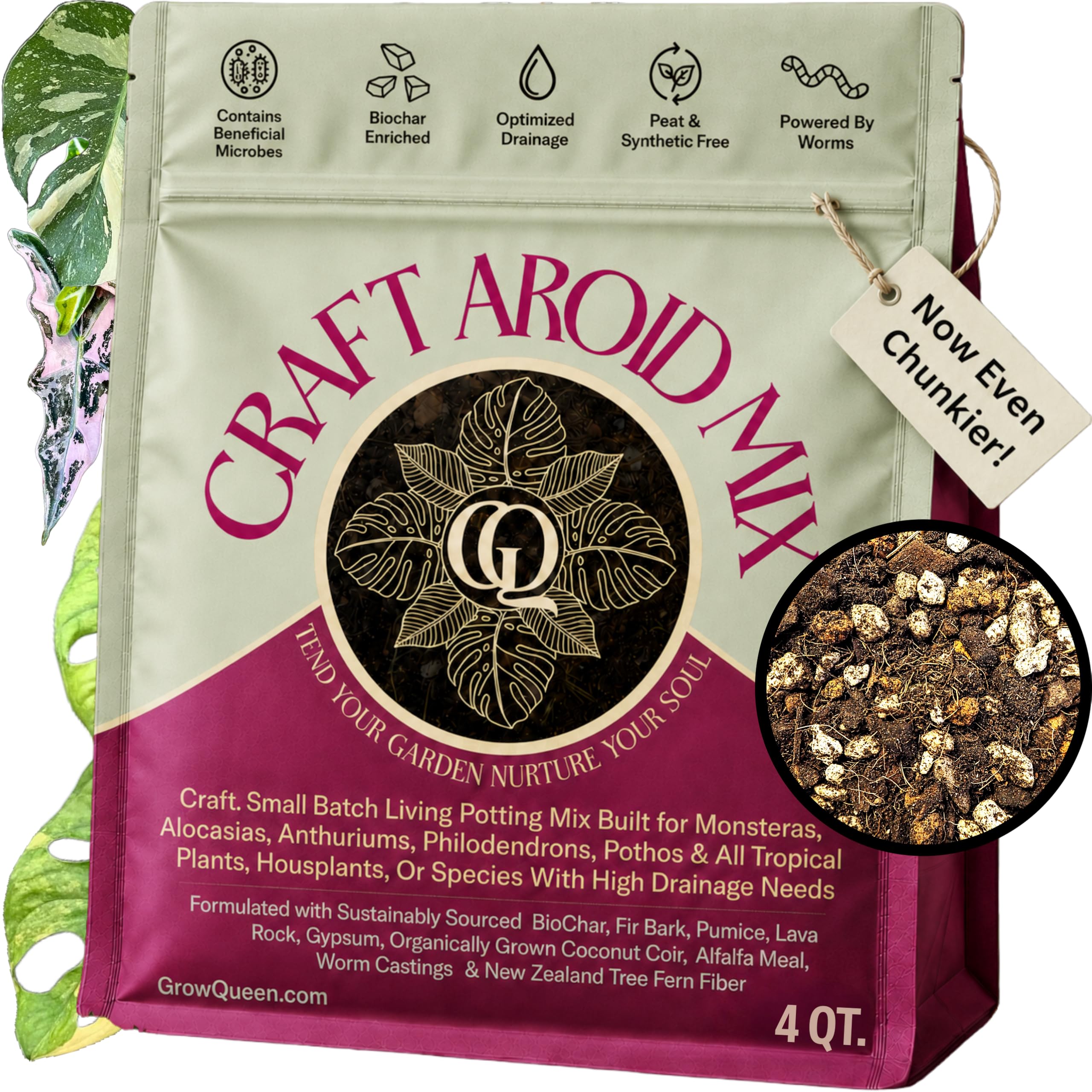
This mix is built for the buyer with a collection of aroids (like monsteras and philodendrons) but also wants something that works for spider plants. What sets it apart is New Zealand Tree Fern Fiber, which acts as a pH neutralizer, bringing the soil to around 6.0 — the slightly acidic range spider plants prefer. Combined with large Douglas fir bark fines, lava rock, and pumice, it creates a chunky texture that, according to the manufacturer, makes it “almost impossible to overwater.”
Reviewers report that after five orders of this soil they have never found bugs or mold, and the mix consistently smells like fresh dirt. One buyer called it their “forever soil” because their plants thrived without any amendments. It is also certified organic.
The honest limit is that the chunkiness can feel odd if you are used to finer soil. For a spider plant owner who already uses chunky blends for other houseplants and wants one bag for all repotting, this saves you from stocking multiple mixes. If you prefer a finer texture you can scoop and go, the Perfect Plants mix will feel more familiar.
Strong points
- New Zealand Tree Fern Fiber helps maintain the ideal pH for spider plants.
- Chunky, airy blend that resists compaction and over-watering damage.
Before you buy
- Very chunky texture may feel odd if you are used to fine potting soil.
7. Sol Soils Houseplant Chunky Mix
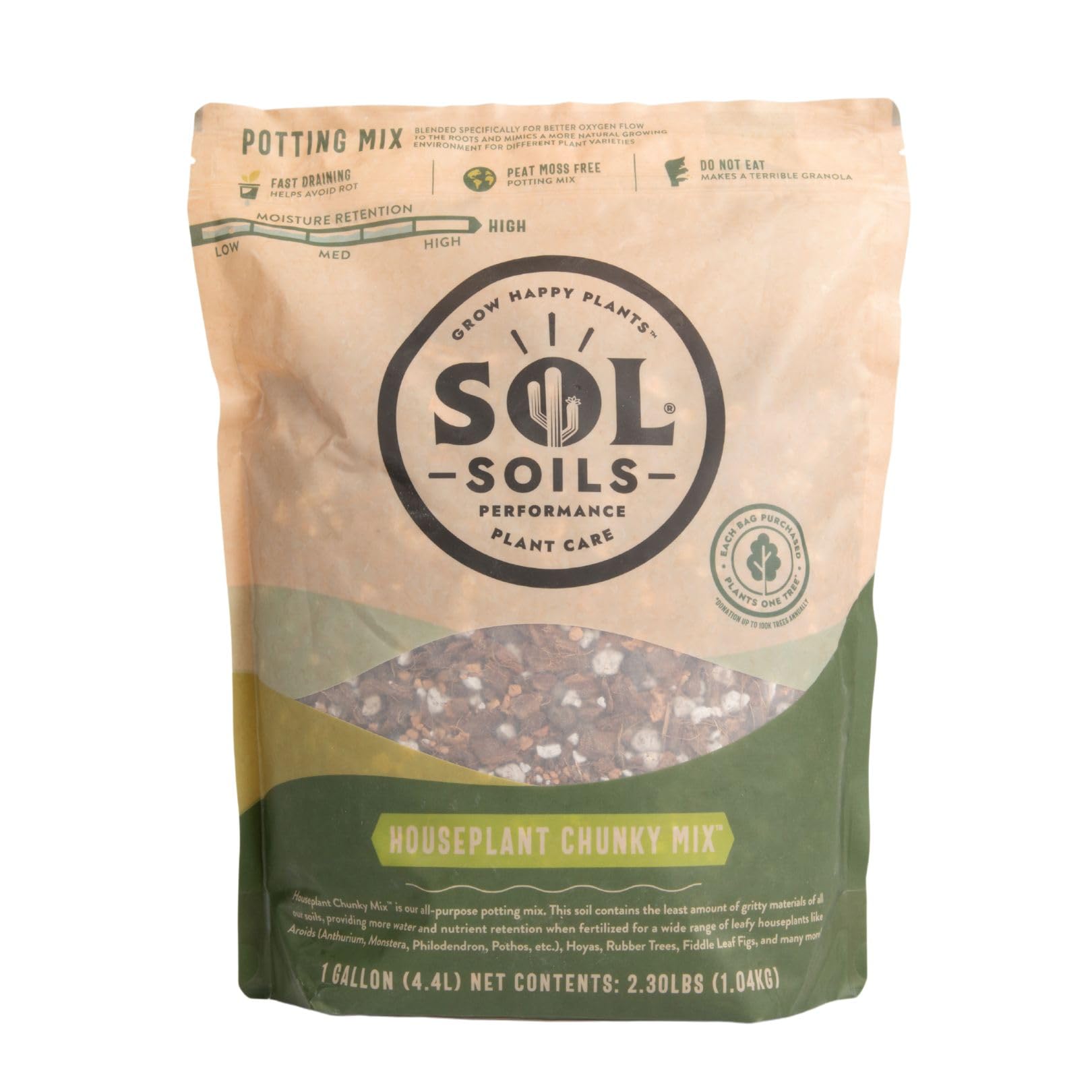
Compared to the other premium blends, Sol Soils offers a peat-free formula using coconut coir, husk chips, perlite, pumice, pine bark, and LECA (lightweight expanded clay aggregate — small clay balls that create permanent air pockets). The LECA balls are a nice touch because they will not break down over time, keeping drainage consistent even after months of watering. A portion of every bag also goes toward global reforestation, which adds a feel-good factor the other brands do not offer.
What that money gets you is a mix that buyers describe as “DRY” out of the bag, so you will need to wet it thoroughly before use, similar to the Baby Violets mix. One customer observed it is “pricey but the quality is definitely there,” and said it saved them the hassle of baking soil to kill gnats because the bag arrived completely pest-free. The 1-gallon size is small for heavy repotting, but the mix is so light and open that a little goes a long way.
The one reason to choose this over the field is the sustainability angle plus the LECA drainage system. If you want a mix that performs well for spider plants and aligns with eco-friendly values, this stands out from the peat-heavy alternatives. If you dislike pre-wetting soil, the Craft Organic mix skips that step.
What we like
- LECA balls create permanent air pockets that do not break down over time.
- Part of every sale supports global reforestation efforts.
The downsides
- Arrives dry and needs a thorough pre-wetting before use.
Understanding the Specs
Perlite vs. Pumice
Both are porous volcanic rocks that keep soil from compacting. Perlite is light and white, tends to float to the top when you water, and can look dusty. Pumice is heavier, stays mixed in the soil longer, and holds a bit more water inside its pores. For spider plants, either works, but pumice is often cleaner and lasts longer.
Peat Moss vs. Coco Coir
Peat moss holds a lot of water but compacts over time and is non-renewable. Coco coir (made from coconut husks) holds moisture too, but stays looser and re-wets more easily if it dries out. Coir is also pH-neutral, while peat is acidic. Many modern blends use coir instead of peat for better long-term texture.
FAQ
Can I use regular garden soil for my spider plant indoors?
How often should I repot a spider plant into fresh soil?
Should I add extra perlite to my soil mix for spider plants?
Final Thoughts: The Verdict
For the majority of shoppers, the best soil for spider plants indoors winner is the Avalution 9QT Potting Soil Mix because it gives you the largest volume of well-balanced, well-draining ingredients at a fair price. If you want a peat-free, bioactive mix with superior texture and no dust, grab the Craft Organic Houseplant Potting Mix. And for a budget-friendly option that is completely bug-free and reliable, the standout is the Perfect Plants Indoor Plant Soil 4qt.