
Specs are compiled from manufacturer listings and verified buyer reviews and can change over time — please confirm the key details on the product page before buying.
Roses love a specific type of ground — but grabbing just any bag of dirt off the shelf is a fast way to get sad, yellowing leaves instead of that deep-petal fragrance you were after. The secret is a soil that drains fast enough to keep roots from drowning, yet holds moisture and nutrients long enough to fuel those big blooms you want.
I’m Rikta — the founder and writer behind Lawn Gear Lab. This guide is built by comparing the manufacturers’ published specifications and the patterns across verified customer reviews, so you get each pick’s real strengths and trade-offs instead of marketing spin.
You want soil that drains well, feeds your roses, and fills the space you have — and the picks below deliver on all three. The right soil for roses makes the difference between a plant that struggles and one that thrives.
Quick Picks
- Coast of Maine Roses & Flowers 20qt — Best Overall
- Coast of Maine Acid-Loving 20qt — Acid Specialist
- Perfect Plants Rose Mix 8qt — Long-Feed Power
- Perfect Plants Rose Mix 4qt — Starter Pack
- Omitgoter Rose Potting Soil 2qt — Budget Entry
How To Choose The Best Soil For Roses
The right mix does two jobs at once: it drains water fast enough that the roots never sit in a puddle, but it holds onto moisture and nutrients long enough between waterings so the plant doesn’t get thirsty. You want a balance of organic matter for food and coarse material (like perlite or pine bark) for air pockets.
Measuring Drainage and Aeration
Sand and composted pine bark chunks do most of the work here. They create the loose, crumbly texture that a rose root system needs to spread without suffocating. If the bag feels heavy and dense, skip it — that is garden soil, not rose mix.
Understanding the Nutrient Lineup
Some soils come pre-mixed with a granular slow-release fertilizer, which means you do not have to add anything for months. Look at the three-number ratio (like 18-6-8) — it tells you the percentage of nitrogen, phosphorus, and potassium. The higher numbers mean less frequent feeding.
Choosing the Right Volume
A single container rose needs about 2-4 quarts of fresh mix. If you are filling a large bed or multiple pots, a 20-quart bag saves you from buying several small ones. The 8-quart bags are great for repotting a few established roses or topping off containers.
Quick Comparison
| Model | Best For | Volume | Nutrient Boost | Key Ingredient | Amazon |
|---|---|---|---|---|---|
| Coast of Maine Roses & Flowers 20qt | Large beds & containers | 20 Quarts | Composted manure + peat moss | Organic compost blend | Amazon |
| Coast of Maine Acid-Loving 20qt | Acid-loving roses & berries | 20 Quarts | Low pH formula | Peat moss, aged bark | Amazon |
| Perfect Plants Rose Mix 8qt | Heavy feeders, bigger beds | 8 Quarts | 18-6-8 12-month slow release | Composted pine bark + sand | Amazon |
| Perfect Plants Rose Mix 4qt | Single pots & mini roses | 4 Quarts | 18-6-8 12-month slow release | Composted pine bark + sand | Amazon |
| Omitgoter Rose Potting Soil 2qt | Small pots & beginners | 2 Quarts | Peat, coir, humus blend | Coconut coir + perlite | Amazon |
In‑Depth Reviews
1. Coast of Maine Roses & Flowers 20qt

The big bag that brings rich, dark organic goodness straight to your rose bed.
This 20-quart bag gives you the volume to handle multiple pots or a full flower bed without having to buy two bags. The blend uses composted manure and sphagnum peat moss to create that dark, crumbly texture rose roots love. Buyers report seeing “dark, rich soil with textural variations, no mold or pests, smells good” — exactly the kind of consistent quality you want for the main event in your garden.
It is OMRI listed for organic use, which means it meets strict organic standards if that matters to your gardening philosophy. Unlike the smaller Perfect Plants mixes, this Coast of Maine option does not come with a pre-mixed slow-release fertilizer added, so you will need to feed your roses yourself or top-dress with compost later on.
Why grab this one
- Huge 20-quart volume — enough for a whole bed or several large pots
- OMRI listed organic with real composted manure
- Dark, quality texture with no mold or pests, per verified reviews
Keep in mind
- No pre-mixed slow-release fertilizer — you add your own feeding schedule
- A few buyers noted the strong compost smell can attract dogs or flies
Perfect for: The gardener ready to fill a large bed or refresh multiple rose containers with one trusted organic bag.
Not ideal if: You want a grab-and-bag with fertilizer already mixed in — this one needs your own feeding plan.
2. Coast of Maine Acid-Loving 20qt

For the roses that thrive on a lower pH, this bag is the perfect fit.
Some rose varieties (and many of their companion plants like blueberries and azaleas) prefer the soil on the acidic side. This Coast of Maine mix uses a low pH premium formulation made with sphagnum peat moss and aged bark to keep the acidity where those plants want it. Owners mention it is “the perfect soil for berries of all kinds” and that “that bag was just the right size” for a couple of planters.
Like the standard Roses & Flowers version, this one offers the same 20-quart volume and OMRI organic certification. The trade-off is the same — no built-in slow-release fertilizer — but if your roses are in a bed with acid-lovers, one bag covers the whole area. The loose, lightweight texture means it drains well without packing down over the season.
Best for acid beds: If your roses share ground with azaleas, rhododendrons, or blueberries, this bag keeps the pH right for everyone.
Skip it for neutral soil: Only buy this if your roses actually want lower acidity — many modern varieties grow fine in neutral soil, where this mix would be unnecessary.
Reach for this if: You are planting roses that prefer a lower pH or mixing them with acid-loving shrubs in the same bed.
Look elsewhere if: You want a general-purpose rose mix with added slow-release fertilizer — pick the Perfect Plants 8qt instead.
3. Perfect Plants Rose Mix 8qt
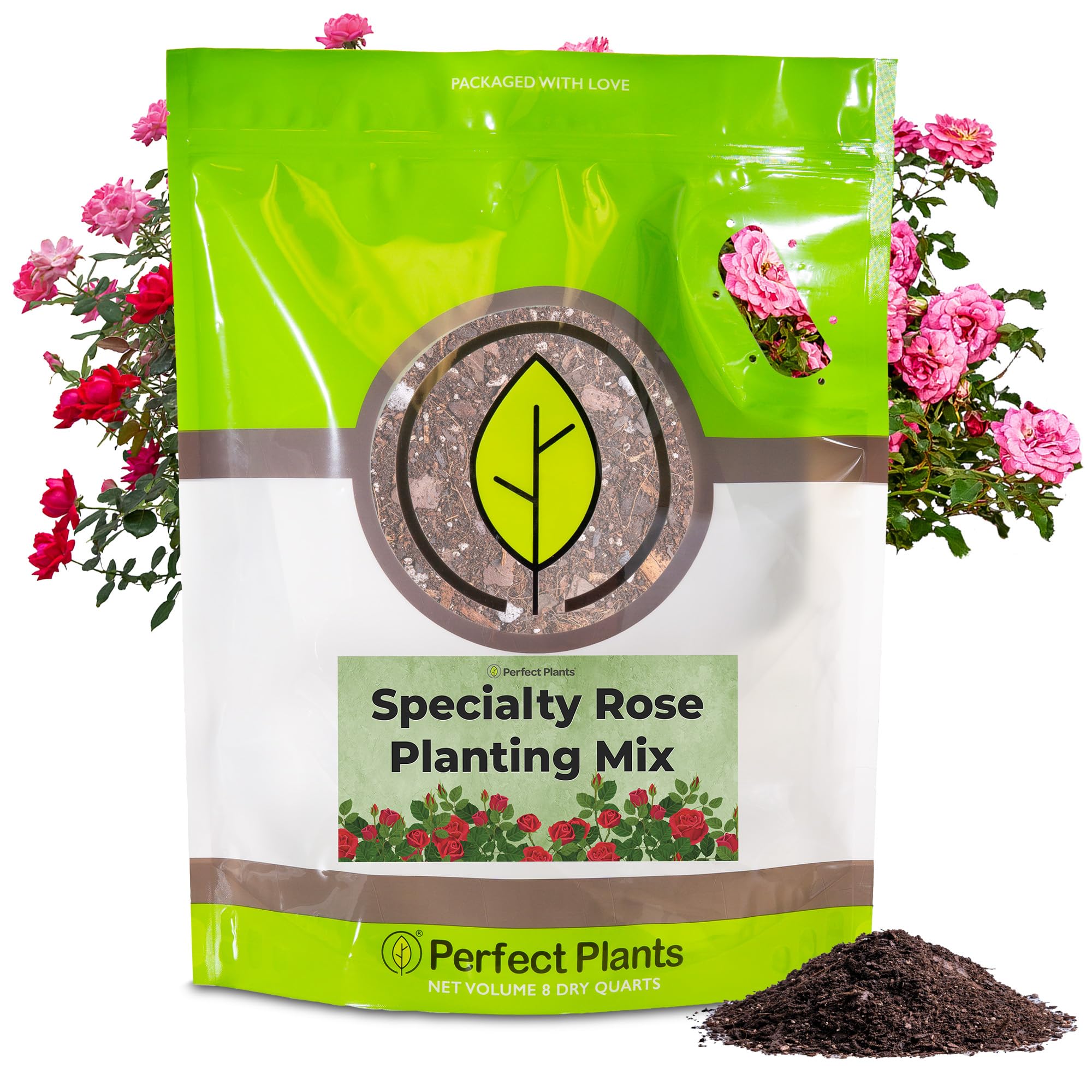
Twelve months of feeding in one bag — no fertilizing until next season.
This is the soil that does the thinking for you. The mix includes a pre-blended 18-6-8 slow-release granular fertilizer that slowly dissolves into the soil with every watering over the course of 12 months. That means you can plant your roses and not worry about adding more food for an entire year. Unlike the Coast of Maine options that leave feeding entirely up to you, the Perfect Plants mix has the nutrients already locked in.
Customers note that “new buds popping and flowers blooming” and that rose bushes “love this soil.” The 8-quart bag gives you enough volume for several large container roses or a small hedge of Knockouts. The blend uses composted pine bark and sand to create those air pockets roses need — so drainage stays sharp even through heavy rain.
Why this stands out
- 18-6-8 fertilizer lasts 12 months — set it and water
- Superior drainage from pine bark chunks and sand
- Hand-mixed in the USA on a family farm with 40+ years experience
Before you buy
- Only 8 quarts — big beds will need two bags
- The resealable bag keeps the mix fresh but the bag itself can be bulky to store
Best for busy growers: If you want to plant and forget the feeding schedule for a year, this is your bag.
Not for small pots: The 8-quart size might be too much for a single mini rose — grab the 4-quart version from the same brand instead.
4. Perfect Plants Rose Mix 4qt
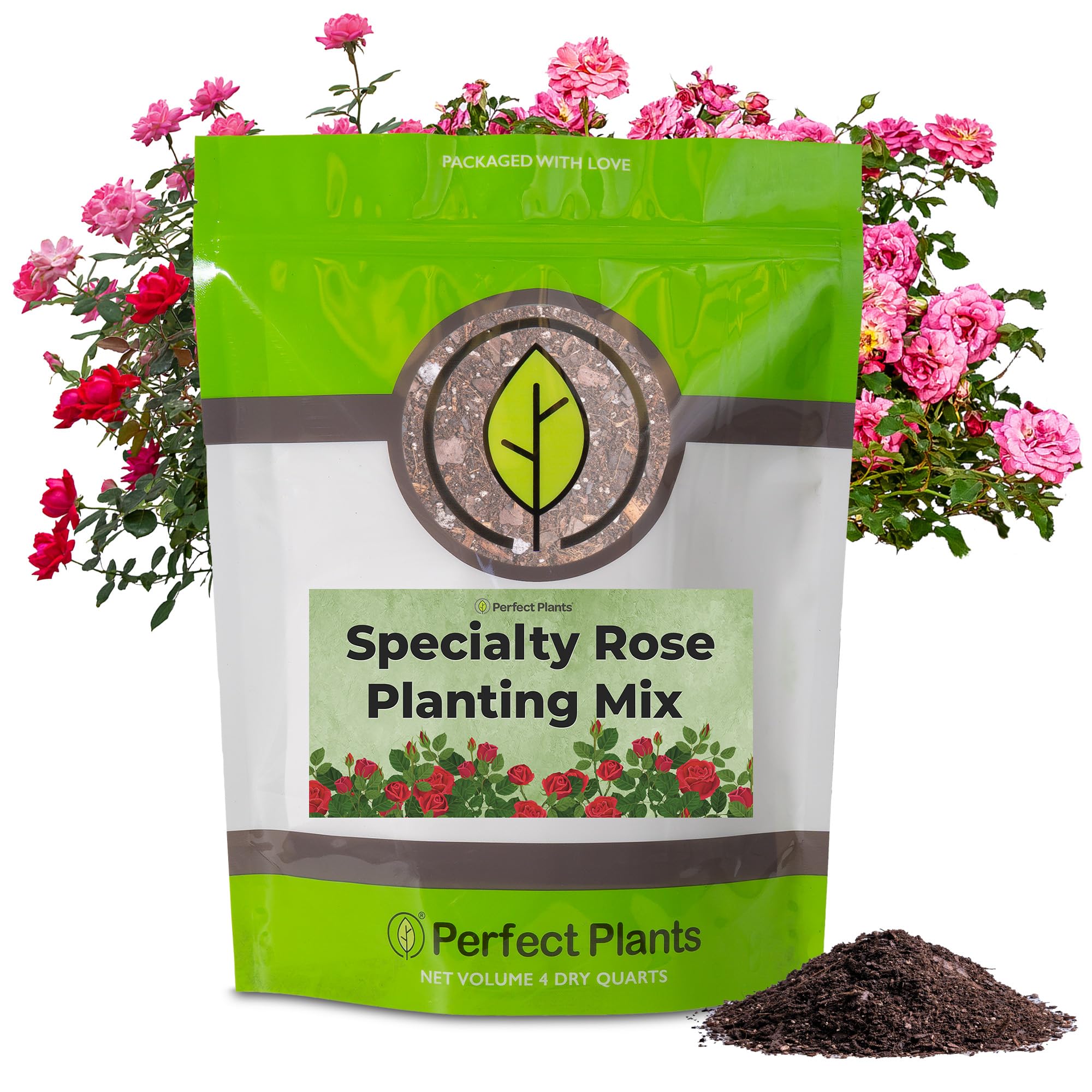
The same year-long feeding power, sized for a single container or mini rose.
This 4-quart bag gives you everything the 8-quart version has — the same 18-6-8 slow-release fertilizer (a blend of 18% nitrogen, 6% phosphorus, and 8% potassium that feeds roots gradually), the same composted pine bark and sand for drainage, the same family-farm USA mixing — but in a smaller package perfect for a single patio pot or repotting a couple of store-bought mini roses. One reviewer noted “I repotted two store bought mini roses using this soil and it worked beautifully.”
The resealable heavy-duty bag keeps the unused portion fresh if you only use half at a time. It is also the most affordable entry point into a soil that requires zero additional fertilization for a full year. Just be aware that if you have an entire rose bed, you will need multiple bags — at which point the 8-quart or the 20-quart Coast of Maine options become more economical.
Perfect for single pots: One bag fills a standard 10-inch rose pot with room to spare for top-dressing.
Budget-aware note: The per-quart cost is higher than the larger bags, so only buy this if you have a small project.
Reach for this if: You need fresh soil for one or two container roses and want the convenience of built-in slow-release fertilizer.
skip it if: You are filling a whole flower bed — grab the 8-quart or a 20-quart bag for way less per pint.
5. Omitgoter Rose Potting Soil 2qt
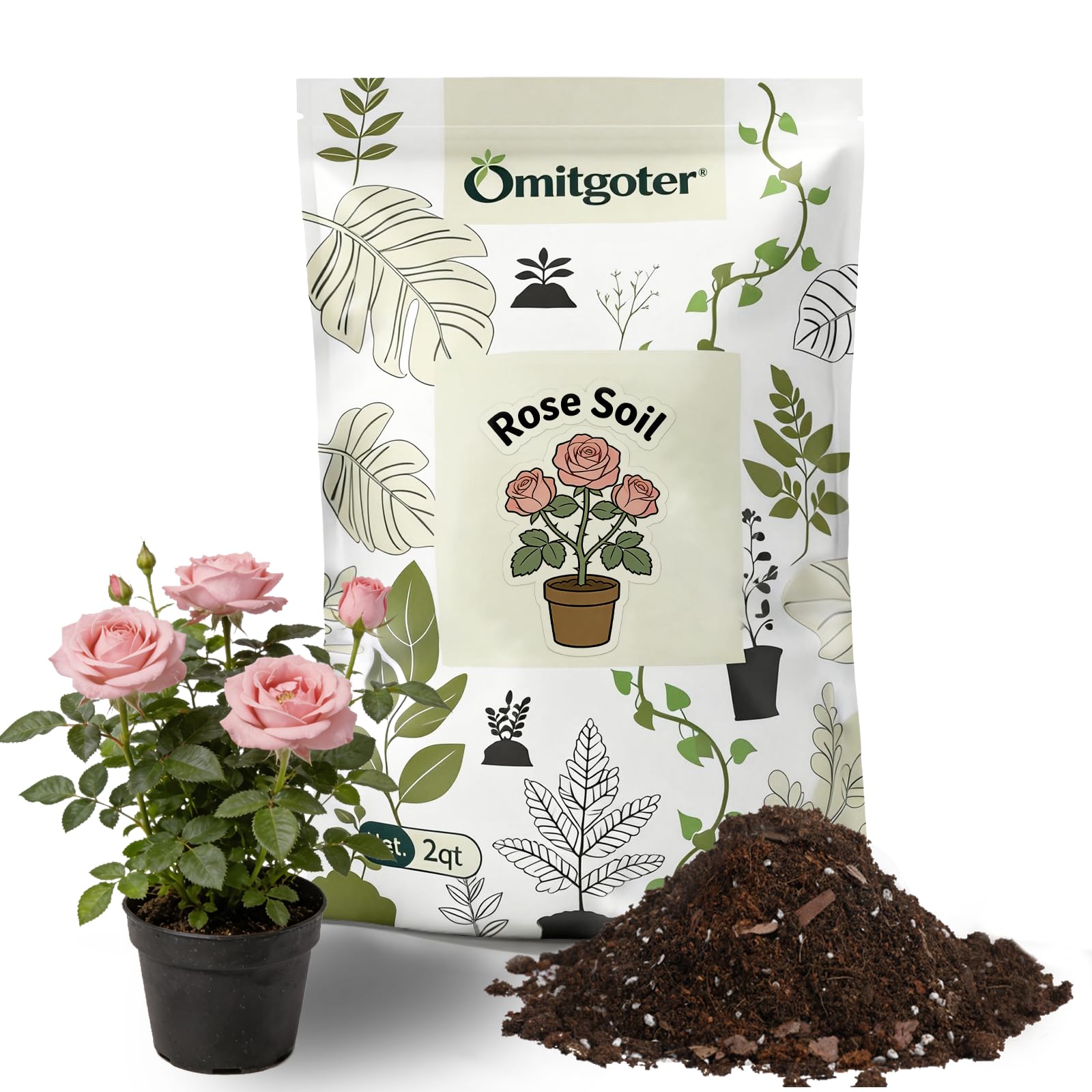
A tiny bag for a tiny job — no chemical additives, ready right out of the bag.
This 2-quart bag from Omitgoter is the smallest and most budget-friendly option here, designed for a single pot or for topping off an existing container. It uses 100% natural organic ingredients (peat, coconut coir, perlite, bark, and humus) with no chemical additives, so it is safe to use directly without mixing. The loose, lightweight texture comes from the coconut coir and perlite, which work together to prevent waterlogging — a common killer of indoor roses.
This is a good starting soil if you are new to roses and just want to try a single plant without investing in a larger bag. Unlike the Perfect Plants mixes, there is no slow-release fertilizer pre-mixed in, so you will need to feed your rose separately. Also, at only 2 quarts it is the smallest volume in this roundup — not a match for the 20-quart bags from Coast of Maine if you are planting a full bed.
Small but capable
- 100% natural organic ingredients — no chemicals
- Ready to use immediately with no mixing
- Lightweight and beginner-friendly
Real limits
- Only 2 quarts — fine for one small pot, not a garden bed
- No pre-mixed fertilizer — you must add plant food yourself
Best for a single project: Perfect for repotting one store-bought rose or starting your first container rose.
Not for serious beds: If you have multiple roses or a large planter, grab the larger options — the Perfect Plants 4qt or a Coast of Maine 20qt bag.
Understanding the Specs
Volume (Quarts)
A 2-quart bag fits a single small pot; a 4-quart bag handles one standard container rose; an 8-quart bag covers a few pots or a small hedge; a 20-quart bag fills a whole flower bed or several large containers. Pick the size that matches the number of roses you are planting today.
Slow-Release Fertilizer
Some soils mix in a granular fertilizer (like the 18-6-8 ratio) that feeds the plant over time — 12 months in the Perfect Plants mixes. Soils without it (like Coast of Maine) rely on the compost and manure to provide nutrients, and you add your own fertilizer separately. The right choice depends on whether you prefer set-and-forget or hands-on control.
Drainage Ingredients
Roses need air around their roots. Soils with coarse sand, composted pine bark, perlite, or coconut coir create the tiny air pockets that prevent waterlogging. Dense, heavy soils suffocate the roots and cause rot — look for bags that list perlite, bark, or sand near the top of the ingredient list.
Organic Certification
OMRI listing (Organic Materials Review Institute) means the product is approved for certified organic farming. If you avoid synthetic chemicals in your garden, look for this badge. The Coast of Maine bags carry it; the Perfect Plants mixes rely on natural ingredients but are not OMRI listed.
FAQ
Can I use regular potting soil for roses?
How much soil does one rose bush need?
What is the best pH for rose soil?
Does rose soil need fertilizer mixed in?
Is organic rose soil better than synthetic?
Can I use rose soil for other flowers?
How often should I replace rose soil?
Does rose soil expire in the bag?
Should I mix compost with rose soil?
What ingredients cause root rot in rose soil?
Final Thoughts: The Verdict
For most buyers, the soil for roses winner is the Coast of Maine Roses & Flowers 20qt because it gives you a huge bag of organic, rich, dark soil that drains beautifully and supports both containers and beds. If you want the convenience of a pre-mixed 12-month slow-release fertilizer, grab the Perfect Plants Rose Mix 8qt. And for a single pot or a first-time rose, the Perfect Plants Rose Mix 4qt delivers the same year-long feeding in a smaller, affordable size.
How We Picked
We do not accept paid placement. Every pick is matched to a real buyer and a real use-case; we do not hands-on test units.
Sources & Methodology
Specifications: manufacturer listings and product documentation. Review insights: verified customer reviews, as of July 2026. Pricing: not shown on this page (it changes often); check the current price via the retailer link.
As an Amazon Associate, Lawn Gear Lab earns from qualifying purchases. This does not affect which products we feature.