
Specs are compiled from manufacturer listings and verified buyer reviews and can change over time — please confirm the key details on the product page before buying.
Regular garden soil is too heavy and dense for tender new cuttings — it traps moisture, suffocates the stem, and rots the roots before they form. What your cuttings actually need is a lightweight, airy, well-draining mix that holds just enough water without getting soggy. This guide walks you through the best options for getting those roots going fast.
I’m Rikta — the founder and writer behind Lawn Gear Lab. This guide is built by comparing the manufacturers’ published specifications and the patterns across verified customer reviews, so you get each pick’s real strengths and trade-offs instead of marketing spin.
Whether you are rooting a single houseplant cutting or starting a tray of vegetable seeds, picking the right medium makes the difference between a wilting stem and a thriving new plant — here is exactly what sets each soil for propagating cuttings apart.
Our Picks at a Glance

How To Choose The Best Soil For Propagating Cuttings
Propagation mixes are different from standard potting soils because the goal is root development, not sustained growth. You want a medium that stays fluffy, drains quickly, and holds a little moisture without getting heavy or compacted. Here are the key factors to check before you buy.
Texture and Aeration
The mix needs to be loose and porous so oxygen can reach the new root tips. Ingredients like perlite, vermiculite, and coco coir create air pockets that prevent soil compaction and encourage roots to spread. A mix that feels dense or clumpy in the bag will likely suffocate your cutting.
Moisture Retention Without Sogginess
Cuttings need consistent moisture to trigger root growth, but standing water rots the stem. The best propagation soils use peat moss or coco coir to hold water while perlite or rice hull charcoal helps excess water drain away. Look for blends that mention both retention and drainage directly in the description.
Soilless vs. Potting Mix
A soilless mix — meaning no actual dirt, just peat, coir, perlite, and vermiculite — is lighter and more sterile than potting soil. It reduces the risk of mold, pests, and fertilizer burn on a cutting that has no roots yet to absorb nutrients. Most propagation specialists prefer soilless blends for the first few weeks.
Quick Comparison
| Model | Best For | Volume | Key Ingredients | Weight | Amazon |
|---|---|---|---|---|---|
| Jiffy Natural & Organic Seed Starting Mix★ Best Overall | Germinating seeds and transplanting seedlings | 10 Quarts | Peat moss, vermiculite, lime | — | Amazon |
| Soil Sunrise Plant Propagation MixAlso Great | Rooting a variety of houseplant cuttings | 4 Quarts | Peat moss, perlite, worm castings, lime | — | Amazon |
| Bigmeta Coco Coir Perlite Mix | Potting indoor plants with extra aeration | 10 Quarts | Coco coir, perlite | — | Amazon |
| Avalution Potting Soil Mix | Reviving stressed plants and general repotting | 9 Quarts | Coco coir fiber, peat moss, perlite, vermiculite, rice hull charcoal | — | Amazon |
| Rio Hamza Trading Planting Mix | Propagation from rose and woody stem cuttings | 4 Quarts | Soilless blend | 2.2 Pounds | Amazon |
| Duspro Seed Starter Potting Soil Mix | Peat-free seed starting in trays | 8 Dry Quarts | Coco coir, perlite, vermiculite, worm castings | — | Amazon |
| Soil Sunrise Coco Peat Perlite Mix | All-natural propagation and container gardening | 4 Quarts | Coco coir, perlite | — | Amazon |
In‑Depth Reviews
1. Jiffy Natural & Organic Seed Starting Soil Mix, 10 QT
Our pick — over 4.5★ from 800+ verified ratings; the strongest balance of quality and price.
The go-to bag for gardeners who want massive volume and consistent germination.
At 10 quarts, this Jiffy mix offers 10 quarts of volume, compared to the Soil Sunrise Propagation Mix’s 4 quarts, making it the clear choice if you are starting a full seed tray or dozens of cuttings at once. It uses peat moss and vermiculite — vermiculite can soak up 3-4x its volume in water, giving you a buffer so the mix does not dry out before roots form. The lime keeps the pH balanced, and the fine texture means seeds stay in good contact with the medium.
Owners mention “an excellent germination rate” with seedlings that “look quite healthy,” and customers note the mix “holds together without compacting hard” when moving sprouts to bigger pots. It does not contain perlite, so if you prefer extra drainage on top of the vermiculite, you can add a handful yourself. This is a straightforward, proven starter mix that has earned its 4.6 rating across over 800 reviews.
Why it stands out
- 10-quart bag offers a full 10 quarts of mix, which is a generous volume for propagation
- Vermiculite soaks up 3-4x its volume, keeping the mix consistently moist
- Fine texture ensures good seed-to-soil contact for high germination rates
The catch
- No perlite included — you may want to add some for extra aeration on woody cuttings
Best for: seed starting and large propagation projects where volume and consistent moisture matter more than specialty additives.
skip it if: you prefer a peat-free blend or need perlite already mixed in for heavy-drainage situations.
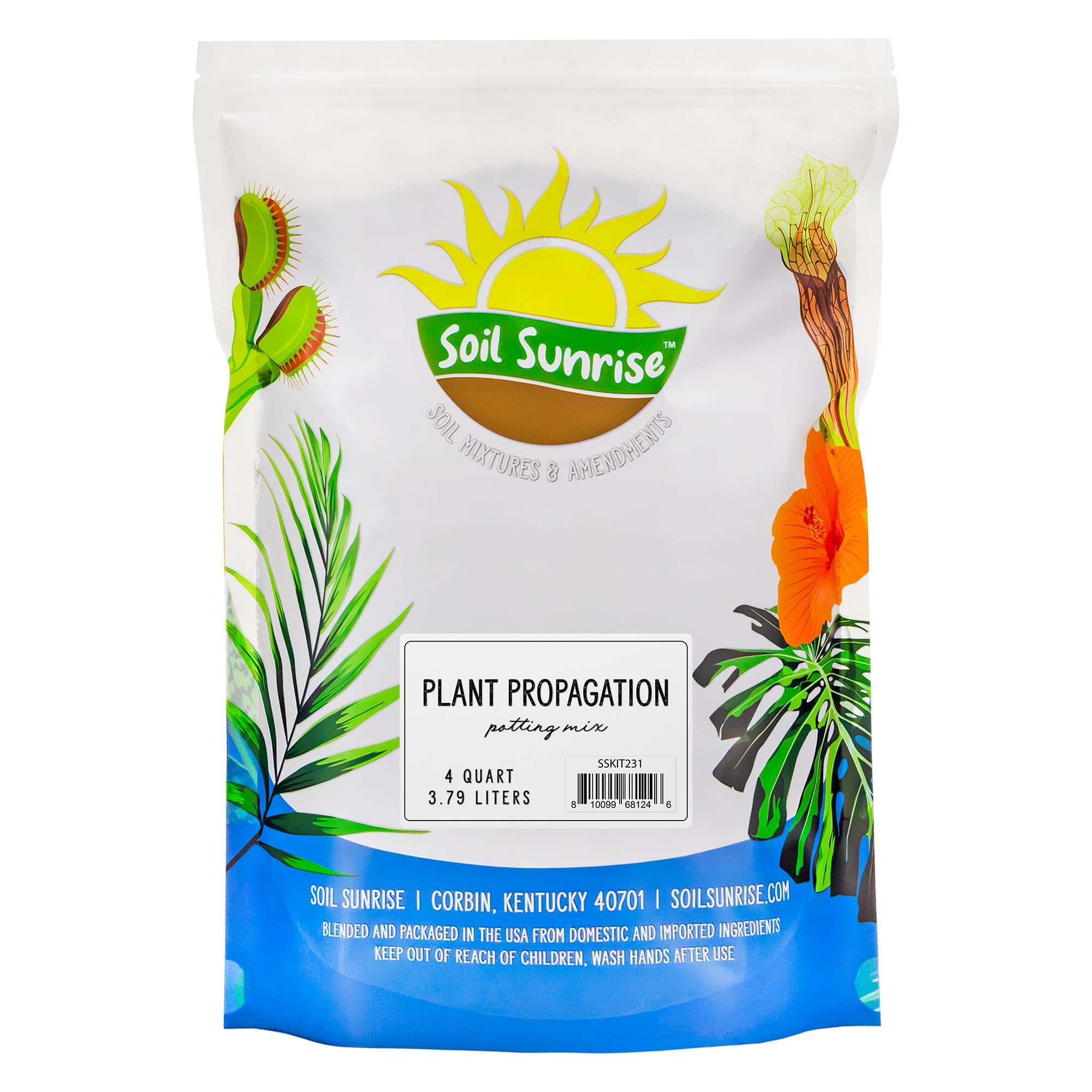
2. Soil Sunrise Plant Propagation Potting Mix (4 Quarts)
A carefully balanced four-ingredient blend that roots almost anything you stick in it.
This mix skips the guesswork by combining peat moss, perlite, worm castings, and lime for pH balance right out of the bag. The perlite keeps the structure open so oxygen reaches the stem, while the worm castings provide a gentle nutrient boost that a fresh cutting can actually use — no risk of fertilizer burn. Its 4-quart size is a convenient 1-gallon volume, ideal for a handful of pots or a small propagation station.
Buyers report that it is “light, airy, retains moisture well” and call it “excellent for rooting aquatic and houseplant cuttings.” One reviewer noted they could “root a rock in it” — proof of how consistently the blend supports root growth. For anyone propagating a mix of houseplants and tropical varieties, this pick delivers the balance of drainage and moisture that cuttings need most.
What stands out
- Peat moss and perlite keep the texture fluffy for root aeration
- Added worm castings provide nutrients without being harsh on new roots
- pH-balanced with lime so you do not need to adjust it yourself
The trade-off
- At 4 quarts, you will need multiple bags for large seed-starting trays
Reach for this if: you want a ready-to-use, gentle propagation mix that works for a wide range of houseplant cuttings without any extra additives.
Look elsewhere if: you are sowing a large tray of seeds and need a bigger volume for the same price point.
3. Bigmeta Coco Coir Perlite Mix, 10 Quarts

A pure two-ingredient blend that boost airflow and drainage for sensitive roots.
This mix strips it down to just coco coir and perlite — 70% coco coir for moisture retention and 30% perlite for drainage and aeration. It is 100% natural with no added fertilizers or chemicals, so you have full control over what your cutting gets. The loose, fluffy texture means you can fluff it right out of the bag and use it immediately in pots or containers, and the organic nature makes it a go-to for growers who avoid peat moss.
Reviewers point out it is “perfect for new plants to hold the moisture” and one buyer described it as “very airy.” One owner was surprised to find a small rock in the bag, but overall feedback points to consistent quality. The 10-quart volume matches the Jiffy bag in size, giving you plenty of medium for both propagation and general potting of houseplants that need good drainage.
Key strengths
- 70/30 coco coir to perlite ratio gives a very open, fluffy texture
- No peat moss — eco-friendly and renewable ingredient choice
- Large 10-quart bag works for propagation and repotting alike
Downside
- No added nutrients or pH balancers — you are on your own for feeding
Reach for this if: you want a peat-free, chemical-free base medium that you can customize with your own amendments.
Look elsewhere if: you prefer a blend with worm castings or lime already included for beginner-friendly results.
4. Avalution Potting Soil Mix, 9QT
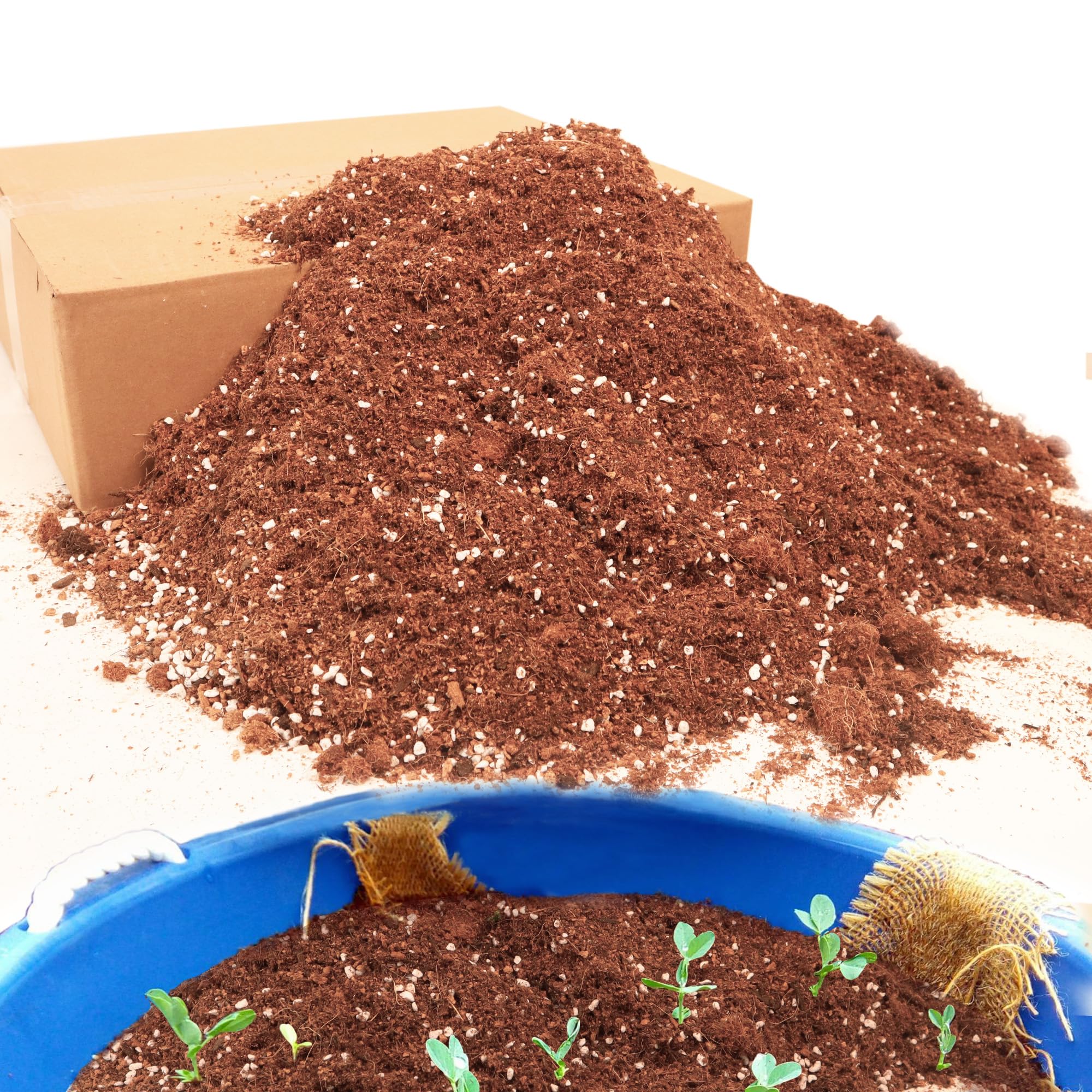
A five-ingredient powerhouse that rescues struggling plants as easily as it starts new ones.
Avalution uses a scientific blend of 55% coconut coir fiber, 12% peat moss, 11% perlite, 11% vermiculite, and 11% rice hull charcoal. The rice hull charcoal is the standout ingredient here — it adds porosity and helps regulate moisture without breaking down quickly. The mix is described as lightweight, well-draining, and effective for a huge range of plants including succulents, ferns, vegetables, and houseplants.
One buyer shared a convincing story: after a plant withered from sunburn and the old soil let water run right through, they repotted it with this mix. “The water didn’t run right through, and I’m not kidding, my little plant bounced back literally overnight!” they wrote. Other reviewers call it “the best plain peat/perlite mix for all around use” and praise its soft, airy texture. The 9-quart bag gives you nearly the same volume as the Jiffy bag, but with a more diverse ingredient list.
Strong points
- Five-ingredient blend covers drainage, aeration, and moisture retention
- Rice hull charcoal adds long-lasting porosity that does not compact
- Works for a wide range of plant types from succulents to vegetable starts
Weak point
- This is technically a potting mix, not a soilless propagation mix — some growers prefer a simpler blend for cuttings
Best for: the indoor gardener who wants one bag that handles propagation, repotting, and reviving plants all at once.
pass on it if: you strictly want a soilless medium with no nutrient content for the earliest rooting stage.
5. Rio Hamza Trading Planting Mix for Plant Propagation (4 Quarts)
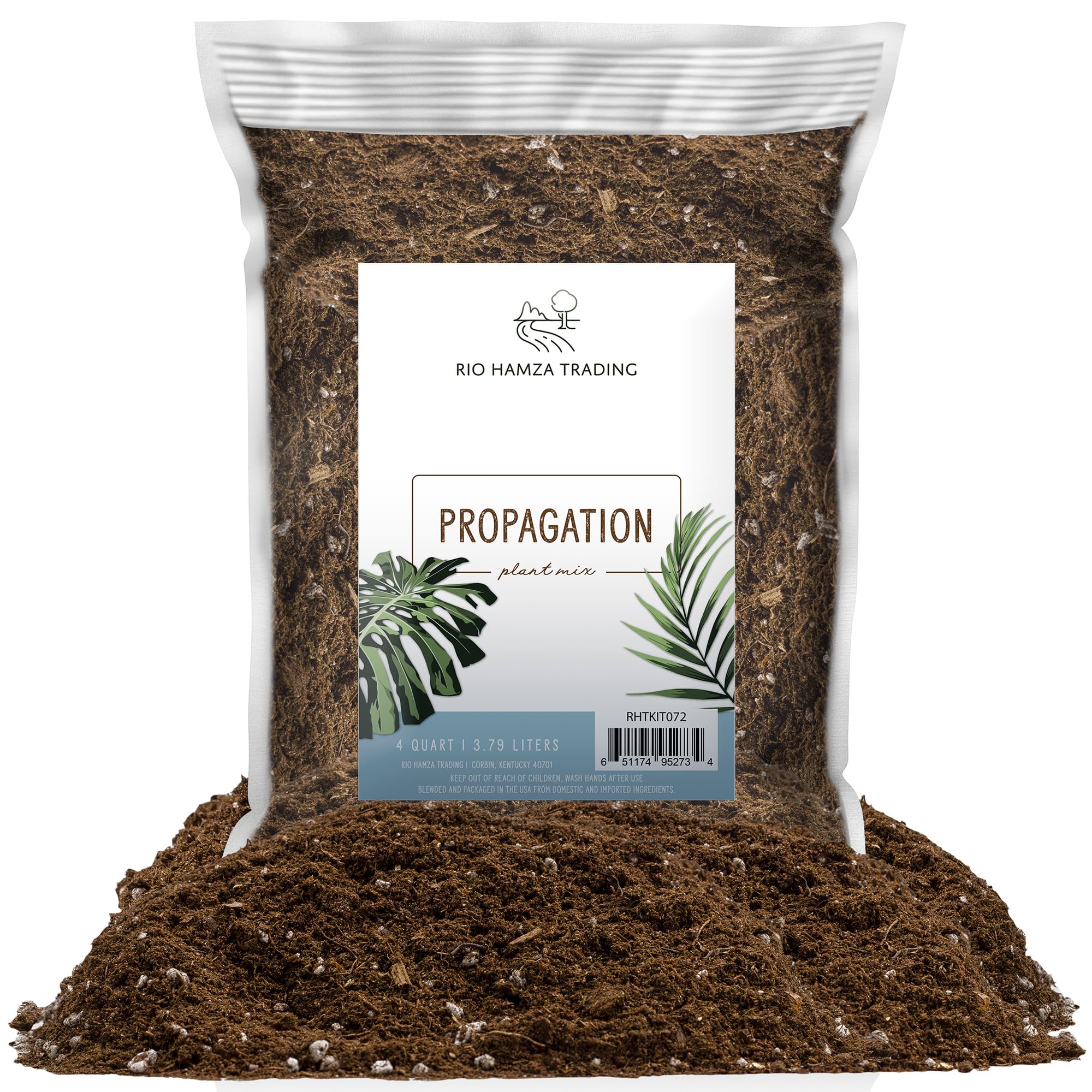
The hand-blended soilless mix that turned rose cuttings into three new plants for one buyer.
This hand-blended soilless mix comes in at 2.2 pounds, because the ingredients pack together without large bark chunks. Reviewers love it for woody stem cuttings like roses: one buyer mentioned, “I used this planting mix to put some of my rose cuttings in. I now have 3 new rose plants!” Another gardener noted it worked beautifully for tomato plants compared to a different brand.
The lightweight composition (as described by the maker) keeps handling easy during delicate propagation, and the fine texture helps cuttings stay upright. The soilless base also means you can use it for succulents and tropical plants without worrying about excess fertilizer. At 4 quarts, it is a targeted buy for propagation work rather than large-scale potting.
What works
- Fine, soilless texture is ideal for rose and woody stem cuttings
- 2.2-pound weight suggests a denser blend that supports taller cuttings
- No pre-added fertilizer — you control feeding
What to consider
- Smaller 4-quart volume compared to the value-focused 10-quart bags
Reach for this if: you are trying to propagate woody ornamentals like roses or fig tree cuttings and want a proven soilless base.
Look elsewhere if: you need a bulk bag for starting dozens of seedlings on a budget.
6. Duspro Seed Starter Potting Soil Mix, 8 Dry Quarts
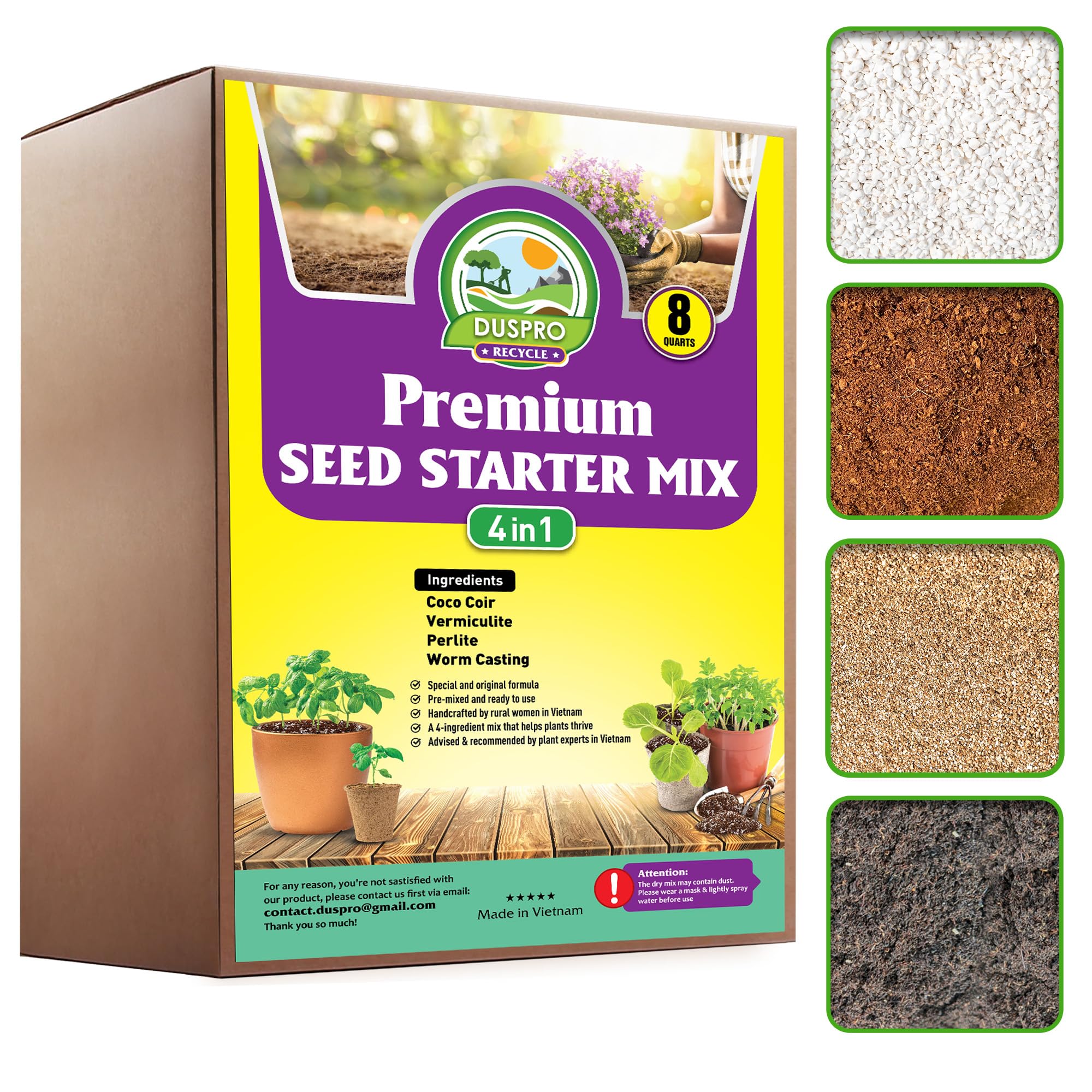
A peat-free coco coir blend that skips the moss without sacrificing moisture control.
Made for gardeners who want to avoid peat moss, this Duspro mix combines coco coir, perlite, vermiculite, and worm castings into an 8 dry quart bag. The hand-screened texture is fine enough for seed trays — it helps seeds stay in contact with the medium while supporting drainage and airflow. The worm castings offer gentle nutrition, similar to the Soil Sunrise Propagation Mix, so young seedlings get a small feeding without the burn risk of chemical fertilizers.
Shoppers say it provides “perfect moisture transfer and aeration for wick-watered seed starting trays” and call it their “new go-to for starting seeds.” One owner reported that some seeds did not sprout, but the overall feedback points to healthy, fast root development. The 8-quart size sits between the 4-quart and 10-quart bags, making it a practical middle-ground volume for home propagators.
Why it is different
- No peat moss — uses coco coir as the primary moisture-holding ingredient
- Fine, hand-screened texture improves seed-to-soil contact in trays
- Worm castings provide gentle nutrients without chemical additives
The limitation
- Newer product with fewer total reviews compared to established brands
Best for: seed starting enthusiasts who want a peat-free alternative that still holds moisture well and provides light nutrition.
it’s not for you if: you prefer a traditional peat-moss-based mix that has been proven over thousands of reviews.
7. Soil Sunrise Coco Peat Perlite Potting Mix (4 Quarts)
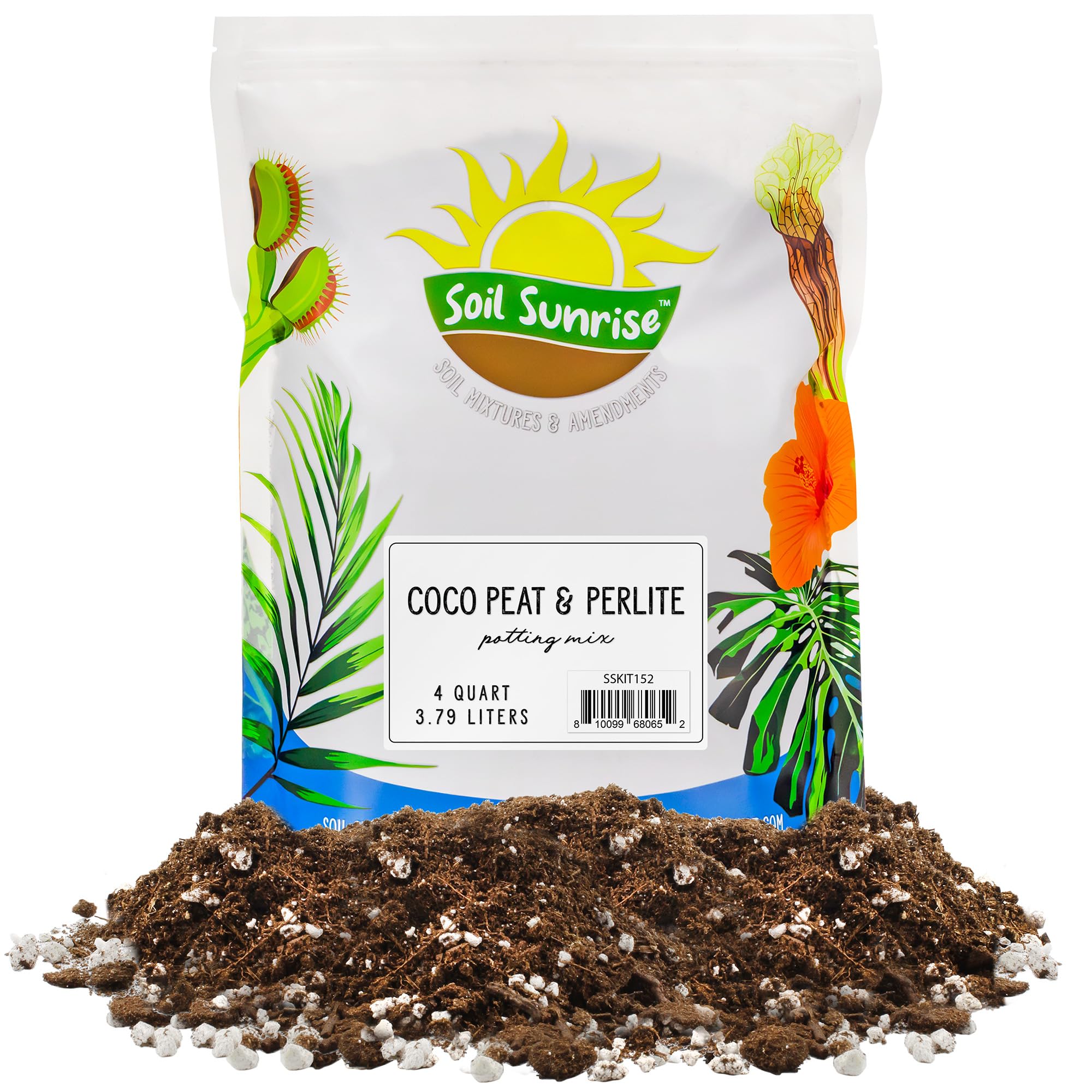
A clean two-part mix with no additives — just coco coir and perlite working together.
This Soil Sunrise blend is similar to the Bigmeta mix, combining coco coir and perlite for a simple, chemical-free propagation medium. It is described as 100% natural with no additives or chemicals, making it a more eco-friendly alternative to peat moss. Because it has no added fertilizers, it is a blank slate — you can use it as-is for succulents, mix it into heavier soil to improve aeration, or use it straight for seed starting.
Buyers call it “great well-draining soilless potting medium” and report using it for months as their favorite mix. One customer observed the bags are resealable but transferred the mix to a sturdier container. The 4-quart bag matches the size of the Soil Sunrise Propagation Mix, but this version skips the worm castings and lime — so it is a purer base medium for anyone who wants to customize their own nutrient and pH balance.
Strong suit
- No chemicals or additives — pure coco coir and perlite
- Resealable packaging keeps the mix moist between uses
- Versatile: works for propagation, container gardening, and as a soil additive
Notable gap
- No pH balancer or nutrients — you will need to monitor pH for sensitive plants
Reach for this if: you want a simple, eco-friendly coco coir base that gives you full control over what goes into your soil mix.
Look elsewhere if: you prefer a ready-to-use blend with worm castings and pH adjustment already handled for you.
Understanding the Specs
Peat Moss vs. Coco Coir
Both hold moisture well, but peat moss can absorb up to 20x its own weight in water and helps retain nutrients for the plant. Coco coir is a renewable alternative that does not compact as much over time and rehydrates more easily when dry. If you care about sustainability, coco coir is the greener choice; if you want maximum water-holding capacity, peat moss takes the lead.
Perlite and Vermiculite
Perlite is the white, popcorn-like material that improves drainage and aeration — water flows through it, so roots never sit in soggy soil. Vermiculite looks like shiny golden flakes and soaks up 3-4x its volume in water, releasing it slowly as the mix dries. A propagation blend with both gives you drainage from perlite and a moisture buffer from vermiculite, which is a great combination for cuttings that need consistent humidity.
Worm Castings
Worm castings are a gentle, natural source of nutrients that do not burn tender roots like chemical fertilizers can. In a propagation mix, they give the cutting a small food supply once the first roots appear, so you do not have to add fertilizer during the critical early weeks. Blends that include worm castings are slightly more “complete” than bare coir-and-perlite mixes.
Surface Moisture and Aeration
A propagation medium needs to stay damp on the surface so the cutting does not dry out, but it also needs air pockets so oxygen reaches the stem. The best mixes manage both: the fine fibers (peat or coir) hold surface moisture while the perlite, rice hull charcoal, or vermiculite create spaces for air movement. A mix that dries out on top too quickly will stress the cutting; one that stays soggy will rot it.
FAQ
Can I use regular potting soil for propagating cuttings?
How does vermiculite help cuttings compared to perlite?
Can I reuse propagation soil for another batch of cuttings?
What is the best soil for rooting rose cuttings specifically?
How often should I water cuttings in a propagation mix?
Do I need to add fertilizer to my propagation mix?
What makes coco coir better than peat moss for propagation?
How long does it take for cuttings to root in a soilless mix?
Can I use a seed-starting mix for plant cuttings or only for seeds?
Why does my propagation soil smell bad after a few days?
Final Thoughts: The Verdict
For most buyers, the soil for propagating cuttings winner is the Soil Sunrise Plant Propagation Potting Mix because it combines peat moss, perlite, worm castings, and lime into a single balanced bag that supports both houseplant cuttings and tropical varieties from day one. If you want maximum volume for starting a tray of seeds, grab the Jiffy Natural & Organic Seed Starting Mix. And for a no-fuss peat-free option that gives you total control over feeding, the Bigmeta Coco Coir Perlite Mix is the cleanest base you can buy.
How We Picked
We do not accept paid placement. Every pick is matched to a real buyer and a real use-case; we do not hands-on test units.
Sources & Methodology
Specifications: manufacturer listings and product documentation. Review insights: verified customer reviews, as of July 2026. Pricing: not shown on this page (it changes often); check the current price via the retailer link.
As an Amazon Associate, Lawn Gear Lab earns from qualifying purchases. This does not affect which products we feature.