
Specs are compiled from manufacturer listings and verified buyer reviews and can change over time — please confirm the key details on the product page before buying.
If your pothos has yellowing leaves, mushy stems, or simply refuses to grow, the issue is almost certainly what it is sitting in. Standard potting soil holds too much water for these tropical vines, slowly drowning the roots. What you actually need is a chunky, fast-draining mix — something that lets air reach the roots and water pass through freely.
I’m Rikta — the founder and writer behind Lawn Gear Lab. This guide is built by comparing the manufacturers’ published specifications and the patterns across verified customer reviews, so you get each pick’s real strengths and trade-offs instead of marketing spin.
The right soil for pothos is not just dirt in a bag — it is a carefully blended mix of bark, coco coir, perlite, and pumice that mimics the plant’s natural rainforest floor.
Quick Picks
- Perfect Plants Organic Pothos Soil — Best Overall
- DUSPRO Tropical Potting Mix Pre-Mixed 5in1 — Best Value
- Craft Aroid Potting Mix (Grow Queen) — Best Chunky Blend
- Noot Potting Soil Mix for Indoor & House — Fastest Growth
- rePotme Pothos/Ivy Potting Soil — Premium Single Pot
- Sol Soils Houseplant Chunky Mix — Eco-Conscious Choice
- Forbidden Cereal Aroid Potting Mix — Top-End Chunky
How To Choose The Best Soil For Pothos
Not every bag in the garden center is built for a pothos. Here are the three factors that separate a soil that helps your plant thrive from one that slowly harms it.
Drainage and Aeration
Pothos roots need oxygen. A mix that stays soggy for days cuts off that air supply. Look for ingredients like pine bark, perlite, pumice, and lava rock — they create pockets of air that let the roots breathe. A “chunky” texture is a good sign the mix drains fast enough for a pothos.
Moisture Retention
You still want the soil to hold some water, just not too much. Coco coir is the ingredient that strikes this balance well — it absorbs water without getting heavy or waterlogged. Peat moss does the same job but is harder on the environment to harvest. Many premium mixes now go peat-free and use coco coir instead.
Nutrient Content
Pothos are not heavy feeders, but they still need some nutrition. Worm castings are a gentle, natural fertilizer that many good aroid mixes include. Some mixes come pre-loaded with organic plant food, which can jump-start growth right after repotting. Avoid soils that require you to add fertilizer separately unless that fits your routine.
Quick Comparison
| Model | Best For | Volume | Key Ingredient | Texture | Amazon |
|---|---|---|---|---|---|
| Perfect Plants Organic Pothos Soil | Best Overall Pothos Mix | 8 Quarts | Pine bark, coco coir | Coarse | Amazon |
| DUSPRO Tropical Potting Mix 5in1 | Best Value for Multiple Pots | 8 Quarts | Pine bark, coco coir, pumice | Loose and airy | Amazon |
| Craft Aroid Potting Mix (Grow Queen) | Best Chunky Aroid Blend | 1 Quart | Douglas fir bark, pumice, lava rock | Very chunky | Amazon |
| Noot Potting Soil Mix | Best for Quick Root Growth | 1 Gallon | Coconut chips, coarse perlite | Airy, pre-soaked | Amazon |
| rePotme Pothos/Ivy Potting Soil | Premium Quality for Single Pots | 4 Quarts | Bark chips, peat, roots | Lightweight | Amazon |
| Sol Soils Houseplant Chunky Mix | Eco-Friendly Pick | 1 Gallon | Coco coir, husk chips, LECA | Chunky and dry | Amazon |
| Forbidden Cereal Aroid Potting Mix | Top-End Professional Mix | 7.1 Liters | Douglas fir bark, coco coir, LECA | Super chunky | Amazon |
In‑Depth Reviews
1. Perfect Plants Organic Pothos Soil
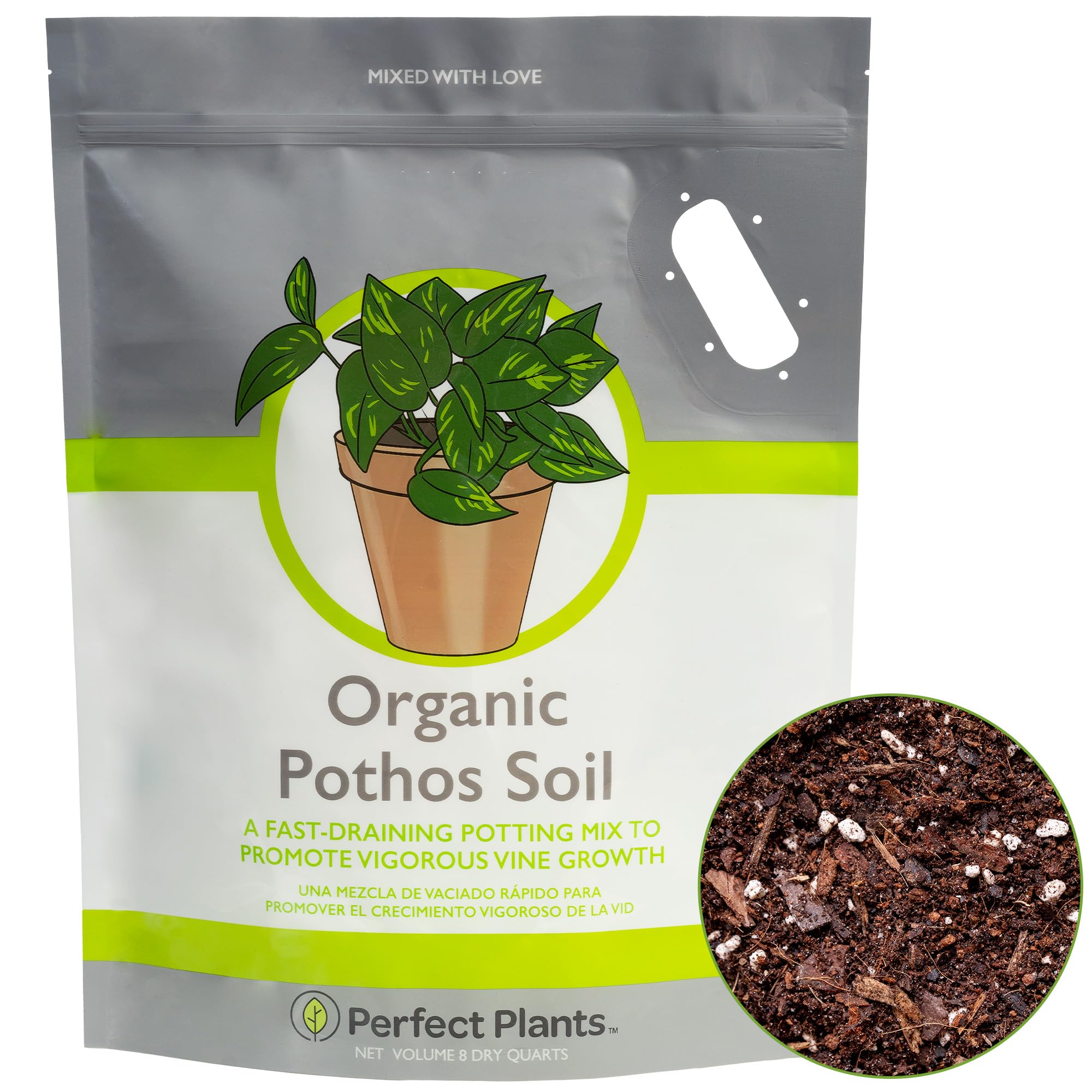
The bag designed specifically for pothos, with the volume to fill several pots.
This mix is built around a farmer-grade recipe: pine bark, perlite, coconut coir, sand, and garden lime. The coarse texture drains water away from the roots efficiently — exactly what a pothos needs. At 8 Quarts, you get more than enough to repot several plants or one large hanging basket, and the bag costs less than many 2-quart boutique blends.
Buyers report that a golden pothos transplanted two months ago “is now doing amazingly well,” which matches the general feedback that this soil helps plants perk up quickly after repotting. The coco base handles moisture without getting heavy, and the added sand provides extra drainage weight. One reviewer even noted the soil grew a mushroom — a sign that the organic life inside it is genuinely active.
The main trade-off is that this is a pre-mixed blend, so you cannot customize the chunkiness. Some growers who prefer an extremely airy, bark-heavy mix may want to stir in extra perlite or orchid bark. For the vast majority of pothos owners, though, this is the right balance of performance and value.
organic pothos specialist: A ready-to-go mix with proven results for pothos at a fair price per quart.
pothos perfectionist: you want a single bag that works for multiple pothos plants without any extra mixing or amendments.
budget buyer: you need an ultra-chunky, bark-heavy aroid mix for fussy tropicals that demand maximum aeration.
2. DUSPRO Tropical Potting Mix Pre-Mixed 5in1
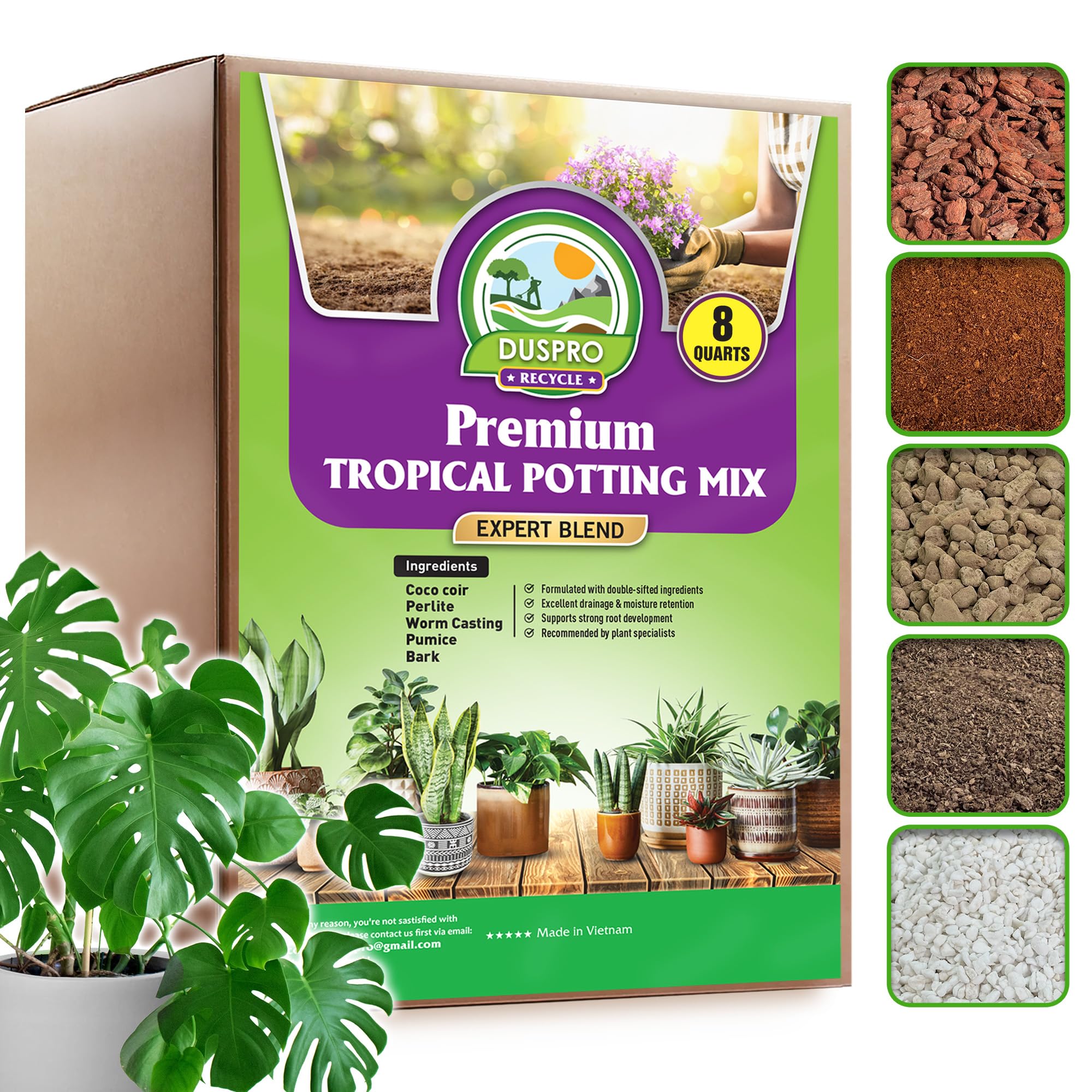
Five premium ingredients pre-blended into an airy mix that prevents waterlogging.
The DUSPRO combines pine bark, coco coir, perlite, worm castings, and pumice — a powerful lineup for pothos. The pumice is the standout here: it creates large pore spaces so excess water flows out freely, while the coco coir holds just enough moisture to keep the roots from drying out between waterings. One reviewer noted their monstera shot out a huge leaf after repotting, and that is the kind of reaction you want from a pothos too.
It comes in an 8-quart bag, matching the Perfect Plants mix on volume. A few owners mention the texture can be quite dusty when dry, which creates a bit of mess during potting. The consensus remains positive — customers describe it as nutrient-dense, easy to work with, and good at deterring mold and fungus. This is a strong alternative if you want the worm-casting nutrition boost without the higher price tag of boutique brands.
value tropical mix: A rich, multi-ingredient mix that gives you everything in one bag.
volume shopper: you want worm castings included and a large bag for repotting several plants at once.
custom blender: you dislike dusty texture and prefer a mix that is moist out of the bag.
3. Craft Aroid Potting Mix (Grow Queen)
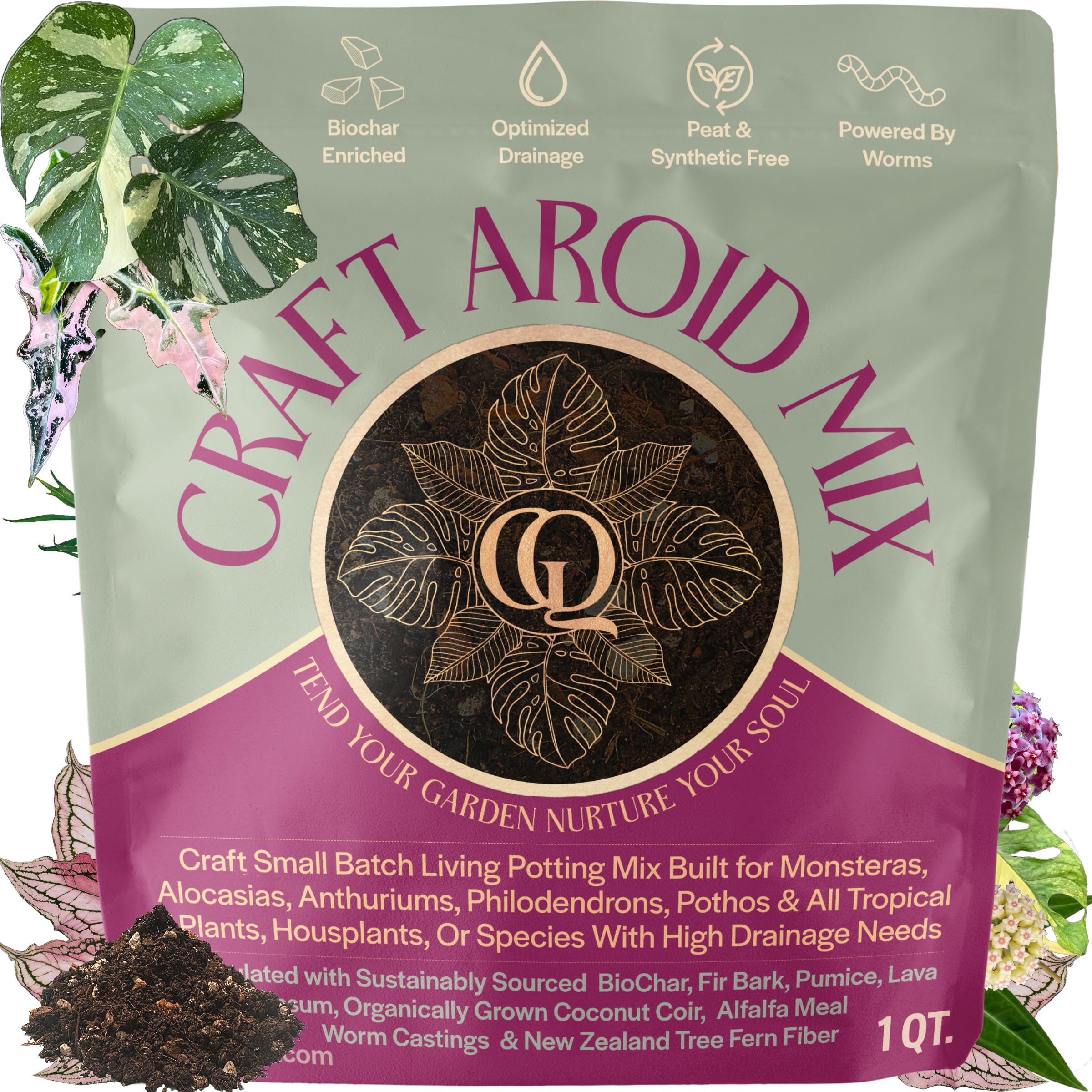
The most innovative ingredient list, swapping perlite for eco-friendly pumice and lava rock.
Grow Queen skips peat and perlite entirely, using Douglas fir bark fines, lava rock, and pumice instead. The result is a noticeably chunky mix where water runs straight through — almost impossible to overwater. It also includes New Zealand tree fern fiber, which the brand says neutralizes pH to 6.0 and mimics the natural soil of tropical plants. If your pothos has ever suffered from soggy feet, this mix is the cure.
The catch is size. At 1 Quart, this bag is best for a single 6-inch pot or smaller. Several buyers confirm it works wonderfully for small aroids but warn that for larger plants, it “retains too much moisture, causing root rot after two months.” That seems counterintuitive for such a chunky mix — likely the coco coir component holds extra water in larger volumes. Stick with this for small pots or as a base to mix into other soils.
ingredient-focused aroid: Sustainable, peat-free, and built for aeration — just be mindful of pot size.
ingredient nerd: you have small pothos plants or want to experiment with a perlite-free, volcanic-rock-based mix.
cost cutter: you are repotting a large, mature pothos in a pot larger than 6 inches.
4. Noot Potting Soil Mix for Indoor & House Plants
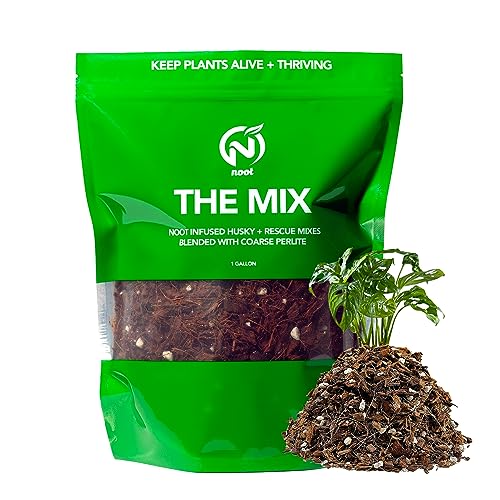
Comes pre-moistened and packed with nutrients so your pothos starts growing immediately.
Noot arrives pre-soaked with a Bio-Organic Plant Food formula (NPK.10/.15/.12) and a blend of 16 strains of beneficial bacteria and fungi. This means you repot and the roots get immediate access to food and microbial support — no waiting for the soil ecology to build up. The mix itself is a combination of larger coconut chips, fibers, low coco coir, and coarse perlite that creates excellent airflow.
Reviewers consistently praise how fast roots grow, though the main complaint is the high price paired with the small bag size — at 1 Gallon, you will not cover many pots. One buyer mentioned the mix is a bit moist and could attract gnats, so be cautious if you already have an issue with flying pests. For a single treasured pothos you want to push into vigorous growth, this is a strong candidate. It does cost more per quart than the Perfect Plants or DUSPRO options.
ready biology boost: A bio-active mix with potent root-boosting ingredients, but it is a premium investment per pot.
instant user: you want the fastest possible root development and do not mind paying extra for a single pot.
lightweight seeker: you are on a budget or need to repot several plants at once.
5. rePotme Pothos/Ivy Potting Soil for Indoor Plants
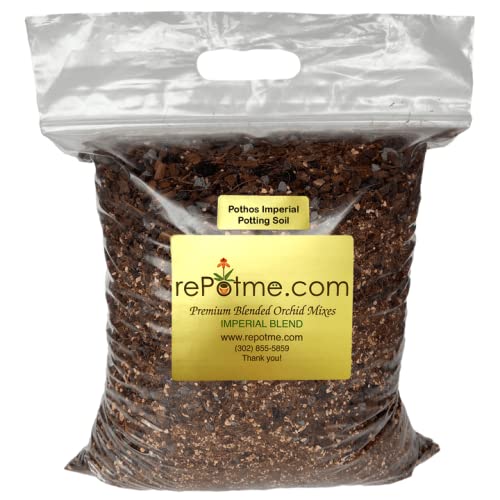
Handcrafted in small batches and used by major botanical gardens — a statement of quality.
rePotme mixes are made fresh every day and used by some of the largest conservatories and botanic gardens in the world. This Pothos/Ivy blend comes in a resealable pouch, making it convenient to store in an apartment. It contains bark chips, roots, and peat, and stays lightweight when dry — easy to scoop into a pot without compacting. Customers note it revives struggling plants, with one noting their African violet bloomed abundantly after repotting.
The Jr. bag is 4 Quarts, which is enough for a couple of medium pots. Several reviews mention the price feels high given the quantity, and that you may need more than one bag for larger projects. It is undeniably a premium option, but the clean, mold-free quality that reviewers consistently mention makes it a safe choice for any pothos, especially if you are growing in decorative pots and want a mess-free experience.
proven scale mix: A clean, high-quality mix from a brand that supplies professional horticulturists.
bulk buyer: you want a reliable, clean mix from a proven source and only need a small amount for one or two pots.
specialist: you are on a tight budget or need a larger volume to fill multiple planters.
6. Sol Soils Houseplant Chunky Mix
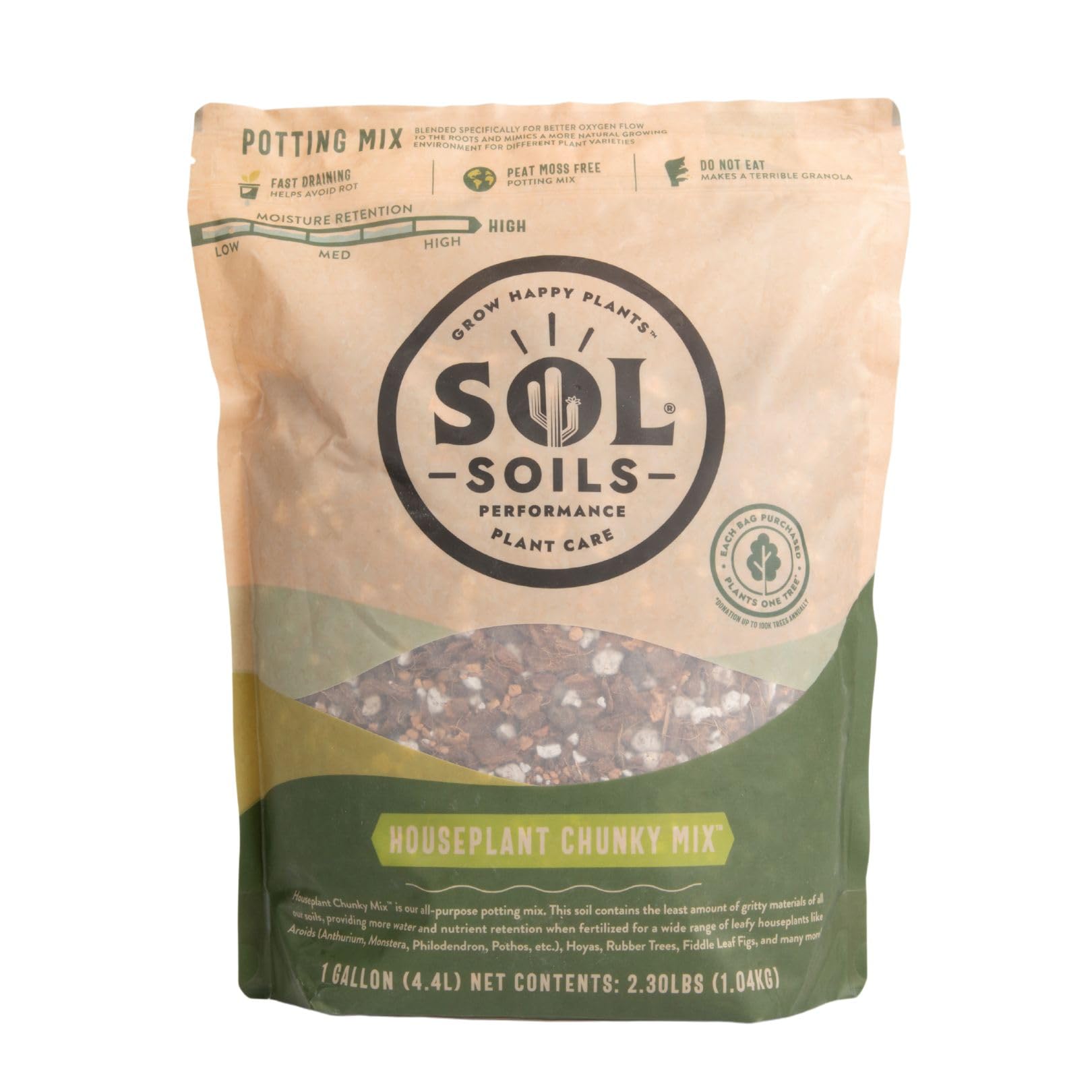
A sustainable, peat-free formula that gives back by planting trees for every bag sold.
Sol Soils uses a blend of coconut coir, husk chips, perlite, pumice, pine bark, and LECA (lightweight expanded clay balls) to create a chunky mix that drains quickly and resists compaction. The LECA balls are a clever addition — they add weight for stability and create air pockets that roots love. Reviewers describe this mix as very dry out of the bag, so you will want to moisten it before potting. The dryness also means no gnats or mold, a common frustration with wetter soils.
Several customers highlight the price as the main drawback, alongside the lack of larger size options. Still, the quality is high — one owner reported their Thai Constellation sprouted new leaves and a Hoya recovered from root rot after switching to this mix. If sustainability matters to you, this is the best choice among the group.
eco-chunky design: An effective chunky mix with a planet-positive mission, albeit in a smaller bag for the price.
green thumb: you want a dry, clean, peat-free mix and like supporting brands that plant trees.
fast dry lover: you need a larger bag or want a mix that comes pre-moistened for immediate use.
7. Forbidden Cereal Aroid Potting Mix
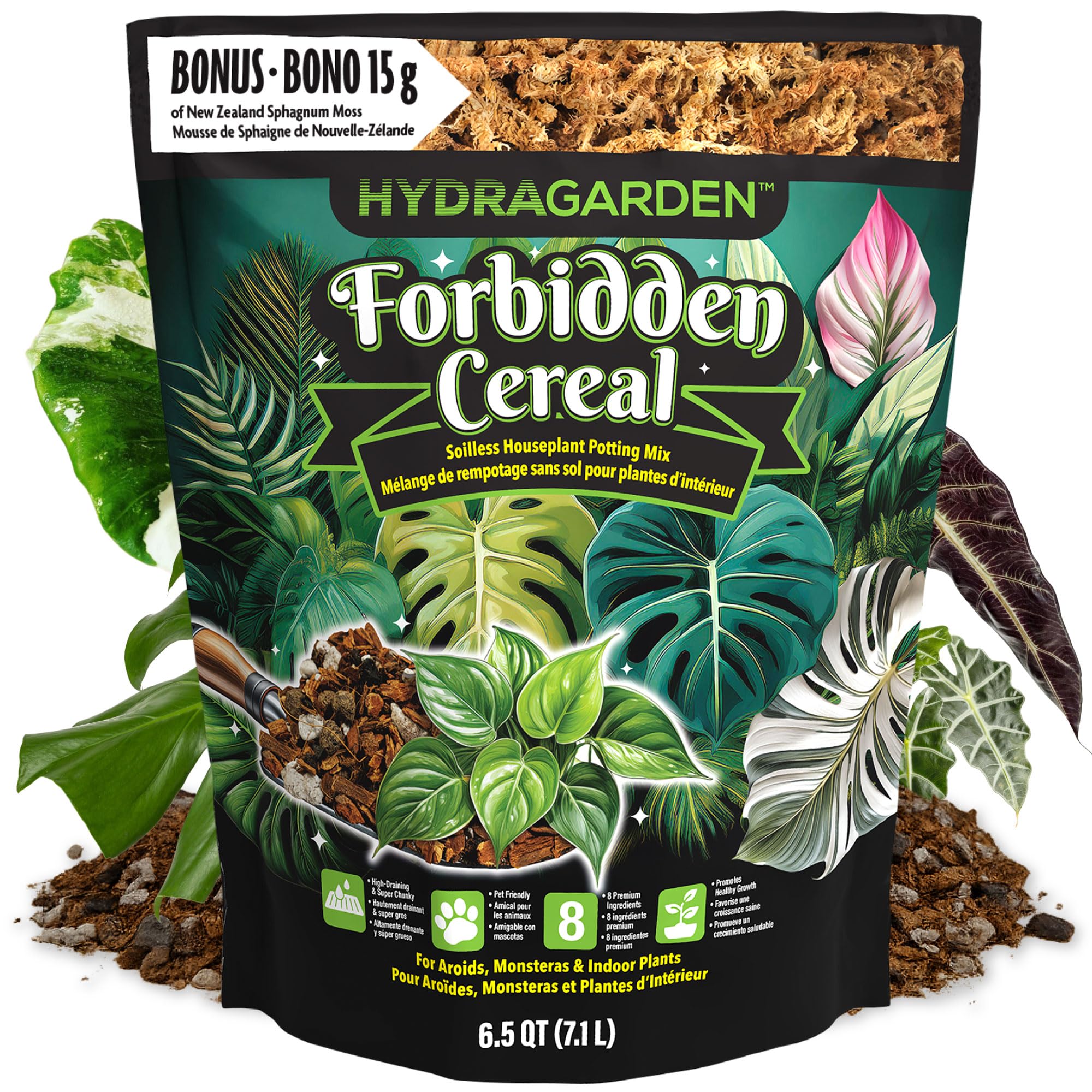
The chunkiest mix in the lineup — water runs straight through while roots thrive.
Forbidden Cereal lives up to its name with hand-sorted Douglas fir bark, fine and coarse perlite, triple-washed coco coir, coconut fiber and chips, horticultural charcoal (biochar), earth worm castings, LECA clay balls, and New Zealand sphagnum moss. The ingredient list reads like a master gardener’s shopping list. The brand separates the sphagnum moss to the top of the bag, so you can use it as a moisture-retaining topper or mix it in as needed.
Reviewers report explosive results — one customer observed their monstera tripled in size over six months with thick roots. A pothos would respond similarly to this level of aeration and nutrition. The cost is the highest here, and a few buyers remark that the bag is pricey for its size. If you have a prized pothos or a collection of aroids, this mix justifies the investment with its professional-grade composition.
no-compromise aroid: A handcrafted, super-chunky mix with the best drainage and the highest price per bag.
elite grower: you are serious about aroids and want a ready-to-use mix that needs zero amendments for maximum root health.
value hunter: the cost per bag is above your budget for potting soil — the DUSPRO or Perfect Plants offer strong performance for less.
Understanding the Specs
Drainage and Texture
The most important quality of Soil For Pothos is how fast water passes through. A “chunky” mix has visible pieces of bark, perlite, or pumice — these create air spaces that let roots breathe and prevent water from pooling. Standard fine-grained soil compacts easily and traps moisture, which leads to root rot. If the mix looks like coarse gravel rather than smooth dirt, that is a good sign for your pothos.
Organic vs. Peat-Free
Many premium aroid mixes now avoid peat moss because harvesting it releases carbon dioxide and destroys peatland habitats. Instead, they use coconut coir, which is a renewable byproduct of the coconut industry. Coco coir holds water well but stays fluffy, so it aerates roots better than peat. If you see “peat-free” on the bag, it means the mix uses coco coir or a similar sustainable alternative.
FAQ
Can I use regular potting soil for pothos?
How often should I water pothos planted in these mixes?
What does “chunky” soil mean for pothos?
Is peat-free soil better for pothos?
How much soil do I need for a single pothos plant?
Can I mix two different soils together?
What is the difference between aroid mix and pothos soil?
Do these soils come with fertilizer already added?
Will these mixes attract fungus gnats?
Can I use these soils for other houseplants?
Final Thoughts: The Verdict
For most pothos owners, the soil for pothos winner is the Perfect Plants Organic Pothos Soil because it combines a proven coco-based recipe with a generous 8-quart bag at a fair price. If you want more ingredients and worm castings included, grab the DUSPRO Tropical Potting Mix. And for a premium, super-chunky mix that boost aeration, the standout is the Forbidden Cereal Aroid Potting Mix.
How We Picked
We do not accept paid placement. Every pick is matched to a real buyer and a real use-case; we do not hands-on test units.
Sources & Methodology
Specifications: manufacturer listings and product documentation. Review insights: verified customer reviews, as of July 2026. Pricing: not shown on this page (it changes often); check the current price via the retailer link.
As an Amazon Associate, Lawn Gear Lab earns from qualifying purchases. This does not affect which products we feature.