
Specs are compiled from manufacturer listings and verified buyer reviews and can change over time — please confirm the key details on the product page before buying.
You bury a seed potato in bagged soil, water it, and wait. But if the soil turns into concrete and drainage stalls, your spuds come out the size of marbles. A fluffy, nutrient-rich mix that holds moisture without getting soggy is what separates a great crop from a failed experiment.
I’m Rikta — the founder and writer behind Lawn Gear Lab. This guide is built by comparing the manufacturers’ published specifications and the patterns across verified customer reviews, so you get each pick’s real strengths and trade-offs instead of marketing spin.
Whether you are setting up grow bags on a patio or filling a five-gallon bucket for the first time, choosing the right soil for potatoes in containers decides whether you get a harvest worth bragging about or a frustrating pile of tiny roots.
Quick Picks
- Coast of Maine Organic & Natural Planting Soil for Vegetables & Tomatoes — Best Overall
- FoxFarm Ocean Forest Potting Soil — Top Performer
- Coast of Maine Organic & Natural Bar Harbor Blend Potting Soil — Organic Champion
- Michigan Peat General All Purpose Premium Potting Soil — Best Value
- Miracle-Gro Moisture Control Potting Mix — Water-Wise Choice
- Miracle-Gro Potting Mix (3-Pack) — Starter’s Choice
- Premium Potting Soil Mix with Peat Moss, Vermiculite, Perlite (Midwest Hearth) — Compact & Clean
How To Choose The Best Soil For Potatoes In Containers
You want a mix that drains well, has enough food for the long haul, and stays light and fluffy as the season goes on. Potatoes throw a lot of energy into growing underground, so the soil needs to support that without turning into a solid brick.
Drainage and Aeration Matter More Than You Think
Potato roots need oxygen to form tubers (the part you eat). If the soil holds too much water and packs tight, the roots suffocate and the potatoes rot before they get a chance to swell. Look for a mix that includes perlite (tiny white rocks that create air pockets), vermiculite (a flaky mineral that absorbs water and releases it slowly), or coarse sand — those ingredients let water drain fast while still keeping some moisture around the roots.
Organic Matter Feeds the Whole Season
Potatoes are heavy feeders. A soil that starts rich in compost, worm castings, or aged manure gives the plants a strong start without needing constant liquid fertilizer. Blends with sphagnum peat moss or coir (coconut husk fiber) also help hold moisture between waterings, which matters when you are growing in a container that dries out faster than a garden bed.
Weight Tells You What Is Inside
A 50-pound bag sounds like a great deal, but a lot of that weight could be sand and heavy fillers rather than the fluffy organic material potatoes love. Lighter bags packed with peat and perlite often provide better root development because they do not compact under their own weight. Pay more attention to the ingredient list than the pounds on the label.
Quick Comparison
On smaller screens, swipe sideways to see the full table.
| Model | Best For | Volume | Weight | Key Ingredients | Amazon |
|---|---|---|---|---|---|
| Coast of Maine Tomato & Veggie | Rich organic start | 20 Quarts | — | Compost, Peat Moss | Amazon |
| FoxFarm Ocean Forest | High-performance growth | 1.5 Cubic Feet | 34 Pounds | Aged Forest, Peat Moss | Amazon |
| Coast of Maine Bar Harbor | Organic long-term feeding | 16 Quarts | 14 Pounds | Compost, Crab/Kelp Meal | Amazon |
| Michigan Peat General Purpose | Budget bulk fill | — | 50 Pounds | Reed Sedge Peat, Perlite | Amazon |
| Miracle-Gro Moisture Control | Forgiving watering schedule | 2 Cubic Feet | 40.51 Pounds | AquaCoir Formula | Amazon |
| Miracle-Gro Potting Mix (3-Pack) | Small pots and beginners | 24 Quarts total | — | Slow-release fertilizer | Amazon |
| Midwest Hearth Premium Mix | Quick seedling/rooting | 8 Quarts | 1.25 Kilograms | Peat Moss, Perlite | Amazon |
In‑Depth Reviews
1. Coast of Maine Organic & Natural Planting Soil for Vegetables & Tomatoes

Its 20-quart size and rich organic compost blend give you a single bag that fits one large container and feeds potatoes from day one.
This mix starts with compost and sphagnum peat moss to balance moisture and drainage — exactly what container potatoes need to avoid soggy bottoms and dry tops. The 20-quart bag holds more volume than the 8-quart Midwest Hearth Premium Mix, so you get better coverage for larger containers without buying multiple bags. You will have room to mound soil around the stems as the plants grow.
Buyers report excellent moisture retention and drainage, and they say they see visible plant growth within days of transplanting. That quick start comes from the nutrient-dense compost that keeps feeding the plants without needing extra fertilizer right away. One reviewer noted the bag is heavy, so plan on having a bucket or wheelbarrow nearby when you open it.
It is also OMRI listed for organic use, so it fits organic gardening practices if that matters to you.
Rich and ready: If you want a single bag that does the heavy lifting — good drainage, strong nutrient load, and organic certification — this is the most straightforward pick for potatoes in containers.
Reach for this if: you want a premium organic mix that gives potatoes a strong nutrient foundation from day one and you do not mind carrying a heavier bag.
Look elsewhere if: you only need a small amount for a single 5-gallon pot or you prefer a lighter, peat-heavy formula.
2. FoxFarm Ocean Forest Potting Soil
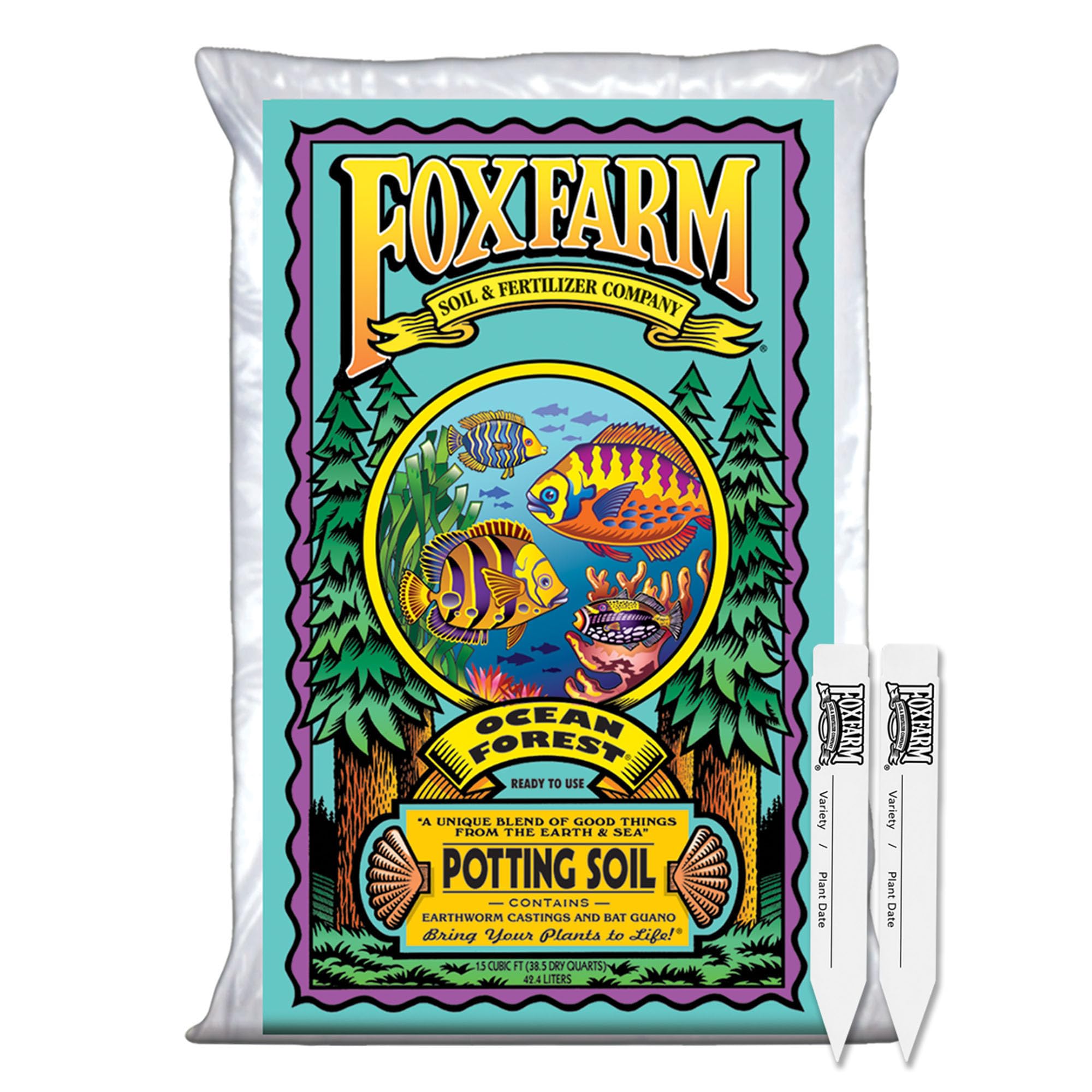
Aged forest products, fish emulsion, and crab meal make this a nutrient-packed blend that growers say visibly outperforms other soils.
FoxFarm Ocean Forest is packed with aged forest products, sphagnum peat moss, perlite, sandy loam, and a full lineup of fertilizers derived from fish emulsion, crab meal, shrimp meal, earthworm castings, kelp meal, and oyster shell. That combination creates a light, aerated texture that gives potato roots room to spread and form large tubers.
One buyer mentioned that FoxFarm soil outperforms Miracle-Gro for tomatoes — same seeds, same watering schedule, but the FoxFarm plants were visibly larger. The sandy loam in the mix adds excellent drainage to prevent root rot, which is a real risk when potatoes sit in waterlogged soil. At 34 pounds for the 1.5-cubic-foot bag, it is lighter than the 50-pound Michigan Peat bag, making this easier to carry and pour.
This is ready to use straight from the bag — no mixing, no waiting. It works for container gardens, houseplants, and seedlings, so any leftover soil goes straight to your other pots.
Why it stands out
- Rich ingredient list with fish and crab meal for steady feeding
- Light, fluffy texture that prevents soil compaction
- Works immediately — no mixing or amendments needed
The downside
- Premium price tag compared to bulk options
- Some users wish the price were lower, especially for large containers
The performance pick: This is for the gardener who wants maximum growth and does not mind paying for a proven, premium blend that makes plants thrive.
skip it if: you need to fill a very large container on a tight budget — the volume-to-price ratio favors cheaper bulk soils.
3. Coast of Maine Organic & Natural Bar Harbor Blend Potting Soil
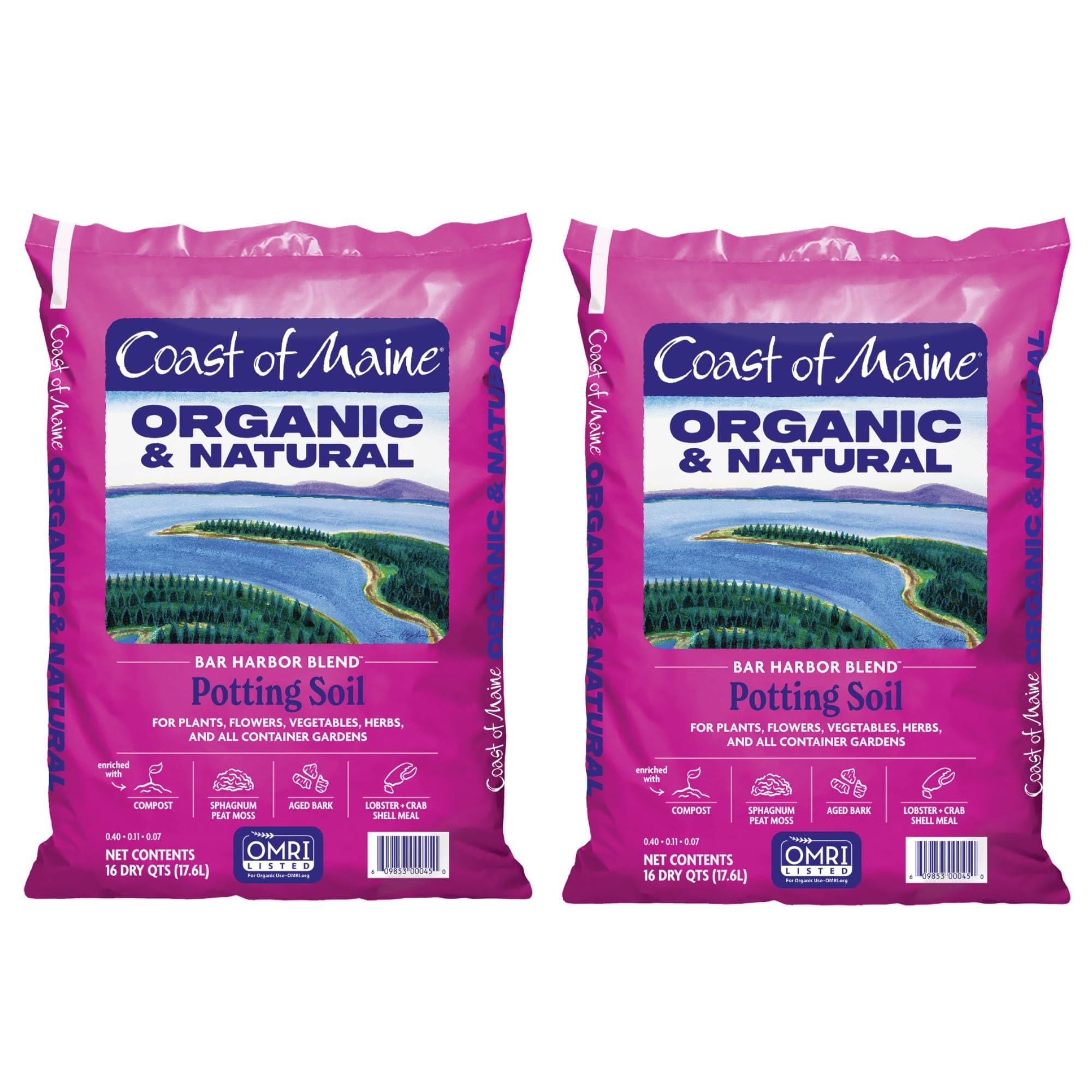
Lobster and crab shell meal release nitrogen slowly, so your potatoes get consistent nutrition for weeks without fertilizer burn.
Coast of Maine’s Bar Harbor Blend takes organic container soil a step further by adding lobster and crab shell meal and kelp meal into the mix. These ingredients release nitrogen slowly over time, giving potato plants consistent nutrition without the risk of fertilizer burn. The blend also includes sphagnum peat moss and perlite to keep the structure light and well-draining.
Owners mention that this soil feels super nice to work with, and one gardener said they planted containers with potatoes, peas, and tomato plants, and everything grew more than they even expected. That same reviewer noted that two bags were enough to mound up eight potato plants, with some left over for two more planters. At 14 pounds for the 16-quart bag versus the 50-pound Michigan Peat option, it is easier to lift and pour without a struggle.
The darker color comes from the compost, which means less peat moss and more rich organic matter. No funky smell either, as one owner reported, so it is pleasant to use even in an indoor potting session.
Long-term feeder: If you want a soil that keeps feeding your potato plants for weeks without extra fertilizer and comes from a company that has been doing organic soil since 1996, this is a top-tier choice.
Best for: organic gardeners who want a complete feeding package in the bag — the crab and kelp meals do the work so you do not have to.
Consider the alternative if: you need a much larger volume for a big container garden on a budget — the 16-quart bag goes fast.
4. Michigan Peat General All Purpose Premium Potting Soil

Fifty pounds of affordable soil with starter and slow-release fertilizers already blended in — ideal for filling multiple grow bags.
When you are filling multiple grow bags or a big planter box, the Michigan Peat General Purpose mix is the budget-friendly workhorse that covers a lot of ground. It blends rich dark reed sedge peat, perlite, and sand to create a ready-to-use mix that works for pots, raised beds, and containers. Starter and slow-release fertilizers are already blended in, so your potatoes get a nutrient boost from the start without you having to add anything.
Customers note it has a perfect consistency for potting and arrives moist straight out of the bag. A few reviewers noted that gnats can come with the soil, so keep that in mind if you are planting indoors or in a space where flying pests would be a real nuisance. At 50 pounds, this is the heaviest bag in the roundup — compared with the 14-pound Coast of Maine Bar Harbor bag — so factor that into delivery and handling.
This mix is not flashy, but it works. It is ideal for container and pot gardens where volume matters more than specialized organic ingredients.
The big plus
- Pre-blended with slow-release fertilizers for sustained feeding
- Massive 50-pound bag covers large planters and multiple pots
- Moist on arrival — ready to use immediately
What to watch for
- Some bags arrive with gnats — plan for outdoor use
- Very heavy — hard to carry and move without a dolly or second person
Go for it if: you need a lot of soil for a low cost and are planting outdoors where a few gnats are not a deal-breaker.
Look elsewhere if: you are planting indoors, want an organic certification, or cannot handle lifting a 50-pound bag.
5. Miracle-Gro Moisture Control Potting Mix

Its AquaCoir Formula is designed to hold more water than basic soil, giving you a buffer if you forget to water for a day or two.
If you tend to forget watering for a day or two, or you water a little too enthusiastically, the Miracle-Gro Moisture Control formula is built to smooth out those mistakes. Its exclusive AquaCoir Formula helps protect against both over- and under-watering while absorbing more water than basic potting soil that does not contain sphagnum peat moss, coir (coconut husk fiber), and a wetting agent. For container potatoes, that buffer can mean the difference between rot and a good crop.
One customer observed that a wild plant they repotted into this soil started flowering, calling it a great soil for novices. A 2-cubic-foot bag is the largest volume here, filling two 14-inch containers per bag. The mix also feeds plants for up to 6 months, so you do not need to add liquid fertilizer during the main growing season.
Keep in mind that some reviewers found the soil holds moisture longer than expected, making it a bit dense when wet. If your potato container does not have excellent drainage holes, you could risk root rot.
Forgiving formula: If you want confidence against watering mistakes and need a large volume bag that keeps feeding for half a year, this is the most forgiving soil in the lineup.
Reach for this if: you are a beginner or have an inconsistent watering schedule and want a soil that compensates for you.
pass on it if: your containers already drain slowly or you tend to overwater — this soil holds moisture aggressively.
6. Miracle-Gro Potting Mix (3-Pack)

Three separate 8-quart bags — each one feeds a pot for up to 6 months — so you do not have to haul a giant bag around.
Sometimes you do not want to haul a 50-pound bag around. The Miracle-Gro Potting Mix 3-Pack comes as three separate 8-quart bags, each one feeding a pot for up to 6 months. Each bag fills two 8-inch containers, making this convenient for small grow bags or a single large bucket. The formula promotes growth and includes a synthetic slow-release fertilizer so you do not have to guess about feeding schedules.
Reviewers point out this soil is well-draining and does not tend to pack down enough to be hard, which is a common frustration with cheaper mixes. The lighter, smaller bags are also easier to store and use as needed without committing to a massive amount of soil. One reviewer specifically mentioned ordering in these smaller bags so they do not have to lug around the large ones.
It is a convenience play, not a bulk-value play.
What works
- Individual bags are easy to handle and store
- Drains well without packing into a hard block
- Feeds potted plants for up to 6 months
The trade-off
- More expensive per quart than larger single bags
- Not organic — uses synthetic slow-release fertilizer
Best for: beginners or balcony gardeners who want a lightweight, no-hassle mix for one or two pots without storing a giant open bag.
it’s not for you if: you want an organic mix or need to fill multiple large containers — the per-quart cost adds up fast.
7. Premium Potting Soil Mix with Peat Moss, Vermiculite, Perlite (Midwest Hearth)

Peat moss, perlite, and vermiculite create a light, fluffy texture that does not harden around roots — ideal for a single small pot.
Midwest Hearth’s formula is built around a simple, effective trio — peat moss for moisture, perlite for drainage, and vermiculite for aeration. It is designed for professional growers and works just as well for home container gardeners. The pH levels are controlled for a broad spectrum of plants, so you do not have to worry about soil acidity affecting your potatoes.
Shoppers say this is excellent potting mix with a light, fluffy texture that promotes strong roots and faster growth. One user highlighted it does not harden around the roots, which is a common issue with heavier soils like the Michigan Peat mix. Another pointed out that you should soak it before use because it can drain too quickly at first if you just pour water on top — that is user error, not a flaw in the soil.
At 8 quarts, this is the smallest bag in the lineup — compared with the 20-quart Coast of Maine Tomato & Veggie bag. It is perfect for a single small pot or for starting seed potatoes before transplanting. The resealable bag is a nice touch for keeping the remaining mix fresh.
Focused and effective: If you only need a small amount of premium soil for a single container and want a clean, well-balanced mix that does not compact, this is a solid pick.
Reach for this if: you are potting a single plant or starting seeds and want a lightweight, no-compaction formula.
Look elsewhere if: you need soil for multiple large containers — the 8-quart bag runs out fast and the per-quart cost is higher than bulk bags.
Understanding the Specs
Volume vs. Weight
The number on the bag — 8 quarts, 20 quarts, 1.5 cubic feet — tells you how much space the soil will fill in your container. Weight is a less reliable guide because heavy filler ingredients like sand add pounds without adding structure. A 50-pound bag might sound like a better deal, but a 14-pound bag can provide better root growth if it is packed with peat and perlite instead of sand.
Organic vs. Synthetic Feeding
Organic soils rely on compost, worm castings, and natural meals (crab, kelp, fish) to release nutrients slowly as microbes break them down. Synthetic mixes like Miracle-Gro use chemical slow-release fertilizers that feed plants for a set period — often up to 6 months. Both work, but organic blends improve soil structure over time while synthetics focus on feeding the plant directly.
Drainage Ingredients
Perlite, vermiculite, and coarse sand are the key components that keep soil from turning into mud. Perlite looks like tiny white rocks and creates air pockets so water flows through quickly. Vermiculite is a flaky mineral that absorbs water and releases it slowly. A good potato soil needs both — enough perlite to prevent soggy roots and enough vermiculite to keep moisture available between waterings.
pH Balance
Potatoes prefer slightly acidic soil, with a pH between 5.0 and 6.0. Most bagged potting mixes are balanced for a broad range of plants (around 6.0 to 7.0), which is fine for potatoes. If your tap water is very alkaline or you are reusing soil from a previous season, a pH-controlled mix like the Midwest Hearth Premium Mix takes that guesswork off the table.
FAQ
Can I use regular garden soil for potatoes in containers?
How much soil do I need for one potato plant in a container?
Should I mix fertilizer into the soil or rely on what is in the bag?
What is the difference between potting soil and potting mix for potatoes?
Can I reuse the soil from this year’s potato harvest?
Why does my potato soil get hard and compacted halfway through the season?
Is organic soil worth the extra cost for container potatoes?
How often should I water potatoes in containers with these soils?
Final Thoughts: The Verdict
For the majority of shoppers, the soil for potatoes in containers winner is the Coast of Maine Organic & Natural Planting Soil for Vegetables & Tomatoes because it combines rich organic compost with excellent drainage in a 20-quart bag that perfectly fits one large container. If you want the highest-performing soil with a proven track record for faster growth and larger plants, grab the FoxFarm Ocean Forest Potting Soil. And for budget-friendly bulk coverage that fills multiple pots while staying affordable, the Michigan Peat General All Purpose Premium Potting Soil covers the most ground per dollar.
How We Picked
We do not accept paid placement, and we did not hands-on test every unit. Instead, we match each pick to a real buyer and use-case by comparing the manufacturers’ published specifications against the patterns in verified customer reviews — so you get each pick’s real strengths and trade-offs instead of marketing copy.
Sources & Methodology
Specifications: manufacturer listings and product documentation. Review insights: verified customer reviews, as of July 2026. Pricing: not shown on this page (it changes often); check the current price via the retailer link.
As an Amazon Associate, Lawn Gear Lab earns from qualifying purchases. This does not affect which products we feature.