
Plumeria cuttings demand a growing medium that strikes a precise balance between moisture retention for root initiation and rapid drainage to prevent stem rot. A mix that clogs pores or stays wet for days is a death sentence for a developing cutting—you need a lightweight, airy, fast-draining blend that encourages tender white roots to push out without suffocating.
I’m Rikta — the co-founder and writer behind Lawn Gear Lab. I’ve spent dozens of hours cross-referencing propagation science against manufacturer specifications and digging through thousands of verified owner reports to identify the soil compositions that actually deliver for plumeria cuttings.
Decoding labels like “soilless,” “chunky,” and “gritty” is the difference between a rooted cutting and a mushy failure, which is why I built this guide to the best soil for plumeria cuttings based on the real specs that matter.
How To Choose The Best Soil For Plumeria Cuttings
Plumeria cuttings have no roots to draw water, so they rely entirely on the surrounding medium to wick moisture upward while keeping the cut base dry enough to avoid bacterial rot. The wrong mix—dense, waterlogged, or packed with synthetic fertilizer—will turn a promising cutting into brown mush within two weeks.
Drainage and Aeration Are Non‑Negotiable
The number one failure point for plumeria propagation is a medium that stays wet. Look for a soilless blend that contains coarse perlite, pumice, calcined clay, or pine bark chunks. These particles create air pockets that let oxygen reach the cut end and allow excess water to drain completely within minutes. A mix that feels compact or looks like fine peat dust is a red flag.
No Pre‑Added Fertilizer
Cuttings cannot absorb nutrients until they develop a full root system. Blends that come with synthetic fertilizer salts can burn the tender callus tissue before roots even form. The safest approach is an unfertilized or lightly amended mix that uses worm castings for gentle nutrition only after roots begin to emerge. Products labeled “starter” or “propagation” mix are usually formulated without heavy feed.
Ideal pH Range
Plumeria prefers a slightly acidic to neutral pH between 6.0 and 6.8. Many soilless propagation mixes lean acidic due to peat moss or pine bark, so a lime amendment is often necessary to buffer the pH upward. Check ingredient lists for added lime—it signals the manufacturer has already balanced the acidity. If the bag lists only peat and perlite, you may need to adjust the pH yourself.
Bag Size and Reusability
For most home propagators, a 4-quart bag handles 6 to 10 cuttings depending on pot size. An 8-quart bag is better for multiple batches or larger containers. Resealable bags keep the mix fresh and prevent moisture absorption from the air, which matters if you store leftover soil for the next round of cuttings.
Quick Comparison
On smaller screens, swipe sideways to see the full table.
| Model | Category | Best For | Key Spec | Amazon |
|---|---|---|---|---|
| Soil Sunrise Plant Propagation Mix (8qt) | Soilless Propagation | Rooting multiple plumeria cuttings | Peat + perlite + worm castings + lime | Amazon |
| Soil Sunrise Cactus & Succulent Mix (8qt) | Gritty / Desert | Maximum drainage for risk‑prone cuttings | Pine bark + silica sand + calcined clay + pumice | Amazon |
| Rio Hamza Trading Plant Propagation Mix (4qt) | Soilless / Starter | Precision small‑batch propagation | Soilless blend with perlite, no fertilizer | Amazon |
| Rosy Soil Cactus & Succulent Mix (4qt) | Peat‑Free / Gritty | Environmentally mindful propagation | Chunky texture, peat‑free, worm castings + microbes | Amazon |
| Jessi Mae Potting Soil (4qt) | Organic / Slightly Acidic | Houseplant cuttings needing light acidity | Perlite + organic materials, slightly acidic pH | Amazon |
| Doter Houseplant Potting Mix (4qt) | Fertilized / Tropical | Repotting rooted tropicals (not initial cuttings) | Peat + perlite + worm castings + lime | Amazon |
| Avalution Lava Rock Pumice (5lb) | Amendment / Top Dressing | Improving drainage of any potting mix | 5 lb bag of gritty lava rock and pumice pebbles | Amazon |
In‑Depth Reviews
1. Soil Sunrise Plant Propagation Potting Mix (8qt)
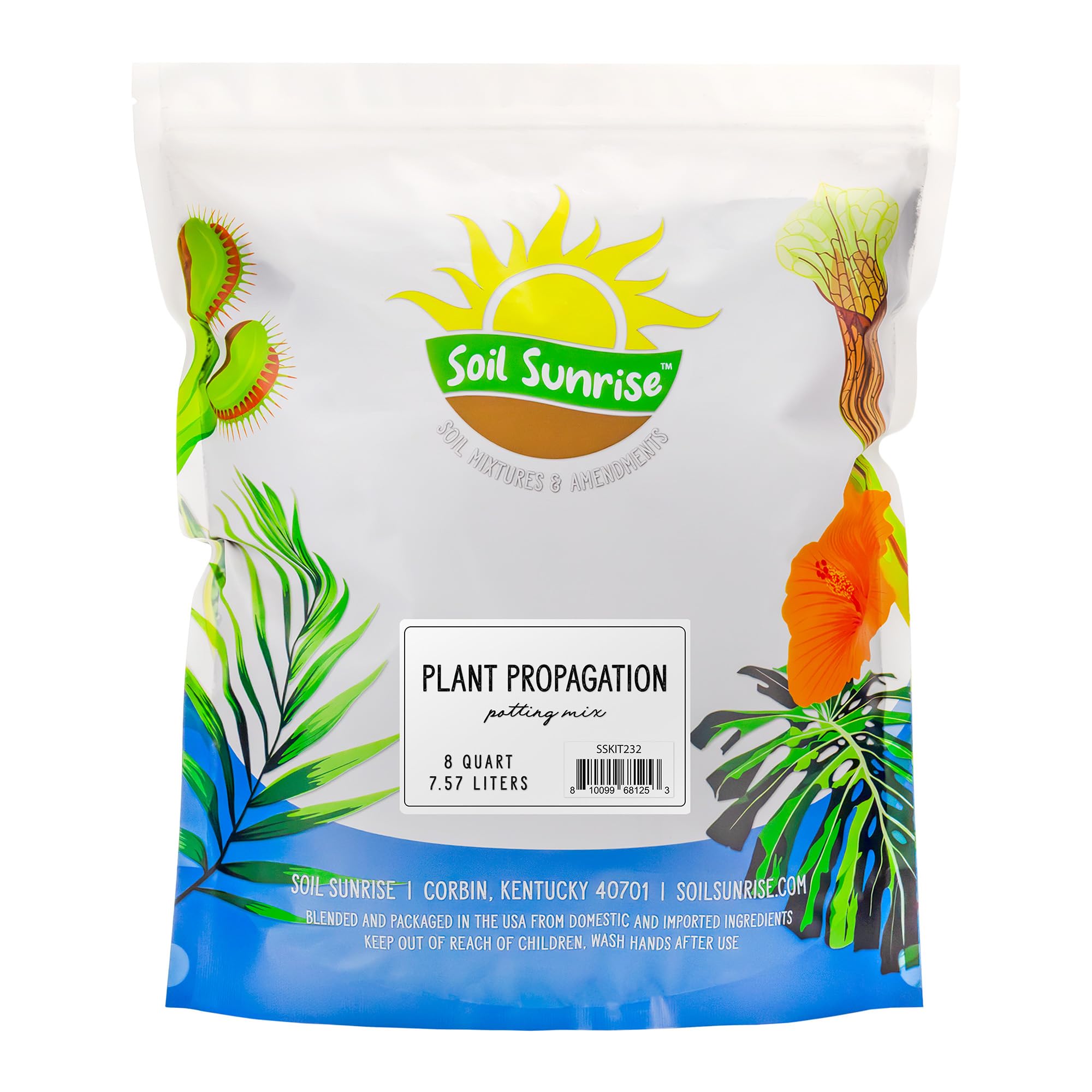
This 8-quart bag delivers three times the volume of most competitor propagation mixes, making it the most economical choice for anyone rooting multiple plumeria cuttings in a single season. The combination of peat moss, coarse perlite, worm castings, and lime creates a light, fluffy texture that drains sharply while holding just enough moisture to trigger root initiation. Users consistently report strong, healthy root development without the compaction or sogginess that plagues denser blends.
The lime amendment is a critical detail for plumeria propagators—it buffers the natural acidity of peat moss to a target range near 6.5, which matches the ideal pH for plumeria root development. The worm castings provide a gentle nutrient source that becomes bioavailable only after roots establish, avoiding the burn risk of synthetic fertilizers. Multiple verified reviews confirm successful rooting of fig and rose cuttings, which share similar aeration and drainage demands with plumeria.
On the downside, the bag lacks a resealable closure, so you’ll want a storage container or clip if you don’t use the full 8 quarts at once. A few users noted the mix is slightly finer than a true gritty blend, but for standard plumeria propagation in 4- to 6-inch pots, the texture is nearly ideal. This is the most complete out‑of‑the‑bag solution for plumeria cuttings on the list.
What works
- Large 8-quart volume covers many cuttings without repurchasing
- Pre‑added lime maintains pH in the plumeria‑friendly range
- Worm castings offer gentle nutrition once roots appear
What doesn’t
- Bag is not resealable; requires separate storage
- Texture is lighter than a true gritty desert mix for advanced users
2. Soil Sunrise Cactus and Succulent Potting Mix (8qt)
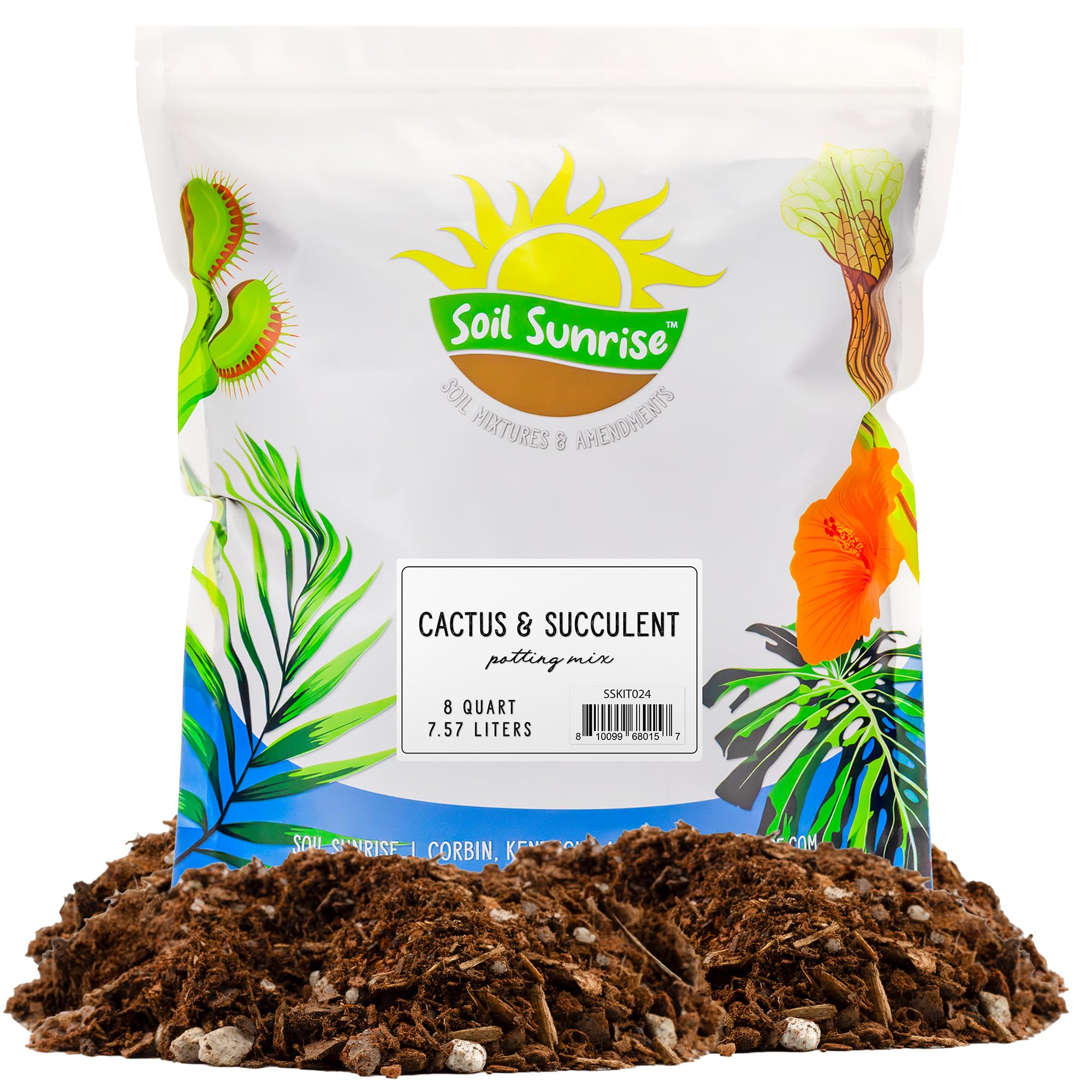
Where the propagation mix from the same brand focuses on moisture balance, this gritty cactus blend leans hard into drainage with a particle‑driven composition of pine bark, silica sand, calcined clay, and pumice. For plumeria cuttings that are particularly thick or prone to rot due to high ambient humidity, this mix provides the fastest water passage of any product in this lineup. Owners report that water flows through the pot in seconds rather than minutes.
The absence of peat moss is a double‑edged sword: it eliminates the risk of over‑retaining water, but it also means the mix dries faster. Plumeria propagators in dry climates may need to water slightly more often, but the trade‑off is near‑zero chance of stem rot at the soil line. The calcined clay adds weight that helps anchor tall plumeria cuttings upright without additional support, a practical advantage during the rooting phase.
Several verified reviews call this the “best gritty mix” they’ve bought, noting it requires no amendments—unlike big‑box cactus soils that are mostly peat. The 8-quart bag is large enough for ten or more cuttings in standard nursery pots. The only real limitation is that this mix contains no added lime or pH buffer, so if your water or local conditions are alkaline, you may need to monitor pH separately.
What works
- True gritty texture provides maximum aeration and drainage
- Calcined clay adds weight to support tall cuttings
- No peat means minimal water‑logging risk
What doesn’t
- Dries faster than peat‑based blends; requires attentive watering
- No lime included; pH may need adjustment in alkaline regions
3. Rio Hamza Trading Plant Propagation Mix (4qt)
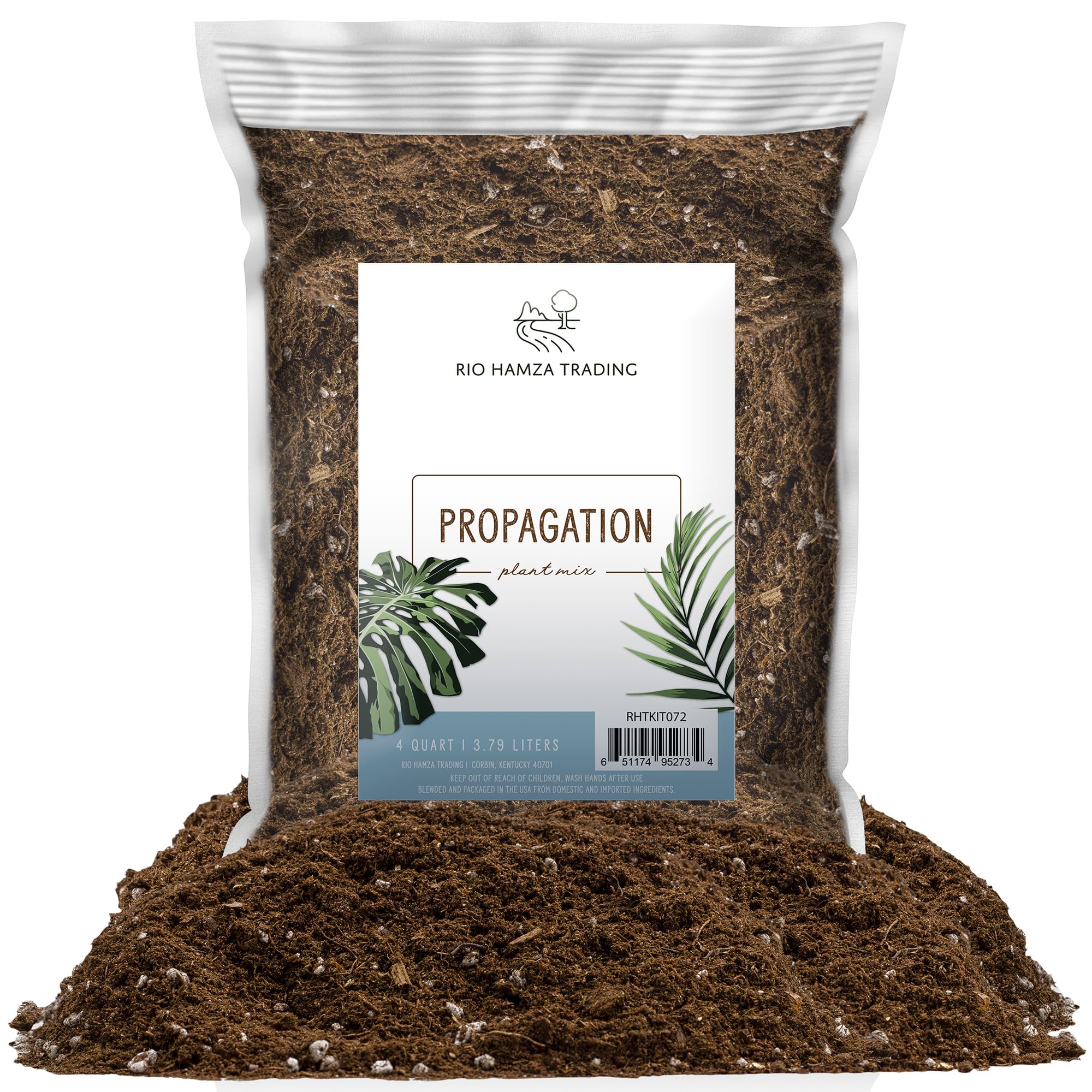
This hand‑blended soilless mix strips the propagation formula down to its essentials: a lightweight composition of perlite and other aeration components with zero pre‑added fertilizer. For plumeria propagators who prefer to control every variable—from moisture to feeding schedule—this blank‑canvas approach is ideal. The mix stays loose and prevents compaction over the weeks a cutting takes to root, ensuring oxygen reaches the callus site throughout the process.
Verified reviews specifically mention success with rose and tomato cuttings, which share similar sensitivity to over‑feeding and water‑logging. The 4-quart bag is a deliberate size: enough for a focused batch of 6 to 8 plumeria cuttings without committing to a larger bag that might degrade in storage. The manufacturer lists the mix as suitable for cacti, succulents, and tropicals, which aligns perfectly with plumeria’s preference for fast‑draining conditions.
The main trade‑off is that you will need to supply your own pH management—there is no lime in this formula, so the natural acidity of the base ingredients could drift below 6.0. A quick pH test and a pinch of garden lime if needed solve that easily. The bag also lacks a resealable feature. But for propagators who want a clean, predictable medium, this mix delivers exactly what the label promises.
What works
- Zero fertilizer eliminates risk of chemical burn on new callus
- Lightweight texture prevents compaction during rooting
- Proven success with multiple cutting types in verified reviews
What doesn’t
- No lime added; pH may be too acidic for plumeria out of the bag
- Small 4-quart bag means fewer cuttings per purchase
4. Rosy Soil Cactus and Succulent Mix (4qt)
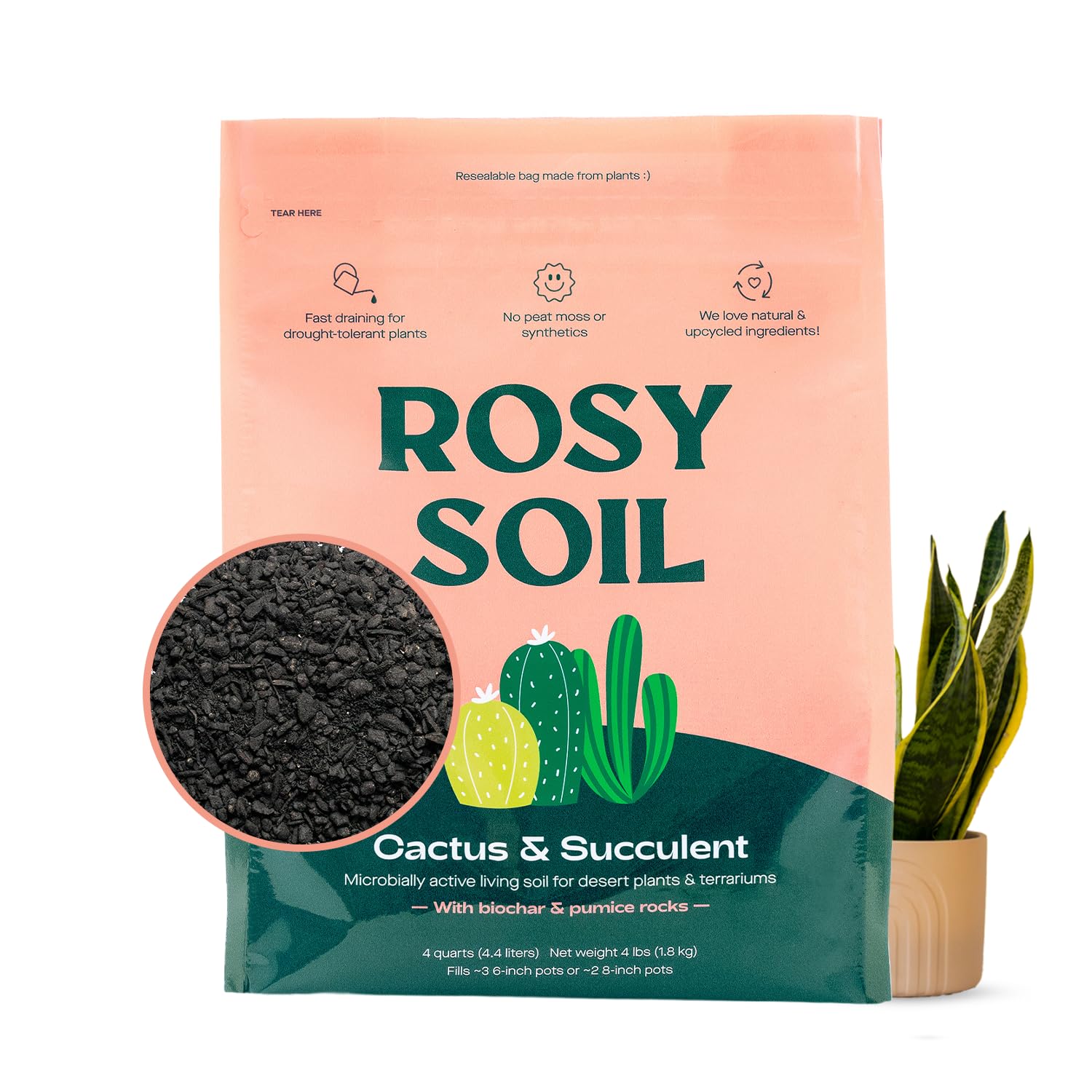
Rosy Soil takes a fundamentally different approach by building a chunky, peat‑free mix that relies on pre‑loaded beneficial fungi and microorganisms to create a living soil ecosystem. For plumeria propagators, the immediate practical benefit is drainage that outperforms any peat‑based blend—the absence of fine peat particles means water channels through the coarse texture almost instantly. The chunky consistency stays loose and airy for the entire rooting period without settling into a dense mass.
The worm castings in this formula provide a slow‑release nutrient source that activates only as roots develop, but the real differentiator is the microbial load. Beneficial microbes colonize the root zone and can help suppress the opportunistic pathogens that cause rot in freshly cut plumeria stems. A resealable bag keeps the unused portion fresh, and the sustainable, plastic‑neutral packaging appeals to environmentally conscious growers.
Some users note that while the mix is excellent as a base, they add extra perlite or bonsai soil for older succulent plants. For plumeria cuttings, the out‑of‑bag texture is already quite good, but if your environment is exceptionally humid, adding a handful of pumice can push drainage even further. The 4-quart bag fills 2–3 standard pots, which is enough for a small propagation run.
What works
- Peat‑free formula eliminates water‑logging risk
- Beneficial microbes help suppress rot pathogens
- Resealable bag with sustainable packaging
What doesn’t
- Small 4-quart bag; limited volume per purchase
- Some users add extra drainage material for very humid conditions
5. Jessi Mae Potting Soil (4qt)

Jessi Mae’s hand‑mixed organic potting soil is formulated with a slightly acidic pH and a light, fluffy texture that includes perlite and organic materials for superior water movement. While it is marketed primarily for snake plants and peace lilies, its drainage profile and lack of synthetic chemicals make it a viable candidate for plumeria cuttings, especially if you are already using it for other houseplants and want a single‑bag solution. The “organic” label means no fertilizer salts to burn tender callus.
Verified reviews highlight its success with peace lilies and pothos, both of which benefit from the same airy, well‑draining structure that plumeria cuttings need. The bag is small—4 quarts—but the resealable food‑grade packaging keeps the mix fresh between uses. The slightly acidic pH (targeting 6.0–6.5) sits right in the acceptable range for plumeria, though you should test it if your water is particularly alkaline or hard.
A few owners note that the mix has a noticeable earthy smell for the first few days after opening, which dissipates quickly. The texture is not as coarse as a dedicated gritty cactus blend, so if your plumeria cutting is very thick or your climate is humid, you may want to add extra perlite. For a general‑purpose organic soil that works for cuttings and established houseplants alike, this is a solid mid‑range pick.
What works
- Organic composition with no synthetic fertilizer burn risk
- Slightly acidic pH aligns with plumeria tolerance range
- Resealable food‑grade bag for clean storage
What doesn’t
- Texture is not as chunky as dedicated propagation blends
- Initial organic smell may be off‑putting for a few days
6. Doter Houseplant Potting Mix (4qt)
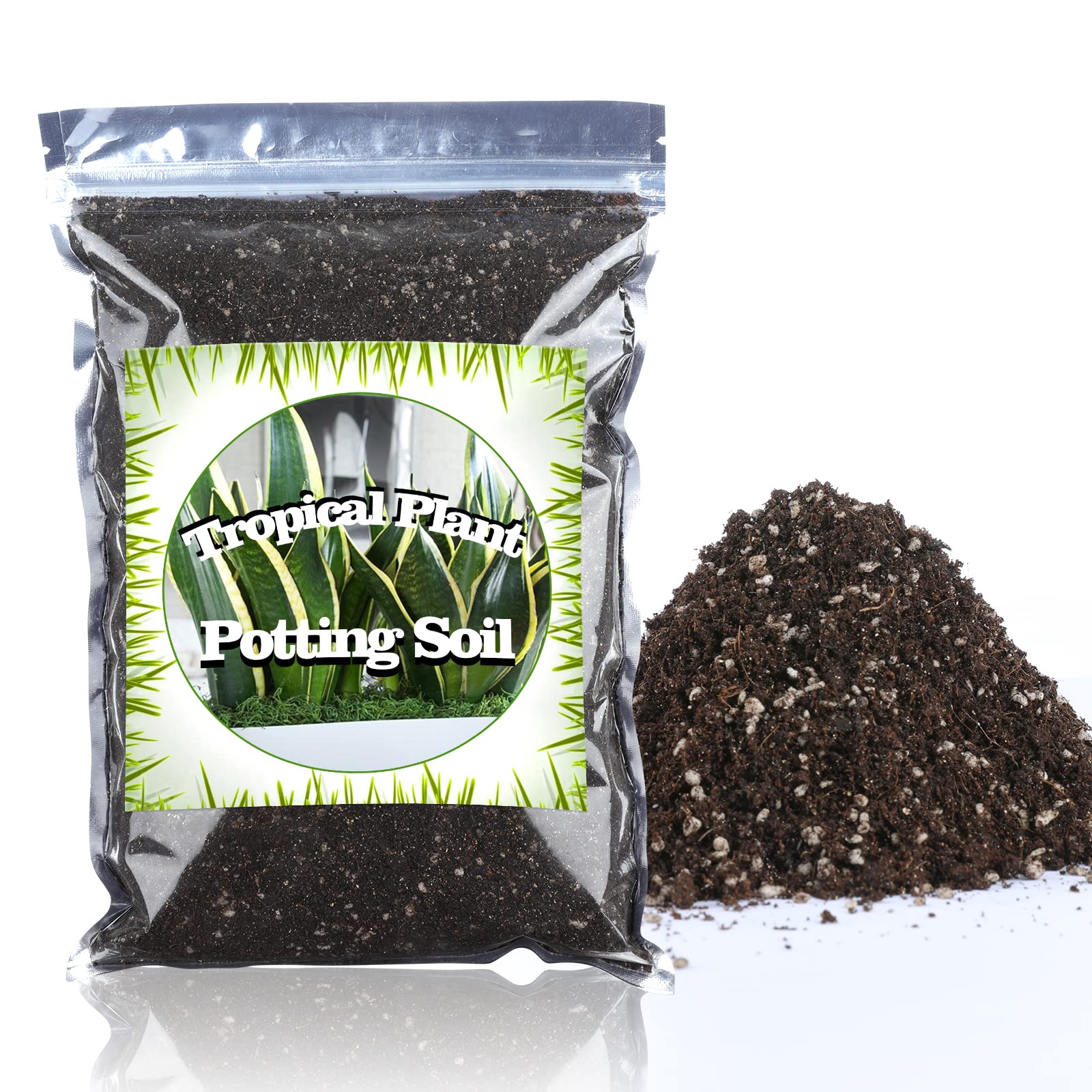
Doter’s tropical houseplant mix combines peat, perlite, worm castings, and lime in a formula designed for all‑purpose indoor tropical plants. For plumeria cuttings that have already produced a root system and are ready to transition into a growing pot, this mix provides the balanced nutrition and moisture management they need. The worm castings feed without the harshness of synthetic fertilizers, while the lime keeps pH steady.
Where this mix falls short for initial rooting is its finer texture and moisture retention. Several users report it holds water well—great for established plants, but riskier for unrooted cuttings that need the stem base to stay relatively dry. If you use this for fresh cuttings, mix in a generous amount of perlite or pumice to increase drainage. The resealable bag is a practical bonus for storing leftovers.
Verified feedback mentions the bag is “very very tiny” for the price, which is a fair criticism—4 quarts does not go far when you are potting several cuttings. The mix works well for tomatoes, string of hearts, and money trees, showing good versatility, but it is best reserved for cuttings that have already struck roots rather than for the initial propagation phase.
What works
- Contains worm castings for gentle, slow‑release nutrition
- Lime stabilizes pH within the ideal plumeria range
- Resealable bag for convenient storage
What doesn’t
- Holds too much moisture for unrooted cuttings without amending
- Small 4-quart bag offers limited volume per purchase
7. Avalution 5lb Lava Rock and Pumice Mix

This 5-pound bag of mixed horticultural lava rock and pumice pebbles is not a standalone propagation medium—it is a drainage additive that transforms any potting mix into a fast‑draining plumeria‑ready formula. The gritty, porous particles are roughly ¼‑inch in size, which means they create large air pockets when mixed into peat‑based soils. Adding 20–30% of this material by volume to a bagged potting mix drastically reduces moisture retention while adding physical structure that supports cutting stability.
Verified buyers use it to make their own cactus and succulent blends, as a top dressing to prevent soil splash, and even in semi‑hydro setups for Hoyas and Rhipsalis. For plumeria propagators, the real value is in customizing an existing mix that is too moisture‑retentive—rather than buying a new bag, you can fix what you have. A few users note that the material is dusty straight out of the bag and needs thorough rinsing before use, revealing the natural pebble colors underneath.
The price per pound is reasonable for an amendment, and a single bag will last through multiple mixing sessions. The main limitation is that this product alone will not support plumeria cuttings—you must combine it with a base mix that provides fine‑particle moisture retention and some nutrient capacity. For advanced growers who want full control over their medium composition, this is an indispensable tool.
What works
- Effective at transforming water‑retentive mixes into fast‑draining blends
- Porous pebbles add weight and stability for tall cuttings
- Single bag covers multiple mix projects
What doesn’t
- Requires rinsing before use due to dust content
- Not a standalone medium; must be blended with a base mix
Hardware & Specs Guide
Particle Size and Texture
Plumeria cuttings require a medium with particles large enough to create air channels. Coarse perlite (3–6 mm), pumice, and pine bark chunks are ideal because they prevent the mix from compacting into a dense, water‑holding mass. Fine sands or silts should be avoided—they fill the air gaps and suffocate the cut end. A mix that looks “chunky” when you pour it out is exactly what a plumeria cutting needs to root successfully.
pH Buffering with Lime
Most soilless propagation mixes are based on peat moss or pine bark, both of which are naturally acidic (pH 3.5–5.5). Plumeria prefers pH 6.0–6.8, so the manufacturer must add lime (calcium carbonate or dolomitic lime) to raise and stabilize the pH. If the bag’s ingredient list includes “lime” or “dolomite,” the pH buffering is already handled. Without it, your cutting may struggle to absorb nutrients even after roots form.
FAQ
Can I use regular potting soil for plumeria cuttings?
Should I use fertilizer when rooting plumeria cuttings?
How do I know if my propagation mix drains fast enough?
Final Thoughts: The Verdict
For most gardeners, the best soil for plumeria cuttings winner is the Soil Sunrise Plant Propagation Mix because it hits the ideal balance of aeration, moisture control, and pH buffering in a generous 8-quart bag. If you want maximum drainage for high‑humidity environments, grab the Soil Sunrise Cactus & Succulent Mix. And for controlled DIY blending, nothing beats the Avalution Lava Rock and Pumice as an amendment to fix any overly moisture‑retentive base soil.