
Standard potting soil is the fastest way to kill a potted orchid. Those dense, moisture-retaining mixes suffocate epiphytic roots, leading to rot and fungal collapse within weeks. The difference between a thriving bloom cycle and a slow decline often comes down to the physical structure of the medium you choose.
I’m Rikta — the co-founder and writer behind Lawn Gear Lab. I’ve spent countless hours parsing botanical data on aeration rates, bark particle sizing, and moisture retention curves to build this guide, and I’ve cross-referenced hundreds of owner reports to separate proven formulas from trendy misses.
Whether you are repotting a rescue Phalaenopsis or expanding a Cattleya collection, selecting the right medium is the single most impactful decision you can make. Here is a thorough look at the best soil for orchids in pots to set your plants up for success.
How To Choose The Best Soil For Orchids In Pots
Orchid roots are aerial specialists adapted to cling to tree bark, not to sit in dense, waterlogged earth. The perfect potting medium copies that epiphytic habitat: chunky, open, and fast-draining. Here are the three critical details to evaluate before you buy.
Bark Type and Particle Size
Douglas fir bark is the gold standard because it resists decomposition longer than pine and holds its structure through multiple watering cycles. Particle size matters just as much: pieces between 0.5 and 1 inch create the air pockets roots need to breathe, while fine dust or shreds compact into a spongy mess. Stick with bark chunks large enough to see individual pieces in the bag.
Additives That Improve Structure
Perlite, pumice, charcoal, and clay pebbles are not filler. Pumice and perlite add weightless drainage channels, charcoal absorbs tannins and odors, and expanded clay pebbles lock in a reservoir of air near the root zone. A mix with two or three of these components will outlast a plain bark-only blend by a wide margin.
Moisture Retention vs. Root Rot Risk
Epiphytic orchids need a quick wet-dry cycle. If you water infrequently, a blend with a little peat moss or coconut husk can buffer against underwatering. If you water weekly or use a humidity tray, skip peat entirely and choose a lean, bark-heavy recipe. Match the medium to your watering frequency, not the other way around.
Quick Comparison
On smaller screens, swipe sideways to see the full table.
| Model | Category | Best For | Key Spec | Amazon |
|---|---|---|---|---|
| rePotme All Purpose Mix | Premium Mix | Serious collectors & fine-rooted orchids | 2 Qt small-batch handcrafted bark | Amazon |
| Rio Hamza Trading All Natural Bark | Organic Bulk Bark | Large repotting projects & chunky soil blends | 4 Qt Loblolly & Southern Yellow Pine | Amazon |
| Avalution Orchid Bark | Fine-Grade Bark | Plants with fine root systems | 9 Qt sterilized pine bark | Amazon |
| Rosy Soil Orchid Mix | Biochar Blend | Eco-conscious growers & microbial enthusiasts | 4 Qt peat-free with mycorrhizae | Amazon |
| Cz Garden Supply Orchid Mix | Multi-Ingredient Blend | Hoya, aroids & chunky-mix lovers | 0.26 cu ft fir bark, charcoal, clay pebbles | Amazon |
| Cz Garden Supply Fir Bark | OMRI Single-Ingredient | DIY custom blends & terrariums | 4 L all-natural fir bark | Amazon |
| Harris Premium Orchid Mix | Balanced All-Rounder | First-time repotters & budget-friendly value | 4 Qt heat-treated Douglas fir bark | Amazon |
In‑Depth Reviews
1. rePotme All Purpose Monterey Bark Imperial Orchid Potting Mix

rePotme stands apart by making every batch fresh daily with hand-selected ingredients sourced globally. The Monterey bark pieces in this mix are an ideal medium size — large enough to create pronounced air channels that prevent root suffocation, yet small enough to settle evenly around fine root networks without leaving gaping voids. This is the same formula trusted by world-class conservatories and botanic gardens, which speaks directly to its structural consistency.
The bag is small at 2 quarts, but the quality density is undeniable. Owners consistently note that it arrives virtually dust-free and rinses clean in one pass, unlike commodity mixes that shed fine particles. The bark resists breaking down for seasons, meaning you won’t need to repot every six months to restore drainage. For anyone maintaining a serious orchid collection, this is the reference standard.
Price per quart is undeniably higher than store brands, but the extended lifespan of the bark and the absence of mold, fungus gnats, or hidden debris offset the upfront cost. If you have ever wondered why your orchids stall after a repotting with cheap bark, this mix likely eliminates that problem.
What works
- Handcrafted small batches ensure consistent bark sizing
- Minimal dust; rinses clean immediately
- Used by major conservatories for reliability
What doesn’t
- Small bag size means higher per-quart cost
- Not the best bulk option for large collections
2. Rio Hamza Trading 100% Organic All Natural Orchid Bark
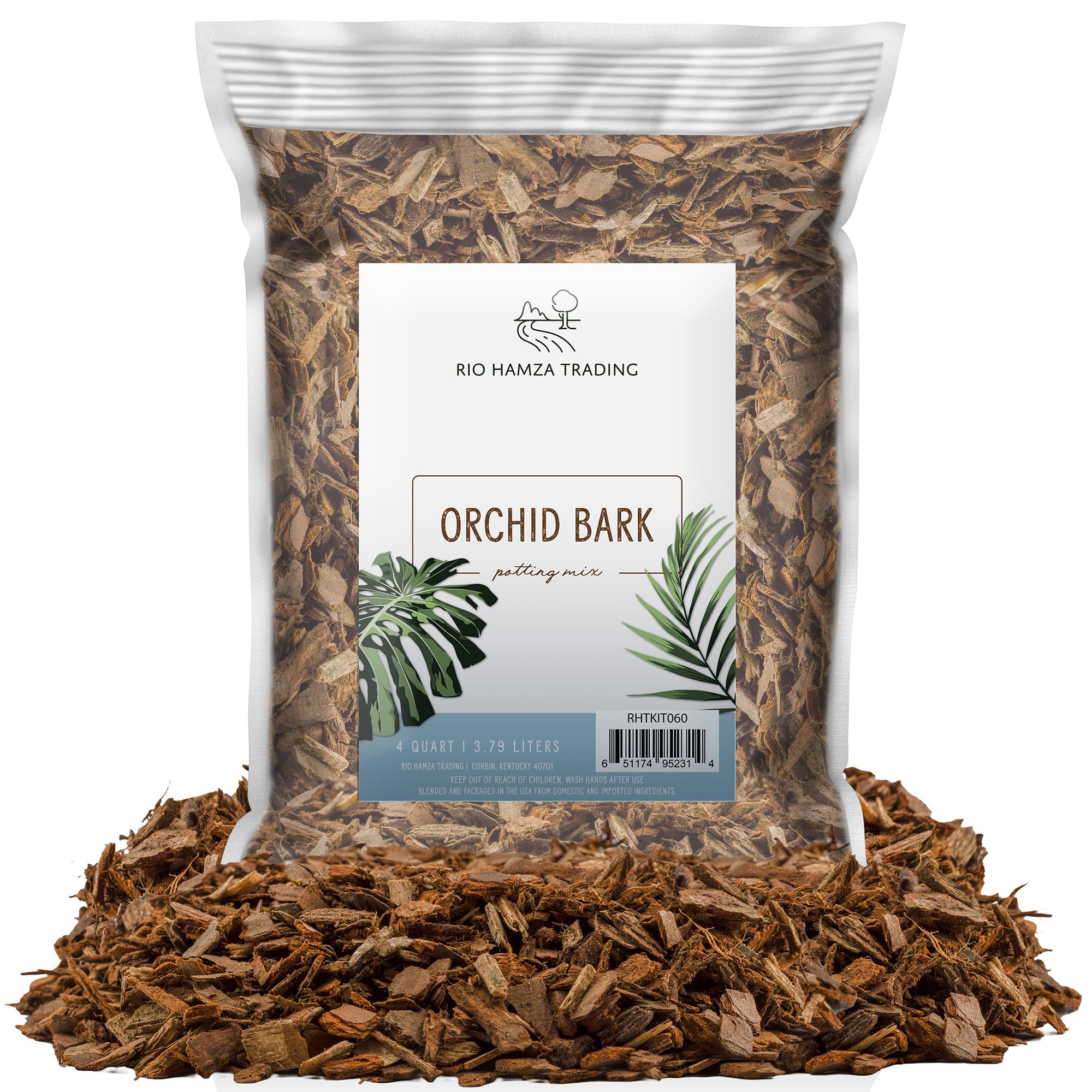
This 4-quart bag of Loblolly and Southern Yellow Pine bark is one of the few options that openly discloses its exact tree source. The particle size lands squarely in the Goldilocks zone — chunky enough for aroids and larger orchids, yet fine enough for beginner growers who might struggle with oversized shards that leave roots dangling in air. The pieces resist crumbling during handling, a sign of properly aged bark.
Owners frequently highlight how easy this bark is to incorporate into a chunky soil blend for monstera and other tropical houseplants, but it shines brightest when used straight for dendrobiums and cymbidiums. The lack of additives means you control the exact moisture profile by mixing in your own perlite or sphagnum. It comes pre-dried and ready to use out of the bag, though a quick rinse removes any residual dust.
The single drawback is occasional inconsistency in chunk size between batches — some bags lean smaller than others. If you are a stickler for uniform grading, sort the pieces by hand before potting. For the price per quart, this is a reliable, organic bulk option for growers who repot often.
What works
- Transparent sourcing from North Carolina pine forests
- Good chunky size for both orchids and aroids
- No additives or fillers
What doesn’t
- Minor batch-to-batch size variation
- Some dust on opening
3. Avalution Orchid Potting Bark
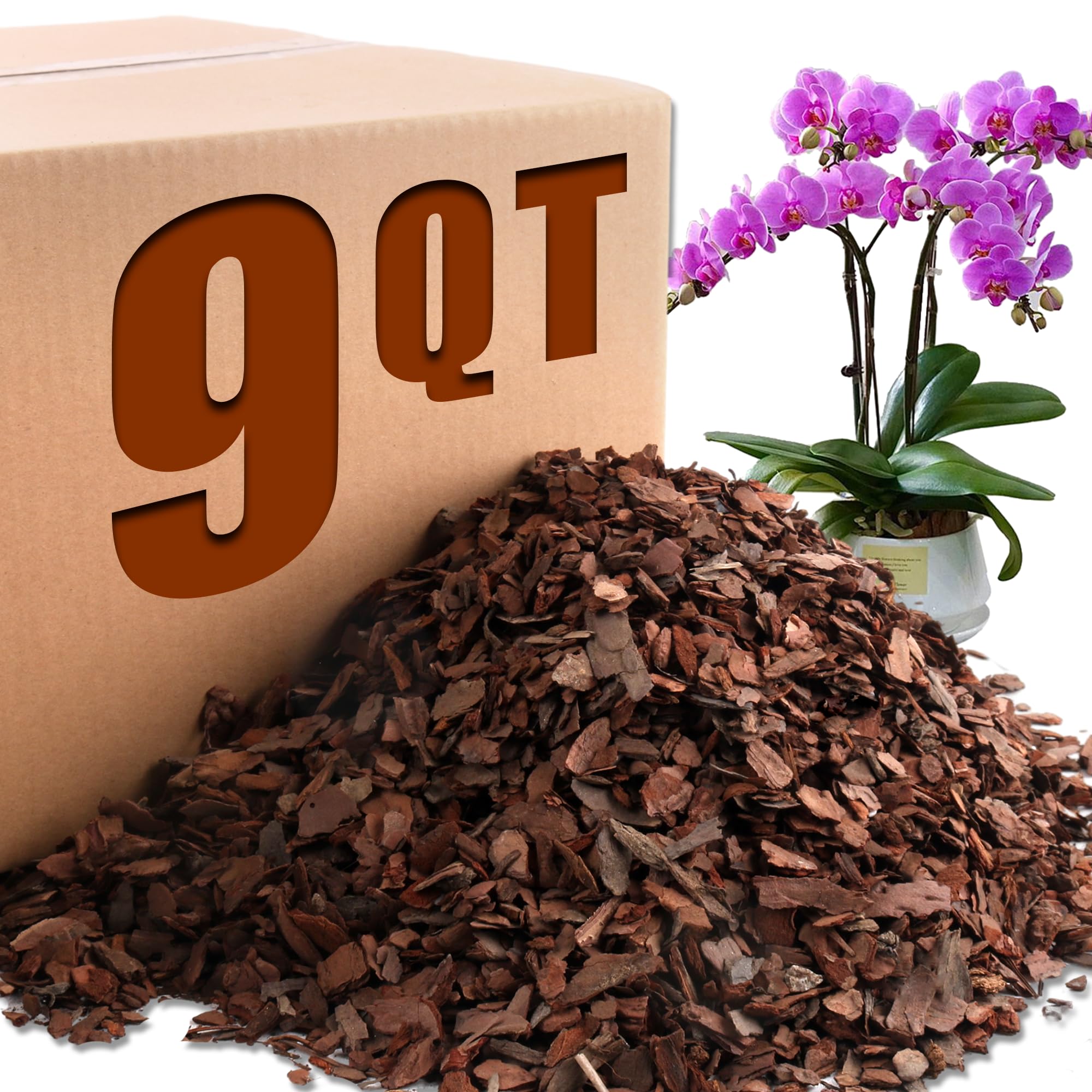
The Avalution bark uses a distinctly smaller particle size — roughly 0.3 to 0.6 inches — which makes it a strong choice for orchids with fine, delicate roots like oncidiums or for growers who layer bark on top of denser soil as a gnat deterrent. The pieces are uniformly graded and free from the jagged splinters that can damage tender root tips during repotting.
Pre-sterilization is a meaningful advantage: the bag arrives free of mold spores, fungus gnat eggs, or hidden pests that plague bulk bark sold from open bins. Owners with indoor collections report zero gnat infestations after switching to this brand, a common pain point with lesser alternatives. The pine base has a neutral pH that does not drift into acidic territory as it ages, keeping the root zone stable through multiple seasons.
The trade-off is that the pieces may feel too small for growers accustomed to chunky fir bark mixes. If you like seeing large bark shards in your pot, this will disappoint. But for moisture-sensitive species and top-dressing purposes, the consistent sizing and cleanliness make it a standout in the mid-range tier.
What works
- Uniformly small pieces protect fine roots
- Pre-sterilized — no gnats or mold
- Large 9-quart bag offers good value
What doesn’t
- Too fine for growers wanting chunky bark
- Some batches may vary slightly in size
4. Rosy Soil Orchid Potting Mix
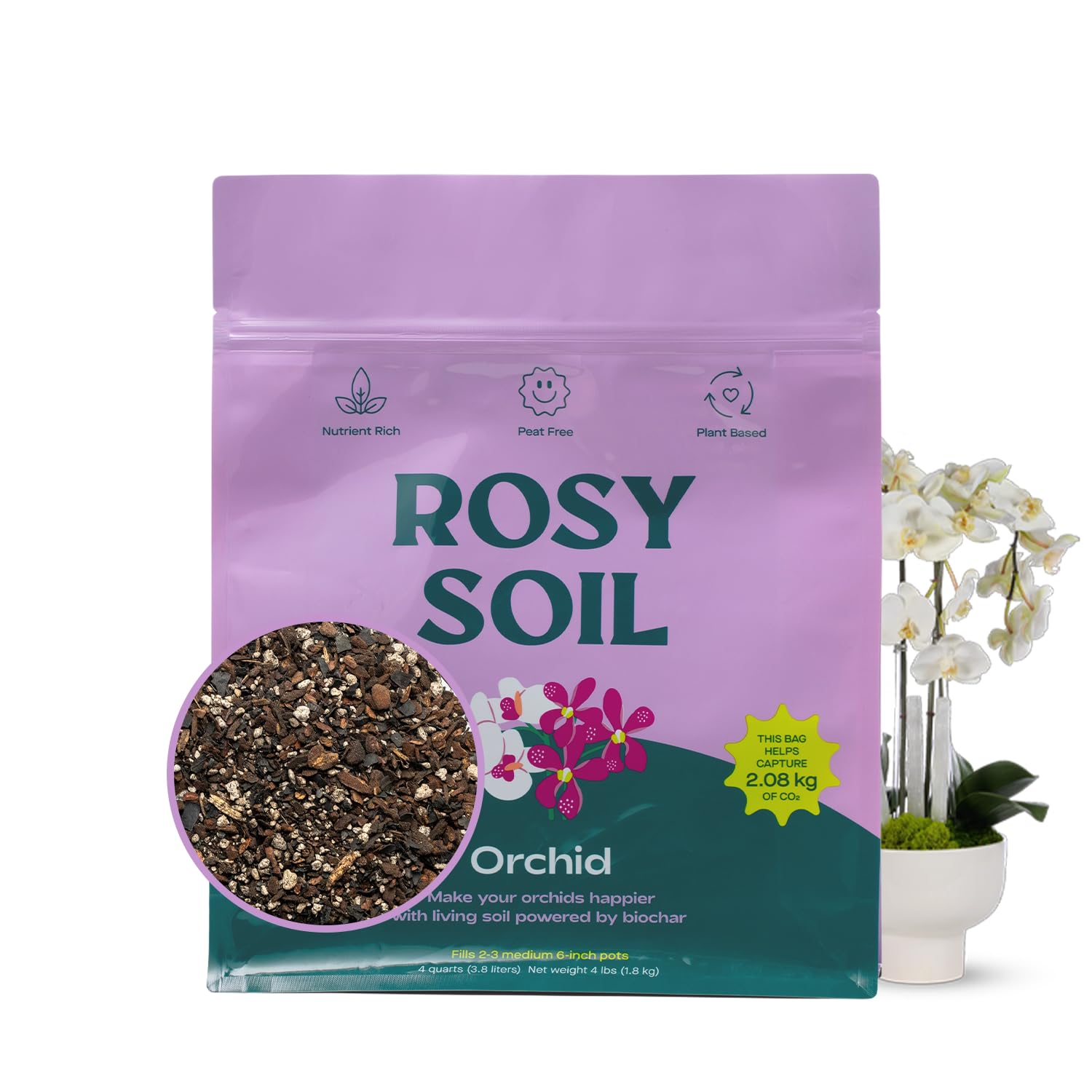
Rosy Soil takes a biological approach to orchid care. Instead of simply providing a structural medium, this mix includes biochar, mycorrhizae, and beneficial microbes that form a living network around the roots. The biochar acts as a carbon-negative sponge that holds nutrients and slowly releases them, while the mycorrhizae extend the root system’s reach for water and trace minerals. This is a genuinely different philosophy from inert bark-only blends.
The texture is chunky and open, with bark, pumice, and worm castings creating an airy bed that mimics a natural epiphytic perch. Owners consistently report faster recovery on rescue orchids and the appearance of new growth and bloom stalks within weeks of repotting. The peat-free formula also appeals to environmentally conscious growers who want to avoid the ecological cost of peat mining.
It costs more than conventional bark mixes, and the microbial life means you cannot let the bag sit open for months — use it within a season for best results. But for the grower who wants a self-sustaining ecosystem in a pot, this mix is unmatched.
What works
- Biochar and mycorrhizae boost root health
- Climate-positive, peat-free formula
- Excellent for rehabilitating weak orchids
What doesn’t
- Higher cost per quart than basic bark
- Microbial blend has limited shelf life once opened
5. Cz Garden Supply Orchid Potting Mix

This five-ingredient blend from Cz Garden combines fir bark, pine bark, biochar, sponge rock, expanded clay pebbles, and coconut husk chips into a single ready-to-use mix. The layering of additives means drainage is aggressive — water flows through in seconds, leaving roots oxygenated rather than saturated. That makes it a favorite not only for orchids but also for aroid growers who repurpose it for monsteras and philos.
Owners praise the fresh, clean aroma — a sign the bark was processed shortly after cutting rather than sitting in a warehouse developing mildew. The resealable pouch locks out humidity, so the remaining mix stays fresh between uses. A quick soak before potting is recommended to rehydrate the coconut husk chips, but that is standard practice for any blend containing them.
The only real knock is that the bag can arrive with small air holes punched during shipping, leaking dust onto other packages. The manufacturer has been responsive about refunds. For the ingredient diversity and performance, this is a strong contender for anyone wanting a complete mix without buying separate components.
What works
- Loaded with drainage-enhancing additives
- Fresh, mold-free aroma
- Resealable pouch for long-term storage
What doesn’t
- Packaging may leak dust during shipping
- Costs more than DIY blending
6. Cz Garden Supply Orchid Potting Bark (Pure Fir Bark)

For growers who prefer to custom-blend their own potting media, this OMRI-listed fir bark is a clean, consistent base. It contains zero added fertilizer, dyes, or moisture-retention additives — just pure bark that has been sorted in a bug-free facility. The pieces are roughly 0.5 to 1 inch, a versatile range that works for both standard phalaenopsis and larger cattleyas.
Customer reports consistently highlight the absence of fungus gnats, a problem that plagues many bark products stored in damp warehouses. The bark arrives dry and smelling freshly cut, with minimal fines at the bottom of the resealable bag. It is also sized right for terrarium reptile bedding if you keep herps alongside your plants, adding a secondary use case.
If you need to repot multiple large orchids at once, you may need two bags. But for the grower who wants total control over the additive mix — adding their own perlite, sphagnum, or charcoal — this is the cleanest single-ingredient bark on the list.
What works
- Pure fir bark with no hidden additives
- OMRI listed for organic use
- No gnat eggs or mold
What doesn’t
- 4-liter bag is smaller than it appears
- Requires separate purchase of additives if needed
7. Harris Premium Orchid Potting Mix

Harris brings a heat-treated Douglas fir bark base to the entry-level price point, and that thermal processing is the key differentiator. Heat treatment kills latent pathogens, insect eggs, and weed seeds without using chemical sterilants, making this one of the safest ready-to-use mixes for first-time orchid repotters. The blend also includes peat moss, pumice, and perlite in a ratio that balances moisture retention with drainage.
Owner experiences consistently mention that this mix revived orchids that were declining in old, broken-down media. The bark structure holds up through at least two seasons before needing replacement, and the pumice fraction prevents the compaction that turns cheaper mixes into root-strangling sludge. It works as a drop-in replacement for any epiphytic orchid without requiring additional amendments.
The main complaint is dust — the bag contains a noticeable amount of fine particles that can be messy during repotting. A quick rinse or repotting outdoors solves this easily. For the price, this is the safest bet for anyone new to orchid care who wants a reputable, all-purpose mix that won’t kill their plant.
What works
- Heat-treated for sterilization without chemicals
- Balanced mix works for most orchid types
- Affordable entry into quality orchid media
What doesn’t
- Noticeable dust content on opening
- 4-quart bag is modest for multiple repots
Hardware & Specs Guide
Particle Size and Air Porosity
Large bark pieces (0.5–1 inch) create the air gaps that epiphytic roots need to avoid rot. Fine particles smaller than 1/8 inch should make up no more than 10 percent of the total volume, as they fill the air pockets and turn the mix waterlogged. Shake the bag before buying: if a cloud of dust pours out, the particle grading is too fine.
Bark Type Longevity
Douglas fir bark is the longest-lasting option, holding its structure for 18 to 24 months before breaking down. Pine bark decomposes faster — typically 12 to 18 months — but costs less and is easier to source. Coconut husk chips and bark blends degrade fastest, often requiring annual replacement. Choose fir bark for large, slow-growing orchids you want to repot infrequently.
FAQ
Can I use regular potting soil for my orchid?
How often should I repot my orchid into fresh bark mix?
Should I soak my orchid bark before using it?
Final Thoughts: The Verdict
For most gardeners, the best soil for orchids in pots winner is the rePotme All Purpose Monterey Bark Imperial Orchid Potting Mix because it delivers the ideal bark structure, cleanliness, and longevity that serious orchid growers demand. If you want a living, microbial-rich medium that actively supports root development, grab the Rosy Soil Orchid Potting Mix. And for a reliable, budget-friendly option that works right out of the bag for beginners, nothing beats the Harris Premium Orchid Potting Mix.