
If you pot an orchid in regular gardening soil, you will kill it. Orchids are epiphytes (plants that naturally grow on tree bark, not in dirt), so their roots need air pockets and fast drainage, not the dense moisture of standard potting mix. The right mix keeps roots dry enough between waterings to avoid rot while delivering enough bark, charcoal, and perlite (a lightweight volcanic rock that prevents compaction) for roots to cling to and breathe through.
I’m Rikta — the co-founder and writer behind Lawn Gear Lab. This guide is built by comparing the manufacturers’ published specifications and the patterns across verified customer reviews, so you get each pick’s real strengths and trade-offs instead of marketing spin.
The six mixes below range from budget-friendly bags to premium small-batch blends, each suited to a different style of orchid care. After reading, you will know exactly which soil for orchid matches your plants, your environment, and your repotting confidence level.
How To Choose The Best Soil For Orchid
The single most important rule is simple: never use standard potting soil. Orchids are epiphytes, which means their roots are designed to hang onto tree bark in humid jungle air. They need a coarse, chunky medium that lets air circulate freely and water drain completely within seconds. Choose a mix that prioritizes drainage and aeration over moisture retention.
Bark type and particle size
Douglas fir bark, pine bark, and coconut husk chips are the most common base ingredients. Larger pieces (about 0.3 to 0.6 inches) create bigger air pockets, which is better for orchids with thick roots like Phalaenopsis (moth orchids) and Cattleyas. Smaller pieces work better for fine-rooted orchids or as a top layer to prevent fungus gnats, but they hold more water.
Additives — charcoal, perlite, pumice, and moss
Charcoal filters impurities and absorbs odors. Perlite and pumice (volcanic stones added for drainage) improve drainage and prevent the mix from compacting. Sphagnum moss or coconut coir retains moisture — a helpful addition in dry climates but a risk in humid spaces where it can stay too wet. A balanced mix includes at least two of these additives alongside the bark.
Bag size and value per repot
A 4-quart bag typically repots two to three orchids. Premium 2-quart bags cost nearly as much as 18-quart economy bags, so you are paying for ingredient quality and handcrafting, not quantity. If you own several orchids or repot annually, the larger bags save significant money over time.
Quick Comparison
On smaller screens, swipe sideways to see the full table.
| Model | Category | Best For | Key Spec | Amazon |
|---|---|---|---|---|
| rePotme Imperial Orchid Mix | Premium | Handcrafted quality for healthy roots | 2 Quarts | Amazon |
| Cz Garden Orchid Mix | Mid-Range | Chunky, fast-drying mix for easy care | 0.26 Cubic Feet | Amazon |
| DUSPRO Orchid Potting Mix | Premium | Complete blend with forest moss for moisture balance | 4 Quarts | Amazon |
| Harris Premium Orchid Mix | Mid-Range | Heat-treated fir bark in a balanced ratio | 4 Quarts | Amazon |
| Perfect Plants Orchid Mix | Value | Well-rounded beginner blend with charcoal | 4 Quarts | Amazon |
| AVALUTION Orchid Bark | Budget | Bulk clean bark for multiple repots | 18 Quarts | Amazon |
In-Depth Reviews
1. rePotme All Purpose Monterey Bark Imperial Orchid Potting Mix (Mini Bag)

0.3 to 0.5 inch bark pieces make this the top pick for small-collection growers who want a ready-to-use, airy mix that Phalaenopsis, Cattleyas, and Dendrobiums can grip without being cramped. One buyer called it their favorite after trying several brands, noting their orchids are “living their best life.” That consistency comes from small-batch handcrafting: this 2-quart bag is made fresh daily, not mass-produced in a factory.
Buyers report the bag has minimal dust compared to other options and rinses clean, which means you spend less time prepping and more time repotting. The Monterey bark drains so effectively that several reviewers said it solved their mold and mushroom problems from previous media. Used by major conservatories and botanic gardens, this is the gold standard for Phalaenopsis (moth orchids), Cattleyas, and Dendrobiums alike.
If you grow a small collection and want the least fuss, this mix works right out of the bag. If you have more than three orchids to repot at once, the 2-quart size means you will need multiple bags, which gets expensive. For small collections, this is the fuss-free gold standard.
Why it’s great
- Ideal bark size for aeration and root grip
- Minimal dust, rinses clean
- Handcrafted daily; used by botanical gardens
Good to know
- Small 2-quart bag is expensive per quart
- Not the best value if you repot many orchids at once
2. DUSPRO Orchid Potting Mix (20QT)
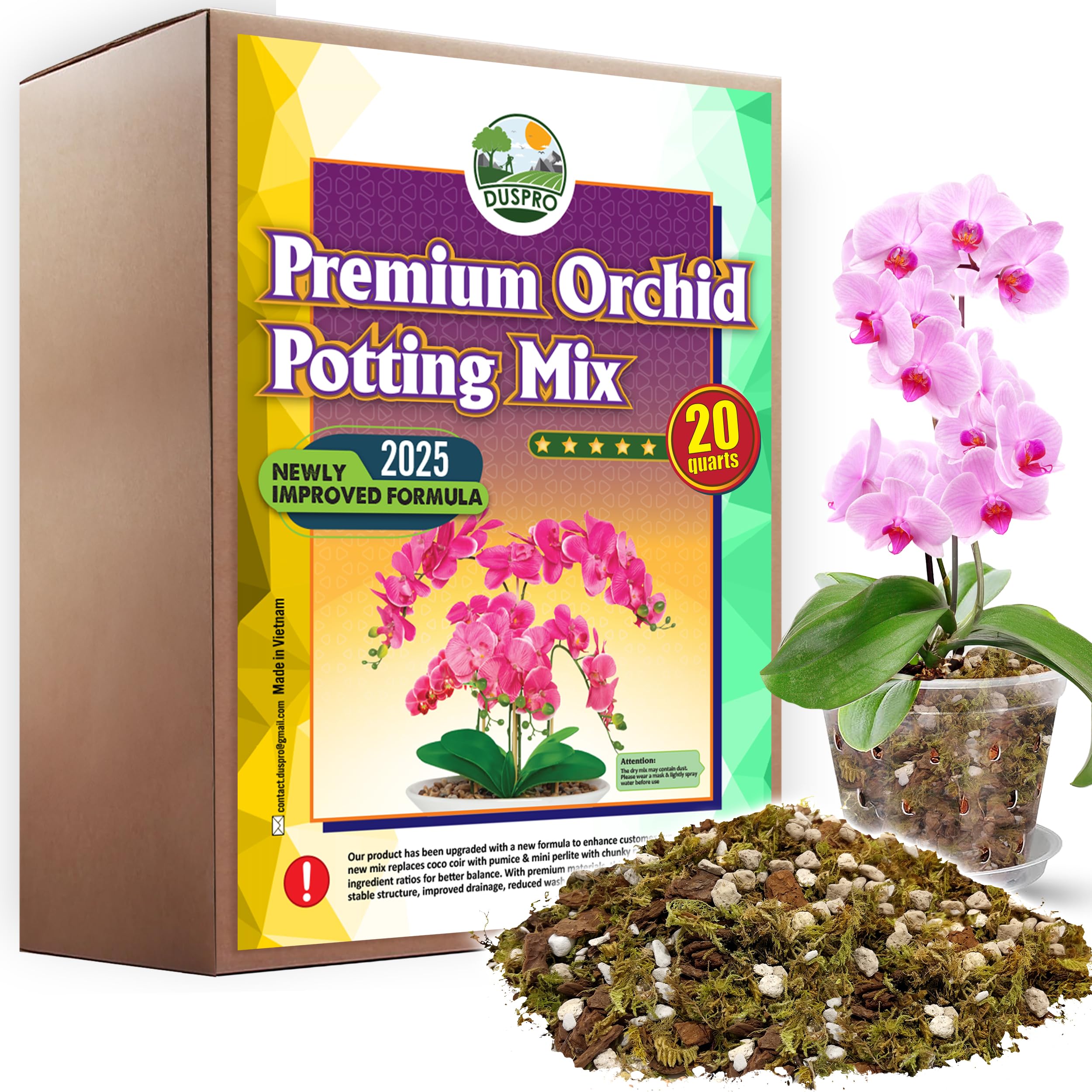
This mix adds forest moss for moisture retention — helpful if you live in a dry home or sometimes forget a watering day. One repeat buyer said they would not buy anything else, and that they have bought it four or five times. The formula changed in 2024: the maker replaced coconut coir with pumice and swapped fine perlite for chunky chunks, which owners mention significantly improved drainage and longevity.
Customers note the mix arrives dry and needs a 30-minute soak before use, but after that it “holds moisture well, no mold.” The blend contains pine bark mulch in 1–4 cm pieces, pumice stone, chunky perlite, and forest moss — a balanced four-ingredient recipe that supports Phalaenopsis, Cattleya, Vanda, and many other varieties. One reviewer noted repotting a Vanilla Bean Orchid in it and said it is thriving.
The catch: the 4-quart volume is smaller than many economy bags, and the price is premium-tier. If you need extra moisture control without adding sphagnum moss yourself, this is the most complete ready-to-use mix on the list. Choose this over the top pick if you want a full blend, not a pure bark base.
Where it shines
- Forest moss helps retain moisture in dry climates
- Upgraded 2024 formula with pumice and chunky perlite
- Multiple repeat buyers praise consistency
Worth noting
- Must be soaked before use
- Premium pricing; not the cheapest per quart
3. Cz Garden Orchid Potting Mix (0.26 Cu Ft)

You need a chunky, fast-drying orchid mix that won’t drown your Phalaenopsis, and this 0.26-cubic-foot pouch delivers six components—Douglas fir bark, pine bark, horticulture-grade coarse biochar, coarse sponge rock, expanded clay pebbles, and coconut husk chips—for a price that packs more ingredients than any other pick here. One buyer summed it up: “Chunky orchid mix dries fast, prevents overwatering,” and customers specifically note the bark is cut and processed immediately, giving it a fresh, pleasant aroma instead of the mildew smell you sometimes get from old bark.
Reviewers confirm it works beyond orchids: one used it for large Monstera plants, mixing it with Fox Farm soil for extra oxygen flow and quick drainage, while others use it as a chunky additive for aroid soil like pothos and philodendrons. The Cz Garden facility is based in the USA and processes the mix in a bug-free facility—several reviews noted receiving zero bugs or mold.
The packaging has small air holes that can leak dust during shipping, a known issue customers mention, but the manufacturer offered refunds proactively, so customer service is responsive. For the price, this is the most versatile mix on the list, working as both an orchid medium and a soil amendment for other houseplants.
What stands out
- Six premium ingredients in one bag
- Fresh bark aroma with no mildew smell
- Bug-free processing in US facility
The trade-offs
- Bag air holes can leak dust during shipping
- Not the cheapest per cubic foot
4. Harris Premium Orchid Potting Mix (4qt)

This is the only mix on the list using heat-treated Douglas fir bark — the heat bakes out pathogens and weed seeds before the bag reaches you. Buyers confirm it works: one wrote “I was unsure about repotting orchids but I used this for 3 orchids and repotted them and they are doing great.” The blend combines fir bark, peat moss, pumice, and perlite in a ratio designed to drain quickly while holding enough moisture between waterings.
The downside is dust. Several customers warned that the bag is very dusty, recommending you repot outside to avoid getting particles everywhere. The 4-quart volume is standard and sufficient for two to three standard Phalaenopsis repots, but some buyers expected a larger bag for the money — one review specifically said “thought it was a larger bag.” This is a stripped-down, bark-forward mix that works reliably but offers fewer ingredients than the Cz Garden blend at a similar price per quart.
For a straightforward, single-bag solution aimed at Phalaenopsis, Cattleyas, Dendrobiums, and Cymbidiums, this mix removes guesswork. If you value ingredient variety and a chunkier texture, the Cz Garden bag gives you more diversity for a small bump in cost.
The upsides
- Heat-treated Douglas fir bark kills pathogens
- Well-balanced drainage and moisture retention
- Works for all common orchid types
Keep in mind
- Very dusty; repot outdoors
- 4-quart bag is smaller than it looks
5. Perfect Plants Orchid Potting Mix (4qts)
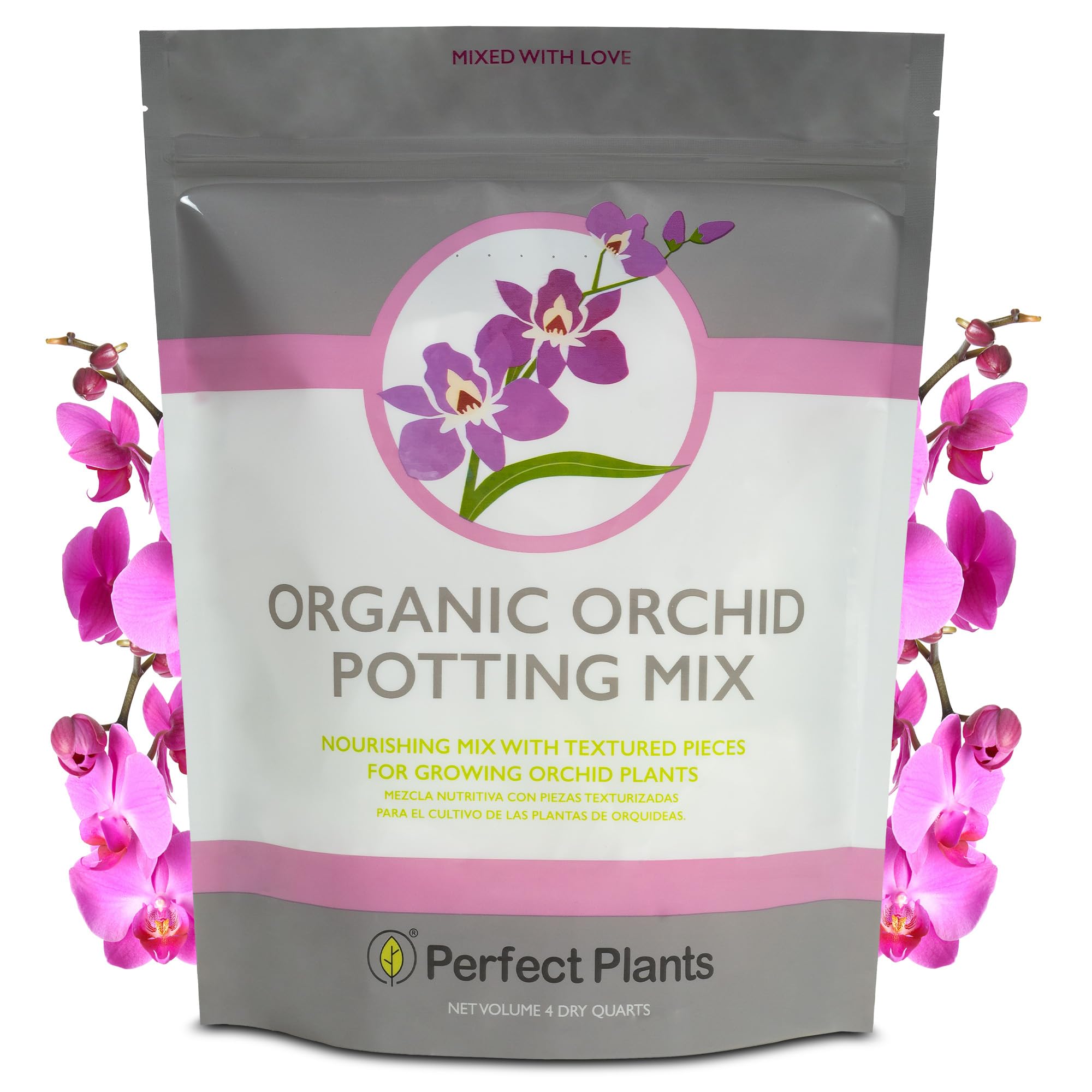
What you actually get at this lower price is 4 quarts of a mix containing charcoal, sponge rock (a porous material for aeration), pine bark, and coconut chips — all selected so orchid roots can “climb and expand” through the textured medium. Buyers confirm the bark pieces are appropriately sized for Phalaenopsis and Oncidiums. One reviewer emphasized that the components are high-quality and work well in humid conditions or for epiphytes needing fast drying.
The weakness is that some customers found the mix did not anchor roots well. One wrote: “Orchid roots didn’t anchor well; plant leans despite posts.” In drier environments, reviewers point out it requires added sphagnum moss and Turface (a fired clay additive) to hold enough moisture — otherwise it dries out too quickly. When one buyer mentioned moss, it became soggy and caused root rot, so the balance is very environment-dependent.
For a beginner in average humidity who wants an organic mix with charcoal (which helps filter impurities), this is a clean, mite-free starting point. But if your home is dry, or you want a mix that works without you having to customize it, pick the Cz Garden or rePotme bag instead — this is the exact budget buyer it is perfect for.
Why we’d pick it
- Charcoal, pine bark, sponge rock, coconut chips
- Mite-free and good for humid climates
- Bark pieces sized well for Phalaenopsis
A few caveats
- Roots may not anchor well; plants can lean
- Needs customization in dry environments
- Adding moss inconsistently causes rot
6. AVALUTION Orchid Potting Bark-18QT Organic Orchid Bark
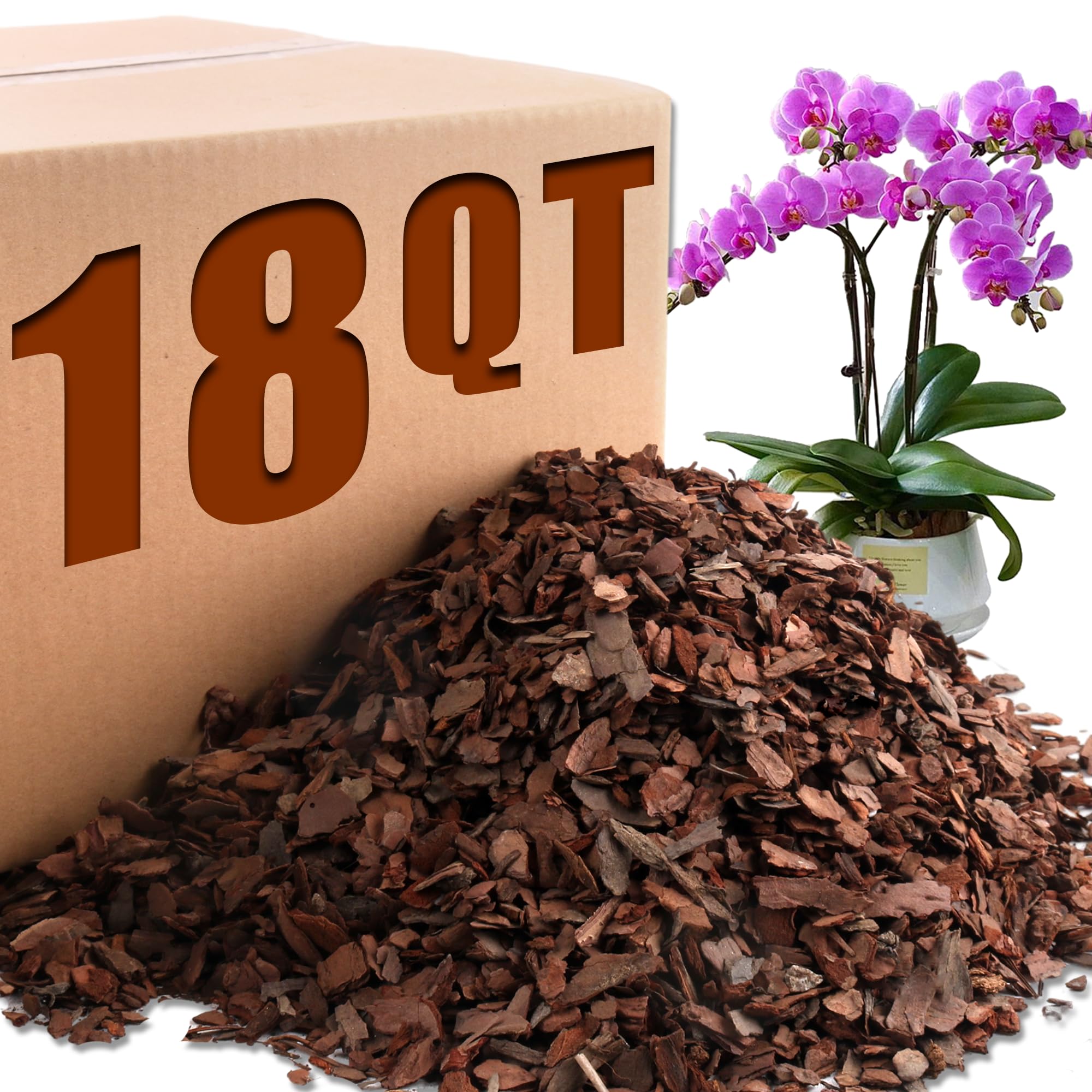
This bag is perfect for the orchid grower who wants a clean, ready-to-use bark that won’t introduce dust or pathogens — shoppers say “excellent drainage and airflow; no dust or breakdown; prevents root rot.” The bark is pH-neutral and pre-sterilized, so you can use it straight away without extra prep.
The bark pieces are on the smaller side — around 0.3 to 0.6 inches — which one owner reported is perfect for plants with fine roots. Another customer specifically loved that it helped create air flow while being “pretty,” layering it on top of soil to prevent fungus gnats. The bark is made from pine and is also marketed for succulents and snake plants, so it is multipurpose.
If you prefer a very chunky, fist-sized bark piece, skip this bag — one review warned “the bark is pretty small so if you’re looking for ‘chunky’ I wouldn’t order.” It is also a pure bark product with no charcoal, perlite, or moss blended in, so you are buying a base medium, not a finished mix. For the price per quart, this is the most economical way to buy orchid bark in bulk if you have many orchids.
Strong points
- Massive 18-quart bag at a low per-quart cost
- Clean, dust-free, evenly sized pieces
- pH-neutral and pre-sterilized
Before you buy
- Bark pieces are small, not chunky
- No charcoal, perlite, or moss included
- Best as a base medium, not a finished blend
Understanding the Specs
Bark particle size
The size of the bark chunks determines how much air reaches the roots. Larger pieces (0.3–0.6 inches) create big air pockets and fast drainage, which is best for thick-rooted orchids like Phalaenopsis. Smaller pieces increase water retention, which benefits fine-rooted orchids but raises rot risk if overwatered. The rePotme and AVALUTION mixes both use an ideal medium size for most common orchids.
Additives — charcoal, perlite, pumice, and moss
Charcoal absorbs impurities and odors from decomposing bark. Perlite and pumice are lightweight volcanic rocks that prevent the mix from compacting over time. Forest moss or coconut coir holds extra moisture, which helps in dry climates but can cause rot in humid homes. The Cz Garden and Perfect Plants blends include at least three of these; the AVALUTION bag is pure bark with no additives.
FAQ
Can I use regular potting soil for orchids?
How often should I repot my orchid into fresh mix?
Should I soak my orchid mix before using it?
Final Thoughts: The Verdict
Across the board, the soil for orchid winner is the rePotme Imperial Orchid Mix because its handcrafted bark pieces are the perfect size for healthy root growth and drainage with zero guesswork. If you want the ingredient variety and the freshest aroma at a fair price, grab the Cz Garden Orchid Mix. And for the best bulk value when you have many orchids to repot, the standout is the AVALUTION 18-quart Orchid Bark.